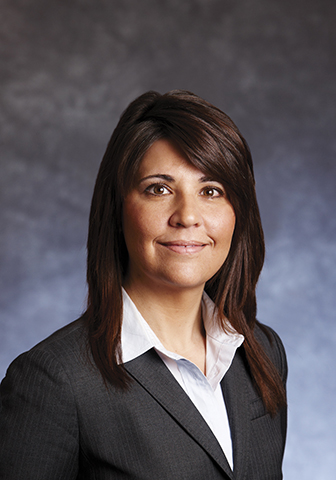
 By Ann Miletti, co-lead portfolio manager of the Wells Fargo Asset Management Private Market Value (PMV) Equity team
When I tell people what I do for a living, I am often met with puzzled looks.
These experiences always remind me that asset management is a complex and often misunderstood business – despite the fact that the industry is inextricably involved in the financial and retirement plans of most Americans. Since it is Women’s History Month with International Women’s Day celebrations still resonating, with the theme #betterforbalance, it is a great time to talk about realities, myths and opportunities that come with working in asset management. And, how it is an underdiscussed career path that many women could take, in many forms, either on the retail or institutional side of the business.
My Journey to Co-lead Portfolio Manager
I’ll admit, when I started my career as an elementary school teacher, I would have had the same reaction. However, 29 years ago my path took a sharp turn that caused me to fall into asset management in a most unconventional way. After my son was born with a serious heart defect, I needed to stay home to care for him while my husband worked during the day. But the tremendous financial implications of his illness and of life in general did not allow me to remain unemployed. So, I found a job working the midnight shift at a call center for a local financial firm. This job allowed me to learn about the financial markets and various product offerings from the ground up. Unbeknownst to me at the time, it would be the stepping-stone for a successful career as a portfolio manager at Wells Fargo Asset Management. I currently, along with my team, manage about $4 billion in assets.
Still today, if you ask a high school or university student who is exploring career options or majors what a fund manager or asset manager does, most do not know. Sadly, if they do know anything, it may not be something positive. Hollywood, the media and politicians often portray the financial services industry – and Wall Street in particular – as immoral, driven by greed and selfishness.
In all honesty, asset management, like most industries, has produced its fair share of bad actors. And the financial crisis of 2008 further tarnished the reputation of financial services overall.
Yet the true value of asset management is rarely discussed, which is unfortunate. I firmly believe that the majority of asset management professionals go to work each day with the goal of creating wealth for their clients and helping them prepare for their financial needs, both for today and for the future. Today, our industry in some way manages about $28 trillion in retirement assets in 401(k) plans, pensions and other vehicles.1 Our mission is to help people achieve their dreams, such as sending their children to college, buying their first home, preparing for retirement or something much bigger.
Asset management provides a worthy and fulfilling career – a notion that I believe remains widely misunderstood. For example, I know the returns we generate for our clients are meaningful and make a significant difference in their lives. And without finance, the economy would not grow, creating fewer jobs and hurting all of us, no matter your profession or financial standing.
How do we change the perception?
To start, we need to educate people at younger ages about financial literacy and encourage them to practice responsible money management skills. This is something I am both passionate about and involved in with high school-age kids today.
We as an industry must also stop talking in jargon that is difficult for a mass audience to understand.
In addition, asset management and financial services in general need a pipeline of curious, dynamic-thinking, and diverse people. To attract the right talent, our industry must do more to educate everyone about the value that we provide to individuals, families and society.
We need to more actively embrace diversity, including encouraging young women equally and early to be interested and confident that they belong in the asset management field – and maybe, most importantly, that they are needed because of their skills.
In research conducted by Wells Fargo Investment Institute,2 we found that women’s attributes such as patience (trading less), discipline (through asset allocation) and a willingness to learn (seeking advice from an investment professional) have allowed them to earn higher returns on their investments for the risks they do take. That is essentially the essence of investing – maximizing returns in the face of risk.
We must find ways to communicate the financial stories of success. Hollywood may have immortalized the slogan “greed is good” with many of the recent depictions showing a persistently evil industry – but that just isn’t so. Nest eggs have grown, college educations have been paid for, endowments have been built up and civic building projects have been completed. These are just a few examples of how society has benefited from the industry.
I am grateful for my career in asset management, a field that thrives on the many strengths and attributes of women.

Voice of Experience: Satyavati Berera, Chief Operating Office, PwC, India
Voices of Experience“There will be times when something will have to take precedence and something else might take a backseat, but that’s natural and expected.”
Making Her Mark
Berera joined PwC more than three decades ago as an intern after graduating from Lady Shri Ram College, University of Delhi. During her tenure, she’s had the opportunity to work in a wide variety of positions as she built her career trajectory, from her first role as an auditor, then moving to Risk Advisory, becoming Managing Partner for North in 2011, Consulting Leader for PwC India in 2013 and eventually taking up the COO position in 2016.
She takes pride in several milestones as she made the most of the multiple opportunities offered by the firm, assuming various roles that enriched her professional journey. But of course, nothing surpasses the fulfillment she feels in the honor of being the first woman partner in 100 years in the Audit practice of the India firm (then Price Waterhouse) and subsequently becoming the first woman COO in Big 4 in India in 2016.
Currently she is leading the transformation agenda for the firm, working to increase collaboration among its people and with the network, and spearheading programs to meet the expectations of a younger than ever workforce. “As COO, to be in the center of all these changes is frankly very exciting,” Berera says. “It’s a thrilling opportunity to lead these initiatives to drive meaningful change and help break barriers to make PwC and our people more future-ready.”
And she notes, she personally has benefited from a great deal of learning, both in this role and throughout her career. Berera also embraces her role as a change agent as the firm continues to enmesh technology and digital strategies, making it central to everything they do.
Berera says that “Today clients are increasingly looking to firms to provide specialized integrated offerings, where they take more than one competency to the client, thus providing holistic solutions to larger business problems. Technology is no longer the solution only to a CEO’s technology problem, it is at the centre of their business strategy. Therefore, we have to create an ecosystem for our people to really think like that.” Encouraging innovation and improving digital acumen of its people is firmly rooted in the firm’s strategy and Berera is committed to making it a success.
Continuing to Create Equal Opportunities
Success paths for women continue to be an issue throughout most organizations in India, which largely lacks an enabling culture for women in the middle to senior management areas. While all firms are working to establish programs and initiatives that address the void, she believes the country is a few years behind. “The sponsorship opportunities for women and custom development programs are still not enough, given the demands of their personal lives,” Berera says. “We still lose women in the mid- to senior-management levels because of personal needs, and it is unfortunate that we’ve not been able to plug this leak.”
But as she notes, PwC is a leader in this arena, having pioneered a number of initiatives to help support the advancement and retention of women. Some of the most noteworthy ones include a generous sabbatical policy and the “full-circle” program, which allows women employees to take a break for family reasons or to pursue other dreams, and then later re-join the firm. Additionally, high-performing employees can retain their last year’s rating if they have worked for significantly less time during a performance year due to a leave of absence or extended leave for maternity or other personal needs.
The firm is also proud to support mentoring programs for women at the manager level and above, where they can spend time with senior leadership, which can provide a boost to their career development journey. Other small, yet very powerful, actions include providing flexibility to women employees to address challenges that arise from working at home or reduced hours, as well as additional support for expectant mothers in the last trimester.
Finding Balance in Her Own Life
Berera prioritizes spending time with her husband and son. They all love to travel, which helps them de-stress, and wellness is important to her, so she starts each day with yoga.
She also likes to spend time organic farming on a small piece of land about 45 minutes from her home, where she grows seasonal flowers and produce.
“It’s a very soothing experience, as it teaches you to be calm, patient and to stay invested for the long term,” Berera says, adding that farming has also taught her to appreciate that success is not always predicted solely by the effort you put in. “Sometimes outcomes are beyond your control, due to factors like environmental conditions. You learn to take it in stride and move ahead.”
And of course, that philosophy bears fruit for all aspects of life.
Intrepid Woman: Noha Waibsnaider, Founder & CEO, GatheringUs
Intrepid Women SeriesShe yearned for a simpler way to find support, conduct all the necessary tasks and purposefully commemorate a life. That was the catalyst for the website GatheringUs, a lasting online space that brings communities together after a death to support each other and celebrate the life of their loved ones.
As part of a large family, she has organized many memorials and funerals, and so knew firsthand the challenges of coordinating family and friends—trying to keep everyone in the loop while planning multiple events and logistics, and doing it all through the emotional roller coaster of mourning.“I was grateful for the outpouring of support from my community, and I realized many wanted to help, yet struggled to find ways to be supportive. I created GatheringUs to provide resources and a simpler way to mobilize everyone and commemorate loved ones,” Waibsnaider explains.
The need is so clear, she says, noting that after launching the site just three months ago, they have already had 30,000 visitors and memorials from all over the world, representing diverse groups of different ethnicities, religions and generations.
“Death scares people, and they don’t want to talk about it, and then you add in the preconceived notions about how funerals are supposed to be. Our goal is to empower people to celebrate and honor their loved ones in a meaningful and personal way that helps them process the loss.”
An Impressive Pedigree
This latest venture sprang from a personal, relatable need, but Waibsnaider already possessed the business acumen that has allowed her to build it so successfully. A serial social entrepreneur and brand builder, she holds an MBA from Columbia Business School and started her career in brand management at Unilever for consumer staples such as Ragu and Lipton. She parlayed that success into a new venture and founded Peeled Snacks, an organic food company, in 2004. She grew and ran the brand for 13 years—vaulting it into the upper echelon by raising $20 million in equity financing and bringing healthy fruit and vegetable snacks to millions of consumers nationwide.
“When I started my last company, I was in a rush to grow and sell within a very short time. I wish in retrospect that I had set my sights on a longer-term horizon,” she says, which would have made it easier to ride the highs and lows and put less pressure on immediate results. Nevertheless, even with that perspective, there’s no denying the impact she made on the business world with her ambition and ingenuity.
Along the way Waibsnaider has been honored with numerous awards, having been recognized as a White House Champion of Change; one of the “Women to Watch,” from Jewish Women International; named to the list of “50 Fastest-Growing Women-Led Companies” by the Women Presidents’ Organization; recognized as a Columbia Business School Distinguished Alumna; and received the Ecademy Award for Entrepreneurship, also from Columbia Business School.
She advises other would-be entrepreneurs to identify a cause or void that they are passionate about, which will allow you to sustain meaning and purpose over time. However, you also have to make sure it has a viable financial model because you can only keep doing it if you can support the business. In addition, she urges entrepreneurs to ask for help from their community. “They want to be there to support you and be part of your success story,” Waibsnaider says.
While she builds her new company, she is in a mode of continuous education and outreach. Notably, she is a 360° Council Member of Reimagine, a nonprofit that hosts a public conversation around death and life celebrations, including a week-long festival in various cities on the topic. The festival in New York in October included 350 events that ranged from presentations by end-of-life doulas and palliative care physicians to art, music, comedians and more, in an inspiring collaboration designed to help others in their stages of grief.
If You Have a Disability and Want to Work, You Need the Help of an Employment Network
Guest Contribution, NewsA new report found that companies who hire people with disabilities outperform their peers, and the U.S. Department of Labor found employers who embrace disability in their talent acquisition strategy have higher retention, employee productivity and workplace safety.
Despite this hard evidence and compelling statistics, the workplace landscape is still disappointingly homogenous when it comes to disabilities. Many hiring managers harbor misconceptions and subscribe to inaccurate stereotypes about people with disabilities and what they are capable of with their conditions. Some of our clients say they wanted to return to their former employer once they medically recovered, but their job was no longer there. Others make the mistake of disclosing their condition during the interview process for a new position and never hear from a potential employer again. Still others don’t believe they can ever go back to work because they don’t realize accommodations can be made for them.
10 million former workers and their dependents currently receive Social Security Disability Insurance (SSDI) benefits, a type of income replacement insurance that is paid by the federal government when workers experience severe health conditions. These benefits help individuals and families survive when the salary stops coming in.
In the first several decades of SSDI’s inception as a program, its beneficiaries were overwhelmingly men. Women were not as prominent in the workforce, and therefore were not as likely to be insured for these benefits through their employment (FICA) taxes. In fact, in the 1970s, researchers found that women reported higher rates of disability but were less likely to apply for SSDI. They also found that compared to men with disabilities, women with disabilities were more likely to rely on a spouse’s earnings instead. Now, women are nearing equity with men when it comes to being awarded the benefits they deserve.
Many of us think we’ll never need to take advantage of such a program — we are healthy, fit and successful, right? But the truth is, the odds of experiencing some sort of debilitating medical condition are higher than you think. The Social Security Administration (SSA) estimates one in four twenty-year-olds will be disabled before reaching age 67, and for those who aren’t in their 20s, the chances are even worse. It pays to be prepared.
If you’ve gone through the SSDI process, you know how complex and lengthy it can be — tons of paperwork and an average wait time of 600-800 days. While waiting, dangers are everywhere: you can easily slip into poverty, lose your assets, and deplete your savings while trying to make ends meet and continue paying to treat your newly acquired condition. Due to lack of funds, many people with disabilities are even forced to file for foreclosure on their home.
Whether you have been collecting SSDI for a long time or got awarded benefits recently, it’s crucial to consider getting help to go back to work as quickly as possible. Key to this decision is your long-term financial picture. You’ll simply be better off if you can work and generate additional income. Should the unthinkable happen, research shows the longer that someone with a disability is out of the workforce, the harder it becomes for them to re-enter. The market changes, you lose skills, and the gaps in your resume become more and more prominent.
Unfortunately, the unemployment rate for this population is twice as high (7.9 percent versus 3.5 percent) as it is for those who are able-bodied. Getting hired with a disability is no easy task, even though it’s proven to be good for business.
If you find yourself on the job hunt without a plan for success, you need to contact an Employment Network as soon as possible. Employment Networks help thousands of people with disabilities across the nation find or return to jobs by streamlining the process, offering valuable resources and keeping your SSDI benefits safe while you try to work again.
Former workers on SSDI benefits can access free help through SSA’s free Ticket to Work program, which protects SSDI and Medicare benefits as participants transition to full-time work. If you find that you are unable to go back to work or experience a medical setback, the Ticket to Work program acts as your safety net — you won’t lose the benefits you waited years to receive. Employment Networks help coordinate your benefits as you re-enter the working world, alerting SSA to your change of work status and helping you achieve the accommodations you may need to do your job to the fullest extent, perhaps through a flexible work schedule or a remote work arrangement.
For corporate women, every day can be a struggle, but even a severe disability cannot keep them from experiencing the personal and financial rewards of returning to work. Employment Networks can help them create an Individual Work Plan, start the Ticket to Work program and get back to climbing the career ladder.
Paula Morgan has more than 18 years of public and private experience helping people successfully navigate Social Security Administration (SSA) disability programs. She is a return to work case manager for Allsup Employment Services (AES), a national, SSA-authorized employment network (EN). Morgan works with former workers with disabilities to help them navigate the SSA’s Ticket to Work (TTW) program. She focuses on education and early intervention of social security disability insurance (SSDI) applicants as they move through the insurance program and identifies opportunities for returning to work should their condition improve.
Paula Morgan has more than 18 years of public and private experience helping people successfully navigate Social Security Administration (SSA) disability programs. She is a return to work case manager for Allsup Employment Services (AES), a national, SSA-authorized employment network (EN). Morgan works with former workers with disabilities to help them navigate the SSA’s Ticket to Work (TTW) program. She focuses on education and early intervention of social security disability insurance (SSDI) applicants as they move through the insurance program and identifies opportunities for returning to work should their condition improve.
Guest contributors views are their own.
7 Reasons why a Career in Technology is Great For Women
Career Advice, Guest ContributionThe IT industry is made up of many sectors, with data privacy and protection being one of these.
Experts indicate that the data protection industry has grown by more than 450% in 2017 alone and is expected to increase into 2020. With the potential for the number of jobs in the area to skyrocket, it is a good opportunity for women to look for jobs in cybersecurity. It remains a male-dominated sector, much like the other sectors of IT and unfortunately, statistics suggest that women aren’t selecting computer science majors.
Here are seven reasons why opportunity is now.
1. There’s a Tremendous Worker Shortage
As organizations of all sizes become increasingly aware of how important privacy and cybersecurity are, they are looking for qualified professionals to take on responsible positions. Unfortunately, they often find a lack of candidates, even when offering excellent pay and great benefits.
Estimates suggest that more than 200,000 cybersecurity jobs were never filled in 2015. The Bureau of Labor Statistics also says that job postings in this sector are up a staggering 74 percent in the past five years. If you’re looking for a career path with good employment opportunities, then cybersecurity is the place for you.
Despite massive growth in the sector the general consensus is that the security sector job market will explode in 2020+. One of the fastest growing areas of that will be MSS (managed security solutions). These are automated solutions that look for system vulnerabilities in small businesses or corporate entities. As the education gap closes some expert expect cyber to become a mandatory insured category for most companies.
2. Incredible Mentors Are Everywhere
The women who entered the cybersecurity field in the early days are undoubted pioneers and trailblazers. Many of them are incredibly successful and willing to help young professionals who are interested in a similar career path. In fact, the industry is known for its supportive professionals who especially want to see other women succeed. This means that you can easily get the guidance and advice you need as you develop a career.
3. You Don’t Have to be a “Geek”
Are you worried that a job in cybersecurity will require you to understand endless reams of technical jargon? Maybe you feel intimidated by all of the technology that you’ll encounter. The reality is that if you can operate a computer, then you are likely capable of learning the skills that you’ll need to work in cybersecurity.
Additionally, technical skills aren’t all that you need in the industry. Professionals considering these jobs need critical thinking skills and should be adept at written and verbal communication. Certain positions may require negotiation or making presentations. Depending upon the precise position, you may find that only a small amount of your time is occupied by the “technical” stuff.
4. Diverse Perspectives Are Good for Business
Many organizations are seeking to hire female IT workers because they have realized a fundamental truth. When a variety of viewpoints and perspectives are considered, better decisions tend to be made. Employers are relying on diverse workforces more than ever before to help give them a leg up on the competition.
A varied workforce is especially helpful in cybersecurity because the profiles of hackers and cybercriminals are similarly diverse. Organizations need workers who think and reason in different ways in order to keep them ahead of potential threats.
5. The Pay and Benefits Can Be Excellent
More and more women are becoming the primary breadwinners in their households. Other women are seeking careers with better pay in two-income households so that they can provide a better life for their family. Whatever the specific reasons, one of the arguments for women entering the cybersecurity field is that the pay generally is incredibly competitive. This is especially true considering the gap between open positions and qualified workers. If you decide to go into cybersecurity, you’ll probably get an attractive raise and an enviable package of benefits.
6. It’s a Chance to Genuinely Help People
Working in cybersecurity isn’t just about looking for vulnerabilities in computer systems or trying to find new ways to foil hackers. At their core, these jobs are really about protecting the private information of thousands or even millions of individuals. When a hack or breach does occur, then the cybersecurity professional goes into a different mode, that of tracking down the bad actor. It’s a bit like a being a detective, figuring out who did the crime and how. Cybersecurity professionals have a definite opportunity to protect people from harm and to right some of the wrongs in the world.
7. It’s a Challenging Field that Constantly Evolves
Do you want to go to work and do the same old thing day after day? Some women just don’t find that appealing. For them, the fast-paced excitement and diversity of cybersecurity may be the ideal challenge.
People who already work in this field frequently talk about how much they love their jobs. They don’t always know what they’ll be doing on a day-to-day basis because unexpected events are always popping up. This keeps them on their toes and keeps their minds sharp. Moreover, technology and security are always evolving, so keeping up with education is a must in this field. If you like to constantly challenge yourself with new information, then a career in cybersecurity may be the perfect decision for you.
Employers are looking for IT professionals right now. Maybe you don’t have the specific education or experience that they are looking for at the present moment, but your abilities to work hard and learn are in your favor. A few classes may be all that you need to start yourself in the right direction toward a career in cybersecurity. With your basic skill set in place, you’ll be positioned to take on a challenging job that pays well and offers great employment security.
Author Bio: Laura Harvsey
I am a senior staff information officer and has practical experience in building community-oriented data platforms. I focus on sharing technology content with those working in innovation networks
Theglasshammer does not endorse views of guest contributors.
Voice of Experience: Lily Chinn, Managing Partner, San Francisco Bay Area, Katten Muchin Rosenman LLP
Voices of ExperienceA Sharp Learning Curve Promotes Experience
That belief has shaped her own career, which started in an atypical fashion compared to most law firm attorneys, as she worked for the Department of Justice in Washington, DC after graduating from law school at UCLA. Chinn found her federal government experience to be exceedingly useful and informative in her approach to law because of the responsibility of immediately handling her own cases. In fact, it’s a path she would recommend to any ambitious attorney, as an ideal way to earn hands-on experience, particularly for future litigators.
One key to success is feeling confident enough to ask for help—which she says is excellent advice for any young associate, but was particularly crucial at the DOJ. She was able to build relationships by asking questions of various senior attorneys while learning about career opportunities she would have otherwise missed if she did not have these conversations.
Chinn also advises all young attorneys to take control of their professional development, whether at a law firm that has an established program or more importantly at a government agency that does not. Proactively initiating contact in areas that interested her—such volunteering for cases going to trial and seeking work in the DOJ computer crime division—helped propel her career, and allowed her to gain essential experience that led to her next position at an environmental boutique law firm in Washington, DC, where she was named a partner.
Chinn later moved back to California with that firm and began concentrating on criminal enforcement, which ultimately attracted her to Katten’s Environmental Workplace Safety Group as it is one of the premier white collar environmental crime practices in the country.
Play to Your Diversity Strengths
Mentors can play an important role in a career trajectory, and Chinn recommends that all young professionals find someone who can provide inspiration and guidance, but she also stresses that you should continue to seek out different mentors throughout your career.
“As you become more senior and experienced, you still need to continue to find mentors and support so you can keep growing,” she says.
Chinn also recommends finding peer groups that will support your goals. She stays active in organizations like the National Asian Pacific American Bar Association (NAPABA), which she finds can be extremely important to the career of diverse professionals. “You need to create your own network, so find groups that support what makes you unique and different and build your profile there.”
At Katten, she has worked with the Chief Diversity Partner to strengthen firm ties with similar groups focused on improving diversity in the legal profession, including providing networking and speaking opportunities for diverse attorneys. For example, the firm is active in the Leadership Council on Legal Diversity (LCLD), which was started by a group of corporate chief legal officers and law firm partners to help diverse high potential attorneys succeed. Chinn was part of the second class of LCLD Fellows, which is now in its eighth year.
Make Work/Life Balance A Key Goal
Creating time for yourself and your family are all critical for career longevity, Chinn says, since being a lawyer can be a demanding and all-consuming profession.
That’s one of the reasons she urges fellow attorneys to choose colleagues whose company will help enhance their quality of life, a factor that she recommends keeping in mind when interviewing for positions. “It’s important to work with people whom you respect and with whom you will enjoy working during the grueling hours that legal cases often require.”
Some behind-the-scenes intelligence gathering with those who know the culture at a new law firm or agency can confirm you’re making the right choice in a workplace. “It’s easy to overlook when you consider other aspects of the job, but I’ve found that your team is actually one of the most important elements in the long run,” Chinn says.
Chinn has been pleased with the culture at Katten, and her satisfaction has been magnified by a close working relationship with a good friend who joined Katten with her. “Having someone you can rely on—who has your back—can be an important component of a successful career,” she says, adding that this type of collaboration can also promote work/life balance on a daily basis, especially when they can provide cover when you need to be out of the office.
While Chinn has helped her corporate clients achieve ongoing success, one of her proudest professional achievements involved a pro bono case where she was able to help a woman who was a victim of domestic abuse. The resolution of that case allowed Chinn to see the life-changing difference she helped make. That experience led Chinn to get involved with groups such as Elevated Legacy, a nonprofit that teaches urban youth leadership skills through sports, where she sits on the board.
“Through my day-to-day work, as well as my pro bono work, I always seek opportunities that support diversity, which is a value I hold dear.”
Women’s History Month Offers an Opportunity to Reflect on the Importance of Women Leaders
News, Op-EdIn honor of Women’s History Month, it’s important we take the time to celebrate our accomplishments and the progress we have made as working women but also to reflect on the work that lies ahead so women in all professions, particularly in the legal field and others that are traditionally male dominated, can achieve gender parity and equity – especially at the leadership and partnership levels.
At Katten, women attorneys are making a mark. Women are represented at every leadership level from practice head and office managing partner to the board of directors and the executive committee, which oversees all governance activities and sets policies for the firm.
This year, not only are Katten’s female attorneys garnering accolades for their hard work and many achievements, but the firm has also been recognized for its efforts to support the career advancement of women and improve diversity and inclusion in the workplace. Katten secured spots on the 2018 lists of Working Mother’s 100 Best Companies and 60 Best Law Firms for Women, as well as Yale Law Women’s Top Ten Female Friendly Firms. Katten also achieved Gold Standard certification from the Women in Law Empowerment Forum and is among National Association for Female Executives’ Top Companies for Executive Women.
But make no mistake: there are still more gains to be made as the number of women attorneys advancing to higher levels is sluggish among law firms in general. And the rate of female minorities ascending to positions of power has lagged even farther behind in the legal profession.
As National Chair of Katten’s Women’s Leadership Forum and a member of the firm’s Board of Directors and Executive Committee, I have a personal commitment to advancing and retaining women attorneys through mentoring, external networking, internal relationship-building and career development programs. We want to see women rise to the top at Katten. That’s why as leaders we aim to do more and to do better by offering firm programs and policies to help women climb the career ladder and develop the skills they need to advance to leadership roles.
Women leaders are integral to the success of empowering all women at all stages of their careers. And that’s why Katten’s female leaders are so vested in the development and implementation of programs and policies that help women reach their professional goals. We believe that women’s upfront involvement is critical to getting these initiatives right and vital to our success.
Our women leaders also serve on the firm’s National Mentoring Panel, which is made up of 17 successful female partners recognized as leaders in their fields. These women serve as role models and share their professional and personal experiences as a means of helping their colleagues. But the objective is to be more than just a mentor. Fellow board member Nadira Clarke likes to remind us, “Women leaders can impact how women get business, how they are compensated, whether or not their work is recognized, or whether or not they get promoted.”
Katten leaders continue to work hard to identify the next generation of female leaders at the firm and provide the tools they need to succeed, including diversity-focused initiatives, in which female attorneys of color participate. Such programs can assist in building leadership skills, developing client relationships and generating substantial books of business, which can go a long way toward a greater likelihood of career advancement – and it’s simply good business sense for the firm as well.
Katten is also committed to dedicating resources to set women on successful career paths. We want to empower our female attorneys at various stages in their careers so they see an attainable, upward trajectory at Katten.
And most importantly, we know we can’t achieve greater gender-balance alone. That’s why we collaborate with organizations at the forefront of generating innovative ideas and solutions that will assist us with improving the retention and promotion of our female attorneys. By working together we learn from each other’s best practices so that we can continue to create positive change.
That’s why we teamed with Diversity Lab’s Women in Law Hackathon, which brings together law firms across the nation to create solutions to boost the retention and advancement of women in law, and pledged our commitment to the CEO Action for Diversity & Inclusion initiative, dedicated to advancing diversity and inclusion within the workplace.
That’s why we signed on to the Mansfield Rule initiative (a winning idea from the 2016 Hackathon). It was a major milestone when Katten achieved certification for meeting Mansfield Rule standards by ensuring that women and attorneys of color make up at least 30 percent of the candidate pool for firm leadership and governance roles, equity partner promotions and senior lateral positions. This year we are also participating in the Mansfield Rule 2.0 which expands our agreement to be even more mindful of diversity by tracking roles in client pitch meetings, including LGBTQ+ lawyers as part of the diverse candidate pool, and making sure that appointment and election processes are transparent to all lawyers.
All of these efforts combine to help push male-dominated industries to focus on creating diverse teams and to snuff out bias, whether intentional or unintentional. They help put more women in the room and at the table when key business decisions, promotions, or job offers are being made. They help transform what leadership looks like today and what it should look like tomorrow. They help encourage the next generation of women to pursue careers in these fields because they see more and more women represented in the industry.
This Women’s History Month, let’s celebrate the affirmative impact of women in the legal profession and renew our commitment to diversity, innovation and greater gender-balance in the workplace. We all have a role to play, to lean in, lead the way and be the change agents. Our careers, businesses and society will be stronger for it.
7 Tips to be A Fearless Saleswoman
Career Advice, Guest ContributionI had always wanted a sports car.
A few years ago, I finally purchased one. Before I wrote the check for the down payment, my husband cautioned me that the car I wanted was available only with a manual transmission. I had never driven a manual, but I said, “No problem, I’ll learn.”
We picked up the car; the dealer handed me the keys. I turned to my husband and said, “I can’t drive this car, I don’t know how. It’s brand new, I don’t want to crash it.” I handed him the keys.
Only on the drive back home did it begin to dawn on me what I had done. I had purchased a car that I couldn’t drive. That fact made me feel more than a little restless. While I was still in the passenger seat, I vowed to master the art of driving the stick shift.
Over the next few weeks, with my patient husband’s help, I tried to get acquainted with a whole new way of driving. It wasn’t easy. I lacked confidence in myself. I had this belief that I would stall out while climbing a hill, that drivers behind me would honk to get me to move forward, and that I might even roll back into the car behind me. I played the whole thing out – and terrified myself. My fear of this scenario was so strong that I only drove my new car on short, flat road trips! Eventually, I decided that this state of affairs was ridiculous. With plenty of practice and repetition, my fear lessened, and I now enjoy the car’s great ride – even uphill. I could have kept talking myself out of getting the most from my car … but fortunately my desire to drive the car was stronger than my fear.
I liken this experience to following a career in sales. Sales is full of risk: the risk of rejection, the risk of running into a buyer who wants to diminish your stature, the risk of having to decide that it’s time to plant your heels, focus on the real issue, and request a yes or no decision – a process that isn’t easy at first. As women, we can easily talk ourselves out of a very lucrative and rewarding career. We can choose to sell ourselves short, but if we do, we will never achieve our full potential, or enjoy the sales role. Why not?
Because of the pressure we place on ourselves and the way we allow others to treat us.
Everyone experiences fear. A little fear is not a bad thing – it gets our adrenaline going and spurs us to take action. Too much fear, however, makes us opt for bad outcomes like never driving our sports car up a hill. Highly successful saleswomen may not be literally fearless – but they do put in place a number of important safeguards that help them to become less fearful. Here are seven best practices that can help you to do just that.
1. Frame your sales role as a stepping stone to what you want most in life.
One great way to do this is to create a vision board with images that remind you what you are moving toward, what is important to you in life, why you get up each morning to do what you do. Place this board where you see it each day as a reminder of your personal “why?”
2. Recognize you come to the job at an advantage over your male counterparts… and leverage your strengths.
Guess what? Women tend to be superior relationship builders, connectors, listeners, questioners, and nurturers. Don’t those sound like important attributes to use in a sales role?
3. Do the opposite of what a traditional sales person does.
Turn the table and become “outer focused” – as opposed to “inner focused.” In other words, focus the conversation on your prospect and his problems. Stop talking about your product features and benefits when you are in front of a prospect. Seek first to understand!
4. Understand and embrace that being uncomfortable is something everyone experiences.
Learn to put the experience in context. Ask yourself these questions:
5. Surround yourself with positive, supportive people who will cheer you on.
Support them in turn!
6. Control who you allow into your castle.
Your “castle” is who you are as a person – it’s your self-image. When you let someone get to you personally, you have let the drawbridge down. Realize it is your role, not you as a person, that they may not like! Keep the drawbridge up.
7. Have a healthy viewpoint about what selling really is.
Selling isn’t about convincing anyone of anything. It’s actually about helping someone discover for themselves whether they have a problem … and then helping them discover for themselves that you offer the best solution. That feels less scary already, doesn’t it? Great! Now you’re in gear!
About the Author
Lorraine Ferguson is author of The Unapologetic Saleswoman: Breaking The Barriers, Beating The Odds. Ferguson is a dynamic trainer and coach who accelerates growth in companies by focusing on the right behaviors, attitudes and techniques that drive success. She has brought the Sandler Selling System to hundreds of selling professionals and businesses. Companies and individuals have transformed their business development ability by working with Ferguson.
For more information, please visit https://www.sandler.com/resources/sandler-books/unapologetic-saleswoman
Guest contributor’s views are their own and are not necessarily endorsed by theglasshammer.com
Voice of Experience: Jennifer Signori, Senior Vice President, Neuberger Berman
Voices of ExperienceYou can’t plan every detail of your career, says Jennifer Signori.
“When I first started, I thought I had my future all mapped out, but you realize over time that there will be twists and turns, and you sometimes have to take a step back to make a leap forward,” she says. And many times, that might entail finding yourself working in an industry that didn’t even exist five years prior, so the ability to be open-minded and flexible is crucial. Case in point….impact investing.
Finding Opportunities at the Forefront of a New Industry
Signori began her career in investment banking at J.P. Morgan right out of university. For her, it was the ideal place to start a career, as she was able to learn an important set of fundamental training and tools, from credit analysis to financial modeling, which subsequently opened up opportunities down the road.
She decided she wanted to apply those skills to impact investing—which wasn’t even yet a well-known concept at the time, so she had the chance to get involved early in the days of the industry. She held a director role at Bridges Fund Management, where she played a key role in establishing its U.S. presence, including new fund development and executing due diligence of growth equity, real estate and social impact bond investments. In 2017, she came to Neuberger Berman to pursue a unique opportunity to deepen and broaden the firm’s environmental, social, and governance (ESG) investing capabilities and to drive innovation in impact investing on an institutional platform across asset classes.
This challenge is the professional achievement she is most proud of so far, as she takes specialized knowledge of this industry, which had been largely niche to date, and to help it grow as it becomes more mainstream. She is working on developing and investing a private equity impact investing strategy, which she sees as an exciting next step of her career.
“To bring ESG and impact investing to mainstream markets and striving to generate positive social and environmental impacts is an exciting convergence of trends, where we are taking a market opportunity and combining it with clients’ growing interest in these areas,” Signori says. “It is exciting to try to solve for challenges facing society, while delivering unique solutions for our clients.”
Her team works with different parts of the firm including the Big Data team to harness all types of data and to make sense of it for investment decision-making. “We are seeing disciplines and subject matters that haven’t historically come together, and it allows us to bring a different perspective to deliver great results for our clients,” Signori says.
Helping Develop the Industry for Women
While Signori finds increased awareness of the need for opportunities for women, she believes that first, they need a seat at the table, which can be spurred through a greater understanding of the gaps that can discourage or hinder women. “Senior leadership of companies are increasingly becoming aware of this and focused on improving—not just for the sake of having a woman fill a position, but by making sure that women are armed with the experience and skills that will allow them to succeed once they arrive there.”
She encourages other women to help each other out by advocating for one another, adding that she’s been fortunate to work with women who were equally committed to collaborative relationships.
That advocacy can come from within or outside of the firm. Signori cites one memorable incident that took place when she had organized a series of women’s networking events at a former employer as an analyst early in her career. A fellow co-chair of the group emailed her manager, praising the events and her contribution. “It was an unexpected gesture that went a long way, and I still kept in touch with her as a friend and colleague; interestingly enough, we both ended up in impact investing.”
Having someone vouch for your credibility like that is crucial for career success. In fact, when Signori talks to younger women interested in the investment management or impact investing field, she always encourages them to first display excellent work skills, and back those with a strong work ethic, curiosity, and a focus on building strong relationships. “Your reputation will precede you if you’re working hard and delivering results,” she says.
Currently expecting her first child, Signori describes it as a bit of a nerve-wracking adventure she’s embarking on, but incredibly exciting. She still intends for her career to play a major role in her life, but she realizes there will be inevitable challenges involved in managing new responsibilities. “I’ve been pleasantly surprised at how many of my colleagues at the firm have stopped by my office to offer support and share their experiences, both men and women,” she says. An avid traveler who has visited more than 50 countries, she hopes to continue exploring in that aspect of her life as well.
Op-ed: Make Asset Management More Visible as a Career Choice to Women and Girls
Career Advice, Op-Ed, Women's History MonthWhen I tell people what I do for a living, I am often met with puzzled looks.
These experiences always remind me that asset management is a complex and often misunderstood business – despite the fact that the industry is inextricably involved in the financial and retirement plans of most Americans. Since it is Women’s History Month with International Women’s Day celebrations still resonating, with the theme #betterforbalance, it is a great time to talk about realities, myths and opportunities that come with working in asset management. And, how it is an underdiscussed career path that many women could take, in many forms, either on the retail or institutional side of the business.
My Journey to Co-lead Portfolio Manager
I’ll admit, when I started my career as an elementary school teacher, I would have had the same reaction. However, 29 years ago my path took a sharp turn that caused me to fall into asset management in a most unconventional way. After my son was born with a serious heart defect, I needed to stay home to care for him while my husband worked during the day. But the tremendous financial implications of his illness and of life in general did not allow me to remain unemployed. So, I found a job working the midnight shift at a call center for a local financial firm. This job allowed me to learn about the financial markets and various product offerings from the ground up. Unbeknownst to me at the time, it would be the stepping-stone for a successful career as a portfolio manager at Wells Fargo Asset Management. I currently, along with my team, manage about $4 billion in assets.
Still today, if you ask a high school or university student who is exploring career options or majors what a fund manager or asset manager does, most do not know. Sadly, if they do know anything, it may not be something positive. Hollywood, the media and politicians often portray the financial services industry – and Wall Street in particular – as immoral, driven by greed and selfishness.
In all honesty, asset management, like most industries, has produced its fair share of bad actors. And the financial crisis of 2008 further tarnished the reputation of financial services overall.
Yet the true value of asset management is rarely discussed, which is unfortunate. I firmly believe that the majority of asset management professionals go to work each day with the goal of creating wealth for their clients and helping them prepare for their financial needs, both for today and for the future. Today, our industry in some way manages about $28 trillion in retirement assets in 401(k) plans, pensions and other vehicles.1 Our mission is to help people achieve their dreams, such as sending their children to college, buying their first home, preparing for retirement or something much bigger.
Asset management provides a worthy and fulfilling career – a notion that I believe remains widely misunderstood. For example, I know the returns we generate for our clients are meaningful and make a significant difference in their lives. And without finance, the economy would not grow, creating fewer jobs and hurting all of us, no matter your profession or financial standing.
How do we change the perception?
To start, we need to educate people at younger ages about financial literacy and encourage them to practice responsible money management skills. This is something I am both passionate about and involved in with high school-age kids today.
We as an industry must also stop talking in jargon that is difficult for a mass audience to understand.
In addition, asset management and financial services in general need a pipeline of curious, dynamic-thinking, and diverse people. To attract the right talent, our industry must do more to educate everyone about the value that we provide to individuals, families and society.
We need to more actively embrace diversity, including encouraging young women equally and early to be interested and confident that they belong in the asset management field – and maybe, most importantly, that they are needed because of their skills.
In research conducted by Wells Fargo Investment Institute,2 we found that women’s attributes such as patience (trading less), discipline (through asset allocation) and a willingness to learn (seeking advice from an investment professional) have allowed them to earn higher returns on their investments for the risks they do take. That is essentially the essence of investing – maximizing returns in the face of risk.
We must find ways to communicate the financial stories of success. Hollywood may have immortalized the slogan “greed is good” with many of the recent depictions showing a persistently evil industry – but that just isn’t so. Nest eggs have grown, college educations have been paid for, endowments have been built up and civic building projects have been completed. These are just a few examples of how society has benefited from the industry.
I am grateful for my career in asset management, a field that thrives on the many strengths and attributes of women.
Celebrating Entrepreneurs and Equality: How Did You Recognize International Women’s Day?
International Womens DayIn honor of International Women’s Day and Women’s History Month, the actions of women entrepreneurs and leaders are being recognized by governments, businesses and society more broadly throughout March.
First recognized in 1908 by 15,000 women who marched on New York City, calling for improved working conditions and the right to vote, International Women’s Day is now celebrated globally each year on March 8. This year, International Women’s Day is focused on the theme of #BalanceforBetter with the aim of achieving a gender-balanced world.
Some of the fantastic International Women’s Day events that were held by government-related and cultural-affiliated entities in 2019 included:
Corporations are also recognizing the importance of a gender diverse workforce by hosting events in recognition of both International Women’s Day and Women’s History Month. View the full list of nearly 600 events listed on the official International Women’s Day website.
Businesses have a crucial role in recognizing the importance of a gender diverse workforce. Goldman Sachs is one of them. The firm has long been a leader in research that sheds light on the important role and untapped potential of women in the global economy.
Insights Driven by Data
Consider this: women make up about 40% of all employees at S&P 1500 companies, but just 6% of CEOs. And across the U.S. economy, women are paid about 20% less than men.
In Closing the gender gaps: Advancing women in corporate America, the Goldman Sachs Global Markets Institute looks at possible explanations behind these gaps. These include frictions between home and work; the double-edged sword of “family-friendly” policies; gender-specific expectations about appropriate behavior, norms of leadership and definitions of success; the allocation of commercial opportunities; and bias, whether conscious or unconscious. The report offers strategies that firms can use to help level the playing field, such as helping women re-enter the workforce or “upshift” their careers, carefully reviewing compensation and promotion practices, and adding women to companies’ boards.
Taking Action
Goldman Sachs has extended its commitment to female economic empowerment through two flagship platforms – 10,000 Women, an ongoing initiative to foster economic growth by providing women entrepreneurs around the world with a business education and access to capital, reaching women from over 50 countries globally; and Launch With GS, Goldman Sachs’ commitment to invest $500 million in women-led companies and investment managers, as well as to build a global network of business leaders to facilitate connections, share ideas, and uncover opportunities. Additionally, the firm has been focused on its internal efforts supporting opportunity at all levels.
Collectively, Goldman Sachs has four key initiatives that are focused on women’s empowerment – academic, philanthropic, commercial and cultural pillars – called When Women Lead. This is driven by the idea that when women lead, everything changes.
The Role of Philanthropy
One of the initiatives that GS recently launched is the “Portraits” campaign – instead of the traditional CEO oil painting in a gilded gold frame, the campaign makes the portrait subjects graduates of the 10,000 Women program, Goldman Sachs’ global initiative that fosters economic growth by providing women entrepreneurs around the world with a business and management education, mentoring and networking, and access to capital. The portraits are accompanied by the name plaque “CEO.”
An accompanying video brought to life one 10,000 Women scholar’s story, Ayo Megbope, as her CEO portrait is unveiled and brings to life her role as an entrepreneur. Filmed in Ayo’s hometown of Lagos, Nigeria, the video juxtaposes her story against the arrival of her CEO portrait to hang on the wall of her business.
Looking Ahead
As we reflect upon this year’s International Women’s Day, the advancement of women in the workplace – and more broadly the state of diversity in the corporate world – is top of mind. While some progress has been made, there is still ample room for further improvement.
To that end, Goldman Sachs is committed to having women represent 50 percent of the firm’s global talent over time, and as an initial step, is working toward ensuring women make up 50 percent of the firm’s incoming analyst class by 2021. We continue to work toward these goals.