
Guest contributed by Andrea Goulet
Quick question. Let’s say your friend gave you a list of fruit: apples, oranges, bananas, and strawberries. She asks you to bring her the item that’s labeled as number three on the list, which one would you pick?
Bananas? That’s the logical one, right? When we count items in most spoken languages, we list things out starting at one: first, apples. Second, oranges. Third, bananas. Ah! Grab a bunch and off you go. To your surprise though, when you bring her your bright yellow fruit, she looks disappointed. You clearly didn’t bring her what she was expecting. So, where did you go wrong?
Here’s what we didn’t tell you. Like many programming languages, your friend uses what’s called zero-based indexing. That means she starts her counting at zero, not one. So she was expecting you to bring her strawberries. In her world, apples = 0, oranges = 1, bananas = 2, and strawberries = 3. She was operating under a different framework from what you’d learned your entire life. Knowing this unwritten rule would have been incredibly useful, right?
Building a career in technology is much the same way. While there is a tried and true path to success, it’s often quite different than what many of us learned in school.
There are invisible forces at play that are obvious once uncovered. However, if you navigate your career without understanding this hidden framework, you’ll usually come up with the wrong answer, just like in the above situation.
Let’s take a peek at some of these hidden habits that are likely holding you back. It took me YEARS to uncover some of these. Hopefully, by seeing them now, you’ll save yourself a lot of aggravation and frustration.
Stop Calling Yourself “Non-Technical”
“Are you technical or non-technical?” Me? I’m both. And I went on a long journey of soul searching to figure that out. Saying you’re “non-technical” means you have absolutely no clue on how to interact with technology. That’s not really the case, right? Chances are, your technical skills are relative, not binary.
You can also get incredibly technical about a wide range of topics. On a recent podcast, the host was surprised at how much technical knowledge I had about cognitive empathy. What’s a topic where you have a deep understanding? This single language hack was the most profound for me on my journey to developing a career in tech.
Get Comfortable with Discomfort
Speaking of getting stumped, get used to it. It’s impossible to understand everything. The industry is so big and moves so fast that it’s tough to keep up, but that’s the fun part. Learn to enjoy the process and see challenges as a way to stretch the brain and grow. Dr. Carol Dweck, a researcher on the topic, suggests the following:
“The passion for stretching yourself and sticking to it, even (or especially) when it’s not going well, is the hallmark of the growth mindset. This is the mindset that allows people to thrive during some of the most challenging times in their lives.”
The fixed mindset says, “I’m not technical. I’ll never learn this.” Then they shut off their computers and stop trying. A growth mindset says, “Wow! This is such an interesting challenge. How can I find resources to help me?”
Mind the Confidence Gap
A few years ago I was at a luncheon for women in business and learned about a study that found women wouldn’t apply for a job unless they met 100% of the criteria on the description. Yep. That felt about right, I thought. Then I learned that the average man would have applied if they met 60% of the criteria.
Katty Kay and Claire Shipman have tackled this topic at length. “Success, it turns out, correlates just as closely with confidence as it does with competence: underqualified and underprepared men don’t think twice about leaning in. Overqualified and over prepared, too many women still hold back. Women feel confident only when they are perfect. Or practically perfect.”
Knowing that men are taking risks without having all the information has made a huge difference in how I approach my work. I may not know everything about a specific technology right now, but I trust my skills, attitude, and abilities. I know that I can learn whatever I set my mind to. That trust in myself has boosted my confidence and led to some amazing opportunities.
Acknowledge Your Biases
At one of my very first software conferences, I was one of two women in the room out of nearly three hundred attendees. It’s really tough to stand confidently when you feel like you so clearly don’t belong. Luckily, I knew from my marketing days that the brain relies on hacks and shortcuts to make decisions. Learning about these biases has helped me not take things so personally.
That person who assumed I was a recruiter when they first met me? That didn’t have as much to do with me as it did with confirmation bias. That person held the belief that women aren’t technical, so when they were met with a new input, they sought to confirm their existing world-view.
Familiarity with the Dunning-Kruger effect, where people believe “the incompetent are often blessed with an inappropriate confidence, buoyed by something that feels to them like knowledge,” is also helpful. In software, when people would scoff or use lots of jargon to make themselves look smarter, I initially wondered if it was me who wasn’t smart enough and didn’t belong. I stopped asking questions and noticed that I felt intimidated by how “technical” other people were. I stopped trying. Turns out, that ended up being another bias that crept in — imposter syndrome. Being aware of these unintentional posturing techniques makes a huge difference when it comes to committing to the long and difficult path of learning to code.
Andrea Goulet is the CEO & Co-Founder of Corgibytes in Richmond, Virginia. She was named a LinkedIn Top 10 Professional Under 35 in Software.
Disclaimer: Views and opinions of Guest contributors are not necessarily those of theglasshammer.com

Why Does Being Recognized in Our Job Matter?
Career Advice, Career Tip of the Week!We all have different personalities and we all have different needs, some based on personality and some based on the constructs and paradigms that we have become attached to over time. Some people care about status and title and others care about responsibility or money regardless of title. No one is right and no one is wrong as it is just who we are and how we have been formed via socio-norms, our own experiences and also our interpretation of those experiences.
While need for recognition scores on psychometric tests vary person to person, we all have in common a basic need to feel that people see us in the most primal human sense and that it matters that we are there.
So, what happens if you feel that you aren’t making a difference? That if you left tomorrow, if wouldn’t matter? If it’s at work only* then its time to review what can you do to feel better about your visibility. Or it is possible that you are experiencing burnout and just need some renewal from the grind. So, how do you get that renewal in a busy world with situations that seem to need resolution as quickly as they appear on your radar?
I read an interesting piece yesterday about coming at a hard project with renewed vigor yesterday with “Rest and Return” being one strategy when feeling stuck. Equally, having a learner mindset, by that I mean, knowing you are there to learn and not judge yourself harshly but rather learn from what happened. This can really help with longevity in any career and in life generally.
If you are in the mood for post Thanksgiving read, there is an easy book that can make you reflect a little of how you frame things to yourself. “Change your questions, change your life” by Marilee Adams. Or an exploration of your mindset and how a fixed mindset can hinder you will take you to Carol Dweck’s mindset work.
As a coach, I firmly believe that growth and renewal can only be achieved when you look at past patterns and current mental models and see how they are affecting your future plans.
Sign up for a five session coaching package with me for $2000 to get you off to a good start for 2018. Book an exploratory call here to see if I can help you thrive not just survive, advance, change jobs or figure out the next 12-24 months at work.
**If you are feeling blue about other areas of your life its probably best to see a therapist or clinical psychologist as well as a coach.
Voice of Experience: Kerone Vatel, Managing Director, Risk Division, Goldman Sachs
People, Voices of Experience“When you have a seat at the table, use it,” advises Goldman Sachs’ Kerone Vatel. “In my 20s I often had an opportunity to interact with executives as part of strategic conversations, but I was reluctant to share my point of view. I know now that in each of those moments I missed an opportunity to influence the organization. I was more focused on my neuroses rather than on the value I could add, but recognizing this has helped to sharpen my focus and my approach in the workplace.”
Adventures in Careers: From Engineering to Business Success
Kerone studied chemical engineering at MIT, a field she pursued and was interested in as her father had been an engineer. While she was drawn to the way engineers are trained to review, evaluate and solve problems, she ultimately realized that rather than publishing research in academic journals – a career many of her classmates were pursuing – she was motivated to use her skills to disrupt existing processes.
She parlayed that interest into a career in business, initially seeking a private equity role. However, just three days before she was supposed to begin her new position, came “Career Stumbling Block Number One,” as the firm let go her entire analyst group.
Undaunted, Kerone sought the counsel of MIT’s career department, which directed her towards Capital One. The company was pioneering a novel approach to leveraging analytics and data, which interested her. Kerone joined as an analyst in the business development group, where she leveraged her math and coding skills to help grow the portfolio of low-risk credit card assets. She also attributes her six and a half years at Capital One with providing her the platform to understand strategy and analyze consumer needs.
Kerone soon relocated to New York, where her husband worked on Wall Street. They were starting a family, which made her commute to Virginia difficult. While on maternity leave, her husband was supportive and encouraged her to consider every option. She soon realized that she couldn’t leave her baby and commute up and down the East Coast, and subsequently made the difficult decision to leave Capital One.
Soon the time was right to investigate new options, and she applied for a role in Derivatives Operations Risk at Goldman Sachs, which she assumed would be a 9- to-5 type job. While her new position proved to be far more immersive, she enjoyed the challenge of a new role, and then decided to pivot her career even further, leveraging her experience in writing code. She found analytics projects to “tinker with,” as she describes it. Under the leadership of a female managing director, she helped to improve efficiencies and highlight high-risk issues in the Operations Division.
From there she moved into a new role, where her team partnered with the Strategist group, many of whom had quantum math and science backgrounds. She eventually transferred to the Operational Risk group in a firmwide role, where she was brought in to support strategy and help develop a more centralized construct when thinking about the full range of operational risk exposure, from technology issues to natural disasters. It’s a position she finds particularly fascinating as she has helped grow the team significantly and developed strong partnerships and collaborations as the firm reframed its approach to Operational Risk management.
Looking ahead, Kerone is excited about Goldman Sachs’ launch into the consumer market, and the opportunity to increase purchasing power and bring the firm’s best-in-class fiduciary services to Main Street.
Words of Wisdom Gleaned Along the Way – And Passed Along
Kerone has learned a number of valuable lessons during her journey; chief among them is to bring your whole self to work. “I felt relatively unsure of myself until I hit my mid-30s and always tried to morph myself into the styles of the people around me,” she says. “Today, I just focus on being my best self and no longer feel pressure to adapt a style that is foreign to me.”
For example, she recently had a colleague comment that she looked particularly serious one morning. “I’d had a tough morning with the kids, which I shared with my colleague. It’s ok to bring yourself to work and to show vulnerability, but it’s very important to provide team members with the context for what’s happening and why.”
In a similar vein, Kerone recommends that women never worry alone. She believes that it is important to leverage the collective ideas and history of the organization to ensure success. When she’s asked to take on a difficult new project, she will always say “yes,” but now realizes the importance of soliciting advice upfront to tease out pitfalls and key enablers and to collect diverse points of view to shape the solution. “Earlier in my career, I kept my head down and worked extremely long hours – in retrospect, I wish that I had harnessed the power of the broader group or advocated for more resources.”
And finally, her work at Goldman Sachs has cemented the important lesson of, “If you want to go fast, go alone; if you want to go far, bring others with you.” Being named managing director was a defining moment as she reflected on the people who had mentored and sponsored her, in addition to junior colleagues from whom she’d learned along the way. “In that moment when I learned I was being named a managing director, it was so clear that everything is due to the effort of a group, all of us pushing things through together by working toward common goals.”
Kerone currently serves as the Risk Division sponsor for Goldman Sachs’ Women’s Career Strategies Initiative (WCSI), a group whose emphasis is on advocating for women who are on the cusp of being promoted to vice president. The purpose is to help women form connections throughout the firm and in their divisions, as well as learn the rules of the road from senior professionals.
“It’s important to me to help younger people get a head start as they begin their careers,” she says.
Taking Time For Herself and Her Family
Last year, Kerone committed to taking at least one short vacation each month to recharge, which she has enjoyed. She also recently took up snowboarding, a big step after a skiing accident early in her 20s.
But most importantly, Kerone savors the time she spends with her husband and her children, ages 11 and 7, gardening with others on their block in Bedford Stuyvesant. They have replanted trees that had been ravaged by storms and brightened the neighborhood with flowers, efforts that paid off after recently being named “The Greenest Block in Brooklyn.”
Is it a Concrete Ceiling for Women of Color?
Career AdviceGuest contributed by Funmi Ogunlusi
When it comes to improving women’s access to professional opportunities, there is an elephant in the room. It is intersectionality: the appreciation of the various ways in which different aspects of our identity intersect to create different experiences of privilege and discrimination. A white woman fighting to break through an old boys’ club certainly faces an uphill battle but how does it differ for women of color? Jasmine Babers calls this a concrete ceiling – one even more difficult to break through than glass – and arguably this set of circumstances can make it easier to find common ground along racial lines.
Well, as a woman of color I can only tell you about my experiences. One in particular stands out. I was meeting two senior members of a company for a chat about a job I was qualified for, based on my experience as a writer and PR account manager. One of them, through several thinly veiled attempts, had been questioning me about my proficiency in English. It made me feel uneasy but I told myself that it made sense for him to want evidence that I could be a good editor, given the job description. However, he wasn’t asking about attention to detail, or my ability to draft the required documents. He was struggling to understand how I could speak English in the first place.
The questions kept coming, in spite of the fact that the interview was being conducted in English and I had two essay-based degrees from British universities – one of which is a First Class. There they were, still wondering if I could string a sentence together. His colleague then tried a more direct approach and asked me if English is spoken in Nigeria, my home country. Before I could respond, this question seemed to jog the other man’s memory. He exclaimed,
And so, colonialism – not my experience, not my aptitude, not my performance during the interview – immediately became the confirmation that I could do a job I had done in the past. Proximity to whiteness, not my actual lived experience.
Many black women I know have similarly ridiculous stories about blatant, unapologetic and casual racism at work. One friend was told, after complaining about a faulty toilet in her building, that she should be used to foul smells because of where she’s from. Another friend was denied an improved job title which appropriately reflected her role and forced to remain in an “internship”, only for that title to be given to a less qualified and experienced white woman who replaced her. I have too many more foul anecdotes like this to mention, and they all have one thing in common: black women on the receiving end of the perfect storm of sexism and racism.
White women continue to be paid and promoted less, but they wouldn’t have had to answer questions about knowing how to speak, read and write English in an interview. A white woman wouldn’t have had to sit across a casual reference to imperialism as a justification for her eligibility for a role. She wouldn’t have her hair tugged by clients for its “intriguing” and “wild” appearance. She wouldn’t be called “sassy”, unofficially appointed as the spokesperson for all black people and always called upon to comment on rap and/or any famous black person in the news. These are real experiences many women face at work today. Not fifty years ago. Today. Issues like this create an additional layer of obstacles women of color have to surmount in order to progress.
This interplay between race and gender is simply not discussed enough, but things are slowly changing. This issue is a subtle theme in the latest season of the HBO smash hit series Insecure, which has been lauded for its portrayal of the experiences of young black women in Los Angeles, California. Molly – a brilliant lawyer – discovers that she is paid significantly less than her white male counterpart despite comparable achievements. It is quite telling that she then turns to a black male colleague at another firm instead of another woman at her own firm.
Many black women might recognize the subtext here. Perhaps Molly could not turn to another woman of color because there simply weren’t any to turn to. Being “the only one in the room” is not an infrequent experience for black women climbing the career ladder. Perhaps she could not turn to her white female colleagues, either because they wouldn’t understand or because they weren’t doing that much better anyway. Whatever the reason, we as viewers are left to fill in these blanks. In a situation where Molly could have aligned with other women in order to face this problem, she didn’t.
I know too many Mollies, forced to navigate worlds of unfamiliar pop culture references, alienating inside jokes, and sometimes frankly inappropriate behavior, all while accepting that they are not being paid what they are worth. In almost all cases, I see them leaning more on other black women or networks built around ethnicity – rarely do they congregate around gender. Why is that?
I think there is one simple reason.
Failure to address this is a major blind spot in most efforts geared towards women empowerment, and much more needs to be done.
These conversations need to stop happening in silos, but we all have to be willing to listen. We have to recognize that these differences exist, and they persist till this day. Acknowledging this does not downplay the common battles all women face in male-dominated spaces. It simply highlights the fact that women do not all experience these battles in the same way – and some have fewer tools in their arsenal than others. Discussing how to move forward, without appreciating that we’re not all starting from the same point, will get us nowhere.
Disclaimer: Opinions and views of Guest Contributors are not necessarily those of theglasshammer.com
Square Zero: Hidden Habits Females Need For A Successful Career in Tech
Career Advice, Hispanic Heritage, Women in TechnologyGuest contributed by Andrea Goulet
Quick question. Let’s say your friend gave you a list of fruit: apples, oranges, bananas, and strawberries. She asks you to bring her the item that’s labeled as number three on the list, which one would you pick?
Bananas? That’s the logical one, right? When we count items in most spoken languages, we list things out starting at one: first, apples. Second, oranges. Third, bananas. Ah! Grab a bunch and off you go. To your surprise though, when you bring her your bright yellow fruit, she looks disappointed. You clearly didn’t bring her what she was expecting. So, where did you go wrong?
Here’s what we didn’t tell you. Like many programming languages, your friend uses what’s called zero-based indexing. That means she starts her counting at zero, not one. So she was expecting you to bring her strawberries. In her world, apples = 0, oranges = 1, bananas = 2, and strawberries = 3. She was operating under a different framework from what you’d learned your entire life. Knowing this unwritten rule would have been incredibly useful, right?
Building a career in technology is much the same way. While there is a tried and true path to success, it’s often quite different than what many of us learned in school.
There are invisible forces at play that are obvious once uncovered. However, if you navigate your career without understanding this hidden framework, you’ll usually come up with the wrong answer, just like in the above situation.
Let’s take a peek at some of these hidden habits that are likely holding you back. It took me YEARS to uncover some of these. Hopefully, by seeing them now, you’ll save yourself a lot of aggravation and frustration.
Stop Calling Yourself “Non-Technical”
“Are you technical or non-technical?” Me? I’m both. And I went on a long journey of soul searching to figure that out. Saying you’re “non-technical” means you have absolutely no clue on how to interact with technology. That’s not really the case, right? Chances are, your technical skills are relative, not binary.
You can also get incredibly technical about a wide range of topics. On a recent podcast, the host was surprised at how much technical knowledge I had about cognitive empathy. What’s a topic where you have a deep understanding? This single language hack was the most profound for me on my journey to developing a career in tech.
Get Comfortable with Discomfort
Speaking of getting stumped, get used to it. It’s impossible to understand everything. The industry is so big and moves so fast that it’s tough to keep up, but that’s the fun part. Learn to enjoy the process and see challenges as a way to stretch the brain and grow. Dr. Carol Dweck, a researcher on the topic, suggests the following:
“The passion for stretching yourself and sticking to it, even (or especially) when it’s not going well, is the hallmark of the growth mindset. This is the mindset that allows people to thrive during some of the most challenging times in their lives.”
The fixed mindset says, “I’m not technical. I’ll never learn this.” Then they shut off their computers and stop trying. A growth mindset says, “Wow! This is such an interesting challenge. How can I find resources to help me?”
Mind the Confidence Gap
A few years ago I was at a luncheon for women in business and learned about a study that found women wouldn’t apply for a job unless they met 100% of the criteria on the description. Yep. That felt about right, I thought. Then I learned that the average man would have applied if they met 60% of the criteria.
Katty Kay and Claire Shipman have tackled this topic at length. “Success, it turns out, correlates just as closely with confidence as it does with competence: underqualified and underprepared men don’t think twice about leaning in. Overqualified and over prepared, too many women still hold back. Women feel confident only when they are perfect. Or practically perfect.”
Knowing that men are taking risks without having all the information has made a huge difference in how I approach my work. I may not know everything about a specific technology right now, but I trust my skills, attitude, and abilities. I know that I can learn whatever I set my mind to. That trust in myself has boosted my confidence and led to some amazing opportunities.
Acknowledge Your Biases
At one of my very first software conferences, I was one of two women in the room out of nearly three hundred attendees. It’s really tough to stand confidently when you feel like you so clearly don’t belong. Luckily, I knew from my marketing days that the brain relies on hacks and shortcuts to make decisions. Learning about these biases has helped me not take things so personally.
That person who assumed I was a recruiter when they first met me? That didn’t have as much to do with me as it did with confirmation bias. That person held the belief that women aren’t technical, so when they were met with a new input, they sought to confirm their existing world-view.
Familiarity with the Dunning-Kruger effect, where people believe “the incompetent are often blessed with an inappropriate confidence, buoyed by something that feels to them like knowledge,” is also helpful. In software, when people would scoff or use lots of jargon to make themselves look smarter, I initially wondered if it was me who wasn’t smart enough and didn’t belong. I stopped asking questions and noticed that I felt intimidated by how “technical” other people were. I stopped trying. Turns out, that ended up being another bias that crept in — imposter syndrome. Being aware of these unintentional posturing techniques makes a huge difference when it comes to committing to the long and difficult path of learning to code.
Andrea Goulet is the CEO & Co-Founder of Corgibytes in Richmond, Virginia. She was named a LinkedIn Top 10 Professional Under 35 in Software.
Disclaimer: Views and opinions of Guest contributors are not necessarily those of theglasshammer.com
Women in Tech- Just Do It
Career Advice, Women in TechnologyBy Nicki Gilmour, Executive Coach and Organizational Pyschologist
Voice of Experience: Helen Cook, Counsel, Shearman & Sterling
People, Voices of ExperienceBy Cathie Ericson
Helen Cook describes her career as a jagged line veering all over the place. A native Australian, she first started at a law firm there, but took a job in Dubai sight unseen after being bit by the travel bug. Working on energy and infrastructure projects in the Middle East region, she developed a specialty in nuclear energy, which she took to Pillsbury Winthrop Shaw Pittman and then to Shearman & Sterling, where she is a counsel in the Washington, DC office. Today she focuses on international nuclear law, a field she never dreamed of entering, particularly given that Australia has no nuclear power plants.
Harnessing the Opportunities in Nuclear
“Had I known I would eventually enter this field, I might have combined my law degree with an engineering or science degree; because as a nuclear lawyer you have to understand the basic technicalities of nuclear energy, but I’ve done my best to learn on the job and from people in the industry,” she says.
In fact, along the way she even wrote a legal textbook, The Law of Nuclear Energy, not long after she had ventured into the nuclear sector. After complaining that there were few useful resources available for lawyers starting out in the area, a former mentor encouraged her to write the book she would have found useful. The resulting piece was published in 2013, and a second edition is currently in the works.
Since there are relatively few new nuclear new build projects in the world today, she considers herself extremely privileged to be working on the largest – a deal that is close to being finalized after a two-year investment of time in the Middle East. In addition, she is working on two in the UK and one in Turkey.
Nuclear is a complicated industry, but despite its challenges she believes that the focus on climate change in global energy policy should see enhanced recognition of the benefits of nuclear energy. “The nuclear industry also needs to more clearly and credibly articulate the potential of nuclear energy to help achieve global warming goals,” she says, adding that its emissions are comparable to those of wind power and hydroelectric power.
Challenges and Opportunities in Conquering the Industry as a Younger Woman
The generational imbalance in nuclear industry started around in the 1990s when people left the industry after Chernobyl, so she says there’s a lot of gray hair at most major nuclear conferences – and it’s mostly on men. “It’s probably hard to find a more male-dominated sector out there,” she says. And, a lot of her work is in the Middle East, where being a professional female can be more challenging.
Her hope is that more young women will be interested in a career in the sector, but she acknowledges they have to be willing to be bold and challenge themselves to do things that might seem out of step – citing the book she authored as an example. “If my boss hadn’t suggested I write it, it wouldn’t have occurred to me, but it helped establish my personal brand and reputation in the market,” she notes.
At Shearman & Sterling, she considers herself fortunate that there are many strong women leaders in the project development and finance practice and throughout the firm, as well as male mentors, who are willing to push you forward. “It’s crucial that men will put you in a room full of other men and not hesitate to give you the lead negotiating role. There have been a number of male partners who have been instrumental in pushing me into leadership roles, which have had tremendous impact on my success as a woman,” she says.
Since her work most often entails a weekly grueling international flight or two, she realizes more than most the value of coming home, where it feels like a vacation as soon as she walks in the door. Her ideal vacation at home? Going for a run around the Georgetown waterfront and cooking a meal with her partner in the evening.
Happy Thanksgiving Week!
NewsHappy Thanksgiving week to our readers in the US and to our readers in the UK and elsewhere happy getting ready to sprint to wrap up the year.
We are taking a publishing break this week but wanted to unveil our new sister company Evolved People Coaching.
Evolved People Coaching is a firm exclusively dedicated to executive coaching and we have coaches who are ready to work with women and men to help you formulate and execute on goals, change things and get the life you want inside and outside of work. We can coach in English , Spanish and French and all coaches are certified by Columbia University’s highly respected program. Our coaches have experience being senior executives themselves and have attended top universities worldwide to ensure we work with you cognitively, emotionally and practically. So whether you are thinking of changing jobs, want to be promoted or want to have better relationships at work, we can help you find your answers
Check out the new website
We coach individuals and groups.
Thank you for reading theglasshammer and see you next week for more profiles and career articles and advice.
Best Wishes
Mover and Shaker: Michelle Pokrzywinski, Vice President of IT, WEX
Movers and Shakers, PeopleBy Cathie Ericson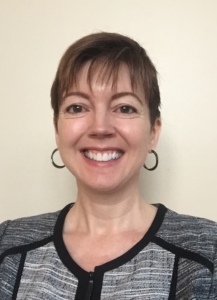
Mentors and sponsors are the glue that holds a career together, says WEX’s Michelle Pokrzywinski. “Throughout my career, my needs have been different and I find role models and mentors all over – within my team, in the company and outside in the general professional world,” she says. “Whatever qualities or skills you are looking for at any given time can be found if you look around.”
Expanding From Technical Skills to Managerial Activities
At the time Pokrzywinski started her career in technology, she understood very little about what career paths could look like with a computer science major. Her education had been focused on technical topics, rather than how to use that knowledge to drive business, but after starting in software development, she immediately knew her interest extended to the management arena. At that point, she proactively broadened her experience with assignments in project management, IT service management and quality management. For close to 15 years she’s been a part of companies that were precursors to WEX, where she currently serves as vice president of IT.
“I now know a career has to be managed, and you have to know how your efforts create value in the business,” she says. “There are many fulfilling paths to success so you have to continuously define what that means to you.” And her role, where she can try new technology and tools and help the company be more efficient with its resources, is a perfect fit.
Teamwork Makes the Difference
Along the way she has benefitted from sponsors who advocated for her, some behind the scenes so she wasn’t even aware. One who had a meaningful impact was a manager who recommended her for the masters of science program in the Management of Technology (MOT) early in her career. The company only sponsored one applicant every two years, and when she expressed interest, he went to bat for her and assisted throughout the application process. “I was so grateful he invested in me as I benefitted so much,” she says, adding that while that was a visible example, she knows there are many others who have helped create the opportunities she has had.
While Pokrzywinski is proud of her many technical achievements, one of her most noteworthy moments was when she was able to take a disparate group of individuals and quickly create a team atmosphere that allowed them to function cohesively and consistently for a large software development project she was operating.
“When you have the right team, it has a ripple effect as they all come together,” she says, noting that managers should focus their efforts on determining what each member needs, so that all those smaller components will coalesce. “You’ll gain collaboration, efficiency and unlimited success when you do the right thing by your team members by putting them in roles where they can succeed.”
And that is a key ingredient in what she considers her recipe for success: Surrounding yourself with good people, who feel they can be honest because you are attuned to listening to them and helping them deliver results.
Pokrzywinski believes in the importance of mentoring, and early in her career was part of the Menttium 100 program, which is focused on helping women gain the strategies needed for success. About five years ago she also participated in an IT mentoring program through Think IT, a service of York Solutions.
An active community volunteer, Pokrzywinski enjoys her time working in a local non-profit resale shop that serves both the general public with high-quality, low-cost merchandise, and local families in need with free clothing, household goods and furniture. She especially loves her role working directly with families and matching their specific needs with the appropriate donated items.
“Everyone should give back when they can,” she says. “It broadens your perspective and is an enriching way to get out of your day-to-day routine by helping others.”
Why Women Are Crucial in Design and Tech
Career Advice, Guest Contribution, Women in TechnologyI was chatting with a woman at a tech conference a while back about sexism in the industry. She rolled her eyes: “Oh, have I got a story for you.” A couple years ago, she was working at a large company’s Silicon Valley innovation center. She was excited. Her company was partnering with a fashion brand to produce a new “fashion-forward” women’s smartwatch, and she would be leading the design research. But when she walked into the kickoff meeting, her stomach sank: she was the only woman at the table.
While the men droned on about their wives, using them as proxies for the “female market,” she hatched a research plan to find out what women actually wanted from a smartwatch. More than a thousand respondents later, she brought her results back to the group. The top insight: women really wanted their smartwatch to help them discreetly keep an eye on things during meetings. But the men wouldn’t listen: women want apps for shopping, not work.
“I felt like I was in an episode of Mad Men,” she told me.
Eventually, the project stalled, and the brand brought in a celebrity to design the smartwatch. It flopped. “It wasn’t based on needs; it was based on stereotypes,” she said.
Her story is over the top, but it’s not rare. While writing my new book,Technically Wrong: Sexist Apps, Biased Algorithms, and Other Threats of Toxic Tech, I saw plenty of products that left women out (like Apple’s Heath app, which didn’t bother to include a period tracker for a full year after it launched). The companies behind those products? Mostly male.
Meanwhile, I also found loads of research confirming what I’d long felt: that diverse teams perform better because they spur new thinking rather than encourage people to rely on the same stale perspectives. As a result, they’re more likely to develop innovative product ideas, and less likely to rally around incorrect assumptions.
That’s why we need more women—and people of color, and LGTBQ people, and people with different abilities, and so much more—working on design and tech at every step of the process, from deciding what to make in the first place to testing products before they go to market.
But as the smartwatch researcher found out, it’s not easy being a woman in tech: we’re routinely passed over for funding, pushed out by harassment, and even subjected to demoralizing pseudoscience claiming we’re just not as good as men.
So how do you create a thriving career, do your part to change the system, and avoid burning out in the process? Here’s what I’ve learned during my career, and in my research talking with dozens of women across the industry.
Make “microchanges” that matter
Diógenes Brito didn’t mean for it to be a big deal when he used a brown hand for a new graphic at Slack, the group-chat platform. But it was—because people of color so rarely see their skin tones reflected in the world (just think about all the so-called “flesh-colored” Band-Aids on the market). “It may seem like a small thing,” tweeted Kaya Thomas, a college student studying computer science. “But when you see graphics over and over excluding your skin color, it matters.”
Seemingly minute design or tech choices—like including women in photos depicting technical teams or removing unnecessary binary gender questions from forms—can make a big difference to users, and can even make a company’s culture more aware and inclusive over time. And since they’re small—as small as depicting a brown hand in an illustration—they’re the kind of thing you can often slip in without getting pushback.
Oh, and Kaya Thomas? She graduated in May. Now she’s an engineer at—you guessed it—Slack, where I’m sure she’ll shake things up even further.
See what others have missed
You know how dating apps used to be cesspools of unsolicited porn? Yeah, okay, so that’s still largely true. But now there are tons of women-run apps offering an alternative. There’s Bumble, of course, founded by ex-Tinder exec Whitney Wolfe. Disillusioned by harassment (including from one of her fellow Tinder founders), Wolfe set out to solve some of heterosexual online dating’s endemic flaws by doing something no one had thought of before: only allowing women to make the first move.
Or, there’s Coffee Meets Bagel, designed as an alternative to “swiping your life away.” Frustrated by the constant ghosting of other apps, the founders—sisters Arum, Dawoon, and Soo Kang—designed their product to give users fewer, better matches each day, and to discourage flakiness by only showing women a short list of men who’d already liked them.
While none of the new women-run dating apps is perfect (for example, many still don’t serve the LGBTQ community very well), they’re all exploring new ground—ground traditional male-run apps never would have considered.
Serve the underserved
Tech has also enabled a bevvy of new fashion startups, and some of the most exciting examples are in a space that used to be a dead zone: plus sizes. Today, loads of women are helming companies that—finally—are focused on combining on-trend and luxury pieces with more inclusive sizing options.
One particularly innovative option? Universal Standard’s “Universal Fit Liberty” policy where customers can exchange a product within a year if their size goes up or down.
While getting funding for a fledgling business still isn’t easy, the world is starting to wake up to the fact that designing for women isn’t a niche case. It’s an underserved audience—one that controls most of the purchasing decisions in the United States, and that’s increasingly fickle about where it spends its money. The more we push for inclusion—and stand up to all the sexists, bad bosses, and other toxic influences out there—the more opportunities we’ll have to make sure that the tech products of the future serve all of us.
5 Things that Make Becoming a Financial Advisor a Smart Choice for Women
Career AdviceBy Nicki Gilmour, CEO theglasshammer.com
Financial Advisory and the retail side of the financial services industry is not something that we have covered from a career perspective here at theglasshammer.com.
So, we thought it was time to have a look at this career and discuss its viability as it pertains to ambitious women looking to make a transition out of the institutional side of the business. Also, to dispel any misnomers around who works in this business and what is needed to succeed, we asked leading women to tell us more. As it turns out, women are between 15%-30% of the front line depending on the firm. The biggest headline is that you can have utmost flexibility which repeatedly is a theme we come across for modern people, both women and men who have outgrown the rigidity of being tied to a desk. We spoke to two women in two firms, Monica Guiseffi, Principal of Financial Advisor Inclusion and Diversity, Edward Jones and Marcia C. Tillotson, Managing Director of Investments and Portfolio Manager at Wells Fargo. They talked candidly about the job, concurring that it is the best kept secret. We gleaned these five insights to share with you.
#1 Make a Living Helping People
Think Financial Advisor, think Mother Teresa? Not the first job that comes to mind for the helping professional but in actuality being an FA is a great way to help people reach goals and access information around decisions that will affect them in later life.
Monica Guiseffi, Principal at Edward Jones states, “This can be a very honorable job as it is really about serving clients a high level and it feels great to help people.”
What is the secret of success in this industry? It is about who you surround yourself with and whose behaviors you model. Monica suggests finding a great mentor and she comments,
Marcia C. Tillotson at Wells Fargo also believes that it is about finding the right people to look to for inspiration. She states,
“Find an FA that you admire… One whose business is run like you want to run yours and ask to be a part of their team.”
When asked what it takes to succeed, Marcia suggests that it is also what is inside you that matters and she believes having the right values is key. She defines it as
“A passion to help people, a wicked work ethic, a working moral compass, and patience,” and her personal response to becoming a Financial Advisor is “The opportunity to help families achieve their financial goals, have a flexible work schedule, be fulfilled in your career, and be fairly compensated. Through the years, I have known a lot of clients unhappy with their career choice. But there is not one job in the world I would trade being an FA for- not one!
#2 Pay Equity Is High in This Field
Marcia Tillotson from Wells Fargo talks more about why she thinks Financial Advisory is such a good fit for women to consider as a career. She comments on the pay equity that has been in place in the industry which isn’t always as transparent in other areas of the financial industry. She states,
“I knew when I became an advisor 30 years ago, I would be paid the same to buy 100 shares of a certain stock for my client as the male FAs at the desks on either side of me. There weren’t many careers with that kind of pay equity in 1987–and frankly, still isn’t.”
#3 The Flexibility
Marcia from Wells Fargo states,
Monica agrees that the great thing about this career is that you can “write your own ticket at your own pace.”
#4 Close the Investment Gap
Financial Advisors can help close the investment gap which is not only present due to the pay gap but also to education, culture and patterns of how women invest and continue to invest. Wells Fargo recently did a very interesting study on investing from a millennial perspective with headline results that includes 82% millennial men surveyed stating they are the sole deciders of the household finances. So, how can Financial Advisors, specifically female advisors help close the investment gap?
Monica from Edward Jones states,
“FAs of any gender can help close the investment gap by emphasizing the importance of diversification (equity, fixed income, and cash). Women, nationwide, tend to hold more cash. The best thing we can do for our clientele is to lengthen their time horizon, the expectations on their portfolio from near-term to longer-term. Inspire confidence to move a portion of their cash into higher yielding investments that have out-performed inflation. Allowing our Women clients to remain too heavily in cash is essentially allowing them to lose purchasing power against rising inflation. Their standard of living will digress. It is the responsibility of all Financial Advisors to address this issue of correct portfolio diversification.”
#5 Changing the Face of the Industry via Engaging Men to Mentor New FA’s
Monica comments “Organizations need to be magnetic in order to attract and retain great talent, especially women. We have a new women’s network called WINGS that provides mentorship to our female advisors as we believe engaging male advisors as well as senior women is key in supporting the women FA’s who work at Edward Jones”
Wells Fargo’s Tillotson agrees mentoring men and women is a way to engage everybody in the conversation and develop the pathways for future diversity. She states,
“Be a mentor. Wells Fargo Advisors has begun this approach pairing associate Financial Advisors with senior FAs and we are very excited about the possibilities and we like to talk about our business!” She urges you to do the same and continues,
“Share your career experience with young people, on college campuses, with your own children. This is a very cool career and no one knows it. I hope in my lifetime there are little girls that want to be a Financial Advisor when they grow up.”