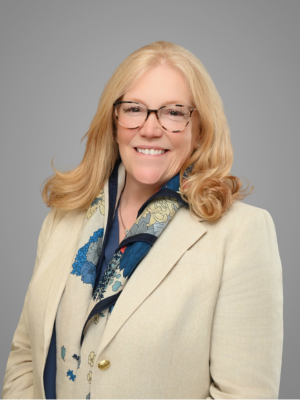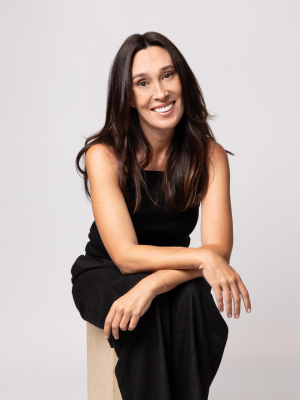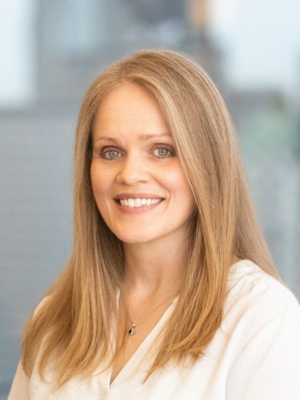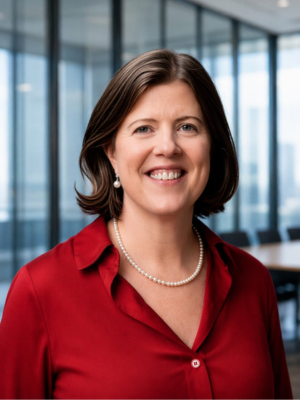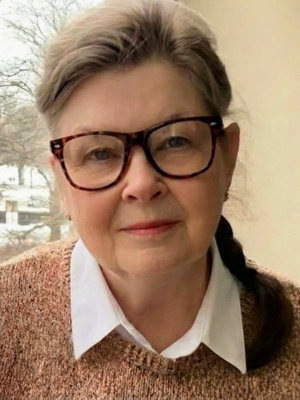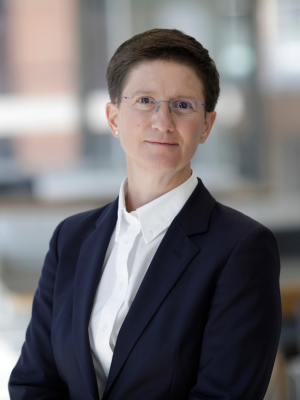
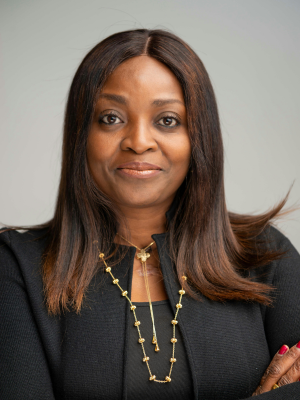
Carey RyanThe Glasshammer is running a “Where Are They Now?” series where we catch up with some of the professional women who we profiled ten or more years ago. We spoke with Carey Ryan, now Chief of Staff for Citi Technology & Business Enablement at Citi, about her career evolution and the role she plays in powering the future from both a technological and cultural perspective.

Nicki: Since we last spoke, where are you now?

Carey: We last spoke for the first time about 10 years ago, which seems like a long time but feels like the blink of an eye. I’ve held a number of roles since then, all within Citi’s Technology & Business Enablement group (though the name has changed a few times).

Now, I am the Chief of Staff for Citi Technology & Business Enablement. This entails working across both our technology organization and the wider bank to ensure we are effectively communicating and implementing new technologies, both with the goal of strengthening how we work and streamlining the time it takes to get work done.

Nicki: How did you get there?

Carey: In my 20 years at Citi, I have learned the best way to grow is to embrace every opportunity, especially if it allows you to learn more about how a company works. All of the roles I have had have allowed me the opportunity to support key areas of the business, including risk and control, data, and cybersecurity, each of which are vital to ensuring impactful technology can be developed or invested in and scaled to the full firm.

Nicki: Can you share a little about your current work?

Carey: Lately, much of my focus has been driving adoption and awareness for our Citi AI tools, helping us find the best places to practically and responsibly implement AI. This work includes leading our AI Champion and Accelerator programs, which are made up of approximately 4,000 volunteers around the firm who dedicate hours each week to serve as Citi AI advocates.

I also spend a lot of time working with our technology communication teams, each of whom covers a specific but global vertical within the larger technology business. No communication initiative is turnkey, and we always work to find new ways to impactfully reach colleagues with the information they need, be it in-person mediums like executive town halls or roundtable discussions, or through digital channels like email or lobby signage. Technology is the largest organization within Citi, so it’s key to focus on communication to enable change and drive execution while strengthening our culture.

Nicki: Have there been any unexpected or interesting twists in your career trajectory?

Carey: I have always worked in or adjacent to the technology space so, even before I recognized it, I was always headed for a career in enabling companies to leverage new technology to strengthen how they operated. That said, the world looks measurably different than it did when I entered the workforce, and Citi is no different. Some of these changes came quickly, such as the introduction and integration of AI, that has demanded the need to quickly shift priorities without much advance warning.

Nicki: Have any of them taught you a valuable lesson?

Carey: Citi is a large company, so I have had the opportunity to work on many projects with many people. Given this, the two key lessons I would share that always keep in mind is to always remember the end goal of every project and to stay flexible.

Nicki: What inspires you to be a leader and your leadership style?

Carey: My favorite part of my role is collaborating with dedicated and passionate colleagues. Whether it be the implementation of cutting-edge software, the voluntary work of a small team creating new patented technology tool, or an analyst successfully completing their first rotation with the bank – it is the passionate, innovative and solution-focused people that inspire me each day.

As I have risen in my career, I strive to be a good mentor and reliable leader for all members of my team, regardless of level. I’ve been lucky to have had several mentors whose advice I still hold on to, and it’s important to pay it forward. I also can’t help but think of my teenage daughter, I want to set a positive example for her as well as for my teams of what is possible in their careers and how leaders should treat their employees. An example that, hopefully, they will one day share with their own teams and mentees.

Nicki: Since we last spoke, can you share any challenging moments, setbacks, or self-doubt you’ve experienced as well as how you have navigated them?

Carey: I’m not sure I can pinpoint just one moment, but every new challenge I am presented with comes with a bit of imposter syndrome when I do not immediately have all the answers. Almost everyday features at least one conversation about something that where either I’m not the expert or the topic is completely new to me. It can be hard to ask questions when you think everyone except you has the answer, but the ability to step out of your comfort zone and know that you add value is a skill that will never go out of style. Self-doubt is something everyone faces, and the unknown is allowed to be scary. The key is being confident in your own ability to learn and adapt to problem-solve when navigating an unfamiliar situation.

Nicki: What skills do you think will matter most for future leaders?

Carey: When I was younger, I always assumed the fear and anxiety I felt about the unknown would go away. That one day I’d wake up and know everything there was to know about my job. But you quickly figure you’ll never know it all, because the world is always changing. Instead, I found the key is to always be ready by learning how to operate effectively with uncertainty and always be willing to learn.

Future leaders must be willing to be agile and adaptive, especially as the pace of change in the world continues to increase. AI is a great example of this. It is an unavoidable technology, and we should be willing to integrate it into how we work.

Nicki: Can you share an invaluable, specific piece of guidance a mentor or someone you admire has imparted on you?

Carey: I’ve had a number of tremendous mentors over the years. What I admired most in all of them was not any guidance they offered me, but the way they all led through their actions. Each of them led with kindness and empathy, listened carefully and accepted all forms of feedback, and were more than willing to change course if something was not working.

Nicki: Has coaching supported you in your journey, and if so, how?

Carey: Yes, I’ve been very fortunate to have had several coaches throughout my career. Coaches who were mentors, coaches whose job it was to support me, and coaches who were my peers. Career coaching offers an objective view of your decision-making. This often leads to introspective reflection on ways you can reframe your thinking, which is invaluable.

We can all sometimes be so goal-oriented, but it’s critical to take a step back and reflect on if we are taking the right steps to reach these goals. I often find myself going into my coaching session with one idea of what we will talk about and coming out with an entirely new perspective. Sometimes, the external guidance that a career coach offers is what one truly needs to help unlock those ‘aha’ moments.

Nicki: We are excited to see what you do next at Citi; we wish you continued success!

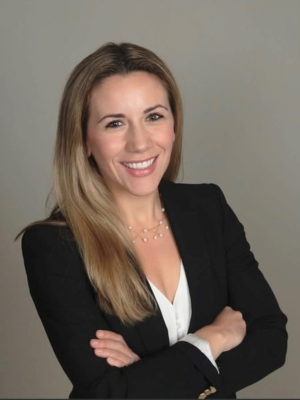
Christina Bresani“Being with my clients, helping them to get deals done, building new relationships is what breathes life into me and gets me excited.”

Ask Christina Bresani, Wells Fargo’s head of Mid-Cap Investment Banking, about a recent client visit and she’ll tell you about climbing into the cab of a semi-truck in high heels and passing a driving simulator test to show her client that she understood their business. That story captures everything about how she approaches her work: with genuine curiosity, a willingness to go wherever the client takes her, and an infectious enthusiasm that has sustained nearly three decades in investment banking.

After 25+ years as an M&A banker at two previous firms, Bresani joined Wells Fargo in 2024 as head of Mid-Cap M&A within the firm’s Global M&A business. In November 2025, she took on the expanded role of leading the firm’s Mid-Cap Investment Banking Practice focused on serving mid-cap clients and delivering investment banking products and services to the bank’s Commercial Banking clients. It’s a dual mandate she wears proudly, and one that plays an important role in Wells Fargo’s Corporate & Investment Banking growth strategy.

“When you love what you do, it’s easy to put your head down and keep doing it,” says Bresani. “But what I saw in Wells Fargo was a new challenge to do what I love and help build a leading corporate and investment bank that can bank companies along the whole spectrum of their growth – from mid-cap to large-cap and beyond.”

Building Something That Lasts

The challenge of building out and developing the Mid-Cap Investment Banking team is one that Bresani finds genuinely energizing. “Creating a strategy, building a team that’s going to be successful in the near term and the long term, is really inspiring to me right now,” she says. “That’s hiring people. It’s getting the strategy right. It’s keeping people motivated because when you are building something, it’s not always a straight line.”

She notes that the foundation of any great team comes down to one word: trust.

“The goal is to build a team with a talented group of people who have the same values and want to lock arms to be successful together. It’s not only about individual success, it’s about elevating the entire team and constantly learning from our collective successes and failures,” she says. “This has always been important to me as a leader and it’s central to Wells Fargo’s culture.”

A Career That Kept Saying Yes

Bresani started out as an analyst, fully expecting to spend two or three years in banking before figuring out what she really wanted to do. Nearly three decades later, she’s still there — and still surprised by it. “Every year I would say, ‘wow, I want to do this, I want to learn this, I want to get better at this,’” she says. “And I just kept going.”

She credits a great deal of that staying power to the mentors who showed up early and stayed. “I was really lucky in my early days to have two amazing mentors: both men. That’s important for young women in the industry to know – you don’t have to only have female mentors.” Those relationships, she says, were as much personal as professional. ” They were ‘work dads’ in the sense that they really guided me and cared about my professional and personal growth. To form those kinds of relationships really makes a difference in this business which can sometimes be tough”

The Moment That Tests You

When asked about setbacks, Bresani reflects on one of the most universal and quietly defining moments in a banker’s career: the first time a client pushes back hard.

“There is always a point in your career where a client doesn’t like you or doesn’t like the advice you’re giving,” she says. “The first time that happens, it’s really hard not to take it personally.”

Just recently, she watched a director on her team navigate exactly that situation. Rather than letting it become a crisis of confidence, Bresani chose to reframe it. “I told him: this is your pivotal moment. Here’s how we help you pick yourself up. Here’s your opportunity to really do your job.” She recalls her own version of that moment as a first-year director, when a mentor stepped in, defended her and then told her precisely what she needed to do better. “You have to learn that not everyone is going to agree with what you say, and you have to have a thick skin. But ultimately, this is a client service business. Not every client is the same, and you have to adjust.”

Fueling the Long Game

How does someone sustain nearly 30 years at that pace without burning out? Bresani takes it one day at a time and deliberately so. “It’s easy in this job to get overwhelmed with everything that has to be done,” she says. “I’m very focused on what needs to get done today, what can wait until tomorrow, and making sure I am prioritizing what is important versus being driven by what is urgent.”

But the off switch matters just as much.

“I have three children, an amazing husband, a menagerie of animals, and I am committed to exercise even if it means a 4.30am workout. I find a way to exercise because I need it. Whatever it is, it’s important to find those things outside of work that make you happy and fill your energy cup.”

Another factor to staying happy and healthy she attributes to friendship, a group forged at an all-women’s college that has stayed tightly bound across careers and time zones. “We have a text chain,” she says, laughing. “We build each other up. We laugh and say, ‘You will never believe what happened today,” She pauses, then finds exactly the right phrase for it: “It’s a group hug via text.”

Still Having Fun

When Bresani’s kids ask her about her day, they don’t want the deal mechanics. They want to hear about the people. “I come home and my kids say, ‘Mom, tell me about the people you met today,’” she says. “I meet the most interesting people.” That, more than any title or transaction, seems to be the through-line of her career. She still operates by a simple rule she set for herself long ago: “I’ll stop doing it when it’s not fun anymore. It’s still really fun.”

By Nicki Gilmour, Founder and CEO of theglasshammer.com and Evolved People Coaching.

Erika Irish Brown“Future leaders will need learning agility above everything else,” says Erika Irish Brown. “The pace of change is only accelerating. Today it’s AI, but we don’t yet know what we’ll be navigating tomorrow. What we do know is that the leaders who thrive will be the ones who stay curious, stay open and embrace change rather than resist it.”

As part of The Glass Hammer’s Where Are They Now series, we are catching up with leaders we have spoken with before to see how their careers and perspectives have evolved over time. Erika Irish Brown, now Head of Talent Management and Engagement at Citi, has long been focused on creating opportunity and building inclusive workplaces. In this next chapter of her career, she shares how that mission is expanding as organizations rethink leadership, mobility and learning in an era defined by rapid technological change.

Q: What are you currently working on?

As Head of Talent Management and Engagement at Citi, my focus is on our global, talent centric approach to supporting our workforce—one that invests in people, creates opportunities for growth and fosters a culture where everyone can thrive.

Our team leads all of Citi’s efforts around development planning, talent designations, talent processes and succession planning. We also oversee enterprise coaching, our engagement activities including 12 global Inclusion Networks and Talent Management and Engagement Councils across each business and function.

Q: What is inspiring you to lead in the future?

What inspires me about leading into the future is the real momentum we’re building at Citi. We have a clear strategy, a leadership team driving meaningful change and a firm accelerating on every front, including technology.

AI is opening new doors for our people, helping colleagues find opportunities that match their skills and aspirations. As it becomes more integrated into how we work, it will continue to fuel growth, innovation and faster execution.

You can see this momentum in our focus on mobility. In 2025, we filled more than 55,000 roles with 44% coming from internal moves and promoted over 28,500 colleagues into new roles. And with initiatives like Development 365, more than 165,000 colleagues created personal development plans last year.

The combination of our strategy, our people and the possibilities technology unlocks makes the future incredibly energizing.

Q: What makes Citi special?

What makes Citi special is the combination of our globality and our focus on human-centered leadership. As the world’s most global bank, we have people on the ground in more than 90 countries, which gives us a unique level of cultural fluency. It allows us to connect with colleagues where they are, listen to their experiences and ensure our strategy reflects the realities of each market. Our clients tell us this reach is a true differentiator.

Our scale also means we tackle complex challenges across borders and offer a wide range of roles and career paths within one firm. That combination of global breadth and opportunity is hard to find anywhere else.

What also sets Citi apart is our leadership. Jane Fraser, our Chair and CEO, leads with a clear vision, and her leadership shapes a culture of understanding from the top. She is a trailblazer in financial services and the first woman to lead a major financial institution. Our global footprint – who we are, where we are, and the businesses we run—makes Citi a truly special place to grow and make an impact.

Q: What lessons in leadership have you learned working at the world’s most global bank?

I’ve had the privilege of working at several of the world’s leading financial institutions, and those experiences have deepened my understanding of culture and lived experience and reinforced that ambition and leadership show up differently around the globe. Leadership is packaged in all different ways, and that has underscored the need for our leadership frameworks to evolve.

We have to break the myth that there is only one archetype of a leader, especially when it comes to succession planning. Not everyone will say, “I want to be CEO.” Many people are quiet leaders, and that doesn’t make them any less ready for what’s next.

Leadership doesn’t begin with a title — anyone can lead, and leadership can be shown at every level. At Citi, we measure leadership against three principles: we take ownership, we deliver with pride and we succeed together. Whether you lead a large team or contribute as an individual, how you bring these principles to life is what truly matters.

Q: How have you navigated challenging moments, setbacks or self doubt?

Navigating difficult moments starts with remembering that meaningful and sustainable change doesn’t happen overnight. Impact builds over time. I try to focus on what I can control and release what I can’t. At the end of each day, its important that I am able to look in the mirror and know I used my voice—especially when it was uncomfortable or challenged the status quo. I believe silence is a form of endorsement; if I’m not willing to speak up, then who will?

Setbacks are part of the process, but I stay grounded in my competence and confidence. If you’re competent, you have every reason to be confident. Mistakes are okay as long as you take feedback, course-correct quickly and keep moving. Learning agility and making progress matters far more than perfection.

When things don’t work out, I remind myself that there may be something else in God’s plan. Faith helps keep everything in perspective. And if I can honestly say I fought the good fight and did my best on behalf of others, I can move forward with confidence.

Q: What skills do you think will matter most for future leaders?

Future leaders will need learning agility above everything else. The pace of change is only accelerating. Today it’s AI, but we don’t yet know what we’ll be navigating tomorrow. What we do know is that the leaders who thrive will be the ones who stay curious, stay open and embrace change rather than resist it.

Being a lifelong learner is no longer optional—it’s a leadership requirement. The leaders who succeed will absorb new information quickly, adapt their approach and translate what they learn into action.

At the heart of learning agility is staying curious —the willingness to ask questions, seek out new perspectives and lean into what you don’t yet know. Curiosity keeps you growing, keeps you adaptable and keeps you ready for what comes next.

Q: Who inspired or influenced you most on your journey, and what did you learn from them?

My parents are my biggest inspirations. They set high expectations, especially around academics and STEM. My mother was a junior high math teacher, and my father rose through the New York City Housing Authority to become Head of Computer Services. In our house, if your grades weren’t where they needed to be, the question wasn’t “Did you try your best?” It was “What happened?”

They taught me to be a change agent. If something wasn’t the way you wanted it to be, you had the power and the responsibility to fix it. That mindset shaped me. You have agency. You can challenge the status quo. You can create opportunities that don’t yet exist.

They also taught me the value of effort and the associated outcomes. What you put into something is what you get out—karma. Education, hard work and smart risks can change your life’s trajectory. Those lessons—accountability, agency and effort—have guided my career and influence how I lead today.

Q: What invaluable, specific guidance have you received along the way?

A few pieces have stayed with me:

  • Listen first. Let the culture shape your understanding. Listen to understand, not to reply.
  • Invest in people. Exposure, opportunity and access change outcomes. Meet people where they are, lift as you climb and bring others on the journey with you.
  • Lead authentically. People, including yourself, thrive when they build trust and feel psychologically safe.
  • Challenge the status quo. Commitment and persistence pay off. Be brave and use your voice. Innovate.
Q: What do you impart upon those you mentor — or would impart upon your younger self?

Be ambitious, take stretch assignments and stay curious. Don’t assume your work will speak for itself — advocate for your own growth. And always consider the legacy you’re building. Making a difference doesn’t have to be grand; it can start with creating an opportunity for even one person to succeed.

Q: Has coaching supported you in your journey, and if so, how?

I have absolutely benefited from coaching. At Citi, executive coaching is a capability we invest in as part of our Talent strategy because we know it elevates performance; it’s not about fixing a problem. Just as elite athletes rely on coaches to refine their craft, high performing leaders gain so much from trusted advisors who help deepen self awareness, strengthen impact and navigate complexity with greater effectiveness. When we prioritize continuous development, we position our leaders and our organization to succeed in an environment that is constantly evolving.

Q: Looking ahead five to ten years, what kind of future are you hoping to help create?

Looking five to ten years ahead, I want to build on the true meritocracy here at Citi. My focus is on a deep, durable leadership pipeline where the next generation is prepared for and stepping into senior roles, ready to run the firm and succeed our most senior leaders.

Equally important is an environment where inclusion shows up in outcomes. Our leadership should reflect the communities and clients we serve, and every colleague should have the same opportunity to grow, to lead and to succeed based on performance, potential and ambition. If we keep investing in people and creating real mobility, Citi will be even stronger, more inclusive and positioned for long term success.

Q: What practices help you sustain energy and resilience?

Staying connected to purpose, spending time with my family and staying close to colleagues keeps me grounded and energized. And for balance, I carve out one hour of Orangetheory Fitness almost every day– the best reset is 60 minutes of self-care.

Q: What are you passionate about in your personal life?

Outside of work, I’m passionate about giving back, especially when it comes to youth development and community programs. My years with the Riverside Hawks — as a parent, board member and advocate — have been some of the most meaningful experiences of my life. I also serve as Vice Chair of the Bedford Stuyvesant Restoration Corporation, which has been a cornerstone of Central Brooklyn for decades.

Service has always been a big part of who I am. I’ve been an active member of Delta Sigma Theta Sorority, Incorporated for more than 35 years, and I’m also a proud member of The Links, Incorporated. And staying connected to my alma mater is important to me too, so I continue to give back through my work on the Columbia Business School board.

Joanna Fields

By Jessica Darmoni

“Future leaders must not only understand technology but wield it responsibly to protect reputational integrity in a world where data breaches and automation carry profound consequences,” says Joanna Fields, a financial market veteran who remains focused on enterprise risk management.

Fields has almost 30 years of experience spanning global asset classes such as equities, derivatives, fixed income, futures, treasury, digital assets and capital markets as well as experience with decentralized physical infrastructure networks (DePIN), telecom and utility industries. She has built a reputation not only as an enterprise risk management expert, but as a leader in market structure and financial governance. She sat down with The Glass Hammer to discuss the importance of resilience, reinvention and a human approach to leadership.

The Art of Balance

“This may sound like an unlikely beginning, but I started out as a professional ballerina,” says Fields, who has led market structure initiatives and designed risk governance frameworks.

As a dancer, she learned aplomb, which is the art of balance and stabilization under pressure. She learned teamwork, discipline, and the necessity of believing in yourself even when the spotlight felt overwhelming.

Fields may never have gone into finance, if it weren’t for a car accident that halted her dance career.

“It was a devastating moment and made me redefine not just my profession but my identity.”

Supported by her father’s steadfast commitment to the Socratic method of education which encouraged questions, analysis, and critical thinking; she took a risk into the world of finance and technology.

Fields started her career in market regulation at the Chicago Board Options Exchange and the International Securities Exchange. She went on to hold Head of Market Structure roles and lead compliance departments at Deutsche Bank Securities, Inc and Credit Suisse First Boston.

Her contribution to financial markets, as she describes it, has been “keeping it safer.”

Fields is good at identifying patterns of fraud and misconduct. She has developed surveillance tools to strengthen governance frameworks and has helped institutions avoid “gotcha” regulatory moments.

She believes there will be pivotal themes in 2026 including; how to use artificial intelligence safely while protecting data privacy, the rise of DePIN, emerging regulatory frameworks such as the Genius Act, and the increasing sophistication of cybersecurity fraud.

In a rapidly evolving technological environment shaped by AI, blockchain, DePIN, and crypto markets, her ability to merge technology with risk oversight has become critical.

Rising with Support and Purpose

While Fields has many professional achievements, her greatest source of inspiration is a personal one. In 2022, her daughter experienced sudden vision loss.

“We spent countless hours in a hospital room navigating all the uncertainties. It was a scary and emotional time but my daughter remained unwavering,” she remembers. “She continues to believe that women can do anything, build anything and achieve anything.

They found that sports, in particular softball clinics at Northwestern with dedicated coaches, shifted their perspective.

“We focused on what was possible instead of what had been lost. We had a strong team of family and friends around us that reframed the adversity as a challenge to be met with collaboratively.”

Throughout her journey, Fields has learned that unexpected challenges are inevitable. What matters is the community you build and the confidence you develop in your specialty over time.

“It’s about who you surround yourself with and who will help you rise. Everyone stumbles. What defines a career, or a life, is how you respond to it.”

Leadership is about Legacy, Not Titles

Fields has also dedicated time to mentoring students from Barnard College and Columbia University. Her advice to young women entering the workforce is practical and empowering.

“Try to get two offers and negotiate the best one. Know your worth. You will spend eight to twelve hours a day at work; choose a team you enjoy and respect. Do not be afraid to take risks. And when you are right, stand firm—while remaining open to negotiation and alternative viewpoints. If you are wrong, own it. Clear communication and thoughtful articulation,” she emphasizes, “are foundational to leadership.”

When asked what impact she hopes to create, her answer is twofold.

“I want financial markets to be safer. I want to be able to use technology proactively against fraud and misconduct.”

Fields also finds satisfaction in seeing those she has worked with grow into long-term careers of their own.

“Leadership is not about titles but about legacy.”

Looking forward, she believes the leaders who will thrive are those who can harness AI securely, protect data privacy, and clearly articulate their value in an increasingly automated world.

“As roles evolve, the ability to communicate your unique contribution will be paramount,” she asserts.

From ballerina to financial risk strategist, from navigating personal tragedy to mentoring the next generation, Fields embodies aplomb in its truest sense: balance, grace and strength under pressure.

Nancy Stern

By Jessica Darmoni

“The (trading) industry is built on people working together,” explains Nancy Stern. “You have to think of your interactions as long-term relationships. Something that makes sense in the short term may not serve you—or others—over time. You always have to ask: what are the unintended consequences?”

That long-term view has shaped Stern’s approach at career inflection points, business strategies and regulatory guidance. After first speaking with Stern over 10 years ago, The Glass Hammer sat down with her to talk about where she is now.

Today, as Managing Director and General Counsel of Simplex Trading, Stern stands at the intersection of market structure, regulation, technology, and leadership. She is the first, and only, lawyer at the 20-year-old market-making firm, a role that requires both precision and perspective.

Building Legal Infrastructure in a High-Speed Market

Simplex Trading operates as a market maker in the fast-moving world of equity options, where milliseconds matter and volumes have exploded. They continuously buy and sell options to capture the bid-ask spread. The firm is connected to 17 exchanges and has traders on the trading floor at Cboe Global Markets.

Over the past decade, the equity options market has transformed dramatically. Retail participation has surged. Trading volumes have exploded. Zero-day-to-expiration (0DTE) options have compressed time horizons to a single day—sometimes blurring the line between investment and entertainment for retail traders. In this environment, risk evolves quickly.

“We are in the business of taking risks,” Stern says. “My job is evaluating those risks. You have to understand the full picture—but most importantly, you have to adapt.”

Simplex historically relied on outside counsel. As the business grew more sophisticated, leadership recognized the need for an in-house legal leader to manage risk proactively, implement processes, and help shape culture from within.

Stern stepped into that role not only to mitigate legal exposure, but to build systems that support sustainable growth.

Her mandate includes implementing new procedures, strengthening governance, and aligning culture with regulatory expectations, all while keeping pace with accelerating technological change, including the integration of AI tools that are reshaping industries at unprecedented speed.

“The pace of change continues to accelerate,” she notes. “The tools are new but in many ways, the challenges are iterations of what we’ve faced before. That’s what makes it exciting to put these new tools into practice.”

From General Counsel to CEO, and Back Again

The Glass Hammer first met Stern in 2015 as Executive Vice President, General Counsel and Secretary of Allston Trading. She went on to become CEO of the proprietary trading firm, which was then acquired by DV Trading in December 2021. After the acquisition she joined futures commission merchant and clearing firm, ABN Amro, as Chief of Staff and General Counsel until 2024.

Her earlier career includes partner roles at Katten Muchin Rosenman LLP and Gardner Carton & Douglas LLP (now Faegre Drinker Biddle & Reath LLP), where she built the legal foundation that would later support her executive leadership.

Transitioning from General Counsel to CEO required more than technical skill, it required self-awareness.

“Coaching was very important to me,” Stern reflects. As she prepared to step into the CEO role, she worked with an executive coach and encouraged her team to do the same. “Understanding your strengths and weaknesses is essential. Sometimes you need someone outside your organization to help you think clearly.”

That investment in self-knowledge became a catalyst for growth.

Resilience, Realism, and Knowing When to Walk Away

Leadership, especially in high-stakes financial environments, inevitably includes moments of doubt. Stern approaches setbacks with a problem-solver’s mindset, and with realism.

“You have to ask yourself: Is this a situation I can improve? Or should I walk away? Can I make this better, or would someone else do a better job?”

She describes herself as loyal and deeply committed however she also recognizes limits. Not every system can be fixed from within and not every environment is the right one.

For women navigating leadership roles, that distinction is powerful: resilience does not mean staying at all costs. It means making thoughtful, courageous decisions about where you can create impact.

Mentorship in All Directions

When asked who influenced her most, Stern doesn’t name a single figure.

“I’ve been fortunate to have mentors at every stage and from all directions,” she says. “Senior people, junior people, peers.”

She learned the craft of law from colleagues in law firms. She learned how to lead organizations by listening to those who understood the pulse of the business and the pain points of its people.

What does she value most?

“Anyone willing to speak the truth, even when it’s difficult.”

Now, she pays that forward. Mentorship is one of the impacts she most hopes to create.

“There are people with tremendous talent who just need guidance on specific questions. If I can help them move forward, that’s incredibly satisfying.”

What the Future Demands from Leaders

As markets evolve, so must leadership. Stern believes future leaders will need empathy and the ability to put others first.

“Strong listening skills, sound judgement and the ability to sift through vast information to make principled decisions will be demanded of our leaders,” she emphasizes.

Stern also believes that execution, the discipline to turn vision into reality will be crucial.

“Vision without execution doesn’t count,” she says.

In an era of accelerating AI adoption, shrinking time horizons, and increasingly complex market participation, those human-centered skills may matter more than ever.

Leading Into the Future

What inspires her now?

“New tools. New experiences. New ways to approach old challenges.”

Despite decades of experience across law firms, trading floors, executive suites, and boardrooms, Stern remains energized by evolution.

Her leadership is not about chasing speed but about thoughtful adaptation, long-term relationships as well as clear-eyed risk assessment and helping others grow along the way.

In industries often defined by volatility, Stern’s career is a reminder that sustainable leadership is built not only on expertise, but on empathy, integrity, and the courage to continually adapt.

Katherine Kirkpatrick BosKatherine Kirkpatrick Bos, General Counsel of StarkWare, is excited about zero knowledge proof technology (ZKP), a revolutionary tool in cryptography. She explains that ZKP allows people to prove something is true without revealing underlying information.

ZKPs enable verification without disclosure—complete, sound, and private. While often discussed in the context of blockchain scalability and transaction speed, their possible use extends far beyond cryptocurrencies. Healthcare records, voting systems, and government services all rely on forms of verification that routinely overshare personal data. Zero-knowledge technology offers a path to redesign those systems around privacy by default.

“StarkWare is deep, cutting-edge technology,” she says. “These are some of the smartest cryptographers and developers in the world.”

This potential drew Kirkpatrick Bos to StarkWare, a company building cryptographic systems at the frontier of zero-knowledge technology. The work is not only about present-day challenges. StarkWare has also developed quantum-resistant technology—an increasingly urgent priority as advances in quantum computing threaten existing cryptographic standards.

“Quantum computing could break a lot of what we rely on today,” she notes. “Quantum-resistant code makes that significantly harder.”

Choosing the Right Room

Prior to joining StarkWare, Kirkpatrick Bos was in listed derivatives on digital assets. She was the Chief Legal Officer of Cboe Digital, a U.S. regulated exchange and clearinghouse for spot crypto and crypto derivatives markets; and General Counsel of Maple Finance, a capital efficient corporate debt marketplace which facilitates crypto institutional borrowing via liquidity pools funded by Decentralized Financial (DeFi) ecosystems. Kirkpatrick Bos was also a partner in the Special Matters and Government Investigations practice at King & Spalding.

Kirkpatrick Bos is candid about career inflection points. She has experienced the frustration of executing a plan within a business that wasn’t growing as expected—and realizing she wasn’t in the room where the real decisions were being made.

“That’s a difficult place to be,” she says. “Especially if you believe you could be doing more.”

The response, in her view, is rarely comfort. It is movement.

“It’s much easier to stay where you are than to start over,” she notes. “But if you want growth, you have to take that risk.”

She is especially direct about this advice for women, who are often encouraged—explicitly or implicitly—to value stability over advancement.

“I’ve always approached my career strategically. You have to understand what’s next.”

Mentorship, Integrity, and Judgment

Kirkpatrick Bos credits much of her professional grounding to early mentors, including a senior partner she worked with for over a decade at King & Spalding.

“He could be prickly,” she recalls, “but he inspired loyalty through integrity.”

That lesson—never compromise ethical standards—has stayed with her. So has the importance of seeing what is possible. Senior women who pushed boundaries in their careers made abstract ambition tangible.

“If you see it, you can be it,” she emphasizes. “If others are doing it, it’s not impossible.”

The guidance she now imparts is unsentimental and practical: protect your principles, make hard decisions when required, put your family first, and outsource what you can.

Leadership in an Age of AI

As artificial intelligence reshapes professional services, Kirkpatrick Bos remains skeptical of claims that judgment can be automated.

“AI is a powerful tool,” she acknowledges. “But it can’t replace instinct.”

Over her career, she has seen lawyers develop competence through experience—and others who never do.

“Judgment is hard to teach. Problem-solving, instinct, knowing when something doesn’t feel right—that still matters.”

As General Counsel, much of her role is translation: helping regulators understand technology, and helping technologists understand the law.

“You have to listen carefully,” she says. “Then explain things in a way the other side can actually understand.”

Why It Endures

There are always difficult days. Seniority does not eliminate friction; it reframes it.

What sustains Kirkpatrick Bos is the belief that the work itself matters—that she is helping shape the legal and regulatory framework for technologies that will define the next generation.

She imagines a future where people look back in disbelief at how much personal information was once routinely shared to prove a single fact.

Innovative technology, she believes, does more than improve systems. It keeps people engaged, even when the work is hard.

And in that sense, zero knowledge is not just a cryptographic concept—it is a blueprint for more thoughtful leadership.

By Jessica Darmoni

Alexandra Barth“After 25 years at one company, making a change can feel daunting,” says Alexandra Barth. “You know the people, the processes, and the rhythm of the work, it’s familiar and comfortable. But when the opportunity at Wells Fargo came along, it was so compelling that I knew it was the right moment to embrace a new challenge.”

After more than two decades at Deutsche Bank, rising from analyst to group head and becoming a trusted voice in leveraged finance, Barth was ready to trade comfort for possibility. Wells Fargo offered not just a new role but a new environment, one defined by ambition, energy, and a leadership team committed to building something world-class. For Barth, it was the right moment to make a change.

Today, as co-Head of Leveraged Finance, Barth’s work centers on building a market-leading leveraged finance franchise inside a platform that is already well-known, well-capitalized, and hungry to grow. “The firm has assembled some of the best people in the market into an established franchise that’s looking to become a true market leader,” she says. “It’s as entrepreneurial as you can be inside an investment bank, and that combination is exciting.”

Barth is drawn in not only by the business potential at Wells Fargo, but the culture, one where senior leaders regularly roll up their sleeves, model curiosity, and make themselves accessible.

“The senior management here is committed to making this not just a world-class, top-tier investment bank, but also interactive…It’s an inspirational culture. It’s not just senior leaders dictating from above or only connecting with you when something is needed” After 26 years in the industry, Barth describes the culture simply: “It’s been reinvigorating to be here.”

Barth’s path into finance had unconventional beginnings: she majored in government with an art history minor at Dartmouth. Originally considering a legal career, early law internships changed her mind, and after taking her brother up on a suggestion to try a 2-year analyst position at an investment bank, gain great experience, and reassess after that, she ended up finding that banking was where she wanted to be. As an analyst, she discovered how much she loved the pace, the problem-solving, and the client work that became foundational to her career.

Words of Wisdom: Focus on the Client and Use Your Voice

Barth credits an early mentor for helping shape her leadership philosophy, setting two expectations that she still carries: always focus on the client, and always use your voice. “The priority was to really listen to the client—what they’re saying, what they need—and not just present what you think will sound good or what’s best for the bank,” she recalls.

Equally important was the expectation that even the most junior person should contribute. “If you’re in a meeting or on a call, even as a junior person, you should be using your voice and bringing something to the table that is thoughtful and adds value.”

It is a lesson Barth incorporates into building her team’s culture. She wants her team thinking critically, independently, and confidently, not just processing.

“Banking can be very process-oriented for junior people,” she notes. “We want a culture at Wells Fargo where you take time to think about what you’re working on, ask questions, understand why you’re doing it. If you’re on a client call or a senior-level committee call, you should be contributing.”

To strengthen that culture of inquiry, Barth brings in external speakers, including investors, economists, and credit strategists, to give the Leveraged Finance team space to stretch intellectually. “We want people thinking critically,” she explains. “If something about a company or a credit doesn’t make sense, or you have a question, be proactive and ask.”

Even the physical layout of the office reinforces this ethos.

“It’s intentionally non-hierarchical. Analysts and associates sit around me. I have a managing director and a second-year analyst next to each other. People walk up and talk to whoever they need to. It’s very interactive, and I think that makes a difference.”

Honesty, Transparency, and Directness Fosters Client Trust

Barth’s track record with clients, often spanning decades and tens of billions in capital raised, rests on a simple principle: honesty.

“Being honest with clients about what you think is the best answer or solution for them—even when it isn’t necessarily most advantageous for you or your firm—has been core to my career.”

Barth’s approach is both candid and relentless. “You have to ask to lead things and be direct. Most importantly, you have to show why you deserve to win,” she explains. That means being deeply knowledgeable about the market, offering creative structures, and making clear that she and her team will be tireless advocates for clients.

Barth knows the business is complicated, and mistakes happen. What matters, she says, is how you handle them.

“The first thing you do after a mistake is what matters most. How you manage it, how you communicate, and how you teach your team to navigate it.”

Clients respond to her consistency and her clarity. Barth earns trust at the CEO and CFO level not because she tells them what they want to hear, but because she tells them what she believes is achievable and then delivers the results.

“I think the ability to back up what I say with the outcome has been one of the biggest drivers of my success,” she says. “That relationship of trust is what matters most.”

Building a Market-Leading Franchise and a Lasting Legacy

Barth sees extraordinary potential at Wells Fargo. “I think in almost every product in investment banking, Wells can be a market leader,” she says. Her goal is straightforward: to help build a platform that is viewed as a top five investment bank, across products and across markets.

As much of a priority is the experience of the people on her team. Whether they stay in leveraged finance long-term or go on to other roles, Barth wants their time on her team and at Wells Fargo to be meaningful. “At my prior firm, I’m still in touch with many of the former junior people, and they tell me their experience was a pillar of their success,” she says. “That’s what I want to create here.”

A Working Mother Who Still Makes Room for Art

Balancing a demanding role with family is no small undertaking, but Barth credits her career with teaching her how to prioritize.

“In banking, you always have ten things happening at once that you can’t possibly do at the same time. You learn to prioritize what’s most important and give it your full attention.”

Outside work, she reconnects with the passion she discovered years ago as an art history student, visiting museums whenever she can in New York and beyond while bringing her eight- and eleven-year-old children with her. “I try to teach them as much as I can about art and art history,” she says, a reminder that even amid a full career, there’s always room to nurture curiosity and creativity.

Barth aims to create that same sense of value and possibility for her team.

“I grew up in a group where every voice mattered, even junior analysts’. Now, after 26 years, that’s exactly the culture I want to create, where the smartest person on the team, no matter their title, feels empowered to speak up and knows their perspective is valued.”

By Jessica Robaire

Monica Marquez“With AI there’s constant disruption,” says Monica Marquez. “It’s about how do you get people to become very agile and comfortable with that disruption? And how do you leverage and sustain that change?”

A “MacGyver for Agentic-Human Reinvention,” Marquez does not shy away from disruption – she wholeheartedly embraces it. Previously profiled in 2021, she spoke with theglasshammer.com on the next chapter in her journey of pioneering change, as she dives into the evolving intersection of human potential and artificial intelligence.

Q: Tell us more about what you’re working on now and how your new venture, Flip Work, is helping organizations navigate this era of rapid change.

At its core, Flip Work helps organizations achieve measurable ROI from AI by focusing on human adoption. According to a 2025 MIT report, 95% of AI pilots have failed, not because of the technology itself, but because people aren’t adopting it, reinventing workflows, or using it to augment their work.

Many companies implement AI without a real plan for how people will use it. The question becomes, how do you help people shift their identities to see themselves differently in the way that they work, and in the way that they must reinvent themselves in the AI era? Because the reality is, AI is changing work faster than people can adapt.

This widening gap is what we define at FlipWork as the Exponential Divide, the moment when technology evolves faster than people can change how they work.

That has been our focus, and we’ve built a human and agentic system that helps people reinvent the way that they work, from a three-pronged approach. First, we help people reinvent themselves from a behavioral and a mindset perspective with the support of FlippyAI, which acts as a daily AI coach and change agent. Second, we reinvent workflows through Flip Lab, our 90-day reinvention sprint. Third, we reinvent workforce tools through Flip Factory, where agentic automations bring redesigned workflows to life. With AI, disruption is constant. The goal is to help people become agile and comfortable with that reality, to leverage it rather than resist it. This is how individuals become People², exponentially capable professionals who evolve at the pace of technology. That’s what Flip Work is all about.

Q: The work you’re describing sounds very much rooted in organizational development, guiding people through behavioral and mindset change. Would you say that’s part of your approach?

Yes, definitely, it’s change management, but traditional change management is no longer enough. When companies are thinking about AI adoption, they think that if they buy all the tools and give them to employees, that will be enough, but no one is really helping the people change and leverage the tools.

Recently I was at a conference talking to senior leaders at Microsoft and they told me that despite rolling out Copilot across their entire professional population, adoption is only 47%. That means that more than half of people aren’t using the tools, often because they’re waiting for permission or guidance from leadership. The impact of that is that people are going to get left behind.

Everybody is fearing that AI is going to replace jobs. The reality is that yes, it will, but we always reinvent ourselves. If we look at the past, think the dot-com era, digital cash registers, or similar technological shifts, people often said, “This is going to displace jobs.” And yes, some roles change, but people reskill and find new ways to contribute. At the end of the day, human discernment, creativity, empathy, and expertise remain essential. Our lived experience still matters in ensuring that outputs are accurate, meaningful, and impactful.

It’s about helping people reinvent themselves, recognizing what your zone of genius is, and how you augment or amplify your zone of genius with AI, and delegate the things that you don’t like to do, so that you can focus on your genius zone. This is the identity-first reinvention that FlipWork is built around.

Q: This is obviously a very exciting moment and project. What brought you here?

As a leader, I’ve always been curious and an early adopter, a pioneer. An example of that is when I was at Goldman Sachs, back in 2008, I spearheaded the Returnship Program. Later, I co-founded Beyond Barriers to accelerate career advancement for women and underrepresented talent. My mindset is always you have to disrupt yourself before you get disrupted. I’ve always operated like a MacGyver, finding resourceful ways to reinvent how work gets done. AI fits in with that because I’m very comfortable with disruption.

When I had colleagues, some of whom are now CHROs at major companies, coming to me and saying, “Our company is adopting all this AI, but I don’t even know how to leverage it. How do we roll out AI adoption for our people?” I started to see a real gap in the marketplace. It’s not just about using the tools; it’s about shifting mindsets. Many people think AI is only for coders or tech experts, and they feel it’s not for them. The truth is, you don’t have to understand how AI works; you just need to know how to use it to do your work better.

Q: What would you tell a digital native, then, entering the space in this exciting world of AI?

Digital natives may have an easier time embracing new tools, but I would be careful that it doesn’t cause creativity and diversity of thought to become lazy. Even though you’re a digital native and you may be an early adopter, you must continuously make sure that what you’re practicing doesn’t lead to intellectual atrophy, making the technology smarter and the humans less smart.

For example, you shouldn’t just be taking the output that ChatGPT or another AI tool gives you and putting it out there without utilizing your own expertise, judgement, and discernment.

One way to think about AI is as your “Artificial Intern.” You wouldn’t give an intern a task and then pass their work along to the higher-ups without checking it first. The same applies to AI. You have to coach it, refine it, review its work, and ensure what it produces reflects your expertise. You wouldn’t pass along unedited intern work to an executive, and the same rules apply with AI.

Q: You’ve long been an advocate for Latina representation in leadership and tech. As a board member for Latinas in Tech and the Association for Latino Professionals in America, how are you helping the next generation of Latino leaders prepare for this new era of work?

Supporting Latinos, Latinas, and other marginalized groups has always been a huge passion of mine, helping them accelerate their careers and expand beyond the limits of their cultural upbringing and conditioned beliefs.

What we’re finding now, though, is that some of the fear around the digital divide is widening. I was at the ALPFA conference over the summer, where we soft-launched Flip the Script, a program designed to help people start thinking about how to adopt AI. The feedback I heard was interesting in that many participants told me, “I’ve always been taught I have to work twice as hard to get half as far. If AI helps me do something in 30 minutes that used to take three days, what does that say about my worth?”

That mindset runs deep, the belief that effort and hard work equal success. But in this new era, we help people rewrite the script to say that impact equals success. AI amplifies your value; it does not diminish it. If you can use AI to achieve more in less time, you’re amplifying your impact, not diminishing your value.

For many, especially those from cultures where perseverance and grit are tied to identity, this shift is difficult. I’ve coached young Latino professionals who feel like using AI is “cheating.” They’re hesitant to embrace it because it challenges their definition of what it means to earn success.

So part of my work now is helping people rewire those conditioned beliefs—whether they’re cultural, societal, or organizational—and help people recognize that their true value lies in their expertise, discernment, empathy, and creativity, the exact human strengths that AI amplifies inside the People² model.

Interviewed by Nicki Gilmour, founder and CEO of theglasshammer.com

words of wisdom 2025In 2025, a clear theme emerged from the leaders we had the privilege of profiling: meaningful leadership grows from the relationships we build, the self-awareness we cultivate, and the courage we bring to each new chapter. Across industries and backgrounds, these women shared the habits and mindsets that have shaped their journeys, including building personal boards of advisors, embracing discomfort as a catalyst for growth, strengthening EQ, and remembering to look beyond the demands of a single role to the broader arc of a career.

Words of Wisdom 2025 brings their insights together in this first installment, with Part 2 coming in future weeks. As we reflect on their stories, we will also explore how coaching can help leaders deepen these practices and accelerate their development. We are grateful for the candor and generosity each woman offered. Their voices continue to illuminate what intentional, authentic leadership looks like and the possibilities that open when we stay curious and committed to our own evolution.

On why networking matters

“In each stage of my career I’ve heeded the advice to build my personal board. It’s thinking about who are the five or six people to go to for very critical decisions? Why are they on your board? Why do they keep a seat on your board, or do you rotate them? They can be a mix of mentors, sponsors, or just people whose opinions you trust.”

Alexandra Wilson-Elizondo: Partner, Co-Chief Investment Officer of Multi-Asset Solutions (MAS), Goldman Sachs Asset Management

On leadership styles evolving

“As I moved higher in my career, I recognized the value of awareness and empathy, understanding different perspectives, styles, and what motivates the current workforce as it’s different from when I was a young professional.”
Today, her leadership prioritizes open communication and constructive feedback. “I have been focused on rebalancing my ‘get things done’ upbringing with understanding how people receive and digest information, and how they can grow.”

Daniela Shapiro: Senior Managing Director, HASI

On embracing change

“I’m not someone who loves change,” confesses Burger. “But one of the best pieces of advice I got—and now share—is to push yourself out of your comfort zone. Challenges can be scary because inevitably they involve change, but it leads to growth. It’s about taking calculated risks and being okay with change when you know it can lead to something better.”

Julie Burger: Co-Head of Public Finance, Wells Fargo

On finding strength in uniqueness through executive coaching

“I focused on how I could be more structured, more powerful, more impactful—so that my French accent became a strength. The firm provided me with a coach who helped me work on my communication and presentation style, which really made a difference. I also found having an external perspective, someone who listens and helps you understand how others hear you, to be invaluable.”

Pamela Codo-Lotti: Partner, Global Chief Operating Officer of Shareholder Activism Defense, Goldman Sachs

On the value of EQ in navigating client relationships

“Working with clients across industries and influencing multiple stakeholders requires emotional intelligence. Every corporation has a different culture, every CFO has a different way they like to be engaged. Understanding that and adapting your approach is critical.”

Alex Douklias: Vice Chair, Corporate Banking, Wells Fargo Corporate & Investment Banking

On building teams with diverse viewpoints and approaches

Marsland recalls a former manager who exclusively hired people with identical approaches. “You end up with a team that lacks diversity in thinking. I don’t think that’s great for business.”

“I want different perspectives, different strengths. One person might be great at presentations; another might excel in negotiations. As long as the job gets done, I don’t need everyone to work the same way.”

Jennifer Marsland: Head of Sales, North America, World Travel Protection

On not losing sight of the bigger picture

“It’s important to remember that your career and your job are two different things. Whether you are happy in your current job or not, you always want to think about your broader career trajectory outside of the present position…Keep up with LinkedIn and go to networking events. Don’t get so heads-down focused on being successful in your current job that you don’t also build connections outside in industry and peer groups.”

Christine McIntyre: Chief Financial Officer, Raftelis

On the impact of a coaching mindset

“My training as a coach has impacted me in foundational ways. That includes not letting fear drive decision making, because in coaching you learn how to look at the worst-case scenario and explore questions like, ‘how bad can it really be? What if that happens? What can you do about it?’ That mindset has impacted my ability to adapt and flex and pivot.”

Natalie Runyon: Content Strategist for ESG, Human Rights Crimes and AI in Courts, Thomson Reuters

On navigating a crossroads when confidence falters

“Firstly, ask this. What was the best moment in the last 12 to 24 months of your life? Often we are so focused on the summit, we don’t look back to see how much ground we’ve covered. So I ask people to find the best moment – personal and professional – and double-click into that moment to ask what you did to make that moment a reality. It did not happen by luck or chance. It was your strengths and talents that made it happen.”

Lisa Sun, Gravitas Founder & CEO & Best-Selling Author

How Coaching Can Accelerate This Wisdom

What ties all these insights together is the active work of becoming. Growth requires intention, perspective, and the willingness to look honestly at how we show up. That is where executive coaching becomes a powerful accelerator. Research consistently shows that coaching strengthens emotional intelligence, improves decision-making, and helps leaders translate insight into sustained behavioral change.

A coach helps you do exactly what these leaders describe: examine how you communicate, challenge unhelpful assumptions, reconnect with your strengths, and navigate uncertainty with more confidence. Coaching provides the structured space that busy professionals rarely give themselves, especially at this time of year, when reflection and recalibration naturally come into focus.

As we close out 2025 and prepare to step into 2026, consider how you want to lead in the year ahead. If this collection sparked recognition or reminded you of the leader you aim to be, take it as an invitation to act. Seek out an executive coach who can help you deepen these practices, expand your impact, and enter the new year with clarity, purpose, and intention.

Book your session today and start 2026 with intentional growth.

Deborah Overdeput“I can look back and point to the promotions, the double-digit growth, all the successes along the way, but I never truly believed in my success until I stepped out on my own and built a business,” says Deborah Overdeput.

That moment of independence was not just a career milestone, but a shift in how she saw herself as a leader: someone who thrives on curiosity, creates clarity where there is none, and knows when it is time to pivot.

From Rocket Science to Market Growth

Overdeput began her career as a rocket scientist, trained in space station computing and fault-tolerant systems. Yet, when she relocated to Belgium for an engineering role at Swift, she felt restless. “I realized I really liked talking about what we were doing rather than actually building it. Once I got bit by that bug, I knew I had to transition into marketing.”

With no formal background in marketing, Overdeput made a bold decision: she would become a Chief Marketing Officer in technology. That goal guided every step she took, from mastering the fast-changing dynamics of marketing to taking lateral moves and pushing herself into stretch roles that expanded her skills and influence. At SunGard, her determination paid off as she advanced from marketing a single product line to overseeing more than 40. Later, at Sapient, she led the repositioning of a 250-million-dollar business unit and helped drive it to more than 500 million dollars in under five years.

What she took away from those years was simple: strategy only works if it is rooted in reality. “If you do not understand how products work, how teams operate, and what customers actually need, it is hard to make the right choices. I have always believed strong leadership starts with really knowing what is happening on the ground.”

Creating Clarity in Uncertain Times

Overdeput believes leadership matters most when circumstances are ambiguous. “You do not need leadership when everything is well defined. You need leadership when the path is unclear and the pressure is high. My role has always been to take that uncertainty, translate it into strategy, and help others see the way forward.”

That principle carries into her role today as COO at Innovative Systems, where she leads global product management, marketing, operations, and human resources. “My focus is on enabling human potential by aligning talent, strategy, and resources so that even in shifting markets, our people can do their best work and deliver meaningful impact for our clients.”

Innovative Systems is also known for building long-term relationships with clients, some spanning decades. Overdeput emphasizes that trust is both a differentiator and a responsibility. “Our clients count on us not just for technology, but for partnership. Delivering on that promise, year after year, is what keeps us relevant and resilient in a shifting compliance landscape.”

Lessons in Confidence and Voice

Before her COO role at Innovative Systems, Overdeput built a successful consultancy as a fractional Chief Marketing Officer. Working with a range of technology and financial services clients, she discovered a new level of confidence in her own capabilities. The experience affirmed her expertise and sharpened her ability to deliver high-impact results across different businesses and industries.

She also discovered her voice had changed. “Earlier in my career, as a woman inside large companies, I often found my ideas ignored until repeated by a man. Over time, I learned to strengthen my voice, to claim my authority. Today, people stop and listen not just because of my title, but because they know I speak with conviction and experience.”

That conviction shapes her leadership style today. “I try to listen more and advocate for voices within the company. Leadership is not about being the loudest person in the room. It is about making sure the right voices are heard.”

The Power of Networks and Mentorship

For Overdeput, networks and mentorship are essential leadership tools. She has mentored University of New Hampshire students since 2009, often those with math or computer science backgrounds like her own. “I tell them, start early. Build your network, get on LinkedIn, connect with your peers. Those relationships are career changing.”

Mentorship, she says, has shaped her as much as her mentees. “Working with students helps me see how the next generation thinks, what motivates them, and how they want to grow. That perspective is essential for any leader who wants to build teams that are not only high-performing today but also ready for tomorrow.”

It is also what inspired her latest project: Walk Away, a book she is co-authoring with Sally Clarke. “The book brings together stories of women who reached pivotal moments and chose to leave situations that no longer aligned with their values or ambitions. Hearing these stories has been like sitting with different mentors. Each one has helped me rethink the situations I face in my own career and the challenges my mentees bring to me. One of the women said, ‘Walking away was the boldest form of leadership I have ever practiced.’ That stayed with me, because leadership is often about knowing when to stay the course, and when the braver choice is to step into something new.”

Building Teams Through Talent

For Overdeput, the heart of leadership lies in building strong teams. “High-performing teams are not built by accident; they come from spotting potential others might overlook and giving people the chance to prove themselves. One of my best hires did not meet the checklist on paper, but I knew she had what it would take. She went on to become a star. As Steve Jobs once said, it does not make sense to hire smart people and then tell them what to do. My role is to create the conditions for their talent to shine.”

Her approach is less about rigid processes and more about creating conditions for people to thrive. Weekly check-ins, open conversations, and celebrating wins keep teams connected and aligned to a bigger purpose. “One of the most rewarding experiences is when a team pulls together to deliver something bigger than any one individual could achieve. I make it a point to celebrate those moments, because they remind me that leadership is not about one person’s actions, but about creating the environment where everyone’s contributions matter.”

Leading With Intuition and Humanity

Her leadership philosophy is also shaped by yoga and meditation, which she has practiced for more than 30 years. “Yoga taught me how to breathe through stress and build core strength, not only physically but also in the way I show up as a leader. Meditation taught me to quiet the noise, to see the world beyond my own ego, and to stay present for others. Together, they remind me it is not about me, it is about enabling others. Maya Angelou captured it best: people will forget what you said and what you did, but they will never forget how you made them feel. That truth stays with me, because I have seen it reflected back in the people I have supported, watching their success become part of my own impact.”

And from her mother, she learned the value of having a cheerleader in your corner. “She showed me that sometimes what you need most is someone who believes in you, no matter the obstacles. That is the kind of leader I try to be for others.”

Looking Ahead

Asked what drives her today, Overdeput points to impact. “I want to look back and know I left a stamp, that I built teams, grew businesses, and created opportunities for others to succeed. For me, leadership is about enabling human potential in ways that last, so the people and organizations I have touched continue to thrive long after I have moved on.”
That philosophy ties her trajectory from rocket science to COO together. As she puts it: “Great leadership means building great products, growing great people, and creating clarity in a complex world.”