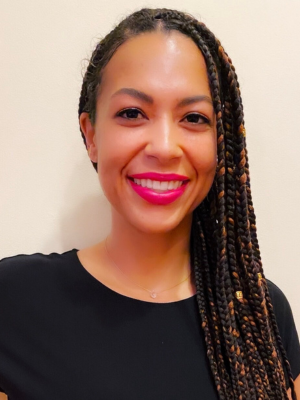
 “It might seem tough at first, but I’ve come to learn that you have to relax and enjoy the ride. No journey is linear where you must pass A and B, to reach C, or else you’re lost. That’s just not how it works,” says Rachel Lockett.
Lockett shares her thoughts on embracing a career pivot, building leadership skills through diverse experiences, prioritizing team development, and the importance of finding meaning in her work.
Pivoting from the Public to the Private Sector
Lockett’s path into marketing in the beauty industry took an unconventional route, beginning with a career in international relations. Working on the Mexico desk at the State Department while getting a graduate degree, she found herself intrigued by the macro subject matter and sense of altruism behind the work, but ultimately craved a faster pace and more control. This led her to pivot into the private sector, earning an MBA in marketing and finance and joining Johnson & Johnson’s international rotation program before landing a role at L’Oréal in New York.
She reflects, “I was interviewing at the UN while I was interviewing at L’Oréal, but the next phase for the UN was sitting for an exam. When L’Oreal offered me the job, I had to choose. I remember there being a lot of pressure to make a ‘right choice,’ feeling the weight of a decision that might be irreversible.”
Lockett recognizes that even though she felt the heaviness of the decision at the time, she is pleased with the way things turned out, particularly as she never even initially saw herself in the beauty space.
“Initially, I didn’t see myself as a ‘beauty girl,’ but my perception has changed over time. I’ve really grown to adore it. Throughout my career, I’ve delved into various roles in trade marketing, brand marketing, and consumer engagement, all within the beauty vertical. I’ve come to realize that I am, in fact, a ‘beauty girl’ and I proudly embrace this identity.”
Empowering Women to Express their Unique Individuality and Beauty
Lockett finds her marketing career in the beauty industry to be as dynamic as she anticipated, constantly offering new challenges and opportunities that energize her.
“The platforms, retailers and landscape of competitors are always changing…there is also the opportunity to work cross-functionally with retailers, media partners, and event activation vendors, making it both diverse and exciting.”
Her enthusiasm for the work shows through in what she has been able to accomplish, with her team winning an Ogilvy award and two Glossy awards for different brand campaigns. These achievements also reflect her commitment to finding innovative ideas to break through and “introduce MAC to a younger Gen Z consumer.” She continues, “a lot of these efforts have been specifically targeted around those goals and have successfully moved the needle in increasing our awareness among younger multi-ethnic consumers.”
Lockett’s aim for MAC is to continue to promote and expand diverse representations of beauty, whether it be body type, skin color and texture, sexual orientation, or gender, through thoughtful decisions around casting, who they feature on their story wall, influencers they work with, and people they feature on their social handles.
“All of those representations are really powerful, and they make a huge impact on how people see themselves and experience the brand’s transformative effect.” She continues, “it’s about encouraging self-expression and experimentation and affirming that everyone is beautiful in their own way.”
Becoming a Well-Rounded Leader who Uses Her Voice
Lockett emphasizes the dual importance of creativity and operational savvy in marketing leadership. While innovative ideas are significant, effective leadership also hinges on adeptly navigating organizational processes, securing resources, and assembling the right team. She advocates for cultivating leadership skills through diverse experiences rather than solely focusing on moving up the ladder.
“Success stems from a breadth of experiences. The broader your understanding and hands-on involvement across domains, the better equipped you will be to thrive in senior roles. Focusing on the richness and depth of experience versus the speed to get there will pay off in the long-term.”
As Lockett builds on her varied experiences to advance her career, she is committed to using her voice and point of view in how she shows up as a leader, particularly as a woman of color. Even though she finds the beauty industry to generally have more women in leadership roles, she notes that there are noticeably more men in the higher ranks of beauty.
She advocates, “As you move up, it’s important to bring your voice and your experience. Remember to speak up, because you bring a unique perspective and a richness to the conversation or strategy discussion that’s not always represented.”
Valuing the Development and Growth of Her Team
Building relationships and sustaining connections is another key element of Lockett’s leadership style, particularly when it comes to managing a team.
“As your team grows and as your profile becomes more visible cross-functionally, simple gestures like walking around the office, asking about people’s weekends, and fostering personal connections can make a big difference in their engagement and commitment because they know you genuinely care.”
Creating engaged and high-performing teams by letting everyone in on the “why” can also go a long way in making people feel included and that they are an important contributing team member.
“As you progress into senior leadership roles, you may gain insight into the ‘why’ of certain strategies, yet this information may not always trickle down to every team. Pausing to communicate the overarching vision to the broader group and explaining the reasons behind our collective efforts fosters camaraderie, understanding, and an investment from the entire team.”
Beyond engaging her team in the vision, Lockett fosters a strong team dynamic in being accessible and open to hearing feedback, demonstrating that the team has a voice and can influence change. She also looks for opportunities for the team to bond outside the office, whether it be a graffiti class or mini golf, so that the team can get to know one another in a more relaxed atmosphere, as she notes, “it can go a long way when down the line they might be in a challenging conversation or have to work long hours getting ready for a big launch.”
Coaching Helps Connect the Dots
Lockett’s insightful reflections on her development as a leader are testament to the value of executive coaching, a recent experience for her.
“Having external perspective has helped me connect the dots between my experiences and approach to things by having someone externally mirror it back to me. Also, through targeted resources and exercises, I’ve gleaned more insights into how other people learn and how I may need to adapt and present information to effectively communicate and engage with others.”
Lockett notes that the benefit of having someone outside the organization facilitate that reflective process is that it helps reveal potential limiting beliefs or behaviors that may not be beneficial, opening new possibilities for how to approach an issue.
“I’ve seen the impact of leadership coaching reflected in my ability to dedicate more time with my team, listen to their perspectives and advocate for what they need in a way that I may not have in the past.”
Making an Impact with the Relaunch of VIVA GLAM
Lockett is an inspirational leader who not only hopes to make an impact with her team, but also on a macro level through the relaunching of the MAC VIVA GLAM campaign. The charitable arm of MAC, VIVA GLAM has given over half a billion dollars globally to support organizations in their mission to create healthy futures and equal rights for all. Now thirty years after its founding, MAC VIVA GLAM has an expanded mission with new pillars including sexual equality, racial equality, gender equality and sustainability that all markets can tailor with grant funding.
“Being involved with VIVA GLAM is one of my favorite parts of working on MAC. I get to oversee the programs that we will run and the charities that we support, allowing me to play a role in making an impact on something – and someone – that is much bigger than myself.”
Reflecting on where she started with aspirations to work in international relations, she realizes, “finding what’s important to you and how to bring that into your work” is what she values most, and she is excited to have an opportunity to continue to do that in her leadership role at MAC.
By Jessica Robaire

Op-Ed: How Military Service Prepared Me for Corporate Life
Career AdviceBy Stephanie Toomey-Johnson, Wells Fargo Commercial Banking Relationship Manager
An essential part of my life that has shaped me and my career is that I am a proud veteran who had the honor of serving our country. My grandfathers, father, uncles, and older brother also served. Growing up, I admired their sense of duty and courage, but I remember thinking my life plans would focus on academics and athletics instead.
My immediate family was small — just me and my older brother Tommy. Because we were so close in age, I was always right behind him, following in his footsteps to match his achievements and make him proud. On his 17th birthday he went into the delayed entry program, leaving for bootcamp the day after he graduated high school. As my brother entered the fleet Marine force, I began my senior year of high school.
September 11th happened not long after and I sat paralyzed in front of the TV. I was shocked at the images, unable to understand how this could happen while wondering what this would mean for my brother.
After graduating, I immediately enlisted. Three days later, I was being yelled at by drill instructors. I didn’t know exactly how, but I sensed things would be both challenging and ultimately rewarding.
I started my Marine Corps career with the rank of Private and an occupational specialty as field radio operator. I completed three deployments, with two in Iraq. On the heels of my last deployment, I decided it was time to leave the Marine Corps and focus on my growing family.
I married an Army infantryman, so you can imagine our house is occasionally divided. My husband has been instrumental in my personal and professional growth, and we have three children who amaze us and make us proud. I believe that military children have their own resilient traits, and I am humbled to have strong and determined children. Our approach to parenting stems from lessons learned while serving, and we teach them to adapt, overcome obstacles, and make the very best of things whenever they can.
Recently my eight-year-old daughter heard I was preparing to deliver a Veteran Reflection speech and said, “Mommy, write this down: it takes a lot of team spirit to be in the military.” It was so adorable coming from my aspiring athlete, but when she walked away, I realized she was right.
I speak from firsthand experience in confirming that the U.S. military has team spirit equal to any other organization. Our bonds start with an oath, are forged through adversity, and become branded in the fabric of who we are and how we function. The military trains and teaches us not to work as individuals, but as a unit. The military takes any weakness, selfishness, distraction, and fear, and turns those things into a disciplined, fortified, and most importantly, a unified front.
The military instilled in me the confidence to think critically and become a confident decision-maker. It also gave me a sense of camaraderie and purpose.
It was bittersweet for me to leave active duty, and it was a culture shock transitioning back into the civilian world. I had doubts, and I wondered if I could be as good at a career in civilian life.
Years later, I’m happy to report that I see myself both as a successful Marine and a strong working professional and leader. I grew to learn there is something on the other side of service, and importantly that service prepares us for almost every possible obstacle, challenge, or bend in road.
My skills and background from the Marines translated well into corporate life. I learned skills like problem solving, being a team player, and being quick on your feet are valued in Corporate America. We are trained to believe in ourselves and believe in broader missions. That also translates to my current role at Wells Fargo.
Wells Fargo found me through their Veteran Hiring program. They recognized my skill set and quickly made me feel like an integral part of the team. Their core values aligned with mine.
I am currently a Commercial Banking Relationship Manager, which means I am an advocate for our clients and an agent for the company. The work I do is challenging and rewarding. I have used my experience to connect with veteran-led and veteran-owned businesses. Additionally, with the support of my team and senior leadership, we have hosted veteran-focused events and made strides expanding our client base to be more inclusive of the veteran community. I am proud of the leadership role I have played in helping us make tangible progress.
I will always be an advocate for the veteran community, both internally and externally. I am grateful for the opportunity to do what I do every day in a place that recognized my unique skill set and respected the experience I could bring to the organization.
There is no question that the military altered the trajectory of my life. It helped inspire a girl from Duval County in Jacksonville, Florida, who was fueled by the admiration she felt for her now late brother. Today, I am filled with immense gratitude for my time served. It helped mold me into a strong, confident, successful professional. I proudly wear many hats as a veteran, wife, mother, sister, and now business leader who gets to serve Wells Fargo clients with pride. Thank you, Semper Fidelis.
Anar Patel: Director, Portfolio Construction, PGIM Investments
Movers and Shakers, PeoplePatel exudes a strong sense of purpose, confidently pursuing her aspirations to be a strong female leader that empowers other women to seize opportunities for professional growth. Since joining PGIM a decade ago, her proactive approach and clear communication of her interests have fueled her advancement. Reflecting on her journey, she credits her self-advocacy and growth mindset for her “organic transition” from one role to the next.
“In every role, I continued to stay focused, do great work, think about what my next move was and communicate the career trajectory that I wanted. You have to advocate for yourself. You’re the marketing team behind your own personal brand, and sometimes, that means creating opportunities for yourself that didn’t exist before.”
Now, as a director in Portfolio Construction, Patel is excited to continue building on her investment experience in managing multi-asset and model portfolios. She speaks to why she is passionate about working in finance, lessons learned from pivotal moments and what she values in leadership.
The Impact of Financial Planning
Patel credits her father for her tenacity and passion for working in the financial industry. Shortly after her parents immigrated to the U.S., her older brother was diagnosed with a severe form of epilepsy, and her father had to pivot from studying for his master’s in chemistry to focusing on caring for his family. He found a way to provide for his family while also making sure to put something aside as an investment for the future.
“The most tangible thing I learned from my father outside of sacrificing and working hard was the importance of saving and investing and how life changing it can be. Thoughtful financial planning provided him with the means necessary to take control of his future.”
Watching her father diligently invest so he could achieve his goals of financial security inspired Patel to provide those opportunities for others. She is enthusiastic about the potential of technology and other tools that make investing more accessible.
“With today’s technological advancements and the increase in availability of different investment vehicles, I think it’s important to democratize investing – to make sure everyone has the information and ability to financially plan for the future. Accessibility and knowledge are empowering more and more people to take control of their financial futures like he did. People can get access to top investment managers, like PGIM, in ways that they couldn’t before.”
2020 – A Pivotal Year
Patel went through her own pivotal moment of personal and professional growth at the onset of Covid in 2020, experiencing the loss of her grandmother, while transitioning into a new role at work, taking a full load of courses in her executive MBA program and planning her wedding.
She reflects, “It was a lot of balancing, and I came out of the experience with a newfound confidence. I learned the depth of my own resilience, adaptability and tenacity, as I had to adjust with all these changes and roll with the punches.”
This tumultuous period also gave her perspective on where she wanted to devote her energy.
“I began to prioritize what was important to me versus what I thought was expected of me. When I started to do that, it freed up a lot of space to focus on my goals and the things that were making me happy.”
Patel admits she is someone who strives for perfection and likes to be in control. However, her experiences in 2020 made her realize that she needed to relinquish some control and share the mental load she was carrying while juggling work and other priorities. That meant working out new routines and responsibilities at home with her fiancée.
“I think we’re seeing a lot of momentum and progress on this already, with society stepping away from traditional gender norms in the household and both partners contributing in a more balanced way. It improves the trajectory for women to assume leadership roles when there’s equality in both the workplace and the household.”
Value of Network Building
Patel’s growing confidence enabled her to create opportunities for herself, not just by being vocal about her aspirations, but also by continuing to build her network. She emphasizes the importance of being proactive and getting out there.
“I sign up for everything – lunch and learns, volunteer events, networking circles. It helps to meet different people – some of whom you might not have the opportunity to meet or interact with given your role.” Patel notes that being connected to a variety of people is a value-add, particularly in getting comfortable walking into different spaces.
During her Executive MBA program at Columbia, Patel enjoyed the opportunity to extend that network beyond her workplace – meeting people from all different industries and walks of life. The program also provided a space to explore ideas and practice presenting them, bolstering her confidence outside the classroom.
“When you feel psychologically safe in an environment, you’re empowered and comfortable testing new ideas, bouncing them off your colleagues, making it easier to scale them for different situations and audiences… You don’t feel as nervous raising your hand.”
The Leader She Aspires to Become
It is hard to envision Patel being nervous, radiating the confidence and self-awareness that people seek in potential leaders. Unsurprisingly, she is clear about what she values in a leader and the type of leader she aims to become. She says emotional intelligence, effective communication and investing in team growth help lay the foundation for a strong leader.
In terms of emotional intelligence, Patel explains, “It’s about understanding how different people work, what motivates them and leveraging their strengths to drive progress.”
Communication is key to understanding people, particularly in creating positive interactions where they feel heard and engaged. “When you know how people prefer to receive information, it really moves things forward. Communicating in ways that resonate with your colleagues and stakeholders can help build and strengthen relationships,” Patel says.
Patel credits part of her professional growth to leaders who were invested in her development. She hopes to be the kind of leader that advocates for others’ growth, recognizing that creating a strong culture of learning that is full of advancement opportunities can motivate employees to bring their best selves to work – and positively impact the company and its bottom line.
She also strives to be the type of leader who makes a positive impact through Diversity, Equity and Inclusion (DEI) initiatives, recently leading the rollout of PGIM’s Inclusive Leadership training to PGIM Investments. Although she believes the industry has made a lot of progress in DEI, she emphasizes the need to keep powering forward.
“It goes beyond getting different voices into a room. Now, it’s about amplifying them and ensuring they’re heard. This may mean waiting for others to speak first or encouraging those more introverted to voice their opinions, since everyone has valuable ideas to contribute to the discussion.”
Pursuing Her Bucket List
As invested in her personal growth as she is in her professional growth, Patel recently made her first solo trip abroad to Malaga, Spain.
“It was on my bucket list to travel by myself, something I really wanted to experience. During the past few years, I realized my strength, resiliency and everything I am capable of, which gave me the courage to book my ticket.”
Patel also enjoys traveling with her husband, most recently going on a safari in South Africa earlier this year. Additionally, she loves to read, host game nights and play with her chocolate Labrador, Bailey.
By Jessica Robaire
Mandy Wan: Managing Director, Head of Markets, Co-Head of CIB APAC, Wells Fargo
People, Voices of ExperienceWan shares how she values learning from diverse experiences, her insights on setting the right culture in a team, and what it means to be a leader who “walks the talk.”
Finding the Right Fit on the Trading Floor
Wan learned from an early age the value of hard work and determination in pursuing her dreams. Growing up in Hong Kong as the eldest child of parents who were refugees of the Chinese Cultural Revolution, Wan took care of her younger brothers and worked after school and during summer breaks to help contribute to the family. Recognizing that to build the life she wanted, she needed to find the right job to support it, Wan attended business school with a focus on accounting.
Although Wan ultimately found accounting wasn’t for her, she remained motivated to work in an environment where she could learn and meet people from different backgrounds and explore other countries. She found what she was looking for on the trading floor.
“During my final year of school, I secured a part-time role at UBS where I worked on the trading floor. It became clear to me that this was where I wanted to be. The environment is incredibly diverse, with people from many different cultures, and the fast-paced, dynamic nature of the job presents new challenges every day, making it exciting.”
Directing her energy and enthusiasm to every opportunity, Wan successfully moved up through UBS, having the chance to travel around the world to market Asian financial products. She relished these experiences as they broadened her horizons, giving her a window into how other people communicate and make investment decisions. Now as the Managing Director, Head of Markets, and Co-Head of CIB APAC at Wells Fargo, Wan channels her tenacity and drive into leading Wells Fargo’s APAC Markets business.
Shaping the Business from the Ground Up
Wan’s entrepreneurial spirit shines through when she describes her passion for leading the Wells Fargo Markets business in APAC.
“I have a full mandate to manage the client franchise in Asia. The opportunity is thrilling as it allows me to envision and shape the business we aim to create from the ground up. I love that aspect because I get to continually learn and be challenged by it.”
In addition, Wan points to the people she works with as integral to what makes her feel deeply committed in her role. She highlights the advantage of being able to recruit those who share that drive when you are in the position of starting anew.
“I always feel more energized when there are people around me who share the same passion.” She continues, “When you build a business, you have the opportunity to assemble the team, and you want to look for someone who is entrepreneurial and energetic and has the passion to enhance the business. When you get the chance to pick a team like that, people feel invested in the sense of ‘we get to do this together.’”
Setting the Right Culture
Another advantage of leading the process of developing a business and team is being able to shape the culture from the beginning. For Wan that means, “a culture of doing the right thing, of running the business, and doing what’s right for the customer and the company. The customer values partnership a lot more and are looking for a trusted party to help them really talk about how we can help them become financially successful.”
Setting an ethos of integrity not only aligns with what customers want, but it is also what members of the team want. As Wan reflects, “employees these days desire to work for a company with aligned aspirations, where they can develop personal achievements. They’re looking for meaningful goals that matter to them, and they want to work alongside people they respect and can learn from, and this particularly applies to recruiting and retaining young talent.”
As setting the right culture recruits, retains and motivates the team, it ultimately is good for business.
“A positive culture can lead to favorable P&L outcomes, as well as financial success and satisfied customers.”
Being a Leader who “Walks the Talk”
In thinking about how she creates the right culture for the business and her team, Wan points to effective communication and recognizing that you have to “walk the talk” as a leader.
“I give very candid feedback, but constructively. The team also needs to feel comfortable to embrace candor with each other in a respectful way.”
She highlights that, “this industry is all about people and the number one thing about working with people is communication. I always urge people to reflect on and improve their communication style.”
As Wan sets the tone for communication by being respectful, but constructive in her interactions, she also is purposeful in how she shows up as a leader, in some cases quite literally.
“The most important thing is that you yourself have to walk the talk. For example, after Covid, a lot of people wanted to work from home. But if you want the team to be in the office, you have to show up. You are demonstrating to them, ‘I’m here and this is why we are here: we need to talk to each other, we need to communicate, because we are on the trading floor’.”
Another example of how Wan models her expectations of others is in how she supports her team’s development.
“If you want people to really take care of junior talent on the floor, you must start with yourself. Consider how you would invest time and mentor your team members. Eventually, everyone will observe your behavior and realize that they should follow suit.”
Be Present in Everything That You Do
Wan relocated to Singapore from Hong Kong last year. Although this wasn’t the first time Wan lived in Singapore, it was the first time she made the move as a mother of three young boys. Getting a family settled while leading the APAC hub made for a busy year and Wan reflects that at times when it’s hard to find work-life balance, she puts extra effort in organizing her schedule, focusing on staying present, and engaging in doing what she committed that time to do.
“Multitasking is a myth. You have to stay focused on what you’re doing in the time that you assigned for it, and then you will find that you are a lot more efficient, therefore improving the quality of time you spend with your family and outside of work.”
Wan also prioritizes wellness and staying active and loves to connect with her kids through sports. As a family they ski, snowboard, and play golf together. She extends this passion for wellness to her work. She is a strong supporter of wellbeing and employee engagement initiatives across the region as a way to engage with her colleagues, devote time to their wellbeing, and give back to the community. Wan is the Executive Sponsor for the Diversity, Equity and Inclusion council in APAC and leads with authenticity and a style that is evident both in the office and in her recreational pursuits.
“Focusing on building the right culture is important for the entire firm. That’s why it is important for me to walk the talk and show up.”
By Jessica Robaire
Developing as a Leader – How to Use a Coach for Best Results!
Career Advice, Career Tip of the Week!Are You Ready for a Coach?
Some leaders come to coaching with very specific goals or outcomes that they want to achieve. A good coach can help with furthering your objectives and goals by evoking your highest thinking around how to figure out the exact pathways to get there. Coaches can also help you to sanity check your goals, to help refine and define and sometimes tweak the goals. It can be daunting to specifically articulate your desired future state to work towards so gaining clarity in goal setting is very much part of the process as it is through deep conversations with a coach, executives can identify their strengths, values, and areas for growth. This clarity enables you to set ambitious, yet achievable career objectives aligned with your long-term vision. Previous articles here on theglasshammer.com have addressed transformative ways to improve your professional life and specifically coaching is recommended as the fastest, most effective way to not only grow, but get tangible results. Evidence based research shows that coaching female leaders still reaps massive benefits for the coachee and the organization at large; I believe coaching men in conjunction with organizational development of structures, systems and behaviors is the most effective way to ensure the effects of coaching women are amplified.
What Does Coaching Help all Executives and Leaders do Better Exactly?
1. Develop Self-Awareness and Emotional Intelligence:
Effective leadership begins with self-awareness and emotional intelligence. It has been claimed via research that women demonstrate more EQ naturally then men, but honestly, I believe everyone regardless of gender has a varying amount of self-regulation which is formed over their entire life experience and arguably yes some amount is intrinsic. Coaches work with leaders to deepen their understanding of their own emotions, behaviors, and impact on others and by enhancing self-awareness, leaders can better manage their emotions, build stronger relationships, and make more informed decisions.
It is obvious then that improved communication skills enable leaders to build trust, motivate others, and foster collaboration within their organizations. As leaders become more self-assured and adaptable, they can lead with greater personal conviction and inspire confidence in their teams. A very specific extra skill you should look for in a coach is the ability to help you clear any hidden competing commitments that are lurking in your subconscious preventing you from doing the actions you need to do to actually obtain your goals. It is removing any “immunity to change” that will make the more elusive goals that perhaps you have struggled with for a while, become reachable because we address our inner critic and pour cold water on paradigms that we have been holding for a long time on the “way it is”. Most of us have hidden fears, or even a sense of shame or lack of worthiness and this can be addressed with the right coach who knows how to use a mix of developmental and cognitive theory together to remove any constructs that cause psychological barriers to success. Leadership can be challenging, often requiring confidence to navigate uncertainties and setbacks.
2. Be Better at Strategic Thinking and Decision-Making
Coaching cultivates strategic thinking and decision-making skills among leaders. Coaches encourage leaders to think critically, analyze complex situations, and anticipate future challenges trends. Through guided reflection and exploration, leaders gain the ability to make well-informed decisions that drive individual, team, and ultimately organizational success. Navigating the systemic issues that belong to the company around ways of working is really fundamental. A coach with a background in organizational psychology can enable you to parse what is your development versus what belongs to the organization and the company’s own work for development can feel like a burden is lifted from you and you can focus on what is truly your own work to do.
3. Get Comfortable with your Leadership Style
Coaching encourages leaders to adopt empowering leadership styles that foster growth and development within their teams. Coaches assist leaders in delegating effectively, empowering team members, and nurturing talent. Flexing style is also a key component to being a leader and a coach can privately help any leader learn how to lead in various ways as most of us have a preferred style when it comes to communication, thinking, doing, and even learning. Leadership development through coaching promotes a mindset of continuous learning and adaptability. We know that female leaders walk a fine line in style, especially when gender issues are present (most companies!). Sometimes it is a matter of flexing a communication style and other times it is truly about changing your entire lens on the world to move into a learner mindset and change the questions you ask.
Coaches encourage leaders to seek feedback, embrace new challenges, and embrace lifelong learning. This commitment to growth enables leaders to stay agile and responsive in dynamic business environments.
4. Have Deeper Alignment with Organizational Goals
Coaching is aligned with organizational goals and priorities. Coaches work collaboratively with leaders to ensure that their development efforts support the organization’s vision, values, and strategic objectives. By cultivating leadership skills that directly contribute to organizational success, coaching becomes an integral part of driving performance and achieving results. Team coaching is also an increasingly popular way to connect a senior management team to the culture, strategy and to what is happening in the trenches of their own teams and those of their peers. The “Five Dysfunctions of a Team” by Pat Lencioni is a great way to approach team performance challenges as it all starts with trust!
Coaching plays a vital role in developing a pipeline of future leaders within organizations. By investing in coaching for current leaders, organizations groom high-potential individuals for future leadership roles.
Get Started with Executive Coaching Today!
To embark on a transformative leadership journey, consider engaging with a professional coach like Nicki Gilmour, Founder of theglasshammer.com. With a background in social-organizational psychology and a team of experienced associates, Nicki offers tailored coaching programs designed to accelerate career growth and leadership development.
For a comprehensive coaching experience over 6 sessions spanning 12-18 months, book an exploratory session with Nicki or one of her endorsed coaches. Take the first step towards realizing your leadership potential and achieving unprecedented success in your career. Click here for a complimentary 1st mini session (30 minutes long chemistry and goal setting meeting). * Cost of 6 full sessions (a pack) is $2999 or 10 sessions for $4799 – sessions are 90 minutes long. Or bring us in to work with your team – we design and deliver offsites and programs! Check out testimonials on LinkedIn.
By Nicki Gilmour, Founder and CEO of theglasshammer.com
Rachel Lockett: Vice President of Marketing, MAC Cosmetics
Movers and Shakers, PeopleLockett shares her thoughts on embracing a career pivot, building leadership skills through diverse experiences, prioritizing team development, and the importance of finding meaning in her work.
Pivoting from the Public to the Private Sector
Lockett’s path into marketing in the beauty industry took an unconventional route, beginning with a career in international relations. Working on the Mexico desk at the State Department while getting a graduate degree, she found herself intrigued by the macro subject matter and sense of altruism behind the work, but ultimately craved a faster pace and more control. This led her to pivot into the private sector, earning an MBA in marketing and finance and joining Johnson & Johnson’s international rotation program before landing a role at L’Oréal in New York.
She reflects, “I was interviewing at the UN while I was interviewing at L’Oréal, but the next phase for the UN was sitting for an exam. When L’Oreal offered me the job, I had to choose. I remember there being a lot of pressure to make a ‘right choice,’ feeling the weight of a decision that might be irreversible.”
Lockett recognizes that even though she felt the heaviness of the decision at the time, she is pleased with the way things turned out, particularly as she never even initially saw herself in the beauty space.
“Initially, I didn’t see myself as a ‘beauty girl,’ but my perception has changed over time. I’ve really grown to adore it. Throughout my career, I’ve delved into various roles in trade marketing, brand marketing, and consumer engagement, all within the beauty vertical. I’ve come to realize that I am, in fact, a ‘beauty girl’ and I proudly embrace this identity.”
Empowering Women to Express their Unique Individuality and Beauty
Lockett finds her marketing career in the beauty industry to be as dynamic as she anticipated, constantly offering new challenges and opportunities that energize her.
“The platforms, retailers and landscape of competitors are always changing…there is also the opportunity to work cross-functionally with retailers, media partners, and event activation vendors, making it both diverse and exciting.”
Her enthusiasm for the work shows through in what she has been able to accomplish, with her team winning an Ogilvy award and two Glossy awards for different brand campaigns. These achievements also reflect her commitment to finding innovative ideas to break through and “introduce MAC to a younger Gen Z consumer.” She continues, “a lot of these efforts have been specifically targeted around those goals and have successfully moved the needle in increasing our awareness among younger multi-ethnic consumers.”
Lockett’s aim for MAC is to continue to promote and expand diverse representations of beauty, whether it be body type, skin color and texture, sexual orientation, or gender, through thoughtful decisions around casting, who they feature on their story wall, influencers they work with, and people they feature on their social handles.
“All of those representations are really powerful, and they make a huge impact on how people see themselves and experience the brand’s transformative effect.” She continues, “it’s about encouraging self-expression and experimentation and affirming that everyone is beautiful in their own way.”
Becoming a Well-Rounded Leader who Uses Her Voice
Lockett emphasizes the dual importance of creativity and operational savvy in marketing leadership. While innovative ideas are significant, effective leadership also hinges on adeptly navigating organizational processes, securing resources, and assembling the right team. She advocates for cultivating leadership skills through diverse experiences rather than solely focusing on moving up the ladder.
“Success stems from a breadth of experiences. The broader your understanding and hands-on involvement across domains, the better equipped you will be to thrive in senior roles. Focusing on the richness and depth of experience versus the speed to get there will pay off in the long-term.”
As Lockett builds on her varied experiences to advance her career, she is committed to using her voice and point of view in how she shows up as a leader, particularly as a woman of color. Even though she finds the beauty industry to generally have more women in leadership roles, she notes that there are noticeably more men in the higher ranks of beauty.
She advocates, “As you move up, it’s important to bring your voice and your experience. Remember to speak up, because you bring a unique perspective and a richness to the conversation or strategy discussion that’s not always represented.”
Valuing the Development and Growth of Her Team
Building relationships and sustaining connections is another key element of Lockett’s leadership style, particularly when it comes to managing a team.
“As your team grows and as your profile becomes more visible cross-functionally, simple gestures like walking around the office, asking about people’s weekends, and fostering personal connections can make a big difference in their engagement and commitment because they know you genuinely care.”
Creating engaged and high-performing teams by letting everyone in on the “why” can also go a long way in making people feel included and that they are an important contributing team member.
“As you progress into senior leadership roles, you may gain insight into the ‘why’ of certain strategies, yet this information may not always trickle down to every team. Pausing to communicate the overarching vision to the broader group and explaining the reasons behind our collective efforts fosters camaraderie, understanding, and an investment from the entire team.”
Beyond engaging her team in the vision, Lockett fosters a strong team dynamic in being accessible and open to hearing feedback, demonstrating that the team has a voice and can influence change. She also looks for opportunities for the team to bond outside the office, whether it be a graffiti class or mini golf, so that the team can get to know one another in a more relaxed atmosphere, as she notes, “it can go a long way when down the line they might be in a challenging conversation or have to work long hours getting ready for a big launch.”
Coaching Helps Connect the Dots
Lockett’s insightful reflections on her development as a leader are testament to the value of executive coaching, a recent experience for her.
“Having external perspective has helped me connect the dots between my experiences and approach to things by having someone externally mirror it back to me. Also, through targeted resources and exercises, I’ve gleaned more insights into how other people learn and how I may need to adapt and present information to effectively communicate and engage with others.”
Lockett notes that the benefit of having someone outside the organization facilitate that reflective process is that it helps reveal potential limiting beliefs or behaviors that may not be beneficial, opening new possibilities for how to approach an issue.
“I’ve seen the impact of leadership coaching reflected in my ability to dedicate more time with my team, listen to their perspectives and advocate for what they need in a way that I may not have in the past.”
Making an Impact with the Relaunch of VIVA GLAM
Lockett is an inspirational leader who not only hopes to make an impact with her team, but also on a macro level through the relaunching of the MAC VIVA GLAM campaign. The charitable arm of MAC, VIVA GLAM has given over half a billion dollars globally to support organizations in their mission to create healthy futures and equal rights for all. Now thirty years after its founding, MAC VIVA GLAM has an expanded mission with new pillars including sexual equality, racial equality, gender equality and sustainability that all markets can tailor with grant funding.
“Being involved with VIVA GLAM is one of my favorite parts of working on MAC. I get to oversee the programs that we will run and the charities that we support, allowing me to play a role in making an impact on something – and someone – that is much bigger than myself.”
Reflecting on where she started with aspirations to work in international relations, she realizes, “finding what’s important to you and how to bring that into your work” is what she values most, and she is excited to have an opportunity to continue to do that in her leadership role at MAC.
By Jessica Robaire
Why the “E” in ESG Matters: Environmental Responsibility for Companies and Leaders
Career Advice, Career Tip of the Week!Recent News in Business and Environmental Responsibility
According to the Morningstar report for the last quarter of 2023, “global sustainable funds experienced net outflows of USD 2.5 billion, marking the first time they entered negative territory. Despite the overall decline, European sustainable funds remained resilient and attracted USD 3.3 billion of net new money in Q4, primarily driven by passive funds. On the other hand, U.S. sustainable funds saw net outflows of USD 5 billion, contributing to a total of USD 13 billion outflows for the year.”
Interestingly, 2024 has already been a hotbed of progress and reversals with four leading banks announcing that they are leaving the Equator Principle formally due to Risk and Antitrust issues, but will continue to follow the tenets of the principle as a guide. Political backlash and special interests have cost BlackRock a self-disclosed revenue loss of $4 billion dollars with the recent example this past month whereby the Texas School Fund pulled away from Blackrock in support of Big Oil, stating Blackrock’s fund to be against state law which forbids boycotting fossil fuel.
While the volatility of the political landscape continues, there is no doubt that there are career opportunities forming from investment jobs to deeper compliance nuances for risk, legal, and compliance roles. The broader participation for ESG inside firms goes beyond the CTIO seat to every C-suite member with the consulting firms benchmarking and pitching to get companies ready for current and future legislation such as the ISSB standard IFRS S2. And the Global Stocktake is underway as countries plan for COP28 where they will assess the progress made toward mitigating global warming since the Paris Agreement in 2015. The results from the first-ever global stocktake will be discussed at COP28.
Navigating Environmental Challenges: Innovation, Trust, and Market Trends
Apple recently released a carbon neutral Apple Watch, the first in their lineup in working towards the ambitious goal of making every product carbon neutral by 2030. Technology and AI and startups in the space are driving innovation and fostering competitiveness. And it is innovation that can prevent or warn us of risks of climate change, including increased severe weather events, rising sea levels, and changes in temperature that can disrupt supply chains, cause infrastructure and property damage, and increase insurance costs, posing a significant threat to business operations and financial performance. The impact on the supply chain is long and deep with an example being that a 2022 drought in southwest China led to reduced hydropower production, cutting power to factories that supplied electronics and auto parts, and ultimately curtailed production for companies like Toyota, Volkswagen, and Foxconn.
As consumers and investors become more environmentally conscious, the value of brand reputation and stakeholder trust is particularly relevant. By showing a track record of environmentally responsible goals and outcomes, companies can gain the trust and buying power of consumers and investors. On the other hand, “greenwashing”, or making misleading claims about a company’s environmental impact, negatively impacts brand reputation and customer satisfaction. Showing a commitment to environmentally responsible practices is not only important for gaining consumer trust, but also in hiring and retaining employees. Like consumers, employees are interested in more than just paying lip service to “going green”, they also want to see tangible outcomes and be engaged in the process. Leaders can do more to address sustainability concerns transparently, building trust and credibility with stakeholders like consumers, employees, and investors.
The market is clued in to the mounting tide of support for environmentally responsible business practices, with investors and shareholders increasingly looking at companies’ environmental performance in considering their investment decisions. According to Morgan Stanley, more than half of individual investors say they plan to increase their allocations to sustainable investments in the next year, while more than 70% believe strong ESG practices can lead to higher returns. This shows that aligning with market expectations of environmental responsibility enhances companies’ attractiveness to investors and shareholders.
Wise Words from Top Women in ESG
Sustainability magazine named the Top 10 Women in ESG for 2023 who are worth checking out. The list of course is not exhaustive with so many great women having a role in the “E” in ESG, as it continues to play an important part in shaping corporate strategy, decision-making, and performance.
Ultimately change takes great negotiation skills and understanding. We recently profiled Susan Nickey, Executive Vice President and Chief Client Officer at HASI who astutely captures the nuance of the industry.
“When you’re trying to come up with a solution or break down a wall, it isn’t simply saying, ‘it needs to happen.’ You have to spend a lot of time thinking about creative solutions to make it work for an incumbent who might say ‘no, I don’t want that’, or ‘I’m not going to do that.’ It’s how you listen to both sides of an argument and come up with a creative solution. Thoughtfully parsed risk allocation, for example, can enable both parties to move forward in a way that they both deem is balanced and fair for them.”
The “E” in ESG is a fundamental aspect of corporate sustainability, responsible leadership, and long-term value creation. In the words of another of our recent profiles, Geneviève Piché, Head of Sustainable Finance and Advisory, Corporate Investment & Banking at Wells Fargo:
“Sustainability and climate efforts are about value creation. They are not check-the-box exercises. It’s about developing strategies that can drive value for companies while making the world a better place.”
Dania Shahzad: Business Manager, Client Advisory Group, PGIM
People, Rising StarsShahzad speaks to finding inspiration in her family, building confidence in the face of adversity, and how she lives her life steadfast in her conviction that women can do anything.
Finding Her Footing
Shahzad was inspired by her father’s successful career in the financial industry when she chose to major in business during her freshman year of college.
“My dad and I have similar personalities – we are both bold, confident, personable people. I used to go to ‘Take Your Child to Work Day’ and the New York Stock Exchange as a child, and it was so exciting. I was always interested in his world.”
As much as she found her father’s career in the financial services industry compelling, Shahzad recognized that, depending on the role, it could come at the price of long days and working weekends. However, she was determined to find a position and company that encouraged and supported a strong work/life balance while giving her the opportunity to learn, grow, and explore various facets of the financial services industry.
After interning at a variety of firms while in college, she was excited to land at PGIM upon graduating. She says the culture, the wealth of knowledge and breadth of opportunity at PGIM is what’s kept her at the firm.
“It’s a great company for somebody who wants to explore different aspects of the financial services industry,” Shahzad says. She shares that networking opportunities and business resource groups have been particularly enriching for her, as they bring together people from all different backgrounds.
“At PGIM, asking questions, making connections, and taking calculated risks are all encouraged—that helps employees maximize their potential and make the most of their careers.”
Since joining PGIM, Shahzad participated in a two-and-a-half-year rotational program, giving her exposure to several parts of the business and the chance to adapt to new challenges and build her skills. Now, as the business manager for PGIM’s Client Advisory Group, she enjoys handling a variety of responsibilities while leveraging her problem solving and project management skills, such as working on strategic priorities and business reviews, and making connections across the organization, which helps her make progress on the firm’s strategic initiatives and get work done more efficiently. This role has also pushed her to discover her voice, particularly as she is often the most junior person in the room.
Believing She Belongs in the Room
Oftentimes being the most junior person, woman or minority in the room can be intimidating under any circumstances. Shahzad notes that her resilience and courage have grown alongside her belief in the value she brings to the table because of her experience and the encouragement of mentors.
“I’ve grown through advice and mentorship. When entering rooms with senior stakeholders, I remind myself why I belong, why I should be there, and embody that. In the past, I would almost physically make myself disappear, taking more of a passive role in group discussions, but I have gained the confidence to show up more fully.”
One of the leadership positions Shahzad stepped into is as co-lead of the Asian Global Network, an employee affinity group at PGIM. The experience has given her the opportunity to make connections and form peer mentorships across the organization, building her network of support and influence beyond her own group.
“It’s exciting that despite being the most junior of the co-leads, people look to me for recommendations and leadership – and I get to build all these connections. The group has been invaluable to me.”
Shahzad reflects that finding her voice has not only impacted how she sees herself, but how she is viewed by senior leaders.
“It changed how my leadership team sees me. I’m considered someone who can lead and assume bigger responsibilities.”
Shahzad’s personal and professional growth have also influenced how she manages challenging working relationships. “I’m generally a very positive person, but at the same time, I’ve come to recognize and accept that not everyone is going to connect with me, and that’s okay.”
“I’ve learned that you can deliver your opinion, your voice, your vision to a project in a professional way, even when you’re not seeing eye-to-eye with someone. You can still work together productively.”
Embodying the Belief that Women Can do Anything
Shahzad credits her strong female support system as a significant contributor to the confidence she exudes today.
“I believe women are incredibly strong. I have learned so much from the women in my personal and professional life and their experiences. I look at what we’ve accomplished collectively and think, ‘We really can do anything.’”
She hopes to be an example to her two nieces, teaching them how to courageously show up in the world as their authentic selves.
“They are two South Asian females who are going to grow up in the U.S. I want to be able to help them navigate that experience, while also showing them all the powerful things that a woman can do.”
Shahzad notes that part of setting that example is demonstrating her commitment to giving back to the community that has supported her. Serving as the VP-at-Large for the New Jersey Institute of Technology (NJIT) Alumni Board of Directors, her alma mater, she engages with students and actively contributes to the university where she once held a full scholarship.
“Inside, I feel deeply privileged to have such a great life in America. I am passionate about wanting to spend more of my time giving back, and the Alumni Board is one way to do that.” Another important part of Shahzad’s philanthropy ties to her faith – spending time engaged with her local mosque and affiliated community organizations, such as supporting children in need.
Authenticity as an Influencer
Shahzad’s message of empowerment reaches more than the people she works with. In fact, outside of work, Shahzad has gained a following on social media, sharing beauty tips based on her cultural traditions, fashion trends, her adventures around the globe, and more. The success of her platform is evidence of the positive impact that can be achieved by having the courage to stick to your convictions.
“I was bullied as a child for having these beauty rituals, but I persisted because I believed in their benefits and cherished the bonding moments they created with my family. Today, the same hair and skincare secrets and ingredients are becoming popular and normalized in the beauty standards and industry in the U.S. I’m proud of these rituals and passionate about using my platform because I’ve worked hard to create a safe space for women to learn and ask questions while sharing tips from my family and our heritage.”
Shahzad also attributes the success of her platform to the skills she’s attained through her work at PGIM. Applying her project management experience and organizational expertise, Shahzad continually receives positive feedback from brand owners and CEOs about her high level of professionalism.
“I’m really grateful for the experiences I’ve had. I feel empowered that I can have this meaningful career in finance and get to express my more creative side—I can be myself all the time.”
By Jessica Robaire
Op-Ed: NextUp for Women Board Members – What’s your Plus One?
Career Advice, Career Tip of the Week!Among the top ten priorities for board selection, gender diversity dropped from top to #8. Hiring candidates with proven enterprise operating experience now topped the list. And there are significantly more males than female with proven enterprise operating experience. If boards are prioritizing traditional skills and capabilities – the pool of women candidates is now smaller. Will all the progress advancing women into board positions now decline?
Maybe not. First, remember that there are exponentially more opportunities for directors beyond the S&P 500. Hundreds more. And if we add private equity boards and startup companies, these opportunities are in the thousands. While competing for board positions will always be competitive, if you broaden your pool and extend your network beyond a traditional set then you might find some interesting opportunities.
I have had the privilege of serving as an independent director on two private equity boards owned by companies, Altamont Capital Partners, and The Riverside Company. I currently serve on a public company board, Cantaloupe, Inc. (NASDAQ: CTLP), and I am a non-voting board member of NextUp where I serve as chief executive officer. NextUp is the premier nonprofit member association firmly focused on developing the pipeline of future women leaders. Women reach out to me to find out how I was able to land these directorships. And as a woman whose day job is helping women advance in business, I am more than happy to offer a few words of advice.
First, think about how your specific skills might give you an enormous competitive advantage. Define your advantage as your “Plus One.” I landed my first board position on a private equity (PE) board looking for a woman + Olympic licensing experience (that is a pretty short list!). But this company was the leader in design and manufacture of gymnastic apparel. What is your Plus One? If it is Artificial Intelligence, your phone will be ringing off the hook! How about experience in direct marketing or membership? I am going to bet that pharmaceutical companies engaged in serving millions of consumers purchasing weight loss drugs are going to be looking for women with a Plus One in CRM.
Which brings me to my second most important piece of advice.
As a board member, your job is to “govern” not to “do.” The quickest way to derail a healthy board discussion is from the rookie who thinks they are on the board to do the job of the management team. They are not. The exception is your role on the board committee. Your finance or accounting degree is going to look attractive to a board looking for someone to serve on Audit. Your HR background will make you a stellar match for Compensation. But, as an independent director, you are there to advise, support and evaluate. Conversely, if rolling up your sleeves and diving in is your gig, then a private equity opportunity may be the right match for you. PE boards prioritize subject matter expertise and are willing to take a risk on those with broad experience, but with a more junior title. They value seasoned pros who lean in on projects. Or have an unbelievable rolodex to help the company. Making a personal investment might be a way to further underline your commitment to the board.
Finally, board positions—private and public—are rare. There are a number of other opportunities where you can gain experience, satisfaction, financial reward and valuable experiences. Right now, as CEO of NextUp, I am fulfilling one of the most satisfying career goals by developing thousands of the next generation of women business leaders. For two-plus decades, NextUp has been partnering with corporations to provide opportunities that build capabilities for the next generation of leaders. And I am certain that more than a few of these will end up in the boardroom.
By: Lisa Baird is the CEO and board member of NextUp, the nonprofit that advances all women in business, and serves on the Board of Directors for Cantaloupe, Inc., a digital payments and software services company that provides end-to-end technology solutions for self-service commerce, and which is recognized as a “Champion of Board Diversity” by the Forum of Executive Women for three years in a row. Cantaloupe is proud to have 44 percent of its Board women. Lisa previously served on the boards of Elite Sportswear and Fox Racing, now a subsidiary of Revelyst.
(Guest Contribution: The opinions and views of guest contributions are not necessarily those of theglasshammer.com).
Shekhinah Bass: Managing Director, Head of Talent Strategy, Goldman Sachs
People, Voices of ExperienceIn turn, Bass champions diversity herself formally via her role and also through her authenticity. As a mother with a successful career, she grounds herself with the mantra, “run your own race.”
Upon joining Goldman Sachs as a summer analyst, Bass never envisioned her journey leading to a career in the financial services industry. Her intent was to go to law school after graduation as she believed it was the only way to add value to society. However, through her experience at the firm, she learned what she really enjoyed doing was advocating for diverse professionals which she had the ability to do in Human Capital Management (HCM) at Goldman Sachs. Ultimately, she accepted an offer to work on the diversity, equity and inclusion team and realized it was also an opportunity to make a meaningful societal impact.
Feeling passionate about engaging in the Human Capital Management space, Bass went on to build her portfolio by working in many different HR disciplines, including performance management, employee relations, and chief of staff to the global head of HCM. She now is the head of talent strategy where she oversees the execution of a wide range of talent management priorities, focusing on development, engagement and retention.
Building the Pipeline of Diverse Talent
One of the ways that Bass is making an impact on elevating and empowering diverse professionals at Goldman Sachs is through the Black Analyst and Associate Initiative, where she is one of the coaches. Recognizing that in order to see more diversity in leadership, there needs to be a way to foster young professionals and build a pipeline from the beginning, the Black Analyst and Associate Initiative creates a formal structure for engaging and providing support for diverse professionals from the earliest stages of their careers.
Bass explains, “the experience is based on the relationships. We bring together the Black analyst, their manager and also a coach that’s assigned to them. It’s a trio that works together to make sure that analyst or associate is having the best experience while giving them advice and coaching them through how to be a successful professional at the firm.”
The program has proven to be beneficial for diverse junior talent as they begin their journeys at Goldman Sachs.
“Our junior talent is having a more positive experience. And that’s because we have this more structured program versus only relying on it to happen organically. Having that structure adds more rigor in making sure that you capture that person who may be shy and not want to go to an event where relationships may form, but is still very talented, smart and could benefit from a coach.”
Another development piece in building the pipeline for diverse professionals to excel at Goldman Sachs is the Women’s Career Strategies Initiative. The program is 4-6 months and includes women who are at an associate level, nearing promotion to vice president. Throughout the program, women have access to developmental content and are invited to events where they engage with senior leaders, both women and men, across the firm. The connections that the women make with their cohort are also invaluable to their career growth.
As a sponsor in the program, Bass speaks to its impact on promoting and retaining women.
“I had about 10 high performing women who I got to spend 5 months with — getting to know them, giving them advice, talking through this transition as they were coming up on moving from an associate to a VP, hopefully. And nearly everyone got promoted to a VP, which I’m very proud of.”
She continues, “We’ve seen many alumni of the program have long and successful careers at the firm…They weren’t partners or MDs when they went through this program, they were associates, and so it shows you that we were able to really engage them, retain them, get them excited to work at the firm and feel connected to continue to grow their careers at the firm beyond the program.”
Managing Change and Taking Advantage of the Support Around You
Bass knows from experience that finding the right support can be key when navigating transitions both professionally as well as personally.
“Coming from humble beginnings to get to where I am, I feel proud, but also feel very fortunate that I had so many mentors and sponsors along my life to get to this point.”
Bass talks about the importance of recognizing that the phases of life can create questions of how to proactively manage your career at different critical points and nuanced advice is required for the challenge at hand.
“In each moment, I was always able to identify someone who, even if they haven’t gone through the same experience, had some knowledge that they could share with me on how I can navigate that moment.”
An important mentor for Bass was a manager she sought guidance from during her first pregnancy.
“When I first found out I was expecting I was excited because it was what we wanted, but when it became a reality, I got very nervous and scared. I was grateful that I had this ‘maternity mentor’ that I could go to and ask questions about, ‘How do I communicate this to the team? How do I prepare to be out? How do I operate when I get back?’”
Now a mother of five, Bass knows what it takes to transition back from maternity leave. She advocates for taking advantage of the support that’s around you and feels fortunate that at Goldman Sachs they have resources like backup childcare and lactation rooms to help support working parents. She has learned that it is important to, “be willing and open to taking on that help because I think a lot of times people feel like they need to be able to do everything. And you really don’t.”
Run Your Own Race at Your Own Pace
Along the path of her career, Bass found a mantra to keep her grounded: “I need to run my own race.” She notes that it can be easy to get distracted trying to keep up with everyone around you, but in the end, you must prioritize what is important to you professionally and personally.
“It’s fine to look to your left and look to your right, and that will give you some sense as to what might be important to you, or a goal you might want to set for yourself, and that’s fine. But don’t get caught up in the competition of it all.”
Part of setting your own pace is creating boundaries and sticking to them.
“You have to be clear on setting boundaries and priorities. Any organization is going to take all that you’re willing to give, so it’s up to you to be the person to set those boundaries for yourself. It doesn’t mean that you’re not going make sacrifices or that there will not be this push and pull constantly, but each time that happens you need to be very thoughtful about whether it’s the right trade-off.”
Showing up with Authenticity
Living her life at her own pace is an example of how Bass shows up authentically and pushes for things that she values in a genuine way.
“I’m a Black woman who is also a mother and a wife to my husband. I have all these different ways that I define myself, and I bring all of that to all the spaces that I enter.”
Bass believes it is important to show up authentically as it sets the tone for those coming up behind her.
“It’s simple things. For example, how I wear my hair at work sets the tone for other young Black women coming into the organization. I’ve had people ask me, ‘is it okay to wear my natural hair?’ I’ve never given myself the title of cultural or diversity change agent, but it is this notion of showing up authentically to the spaces that I occupy, that I hope allows this shift or change to happen naturally.”
From her enthusiasm, Bass clearly brings her whole self as much to her personal life as she does her professional. A mother of five with an engaging career, Bass admits that these days her leisure time is devoted to her family, particularly as her two eldest children play on travel soccer teams. Calling herself a “budding soccer mom”, Bass expresses joy in having the opportunity to take her children to practice and shouting from the sidelines when they play in tournaments.
By Jessica Robaire
The Impact of Emotional Labor on Women Managers
Career Advice, Career Tip of the Week!It might be even more jarring to feel expected to mask your real personality traits to fit in with the men by being the right kind of female manager, according to the false generalized stereotype of all women being compassionate, as this also is emotional labor to mask.
These efforts are expected from women in the workplace because they are stereotypically seen as more nurturing and empathetic. However, the same expectations aren’t placed on their male counterparts. Let’s find out why — and how you, as a manager who happens to be a woman, can use emotional labor to your benefit.
What Is Emotional Labor in the Workplace?
Emotional labor consists of the intangible, mental hoops people go through to ensure smooth operations and relationship maintenance, and often requires managing your emotions. This can happen in the workplace or, most recently recognized, in the home.
To cater to the needs of others, women often have to mask their own emotions. This can be cumbersome when working in leadership. If a home environment that requires much of the same is added to the mix, it can be even more taxing. Emotional labor in the workplace should be distinguished from simply exhibiting emotional intelligence. Of course, you need a certain level of emotional intelligence, or knowledge of how to manage and interpret emotions, to be successful in the workplace. The labor aspect is where you can find yourself masking your true emotions or experiencing burnout from too much emotional involvement at work.
Emotional labor is often devalued in and outside of the workplace. Productive work, like creating goods and services, is rewarded for its tangible results. However, ideal work environments are also ripe with mental and emotional care.
Surface Acting and Deep Acting
Emotional labor can consist of surface acting and deep acting. Surface acting involves the emotional laborer putting on a fake show of emotions to keep things running smoothly at work and fit in with norms. This is often exhibited by female leaders who are expected to not act “bossy,” “overbearing,” or “too emotional.” Deep acting exists when the laborer tries to, and often successfully does, change their true emotions to match what is expected of them. This way, emotional displays are more characteristic of what they are really feeling and, therefore, less emotionally and mentally draining.
While managing emotional displays is a crucial part of success in the workplace and interpersonal relationships, it can be problematic if taken to the extreme. Women in leadership also find themselves having to manage the emotions of others at work, such as mediating a dispute between colleagues or talking down angry customers. Traditionally, leadership roles don’t include this type of work, as it is delegated to those in lower positions. This sequestering of emotional labor can be traced back to patriarchal structuring.
This still seeps into how women are treated in the workplace, today. However, female leaders can take control of the narrative.
Reclaiming Control Over Emotional Labor
The inherent ability of women to not only enact emotional labor but do it exceedingly well is a desirable trait. Although this need is typically unspoken, many organizations could benefit from an open and honest conversation about how emotional labor is required to make their company tick.
Even if you are reluctant to lead, you may be more suited for a leadership role than you think. It’s within the realm of possibility to teach your team why emotional labor needs to be valued and recognized. You can point out flaws in gendered assumptions, and help higher-ups and colleagues focus on your strengths and achievements. It’s important to also set boundaries around emotional labor so that you aren’t expected to take on every burden. Learn to prioritize yourself and delegate emotion-laden tasks, and your leadership skills will flourish.
There are strategies women can employ to assert themselves effectively without shouldering unnecessary emotional burdens.
Resonating With Your Team
Along with your qualifications, your ability to be a present, concerned, clear, and genuine leader is a clear advantage. Educate your team when possible about what it means to be a woman in leadership and how they can support the emotional labor you are doing behind the scenes. Empathetic leadership can foster a more balanced workforce, allowing you to focus on your strengths and advocate for change.
Effective leaders are well-versed in emotion management, which can help you get team buy-in when it matters most. You can use your emotions to share your vision and emphasize the importance of teamwork on the project. A supportive environment will be worth the work once your team starts managing their emotions effectively and working toward a common goal.
Moving Forward
Recognize and advocate for the emotional labor you do as a woman in leadership. Some of your colleagues or higher-ups may be reluctant to accept that this is a large part of how businesses treat female leaders. However, pushing for a more inclusive environment can help women in the workplace everywhere. Plus, you’ll feel better knowing that you don’t have to suffer in silence any longer. You can use your emotional labor skills for good, paving the way for a more equitable and supportive work environment.
By: Indiana Lee is a passionate writer from the Pacific Northwest, specializing in business operations, leadership, and marketing. Connect with her on LinkedIn.
(Guest Contribution: The opinions and views of guest contributions are not necessarily those of theglasshammer.com).