
Tag Archive for: AI

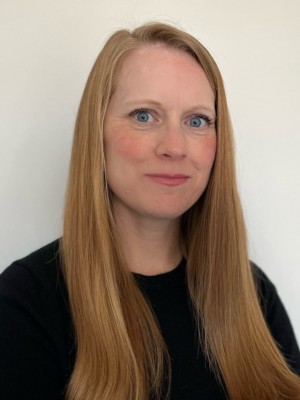
Carey RyanThe Glasshammer is running a “Where Are They Now?” series where we catch up with some of the professional women who we profiled ten or more years ago. We spoke with Carey Ryan, now Chief of Staff for Citi Technology & Business Enablement at Citi, about her career evolution and the role she plays in powering the future from both a technological and cultural perspective.

Nicki: Since we last spoke, where are you now?

Carey: We last spoke for the first time about 10 years ago, which seems like a long time but feels like the blink of an eye. I’ve held a number of roles since then, all within Citi’s Technology & Business Enablement group (though the name has changed a few times).

Now, I am the Chief of Staff for Citi Technology & Business Enablement. This entails working across both our technology organization and the wider bank to ensure we are effectively communicating and implementing new technologies, both with the goal of strengthening how we work and streamlining the time it takes to get work done.

Nicki: How did you get there?

Carey: In my 20 years at Citi, I have learned the best way to grow is to embrace every opportunity, especially if it allows you to learn more about how a company works. All of the roles I have had have allowed me the opportunity to support key areas of the business, including risk and control, data, and cybersecurity, each of which are vital to ensuring impactful technology can be developed or invested in and scaled to the full firm.

Nicki: Can you share a little about your current work?

Carey: Lately, much of my focus has been driving adoption and awareness for our Citi AI tools, helping us find the best places to practically and responsibly implement AI. This work includes leading our AI Champion and Accelerator programs, which are made up of approximately 4,000 volunteers around the firm who dedicate hours each week to serve as Citi AI advocates.

I also spend a lot of time working with our technology communication teams, each of whom covers a specific but global vertical within the larger technology business. No communication initiative is turnkey, and we always work to find new ways to impactfully reach colleagues with the information they need, be it in-person mediums like executive town halls or roundtable discussions, or through digital channels like email or lobby signage. Technology is the largest organization within Citi, so it’s key to focus on communication to enable change and drive execution while strengthening our culture.

Nicki: Have there been any unexpected or interesting twists in your career trajectory?

Carey: I have always worked in or adjacent to the technology space so, even before I recognized it, I was always headed for a career in enabling companies to leverage new technology to strengthen how they operated. That said, the world looks measurably different than it did when I entered the workforce, and Citi is no different. Some of these changes came quickly, such as the introduction and integration of AI, that has demanded the need to quickly shift priorities without much advance warning.

Nicki: Have any of them taught you a valuable lesson?

Carey: Citi is a large company, so I have had the opportunity to work on many projects with many people. Given this, the two key lessons I would share that always keep in mind is to always remember the end goal of every project and to stay flexible.

Nicki: What inspires you to be a leader and your leadership style?

Carey: My favorite part of my role is collaborating with dedicated and passionate colleagues. Whether it be the implementation of cutting-edge software, the voluntary work of a small team creating new patented technology tool, or an analyst successfully completing their first rotation with the bank – it is the passionate, innovative and solution-focused people that inspire me each day.

As I have risen in my career, I strive to be a good mentor and reliable leader for all members of my team, regardless of level. I’ve been lucky to have had several mentors whose advice I still hold on to, and it’s important to pay it forward. I also can’t help but think of my teenage daughter, I want to set a positive example for her as well as for my teams of what is possible in their careers and how leaders should treat their employees. An example that, hopefully, they will one day share with their own teams and mentees.

Nicki: Since we last spoke, can you share any challenging moments, setbacks, or self-doubt you’ve experienced as well as how you have navigated them?

Carey: I’m not sure I can pinpoint just one moment, but every new challenge I am presented with comes with a bit of imposter syndrome when I do not immediately have all the answers. Almost everyday features at least one conversation about something that where either I’m not the expert or the topic is completely new to me. It can be hard to ask questions when you think everyone except you has the answer, but the ability to step out of your comfort zone and know that you add value is a skill that will never go out of style. Self-doubt is something everyone faces, and the unknown is allowed to be scary. The key is being confident in your own ability to learn and adapt to problem-solve when navigating an unfamiliar situation.

Nicki: What skills do you think will matter most for future leaders?

Carey: When I was younger, I always assumed the fear and anxiety I felt about the unknown would go away. That one day I’d wake up and know everything there was to know about my job. But you quickly figure you’ll never know it all, because the world is always changing. Instead, I found the key is to always be ready by learning how to operate effectively with uncertainty and always be willing to learn.

Future leaders must be willing to be agile and adaptive, especially as the pace of change in the world continues to increase. AI is a great example of this. It is an unavoidable technology, and we should be willing to integrate it into how we work.

Nicki: Can you share an invaluable, specific piece of guidance a mentor or someone you admire has imparted on you?

Carey: I’ve had a number of tremendous mentors over the years. What I admired most in all of them was not any guidance they offered me, but the way they all led through their actions. Each of them led with kindness and empathy, listened carefully and accepted all forms of feedback, and were more than willing to change course if something was not working.

Nicki: Has coaching supported you in your journey, and if so, how?

Carey: Yes, I’ve been very fortunate to have had several coaches throughout my career. Coaches who were mentors, coaches whose job it was to support me, and coaches who were my peers. Career coaching offers an objective view of your decision-making. This often leads to introspective reflection on ways you can reframe your thinking, which is invaluable.

We can all sometimes be so goal-oriented, but it’s critical to take a step back and reflect on if we are taking the right steps to reach these goals. I often find myself going into my coaching session with one idea of what we will talk about and coming out with an entirely new perspective. Sometimes, the external guidance that a career coach offers is what one truly needs to help unlock those ‘aha’ moments.

Nicki: We are excited to see what you do next at Citi; we wish you continued success!

Katherine Kirkpatrick BosKatherine Kirkpatrick Bos, General Counsel of StarkWare, is excited about zero knowledge proof technology (ZKP), a revolutionary tool in cryptography. She explains that ZKP allows people to prove something is true without revealing underlying information.

ZKPs enable verification without disclosure—complete, sound, and private. While often discussed in the context of blockchain scalability and transaction speed, their possible use extends far beyond cryptocurrencies. Healthcare records, voting systems, and government services all rely on forms of verification that routinely overshare personal data. Zero-knowledge technology offers a path to redesign those systems around privacy by default.

“StarkWare is deep, cutting-edge technology,” she says. “These are some of the smartest cryptographers and developers in the world.”

This potential drew Kirkpatrick Bos to StarkWare, a company building cryptographic systems at the frontier of zero-knowledge technology. The work is not only about present-day challenges. StarkWare has also developed quantum-resistant technology—an increasingly urgent priority as advances in quantum computing threaten existing cryptographic standards.

“Quantum computing could break a lot of what we rely on today,” she notes. “Quantum-resistant code makes that significantly harder.”

Choosing the Right Room

Prior to joining StarkWare, Kirkpatrick Bos was in listed derivatives on digital assets. She was the Chief Legal Officer of Cboe Digital, a U.S. regulated exchange and clearinghouse for spot crypto and crypto derivatives markets; and General Counsel of Maple Finance, a capital efficient corporate debt marketplace which facilitates crypto institutional borrowing via liquidity pools funded by Decentralized Financial (DeFi) ecosystems. Kirkpatrick Bos was also a partner in the Special Matters and Government Investigations practice at King & Spalding.

Kirkpatrick Bos is candid about career inflection points. She has experienced the frustration of executing a plan within a business that wasn’t growing as expected—and realizing she wasn’t in the room where the real decisions were being made.

“That’s a difficult place to be,” she says. “Especially if you believe you could be doing more.”

The response, in her view, is rarely comfort. It is movement.

“It’s much easier to stay where you are than to start over,” she notes. “But if you want growth, you have to take that risk.”

She is especially direct about this advice for women, who are often encouraged—explicitly or implicitly—to value stability over advancement.

“I’ve always approached my career strategically. You have to understand what’s next.”

Mentorship, Integrity, and Judgment

Kirkpatrick Bos credits much of her professional grounding to early mentors, including a senior partner she worked with for over a decade at King & Spalding.

“He could be prickly,” she recalls, “but he inspired loyalty through integrity.”

That lesson—never compromise ethical standards—has stayed with her. So has the importance of seeing what is possible. Senior women who pushed boundaries in their careers made abstract ambition tangible.

“If you see it, you can be it,” she emphasizes. “If others are doing it, it’s not impossible.”

The guidance she now imparts is unsentimental and practical: protect your principles, make hard decisions when required, put your family first, and outsource what you can.

Leadership in an Age of AI

As artificial intelligence reshapes professional services, Kirkpatrick Bos remains skeptical of claims that judgment can be automated.

“AI is a powerful tool,” she acknowledges. “But it can’t replace instinct.”

Over her career, she has seen lawyers develop competence through experience—and others who never do.

“Judgment is hard to teach. Problem-solving, instinct, knowing when something doesn’t feel right—that still matters.”

As General Counsel, much of her role is translation: helping regulators understand technology, and helping technologists understand the law.

“You have to listen carefully,” she says. “Then explain things in a way the other side can actually understand.”

Why It Endures

There are always difficult days. Seniority does not eliminate friction; it reframes it.

What sustains Kirkpatrick Bos is the belief that the work itself matters—that she is helping shape the legal and regulatory framework for technologies that will define the next generation.

She imagines a future where people look back in disbelief at how much personal information was once routinely shared to prove a single fact.

Innovative technology, she believes, does more than improve systems. It keeps people engaged, even when the work is hard.

And in that sense, zero knowledge is not just a cryptographic concept—it is a blueprint for more thoughtful leadership.

By Jessica Darmoni

Monica Marquez“With AI there’s constant disruption,” says Monica Marquez. “It’s about how do you get people to become very agile and comfortable with that disruption? And how do you leverage and sustain that change?”

A “MacGyver for Agentic-Human Reinvention,” Marquez does not shy away from disruption – she wholeheartedly embraces it. Previously profiled in 2021, she spoke with theglasshammer.com on the next chapter in her journey of pioneering change, as she dives into the evolving intersection of human potential and artificial intelligence.

Q: Tell us more about what you’re working on now and how your new venture, Flip Work, is helping organizations navigate this era of rapid change.

At its core, Flip Work helps organizations achieve measurable ROI from AI by focusing on human adoption. According to a 2025 MIT report, 95% of AI pilots have failed, not because of the technology itself, but because people aren’t adopting it, reinventing workflows, or using it to augment their work.

Many companies implement AI without a real plan for how people will use it. The question becomes, how do you help people shift their identities to see themselves differently in the way that they work, and in the way that they must reinvent themselves in the AI era? Because the reality is, AI is changing work faster than people can adapt.

This widening gap is what we define at FlipWork as the Exponential Divide, the moment when technology evolves faster than people can change how they work.

That has been our focus, and we’ve built a human and agentic system that helps people reinvent the way that they work, from a three-pronged approach. First, we help people reinvent themselves from a behavioral and a mindset perspective with the support of FlippyAI, which acts as a daily AI coach and change agent. Second, we reinvent workflows through Flip Lab, our 90-day reinvention sprint. Third, we reinvent workforce tools through Flip Factory, where agentic automations bring redesigned workflows to life. With AI, disruption is constant. The goal is to help people become agile and comfortable with that reality, to leverage it rather than resist it. This is how individuals become People², exponentially capable professionals who evolve at the pace of technology. That’s what Flip Work is all about.

Q: The work you’re describing sounds very much rooted in organizational development, guiding people through behavioral and mindset change. Would you say that’s part of your approach?

Yes, definitely, it’s change management, but traditional change management is no longer enough. When companies are thinking about AI adoption, they think that if they buy all the tools and give them to employees, that will be enough, but no one is really helping the people change and leverage the tools.

Recently I was at a conference talking to senior leaders at Microsoft and they told me that despite rolling out Copilot across their entire professional population, adoption is only 47%. That means that more than half of people aren’t using the tools, often because they’re waiting for permission or guidance from leadership. The impact of that is that people are going to get left behind.

Everybody is fearing that AI is going to replace jobs. The reality is that yes, it will, but we always reinvent ourselves. If we look at the past, think the dot-com era, digital cash registers, or similar technological shifts, people often said, “This is going to displace jobs.” And yes, some roles change, but people reskill and find new ways to contribute. At the end of the day, human discernment, creativity, empathy, and expertise remain essential. Our lived experience still matters in ensuring that outputs are accurate, meaningful, and impactful.

It’s about helping people reinvent themselves, recognizing what your zone of genius is, and how you augment or amplify your zone of genius with AI, and delegate the things that you don’t like to do, so that you can focus on your genius zone. This is the identity-first reinvention that FlipWork is built around.

Q: This is obviously a very exciting moment and project. What brought you here?

As a leader, I’ve always been curious and an early adopter, a pioneer. An example of that is when I was at Goldman Sachs, back in 2008, I spearheaded the Returnship Program. Later, I co-founded Beyond Barriers to accelerate career advancement for women and underrepresented talent. My mindset is always you have to disrupt yourself before you get disrupted. I’ve always operated like a MacGyver, finding resourceful ways to reinvent how work gets done. AI fits in with that because I’m very comfortable with disruption.

When I had colleagues, some of whom are now CHROs at major companies, coming to me and saying, “Our company is adopting all this AI, but I don’t even know how to leverage it. How do we roll out AI adoption for our people?” I started to see a real gap in the marketplace. It’s not just about using the tools; it’s about shifting mindsets. Many people think AI is only for coders or tech experts, and they feel it’s not for them. The truth is, you don’t have to understand how AI works; you just need to know how to use it to do your work better.

Q: What would you tell a digital native, then, entering the space in this exciting world of AI?

Digital natives may have an easier time embracing new tools, but I would be careful that it doesn’t cause creativity and diversity of thought to become lazy. Even though you’re a digital native and you may be an early adopter, you must continuously make sure that what you’re practicing doesn’t lead to intellectual atrophy, making the technology smarter and the humans less smart.

For example, you shouldn’t just be taking the output that ChatGPT or another AI tool gives you and putting it out there without utilizing your own expertise, judgement, and discernment.

One way to think about AI is as your “Artificial Intern.” You wouldn’t give an intern a task and then pass their work along to the higher-ups without checking it first. The same applies to AI. You have to coach it, refine it, review its work, and ensure what it produces reflects your expertise. You wouldn’t pass along unedited intern work to an executive, and the same rules apply with AI.

Q: You’ve long been an advocate for Latina representation in leadership and tech. As a board member for Latinas in Tech and the Association for Latino Professionals in America, how are you helping the next generation of Latino leaders prepare for this new era of work?

Supporting Latinos, Latinas, and other marginalized groups has always been a huge passion of mine, helping them accelerate their careers and expand beyond the limits of their cultural upbringing and conditioned beliefs.

What we’re finding now, though, is that some of the fear around the digital divide is widening. I was at the ALPFA conference over the summer, where we soft-launched Flip the Script, a program designed to help people start thinking about how to adopt AI. The feedback I heard was interesting in that many participants told me, “I’ve always been taught I have to work twice as hard to get half as far. If AI helps me do something in 30 minutes that used to take three days, what does that say about my worth?”

That mindset runs deep, the belief that effort and hard work equal success. But in this new era, we help people rewrite the script to say that impact equals success. AI amplifies your value; it does not diminish it. If you can use AI to achieve more in less time, you’re amplifying your impact, not diminishing your value.

For many, especially those from cultures where perseverance and grit are tied to identity, this shift is difficult. I’ve coached young Latino professionals who feel like using AI is “cheating.” They’re hesitant to embrace it because it challenges their definition of what it means to earn success.

So part of my work now is helping people rewire those conditioned beliefs—whether they’re cultural, societal, or organizational—and help people recognize that their true value lies in their expertise, discernment, empathy, and creativity, the exact human strengths that AI amplifies inside the People² model.

Interviewed by Nicki Gilmour, founder and CEO of theglasshammer.com

IWD 2023It feels that Artificial intelligence (AI) has really gone from feeling opaque and slightly in the realms of science fiction to current reality with Chat GPT now partly academically approved and AI of all types – from Bing’s chat GPT ‘wanting to be alive’ Jungesque aspirations this week to Elon Musk’s perhaps legitimate fear of AI to the ‘metaverse’ – being discussed at family gatherings. Surprisingly, or perhaps right on time, the UN Women 67th Annual Commission on the Status of Women International Women’s Day 2023 has a theme of “DigitALL: Innovation and technology for gender equality.” With the hashtag #Poweron, the focus is on the opportunities that technology has to create access to work opportunities and services for more parity for women across the world, while reducing the internet’s facilitation and spread of sexual violence.

AI Issues From a Career Perspective for Women

Algorithms and AI can add another layer to bias and stereotyping beyond the human aspects that we all work so hard to defuse. Just under 80% of people who work in AI are men and the systems are entrenched in language – benign at best, purposely coded at worst with “lesser than” logic patterns. AI has been found to have biases against women and from a career perspective this has been understood most in hiring processes with Amazon scrapping their AI for recruiting for some of these reasons. Machine learning has shown to replicate male and white visibility with higher values given to data and images of white men. In The MIT Sloan Review, invisibility and erasure was discussed when it comes to ethnic diversity in facial recognition, with the topic causing a furor last June when President Obama’s face was machine refined as a high pixel image of a white man.

There are huge opportunities in AI though from a career breadth and depth perspective. AI is and will be in our lives more and more with wearables being the predicted game changer for healthcare. Other industries like financial services and even your digital shopping cart are heavily investing in AI and machine learning. It could it be applied to big issues like carbon farming practices and climate disaster and climate migrant preparation related challenges. And job roles and skillsets that represent a cross-section of disciplines are increasingly relevant and necessary, so coming from a STEM background is not a prerequisite for getting involved.

What are the Social Issues?

The issue behind technology is always based in human behaviors from who creates what, how and why, to who uses the product or service and for what end. How much humanity is in avatars and online commenters and how people behave online versus in real life has been a decade plus study. Do people act differently when they have anonymity or are without nonverbal cues? How does life online inform real life and vice versa? Apparently, moral outrage gets reposted 20% more than regular statements. The Pew Center has a body of research stating online harassment to be around 45% for men especially around topics of politics while fewer women report this. But, female politicians face verbal abuse with 39% of tweets about females in politics containing problematic threats, as do female journalists. Women are more likely to be sexually harassed or threatened with sexual violence online with image sharing, revenge porn and sextortion being part of this century so far.

Legislation is slowly catching up in Europe and the US with The White House launching the White House Task Force to Address Online Harassment and Abuse in 2022 to tackle online issues including sexual violence, abuse and sharing of files against women, and also child sexual abuse material (CSAM) sharing. Files containing CSAM have increased exponentially with 89.1 million files being reported in 2021 alone and the Legal 500 recently published a study entitled “Is it time to age gate the internet?” citing demand by internet to view child abuse to be increasing significantly. Harrowing as this is to report the hundreds of percent increase for demand of this terrible societal scourge, it is entirely important to understand how technology can help solve for issues as well as replicate problems. It does require people to think about hard things, have difficult conversations and take actions – such as code and AI for good not evil. For example, Thorn.org works to help via code to tag material to stop the spread of files, and in the UK and EU, there are similar technologies that all companies can access. We all need to work to solve real issues that degrade people as well as for democracy and opportunity for all humans.

Women’s lives is an increasing issue with discussions at major platforms and within governments ongoing on how to truly parse and filter empowering content regarding fitness, breastfeeding and women’s health from adult consensual content from non-consensual violence and assault; first to third world. Society at large from a behavioral perspective is again acceptably and overtly anti- women when it comes to dignity and personal sovereignty it seems. From dating apps and their unsolicited genital pictures and deepfakes to permanent perennial abuse images that never let the victim truly recover and all that is in between, it is hard to avoid pondering the nuances of the internet being a mirror or a vehicle to human darkness?

What Can You Do To Be Part of the Solution?

#1 Support with time and money STEM and coding programs for girls and women such as Girls Who Code or Black Girls Code or anitab.org or NCWIT or TCGi Foundation from Avis Yates Rivers. Encourage any girl or young woman you know to get into STEM. There are many pathways.

#2 Hire women into tech jobs, mentor women where you can, be the sponsor where you can!

#3 Have difficult and unsavory conversations with your kids about what is ok and what is not, and what to do if they see something awful on the internet.

#4 Continue the obviously much needed socio-cultural and psychological work for all humans to instill ethical boundaries in our boys and men (and girls and women) to help stop casual sexual and physical violence in real life as well as virtual world, the mantra ‘boys will be boys’ has to stop now so that girls can be girls, safely.

#5 Fund the solutions. Consider donating to Thorn or a similar organization that provides technical solutions, advocacy, support or education on the topic of CSAM or gender/sexual violence and sex trafficking such as RAINN or New Life, New Friends.

Either way, having awareness that there is a virtual world that replicates some of the real world’s most difficult challenges regarding gender is the conversational entry point into an inevitable new world. With more women being involved in building technology, and more women worldwide having equal access to technology, we hold out hope that we engineer AI for the good of women’s lives and towards the collective good.

By Nicki Gilmour