By Cathie Ericson
In the workplace, many women don’t know the right questions to ask, but the more questions you ask, the more you’ll learn. “At first it might seem negative to others, but it won’t be long before people will value that spirit and curiosity,” Bickford says.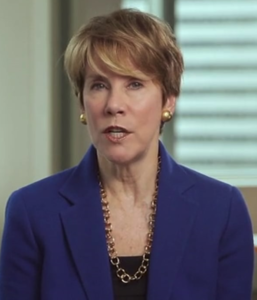
She has benefited from her exposure to cultures, having lived all over the world. “When someone would say, ‘this is the way it should be,’ I would wonder why and in the end, these questions would have great strategic value. By asking questions, I saw opportunities that others didn’t,” she notes.
Finding Ageless and Timeless Career Success
You could call Bickford’s successful career path a bit delayed. She didn’t have her first paying job until she was 38, and at age 70, is still working. “I just got a late start to work,” she says, noting that she had two daughters by the age of 23, so she spent the first years of her adult life as a housewife and volunteer. She took those roles very seriously, working at them as though they were a paying job, which helped pave the way for her future political and corporate life.
Her first paying job was in the Koch Administration, and she then went to the consumer services group of Citibank, where she says she got fired within nine months. As part of the bank’s outplacement services, she took a battery of tests, and found out she was a natural-born investment banker. She was transferred to Citibank investment banking group, left to join Dillon Read’s investment bank and when Dillon Read was bought by Travelers she was designated a key employee. With her bonus she opened up her own firm in asset securitization which at the time was a new industry.
She sold her firm to Rothschild in 1994 and joined them at Rothschild Inc. as the only female global partner in the United States. She cites this as one of the professional achievements she’s most proud of since investment banking is a tough field and very few women have excelled in the business. In fact, she was so focused on helping other women get promoted that she was dubbed “Head Girl” for her efforts.
In 2009, she retired, and, as she says, “flunked retirement.”
She returned to the investment world at GenSpring, where she created the women in wealth educational template for wealthy families across the United States. After, she left to join Evercore Wealth Management where she became a partner and wealth advisor. She says:
“If they recognize your talent, and feel you can make a contribution to the organization, it doesn’t matter your age,”
Volunteer Work Guides Her Path
Over the years, she has also served on more than 30 non-profit boards. This volunteer work in partnership with her business has been good for her mental health and also for building friendships and networking opportunities. She noted, “being the only woman in many work situations can be lonely, and my volunteer work helped, as much of it was focused around helping women.”
One notable appointment was serving as a member of the Council on Foreign Relations and the founder of the Council’s task force studying the role of women in economic and political development in the Middle East and Southeast Asia. “Women are well suited for conflict resolution and stabilizing communities in the developing world,” she notes.
Helping Women Achieve Their Goals – Financial and Work-Related
Currently, at Evercore Wealth Management, she enjoys working with families. Since women live longer than men, often much longer, they try to prepare women to manage their finances so they will know the right questions to ask their financial advisor and only select products that will help women achieve their goals. Women will control 14 trillion dollars of assets in the near-term future. “A revolution is occurring, but most people are unaware that women tend to use their money to achieve their goals,” Bickford says. Whereas a man will typically ask about performance, a woman has never asked that in the first meeting. She says they want to know about risk, if they can maintain their lifestyles and what they can do with the money around goals and values.
Whereas she’s found that in the investment banking world men don’t see women as the “man for the job,” the wealth management industry is much more user-friendly for women, as a lot of the natural skills women possess, such as insight and nurturing, dovetail well with the skills needed. At Evercore, they have several female portfolio managers and wealth advisors. Bickford notes, “it isn’t lonely at all.”
They also excel in dealing with complicated issues, such as how money is equated with love, especially in blended families, making it an excellent field for women to pursue.
Overseeing “Paradigm for Parity”
This December, Bickford helped launch this coalition, which she says is part of the continuum in bringing men and women together who are committed to achieving a new norm in corporate leadership. While the ideas for unearthing unconscious bias and sponsorship aren’t new, her group is going about it a new way, she says. They have developed a five-point action plan to hand to a CEO or diversity officer and when implemented concurrently, the steps will reinforce each other.
“If they commit to implement the points all at once, they will see vast progress in a thorny situation,” she says.
The steering committee boasts CEOs from many top companies and Bickford says the fact that the plan and the measurements for success were developed by people within the very companies that need the change will help ensure it will succeed.
Bickford says that her husband has been a guiding force in her success. “When your work life is complicated, you need someone who can support you and help you find the right balance between business and family.” She adds that those who don’t find that in their family can turn to their network to find those people they can trust.

How to Mentor Millennials
Career Advice, Career Tip of the Week!, Guest ContributionHaving a successful protégé reflects well on you and adds to the progress of professional women everywhere. So mentally brace yourself for the mentor/mentee relationship.
Remember what it was like to be an inexperienced person? Once you are mentally prepared to start molding a successful protégé, you must then prepare yourself for the patience it will take to get started.
Whether or not you had a mentor when you were younger, you can still relate to the feeling of being the new person in the office. As someone who has now been in the grind for years, you may have a tough time knowing where to start with your mentee. Well, think back.
When you were the new person, what qualities did you appreciate in your colleagues? Most likely, you wanted to work with those who:
Now that you’re on the other side of the mentor/mentee relationship, you can make good use of these memories.
With your mentee, discuss expectations — both yours and theirs. Set goals. Pay attention to their progress. Give feedback. Be supportive. Offer advice, but also listen. And, most importantly, take a genuine interest in their work and well-being.
Appreciate Generational Differences
More than likely, your near-future mentees are going to be millennials. Like every generation, millennials have their own set of concerns, indignations, interests, goals and talents.
Millennials are generally tech-savvy, environmentally conscious, insistent upon equal rights, adventurous, innovative and generally more interested in finding meaningful work than the largest paycheck or the best job security they can get.
However, despite the differences between millennials and non-millennials, all of the millennial-specific qualities can be channeled toward the greater good of a business. It’s up to you, as a mentor, to find the benefits these qualities have to offer, and to guide your mentees to apply them correctly.
Parting Thoughts
No matter who your mentee is — man or woman, intern or new hire, millennial or baby boomer — it’s up to you to help them succeed. The best way to do this is to understand what it means to be a mentor. It takes patience, dedication and a genuine investment in their progress.
If you decide to take on the role of the mentor, embrace the qualities that make you uniquely successful and help your mentee to do the same. And, as you learn and grow alongside your protégé, know that you’re doing your part for the advancement of professional women.
(The views and opinions of Guest Contributors are not necessarily those of theglasshammer.com)
The Gender Pay Gap
Career Advice, Money TalksThis month we celebrate Equal Pay Day. Take a look at these informative Pay Gap articles previously published on theglasshammer.
This week we hit “Equal Pay Day” on Tuesday, a day which symbolizes the extra days women must work to make the same salary as her male peers did last year. According to the Demystifying The Gender Pay Gap survey by Glassdoor, the biggest myth about the gender pay gap is that it doesn’t exist at all, as 7 in 10 employees across seven countries assumed men and women received the same pay for the same work. But even when narrowed down to an apples-to-apples comparison within companies, researchers found a significant gender gap exists.
Closing the investment gap for women as well as the better- documented pay gap needs to happen. What is the investment gap? And why are most women, even highly paid professional women still missing out? Sallie Krawcheck just wrote a post about the cost of not realizing what we are missing financially by not investing properly on LinkedIn.
In March 2015, the US Census Bureau released the latest pay statistics from 2013, including median earnings by detailed occupation, showing that full-time working women earn 78.8% of what full-time working men do. The census data revealed that across 342 occupations, women (barely) out-earn men in only nine.
Narrow the Hidden Executive Pay Gap Starting Now
As women move to senior ranks, the gender pay gap widens. Your best career management play? Begin closing it now.
Voice of Experience: Carey Halio, Partner, Finance Division, Goldman Sachs
Voices of Experience“Your career is a marathon, not a sprint,” notes Goldman Sachs’ Carey Halio, though she admits that while she received this advice early in her career, she didn’t always take it to heart.
“Many of us are hard-driving individuals who want to make an immediate and constant impact, but it’s vital to remember that your experiences, skills and network build upon each other throughout your career.”
Even though she was recently named partner, Halio finds that she still needs to remind herself of this advice, and likens her career to training for a real marathon. “When I first started running, I could only handle one mile, then two, five, and so on, and your career builds in the same incremental way. But, it’s hard to keep that in mind because you don’t have the benefit of hindsight when you’re in the moment,” she says.
Helping the Firm Embrace New Challenges and Growth Opportunities
Before beginning her career in finance, Halio served as a member of the Peace Corps, where she learned the importance of resilience as she worked in Guatemala without access to basics, such as running water and telephones. That experience instilled within Halio the belief that she would be capable of “figuring it out” in any situation, and she was able to overcome her initial intimidation upon joining Goldman Sachs following business school.
“I now see how hugely beneficial my time in the Peace Corps was in teaching me to be resilient and confident to know that things will work out even if you don’t have all the ideal tools readily available. This has been very important in my career and life,” she says.
Halio spent the majority of her tenure in the Credit Risk Management & Advisory Group within the Securities Division before joining Goldman Sachs Bank USA as Chief Financial Officer in 2014.
She notes that her role in Goldman Sachs Bank USA is an exciting position, as the bank was formed relatively recently and now offers consumer lending and deposit products, an area of the financial sector that Goldman Sachs had not traditionally been involved in. “It is very exciting to be part of completely new activities within an institution that has been in business for 148 years.”
Having been in the financial services industry through its ups and downs, she looks back on the tumult as a time of growth. “While the financial crisis was scary, I know that it helped me become a better risk manager, as I was running a team covering companies that failed,” she says. “I grew professionally in multiple ways, learning how to maintain composure in the face of uncertain circumstances.”
A Supportive Environment
In addition to her fulfilling day-to-day work, Halio enjoys the firm’s culture, which encourages mentoring. New female partners are encouraged to pay it forward: She herself has reaped the benefits of a network of women who have been generous with career advice as well as thoughts on childcare and work/life balance. “We need to do the same to keep that spirit alive with our younger colleagues,” she says.
While working at Goldman Sachs, Halio has been active in her division’s Women’s Network, appreciating the opportunity to hear from noteworthy speakers and develop supportive relationships with peers with whom she has “grown up.”
Integrating Balance
While women continue to make major strides in the workforce, childcare and balance remain areas of challenge. As Halio says, with two young boys, no matter how much responsibility she has at work, when she’s home, she’s mom. “I love my work and am proud of what I’ve accomplished but I am still focused on creating a close, engaging family.”
On that note, Halio cites the book “Wonder Women: Sex, Power, and the Quest for Perfection,” by Debora Spar, the president of Barnard College and former Goldman Sachs board member.
Referencing the book, Halio cautions, “You can’t have it all; you have to pick and choose what’s important to you at certain times.” She notes that there are a million things she would like to do, from spending more time with colleagues, to cooking more meals from scratch, but it’s not practical to expect to be able to do everything. She adds that over time your priorities change and you have to make meaningful tradeoffs and have the confidence to make tough choices.
For Halio, that means carefully choosing her outside activities. One that she spends some of her time on is serving as an active board member of her alma mater, Whittier College in Southern California.
She, her husband and sons, ages 3 and 7, enjoy spending their weekends together and reinforcing the family dynamic that can be hard to achieve during the week. They deliberately chose to live outside the city and invest in their community. “I want to provide my sons with a stable, strong foundation and we enjoy hanging out and being part of our town.”
OP-Ed: What Happened After International Women’s Day 2017?
Career Advice, Featured, International Womens DayThere was a flurry of activity for international women’s day this year, observationally more than usual and that could be correlated with the determination of some to deny women equality in a fairly overt way or it could just be a coincidence. You decide. There were hashtags such as #Beboldforchange, there were marches and a strike concept (A day without women), there was a designated color to wear (red). What does it all mean? And where are we really at?
Well, let’s have a quick recap of a small slice of life regarding NY based IWD activities as a microcosm for awareness of first world issues on this day which is mostly about third world women issues. However, in many ways IWD represents why we are going in circles with diversity and gender work.
Statestreet erected a statue of a little bronze girl staring in a defiant manner at the bull of wall street. That famous icon that can be construed in all sorts of ways, but mostly it is a bull representing good markets (bull markets). Next, some young white idiotic man accosted the statue in a suggestive sexual manner totally reinforcing in part why it was there in the first place. Backlash to this surprised me as not so long ago this would have been considered a drunken rite of passage so maybe we are making progress or maybe we are just more citizen journalist than ever. Then, in the spirit of no good deed goes unpunished and what was a good social statement from Statestreet (and marketing for the gender index SHE) quickly turned into curiosity of just how many women they have in high places. Also, the statue has now been removed as it was always a temporary erection, if you will pardon the pun when perhaps we should be asking why it couldn’t stay there more permanently if we are to remain mindful of the lack of parity?
Are we getting anywhere?
It seems progress is definitely not linear to anyone really looking at the macro side of it. In the myth of the ideal worker research by Catalyst, we see what we know to be true, the tactics that work for men to advance doesn’t not apply to women necessarily in equal measure and the piece in HBR back in 2010 interestingly points out the importance of one’s early managers.
So how can we have conversations that matter? Conversations that progress things and that engage people and then create actual actions? Beyond the politeness and avoidance of things that matter in an increasingly weird and fragmented world where everything is accused rightly or wrongly to be politicized, how do we talk to each other?
The first step that we need to take, I believe, is to recognize there isn’t equality everywhere at work currently. I am not talking about society at large, instead this is a focused narrower conversation as it pertains to executives and professionals but certainly some of this applies more widely without doubt.
To recognize a lack of level playing field, sometimes you have to have awkward, painful conversations with people who may have differing viewpoints than you. It does take bravery to have bold conversations at work as there is an element of risk and that is usually on the less powerful individual in that bold conversation. On International Women’s Day 2017, Catalyst held their annual conference and awards dinner while revealing their new initiative called the Catalyst CEO Champions For Change stating it to be transformational for diversity and inclusion because more than 40 high-profile CEOs and top leaders, many from the Catalyst Board of Directors, have pledged to do even more to accelerate diversity, inclusion and gender equality within their organizations. Curious to the mechanics of how this will actually work and impact real change for the women in the trenches, Catalyst assures me that this is different due to the fact that the companies that have signed on will share data on the representation of women in their workplaces with Catalyst, so that collective progress can be tracked, analyzed and reported. They state that,
This (initiative) is a good example of companies understanding that there is a reason to think we might have an issue that can actually be solved.”
Krista Brookman, Vice President, Inclusive Leadership Initiative, Catalyst weighs in on the importance of leadership when it comes to diversity,
“Leaders can ensure that women are accelerating in their workplaces by committing to visibility, access, and equity. That means that women have access to high quality mentors and sponsors for women, that women are considered for “hot jobs” – high profile, high visibility, and international assignments, that women have access to the unwritten rules (generally unspoken workplace norms and behaviors), that leaders are intentional and about making women’s achievements visible, that leaders interrupt bias and stereotypes in their choices and decision-making, and that leaders understand, develop and practice inclusive leadership skills and behaviors with men and women on their teams.
Thirdly, there has to be action, execution and accountability in the middle ranks and this is often a tricky factor in the success of diversity work and getting managers involved rather than handing them HR policy is the way to go.
Does the solution start with you and I?
A panel at the conference discussing how to engage in conversations about Gender, Race and Ethnicity in the workplace stuck me as interesting as intersectionality is often where the wheels come off and division of people happens based on social identities, wealth, and life experiences amongst other stuff. I caught up with Jennifer Allyn, Diversity Strategy Leader for PwC in the US, after the panel that she just had sat on and she recounted how bold leadership is needed to create a culture where dialogue can happen. Jennifer comments how PwC recognized that you cannot just ignore tragic current events as people carry that around emotionally and have feelings about issues either way. She states,
“After the spate of police shootings last year, our CEO, Tim Ryan sent a message asking everyone in the firm to have conversations with their teams about what happened. It was an explicit invitation to talk about race and the trust gap in society.
Tim Ryan’s stance on tackling tough issues is not run of the mill but neither is his appointment of the most diverse leadership team in the firm’s history consisting of four white women, three women of color, four men of color, and an openly gay partner on the team.
Jennifer continued that it is best to assume your colleagues have good intentions because “being self righteous isn’t helpful in a difficult conversation”. She states,
“If your goal is to learn from someone else’s perspective, the conversation has to be reciprocal. You have to do more listening than talking. The panel moderator Dnika J. Travis, PhD, Vice President and Center Leader, Catalyst Research Center for Corporate Practice said it best – ‘you take fear with you’ and the biggest humility is understanding that other people don’t have the same experiences that you do.”
There is nothing to fear but fear itself and if there is an action to take away from International’s women’s month perhaps it is to spark up a conversation with someone who has opposing views and just hear them.
Behaviors That Build Confidence
Career Advice, Guest ContributionI’ve spent decades watching both men and women climb the corporate ladder to build highly successful careers. I have watched and listened carefully to understand the actions that enabled these people to be called out from the crowd. They weren’t all good-looking or even charming. If there was one single common thread it was confidence. Successful leaders behave in ways that caused them to be noticed, heard, and remembered. Admittedly, slightly generalizing an entire gender, I’ve observed that men, more frequently than women, seem to garner the confidence of a crowd more quickly. I believe that is because they more frequently demonstrate confidence-building behaviors. And I believe women can get the same result by more frequently demonstrating some of those behaviors as well.
This is not to say that as a women, you should act like a man or that you should not be your authentic self. In fact, you’ve got to be your authentic self. You are unique. Your thoughts are unique. The trick is delivering your uniqueness effectively. If you practice a few basic rules, you will deliver.
Speak First.
Yes, first, not last. It doesn’t matter if your idea is not fully baked, with all of the possible pitfalls identified. If you wait until everyone else’s ideas are heard, while you refine yours or, worse, come up with a reason why yours is not a good idea, one of two things will happen: You will never be heard, because you’ll never get the chance to speak, and the conversation will move on. You will never be heard because someone else said it first.
If you have trouble getting the attention of the room when you need it, there are a few techniques you can try. It starts with body language. Be confident. Don’t slump in your seat. Sometimes you need to interrupt. Some of you may think of it as rude. Call it what you will. If people talk over you and around you while you’re trying to get a word in, you have to be a little bold. Lean forward on the table, stand up, move to the front of the room. Speak concisely and with energy. Use humor. It helps people remember what you said. Don’t pause. If you pause too often or for too long, someone else will take the opening and run you off track.
Let’s talk about strategic use of profanity. I believe that there are moments—and they should be rare—when the occasional use of profanity can get the attention of your audience in a good way. Use at your discretion and only when the culture allows it. I am talking “hell” as in “what the hell” and words of that nature.
Stop Apologizing.
Stop qualifying your statements. Every time you preface your thought with an apology or a qualifier, you take power away from yourself and give it to the men in the room (because there are likely more men in the room). Stop it! You don’t really believe it when you say you’re not sure if it’s a good idea, right? You’re just being polite, because somehow you think the message will be better received if you apologize for it first. Let’s think about that for a minute. When was the last time that anyone trying to persuade you to buy anything apologized for their product? “I’m sorry, this car is a piece of shit, but I think you should buy it. Our consulting services might not be the best in class, but we will get the job done good enough.” Really?
Make Time for Face-to-Face Communication.
In this ever-connected, 24-7 world, it is easy to do all of your communicating electronically. And why not? Women (again totally generalizing) are such pros at multitasking, so why shouldn’t we carry on a couple of conversations at once?
For women who love to multitask—and many of us do—we often miss opportunities to demonstrate our thought leadership and therefore miss opportunities to be seen as a leader, by trying to do too much at once. Face-to-face communication is not always convenient, but it’s nearly always well worth it. Successful people understand this. They know it’s important to build relationships with those who are important to them, because relationships are the most critical element in influencing others. Women have to be effective at influencing both genders. Our communication style and method has everything to do with that.
About the author
MELISSA GREENWELL is the author of MONEY ON THE TABLE: How to Increase Profits Through Gender-Balanced Leadership (Greenleaf Book Group, January 2017). She is Executive Vice President and Chief Operating Officer of national retailer The Finish Line, Inc. You can learn more at www.melissa-greenwell.com
Disclaimer: The views and opinions of Guest Contributors are not necessarily those of theglasshammer.com
The Juggle: 3 Tips to Get Stuff Off Your Plate
Career Advice, Career Tip of the Week!By Nicki Gilmour, Executive Coach and Organizational Pyschologist
Image via Shutterstock
Unless you are a fully fledged workaholic ( I used to be one and I know many), you may want to work a little less and do a little more of just about everything else. With the exception of chores which are few people’s idea of fun.
So, how it is possible to live and love in an urban place, give it your all and maybe just maybe have time for other areas of your life, be it having children or not having children. I say that with caution as people get derailed quickly and fall into 2 camps when it isn’t about that division it is about the unification of the truth that we all do work more than ever.
Here are my three tips to get you closer to nirvana.
TIP 1: What tasks at work are non crucial and can be delegated, dumped or reframed to matter more strategically and therefore become worth doing?
TIP 2: How can you break cultural norms in a ‘face time” environment to show that results orientated work and productivity are winners?
TIP 3: At home, what life hacks can you apply to boring admin and chores to outsource or reduce them? Get a system or actual people involved to help you free up your time to live the dream. If you feel your other half needs to do more, tell me what they need to do and when as maybe they just do not know?
Most importantly, it is worth your while to step out of the weeds and look at the big picture – what do you want personally and professionally to happen in the next 24 -36 months?
Best of Luck
Voice of Experience: Jewelle Bickford, Partner, Evercore Wealth Management
People, Voices of ExperienceBy Cathie Ericson
In the workplace, many women don’t know the right questions to ask, but the more questions you ask, the more you’ll learn. “At first it might seem negative to others, but it won’t be long before people will value that spirit and curiosity,” Bickford says.
She has benefited from her exposure to cultures, having lived all over the world. “When someone would say, ‘this is the way it should be,’ I would wonder why and in the end, these questions would have great strategic value. By asking questions, I saw opportunities that others didn’t,” she notes.
Finding Ageless and Timeless Career Success
You could call Bickford’s successful career path a bit delayed. She didn’t have her first paying job until she was 38, and at age 70, is still working. “I just got a late start to work,” she says, noting that she had two daughters by the age of 23, so she spent the first years of her adult life as a housewife and volunteer. She took those roles very seriously, working at them as though they were a paying job, which helped pave the way for her future political and corporate life.
Her first paying job was in the Koch Administration, and she then went to the consumer services group of Citibank, where she says she got fired within nine months. As part of the bank’s outplacement services, she took a battery of tests, and found out she was a natural-born investment banker. She was transferred to Citibank investment banking group, left to join Dillon Read’s investment bank and when Dillon Read was bought by Travelers she was designated a key employee. With her bonus she opened up her own firm in asset securitization which at the time was a new industry.
She sold her firm to Rothschild in 1994 and joined them at Rothschild Inc. as the only female global partner in the United States. She cites this as one of the professional achievements she’s most proud of since investment banking is a tough field and very few women have excelled in the business. In fact, she was so focused on helping other women get promoted that she was dubbed “Head Girl” for her efforts.
In 2009, she retired, and, as she says, “flunked retirement.”
She returned to the investment world at GenSpring, where she created the women in wealth educational template for wealthy families across the United States. After, she left to join Evercore Wealth Management where she became a partner and wealth advisor. She says:
Volunteer Work Guides Her Path
Over the years, she has also served on more than 30 non-profit boards. This volunteer work in partnership with her business has been good for her mental health and also for building friendships and networking opportunities. She noted, “being the only woman in many work situations can be lonely, and my volunteer work helped, as much of it was focused around helping women.”
One notable appointment was serving as a member of the Council on Foreign Relations and the founder of the Council’s task force studying the role of women in economic and political development in the Middle East and Southeast Asia. “Women are well suited for conflict resolution and stabilizing communities in the developing world,” she notes.
Helping Women Achieve Their Goals – Financial and Work-Related
Currently, at Evercore Wealth Management, she enjoys working with families. Since women live longer than men, often much longer, they try to prepare women to manage their finances so they will know the right questions to ask their financial advisor and only select products that will help women achieve their goals. Women will control 14 trillion dollars of assets in the near-term future. “A revolution is occurring, but most people are unaware that women tend to use their money to achieve their goals,” Bickford says. Whereas a man will typically ask about performance, a woman has never asked that in the first meeting. She says they want to know about risk, if they can maintain their lifestyles and what they can do with the money around goals and values.
Whereas she’s found that in the investment banking world men don’t see women as the “man for the job,” the wealth management industry is much more user-friendly for women, as a lot of the natural skills women possess, such as insight and nurturing, dovetail well with the skills needed. At Evercore, they have several female portfolio managers and wealth advisors. Bickford notes, “it isn’t lonely at all.”
They also excel in dealing with complicated issues, such as how money is equated with love, especially in blended families, making it an excellent field for women to pursue.
Overseeing “Paradigm for Parity”
This December, Bickford helped launch this coalition, which she says is part of the continuum in bringing men and women together who are committed to achieving a new norm in corporate leadership. While the ideas for unearthing unconscious bias and sponsorship aren’t new, her group is going about it a new way, she says. They have developed a five-point action plan to hand to a CEO or diversity officer and when implemented concurrently, the steps will reinforce each other.
The steering committee boasts CEOs from many top companies and Bickford says the fact that the plan and the measurements for success were developed by people within the very companies that need the change will help ensure it will succeed.
Bickford says that her husband has been a guiding force in her success. “When your work life is complicated, you need someone who can support you and help you find the right balance between business and family.” She adds that those who don’t find that in their family can turn to their network to find those people they can trust.
Mover and Shaker: Stefanie Stewart, Vice President, Senior Real Estate Portfolio Manager, Voya Investment Management
Movers and ShakersConquering a Male-Dominated Industry
These words of wisdom have helped propel Stefanie Stewart through her ascent in a traditionally male-dominated industry.
A finance and real estate major in college, Stefanie worked in student housing, which sparked her interest in commercial real estate.
A professor helped connect her with ING (now Voya) and she started as an analyst eleven years ago, working her way up through the ranks. Seven years back, she moved from an analyst to a production role with her own territory, which she names as the professional achievement she is most proud of so far – her success in exceeding production goals.
“That win was particularly sweet,” said Stefanie considering an experience she had prior to joining Voya – where she has enjoyed being supported throughout her career.
“I was given an interview as a courtesy. At the end, the male manager said, ‘The commercial real estate industry is a good ol’ boys network, I don’t think it’s a place for a young woman.’” Stefanie used the experience to motivate her.
“It is a male-dominated industry, and when I made the transition from analyst to producer I wondered if I would be as successful as the guys at building external relationships. Typically, at first, you start with people lending their relationships, but then you have to build your own book of business,” she notes. Stefanie is proud that she’s been able to succeed and build a reputation for herself in the industry, with the support of her team.
Building Relationships to Build Your Career
A member of Path Builders early on in her career, she has also taken advantage of a variety of women’s networking events.
Stefanie has found sponsorship to be important in her career, with managers who have been committed to putting her in front of senior managers. She says she was fortunate that she was part of the mentoring program while making the transition, which was great timing to help her navigate the waters professionally and even politically.
She also credits much of her growth to managers in the group who have given her opportunities that she acknowledges she often wasn’t yet ready for – some of which filled her with fear, whether it was being in front of senior managers, a complex deal or participating on a panel. In hindsight, each was pivotal in her career. “They have only made me better, and now I look forward to some of these situations that make me uncomfortable, because I know they will give me the opportunity to continue to grow.”
She has had many role models along the way too, and knows that sometimes they can serve as a model of as much what not to do as what to do. “I’ve learned a lot by observing how people handle things under stress or react to criticism, and it has helped me remember that you can always learn from positive feedback.” External role models who are navigating similar challenges, from different sides of the equation, can also be helpful as a sounding board.
Her experience in the real estate program at Florida State University prepared her well for the real estate business, and she now serves as a mentor for recent graduates of the program, as well as visiting to provide case studies for the classes and sitting on a real estate trends conference planning committee. “If I can help a 22 year-old find their way, that is very gratifying to me,” she says.
Save
The Importance of Knowing What You Want
Career Advice, Guest ContributionGuest contributed by Tracey Carr, Executive Coach and CEO of Mi Purpose
I don’t know about you but my life is mad, crazy, busy running a complex business and being the best single Mum that I can be while also taking care of my health, having fun and taking control of my financial destiny.None of us have time for wasting our lives on distractions and yet it is so easy to be distracted in this world of information overload and being constantly available through our devices.
It takes discipline to focus on important activity that takes you toward your goals instead of being distracted by everybody else’s demands.
Our research shows that less than 1 person in every 100 people knows what they want, and guess what, most people get just that – a destination they didn’t want or choose!
How do I choose my own destiny?
The simple answer: scheduling!
Or rather, the process of scheduling, which I like to call “Dump, Chunk and Do”; it’s a fairly simple 3 step process that requires about 10 to 20 minutes a day. Allow me to explain:
Step 1: Dump
As the saying goes, the one thing constant in life is change. Because of change, our priorities change; things that were once important and/or urgent get moved to the back-burner and other “nice to have” tasks suddenly pop into the forefront of our attention. Because of this, we need a system to make sure that we can keep track of all the tasks in our heads without losing them.
This is where Dumping comes into play. Having a capture list is like a traditional “to do” list, but it allows you to clear the mental space and focus those tasks and aha’s into an inventory. Having such an inventory of tasks can and will grow over time and can seem like a lot to manage. Luckily, there’s Step 2 that avoids the problem of long static task lists or desks covered in post-it-notes.
Step 2: Chunk
Chunking is the means by which we organize our task inventory. I prefer to place tasks into logical grouping or categories that way i find that can I focus on the various aspects of my personal and professional life in one place without the stress of having to remember where ‘that’ list or reminder is.
Step 3: Do
Once Chunked, identify those important/urgent tasks that need to get done immediately.
For each of your categories, prioritise your top 5 – 10 items/tasks and then schedule those tasks on the day that you want to do them. Chunk the colours together into groups so that you can focus on one category at a time rather than randomly flitting from one task to another. (you can do this on paper, through Microsoft Outlook, Google Calendar or my personal favorite is the one I developed myself : Mi Purpose
Why group colours together in my calendar system?
You will be more effective if you practice scheduling your energy as suggested. It takes a different kind of energy to work on finance than it does working on long term visions and goals. This also allows you to be flexible and save time and as you have now already categorised your tasks it should be easy.
For instance, imagine that you are planning a party or sporting event and you have Chunked some ideas into one of your categories and scheduled those “Do” tasks for next Wednesday in your calendar. As you think of other ideas for the event, you can simply refer to your calendar of Do tasks (use the colour coding wherever possible) and drop or add new tasks as needed.
This will give you peace of mind that you are in control, remaining spontaneous and safe in the knowledge that you will complete everything at the most efficient time by scheduling and controlling your own life.
The trick is align to your vision and goals to prioritise your work flow against the pressure of too many demands and that way you decide what matters most in your life!
In conjunction with Tracey Carr and Best Year Ever, The Glass Hammer readers are being invited to take advantage of this unique opportunity with a special one-time offer to get Mi Purpose FREE FOR LIFE for one small pledge during this 30-day campaign on Indiegogo
Tracey Carr is the Founder & CEO of Mi Purpose SAAS, Executive Coach, International Speaker and Mom to 3 girls
Checking Your Own Biases Around Gender In Your Career
Career Advice, Guest ContributionBy Nicki Gilmour, Executive Coach and Organizational Psychologist
Image via Shutterstock
Are you a sexist woman? You might be wondering where I am going with this but in ten long hard years of working on gender equality, the one thing that has amazed me most is the level of sexism against women perpetrated by women. How do you know if you are harboring biases against women? If you are, you are probably unaware if you do have biases and maybe on a very unconscious level you believe in deeply engrained gender roles without ever looking at this.
This of course will seem odd to you as a working professional women who may even espouse that you are all about seeing women advance. Are you brave enough to look at your deepest held beliefs? It is a journey, and scary at times but one that can help you understand which paradigms are really aligned with your values and which have been handed to you and upon inspection do not take you to where you want to go or who you want to be.
It is a spectrum to fall on, this sexist thing. No one is exempt from having some bias for and against everything from who you work with to seemingly unimportant things such as whether you prefer watching sports played by women or men and then which is the better version according to you. The constructs behind the “why” is really the piece that can be examined, and if the “why” lines up for you, then great, but more than half of the time, as a coach and a psychologist, I find that not to be the case.
Do you believe that men are more leaderlike than women? In a 50 year long, regularly updated case study called “Think Manager, think Male” on which groups of men or women (by the way imaginary group not actual people) are believed to be more leaderlike rated by their assigned traits. Even when young women answer the survey, they vote straight white men as more competent and productive than themselves. So, you tell me where does that leave the “the lean in”, you go girl mantra? Mind blowing isn’t it? Not to me, I can totally see that the lack of progress being made is in part due to the mental models the patriarchy has given most of us. The mind blowing part to me is that if once people examine it and see no value in keeping it that they keep it anyway out of inertia or fear of change.
The other area to see where you are or others is to talk about children. If you hear yourself or others applying different standards of behavior to your girl children and boy children, then you can be sure that you are taking that into work with you too and as a bonus setting them up for carrying on that belief too.
No judgment from me, my job is not to agree to disagree or feel aligned with your values. My job is to ask you the question – now that you have looked deeper into how do you feel about ensuring women and men are treated with the same benchmark when it comes to leading, working and being promoted fairly after reading this post?
What is your role in creating the world you espouse to believe in at work and at home?