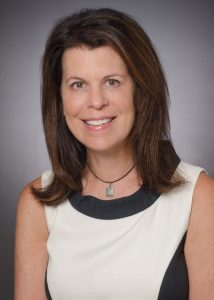
 Advocate for yourself and know your value; don’t sell yourself short, Wendy Cohen advises associates.
Cohen states, “You have to ask for what you want and recognize what your contribution is; then refuse to feel diminished, intimidated or not as worthy as your male counterparts just because you may have different demands on your time and elements of your life to balance.”
Cohen never conceded her talents and thus was able to parlay a temporary downshift with a part-time schedule into becoming a partner.
A Mutually Beneficial Arrangement Leads to Career and Firm Success
Directly from law school Cohen started at her current firm’s predecessor, Rosenman & Colin LLP, which merged with Katten in 2002. She joined the firm’s then-corporate department, and during her second year began working with Fred Santo, a partner who specialized in financial services. In addition to public commodity deals, she earned a lot of experience with private funds, now commonly known as hedge funds.
But even though she was a well-regarded associate on an upward trajectory, she removed herself from the partner track to focus on building a family, paring back to four days a week.
After having her twins in 1995, Cohen came back to work three days a week when they were six months old. While she enjoyed her client work, the lack of technology at the time made it too challenging to effectively juggle home and work, and when she became pregnant with her third child, she left the firm again at the end of 1996.
In 2001, Cohen reached back out to her former partner to see if she could work on a project basis; he welcomed her back and she worked as a consultant, billing time directly to the client. After ramping up to working in the office three days a week, it wasn’t long before the firm realized that they wanted to formalize the arrangement, and they offered her a partnership.
As her kids grew and her available time expanded, Cohen gradually extended her days in the office. In 2011 she was named a partner, and two years later she became a capital partner. “I was so proud to become a partner while balancing time in the office and at home,” she says, adding that the arrangement has been mutually beneficial. “Fred is retiring at the end of this year, but I will be able to take over those clients with whom I have worked for 25 years. The firm maintained their investment in me, and now they have the benefit of retaining clients with a seamless transition.”
And as she says, she now is able to devote all her time to the firm. “I provide a tremendous value-add that they would have missed out on had they not allowed me to come back part-time; and at the same time I appreciate the value they saw in me. We all would have lost if they hadn’t been committed to this non-traditional arrangement.”
As current co-chair of the financial services department, Cohen continues to work with clients, including advising her first private investment fund that’s investing in cryptocurrency, and also is focused on business development and lateral hiring.
Perspective That Comes With Experience
Looking back on her career, Cohen appreciates how things change when you don’t even notice. “At some point you realize life is finite, and not to sweat the small stuff—and as they say, most of it is. I am glad I spent time with my kids when they were growing up…I certainly didn’t rush life away during that chapter, but I also didn’t necessarily appreciate that it would change the way it has.”
That wise perspective is one she is able to share with younger professionals as they decide how to forge their paths. While she feels fortunate that firm management allowed her the bandwidth and flexibility she enjoyed, she realizes that although it’s better than it used to be and more common for attorneys to experience balance, it’s not yet where it should be.
“My path should not be anomalous; it should be available to all women who choose to downshift, without being viewed as less successful, committed or capable,” Cohen says.
While other women partners she works with might have taken different paths, she thinks it’s important for all associates to see that there’s not one standard for reaching the goal of partner. “Katten management has been making great strides, but as an industry, we still have work to do for women to realize there is value to their contribution not only for themselves individually, but also for the whole firm.”
And she advises women who are her peers to realize that although they might have had to make sacrifices to achieve their success, they shouldn’t hold that against the new generation. “We can nurture our younger women attorneys in different ways and allow them to decide for themselves the best way to provide value, even if it’s different from what you did.”
But she realizes that there are other ways that being a women can be tenuous. For example one of her clients is a seed investor in Glam Squad so at a recent meeting of 100 Women in Finance, where she co-chairs the Legal Peer Advisory committee, two of the founders talked to the group, then stylists came and “glammed” them.
Although Cohen grappled briefly with whether that would undercut the group, she realized second guessing the event was unreasonable. After all, they have a business model that is fascinating and substantive, and there’s nothing wrong with looking your best and feeling more confident. “We can do things our own way. It doesn’t diminish us; it’s just a different way of networking and bonding.”
She also is working on hosting a panel in January sponsored by 100 Women in Finance with the former managing director of a large private equity firm speaking about women on boards and how to advocate for board seats.
Cohen is active in Katten’s “Women Leadership Forum,” recently attending a women’s networking event at the Knicks game. “The firm is very committed to diversity, and expends a great deal of energy and time nurturing women,” she says adding that the firm is “Mansfield Certified” for excellence in diversity.
In her spare time, Cohen also volunteers closer to home, as the past president of the Jewish Federation in Westport. And she loves to spend time with her husband and now- adult kids—travelling and eating and ideally combining the two, she laughs.

Happy New Year: Tell your story, pass on your wisdom
Career Tip of the Week!, NewsHappy New Year from theglasshammer! Welcome 2019.
Instead of talking about New Year’s resolutions and the very interesting psychology behind them, I will ask you to simply take actions to help yourself and in turn, help others.
Firstly, tell your story. Although it might seem unremarkable to you, others might really be inspired to do more than they thought possible because you trail blazed for them. All of the women that we have profiled (over 1000) have had an amazing amount of experience and wisdom to share and since we are all different, it is always great to hear about different approaches to one’s career.
Secondly, pass on your wisdom and this can be formally as a mentor or a sponsor (by giving access to projects and people) or informally such as over a chat or a site like this one.
Thirdly, be yourself but know what that is exactly. You, according to you can be different to you, according to them. Work with a great coach (we offer coaching services, book an exploratory call here to see if there is a fit) to determine your behaviors, traits and skills and then how you are perceived in the social system you are operating in. How do you show up? What is your impact versus your intention on people and situations?
We are looking to you, the collective wisdom of the readership to contribute more this year. So if you would like to contribute with an op-ed, or a career article or be profiled, please let me know (write to nicki@glasshammer2.wpengine.com and put “editorial” in the title of the email).
As you know, we do not exist without sponsors, so if you would kindly ask your company to sponsor this site to show the organizational commitment and employer of choice commitment that they espouse to have, we would be very grateful.
Here is to a successful, happy, healthy, productive and stress-free 2019
Best Wishes
Nicki Gilmour
Founder and Publisher
Voice of Experience: Sarah Wolman; Senior Advisor; The LEGO Foundation
Voices of Experience“You don’t have to choose between work that allows you to feel fulfilled and that would put food on the table,” she says, encouraging other new professionals to talk to people about what they do and ask good questions that help them understand how people spend their time. “Find out what will make you feel you’re making a meaningful contribution, and listen for those opportunities that mesh.”
And, she points out—it might take a whole career to find those. “Your career will be long, so the secret is to continue looking for those positions that combine what you’re good at with what you love,” she says, adding that this has been true of her own career. Each piece made sense after the last one.
Building on Opportunities Where She Found Them
Majoring in comparative literature and French and Italian, Wolman wrapped up the majority of her coursework early, which allowed her to take classes in the sociology department, delving into her interest in policies around women, children and families. She left with an interest in policy work and took a position with the Office of the Mayor of the City of New York as a policy analyst, which provided the perfect birds-eye view into a wide variety of programs that existed, and also illuminated needs.
While there, she realized that the professionals above her all had obtained law degrees, so she thought that might be the best route to become a decision-maker. She attended law school, harboring no expectations of practicing law, but rather to further her ability to focus on issues of equity and social justice.
During her first summer of law school, Wolman did a Human Rights fellowship. During her second summer, her work was again funded by her law school Wolman through a public interest law fellowship that allowed her to do socially conscious work with a nonprofit called Legal Outreach. She ran a five-week law school-like internship for eighth graders, not designed to create future lawyers but rather to help motivate the students toward college and careers in general. “I remain so proud of what the kids accomplished over the years; they worked so hard every day after school, every Saturday and every summer, and ultimately they achieved their goals.”
The following year she returned and took a year-long course with the organization’s Executive Director. During the fall, she learned Family Law and a teaching methodology, and then in the spring, she and the other law students taught law in eighth grade social studies classes in Harlem. She describes her first day teaching as nerve-wracking, and yet standing on the subway platform, she called her husband and announced she had missed her calling—she was supposed to be a teacher. From that time, she remained involved with the organization for more than 10 years, including full-time, part-time and volunteer roles.
Yet when law school graduation rolled around, there were other factors at play. Her husband was still in law school, and so she took a stint at a large, corporate law firm for two years. She found a way to make it work for her, mostly by taking on lots of pro bono work. “There are different times for different things, and at the time, I was the primary breadwinner. Fortunately the firm understood where my interests lay and allowed me time to focus on my pro-bono passion.”
From there, Wolman transitioned to the Administration for Children’s Services and led their Policy & Procedure unit, all the while volunteering at Legal Outreach and joking with the Executive Director about opening a Brooklyn Office. While on her first maternity leave, she got the call to do just that, and she spent the subsequent five years running the site. She then transitioned to part-time after her second maternity leave.
By the time she moved to the New Jersey suburbs, Wolman was ready to be back to full-time. She took a position as the President & CEO of a community-based non-profit, where she was close to home and able to juggle a full schedule. The organization offered counseling programs, domestic violence services, an early childhood center, and other social service programs. She decided to build on the successful Legal Outreach model and start a similar program that would align kids with professionals in law, business and science. She reached out to the Merck Company Foundation to provide science mentors and was thrilled they wanted to support all three aspects of the program.
Following her third and final maternity leave, she decided the demands of the CEO position were too high and instead turned to consulting work; one of her first stints was covering another professional’s maternity leave at the Merck Company Foundation as Manager of the Education grants Portfolio.
Merging her passion for education with a new love for philanthropy, she was recruited by the LEGO Foundation; the only potential deal breaker was that the position was in Switzerland. Encouraged by her husband they dove in, and she has been with the LEGO Foundation ever since, returning to New York four years ago.
Currently she is excited to be working on a program designed to bring play to the youngest refugees in Bangladesh, Lebanon and Jordan in connection with Sesame Workshop. “The LEGO Foundation exists thanks to the incredible generosity of its owner family, which dedicates 25% of all profits of the LEGO Group to the Foundation. With living donors, the onus is on us to make a case for why something is timely and relevant. Displacement is in many ways the moral crisis of our day, so it makes so much sense for the Foundation to get deeply involved in this space. This new effort is a huge statement to the world that anyone who is doing humanitarian work needs to think about young children and their need to play and learn. It’s been a total privilege to work on this project.”
Finding Your Path, No Matter How Winding
As she looks back on a varied and full career, Wolman says that she wishes that younger people would realize that there is a diverse and rich range of options in the professional world. “When I was in law school, we were presented with two options—working in a law firm or legal aid,” Wolman says. “But the world is a more interesting place than that. Those are great options for some but there are so many ways to use a law degree – and so many interesting careers that don’t require one. It never occurred to me that the side of me that loves to be creative and playful would be able to merge with my interest in program development and policy.” Wolman speaks and trains around the world on the connection between learning through play, often traveling with a suitcase full of LEGO bricks. “Sometimes I wish I could see the faces of the airport staff scanning my luggage.”
While Wolman feels like she has arrived at a gratifying point in her career, she sees that the workplace generally hasn’t quite caught up with women’s ambitions and needs. “Success in one industry or workplace is perceived as primarily linear; we think about progressing up a ladder, one rung at a time, but this perspective can be limiting for working moms,” Wolman says. First, the needs of your family and your own personal and professional needs become much more complex, which is why her personal philosophy has always been to make plans one year at a time. “Who’s got what kind of commute? What are the kids’ needs? I always try to be on the lookout for high-impact opportunities that allow me to meet whatever needs we have in any given year. But it’s difficult to find that flexibility and quality of life when you’re looking at careers in a linear way.”
She finds that women who press pause to have children and plan to jump back in at the same level may be doing themselves a disservice. “It’s easy to underestimate how you will feel when you come back in, and how you need to privilege certain parts of your life at certain times, but I believe most fields haven’t caught up to the idea that these needs will vary. The workplace is often not imaginative enough to appreciate the value of individual people and how to make things work for them quite yet.”
That’s where your own personal imagination has to kick in, much like Wolman’s has in building her own ideal career, brick by brick.
Merry Christmas, Happy Holidays, Happy New Year
NewsWhatever you celebrate, however and whenever you do that, we want to thank you for your continued support of this site.
Gloria Steinem once said to me that we should continue to build the camp fire to let women tell their stories and that is exactly why after 11 years we are still here, telling your stories. Much imitated, we are the longest running publication of this type. Thank you to our sponsors for keeping us alive and to all the hard working people who continue and have in the past written and edited and helped out with their expertise over the years.
Best wishes to you and yours for 2019. We will be back in January to continue to “inform, inspire and empower you”.
Nicki Gilmour
Founder and CEO
Miriam Wheeler, Managing Director, Goldman Sachs
Voices of Experience“If you’re never uncomfortable, you’re not growing professionally. And even if you fail, you will learn valuable lessons that are relevant for the next undertaking,” she says. When those successes inevitably come, she thinks it’s important to celebrate as a team. “We have a tendency to jump right into the next deal, but giving the team recognition and celebrating wins together helps morale and overall job satisfaction,” she notes.
Exploring Different Areas of Finance
Wheeler joined Goldman as a summer intern in securities in 2004, working in mortgage sales for two years before moving to the finance group. She had always wanted to work in real estate, with a specific interest in land use policy and city infrastructure. She found her perfect fit in the Real Estate Financing Group, a role she finds continuously challenging and interesting. “As a deal junkie, I love the thrill of when a big project comes together for a client,” she says.
In fact, the professional achievement she is most proud of so far was seeing Goldman Sachs vault to the top of the 2017 CMBS (Commercial Mortgage-Backed Securities) league table. “It was truly a team effort where we delivered on a lot of transactions. Not only did it represent a huge leap in position, but it signified how relevant we had become to our clients,” she says.
The GS real estate lending platform has expanded considerably in recent years. While the team previously focused only on securitized lending, they now have a much wider array of products to offer clients, including real estate loans that sit in the Goldman Sachs’ Bank USA, which clients have found to be a useful and relevant product offering.
Helping Women Advance in the Industry
As Wheeler surveys college resumes, she is surprised that there are still so many more men applying to roles in the finance sector right out of college than women. “We need to continue to recruit women and educate them on the benefits of a long-term career in finance, as many are self-selecting out of the industry before they even have a chance to begin a career,” she says. In fact, when she looks back over her own career, she notes that initially a lot of the senior positions were predominantly held by men, which can be a barrier to women when they only see men across the table. She is encouraged that the mix is changing, particularly among her client counterparts. “It’s vital to show women who are considering a career here that it is a viable place for them to have a successful long-term career.”
She encourages women who enter the field to build relationships with peers at their level, as those peers will also become more senior over time. “Build as many relationships as possible both internally and externally.—get to know your peers and clients of both genders. You can build great relationships by delivering excellent execution and client service, even if you don’t have a lot in common with someone on the surface.”
As a woman at Goldman Sachs, she has found the firm to be very supportive of women’s family needs, including a robust maternity leave program that she took advantage of when both her daughters, now ages 1 and 3, were born, as Goldman offers 16 weeks of paid leave and the option to extend maternity leave as well. Goldman also offers a month of paternity leave and has recently begun to offer a milk shipping program, allowing women traveling on business to ship breast milk home to their baby. In addition, she has taken advantage of the firm’s onsite back-up childcare, when her regular childcare is not an option. “All the support is incredibly beneficial when you are trying to balance your family and your career,” she says.
Looking ahead to her daughters’ future, Wheeler is excited to think about opportunities that will be open to them. “We all have the responsibility to create an environment where future generations of women can thrive,” she says.
That ethos expands to her philanthropy work as well; as a board member for WIN Partners, she is proud of her involvement with a group that is dedicated to helping homeless women and children transition from shelters to their own homes. Over the past year, WIN has supported 10,000 homeless individuals, including 6,000 children.
Gender Roles in Business | Are They Still Relevant in 2018?
Career Advice, Guest ContributionGuest Contribution
In a rapidly changing world, stereotypes of gender are transforming many aspects of society and business culture.
Not only is motherhood no impediment to the degree of ambition and expectation women have in terms of achieving greater job and career responsibility, male attitudes to gender roles are shifting, with men more willing to make job changes and sacrifices to achieve better work and family life balance, and to contribute to their wives or partners career success. Many traditionally male or female dominated jobs are also seeing an increase in gender balance to varying degrees, particularly in the last 10 years.
While many are successfully shifting attitudes to gender-roles, narrow mindsets can still dominate in both overt or subtle ways, and both men and women can still feel limited in their freedom to advance in business or chose a career that may be perceived as atypical to generalized norms.
Whether you have experienced a little or a lot of discrimination for the body you were born in, you can have profound impact on the future of business by taking a leadership role in empowering yourself and others to go beyond gender-roles or any other perceived limitation.
This begins with committing to becoming limitless in your own mindset and addressing any unconscious judgements you may have in place. Adopt the following questions into your business mindset and become an invitation to function outside of confines based on gender or any other definition:
Are you willing to be a leader that empowers all people?
The key to continual progress where gender-role issues may arise is to first recognize that judgment, definition or discrimination of any kind, gender-based or not, will create a limitation in mindset and as a result in business. It is important to ask yourself the question, “Am I willing to be a leader for the empowerment of all?”
When you ask this question, you will step beyond oppositional thinking such as men versus women, right versus wrong, and begin to see the change you can affect with the people around you based on the possibilities available, rather than the problems and issues you think you have to overcome to succeed.
If you perceive gender-based judgment coming into play around you, or even in your own thinking, asking a question as simple as, “What else is possible here?” or “What choice is available beyond this?” will expand your thoughts beyond any barriers to include all kinds of possibilities for instigating change that you may not have previously considered.
Do you encourage contribution or competition?
The narrow-thinking that underpins gender-role stereotypes are usually accompanied by a sense of divisiveness, opposition and competition. The elements of competition are: right and wrong, win and lose, better than and less than, proving and defending. When you function from competition you cannot acknowledge your value and capacities in their own right and you cannot receive the talents and capacities of others that could contribute to you. In business this means potentially losing money, projects, and opportunities by not being willing to come together and take advantage of what everyone can bring to the table.
Eliminate oppositional thinking and develop a contribution-based mindset. Ask yourself, “What do I know that no one else does?” “What do others know that I don’t that would contribute to bringing this to fruition?” “Who or what can I add to the business/project today that would contribute to this becoming greater than what I can create alone?” “What are we capable of together that we could not create alone?”
With a contribution mindset, you can be in pole position and invite others to springboard off you to create even greater. This in turn can challenge you to look at what else is possible for you and what you are capable of that you haven’t acknowledged. A contribution-based perspective empowers you and others to out-create alongside each other, rather than compete against each other from oppositional positions.
Are you willing to be a game-changer?
As a leader in life and business, would you ever truly allow any definition, judgment or limitation to be relevant, significant or dominant? A limitation is only real if you decide it is. When you recognize that no judgment or belief can hold you back, you can ask questions like, “How can I out-create and go beyond this with ease?” and “If this wasn’t a problem, what possibility would it be?” and see possibilities, opportunities and advantages where others see none. A true leader is willing to be a game-changer, not just a player.
When you are willing to acknowledge that any limitation is only relevant if you choose to make it so, you will recognize your ability to create a different future and be an invitation for others to do the same. With an empowered perspective, gender-based roles, biases and limitations lose relevance in the face of our commitment to embracing and levering all differences to create more in our businesses and organizations.
The glasshammer.com does not necessarily endorse or agree with view of guest contributors or their organizations or affiliations.
About Doris Schachenhofer
After completing her social work studies in Vienna, Doris Schachenhofer worked with children, homeless people, delinquent teenagers and prisoners transitioning back into the real world.
Follow Doris here.
How To Achieve Growth and Renewal at Work and Life
Career Tip of the Week!It is the holiday season and end of year.
Many of us are sprinting towards the finish line, busy with deadlines and projects that need to be cleared off our desk this week so that we can take a break over the next few weeks.
Taking a break is very helpful. But, how do you really use your break to feel renewal and even perhaps growth? I believe that learning from the good and the bad and having a growth mindset gives us what we need to be better, more effective and have more of everything we want.
These past few years, I have become very interested in neuroscience and how our conscious and unconscious mind works for us and against us. This has been in service of helping my coaching clients break life-long paradigms implicitly formed via constructs over time from birth which just don’t work for them. How we see things matters since we evaluate our options through that developed over time lens. For example, people who operate with a lens of loss will have a tougher time seeing the opportunity or gains in a situation and rather see what they don’t have or didn’t get. Opposite to that example, are people who have an over tuned mental model around aspiration as they will goal set around aspirations without a grounding on the resources and factors that are needed to get there.
It is the ability to be able to create and use strategic insight by literally conduct ongoing self-appraisal accurately, that allows you to know what strengths can be deployed to achieve your goals; real ones that matter. Goals that enable growth and renewal one thought, feeling and action at a time.
Here are some TEDx talks to enjoy over the holidays as a change of scene and some “off-task” time can be very good for the brain!
Happy Holidays to theglasshammer readers and if you wish to have an exploratory coaching call (at no charge) to see if coaching can help you, then email nicki@evolvedpeople.com
Voice of Experience: Wendy Cohen, Partner; Katten Muchin Rosenman LLP
Voices of ExperienceCohen states, “You have to ask for what you want and recognize what your contribution is; then refuse to feel diminished, intimidated or not as worthy as your male counterparts just because you may have different demands on your time and elements of your life to balance.”
Cohen never conceded her talents and thus was able to parlay a temporary downshift with a part-time schedule into becoming a partner.
A Mutually Beneficial Arrangement Leads to Career and Firm Success
Directly from law school Cohen started at her current firm’s predecessor, Rosenman & Colin LLP, which merged with Katten in 2002. She joined the firm’s then-corporate department, and during her second year began working with Fred Santo, a partner who specialized in financial services. In addition to public commodity deals, she earned a lot of experience with private funds, now commonly known as hedge funds.
But even though she was a well-regarded associate on an upward trajectory, she removed herself from the partner track to focus on building a family, paring back to four days a week.
After having her twins in 1995, Cohen came back to work three days a week when they were six months old. While she enjoyed her client work, the lack of technology at the time made it too challenging to effectively juggle home and work, and when she became pregnant with her third child, she left the firm again at the end of 1996.
In 2001, Cohen reached back out to her former partner to see if she could work on a project basis; he welcomed her back and she worked as a consultant, billing time directly to the client. After ramping up to working in the office three days a week, it wasn’t long before the firm realized that they wanted to formalize the arrangement, and they offered her a partnership.
As her kids grew and her available time expanded, Cohen gradually extended her days in the office. In 2011 she was named a partner, and two years later she became a capital partner. “I was so proud to become a partner while balancing time in the office and at home,” she says, adding that the arrangement has been mutually beneficial. “Fred is retiring at the end of this year, but I will be able to take over those clients with whom I have worked for 25 years. The firm maintained their investment in me, and now they have the benefit of retaining clients with a seamless transition.”
And as she says, she now is able to devote all her time to the firm. “I provide a tremendous value-add that they would have missed out on had they not allowed me to come back part-time; and at the same time I appreciate the value they saw in me. We all would have lost if they hadn’t been committed to this non-traditional arrangement.”
As current co-chair of the financial services department, Cohen continues to work with clients, including advising her first private investment fund that’s investing in cryptocurrency, and also is focused on business development and lateral hiring.
Perspective That Comes With Experience
Looking back on her career, Cohen appreciates how things change when you don’t even notice. “At some point you realize life is finite, and not to sweat the small stuff—and as they say, most of it is. I am glad I spent time with my kids when they were growing up…I certainly didn’t rush life away during that chapter, but I also didn’t necessarily appreciate that it would change the way it has.”
That wise perspective is one she is able to share with younger professionals as they decide how to forge their paths. While she feels fortunate that firm management allowed her the bandwidth and flexibility she enjoyed, she realizes that although it’s better than it used to be and more common for attorneys to experience balance, it’s not yet where it should be.
“My path should not be anomalous; it should be available to all women who choose to downshift, without being viewed as less successful, committed or capable,” Cohen says.
While other women partners she works with might have taken different paths, she thinks it’s important for all associates to see that there’s not one standard for reaching the goal of partner. “Katten management has been making great strides, but as an industry, we still have work to do for women to realize there is value to their contribution not only for themselves individually, but also for the whole firm.”
And she advises women who are her peers to realize that although they might have had to make sacrifices to achieve their success, they shouldn’t hold that against the new generation. “We can nurture our younger women attorneys in different ways and allow them to decide for themselves the best way to provide value, even if it’s different from what you did.”
But she realizes that there are other ways that being a women can be tenuous. For example one of her clients is a seed investor in Glam Squad so at a recent meeting of 100 Women in Finance, where she co-chairs the Legal Peer Advisory committee, two of the founders talked to the group, then stylists came and “glammed” them.
Although Cohen grappled briefly with whether that would undercut the group, she realized second guessing the event was unreasonable. After all, they have a business model that is fascinating and substantive, and there’s nothing wrong with looking your best and feeling more confident. “We can do things our own way. It doesn’t diminish us; it’s just a different way of networking and bonding.”
She also is working on hosting a panel in January sponsored by 100 Women in Finance with the former managing director of a large private equity firm speaking about women on boards and how to advocate for board seats.
Cohen is active in Katten’s “Women Leadership Forum,” recently attending a women’s networking event at the Knicks game. “The firm is very committed to diversity, and expends a great deal of energy and time nurturing women,” she says adding that the firm is “Mansfield Certified” for excellence in diversity.
In her spare time, Cohen also volunteers closer to home, as the past president of the Jewish Federation in Westport. And she loves to spend time with her husband and now- adult kids—travelling and eating and ideally combining the two, she laughs.
Mover & Shaker: Clare Murphy, Commercial Director – Europe, WEX
Movers and Shakers“Most people believe the customer has to come first, but I’ve found that the key is to get the team dynamic right first instead. If you have that, they will naturally put the customers at the center, and you have a win/win.”
And, she adds, a key component of building that team rapport is collaborating to find out how you can be a better manager. “Ask them for feedback on an ongoing basis so you can fine-tune your own performance,” she recommends.
Collaboration is the key to success
Murphy ran her own consultancy for seven years buying corporate travel, and became curious why there was a general lack of innovation in the payments sphere, despite existing options such as payment cards. So when she was approached by Travelport where she had previously worked, she jumped at the chance to help with its newly formed payment division. As only the second hire, she helped build its capabilities from the ground up, helping set up the office and spearheading major bids.
About two years into her tenure there, WEX approached her with an appealing role as commercial director, where she’s now been a year. For Murphy, it’s the perfect intersection of the travel and tech/payment industries that she knows will continue to provide exciting developments. “We have such a fantastic opportunity to make the payment experience more simple and efficient for our customers, and it’s exciting to be on the front line,” she says.
Over the past year she has helped lead the transformation of WEX’s commercial team in Europe, and she has been delighted to see the evidence of their efforts in living the WEX values, specifically related to integrity, she says, adding that their recent appointment to the “Great Place to Work” list reinforces they are on the right track.
Rising With the Support of Others
Over the course of her career, Murphy knows she has been fortunate to have worked with senior leaders who were invested in her career, and assisted with the opportunities and networking that would allow her to move to the next level. And she was fortunate to have a mentor in former supervisor Elaine Halt, whose gravitas and ability to help teams coalesce around a goal was particularly inspirational. “When she left, we were all devastated, but I still keep in touch with her. Even though I haven’t worked with her in 15 years, I still see her regularly and appreciate her counsel and feedback that has helped me throughout my career,” Murphy says.
In her position at the cross section of travel and payments, she has become a part of a number of industry groups that have strengthen and motivated her professional development, including; Women in Payments, the Emerging Payments Association, Women in Fintech and Women Travel Executives. Not only does Murphy see personally benefit, but she makes sure that her female and male colleagues do too. She regularly invites junior team members to sessions, giving them experience and exposure to the great work these groups offer.
Balance Leads to a Full Life
Over the years, Murphy has realized the importance of not letting yourself get caught up in the day-to-day struggle of determining what is and isn’t urgent. She has learned to take a long-term view to find time to focus on things that are important, but not necessarily urgent, such as professional development and networking. That helps her find a good balance where she calendars those in, and treats them as equally important to other items on her to-do list.
And of course, her top priority remains her family – her husband and two children. As an “extreme sports” family, they take time to build bonds by skiing and scuba diving, having just returned from a trip to Cancun.
They also work together to fundraise for the Bone Cancer Research Trust, and have raised more than £2,000 while continuing to do charity events in support. Her daughter even donated her hair to charity. While she is proud of the money they have raised, there has been another important byproduct that comes from having her children see her ask for money and instilling a sense of philanthropic interest.
In addition, Murphy has been on the Board of Governors for her children’s school for eight years, overseeing strategy and curriculum. “It’s been a pleasure to see the school flourish, and I look forward to returning to even more volunteering when my career is less busy,” she says.
OP-ED: Why Corporations have a role in America’s STEM Pipeline
Career Advice, Guest Contribution, Op-EdBy Serene Gallegos
According to the U.S. Bureau of Labor, by 2020 there will be more than one million more computer science-related job openings in the U.S. than graduating college students qualified to fill them.
And it’s not just computer science careers that are changing; at the same time, automation is reshaping the way we work across professions. So, what does that mean as we try to prepare today’s students for tomorrow’s jobs – many that don’t even exist quite yet?
As a former elementary teacher, I know firsthand that teachers face a unique challenge to build lessons that are engaging and relevant for the future. Plus, it’s easy to become overwhelmed with the resources that may or may not be available – particularly around STEM and computer science. These subjects used to be relegated to math and science, but in today’s digital-first environment, technology permeates throughout everything we do, and therefore everything we teach.
To successfully navigate this new era of technology, students must be problem-solvers armed with skills to compose a successful workforce in the future. To achieve this, we need to implement a new way of thinking – namely, computational thinking – into the classroom. That’s part of the reason why I made the move to the private sector. Today, I work at Tata Consultancy Services (TCS) to lead a program equipping teachers with relevant lesson plans and experiential learning activities that help bring computational thinking to life.
So, what exactly is computational thinking? It’s a higher-level problem solving process whereby students learn to decipher information and form innovative solutions. What sets computational thinking apart from traditional critical thinking is that it considers how 21st century technology overlaps with key strategies to solve any given challenge. Computational thinking goes far beyond computer science to encompass all subject areas across all industries – from social studies to physical education, or simple tasks like packing a suitcase, learning to dance, or cooking a meal.
According to a recent report released by The World Economic Forum, by 2022 more than 54 percent of employees will require re-skilling because of new and emerging technology. Computational thinking is a foundational skill for the success of the future workforce and is how we future-proof students with skills that will be relevant to any career they choose.
In general, organizations are increasingly recognizing the value of building a diverse workforce. With STEM jobs growing 50% higher than the national growth average, it’s important to engage diverse backgrounds and different problem solving perspectives in order to maximize innovation. In addition, we know that the economic impact of stable, salaried STEM jobs for women and people of color will strengthen our economy. Yet for resource-strapped school districts, it’s difficult to single-handedly retrain teachers or implement costly new technologies in the classroom that engage all students.
Additionally, women’s underrepresentation in STEM is widely reported. Surprisingly, the number of female computer science college grads is trending downward – at just 18 percent according to the latest figures. Yet, women bring a highly valuable perspective to business operations today; just look at Lyft, a company that’s built a reputation for driving gender-inclusive policies that evens the playing field between drivers and passengers. Lyft partially attributes their app design to input from female leadership. This is just one example of why critical, computational thinking is an essential tool for women that can be applied in many different ways in today’s digital-first workforce.
That’s why education-focused corporate partnerships can truly make an impact to broaden the reach of STEM skill-building. TCS unveiled Ignite My Future In School in partnership with Discovery Education to provide free, easy-to-implement lesson plans and resources for teachers that can jump-start their ability to bring computational thinking to the forefront, across subjects, and for all students.
The value of corporate-led initiatives like TCS’ Ignite My Future in School are unique in that they are designed to meet teachers where they are, regardless of experience. Whether you are a new art teacher just starting out your career, or a tenured teacher with more than twenty years under your belt, curriculum that is digestible to all is less daunting to implement, and is also the most well-received by students. In many cases, schools cannot achieve this on their own – at least, not without a costly investment that may or may not be realistic. That’s why corporations are key to help fill a void, so long as they work in tandem with school needs.
Also, corporations must be realistic that they also can’t do this alone. When building out a successful education-focused CSR initiative, it’s crucial to bring in the right partners who can successfully integrate technology into resources that will resonate well with teachers. At TCS, we chose to partner with Discovery Education, a well-established leader in teacher resources and professional development, which only strengthens awareness and the educational components of our program.
When you’re a teacher, particularly in elementary education, you must become adept at many things – not just your subject area. You gain an understanding of how to incorporate different activities to bring your classroom teaching to life. Having an arsenal of resources with a curriculum that explores all subject areas and includes lesson plans on everything from building drones to deliver pizzas, to how to spur activism as it relates to an ecological crisis, is so powerful. That is why looking to corporations who are willing to step up to the plate, take accountability and address building a teacher’s capacity to the best of their ability is so critical in 2018.
My experience as a teacher has proved very valuable in helping TCS consider ways that our CSR program can positively influence the STEM pipeline in our country. I would stress then, that for other corporations’ programs to be just as successful, they should look to diversify the minds behind it and ensure that they are employing those from all walks of life who can bring unique perspectives to the table. When businesses take the first step, but also work in tandem with experts and thought leaders that can help guide their efforts to make a difference, they have the power to shape and propel us towards a prosperous future.
What would you like to change for 2019?
Career Tip of the Week!By Nicki Gilmour
Let’s face it, we are always changing, evolving and adapting to survive. Imagine how you can use change to thrive.
Last week, we talked about themes from 2018 and what was memorable to you. What is your “theme” going into 2019? Is it a new theme? Are you carrying around a theme that you no longer want? Is it even your theme? Or is it what you think you ‘should’ be doing according to other people’s wisdom? Or even due to ‘norms’ for people at your stage of your career or life?
Think about what you want and then think about what you have to do to get there. Simple right? Sounds like goal setting, right? And it is mostly. But something to also consider is the behavioral piece of achieving goals because if you have a goal and your actual actions are not aligning then it might not be as easy as it looks on paper.
What do you have to do? And will you do it? What is behind what you tell yourself?
Who do you have to be? Who do you want to be in 2019?
Book a free exploratory chat with Nicki to see if coaching will help you get you further, faster.