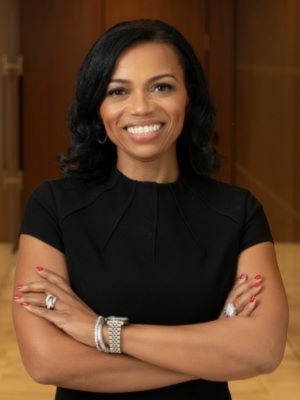
 “Future leaders will need learning agility above everything else,” says Erika Irish Brown. “The pace of change is only accelerating. Today it’s AI, but we don’t yet know what we’ll be navigating tomorrow. What we do know is that the leaders who thrive will be the ones who stay curious, stay open and embrace change rather than resist it.”
As part of The Glass Hammer’s Where Are They Now series, we are catching up with leaders we have spoken with before to see how their careers and perspectives have evolved over time. Erika Irish Brown, now Head of Talent Management and Engagement at Citi, has long been focused on creating opportunity and building inclusive workplaces. In this next chapter of her career, she shares how that mission is expanding as organizations rethink leadership, mobility and learning in an era defined by rapid technological change.
Q: What are you currently working on?
As Head of Talent Management and Engagement at Citi, my focus is on our global, talent centric approach to supporting our workforce—one that invests in people, creates opportunities for growth and fosters a culture where everyone can thrive.
Our team leads all of Citi’s efforts around development planning, talent designations, talent processes and succession planning. We also oversee enterprise coaching, our engagement activities including 12 global Inclusion Networks and Talent Management and Engagement Councils across each business and function.
Q: What is inspiring you to lead in the future?
What inspires me about leading into the future is the real momentum we’re building at Citi. We have a clear strategy, a leadership team driving meaningful change and a firm accelerating on every front, including technology.
AI is opening new doors for our people, helping colleagues find opportunities that match their skills and aspirations. As it becomes more integrated into how we work, it will continue to fuel growth, innovation and faster execution.
You can see this momentum in our focus on mobility. In 2025, we filled more than 55,000 roles with 44% coming from internal moves and promoted over 28,500 colleagues into new roles. And with initiatives like Development 365, more than 165,000 colleagues created personal development plans last year.
The combination of our strategy, our people and the possibilities technology unlocks makes the future incredibly energizing.
Q: What makes Citi special?
What makes Citi special is the combination of our globality and our focus on human-centered leadership. As the world’s most global bank, we have people on the ground in more than 90 countries, which gives us a unique level of cultural fluency. It allows us to connect with colleagues where they are, listen to their experiences and ensure our strategy reflects the realities of each market. Our clients tell us this reach is a true differentiator.
Our scale also means we tackle complex challenges across borders and offer a wide range of roles and career paths within one firm. That combination of global breadth and opportunity is hard to find anywhere else.
What also sets Citi apart is our leadership. Jane Fraser, our Chair and CEO, leads with a clear vision, and her leadership shapes a culture of understanding from the top. She is a trailblazer in financial services and the first woman to lead a major financial institution. Our global footprint – who we are, where we are, and the businesses we run—makes Citi a truly special place to grow and make an impact.
Q: What lessons in leadership have you learned working at the world’s most global bank?
I’ve had the privilege of working at several of the world’s leading financial institutions, and those experiences have deepened my understanding of culture and lived experience and reinforced that ambition and leadership show up differently around the globe. Leadership is packaged in all different ways, and that has underscored the need for our leadership frameworks to evolve.
We have to break the myth that there is only one archetype of a leader, especially when it comes to succession planning. Not everyone will say, “I want to be CEO.” Many people are quiet leaders, and that doesn’t make them any less ready for what’s next.
Leadership doesn’t begin with a title — anyone can lead, and leadership can be shown at every level. At Citi, we measure leadership against three principles: we take ownership, we deliver with pride and we succeed together. Whether you lead a large team or contribute as an individual, how you bring these principles to life is what truly matters.
Q: How have you navigated challenging moments, setbacks or self doubt?
Navigating difficult moments starts with remembering that meaningful and sustainable change doesn’t happen overnight. Impact builds over time. I try to focus on what I can control and release what I can’t. At the end of each day, its important that I am able to look in the mirror and know I used my voice—especially when it was uncomfortable or challenged the status quo. I believe silence is a form of endorsement; if I’m not willing to speak up, then who will?
Setbacks are part of the process, but I stay grounded in my competence and confidence. If you’re competent, you have every reason to be confident. Mistakes are okay as long as you take feedback, course-correct quickly and keep moving. Learning agility and making progress matters far more than perfection.
When things don’t work out, I remind myself that there may be something else in God’s plan. Faith helps keep everything in perspective. And if I can honestly say I fought the good fight and did my best on behalf of others, I can move forward with confidence.
Q: What skills do you think will matter most for future leaders?
Future leaders will need learning agility above everything else. The pace of change is only accelerating. Today it’s AI, but we don’t yet know what we’ll be navigating tomorrow. What we do know is that the leaders who thrive will be the ones who stay curious, stay open and embrace change rather than resist it.
Being a lifelong learner is no longer optional—it’s a leadership requirement. The leaders who succeed will absorb new information quickly, adapt their approach and translate what they learn into action.
At the heart of learning agility is staying curious —the willingness to ask questions, seek out new perspectives and lean into what you don’t yet know. Curiosity keeps you growing, keeps you adaptable and keeps you ready for what comes next.
Q: Who inspired or influenced you most on your journey, and what did you learn from them?
My parents are my biggest inspirations. They set high expectations, especially around academics and STEM. My mother was a junior high math teacher, and my father rose through the New York City Housing Authority to become Head of Computer Services. In our house, if your grades weren’t where they needed to be, the question wasn’t “Did you try your best?” It was “What happened?”
They taught me to be a change agent. If something wasn’t the way you wanted it to be, you had the power and the responsibility to fix it. That mindset shaped me. You have agency. You can challenge the status quo. You can create opportunities that don’t yet exist.
They also taught me the value of effort and the associated outcomes. What you put into something is what you get out—karma. Education, hard work and smart risks can change your life’s trajectory. Those lessons—accountability, agency and effort—have guided my career and influence how I lead today.
Q: What invaluable, specific guidance have you received along the way?
A few pieces have stayed with me:
- Listen first. Let the culture shape your understanding. Listen to understand, not to reply.
- Invest in people. Exposure, opportunity and access change outcomes. Meet people where they are, lift as you climb and bring others on the journey with you.
- Lead authentically. People, including yourself, thrive when they build trust and feel psychologically safe.
- Challenge the status quo. Commitment and persistence pay off. Be brave and use your voice. Innovate.
Q: What do you impart upon those you mentor — or would impart upon your younger self?
Be ambitious, take stretch assignments and stay curious. Don’t assume your work will speak for itself — advocate for your own growth. And always consider the legacy you’re building. Making a difference doesn’t have to be grand; it can start with creating an opportunity for even one person to succeed.
Q: Has coaching supported you in your journey, and if so, how?
I have absolutely benefited from coaching. At Citi, executive coaching is a capability we invest in as part of our Talent strategy because we know it elevates performance; it’s not about fixing a problem. Just as elite athletes rely on coaches to refine their craft, high performing leaders gain so much from trusted advisors who help deepen self awareness, strengthen impact and navigate complexity with greater effectiveness. When we prioritize continuous development, we position our leaders and our organization to succeed in an environment that is constantly evolving.
Q: Looking ahead five to ten years, what kind of future are you hoping to help create?
Looking five to ten years ahead, I want to build on the true meritocracy here at Citi. My focus is on a deep, durable leadership pipeline where the next generation is prepared for and stepping into senior roles, ready to run the firm and succeed our most senior leaders.
Equally important is an environment where inclusion shows up in outcomes. Our leadership should reflect the communities and clients we serve, and every colleague should have the same opportunity to grow, to lead and to succeed based on performance, potential and ambition. If we keep investing in people and creating real mobility, Citi will be even stronger, more inclusive and positioned for long term success.
Q: What practices help you sustain energy and resilience?
Staying connected to purpose, spending time with my family and staying close to colleagues keeps me grounded and energized. And for balance, I carve out one hour of Orangetheory Fitness almost every day– the best reset is 60 minutes of self-care.
Q: What are you passionate about in your personal life?
Outside of work, I’m passionate about giving back, especially when it comes to youth development and community programs. My years with the Riverside Hawks — as a parent, board member and advocate — have been some of the most meaningful experiences of my life. I also serve as Vice Chair of the Bedford Stuyvesant Restoration Corporation, which has been a cornerstone of Central Brooklyn for decades.
Service has always been a big part of who I am. I’ve been an active member of Delta Sigma Theta Sorority, Incorporated for more than 35 years, and I’m also a proud member of The Links, Incorporated. And staying connected to my alma mater is important to me too, so I continue to give back through my work on the Columbia Business School board.

Radical Candor: A Practical Approach to Accountability on Teams
Career Advice, Career Tip of the Week!That gap matters. Because when teams cannot reliably follow through on what they agree to, it becomes difficult to build momentum, make decisions stick, or deliver consistently as a group.
For many teams, accountability is one of the hardest behaviors to translate into practice. It is easy to agree, in principle, that teams should hold one another accountable. It is much harder to know what that looks like in real conversations, especially when relationships, power dynamics, and organizational pressures are in play.
Why Accountability Breaks Down
The Five Dysfunctions of a Team framework offers a clear model for what teams need in order to be effective and cohesive. Accountability sits near the top of the pyramid, build on a foundation of trust, productive conflict, and clear commitment. Teams first need to be able to have vulnerability-based trust, then healthy debate, then clear decisions. Only after that can people realistically hold one another accountable.
What the model does not always answer is how accountability conversations actually happen.
Even well-resourced, strategically aligned teams can struggle to sustain accountability. The challenge is not a lack of intent, but the nature of the behavior itself. Holding someone accountable requires naming something uncomfortable. It requires you to say, out loud, that an agreement was not met and to do it in a way that preserves the relationship, the trust, and the team’s ability to move forward.
When those conversations do not happen, the ripple effects go well beyond a missed deadline. People may stop raising concerns, stop pushing for clarity, and over time, stop believing the team can deliver on its shared goals.
So, if accountability is so central to team effectiveness, why is it so hard to sustain?
Because at its core, accountability requires uncomfortable conversations and many of us were never taught how to have them well.
A Framework for Accountability Conversations: Radical Candor
One useful framework for navigating these conversations is radical candor. Coined by Kim Scott in her book Radical Candor: Be a Kick-Ass Boss Without Losing Your Humanity, radical candor is an approach to communication that emphasizes two things at once: challenging directly while caring personally.
This is not the same as “brutal honesty.” In fact, in Scott’s framework, brutal honesty sits in a quadrant she calls Obnoxious Aggression, characterized by being critical without caring, or being clear but not kind. For example, public callouts, sarcasm disguised as feedback, or “I’m just being honest” used as an excuse to be harsh.
Radical candor, by contrast, is about having compassion while being transparent. It means being willing to say the hard thing while staying connected to the humanity of the person you are speaking with. It assumes positive intent, even when addressing negative behavior.
Scott’s model also includes two other quadrants that illustrate what it looks like when communication is not balanced between caring personally while challenging directly.
Ruinous Empathy sits in the quadrant of high care, low challenge. This is what happens when someone avoids giving clear feedback to spare feelings or keep the peace, absorbing someone else’s missed deadline rather than addressing it or letting a pattern continue because “they’re going through a lot right now.” It feels compassionate in the moment, but the person never receives the information they need to improve, and the team quietly absorbs the cost of a problem that was never named.
Manipulative Insincerity falls in the quadrant of low care, low challenge, and looks like “nice to your face, critical behind your back.” A team member agrees to a plan in a meeting but complains privately that it is unrealistic. A leader avoids addressing missed commitments directly while venting about them to peers. This behavior is particularly toxic because it erodes the trust that is fundamental to a cohesive team.
Radical Candor Is Not Just for Managers
While the revised edition of Scott’s book is subtitled “Be a Kick-Ass Boss Without Losing Your Humanity,” she is clear that radical candor is not meant to be hierarchical. It should be practiced up, down, and across. Teams are strongest when everyone feels responsible for naming issues and maintaining shared standards.
Practical Ways to Apply Radical Candor
Let us look at some examples of how to use radical candor to maintain accountability on a team, whether you are speaking with your direct report, colleague, or leader.
Leader to Direct Report
In this context, the leader’s role is not just to manage performance, but to protect the team’s agreements:
Here, care is shown through respect and support; challenge is shown through naming the pattern and its impact.
Peer to Peer
This is the kind of accountability that is truest to Patrick Lencioni’s use of the term in his Five Dysfunctions of a Team model:
The script above works because it opens with relationship, not accusation, and grounds the challenge in shared impact rather than personal frustration.
Direct Report to Leader
While giving feedback in an upward direction may feel risky given potential power dynamics, if psychological safety is present, it can reinforce shared commitments and strengthen trust:
When leaders invite and respond well to this kind of feedback, they model accountability as a shared value rather than a power dynamic.
Building Cohesive Teams in Practice
Accountability is not about policing behavior or enforcing rules; it is about protecting the team’s purpose.
Radical candor provides a practical way to do that without sacrificing relationships or culture. It creates a norm where people can name issues early, address them directly, and move forward together.
Ultimately, accountability is a form of respect. It says: Our work matters. Our goals matter. And we value each other and our team enough to have the conversations that matter.
Without it, teams may remain polite, but they will never become truly cohesive.
At Evolved People Coaching, the coaching arm of theglasshammer.com, we work with leadership teams who are looking to transform the way they work and bring their team to the next level. Our team development workshops draw on the Five Behaviors of a Cohesive Team framework alongside evidence-based communication approaches like Radical Candor, helping teams move beyond theory into real conversations. We work alongside teams to build the trust, language, and habits they need to navigate conflict productively, hold one another accountable to shared commitments, and deliver meaningful results together.
Contact us to learn more!
Powering the Future: Erika Irish Brown, Head of Talent Management and Engagement, Citi
PeopleAs part of The Glass Hammer’s Where Are They Now series, we are catching up with leaders we have spoken with before to see how their careers and perspectives have evolved over time. Erika Irish Brown, now Head of Talent Management and Engagement at Citi, has long been focused on creating opportunity and building inclusive workplaces. In this next chapter of her career, she shares how that mission is expanding as organizations rethink leadership, mobility and learning in an era defined by rapid technological change.
Q: What are you currently working on?
As Head of Talent Management and Engagement at Citi, my focus is on our global, talent centric approach to supporting our workforce—one that invests in people, creates opportunities for growth and fosters a culture where everyone can thrive.
Our team leads all of Citi’s efforts around development planning, talent designations, talent processes and succession planning. We also oversee enterprise coaching, our engagement activities including 12 global Inclusion Networks and Talent Management and Engagement Councils across each business and function.
Q: What is inspiring you to lead in the future?
What inspires me about leading into the future is the real momentum we’re building at Citi. We have a clear strategy, a leadership team driving meaningful change and a firm accelerating on every front, including technology.
AI is opening new doors for our people, helping colleagues find opportunities that match their skills and aspirations. As it becomes more integrated into how we work, it will continue to fuel growth, innovation and faster execution.
You can see this momentum in our focus on mobility. In 2025, we filled more than 55,000 roles with 44% coming from internal moves and promoted over 28,500 colleagues into new roles. And with initiatives like Development 365, more than 165,000 colleagues created personal development plans last year.
The combination of our strategy, our people and the possibilities technology unlocks makes the future incredibly energizing.
Q: What makes Citi special?
What makes Citi special is the combination of our globality and our focus on human-centered leadership. As the world’s most global bank, we have people on the ground in more than 90 countries, which gives us a unique level of cultural fluency. It allows us to connect with colleagues where they are, listen to their experiences and ensure our strategy reflects the realities of each market. Our clients tell us this reach is a true differentiator.
Our scale also means we tackle complex challenges across borders and offer a wide range of roles and career paths within one firm. That combination of global breadth and opportunity is hard to find anywhere else.
What also sets Citi apart is our leadership. Jane Fraser, our Chair and CEO, leads with a clear vision, and her leadership shapes a culture of understanding from the top. She is a trailblazer in financial services and the first woman to lead a major financial institution. Our global footprint – who we are, where we are, and the businesses we run—makes Citi a truly special place to grow and make an impact.
Q: What lessons in leadership have you learned working at the world’s most global bank?
I’ve had the privilege of working at several of the world’s leading financial institutions, and those experiences have deepened my understanding of culture and lived experience and reinforced that ambition and leadership show up differently around the globe. Leadership is packaged in all different ways, and that has underscored the need for our leadership frameworks to evolve.
We have to break the myth that there is only one archetype of a leader, especially when it comes to succession planning. Not everyone will say, “I want to be CEO.” Many people are quiet leaders, and that doesn’t make them any less ready for what’s next.
Leadership doesn’t begin with a title — anyone can lead, and leadership can be shown at every level. At Citi, we measure leadership against three principles: we take ownership, we deliver with pride and we succeed together. Whether you lead a large team or contribute as an individual, how you bring these principles to life is what truly matters.
Q: How have you navigated challenging moments, setbacks or self doubt?
Navigating difficult moments starts with remembering that meaningful and sustainable change doesn’t happen overnight. Impact builds over time. I try to focus on what I can control and release what I can’t. At the end of each day, its important that I am able to look in the mirror and know I used my voice—especially when it was uncomfortable or challenged the status quo. I believe silence is a form of endorsement; if I’m not willing to speak up, then who will?
Setbacks are part of the process, but I stay grounded in my competence and confidence. If you’re competent, you have every reason to be confident. Mistakes are okay as long as you take feedback, course-correct quickly and keep moving. Learning agility and making progress matters far more than perfection.
When things don’t work out, I remind myself that there may be something else in God’s plan. Faith helps keep everything in perspective. And if I can honestly say I fought the good fight and did my best on behalf of others, I can move forward with confidence.
Q: What skills do you think will matter most for future leaders?
Future leaders will need learning agility above everything else. The pace of change is only accelerating. Today it’s AI, but we don’t yet know what we’ll be navigating tomorrow. What we do know is that the leaders who thrive will be the ones who stay curious, stay open and embrace change rather than resist it.
Being a lifelong learner is no longer optional—it’s a leadership requirement. The leaders who succeed will absorb new information quickly, adapt their approach and translate what they learn into action.
At the heart of learning agility is staying curious —the willingness to ask questions, seek out new perspectives and lean into what you don’t yet know. Curiosity keeps you growing, keeps you adaptable and keeps you ready for what comes next.
Q: Who inspired or influenced you most on your journey, and what did you learn from them?
My parents are my biggest inspirations. They set high expectations, especially around academics and STEM. My mother was a junior high math teacher, and my father rose through the New York City Housing Authority to become Head of Computer Services. In our house, if your grades weren’t where they needed to be, the question wasn’t “Did you try your best?” It was “What happened?”
They taught me to be a change agent. If something wasn’t the way you wanted it to be, you had the power and the responsibility to fix it. That mindset shaped me. You have agency. You can challenge the status quo. You can create opportunities that don’t yet exist.
They also taught me the value of effort and the associated outcomes. What you put into something is what you get out—karma. Education, hard work and smart risks can change your life’s trajectory. Those lessons—accountability, agency and effort—have guided my career and influence how I lead today.
Q: What invaluable, specific guidance have you received along the way?
A few pieces have stayed with me:
Q: What do you impart upon those you mentor — or would impart upon your younger self?
Be ambitious, take stretch assignments and stay curious. Don’t assume your work will speak for itself — advocate for your own growth. And always consider the legacy you’re building. Making a difference doesn’t have to be grand; it can start with creating an opportunity for even one person to succeed.
Q: Has coaching supported you in your journey, and if so, how?
I have absolutely benefited from coaching. At Citi, executive coaching is a capability we invest in as part of our Talent strategy because we know it elevates performance; it’s not about fixing a problem. Just as elite athletes rely on coaches to refine their craft, high performing leaders gain so much from trusted advisors who help deepen self awareness, strengthen impact and navigate complexity with greater effectiveness. When we prioritize continuous development, we position our leaders and our organization to succeed in an environment that is constantly evolving.
Q: Looking ahead five to ten years, what kind of future are you hoping to help create?
Looking five to ten years ahead, I want to build on the true meritocracy here at Citi. My focus is on a deep, durable leadership pipeline where the next generation is prepared for and stepping into senior roles, ready to run the firm and succeed our most senior leaders.
Equally important is an environment where inclusion shows up in outcomes. Our leadership should reflect the communities and clients we serve, and every colleague should have the same opportunity to grow, to lead and to succeed based on performance, potential and ambition. If we keep investing in people and creating real mobility, Citi will be even stronger, more inclusive and positioned for long term success.
Q: What practices help you sustain energy and resilience?
Staying connected to purpose, spending time with my family and staying close to colleagues keeps me grounded and energized. And for balance, I carve out one hour of Orangetheory Fitness almost every day– the best reset is 60 minutes of self-care.
Q: What are you passionate about in your personal life?
Outside of work, I’m passionate about giving back, especially when it comes to youth development and community programs. My years with the Riverside Hawks — as a parent, board member and advocate — have been some of the most meaningful experiences of my life. I also serve as Vice Chair of the Bedford Stuyvesant Restoration Corporation, which has been a cornerstone of Central Brooklyn for decades.
Service has always been a big part of who I am. I’ve been an active member of Delta Sigma Theta Sorority, Incorporated for more than 35 years, and I’m also a proud member of The Links, Incorporated. And staying connected to my alma mater is important to me too, so I continue to give back through my work on the Columbia Business School board.
Futures Industry Gathers in Boca to Discuss Where Risk Management Ends and Gaming Begins
NewsThe Futures Industry Association (FIA) held their annual FIA Boca conference in Boca Raton, Florida March 8-11, 2026. The annual gathering brings together institutional investors and professionals in the listed and over-the-counter derivatives markets with an emergence of digital asset firms and retail brokers joining in the past few years.
One of the hot topics this year was the rise of prediction markets, which can be a useful risk management tool enabling participants to hedge against uncertain future events. However as these markets evolve, there is growing concern about when they cross the line from risk management tools to gaming and speculation?
A Repackaged Product
From a structural perspective, prediction market contracts are not new. Many of them are variations of instruments the financial industry has traded for decades. Most operate as fully collateralized products known as binary options. Binary options are contracts that only pay out a fixed amount if a specific event occurs. The buyer will only lose what he spent to buy the option if the event does not occur.
“Everyone is looking for what is next,” says Jim Kharouf, Chief Marketing Officer at IncubEx, which designs and develops environmental derivatives. “We have seen the evolution from the institutional derivatives to e-minis, and options to zero-day contracts and so on. Prediction markets, and even crypto, are more examples of the next layers of innovation.”
While versions of these contracts have existed since the late 1990s, new players have brought a wave of excitement, and potential for scale and scope. Last year, the CME Group announced a partnership with Fanduel (they hired former Chicago Bulls player Scottie Pippen to promote the products at this year’s FIA Boca conference.) Another recent partnership between InterContinental Exchange and Polymarket has brought additional buzz to the prediction market space. Other notable names include Robinhood and Draftkings.
The collaborations represent a shift in the derivatives markets. These exchanges, which traditionally service institutional and professional traders, are introducing event-based trading to a much broader audience with consumer facing platforms. While the foundation of the product has stayed the same, it is the entrance of new participants and the events in which they are trading on, which has brought up these pressing questions.
A Natural Progression
Christopher Hehmeyer, a derivatives industry veteran who was most recently CEO of Warwick Capital, says that we must reframe the issue in terms of public perception. He wonders whether the American public sees a meaningful difference between trading a contract on the next Taylor Swift concert and taking a position in gold.
“It’s gaming on U.S. entertainment versus risk management,” he says, explaining that betting on pop culture events may feel closer to traditional gambling than financial trading.
However, Hehmeyer also points to prediction instruments that serve a clearer economic purpose. Weather contracts, for example, allow businesses and individuals to hedge against environmental risks that can be difficult or expensive to insure.
Contracts tied to weather outcomes are traded on platforms such as Kalshi, a regulated U.S. exchange that offers event-based contracts on topics ranging from economic indicators to climate data.
“If insurance is too expensive, the option to buy a weather contract hedging against a hurricane is a type of risk management,” he says. “That’s not gaming.”
In that scenario, a business located in a hurricane-prone region might buy a contract that pays out if a storm strikes its area. The payout could offset revenue losses caused by the disruption, functioning similarly to an insurance policy.
This illustrates the central challenge regulators face. The same financial instrument can be used in very different ways. A coastal business might use a hurricane contract to hedge real financial exposure, while a retail trader in another state might simply be speculating on the outcome.
The debate therefore often centers less on the structure of the contract and more on the underlying event being traded. As prediction markets expand, this distinction is becoming increasingly important.
A Regulatory Impact
Finally, another complication is the regulatory framework itself. In the United States, prediction markets exist in a complex environment overlapping financial regulation and state gambling laws. Some contracts are treated as derivatives, while others may be restricted depending on how regulators interpret their purpose. Also, states may lose out on potential tax revenue, if there isn’t regulatory certainty and federal legislation, as trading activity shifts to platforms that operate outside of traditional gaming structures.
While prediction markets may be part financial innovation and part speculative entertainment, it is clear that the underlying idea is gaining momentum. As technology makes it easier for individuals to trade on real-world outcomes, prediction markets may become an increasingly visible part of the financial landscape. It is now up to the regulators and policymakers to decide where the line is drawn between real-world risks and betting on the unpredictable.
Powering the Future: Joanna Fields, CEO, Aplomb Strategies Inc.
PeopleBy Jessica Darmoni
“Future leaders must not only understand technology but wield it responsibly to protect reputational integrity in a world where data breaches and automation carry profound consequences,” says Joanna Fields, a financial market veteran who remains focused on enterprise risk management.
Fields has almost 30 years of experience spanning global asset classes such as equities, derivatives, fixed income, futures, treasury, digital assets and capital markets as well as experience with decentralized physical infrastructure networks (DePIN), telecom and utility industries. She has built a reputation not only as an enterprise risk management expert, but as a leader in market structure and financial governance. She sat down with The Glass Hammer to discuss the importance of resilience, reinvention and a human approach to leadership.
The Art of Balance
“This may sound like an unlikely beginning, but I started out as a professional ballerina,” says Fields, who has led market structure initiatives and designed risk governance frameworks.
As a dancer, she learned aplomb, which is the art of balance and stabilization under pressure. She learned teamwork, discipline, and the necessity of believing in yourself even when the spotlight felt overwhelming.
Fields may never have gone into finance, if it weren’t for a car accident that halted her dance career.
“It was a devastating moment and made me redefine not just my profession but my identity.”
Supported by her father’s steadfast commitment to the Socratic method of education which encouraged questions, analysis, and critical thinking; she took a risk into the world of finance and technology.
Fields started her career in market regulation at the Chicago Board Options Exchange and the International Securities Exchange. She went on to hold Head of Market Structure roles and lead compliance departments at Deutsche Bank Securities, Inc and Credit Suisse First Boston.
Her contribution to financial markets, as she describes it, has been “keeping it safer.”
Fields is good at identifying patterns of fraud and misconduct. She has developed surveillance tools to strengthen governance frameworks and has helped institutions avoid “gotcha” regulatory moments.
She believes there will be pivotal themes in 2026 including; how to use artificial intelligence safely while protecting data privacy, the rise of DePIN, emerging regulatory frameworks such as the Genius Act, and the increasing sophistication of cybersecurity fraud.
In a rapidly evolving technological environment shaped by AI, blockchain, DePIN, and crypto markets, her ability to merge technology with risk oversight has become critical.
Rising with Support and Purpose
While Fields has many professional achievements, her greatest source of inspiration is a personal one. In 2022, her daughter experienced sudden vision loss.
“We spent countless hours in a hospital room navigating all the uncertainties. It was a scary and emotional time but my daughter remained unwavering,” she remembers. “She continues to believe that women can do anything, build anything and achieve anything.
They found that sports, in particular softball clinics at Northwestern with dedicated coaches, shifted their perspective.
“We focused on what was possible instead of what had been lost. We had a strong team of family and friends around us that reframed the adversity as a challenge to be met with collaboratively.”
Throughout her journey, Fields has learned that unexpected challenges are inevitable. What matters is the community you build and the confidence you develop in your specialty over time.
“It’s about who you surround yourself with and who will help you rise. Everyone stumbles. What defines a career, or a life, is how you respond to it.”
Leadership is about Legacy, Not Titles
Fields has also dedicated time to mentoring students from Barnard College and Columbia University. Her advice to young women entering the workforce is practical and empowering.
“Try to get two offers and negotiate the best one. Know your worth. You will spend eight to twelve hours a day at work; choose a team you enjoy and respect. Do not be afraid to take risks. And when you are right, stand firm—while remaining open to negotiation and alternative viewpoints. If you are wrong, own it. Clear communication and thoughtful articulation,” she emphasizes, “are foundational to leadership.”
When asked what impact she hopes to create, her answer is twofold.
“I want financial markets to be safer. I want to be able to use technology proactively against fraud and misconduct.”
Fields also finds satisfaction in seeing those she has worked with grow into long-term careers of their own.
“Leadership is not about titles but about legacy.”
Looking forward, she believes the leaders who will thrive are those who can harness AI securely, protect data privacy, and clearly articulate their value in an increasingly automated world.
“As roles evolve, the ability to communicate your unique contribution will be paramount,” she asserts.
From ballerina to financial risk strategist, from navigating personal tragedy to mentoring the next generation, Fields embodies aplomb in its truest sense: balance, grace and strength under pressure.
The Return on Investment for Executive Retreats
Career Advice, Career Tip of the Week!Executive wellness retreats are often judged by their immediate costs: time away from work, financial investment, and short-term disruption. But their real return on investment shows up in longer-lasting gains such as clearer thinking, personal growth, and greater resilience. This makes them powerful tools for leaders operating in complex environments.
Below are a few takeaways when considering an executive retreat including: how participants can become some of your best friends, introducing you to new ideas and concepts as well as how retreats help you take action and strengthen a part of your brain called “the willpower muscle.”
A Social Media Algorithm IRL
In an era where algorithms shape what we read, watch, and believe, executive retreats offer something increasingly rare: a human algorithm designed for growth. The people you meet at retreats introduce you to new programs, ideas, books, music, leadership frameworks, and ways of thinking, but without the advertisements or agendas. Instead of being fed what reinforces who you already are, you are exposed to perspectives that gently, and sometimes uncomfortably, stretch who you might become.
Most leaders seek out retreats based on interests they already have, which immediately creates common ground. Whether it’s leadership development, wellness, strategy, or personal growth, you arrive knowing that everyone in the room has chosen to invest time, money, and attention into becoming better at something that matters. This shared intention accelerates trust.
Retreat Friends Can Be Some of Your Best Friends
What makes retreat connections particularly powerful, however, is not the similarities, but the differences. Retreat participants often come from outside your industry, geography, or social circle. They are people you would not naturally encounter in your day-to-day routine. That distance from familiarity creates space for impact. These individuals can influence not just what you think, but how you think and feel about your everyday life. Their questions land differently, their observations bypass internal defenses and their stories linger.
Over time, retreat friends often become some of your most meaningful relationships. They occupy a unique category, separate from family, colleagues, and long-time friends. There is little overlap, which creates a rare psychological safety. They can offer a clean perspective during moments of career inflection because they don’t know your boss, your board, your team or your history. It can be easier to share ambitions, doubts, and fears with people who hold no preconceived narrative about who you are supposed to be.
For executives, this matters because leadership can be isolating. The higher you rise, the fewer places exist where you can speak openly without consequence. Retreat relationships provide a neutral ground and one where insight is not filtered through politics or expectations. In those conversations, clarity often emerges not because someone gives advice, but because they listen without agenda.
Nothing Changes If Nothing Changes
Beyond relationships, retreats catalyze change in a more fundamental way. Awareness alone does not transform behavior. As comedian Theo Von succinctly put it, “Nothing changes if nothing changes.” Many leaders already know what they want to improve whether that be better health, stronger presence, clearer priorities or more balance. The challenge is not knowledge; it’s execution. Retreats create a structured interruption to routine that makes execution possible.
By removing leaders from their habitual environments, retreats disrupt autopilot thinking. They introduce friction, reflection, and intentional practice. Whether through guided discussion, physical challenge, or skill-building exercises, participants are asked to do something different and that is where growth takes place. Retreats provide a container where discomfort can feel purposeful rather than punishing, and experimentation can feel safe rather than risky.
Importantly, effective retreats do not exist in isolation from real life. The goal is not escape, but integration. The most impactful retreats help leaders translate insight into daily practice; how to bring a new habit, mindset, or leadership behavior back into boardrooms, meetings, and home life. Change becomes tangible when leaders leave with both inspiration and a practical path forward.
The Willpower Muscle
There is also a neurological dimension to this process. Addressing hard things quite literally grows the brain. Research points to the Anterior Mid-Cingulate Cortex, also known as the “willpower muscle,” as a key region involved in resilience, effort, and decision-making. This area increases in size when people engage in productive struggle, such as intense physical exercise or learning new skills. In other words, leaning into difficulty enhances cognitive agility.
Executive retreats often create precisely this kind of productive struggle. They ask leaders to confront limiting beliefs, test physical or mental endurance, and practice unfamiliar ways of thinking. The result is not just emotional insight, but biological reinforcement. Leaders who repeatedly choose to challenge themselves strengthen the neural pathways associated with persistence and adaptability, which are two traits essential in complex, fast-changing environments.
Choose Challenge Over Comfort
The value of executive retreats is not necessarily found in luxury locations or curated schedules. It is in the connecting of people, perspective, and purposeful discomfort. Retreats act as a living algorithm, introducing leaders to ideas and individuals they didn’t know they needed, accelerating self-awareness, and making change unavoidable.
For leaders committed to growth, retreats are not a break from real work. They are the work. They sharpen the mind, expand the network, and create the conditions where meaningful transformation can occur. In a world optimized for convenience, choosing a challenge and choosing people who challenge you, may be the most strategic decision of all.
————-
Evolved Wellbeing – the new executive wellbeing coaching and retreat company, brought to you by Nicki Gilmour, the Founder of theglasshammer.com. This is part of the Evolved People portfolio of offerings – that connects professional development to executive sustainability. Wellness is the cornerstone of high performance.
Nancy Stern: Managing Director and General Counsel, Simplex Trading
People, Voices of ExperienceBy Jessica Darmoni
“The (trading) industry is built on people working together,” explains Nancy Stern. “You have to think of your interactions as long-term relationships. Something that makes sense in the short term may not serve you—or others—over time. You always have to ask: what are the unintended consequences?”
That long-term view has shaped Stern’s approach at career inflection points, business strategies and regulatory guidance. After first speaking with Stern over 10 years ago, The Glass Hammer sat down with her to talk about where she is now.
Today, as Managing Director and General Counsel of Simplex Trading, Stern stands at the intersection of market structure, regulation, technology, and leadership. She is the first, and only, lawyer at the 20-year-old market-making firm, a role that requires both precision and perspective.
Building Legal Infrastructure in a High-Speed Market
Simplex Trading operates as a market maker in the fast-moving world of equity options, where milliseconds matter and volumes have exploded. They continuously buy and sell options to capture the bid-ask spread. The firm is connected to 17 exchanges and has traders on the trading floor at Cboe Global Markets.
Over the past decade, the equity options market has transformed dramatically. Retail participation has surged. Trading volumes have exploded. Zero-day-to-expiration (0DTE) options have compressed time horizons to a single day—sometimes blurring the line between investment and entertainment for retail traders. In this environment, risk evolves quickly.
“We are in the business of taking risks,” Stern says. “My job is evaluating those risks. You have to understand the full picture—but most importantly, you have to adapt.”
Simplex historically relied on outside counsel. As the business grew more sophisticated, leadership recognized the need for an in-house legal leader to manage risk proactively, implement processes, and help shape culture from within.
Stern stepped into that role not only to mitigate legal exposure, but to build systems that support sustainable growth.
Her mandate includes implementing new procedures, strengthening governance, and aligning culture with regulatory expectations, all while keeping pace with accelerating technological change, including the integration of AI tools that are reshaping industries at unprecedented speed.
“The pace of change continues to accelerate,” she notes. “The tools are new but in many ways, the challenges are iterations of what we’ve faced before. That’s what makes it exciting to put these new tools into practice.”
From General Counsel to CEO, and Back Again
The Glass Hammer first met Stern in 2015 as Executive Vice President, General Counsel and Secretary of Allston Trading. She went on to become CEO of the proprietary trading firm, which was then acquired by DV Trading in December 2021. After the acquisition she joined futures commission merchant and clearing firm, ABN Amro, as Chief of Staff and General Counsel until 2024.
Her earlier career includes partner roles at Katten Muchin Rosenman LLP and Gardner Carton & Douglas LLP (now Faegre Drinker Biddle & Reath LLP), where she built the legal foundation that would later support her executive leadership.
Transitioning from General Counsel to CEO required more than technical skill, it required self-awareness.
“Coaching was very important to me,” Stern reflects. As she prepared to step into the CEO role, she worked with an executive coach and encouraged her team to do the same. “Understanding your strengths and weaknesses is essential. Sometimes you need someone outside your organization to help you think clearly.”
That investment in self-knowledge became a catalyst for growth.
Resilience, Realism, and Knowing When to Walk Away
Leadership, especially in high-stakes financial environments, inevitably includes moments of doubt. Stern approaches setbacks with a problem-solver’s mindset, and with realism.
“You have to ask yourself: Is this a situation I can improve? Or should I walk away? Can I make this better, or would someone else do a better job?”
She describes herself as loyal and deeply committed however she also recognizes limits. Not every system can be fixed from within and not every environment is the right one.
For women navigating leadership roles, that distinction is powerful: resilience does not mean staying at all costs. It means making thoughtful, courageous decisions about where you can create impact.
Mentorship in All Directions
When asked who influenced her most, Stern doesn’t name a single figure.
“I’ve been fortunate to have mentors at every stage and from all directions,” she says. “Senior people, junior people, peers.”
She learned the craft of law from colleagues in law firms. She learned how to lead organizations by listening to those who understood the pulse of the business and the pain points of its people.
What does she value most?
“Anyone willing to speak the truth, even when it’s difficult.”
Now, she pays that forward. Mentorship is one of the impacts she most hopes to create.
“There are people with tremendous talent who just need guidance on specific questions. If I can help them move forward, that’s incredibly satisfying.”
What the Future Demands from Leaders
As markets evolve, so must leadership. Stern believes future leaders will need empathy and the ability to put others first.
“Strong listening skills, sound judgement and the ability to sift through vast information to make principled decisions will be demanded of our leaders,” she emphasizes.
Stern also believes that execution, the discipline to turn vision into reality will be crucial.
“Vision without execution doesn’t count,” she says.
In an era of accelerating AI adoption, shrinking time horizons, and increasingly complex market participation, those human-centered skills may matter more than ever.
Leading Into the Future
What inspires her now?
“New tools. New experiences. New ways to approach old challenges.”
Despite decades of experience across law firms, trading floors, executive suites, and boardrooms, Stern remains energized by evolution.
Her leadership is not about chasing speed but about thoughtful adaptation, long-term relationships as well as clear-eyed risk assessment and helping others grow along the way.
In industries often defined by volatility, Stern’s career is a reminder that sustainable leadership is built not only on expertise, but on empathy, integrity, and the courage to continually adapt.
Making the Most of Your Coaching Investment
Career Advice, Career Tip of the Week!Coaching is not something that happens to you. It is a partnership that depends on how you show up, what you practice between sessions, and how intentionally you apply insights in real-world situations. This final section focuses on how to maximize the value of coaching once you decide to invest so that the time, energy, and resources you commit translate into meaningful, lasting impact.
Come to Sessions Prepared
Treat coaching sessions as some of the most important meetings on your calendar. They are one of the few spaces designed entirely around you and your growth.
Before each session, take time to reflect on what has happened since your last conversation. What situations tested you? Where did you feel effective, or stuck? What commitments did you make, and what progress did you notice?Clarifying one or two priorities you want to focus on allows the session to go deeper, faster.
Your coach can work with whatever you bring, but the leaders who gain the most from coaching arrive with intention, not just updates.
Be Genuinely Open and Honest
Executive coaching works because it creates a confidential space for conversations that rarely happen elsewhere. It is the place where uncertainty, doubt, frustration, and missteps can be examined without consequence.
If you find yourself showing up polished, guarded, or overly strategic, pause. The most meaningful breakthroughs often come from exploring the things you hesitate to say out loud, like patterns you see but have not named, decisions you are avoiding, or feedback you are struggling to integrate.
This is not about oversharing or self-criticism. It is about speaking truth to what matters to move towards meaningful growth. Coaching is most powerful when it reflects what is actually happening, not what you wish were true.
Implement Between Sessions
The real work of coaching happens between conversations. Sessions create clarity and direction; progress comes from what you practice afterward.
This might include testing new leadership behaviors in meetings, applying decision-making frameworks in real time, soliciting feedback from colleagues, or carving out space for reflection. Small experiments done consistently are what turn insight into sustained change.
Coaching is active, not passive. Leaders who treat sessions as stand-alone conversations miss much of the value. Those who apply, reflect, and adjust between sessions see momentum build quickly.
Give Yourself Time to Grow
Leadership development is not linear. New habits take practice and perspective shifts happen gradually. Confidence grows through repetition, not revelation.
Most executive coaching engagements run three to six months at a minimum for this reason. Expect progress, but not perfection. Some weeks will feel energizing and clear; others may surface tension or discomfort. That is not a sign something is not working—it is often a sign you are working at the right level.
Consistency matters more than intensity. Small, sustained changes compound over time.
Share Your Development Strategically
While coaching conversations remain confidential, being open about your commitment to development can be beneficial. Letting your manager or select colleagues know that you are engaged in coaching signals ownership of your growth and often creates positive accountability.
It is not necessary to share details, but even naming the capabilities you are working on, like strategic thinking, executive presence, or navigating complexity, can reinforce alignment and invite support.
When done thoughtfully, this transparency normalizes leadership development and reinforces that growth is not remedial, it is expected.
Invest in Yourself
Executive coaching requires an investment of time, focus, and financial resources. The question leaders rightly ask is whether it is worth it.
Research consistently suggests that it is, but the return is not purely financial. Many of the leaders we profiled here on theglasshammer.com pointed to lasting and meaningful impacts of executive coaching such as enhanced emotional intelligence, more effective communication, embracing a growth mindset, and an improved ability to flex one’s leadership style. Coaching can help leaders avoid years of frustration, misalignment, or stalled growth by accelerating learning that might otherwise come only through trial and error.
Organizations recognize this value as well. Companies that invest in leadership development through coaching often see higher engagement, stronger retention, and more resilient leadership pipelines.
Your Next Steps
If you are considering executive coaching, here is how to move forward thoughtfully.
Step 1: Clarify What You Want
Be specific about what would make coaching valuable for you. “Become a better leader” is too broad. “Strengthen my strategic voice in executive forums” or “prepare for a larger role within the next 12–18 months” gives focus and direction.
Your goals may relate to advancement, transition, leadership effectiveness, team performance, or sustainability. Clarity at the outset helps ensure the coaching engagement is designed to serve what matters most.
Step 2: Explore Support Options
Start by looking inside your organization. Many companies sponsor executive coaching for leaders, particularly at moments of increased scope, transition, or growth. If coaching is not already offered, raising the conversation with HR or your manager can be a productive first step, especially when framed around leadership effectiveness and business impact.
At Evolved People Coaching, we partner with both individuals and organizations, tailoring engagements to leadership goals, business realities, and development needs. We offer assessments, including qualitative 360 feedback reports, to ground the work in data, providing a clear picture of strengths, patterns, and opportunities that inform a focused coaching plan from the start.
Whether sponsored by your organization or self-funded, the goal is the same: a coaching relationship designed to support meaningful, sustained growth.
Step 3: Commit Fully
Once you decide coaching is right for you, commit to the process. Protect time for sessions and reflection, engage honestly with the work, and apply what you are learning consistently.
Leaders who approach coaching with curiosity and discipline see results faster and more reliably.
Step 4: Measure and Adjust
Effective coaching includes regular check-ins on progress. Are you moving toward your stated goals? What changes are you noticing? Where do you want to go deeper?
These conversations keep the work aligned and ensure the engagement continues to serve your evolving needs.
The Choice That Changes Everything
Talent and hard work matter, but they are rarely enough on their own. The leaders who grow most effectively are intentional about their development. They seek feedback. They invest in perspective. They build capabilities before they are urgently needed.
You can navigate leadership through trial and error, learning slowly and reacting as challenges arise. Or you can engage a strategic partner who helps you think more clearly, act more intentionally, and grow with purpose.
If you are ready to explore what executive coaching could look like for you or your organization, schedule a complimentary exploratory conversation with Nicki Gilmour, founder and CEO of theglasshammer.com and Evolved People Coaching here: BOOK SESSION
Powering the Future: Katherine Kirkpatrick Bos, General Counsel, StarkWare
PeopleZKPs enable verification without disclosure—complete, sound, and private. While often discussed in the context of blockchain scalability and transaction speed, their possible use extends far beyond cryptocurrencies. Healthcare records, voting systems, and government services all rely on forms of verification that routinely overshare personal data. Zero-knowledge technology offers a path to redesign those systems around privacy by default.
“StarkWare is deep, cutting-edge technology,” she says. “These are some of the smartest cryptographers and developers in the world.”
This potential drew Kirkpatrick Bos to StarkWare, a company building cryptographic systems at the frontier of zero-knowledge technology. The work is not only about present-day challenges. StarkWare has also developed quantum-resistant technology—an increasingly urgent priority as advances in quantum computing threaten existing cryptographic standards.
“Quantum computing could break a lot of what we rely on today,” she notes. “Quantum-resistant code makes that significantly harder.”
Choosing the Right Room
Prior to joining StarkWare, Kirkpatrick Bos was in listed derivatives on digital assets. She was the Chief Legal Officer of Cboe Digital, a U.S. regulated exchange and clearinghouse for spot crypto and crypto derivatives markets; and General Counsel of Maple Finance, a capital efficient corporate debt marketplace which facilitates crypto institutional borrowing via liquidity pools funded by Decentralized Financial (DeFi) ecosystems. Kirkpatrick Bos was also a partner in the Special Matters and Government Investigations practice at King & Spalding.
Kirkpatrick Bos is candid about career inflection points. She has experienced the frustration of executing a plan within a business that wasn’t growing as expected—and realizing she wasn’t in the room where the real decisions were being made.
“That’s a difficult place to be,” she says. “Especially if you believe you could be doing more.”
The response, in her view, is rarely comfort. It is movement.
“It’s much easier to stay where you are than to start over,” she notes. “But if you want growth, you have to take that risk.”
She is especially direct about this advice for women, who are often encouraged—explicitly or implicitly—to value stability over advancement.
“I’ve always approached my career strategically. You have to understand what’s next.”
Mentorship, Integrity, and Judgment
Kirkpatrick Bos credits much of her professional grounding to early mentors, including a senior partner she worked with for over a decade at King & Spalding.
“He could be prickly,” she recalls, “but he inspired loyalty through integrity.”
That lesson—never compromise ethical standards—has stayed with her. So has the importance of seeing what is possible. Senior women who pushed boundaries in their careers made abstract ambition tangible.
“If you see it, you can be it,” she emphasizes. “If others are doing it, it’s not impossible.”
The guidance she now imparts is unsentimental and practical: protect your principles, make hard decisions when required, put your family first, and outsource what you can.
Leadership in an Age of AI
As artificial intelligence reshapes professional services, Kirkpatrick Bos remains skeptical of claims that judgment can be automated.
“AI is a powerful tool,” she acknowledges. “But it can’t replace instinct.”
Over her career, she has seen lawyers develop competence through experience—and others who never do.
“Judgment is hard to teach. Problem-solving, instinct, knowing when something doesn’t feel right—that still matters.”
As General Counsel, much of her role is translation: helping regulators understand technology, and helping technologists understand the law.
“You have to listen carefully,” she says. “Then explain things in a way the other side can actually understand.”
Why It Endures
There are always difficult days. Seniority does not eliminate friction; it reframes it.
What sustains Kirkpatrick Bos is the belief that the work itself matters—that she is helping shape the legal and regulatory framework for technologies that will define the next generation.
She imagines a future where people look back in disbelief at how much personal information was once routinely shared to prove a single fact.
Innovative technology, she believes, does more than improve systems. It keeps people engaged, even when the work is hard.
And in that sense, zero knowledge is not just a cryptographic concept—it is a blueprint for more thoughtful leadership.
By Jessica Darmoni
How Executive Coaching Works
Career Advice, Career Tip of the Week!Understanding how coaching actually works is the next step. The process itself is often discussed in abstract terms, which can make it difficult to know what to expect or how to evaluate whether coaching is right for you. This article takes a practical look at what happens inside a coaching engagement, how coaching conversations unfold, and what to consider when choosing a coach.
The Coaching Process
Most executive coaching engagements follow a structured rhythm rather than an open-ended or ad hoc approach. Coaching typically begins with an initial contracting and discovery phase, during which you and your coach clarify what your “north star” will be – the overarching goals you want to work on throughout the engagement. Even if you do not exactly know this as a defined sentence or paragraph, your coach will skillfully help you ascertain “what good looks like” by the end of the engagement.
In many engagements, this early phase includes the use of assessments or 360-degree qualitative feedback reports. These may involve leadership style inventories, personality or strengths assessments, or confidential feedback gathered from managers, peers, direct reports, and key stakeholders. At Evolved People Coaching, we offer assessments such as DiSC, Five Behaviors of a Cohesive Team, and the Hogan Leadership suite as well as comprehensive qualitative 360 stakeholder interviews and thematic feedback reports. The purpose of these tools is not evaluation or performance management, but insight. They help surface patterns, blind spots, and discrepancies between how leaders see themselves and how others experience them.
When used well, assessments and 360 feedback provide a shared data set that informs the coaching plan. They help focus the work on what will have the greatest impact, grounding coaching goals in both self-perception and external feedback.
From there, coaching sessions typically take place every two to four weeks and last between 60 and 90 minutes. Each session builds on the last, creating continuity and momentum over time. Sessions often include reflection on recent experiences, exploration of current challenges, examination of patterns or assumptions, and agreement on actions to test before the next meeting.
However, it is the action and work between sessions that really creates the forward momentum. Leaders apply new approaches, experiment with behaviors, seek feedback, and reflect on outcomes. This between-session application is where coaching moves from insight to meaningful change.
Most engagements last between three and twelve months, depending on the scope of goals and the complexity of the leader’s context. Some leaders engage a coach for a specific transition or challenge, while others work with a coach across multiple stages of their career.
What Actually Happens in Coaching Sessions
Coaching conversations differ from consulting or mentoring conversations in one important way: the focus is not on advice-giving. Rather than telling you what to do, a coach uses questions, reflection, and observation to help you think more clearly and see situations from new angles.
You might be asked questions such as: What feels most important here? What outcome are you aiming for? What assumptions are shaping your response? What are you saying “no” to if you say “yes” to this? What would it look like to experiment or bring curiosity to those challenging moments?
Over time, this style of inquiry helps leaders strengthen their own capacity for reflection and decision-making. Many leaders find that they begin asking themselves these questions outside of coaching sessions, applying the thinking process independently.
In addition to asking questions, a coach acts as a mirror. They may reflect patterns they notice, for example how you talk about success, where you hesitate, how you frame challenges, or where energy rises or drops. These observations help close the gap between intention and impact, allowing leaders to make more deliberate choices about how they show up.
The Coach–Client Relationship
At the core of effective coaching is a relationship built on trust, confidentiality, and partnership. Coaching conversations are confidential, even when the coaching is sponsored by an organization. This confidentiality creates psychological safety, the ability to speak openly about uncertainty, doubt, and complexity without fear of evaluation or consequence.
The relationship is also collaborative. You set the agenda for each session, decide what to work on, and choose which actions to take. The coach’s role is not to direct your career, but to support your thinking, challenge your assumptions, and help you stay aligned with your goals.
This partnership is what makes coaching distinct from mentoring, consulting, or performance management. The value lies not in expertise about your job, but in the quality of thinking the relationship enables.
Choosing the Right Executive Coach
The effectiveness of coaching depends heavily on the quality of the fit between coach and client. While there is no single “right” coach for everyone, several factors matter consistently.
Professional credentials provide a useful baseline. Certifications from organizations such as the International Coaching Federation (ICF) indicate that a coach has completed formal training, adheres to ethical standards, and has been assessed on coaching competency. While credentials alone do not guarantee quality, they signal a serious commitment to the profession.
Relevant experience is also worth considering. Some coaches specialize in particular industries, leadership levels, or types of transitions. Depending on your situation, experience in a similar context may help a coach understand your challenges more quickly. That said, strong coaching skill often matters more than industry expertise, as effective coaching centers on facilitating your thinking rather than providing content knowledge. Nicki Gilmour, our founder and head coach believes there is value in working with coaches who also have a background in social-organizational psychology, social work or clinical psychological or adult learning in addition to being a certified coach. Nicki states,
“Executives are part of a wider eco-system of other humans and their behaviors. This along with cultural norms around how work gets done, and other factors such as management practices, policies, systems and processes, means the work is powerful when seen through context of the team, manager and company itself. Empowering people to map the ‘systemic enablers and disablers’ when navigating their success in addition to looking at optimizing how they show up, creates impactful results.”
Chemistry and trust are critical. Coaching requires openness, reflection, and a willingness to be challenged. At Evolved People Coaching we offer a complimentary initial consultation or chemistry session. Use this time to notice whether you feel heard, whether the questions prompt new thinking, and whether the interaction feels both supportive and stretching. We have a range of coaches who have different styles (DiSC/Insights) and personalities and even backgrounds to ensure you get the right person to be able to be honest and vulnerable in the private sessions. We have an associate pool of ten coaches who we trust.
Finally, consider logistics and structure. Coaching is most effective when it fits realistically into your life. Discuss session frequency, format, and expectations upfront. Most coaching today occurs virtually, offering flexibility in both scheduling and access, but structure and consistency still matter. Face to face still matters and can be done, but virtual also works as well.
A Foundation for Making the Most of Coaching
Understanding how executive coaching works helps you engage more intentionally — whether you are considering coaching for the first time or refining an existing engagement. Coaching is not a passive experience. Its impact depends on clarity of goals, quality of the relationship, and the leader’s willingness to reflect, experiment, and apply insights in real time.
In Part 3 of this series, we will turn to how leaders can make the most of their investment in coaching. We will explore how to approach coaching with intention and practical next steps for beginning a coaching relationship that genuinely supports your growth.
If you are ready to start, please book in with Nicki Gilmour to have a complimentary call to explore your goals and challenges and be matched with the right coach here: BOOK SESSION
By Jessica Robaire, writer for theglasshammer, executive coach at Evolved People Coaching
Your Leadership Development Partner in 2026: How Executive Coaching Transforms Your Career Journey
Career Advice, Career Tip of the Week!Against this backdrop, choosing to engage an executive coach gives leaders the opportunity to think more deliberately about how they lead and how they grow. Research suggests that executive coaching supports improvements in leadership effectiveness, self-awareness, goal clarity, and resilience. Behaviorial flexing to learning, thinking styles and task styles are capabilities and can be learned as skills and have become increasingly important as roles expand and complexity increases.
To offer a comprehensive view of executive coaching, this three-part series explores not only its potential benefits, but also what executive coaching is, how it works, and how leaders can make the most of the investment. Whether you are an executive paying for your own development or an HR professional looking for leadership development coaches and team coaching in an offsite format, we want to hear from you.
Part 1 focuses on why executive coaching matters. It reviews the evolving demands on leaders, and the concrete outcomes associated with a high-quality coaching engagement.
Part 2 looks behind the curtain at how executive coaching actually works — what happens inside a coaching relationship, how the process unfolds, and how to evaluate and select the right coach for your goals, style, and context.
Part 3 turns to how to make the most of your investment, exploring how to actively engage in coaching to accelerate growth and practical next steps to move forward.
Why Executive Coaching Matters
Corporate training budgets today remain heavily weighted toward technical skills, systems training, and compliance requirements. Leadership development, when it exists, is often episodic rather than sustained. Traditional mentorship programs have largely disappeared in remote and hybrid environments. The informal learning that once happened through hallway conversations and after-work gatherings has changed in quantity and also was never a completely consistent practice by or for all.
Meanwhile, leadership complexity has intensified. Leaders are managing teams across time zones, navigating constant technological change, making decisions with incomplete information, and doing it all while maintaining work-life integration that often feels elusive.
Engaging with an executive coach helps leaders chart a path through the complexity. It provides personalized development when organizations cannot, strategic guidance when you are facing novel challenges, and accountability when it is easy to deprioritize your own growth.
This personalized approach matters because leadership is not one-size-fits-all. The skills that make you effective are deeply connected to who you are: your values, your strengths, your communication style, your life circumstances. Coaching helps you develop leadership that is both effective and authentic.
What Executive Coaching Actually Delivers
Let’s move beyond abstractions to concrete outcomes you can expect from a quality coaching engagement:
1. Clarity That Drives Action
Given the many demands on leaders today, it is no wonder that many feel like they are operating in perpetual reaction mode: responding to emails, attending meetings, and putting out fires. Coaching creates space for leaders to step back and ask fundamental questions: What am I actually trying to achieve? What matters most? Where should I focus my limited time and energy? What does success look like for me personally, not just professionally?
This clarity becomes a decision-making filter so that when opportunities arise, you can evaluate them against your actual priorities rather than defaulting to yes or getting swept along by others’ agendas. Research shows that working with an executive coach increases goal clarity and goal attainment, helping leaders move from urgency-driven behavior to intentional, strategic action.
2. Self-Awareness That Transforms Effectiveness
You cannot see yourself the way others see you. You can’t observe your own patterns, blind spots, or the gap between your intentions and your impact. This is where coaching becomes invaluable.
Through powerful questions, reflection exercises, and sometimes formal assessments, coaching builds the self-awareness that distinguishes good leaders from great ones. You discover how your communication style lands with different people, which strengths you’re overusing or undervaluing, what triggers cause you to react rather than respond, and where your assumptions limit your possibilities. Of note, leadership research consistently links emotional intelligence, of which self-awareness is a key component, to leadership effectiveness, team cohesion, and motivation, which executive coaching helps leaders develop over time.
3. Strategies for Your Specific Challenges
Leadership challenges are often maddeningly context-specific. How do you give difficult feedback to a high performer who has behaviors that negatively effect team culture? How do you influence senior stakeholders when you lack formal authority? How do you manage your energy when your role demands constant availability? How do you make the case for promotion without seeming entitled?
Books and training programs offer general principles. Your coach helps you develop strategies tailored to your specific situation, taking into account your organizational culture, your relationships, your constraints, and your goals. Generic advice rarely moves the needle; specific strategies do.
4. Accountability That Drives Change
Knowing what to do and actually doing it are entirely different challenges. We’ve all set goals only to abandon them when the daily grind takes over. Coaching provides structure and accountability that transforms intentions into actions.
Your coach holds you accountable not through judgment but through partnership. Between sessions, you implement agreed-upon actions, experiment with new approaches, gather feedback, and track progress. They then return to reflect on what worked, what didn’t, and what to adjust next. This cycle of action and reflection is where lasting change occurs.
5. Resilience to Navigate Setbacks
Every career includes setbacks: projects that fail, promotions you don’t get, relationships that sour, or reorganizations that derail your plans. How you respond to these moments often matters more than the setbacks themselves.
Coaching builds resilience by helping you process challenges productively, maintain perspective, develop coping strategies for high-stress situations, learn from failure without internalizing it as identity, and sustain motivation over time. Leadership coaching has been shown to increase leaders’ confidence in navigating their roles and improve trust in their direct reports, both critical factors in bouncing back from challenges.
6. Skills That Compound Over Time
Some professional development delivers immediate returns but little lasting value. Coaching is different. The skills you develop, like emotional intelligence or communication effectiveness, compound throughout your career.
A feedback framework learned today remains useful for decades. Increased self-awareness carries across roles and organizations. Communication shifts ripple through every future relationship. This compounding effect explains why coaching continues to deliver value long after the formal engagement ends.
7. Permission to Lead Authentically
Many professionals feel pressure to conform to leadership stereotypes that do not fit who they are. The charismatic extrovert. The tough boss. The relentless competitor.
Coaching offers a third option: developing a leadership style that is both effective and authentically you. This means honoring your values while building influence, leading in ways that energize rather than drain you, using your natural strengths rather than trying to eliminate weaknesses, and building teams that complement your style rather than compensate for it. Coaching helps you lead from a place of integrity and self-knowledge rather than imitation.
8. A Thinking Partner for Complex Decisions
Senior leadership can be isolating. The higher you rise, the fewer people you can speak with candidly. Your direct reports need confidence. Your boss evaluates judgment. Your peers may compete.
An executive coach becomes a confidential thinking partner, someone without agenda or judgment, providing a confidential space to think out loud, test ideas, and consider implications before acting. Having this thinking partner is not a sign of weakness; it is a strategic advantage that many effective leaders leverage intentionally.
A Deliberate Investment in How You Lead
Executive coaching is about supporting leaders at moments when complexity increases, stakes rise, and familiar strategies no longer suffice. In a workplace defined by constant change, coaching offers something increasingly rare: time, perspective, and partnership focused entirely on how you lead and how you grow. If you are ready to be matched with one of our coaches, please book a free exploratory conversation with our Founder and Head Coach, Nicki Gilmour here: BOOK SESSION
By Nicki Gilmour, Founder and CEO, theglasshammer and Evolved People Coaching