
Tag Archive for: self-awareness

perceptual lensMost of us think that our beliefs are truth. But beliefs are not facts. Rather, they are a core part of
 our perceptual lens, and thus very powerful in shaping our everyday experiences.

Psychologists refer to this as a perceptual set – a predisposition to perceive things in a certain 
way, which leads us to notice only certain aspects of an object or situation while ignoring other
 details. I like to refer to these as perceptual lenses, because it’s literally the “lens” which you
 unconsciously and subconsciously perceive the world through that’s driving your behavior.

There are all kinds of perceptual lenses, and each of us tends to use, and overuse, our own few
 personal favorites. For example, when someone has a competitive lens, they will relate to almost
 any situation as though it is a competition, whether or not any such competition exists. Someone
 with a binary lens will relate to most situations as if there is only one right answer, and
 everything and everyone else is wrong.

Typically, we each have a few favorites that we apply no matter what the context. Because we
 are using these few lenses by default, they often are not appropriate to the context. We need to
 expand past our tired old playlist.

There are two kinds of lenses: generally helpful lenses, and those that are impeding when 
overused.

Generally helpful lenses:
  • Collaborative lens. The I-win-when-you-win-approach.
  • Optimistic lens. “Everything always works out for the best, even if it doesn’t seem so in the moment.”
  • Create possibility lens. It temporarily sets aside all perceived obstacles, problems, or doubts, in order to give you freedom to imagine an ideal.
  • Opportunity lens. With this lens, you ask yourself, “How can I find an opportunity in whatever situation I face?”
Impeding lenses:
  • “Problems to fix” or “what’s wrong” lens. With this lens, someone is always looking
 for something to go wrong; they are always wondering what can go wrong here, what
 will go wrong here?
  • Victim lens. “It doesn’t matter anyway.” “I can’t make a difference.” “Bad things always happen to me.”
  • Distrust/“It’s not safe” lens. A person with this lens operates from a default position that the world around them is inherently dangerous.
  • Binary/“black or white” lens. With this lens, a person tends to view situations as “either/or.” There’s no gray area, there’s no middle ground.

Each of these lenses has its own set of underlying beliefs and assumptions. You see what your
 lens shows you.

If you habitually default to the same lens all of the time, in every situation, then you are not 
perceiving the actual circumstances and environment around you. You are seeing only what your
 lens shows you. You are making assumptions instead of gleaning useful data that would more
 constructively guide your choices and actions.

You can’t be human and be without any lenses, but you can be aware of your lens, as well as be 
intentional about choosing an appropriate lens for any given situation. There is a place for a 
competitive lens and a collaborative lens, for a problems lens and an opportunity lens, and so on.
 What does not serve us is to blindly and automatically apply one lens across the board no matter
 what is actually happening.

Road Bump To Choosing A New Lens: You’re Attached To Your Story

You can’t change your lens while wearing your current lens. The people who have the hardest
 time transforming their leadership, or their lives, are those who hold onto their own story very,
 very tightly. Their self-image is dependent upon them being “the one who always_________.”
 The one who’s always right. The one who never gets what they want. The one who always 
achieves. The one who always cleans up after others. The one who’s the smartest. The one who 
is always betrayed. When you are so locked into your story, then a change of perceptual lens can 
feel destabilizing. If you aren’t the one who always is this or that, or who does this or that, then 
who are you?

When you step into the unfamiliar territory of using a new lens, you need to be willing to “try” it 
out. On some level you will feel some relief—because you are choosing a lens that empowers
 you— but on another level you are likely to resist the feeling of change.

Recognize your discomfort for what it is: your ego’s inner defenses against change. The 
solution? Acknowledge that discomfort while trying on the new lens— even though it feels odd,
 contradictory, or just plain impossible. You keep doing that again and again until the new lens 
can start to stay in place, and the new lens becomes the new you.

Initially, you aren’t going to have “proof ” that any of these helpful lenses will bring you better 
results than your current, impeding lens. You can only give them a try. Be curious, open,
 experimental. Lean into it. Doing so increases your options. And pay attention to what happens; 
observe your new results. Loosen up on your own story until you really get that your story is not
 you. That’s the only way that true change can happen.

By: Jody Michael is the author of Leading Lightly: Lower Your Stress, Think with Clarity, and Lead with Ease (Greenleaf Book Group Press, 2022). She is CEO of Jody Michael Associates, a coaching company specializing in executive coaching, leadership development, and career coaching. She is recognized as one of the top 4% of coaches worldwide and is an internationally credentialed Master Certified Coach, Board Certified Coach, University of Chicago trained psychotherapist, and Licensed Clinical Social Worker.

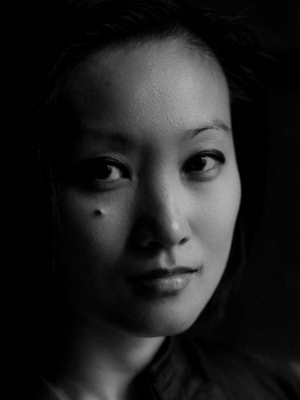
Elena Kim“I found a different lease on my otherness. I can’t chase everybody’s projection of me,” says Elena Kim, “but the more I recognize the uniqueness of my own experience, the more I feel I have to offer.”

Kim speaks to how she learned to dream, connecting through differences, emotional regulation and integrating masculine and feminine aspects of leadership.

How the Invitation To Dream Changed Everything

Kim spent the first six years of her career in investment banking in Moscow, before the financial crisis of 2008. She decided to take the ‘opportunity’ of the market slump to invest in herself by pursuing an MBA. While filling out the application, she had to answer where she envisioned herself in five years, which she had never considered: “It quickly became a self-discovery journey for me.”

When Kim pondered what she cared or was passionate about, she realized she didn’t know what she really wanted.

“It was the first time when I allowed myself to dream as if anything was possible,” reflects Kim. “At that time, it was films and TV series – my window into the bigger world, into a different world. Growing up in Uzbekistan, I never had allowed myself to even consider the possibility of working in entertainment.”

She received her MBA from UCLA Anderson School of Management in Los Angeles when digital media was becoming prevalent in media and entertainment, which created a permissive playing field of newbies. Jumping on the rising wave of digital transformation as major players were just coming onto the scene, she joined a startup and began to reinvent her career path.

For several years, she acquired film and TV content for digital platforms, such as Hulu, Vimeo and iflix. For the past three years, she has negotiated and licensed music rights for programming across broadcast, cable, local TV networks and streaming platforms, which gives her a bird’s eye view of the whole TV and film industry.

“What I’m passionate about is figuring out what makes people’s hearts beat faster. What do they really love to watch and what determines that?” she says.

Having worked across emerging markets, she observed the obvious: whereas what people prefer to watch in Latin America might differ from that in Eastern Europe, Middle East, Africa or Southeast Asia, the love for stories about human experience is shared universally.

The Curiosity to Learn

Early on, Kim believes that her strongest asset was curiosity and willingness to dig deep into a subject. She notes she had amazing teachers who taught her the structure of learning a new skill and how to dissect a new concept to understand it.

“So how do you learn a new industry, for example? You look at the main players and their business models: how do people make money? What is the current political, economic, legislative environment impacting the industry? What are the major trends? What stands behind the main buzzwords?” asks Kim. “As you learn the basics, you then start tuning into where the opportunity is. What forms core competitive advantage, and what is driving the opportunity, what needs to hold true to fully unleash value? etc.”

When she was coming from Russia to the U.S., shifting from banking to media, she applied this process: “It became very clear to me that the wind was blowing towards online viewing, and I knew I wanted a job that had something to do with digital distribution.”

She loves how digital distribution of content included many more voices in a global dialogue. Regardless of where you are from and what you believe, you can connect over Game of Thrones or Friends.

The Value In Our Differences

As an avid globe trotter (over 60 countries and counting), she finds traveling therapeutic. She especially enjoys interacting with local people who don’t speak her language, figuring out ways to communicate beyond verbal. She holds such memories dear to her heart after surviving an earthquake in Nepal, sharing music with children from indigenous tribes in Indonesia, self-driving through Botswana and Namibia with local hitchhikers, getting help from local police after being robbed in Argentina, for example.

During one such trip, she traveled to Peru and had her first experience with plant medicine under the guidance of a local shaman, who held space with due reverence to ancient practices and traditions: “This was learning on a cosmic level. I won’t even attempt to describe it in words. If my spiritual inquiry started with understanding the concepts of neuroplasticity (who you are today is not a verdict), my awakening was turbo charged by living through the learning during this psychedelic experience.”

Kim continues, “One of the things now running through my veins is the knowing that what makes me connect with people is the ways in which we are similar, what intrigues and draws me to people is the ways in which we are different.”

“My personal journey with ‘otherness’ has been an emotional roller coaster. I am Korean ethnically, born in a Muslim country of Uzbekistan, mentally grew up in Russian culture in the Russian society,” says Kim. “Now I live in the U.S. as a gay woman, a scientifically-inclined spiritual psychonaut, where I’m ‘too woo woo’ in analytical circles and ‘too in my head’ in esoteric environments, etc. Of course, these are mostly distorted self-assessments.”

Growing up, she felt the disconnection of being Asian in Russia by not ‘presenting’ as Russian. Yet she speaks Russian, not Korean or Chinese, for which she’s regularly mistaken. Last year, prior to the current geopolitical crisis, she spent time in Russia, where she identified a piece in herself that she feels is Russian: her sense of depth. She does not give people any box to put her in anymore: “I don’t even fit the labels I have for myself,” she notes, “I’ve stopped explaining. ‘I’m from Russia’ is all I say now.”

To Kim, whatever makes us different is what helps us to represent a specific side of humanity as part of the whole. She resonates with Jerome Braggs’s notion that if you believe in universal oneness, then excluding experiences that are unique leads to robbing others of a fuller wholeness. Therefore, the more different we’re perceived we are, the more important it is for us to show up in all areas of life – and she notes those differences are defined in so many ways beyond ethnicity, race, gender or sexual orientation.

Integrating Feminine and Masculine Traits in Leadership

In a previous role, Kim was encouraged to start an initiative to foster diversity, equality and inclusion across employees from 40+ different countries and cultural backgrounds, which activated for her the importance of so-to-speak “feminine” qualities of leadership, especially when dealing with something intangible like what gives people a collective sense of purpose, belonging, safety for authenticity, and striving for excellence.

Kim recounts we have historically glorified and rewarded traits of leadership that are labeled as “masculine” – assertiveness, linear thinking, clarity without questioning and go-getting. But traits that we assign as “feminine” – such as empathy, collaboration, creating constructive atmosphere – are considered nice-to-have but not necessarily perceived as attributes of leadership or rewarded.

“The DE&I initiative quickly led me to a path of dissecting and challenging the leadership paradigm that we were operating under,” reflects Kim. “It’s so clear to me that to be successful in a multicultural organization, you have to have an acute level of empathy and cultural awareness. And the soft skills are increasingly becoming must-have.”

She has come to see that “feminine” leadership qualities are a necessary complement to “masculine” qualities, not a compromise or trade-of. “I used to hold this myth that once you start being softer, you lose your edge, an ability to reach goals in a timely manner. I had this notion you either be like a robot or you float in the clouds, and that was a misconception.”

Reflecting on the evolution of her leadership style, she says: “Even if I was telling myself a different story, early on I was truly managing out of egoic fear of losing control. I was never a micro-manager, but I was a micro-controller. I had to know everything, call the shots, be the one interacting with management to control the narrative, etc.”

Kim realizes this came from being extremely demanding on herself, and meant she came off polished and unapproachable. As she steps up as a leader, her focus is increasingly shifting to creating opportunities for others to push their growth edges, normalizing making mistakes while minimizing their impact.

Now she finds herself at a company that’s thriving despite the global pandemic. “We have set clear goals, roles, strategy and timeline, while the flow and interaction within the team remains fluid, supportive and trusting. I don’t need to chase anyone to get their job done, rather keep communicating progress, so folks can self-direct their work streams to deliver on time. This release of control within set boundaries is still work in progress as my ego peeks its head constantly. With that, I find myself being successful at my job, really supported by my team and a much happier me.”

Emotional Regulation and Co-Creation

Kim feels the pandemic, socio-economic inequity, and current geopolitical crises have brought a set of unique challenges around managing people’s mental and emotional states. Leaders are not necessarily equipped with due skillsets, protocols or guidelines to attend to people’s emotional turbulence. She is increasingly interested in the area of emotional self-regulation and has heard many executives speak to challenges of operating in toxic environments where stress and reactivity are the norms: “Even in my relatively emotionally intelligent company, without the acquired self-regulation practices I’ve exposed myself to in the last couple of years, I could not have managed some of the incidents that have come up inside and outside of the company. A simple thing like taking a deep breath might lead to a more beneficial outcome in an emotionally charged situation. These tools are teachable and the impact is quickly palpable.”

Her latest fascinations include Web 3.0 and decentralization, and she’s presently teaching a blockchain fundamentals course at chief.com to a network for executive women.

By Aimee Hansen

transformationThe transformational story of caterpillar to winged butterfly has arguably become an overused and often abused analogy for rebirth. Yet, the crux of the journey is neither the caterpillar nor the butterfly, but the dissolution and uncertainty in the void of the chrysalis.

The messy process of transformation, the surrender of what has been for what will come, both terrifies and excites us. As humans, we face uncertainty in the transformation journey many times in our cycles of personal growth.

It is partially the willingness to go the liminal place of uncertainty that determines our capacity for personal evolution.

We also face a challenging matter the caterpillar does not: how resistant the human ego can be when it comes to letting go of who we have perceived ourselves to be, and the worth and value we have attached to it.

Separate Your Worth From Your Roles

Identity, according to Psychology Today, “encompasses the memories, experiences, relationships, and values that create one’s sense of self.”

In her book Warrior Goddess Training: Become the Woman You Are Meant to Be, Heather Ash Amara speaks to how we often attach value or self-worth to the roles we play within our lives. Any role that we identify with, no matter how valuable it may be to our sense of self, also becomes a too narrow script to ultimately live in.

A role can range anything from a “loving mother” to a “successful executive” to a “good friend” to a “resilient entrepreneur.”

We tend to have a script for every role we play, one that was often written before us. How you perceive yourself and how others perceive you can become a trap. Being stuck to being something you have been proud to identify with can be as much of a cage as being boxed into a role that you never asked for, if you have to keep acting out the script of that role to feel worthiness.

If you’ve attached to the image of being a world traveler, you might buy a ticket when you truly crave a home. You may not even be able to admit to yourself that you crave a home. If you’re attached to being a loving mother, perhaps your script does not include taking the personal break you really need. If you’ve attached your worth to being a good friend, you may have written yourself into a contract of being available more than what is now kind to you.

In order to be free to move authentically in our lives between roles, to both redefine who we are and to expand, we must be able to release ourselves from any script we’ve attached our worth and value to.

So take stock of the roles you are playing:

  • What roles have you currently attached some sense of worth or value to?
  • What is the script you have defined for each?
  • What worth do you derive from playing these roles?

When it comes to change, we have to be willing to question where we have displaced our sense of worth. We rather come to source it from our inherent selves and sometimes tear up or simply re-envision our scripts to fit who we are now.

As Brené Brown often speaks to, we have to stop hustling for our worthiness, which ultimately comes from shame and fear we are not enough. We must realize, as Meggan Watterson writes, “Worth is not given, it’s claimed.”

From a place of knowing our inherent worth, we give ourselves permission to shed who we have been without losing our sense of value in the world, and more importantly, our connection to ourselves.

Harmonize To Where You Want To Be

Inside of personal change, there is often a time of dissolution between a previous reality and the one that you are moving towards. And while you might not be able to see it, you can still harmonize towards where your inner awareness is taking you.

Imaginal cells are like the blank slate of the becoming inside the chrysalis. The caterpillar is gone. Possibility exists. At first, imaginal cells operate like disconnected islands and appear to be a threat to the organism. It is only once enough imaginal cells begin to vibrate at the intrinsic tune of butterfly and communicate with each other that they reach the tipping point of collectively becoming the butterfly.

Often, a time of transformation does involve re-imagining our lives. It’s not only new outcomes we might envision, but begins with our beliefs about ourselves, others and how the world works, as these are often shaping the reality we are operating within. If all the cells still vibrated at caterpillar, the change would never occur.

As Joe Dispenza writes in Breaking the Habit of Being Yourself, “a state of being means we have become familiar with a mental-emotional state, a way of thinking and a way of feeling, which has become an integral part of our self-identity.”

Just as with roles, the truth is that we can derive worth and value and reward from our limiting beliefs about ourselves and the world, even if that value is the ability to stay comfortable inside of our limitations. We must not only be able to see the pattern, but desire to evolve, by actively challenging the more well-oiled perceptual pathways within so that we shift to and harmonize at a new level. As we begin to do this, we notice change begins to happen.

In her book How To Do The Work, Dr. Nicole LePera, also known as “The Holistic Psychologist”, shares her writing practice of leaning into growth through her Future Self Journaling prompts she used to ground new experiences in her body.

For the new experience she wishes to cultivate (eg restoring balance to her nervous system), LePera writes what she is practicing today, why she is grateful to be practicing it, what she is doing, how will she know when she is doing it and what the change will allow her to feel.

This journaling practice is a way to resonate more with the woman she is becoming and with the balanced nervous system she wishes to cultivate. Often we need to practice not only thinking in the direction we are moving, but feeling into it. This act of attention is infusing the conversations happening within the cells with a new way of being within the body.

Even when we don’t know our next big landing place, we can often feel the internal pull to evolve from within even as we must overcome ourselves, just as the being in the chrysalis must release the caterpillar to the open possibility of the imagination of cells.

Are you able to release yourself from the bounds of roles in which you have previously cast your worth? Are you able to harmonize more of your feelings and thoughts and actions with the being you can feel you are becoming?

In the uncertainty of the chrysalis and transition within a human life, this may look like nothing. But little by little, these small practices become the change.

By Aimee Hansen

By Nicki Gilmour, Executive Coach and Organizational Psychologist

Reading is the supreme life hack – medium.com recently declared gifting a list of psychology and philosophy books, a couple of which got added to my (long) reading list.

Reading is an executive habit, with top executives reading at a much higher rate than others, with some stats quoting one book per week. But, it is what you do with what you read that counts.

Behavior change is notoriously hard for anyone. Addiction theory and neuroscience tells us that it takes sixteen weeks to bring a habit.

There is no doubt that our habits are socially acceptable like over working, over extending and never believing enough is enough. Then there is the whole topic of feeling worthy! Our fires are fueled by our self- talk, our mental models and our beliefs – implicit and explicit. Are you consciously goal setting or is the driver of your bus your unconscious mind? Just what role does the belief set that has been formed since childhood play right now? Our fear can fuel us without us ever realizing the agenda it creates while we go about our business.

Are you ready to talk about it and go on a journey of discovery?

Work with nicki@evolvedpeople.com as your executive coach to kill those gremlins!