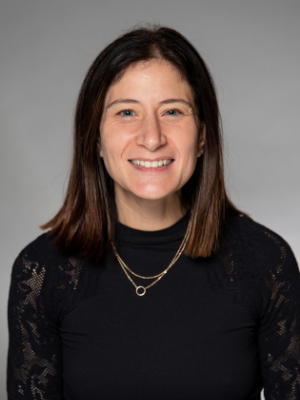

By Jessica Darmoni
“Historically, much of the derivatives business has been passed down through oral tradition,” says Jamila Piracci. “People learned through mentorship or by being in the right place at the right time. While this helped some people, we need to make sure as an industry that we formalize an information sharing process and purposefully strategize succession.”
The Glass Hammer was first introduced to Jamila Piracci when she was the Vice President of Over-The-Counter (OTC) derivatives at the National Futures Association (NFA) where she led a team in designing one of the most significant regulatory frameworks in modern derivatives markets.
Following the passage of the Dodd-Frank Act, Piracci was hired by NFA to establish its swaps regulatory program. The effort required coordinating within the well established futures industry self regulatory body to create processes, recruit staff, and develop oversight mechanisms for swaps market participants. By the time she left NFA to relocate to Texas with her family, the swaps program had approximately 120 professionals, including examiners, risk specialists, auditors, and quantitative experts.
The experience gave Piracci a front-row seat to one of the largest regulatory transformations in derivatives history. Her experience with swaps oversight at NFA, combined with her past roles at the Federal Reserve Bank of New York and ISDA, provided a particularly valuable perspective as the markets evolved. She has a unique ability to help firms understand not only the technical requirements but the spirit of U.S. regulatory frameworks. For emerging leaders entering the futures industry, understanding both the structure of these markets and the policy forces shaping them can be daunting without a formal information sharing process.
Building the Future Workforce
Piracci is working to fix that with work grounded in education. As part of her involvement with the Futures Industry Association (FIA), she contributes to industry development initiatives designed to cultivate expertise across derivatives professionals.
Piracci serves on the FIA Board and is a member of the board’s Membership and Market Structure Advisory Committees. She also instructs a virtual “Swaps 101” course through the organization’s training programs. The course introduces newcomers to the fundamentals of swaps markets—an essential area of modern derivatives trading.
“FIA’s educational initiatives aim to build expertise from the ground up, ensuring a steady pipeline of knowledgeable professionals in the industry,” she explained.
Her own entry into the swaps world reflected a different dynamic. Early in her career, she was handed the 1999 ISDA Credit Derivatives Definitions booklet and told that if she wanted to understand the field, she should read it from start to finish.
“I learned a lot from that experience,” she recalls. “But I also had mentors along the way. That was partly because of where I worked. However, I started wondering what happens to talented people who don’t have access to those same networks?”
Programs like FIA’s educational initiatives aim to answer that challenge by making industry knowledge accessible to anyone interested in learning about derivatives markets.
Democratizing Knowledge
Piracci believes that education and transparency are essential for the long-term sustainability of financial markets.
The concept resonates with broader developments in financial technology, particularly in digital assets. One of the central ideas in that space is democratizing access to financial opportunities and reducing barriers to participation. Piracci sees similarities with education.
“Information should always be democratized,” she says. “The more people understand how these markets work, the more people can participate responsibly.”
By creating structured learning opportunities, the industry can attract new talent and reduce a reliance on informal knowledge transfers. She credits this mindset to her time at NFA, which has become a foundation for her later career values.
“I was responsible not just for recruiting the staff but I also had to ensure they were trained. We built a training program partly based on my experience and partly on NFA’s existing new staff training program,” she said. “I am most proud that the staff became beneficiaries and later leaders of the training structure that we built together methodically over time.”
A Passion for Public Interest
Longevity is a theme that runs through Piracci’s current work too. Today, at Roos Innovations she works with federal regulators, commodity and energy market participants as well as trade associations to help firms build responsibly and endure transitions. Her work also extends to financial services firms seeking registration with the Commodity Futures Trading Commission (CFTC). These engagements often involve creating healthy dialogue and, in some cases, building the pillars necessary for firms to function as regulated entities.
“Many companies today want to become U.S. regulated market participants, ” she says. “This includes commodities firms, as well as digital asset firms and prediction market companies, some of which come from overseas and want insight into how to work with U.S. regulators.”
She also believes that financial markets ultimately serve a broader purpose.
“Transparent, well-regulated markets protect participants but also ensure broader economic growth, which is essential for long-term societal health,” she said.
That philosophy extends into her public service roles. For the past two years, Jamila has served on the CFTC’s Energy and Environmental Markets Advisory Committee, where she was appointed by former CFTC Commissioner Summer Mersinger. The advisory committees provide recommendations and insights to the Commission, helping regulators understand market developments and stakeholder perspectives.
Jamila’s commitment to the public interest also includes extensive work with industry organizations such as Life:Powered, a nonprofit dedicated to improving America’s energy literacy, and the Committee of Chief Risk Officers. Through research and written analysis, she contributes insights on how policy decisions affect consumers and energy markets as well as how they impact risk management choices that have become increasingly more complex.
Skills for the Next Generation
Looking ahead, Jamila believes the most important skill for emerging leaders will be adaptability.
“The ability to learn new things matters more than simply amassing new facts,” she says. “The real skill is learning how to learn differently.”
In a world defined by technological innovation, regulatory change, and evolving market structures, professionals must be able to pivot quickly.
She describes this not merely as managing change but managing volatility.
“This requires a recognition that change is constant and must be embraced rather than resisted,” she says.
A Mission to Share Knowledge
Throughout her career, Jamila has worked at institutions central to the derivatives ecosystem, including regulatory bodies and an industry association. Those experiences gave her insights into how markets function at both policy and transactional levels.
Rather than keeping that knowledge within a small circle, she sees sharing it as a responsibility.
Whether advising firms, supporting industry groups, or sharing knowledge with other professionals, Piracci’s work reflects a commitment to adaptability, education and a talent pipeline that will guide the markets of tomorrow.
In closing, she is reminded of the quote by American writer and futurist Alvin Toffler, “the illiterate of the future will be those who can’t learn, unlearn, and relearn.”