Tag Archive for: crypto

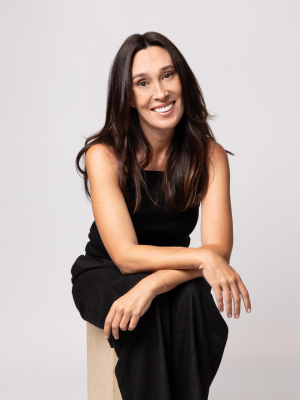
Caroline FriedmanBy Jessica Darmoni

“With the GENIUS Act establishing a federal framework for stablecoin issuance, the window to define what responsible stablecoin infrastructure looks like is right now,” says Caroline Friedman. “That is a moment I wanted to be a part of, and it has been energizing to build a strong team at Bastion to seize it.”

Friedman is the COO and Board Member at Bastion, a financial institution purpose-built for stablecoin services, and she has spent her career preparing for exactly this kind of moment. A founding member of the company, she oversees legal, compliance, finance, operations, and go-to-market, and brings to the role something rare in the industry: extensive experience in both the public and private sectors.

She started as an associate attorney in the government regulations practice at Jones Day in Washington D.C., then became a federal prosecutor in the National Security and International Crimes Unit in the Eastern District of Virginia, and later in the Major Crimes Unit in Colorado. From there she moved into crypto as Chief of Staff and Regulatory Strategy Counsel at Kraken, then as Chief of Staff at a16z crypto, before co-founding Bastion.

From Courtroom to Crypto

The prosecutorial years set a standard Friedman has never lowered. “Federal cases demand precision. Every detail matters and the analysis has to hold up.” That same rigor now runs through every compliance framework and governance structure she builds at Bastion.

Her two Chief of Staff roles gave her something equally formative: a way of seeing across entire organizations at a moment when the crypto industry was still taking shape. At a16z, the vantage point was clarifying. “Sitting close to world-class investment partners and seeing dozens of companies up close was an education in pattern recognition. You see what separates the teams that scale from the teams that stall, and that lens stays with you.”

She is equally direct about what those platform roles built in her as an operator. “I learned how to operate across an entire organization, how to support leaders, how to be a force multiplier and how to build the connective tissue that keeps fast-moving teams aligned. These kinds of roles can shape a career in ways that are hard to replicate elsewhere.”

Built for This Moment

Bastion’s full-stack product suite covers custodial wallet infrastructure, global asset conversion rails, and white-label stablecoin issuance, serving banks, fintechs, and global enterprises that need to move money faster, settle cross-border transactions efficiently, and operate under controls that hold up to scrutiny. Friedman is unambiguous about where the market stands.

“It is clear that the market has shifted. Stablecoins are no longer a niche conversation. There is a federal framework to anchor on, banks are issuing, and enterprises are integrating. There is a lot happening, and Bastion was built for this moment.”

Her compliance-first philosophy is not defensive posturing. It is rooted in a conviction about what makes the technology genuinely valuable.

“Stablecoins are showing up in everyday commerce, corporate treasury and local payment networks. The technology can reach people, businesses, and corridors that the existing system hasn’t served well, but that promise only matters if it gets built in a way that is safe and secure. Regulations exist for a reason. They are there to protect consumers.”

Delegation, Endurance, and the Lego Principle

Building a regulated financial institution from the ground up, Friedman says, requires a specific kind of staying power. “It is a long, often quiet practice in perseverance, dedication, diligence, and constant curiosity. The hardest moments are not always the obvious ones. They are the stretches where the path forward is not yet clear and the only thing to do is keep showing up.”

Her most reliable reset is her children. “There is a clarity that comes from stepping away from screens and into a context where the only thing required of me is to be present. Parenting is the ultimate forcing function. It sharpens what actually matters.”

On the leadership principle she repeats most often, she credits Molly Graham: “Give away your Legos. Every time the company expands, parts of your job have to belong to someone else. The leaders who cannot let go become bottlenecks. The ones who can, who actually celebrate handing something off, make room for the next thing the company needs from them.”

Alongside it, she returns to a second frame: “It is a marathon, not a sprint. The work we are doing at Bastion takes years, not months, and the teams that build something durable are the ones that protect their pace.”

Advice for the Next Generation

For women earlier in their careers, Friedman’s guidance is concrete. Start by understanding the business as a whole, not just your function. “What are the real priorities? Where are the gaps? Who needs to be aligned? The people who build influence early in their careers are the ones who can hold that context and act on it, and that reputation compounds over time.”

Seek roles that stretch, even the ones that resist easy explanation. “The jobs where you have to context-switch constantly, solve ambiguous problems, and get things over the line across multiple workstreams build range. Range is what makes you a strong leader later.”

And take opportunities early, even unconventional ones.

“I interned for free for countless summers through college, law school, and post-grad. Those experiences shaped my career path, helped me build a network early and gave me the confidence to keep exploring. You can create your own narrative, and the skills you build along the way are almost always more applicable than they look at the time. Mine is what gave me the confidence to take a Bastion-sized risk in building a company.”

The Skills That Will Matter Most

On the qualities that will define future leaders, Friedman’s answers are grounded: listening and professionalism. “Most of the time, people are either talking or thinking about what they want to say next, rather than actually hearing the person across from them. Real listening is the greatest gift you can offer in any moment, to a customer, a colleague, a partner. It is also where the best decisions start.”

By professionalism, she means something more than presentation. “Showing up consistently, treating every person you encounter with respect regardless of their seniority, following through on commitments, and bringing the same rigor to the routine work as you do to the high profile work. In an industry where credibility is currency, that consistency matters.”

As for what she hopes Bastion stands for in the end, she points to what gets built on top of it.

“What I am most excited about is what our customers will build on top of Bastion. The innovative, delightful products that will change the way people and businesses use money.” And for the industry itself: “I would like to look back and feel like the frameworks we built at Bastion, the conversations we had with regulators, and the way we ran the company helped move the industry forward.”
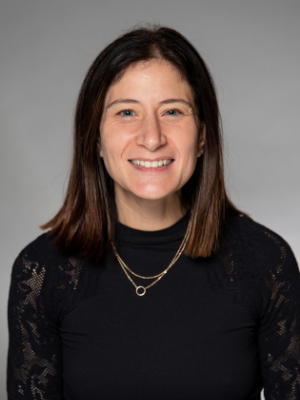
“You should always ask for more when you’re talking about salary,” advises Jessica Titlebaum Darmoni. “You want to demonstrate that you are willing to negotiate for the best rate, for yourself and for them.”

Darmoni speaks to self-educating herself on derivatives, the value of finding your culture match and why asking for more is an astute move.

From Creative Writing to Listed Derivatives to Crypto

Darmoni is a true self-taught financial professional.

After graduating from the University of Maryland with an English-Creative Writing degree, and a backpacking tour of Southeast Asia, she entered into the niche market of listed derivatives. Her CV was picked up online for a marketing role at a technology consulting company. Without knowing much about derivatives or having any industry connections, Darmoni found herself inside an exclusive corner of finance.

At that time, she began reading an industry newsletter published by a journalist/broker John Lothian to learn more about the listed derivatives space. After asking for an internship and working part time for John Lothian News, she went on to become the Head of Sales. Concurrently, thanks to a lot of networking for her role, she was also writing and interviewing for theglasshammer.com from near its inception and for over a decade. She credits a lot of what she has learned to John Lothian as well as The Glass Hammer founder Nicki Gilmour.

She continued to read the Financial Times, thanks to a three year gifted subscription, and has now read the analog paper for sixteen years on a daily basis. She also went back to school for a Masters in Journalism and grew her network in the derivatives space. One of her mentors Karen Wuertz gave her a career-changing piece of advice: get involved with an industry activity.

In 2009, along with her co-founder Leslie Sutphen, Darmoni created the non-for-profit networking organization Women In Listed Derivatives (WILD). At over 1200 women strong, the organization promotes networking and relationship-building among women in derivatives through social, educational and mentoring events.

Reframing the Salary Negotiation

“One of the things WILD taught me was that you should always ask for more in salary negotiations,” recommends Darmoni, who never used to realize how important it was to do so. “In fact, companies could almost expect it, because if you’re on the other side and working for the company, they want you to get them the best deal and ask for the best price. So you want to show that you are willing to negotiate, for yourself and for them.”

She credits a WILD mentor Pat Lunkes for teaching her that when you reframe the salary discussion as part of the interview, it’s not a risk to ask for more but rather a risk not to. Braving the conversation provides another opportunity to qualify yourself and set a tone around your value.

Hearing The Feedback That is Hard To Hear

Darmoni has come to value receiving the feedback that can be hard to hear. She finds even soliciting feedback by asking “why the no” can be very constructive and valuable.

“I used to hate feedback, but I think feedback and constructive criticism is so important. You may have really good intentions and just not know you’re doing something that isn’t working for you,” she says. “The feedback may be really hard to hear and digest, but sometimes it comes from a great place. Even if you may not agree, it’s good to hear it.”

Darmoni provides the personal example of being highly responsive to communication as a matter of practice. It would have been her habit to reply to a message as soon as possible, acknowledge receiving it and promise to come back with a response if she didn’t yet have one, to feel she had closed the loop. Her direct boss challenged her to break this habit and give pause before responding at all.

Now, rather than respond immediately, she steps back and responds only when she has reflected and is ready. Not only does this give her spaciousness for more thought, it shifts her value equation to her insight and expertise, rather than her availability, and helps her clarify her thinking because she’s not focused on just being responsive.

Finding Your Own Cultural Fit

Looking back on her career path, Darmoni stayed in one position for only eight months, when the cultural mismatch was both clear and painful. She emphasizes not to see a poor fit as a missed mark in your journey, but as guidance along the way.

“One of my career goals is to be a Commissioner at the Commodity Futures Trading Commission and I was working for a related regulatory agency. At the time, it felt like such a failure, and I was really disappointed that it didn’t work out,” she recalls. “Now I’m actually very proud of my time there. I think everybody has something on their resume that just didn’t work out the way they thought it would. I went on to find the cultures that I did fit in with.”

While it took getting past the feelings of wanting it to work, Darmoni is glad for the contrast of experiencing a culture she did not thrive in: “I know the dynamic of a team and how important that is, and I’m so grateful for where I am now.”

Shaping a New Asset Class

Darmoni currently works at ErisX, a U.S. based exchange and clearinghouse for crypto spot and derivatives markets. With her current focus on crypto, Darmoni enjoys helping to build a new asset class from the ground up: “Things are still shaking out. The leaders and players are still being developed, and we don’t yet know for certain what the major plays will be.”

As a way to explain Bitcoin, she cites the comparison between gold and Bitcoin as digital gold. Both involve mining, both are fixed in quantity and both have costs associated with mining and storing, so require hedging of risk.

With her passion for regulation, Darmoni would personally imagine there is valuable friction to come from the meeting of the established financial markets and the emerging world of unregulated crypto, though both may have to adjust how they approach the other.

She has a personal hunch that the crypto disruptors might even offer unexpected help: “My personal opinion is that decentralized initiatives may have thought-provoking solutions for problems that the established financial markets have and are working to solve.”

Darmoni admits that her 16-year self-driven love affair with finance, and especially derivatives, comes down to fascination with how much reach the market has in setting the prices of our daily lives and yet how little people know about the market itself, which makes it a powerful industry to be a part of.

The Value of Being Personally Motivated

During a Peloton ride with Robin Arzón that focused on finding your motivation within, Darmoni realized how much she resonated with being internally driven.

“I did not have a financial background so I learned mine through reading, asking questions and establishing relationships. I didn’t know a single person in finance or derivatives, whereas everybody knows everybody in my industry,” she says. “Aim to build relationships with mentors and sponsors. I’ve been lucky to have maintained great relationships with people that have helped me.”

While she used to find FT Weekend’s How To Spend It too frivolous, she admits she treated herself to a wellness retreat she found amidst its page for her 40th birthday.

This woman is even finding her vacations through her passion.

By Aimee Hansen