
Tag Archive for: consulting

Stop Letting Your Career Happen to YouBy Jessica Darmoni

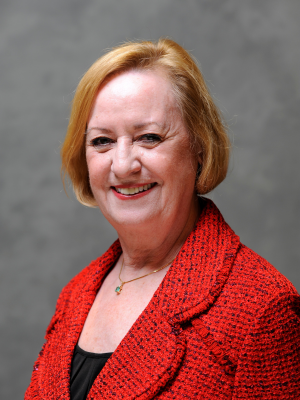
“Make sure to manage your career,” says Patricia Lunkes. “And that your career is not managing you.”

After more than four decades in human resources and as founder of Parkway Consulting Group, Lunkes has spent her career watching people at pivotal moments, whether being hired, promoted or laid off. From that vantage point she notices patterns, the biggest one being that people wait too long to take control.

“It’s very easy to have a career manage you,” she says. “You have to be conscious that it’s going in the right direction.”

While that sounds obvious, it isn’t. In reality, careers drift, promotions come with tradeoffs no one fully evaluates and roles evolve faster than people adapt. Dissatisfaction builds gradually, then suddenly feels overwhelming. By the time many professionals stop to ask whether they’re in the right place, they’re already far from it.

Watching for the Warning Signs

Lunkes offers a simple but powerful framework which she calls “the 80/20 rule” of job satisfaction. If roughly 80% of your work aligns with what you enjoy and do well, you’re in a sustainable place.

“If that ratio slips toward 60/40, it’s not just a bad week, it’s a warning sign,” she says. “And most people ignore the warning sign by rationalizing.”

It is common for employees to look toward that next project, the next boss, or the next year as a solution. Sometimes it gets better, but often it doesn’t, and the cost of waiting compounds not just professionally, but psychologically.

Lunkes knows this firsthand. Twice in her career, she stepped into roles that looked right on paper but were not good cultural fits. In both cases, she says she believed she could change the environment.

“The common denominator was me,” she admits. “That realization is uncomfortable but necessary. We tend to blame circumstances, leadership, or culture. Those factors matter but they don’t replace self-awareness. If you don’t understand what actually fits you, you will keep choosing environments that don’t.”

Reflection Creates Better Decisions

What Lunkes did next is what separates intentional careers from accidental ones: she paused. She stepped back, reassessed, and rebuilt her work around what she genuinely enjoyed, which was meeting people, solving problems, and helping others move forward. Instead of forcing herself into a predefined role, she designed one. That decision became Parkway Consulting Group.

Her path underscores a broader shift that many professionals still resist: careers are no longer linear.

“The most resilient professionals aren’t the ones who follow a plan perfectly,” she notes. “They’re the ones who adjust quickly when the plan stops making sense.”

That requires two things people often undervalue: reflection and honesty.

Lunkes encourages something simple, a “career buddy.” Someone who can listen, challenge your assumptions, and help you distinguish between temporary frustration and a deeper mismatch. In fast-moving industries especially, where roles evolve constantly, that outside perspective can be the difference between a smart pivot and a costly mistake.

The Skills that Matter Most

While reflection is important, it must be coupled with thoughtful execution. Here, Lunkes is blunt about the skills that actually move careers forward today.

Communication sits at the top of the list, meaning not just speaking, but listening, reading a room, and knowing when to stop talking. In hybrid and remote environments, where nuance is easily lost, this skill has become a differentiator.

Adaptability is also important. The professionals who thrive aren’t necessarily the most experienced; they’re the ones most willing to evolve.

Finally, there’s the piece many still struggle with which is boundaries.

Learning to say no sounds simple but it requires confidence, clarity, and practice. For many, especially women, Lunkes notes, it’s a skill developed late, if at all. She emphasizes that without it, careers become shaped by external demands rather than internal priorities.

The same applies to negotiation. Too many professionals treat it as optional or adversarial but, if done well, it signals that you understand value, including your own.

Your Career is Something You Build

Underlying all of this is a mindset shift: your career is not something you endure or inherit. It’s something you actively construct. That doesn’t mean every move will be perfect. Lunkes’ career certainly wasn’t. However, it does mean paying attention regularly, honestly, and without waiting for a crisis to force “the 80/20 rule” question.

The reality is that the market will keep changing. Industries will speed up. Roles will blur. Stability, as previous generations understood it, is not coming back. What remains constant is the need for self-awareness. The professionals who succeed in this environment won’t be the ones with the most predictable paths. They’ll be the ones willing to ask, again and again: Is this still right for me?

And if the answer is no, they’ll do something about it.

Deborah Overdeput“I can look back and point to the promotions, the double-digit growth, all the successes along the way, but I never truly believed in my success until I stepped out on my own and built a business,” says Deborah Overdeput.

That moment of independence was not just a career milestone, but a shift in how she saw herself as a leader: someone who thrives on curiosity, creates clarity where there is none, and knows when it is time to pivot.

From Rocket Science to Market Growth

Overdeput began her career as a rocket scientist, trained in space station computing and fault-tolerant systems. Yet, when she relocated to Belgium for an engineering role at Swift, she felt restless. “I realized I really liked talking about what we were doing rather than actually building it. Once I got bit by that bug, I knew I had to transition into marketing.”

With no formal background in marketing, Overdeput made a bold decision: she would become a Chief Marketing Officer in technology. That goal guided every step she took, from mastering the fast-changing dynamics of marketing to taking lateral moves and pushing herself into stretch roles that expanded her skills and influence. At SunGard, her determination paid off as she advanced from marketing a single product line to overseeing more than 40. Later, at Sapient, she led the repositioning of a 250-million-dollar business unit and helped drive it to more than 500 million dollars in under five years.

What she took away from those years was simple: strategy only works if it is rooted in reality. “If you do not understand how products work, how teams operate, and what customers actually need, it is hard to make the right choices. I have always believed strong leadership starts with really knowing what is happening on the ground.”

Creating Clarity in Uncertain Times

Overdeput believes leadership matters most when circumstances are ambiguous. “You do not need leadership when everything is well defined. You need leadership when the path is unclear and the pressure is high. My role has always been to take that uncertainty, translate it into strategy, and help others see the way forward.”

That principle carries into her role today as COO at Innovative Systems, where she leads global product management, marketing, operations, and human resources. “My focus is on enabling human potential by aligning talent, strategy, and resources so that even in shifting markets, our people can do their best work and deliver meaningful impact for our clients.”

Innovative Systems is also known for building long-term relationships with clients, some spanning decades. Overdeput emphasizes that trust is both a differentiator and a responsibility. “Our clients count on us not just for technology, but for partnership. Delivering on that promise, year after year, is what keeps us relevant and resilient in a shifting compliance landscape.”

Lessons in Confidence and Voice

Before her COO role at Innovative Systems, Overdeput built a successful consultancy as a fractional Chief Marketing Officer. Working with a range of technology and financial services clients, she discovered a new level of confidence in her own capabilities. The experience affirmed her expertise and sharpened her ability to deliver high-impact results across different businesses and industries.

She also discovered her voice had changed. “Earlier in my career, as a woman inside large companies, I often found my ideas ignored until repeated by a man. Over time, I learned to strengthen my voice, to claim my authority. Today, people stop and listen not just because of my title, but because they know I speak with conviction and experience.”

That conviction shapes her leadership style today. “I try to listen more and advocate for voices within the company. Leadership is not about being the loudest person in the room. It is about making sure the right voices are heard.”

The Power of Networks and Mentorship

For Overdeput, networks and mentorship are essential leadership tools. She has mentored University of New Hampshire students since 2009, often those with math or computer science backgrounds like her own. “I tell them, start early. Build your network, get on LinkedIn, connect with your peers. Those relationships are career changing.”

Mentorship, she says, has shaped her as much as her mentees. “Working with students helps me see how the next generation thinks, what motivates them, and how they want to grow. That perspective is essential for any leader who wants to build teams that are not only high-performing today but also ready for tomorrow.”

It is also what inspired her latest project: Walk Away, a book she is co-authoring with Sally Clarke. “The book brings together stories of women who reached pivotal moments and chose to leave situations that no longer aligned with their values or ambitions. Hearing these stories has been like sitting with different mentors. Each one has helped me rethink the situations I face in my own career and the challenges my mentees bring to me. One of the women said, ‘Walking away was the boldest form of leadership I have ever practiced.’ That stayed with me, because leadership is often about knowing when to stay the course, and when the braver choice is to step into something new.”

Building Teams Through Talent

For Overdeput, the heart of leadership lies in building strong teams. “High-performing teams are not built by accident; they come from spotting potential others might overlook and giving people the chance to prove themselves. One of my best hires did not meet the checklist on paper, but I knew she had what it would take. She went on to become a star. As Steve Jobs once said, it does not make sense to hire smart people and then tell them what to do. My role is to create the conditions for their talent to shine.”

Her approach is less about rigid processes and more about creating conditions for people to thrive. Weekly check-ins, open conversations, and celebrating wins keep teams connected and aligned to a bigger purpose. “One of the most rewarding experiences is when a team pulls together to deliver something bigger than any one individual could achieve. I make it a point to celebrate those moments, because they remind me that leadership is not about one person’s actions, but about creating the environment where everyone’s contributions matter.”

Leading With Intuition and Humanity

Her leadership philosophy is also shaped by yoga and meditation, which she has practiced for more than 30 years. “Yoga taught me how to breathe through stress and build core strength, not only physically but also in the way I show up as a leader. Meditation taught me to quiet the noise, to see the world beyond my own ego, and to stay present for others. Together, they remind me it is not about me, it is about enabling others. Maya Angelou captured it best: people will forget what you said and what you did, but they will never forget how you made them feel. That truth stays with me, because I have seen it reflected back in the people I have supported, watching their success become part of my own impact.”

And from her mother, she learned the value of having a cheerleader in your corner. “She showed me that sometimes what you need most is someone who believes in you, no matter the obstacles. That is the kind of leader I try to be for others.”

Looking Ahead

Asked what drives her today, Overdeput points to impact. “I want to look back and know I left a stamp, that I built teams, grew businesses, and created opportunities for others to succeed. For me, leadership is about enabling human potential in ways that last, so the people and organizations I have touched continue to thrive long after I have moved on.”
That philosophy ties her trajectory from rocket science to COO together. As she puts it: “Great leadership means building great products, growing great people, and creating clarity in a complex world.”