
Tag Archive for: Build relationships

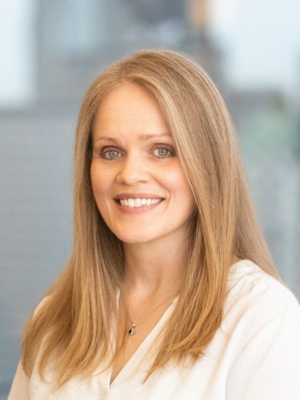
Jeanine OlivaBy Jessica Darmoni

“I have built genuine trust and strong relationships with my team here at Citadel, which go beyond the day-today work,” says Jeanine Oliva, Global Head of Tax Operations at Citadel and Treasurer of WILD Gives Back. “Taking the time to get to know team members as individuals deepens trust, fosters collaboration and in my experience, high performance naturally follows.”

The Glass Hammer sat down with Oliva to learn more about her path to one of the world’s most demanding financial firms. It was not shaped by a master plan but by trusted relationships, a relentless work ethic and a refusal to let self-doubt have the final word.

Impactful Connections

Oliva has always been in roles that support middle and back office operations by understanding how global transactions are taxed. Her path to Citadel first emerged while she was a public accountant at RSM McGladrey.

“I was working with a close friend when he left to join Citadel,” says Oliva. “Soon afterwards, I was hired by a hedge fund administrative company that at the time was owned by Citadel.”

It was through this role that Citadel became one of her clients. The proximity gave her first-hand insight into the company’s culture.

“I saw their high standards and approach to excellence up close,” she explains.

Those qualities did not intimidate her but instead drew her in. She had kept in touch with her former colleague from McGladrey and when the opportunity presented itself to work at Citadel, she was ready.

The Human Endeavor in Leadership

“Being trusted as a leader at Citadel is one of my greatest motivators,” she says. “However, what really sustains my day-to-day are the people.”

This philosophy extends beyond her immediate team. She describes keeping in touch with former colleagues over the years, offering support in the form of a fresh perspective on a tricky problem, or a job reference at just the right moment.

Oliva is also the Treasurer of WILD Gives Back, a not-for-profit 501(c)3, which raises funds for students to study derivatives courses at the Associated Colleges of Illinois. She has a unique perspective from her vantage point.

“Some of the most meaningful moments in my career have been watching people I’ve worked with grow into their full potential,” she reflects.

The Value of Being Seen

Oliva thinks back on her career, which was more of a game of chutes and ladders, than a direct climb to the top. She describes a pivotal moment when early in her career, and pregnant with her first child, a former boss tried to bring her back to his team. She raised a concern that it might not be practical timing and his response has stayed with her ever since: “Half of Jeanine is better than no Jeanine.”

His comment was a critical reminder that genuine professional relationships are not transactional. For a woman in finance, navigating a career alongside pregnancy and motherhood, being told plainly that her presence was valued regardless of circumstance was a message that carried real weight.

Making Space

Oliva points to Harlan Ten Pas, lead partner of the Financial Services team at McGladrey, as another significant influence, shaping not only the early years of her career, but also her leadership.

“He was exceptionally sharp and always approachable, regardless of his seniority. He took a personal interest in each member of his team creating an environment where many colleagues felt like family.”

That mattered especially in the early years, when she was often one of the only women in the room.

“His warmth and investment in his people showed me that belonging was possible in a field that didn’t always make space for me.”

He also modeled something she values deeply. She says he taught her “that a successful career and a fulfilling personal life aren’t mutually exclusive.” Though he passed away last year, his influence continues to shape how she leads.

Turning self-doubt into fuel

While Oliva is secure in her industry knowledge, that does not mean she is not faced with moments of uncertainty.

“When resistance arises in a meeting, I lean into it rather than away,” she says. “At Citadel, being entrepreneurial from day one and challenging ideas constructively and constantly asking, “is there a better way?” is not just permitted, it’s expected.”

When self-doubt surfaces, her response is characteristically grounded because she doubles down on the work. This could mean reading up on recent regulations, talking through issues with colleagues, or building her understanding until she is confident.

“At Citadel confidence comes from knowledge, rigor, and continued curiosity, not complacency.”

A Human Mind Behind AI

Even when it comes to modern technologies such as AI and Machine Learning, Oliva believes the human element will still be an important one.

“Technology, including AI, is only as good as the human mind behind it,” she says.

In an era of rapid AI adoption in finance, this stance feels more relevant than ever. Questioning outputs and challenging existing processes, are not just encouraged at Citadel but expected. The culture of continuous improvement is something she genuinely values, and something she sees as essential for the next generation of leaders.

One of the most practical pieces of guidance Oliva carries is a healthy skepticism of doing “the same as last year.”

“The principle is straightforward,” she says. “Don’t accept inherited processes at face value. Rules and fact patterns can change. Understand the calculations. Know where the data comes from. Do the research.”

Leaders in a Crowd

When she thinks of the young women only starting out, she says, “Keep pushing toward what you want. Persistence and hard work generate dividends. Don’t be afraid to take a different path to get there, and if others doubt you, prove them wrong.”

She believes the leaders of tomorrow will be defined by the strength of their personal relationships and the ability to trust their own judgment.

“Relationships keep you grounded, keep you motivated, and open doors,” she said. “Critical thinking, the capacity to reason beyond what any algorithm can offer, is what ultimately distinguishes a leader from the crowd.”

It’s a vision of leadership that’s both deeply human and rigorously disciplined, which sounds a lot like Jeanine Oliva.

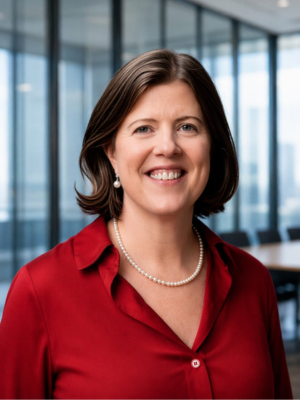
Charlotte Weir“Leadership isn’t about directing from the sidelines,” says Charlotte Weir. “It’s about standing shoulder to shoulder with your team, celebrating success together and, when things don’t go to plan, being the first to own it.”

In a career spanning nearly three decades, Weir has operated by a consistent set of principles: be genuine, be present, and invest in people for the long term. It’s a philosophy that has defined her career, whether she is building client relationships lasting over 25 years, mentoring junior colleagues, or being candid with her team about the demands of balancing life and work.

Do What You Enjoy

“My philosophy is to do things you enjoy,” says Weir in explaining how she made her way to a career in finance. At first that meant a chemistry degree, pursued simply because she loved the subject. But once she graduated, she realized that she needed to find something that matched her energy.

“I’ve always been a high-intensity, competitive person,” she explains. “I wanted to be in an environment that was buzzy, fast-paced, and pushed me.” A recruitment firm landed her on a trading floor at Bear Stearns in London, where “the speed, the pace, being on the trading floor, it really excited me.”

What drew Weir specifically into debt capital markets wasn’t the products, but the relationships. “It’s about building relationships with clients while being very strong in your subject matter,” she notes, “building that trust so clients come back to you time and time again.”

After Bear Stearns, nearly two decades at Barclays followed, building seniority across UK, Northern European, and EMEA corporate teams. But the pandemic prompted a change of course.

“I had this moment where I thought, am I really doing what I want to be doing?” Weir recalls. “I was looking for a challenge. I was looking for the next opportunity to stretch myself.”

The challenge of building Wells Fargo’s corporate banking franchise in EMEA was the catalyst for Weir to make the move and step into a leadership role at Wells Fargo, with a team of about 50 people across London, Dublin and Frankfurt and a mandate to grow the business.

“My DCM background is still part of my DNA, but this role has challenged me to broaden my expertise, think more strategically, and help shape a team capable of taking the franchise to its next phase of growth across EMEA.”

Integrity and Showing Up

A defining feature of Weir’s leadership is integrity: doing what you committed to and not asking of others what you wouldn’t ask of yourself. That principle becomes most visible when things don’t go to plan. When a deal goes in the wrong direction, she doesn’t wait for someone else to manage the fallout.

“I am first on the phone to the client. I’m as much a part of the success as when things don’t go right.”

Rather than viewing those moments as setbacks, Weir sees them as some of the most powerful opportunities for growth.

“You learn so much more when things go wrong. It feels terrible in the moment, but you come out with lessons learned and much stronger.”

That same commitment to honesty and accountability carries through to how she shows up with her team internally. As the mother of 18-year-old triplets, Weir believes in being transparent about the realities of balancing work and family.

“I expect the team to work hard but it’s better if people know that home needs to come first sometimes,” she says. “Modeling that behavior helps other people realize it’s okay too. And that can change how they feel about work, because they know that there is flexibility there.”

Relationships and the Long Game

A defining thread in Weir’s career is her commitment to investing in relationships, especially when it comes to her clients.

“Some of my clients I’ve covered for 25 years. That creates an incredibly strong bond.”

That bond, she says, is what allows her to have conversations that go beyond the transactional and it means clients keep coming back, whether through market cycles or personnel changes.

Weir’s emphasis on relationships also shapes how she has approached mentorship and sponsorship. Rather than waiting to be noticed, she has consistently sought out senior leaders whose values resonated with her own, and asked directly for their guidance. At the same time, she is clear that while mentors and sponsors can open doors, it is equally important to learn how to advocate for yourself.

“While others may advocate for you, you also need to learn how to advocate for yourself, and it has to be done in a natural way, that feels like you.” For Weir, that meant connecting with senior leaders, often one or two levels above her direct manager, so that her contributions were visible beyond her immediate team.

“It’s about finding opportunities to help people recognize and realize what you’ve been involved in, what you’re doing, and how you’re driving the business forward. And doing it in a way that feels authentic to you.”

The mistake Weir made early on was assuming strong work would speak for itself. “There’s a mentality of put your head down, do your job really well, and you’ll get promoted. That’s not always the case.” Relationships, she learned, are not only how you serve clients, but also how you build and sustain a career.

Planting Seeds

Having entered the industry when she was, in her own words, “one of very few women,” Weir now channels that same long-term thinking into ensuring the next generation has an easier path. She is consistently involved in Wells Fargo’s campus recruiting and helped launch Treasurers and Bankers of Tomorrow, a Wells Fargo forum connecting junior bankers with junior finance professionals on the client side. The goal is simple: build authentic relationships long before anyone is in a position to do a deal.

“So much of my career comes back to relationships. If we can help our teams foster those connections early on, they’ll carry them throughout their careers.”

Switching Off

Outside the office, Weir stays active year-round through running, skiing, and paddleboarding. Running often becomes thinking time, while skiing offers something entirely different.

“It’s one of the only times when I can truly switch my brain off and enjoy being active in beautiful scenery.”

It’s fitting for a leader who believes in showing up fully: for her clients, her team, and herself. Knowing when to step back and recharge is what allows Weir to step forward when it matters most.

By Jessica Robaire

Top Asian Women in FinanceThere is a phrase that Ida Liu now CEO of HSBC Private Bank returns to when she talks about her career. “I have a double ceiling,” she has said, “the glass ceiling on one side and the bamboo ceiling on the other.”

Ida Liu built her career at Citi around this insight. After years in investment banking in New York and Hong Kong, she detoured through the fashion industry — serving as Global Head of Sales and Marketing at designer Vivienne Tam before returning to finance with an idea: a Fashion, Retail and Entertainment practice at Citi Private Bank, followed by the creation of the firm’s North America Asian Clients Group. Her cultural fluency, her language skills in Mandarin and Spanish, and her understanding of Asian ultra-high-net-worth families became a competitive differentiator that propelled her from managing director to Global Head of one of the world’s most prestigious private banks. Today, as CEO of HSBC Private Bank — which she has described as the one institution she would have considered joining — she oversees $566 billion in invested assets and customer deposits, with her background as a central part of her value proposition.

It is a formulation that captures the particular challenge facing Asian women who have risen to the top of financial services and the Fortune 1000. They have had to break through not one barrier, but two: the persistent underrepresentation of women in senior finance roles, and the equally stubborn phenomenon that leaves Asian professionals clustered in technical and mid-level positions while remaining conspicuously absent from boardrooms and C-suites.

Yet a remarkable cohort of Asian women has done exactly that, ascending to roles that were unimaginable a generation ago. Their paths differ, from investment banking to asset management, from private wealth to regulatory fintech but their hard-won lessons form a coherent body of wisdom for women navigating the same terrain today.

A new book, Walk Away: Step Out to Step Up by Singapore-based author and executive Sally J. Clarke and US based co-author Deborah Overdeput, adds a compelling dimension to that wisdom. They gather the stories of high-achieving women across Asia who discovered that sometimes the most powerful career move is not pushing harder, but instead stepping back with clarity and intention to then reach their goals more effectively.

The Landscape: Progress, But Not Parity

The headline numbers tell an optimistic story. Yie-Hsin Hung, president and CEO of State Street Investment Management, leads one of the world’s four largest asset managers with more than $5 trillion in assets under management. Lisa Su runs AMD. Susan Li is CFO of Meta. These names have become shorthand for a generation of Asian women who have reached the commanding heights of corporate America and global finance.

But the structural picture is more complicated. According to a 2023 study by KPMG and Ascend, a global network for Asian professionals, directors of Asian ancestry hold just 6.4% of Fortune 1,000 board seats, far below their share of the educated workforce. Research by MIT Sloan’s Professor Jackson Lu has found that East Asian Americans in particular advance to senior roles at lower rates than both white and South Asian peers, a disparity that persists even after controlling for qualifications. The bamboo ceiling, a term popularized by Jane Hyun in her 2005 book Breaking the Bamboo Ceiling, is not a relic — it is a present-day reality, shaped by cultural stereotypes, implicit biases, and leadership frameworks that were never designed with Asian women in mind.

“We’re chipping away at the glass ceiling,” Liu observed recently. “But when it comes to the bamboo ceiling, there’s still a lot of work to do.”

A Cultural Nuance: Visibility Is Not Vanity: It is Strategy

One of the most consistent themes among Asian women who have reached the top of financial services is the deliberate decision to make themselves seen and heard, even when cultural upbringing inclined them toward restraint.

Ida Liu has spoken openly about conducting “elevator pitch sessions” through Citi’s Asian heritage network, coaching Asian women in the art of self-advocacy. The inherited norms of humility that serve as virtues in many Asian families such as being modest, not boasting, and deferring to the group can quietly derail careers in an industry where visibility and sponsorship are currency.

“Communication is key, and networking is everything,” she has said, describing the advice she wishes she could give her younger self.

Yie-Hsin Hung’s trajectory illustrates what deliberate visibility can achieve. A mechanical engineering graduate of Northwestern and MBA from Harvard, she spent years at Morgan Stanley and Bridgewater before becoming CEO of New York Life Investment Management in 2015 — where she became the highest-ranking Asian American and female executive at the parent company. She was the first woman and first Asian American to chair the Investment Company Institute’s Board of Governors in its eight-decade history. These firsts were not accidents. They were the product of sustained engagement with the networks, associations, and platforms that allow leaders to be recognized beyond their immediate organizations.

The lesson is practical and simply put, attend the conference, join the board, take the speaking engagement, even when the instinct is to let the work speak for itself. In financial services, work rarely speaks loudly enough on its own.

Build Relationships Across, Not Just Up

Traditional career advice emphasizes the importance of senior sponsors and sponsorship remains genuinely critical, particularly in an industry where promotion decisions are often made in rooms that exclude the candidates being discussed. But the Asian women who have reached the top of financial services have often distinguished themselves by investing equally in lateral relationships: peers, direct reports, colleagues in adjacent functions.

Yie-Hsin Hung has described her leadership philosophy in terms that go beyond conventional hierarchy. She has spoken of the importance of “engaging people’s hearts” alongside their intellects, of leading organizations that live and breathe their values, not merely execute their strategies. At State Street Investment Management, she introduced performance management processes centered on career conversations and real-time feedback, and launched leadership development programs that explicitly teach communication skills and emotional intelligence. She has made building a diverse leadership team a stated priority, noting that the senior leadership of her organization is now more than half women.

The Walk Away contributors echo this orientation toward community and reciprocity. As Clarke writes in the book’s framing, recurring refrains heard from high-achieving women across continents include the necessity of mentorship, the importance of building networks, and the value of lifelong learning. These are not soft supplements to technical excellence; they are the architecture through which Asian and Asian American women in finance have most reliably built the sponsorship, the visibility, and the trust that formal credentials alone rarely confer.

The implication for women building careers today: the relationships you cultivate with people at every level and the reputation you earn as someone who develops others, not merely outperforms them will matter as much as any individual achievement when senior roles are being filled.

By Nicki Gilmour, founder and CEO of theglasshammer.com and Evolved People Coaching.

rethinking networkingFor many professionals, the word “networking” sparks anxiety. The first thought is often, “What do I have to offer?” That fear is common, but it is also misplaced. Every one of us brings value to a conversation—whether it comes from professional experience, nonprofit involvement, or simply shared interests. The key is to shift your perspective: networking isn’t about proving your worth, it’s about finding common connections.

Start with Shared Ground

The easiest way to overcome networking anxiety is to say YES. If you’re invited to an event with a networking component, you already have something in common with everyone in the room—you all chose to be there. That shared context is a natural starting point.

Simple openers like “What brought you here today?” or “How are you connected to this event?” instantly create a bridge. From there, you can move into the basics—asking what someone does, where they went to school, or how they became involved in the topic at hand. It doesn’t take long to uncover people you know in common, whether separated by one degree or six. That realization alone is often enough to establish connection.

Build Relationships Not Transactions

At work, your “natural” network already exists—the colleagues you speak with regularly to get your job done. But true networking requires more than functional interactions. Instead of viewing these conversations as purely transactional, approach them as opportunities to build relationships.

Why does this matter?

  • You may learn something new.
  • You may identify ways to collaborate more closely in the future.
  • And perhaps most importantly, those colleagues may become advocates for you when you are not in the room.

This kind of relational networking creates allies, not just contacts.

Expand into Adjacent Circles

Beyond your immediate circle lies your “adjacent network”—people in roles that intersect with, but are not identical to, yours. Building these connections offers two benefits:

1. It creates opportunities for collaboration and innovation.

2. It expands your sphere of influence within the organization.

Networking across these adjacent circles ensures that you’re not siloed. It positions you as someone who sees beyond your lane and values cross-functional insight.

Seek Inspiration and Learning

Finally, there is the “outer ring” of networking: people who inspire you, challenge your thinking, or offer perspectives you want to learn from. These individuals may not be immediately accessible, but reaching out to them can be transformative. Over time, relationships that begin with admiration can evolve into mentorship—and, for some, sponsorship.

The Accidental Network

I often describe my own network as “accidental.” In reality, it was strategically built without me realizing it. I wasn’t focused on collecting contacts. Instead, I was focused on impact. Building connections allowed me to expand my influence, which in turn created greater impact. The cycle fed itself: impact → influence → more impact.

Looking back, what seemed like casual conversations were actually the foundation of a powerful
network.

From Anxiety to Excitement

Instead of approaching networking with dread, approach it with curiosity. Who might you meet? What might you learn? What connection might spark unexpectedly?

The truth is simple: we all bring something to the table. Networking isn’t about rehearsed elevator pitches or forced interactions. It’s about shared ground, genuine curiosity, and the relationships that form when we take the time to connect.

So the next time networking makes you anxious, reframe it. Get excited about the possibilities—because you never know where one conversation might take you.


By: Tracy Castle-Newman, Founder of TCN Advisors, empowering businesses and individuals to achieve their full potentional through consulting, coaching and public speaking engagements.  With 35 years in Financial Services, spending over 28 at Morgan Stanley, she has built and led businesses that drove revenue growth, operational efficiency, and strategic innovation. Recognizing that talent is your most valuable asset, Tracy dedicated much of her career mentoring and developing the next generation of leaders, with an intentional focus on women. She is known for building like-minded communities and built the most successful community for female portfolio managers on Wall Street.

Tracy also coaches with the Evolved People team (owner of the theglasshammer).  If you wish to work with her, speak with Nicki Gilmour here.

(Guest Contribution: The opinions and views of guest contributions are not necessarily those of theglasshammer.com)

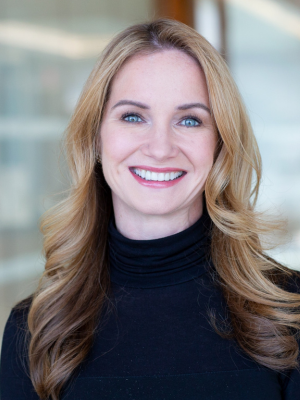
Maureen O'Connor“I always tell people that the key to my success is loving what I do, because when you truly enjoy your work, it shows—and clients can feel that,” says Maureen O’Connor. “Over the years, my clients have seen that I care as much about the outcome of their transactions as they do, and that has been crucial to building strong relationships.”

Exuding passion and enthusiasm, O’Connor demonstrates how loving what you do and honing your emotional intelligence are essential to long-term success. She reflects on the importance of skillful communication, maintaining in-person connections, and prioritizing finding work that is deeply fulfilling for a sustainable career.

Fueled by the Energy of the Markets

Dynamic and driven, O’Connor has always thrived in high-energy environments, making the fast-paced trading floor the ideal fit for her career.

“I love the markets and how what you read in the press that morning is going to have an impact on what you do that day. It’s exciting how things are ever changing, and that no day is like the last.” This unpredictability, far from overwhelming, is the fuel that powers her. “The buzz of a trading floor is the energy that I thrive off of.”

O’Connor feels fortunate to have built a career that still ignites her passion, even after more than two decades in the industry.

“It hasn’t felt like work in that regard. I really enjoy what I do—it fulfills me on a very deep level.”

O’Connor’s talents particularly shine as Wells Fargo’s Global Head of High Grade Debt Syndicate because the role is more about building connections with clients and finding a way to bring two sides together than it is about selling.

“My goal is to be upfront about what we can accomplish for you, and I love that. I enjoy being direct with people.” She continues, “it’s about finding that perfect balance between what the investor and the issuer wants, ensuring that neither feels like they got the upper hand, but rather that the outcome is fair.”

Building Stronger Client Relationships with In-Person Connection

Given that much of O’Connor’s role involves balancing both sides of a deal, she believes forging strong client relationships is essential—and in her view, the best way to do that is in person.

“I’m not one for small talk—I love real conversations,” she says. ” In my view, in-person connections with clients are critical – it’s harder to build a serious and deep connection with someone virtually.”

O’Connor believes that in-person meetings, preferably outside the confines of a conference room, are where true bonds are formed.

“I love to hear people’s stories, to understand what makes them tick,” she explains. “It’s not about using that knowledge to get something for myself; it’s about figuring out what’s going to work for them.”

While her job in syndicate is to carry a deal across the finish line, O’Connor sees it as much more than just completing a transaction.

“All the work you do leading up to that moment, getting to know your clients better, makes the final leg so much more meaningful.” This personal touch, she believes, is what sets her—and others in her line of work—apart.

Delivery is Key

For O’Connor, mastering the art of communication has been another key element to her success. While technical skills and attention to detail are critical early in one’s career, she believes that as you advance, it’s the softer skills that become more significant.

“I think having a high emotional intelligence (EQ) is really important,” she says. “When you’re a junior, it’s all about analytical skills and efficiency. But as you get more client-facing, it becomes much more about how you deliver.”

O’Connor prides herself on her ability to read people and adapt her approach accordingly. “I used to joke that the number one skill in my job was sounding good on the phone—now, it’s probably sounding good on Zoom,” she laughs. For her, clear and confident communication is essential. “It’s not just about what you say, it’s about sounding good saying it.”

Not only is confidence key, but making the delivery dynamic and engaging is essential as well. She emphasizes that effective communication is about more than just data—it’s about ensuring that the message sticks.

“Delivery is so important, and I don’t think people spend enough time polishing it. They work too much on the content and not enough on thinking about how to say it with emphasis in a way that leaves a lasting impression.”

The Art of Navigating Difficult Conversations

O’Connor points to another crucial element of communication—adeptly navigating hard conversations—as an asset in her role. Working in syndicate, she walks a fine line between the demands of issuers and the expectations of investors, advocating for both sides with skill and empathy.

“You get one of those tough trades, and sometimes the music stops. Your ability to deliver bad news becomes crucial.” She continues, “the way you handle those hard conversations is a critical skill that sets apart the good from the great at this job.”

O’Connor believes her success in this area comes from her ability to communicate directly. “I always ask myself, ‘How would I want to receive this news?’ And the answer is usually straightforward: I’d just want to know,” she says. This candid approach earns her respect, even when emotions are running high.

“It’s about your ability to impart to them, ‘this doesn’t feel good on this side, either. We’re not where we want to be, but we’re going get you to the best possible place we can’.”

O’Connor finds that approaching difficult conversations with a “we’re in this together” mindset not only reassures her clients but also fosters a collaborative atmosphere that helps navigate tough situations.

Passion is Preferable

O’Connor is clearly passionate about her work but acknowledges that there is a balance between caring deeply and maintaining emotional resilience.

“It’s hard not to take things personally when you care a lot. I’d tell my younger self not to stress so much.”

Yet, she emphasizes that bringing passion to the job is not only acceptable but essential.

“One of the worst pieces of feedback a woman can receive is being told she’s too emotional,” she shares. “It’s unhelpful. Asking someone not to care is not a solution. I love passion. I can help rein in or smooth the edges around that, but I can’t make somebody care about something they don’t care about, so I’d much rather somebody go in that direction than the other way around.”

In her view, the goal isn’t to care less, but to take things less personally.

“I’m not going to ask people to be less emotional. I might ask you to hone your reaction but never to care less.”

For a Sustainable Career, Love What You Do

For O’Connor, having genuine passion for one’s work is truly the foundation of a sustainable career.

“You have to ask yourself why you’re entering this business,” she advises. “Have a heart-to-heart with yourself, especially in those early years when sacrifices are abundant. If you’re in it for the wrong reasons, you won’t last. You have to truly love what you do because, ultimately, the money alone won’t sustain you.”

O’Connor encourages aspiring professionals to reflect on their motivations and be open to trying different roles to find their passion. She shares that she bounced around early in her career before finding her fit in syndicate in 2006.

“Don’t be afraid to pivot early in your career,” she stresses. “You must find that role that makes you happy. Otherwise, with the long hours and demanding nature of the work, you’re not going to thrive. You need to be in a seat that you genuinely love.”

As a mother of three girls, O’Connor aims to show her daughters that it’s possible to pursue a career she loves while finding deep fulfillment in her family life. For her, it’s less about achieving perfection and more about showing the importance of hard work and learning from mistakes. In her downtime, O’Connor spends quality time with her three daughters, loves baking and playing mediocre tennis with friends – simple joys that keep her connected to what matters most.

By Jessica Robaire

Yasmine Coupal“Careers are not linear, and there isn’t a one size fits all approach. I think the key is to find the balance that works for you professionally and personally. If I had tried to predict what the next five years of my career would have been at any single point in time, I would have been completely wrong,” says Yasmine Coupal, a partner in Investment Banking, Goldman Sachs. “I thought I was joining Goldman Sachs for two years, and here I am, 20 years later.”

Coupal’s career is a testament to the power of embracing the unexpected. Born and raised in Venezuela, she initially set her sights on economic development, education policy in particular, planning to return to Latin America after completing undergraduate and graduate degrees in Economics and International Policy at Stanford. But a surprising detour into finance changed everything.

After graduation, a friend who was working at Goldman Sachs recommended she interview for a role on the Latin America credit team and Coupal was impressed with the people she interviewed with.

“It was too compelling of an offer to pass up, even though it meant adjusting my plans to return to Venezuela to be with my then boyfriend, now husband of 19 years.” She remembers, “long story short, I took the job in 2004, and he moved to New York instead.”

Yasmine thrived at Goldman as an analyst on the Latin America and Natural Resources credit risk team. Coupal states that she loved to travel across the region and while on a business trip in Argentina in 2007, she met a VP that ultimately convinced her to join the capital markets team as an associate. She then shifted her coverage from Latin America to domestic industrial companies.

“I wasn’t looking for a move, but I knew it was time for a challenge and to try something new.”

It was Coupal’s unwavering openness to new challenges that propelled her advancement from an internal facing role in Credit Risk to a client facing role in Capital Markets. However, it was the personal decision to relocate to San Francisco with her husband that proved to be a turning point in her career. Taking the risk to leave the financial hub of New York and follow her heart, Coupal found herself in the midst of Silicon Valley’s booming tech scene. Leveraging her unique position of being on the ground to meet with large cap tech clients, Coupal built relationships, knowledge and experience with TMT (Technology, Media and Telecommunications) clients while still very much covering her sector of industrial and real estate companies for the bank.

Ultimately, when the Managing Director for TMT debt capital markets retired in 2014, Coupal raised her hand and was selected to lead the team due to the strong relationships she had built with clients on the West Coast. In fact, she made Managing Director in 2015 and in 2018, the firm officially created the West Coast Financing Team. Along with Will Connelly, Coupal was named Co-Head and after growing and guiding the team through the pandemic, Yasmine made partner in 2020.

She reflects, “there will be moments in your career when you’ll need to make decisions based on what aligns with your professional goals and then there are moments when personal priorities are more important. Sometimes it involves taking risks, even when the outcome is uncertain. Ultimately, finding the right balance that works for you is key.”

Never one to get too comfortable, Coupal made another bold move two years later in 2022, stepping into an investment banking role where she leads coverage of large cap technology companies. Driven by her constant quest for growth and her ability to turn every opportunity into a success, Coupal is excited to keep pushing her boundaries and challenge herself as she continues as a leader at Goldman Sachs.

Investing in Relationships

When Coupal first interviewed at Goldman, it was the people she met who ignited her excitement about joining the firm. Even today, the connections she built at the firm throughout her career remain a driving force in her sense of fulfillment at work as she notes, “you’re not going to really love the job or be successful if you don’t like the people that you work with.”

In addition to making the work more enjoyable, building relationships also expands one’s network. Coupal advocates for taking the time and effort to establish those connections, particularly through in-person opportunities like meeting for coffee.

“You need to invest in your network. It’s important to have a goal of setting up an in-person catch up with someone that you work with every single week because it allows for people to get to know you as a person, so that you’re not just a name on the other side of an email.”

The value of investing that time is multifold as it creates a sense of support, opens opportunities to learn from others, and engenders loyalty to each other and the firm.

“As people understand your interests, give you feedback and see that you’re performing, you automatically get new opportunities. It becomes this reciprocal cycle that leads to success,” says Coupal. “It’s also the glue that keeps people at the firm. One of the reasons I’ve stayed so long is because I have people that I admire who have invested in me. It creates a sense of loyalty.”

Mentorship is Reciprocal

In thinking about the significance of finding inspiration and support, Coupal points to one of her mentors, Susie Scher, as pivotal to her leadership development.

Coupal shares, “Susie was instrumental in my growth at Goldman Sachs from the associate level to Vice President, Managing Director and ultimately, Partner. In essence, she saw me grow up at Goldman Sachs. She is someone who identified my talent, invested in it, and was courageous enough to give me a lot of responsibility.”

Having the experience of a mentor who believed in her engenders a deep commitment for Coupal to pay it forward and be that support for others.

“It begins with how I develop my team and invest in them, placing a strong emphasis on feedback. I focus on building genuine relationships, getting to know who they are, their skills, their ambitions, and identifying the potential in them that they may not yet have recognized.”

Extending her influence beyond her direct reports, Coupal participates in formal mentorship programs at Goldman while also being open to informal connections when people reach out to her for guidance. In either circumstance, Coupal emphasizes, “mentoring is a two-way relationship, it requires both sides to equally invest. I might want to mentor as many people as I can, but if the other side is not reciprocating and wanting to develop that relationship, there’s only so far that I can go.”

Reflecting on where sponsorship fits within the framework of support and building relationships, Coupal believes that mentorship and sponsorship go hand in hand as the roles can shift and change as people move through the firm.

“It’s fluid. A mentor can become a sponsor, or vice versa, but the key to success lies not just in getting to know you personally, but in working with you. It’s that combination that makes the relationship most effective.”

Champion your Uniqueness

In addition to being an avid mentor and sponsor, Coupal supports diversity and inclusion efforts, participating in speaking engagements and hosting sessions that provide an opportunity for female talent at the firm to talk candidly about their experiences. One theme that she strives to convey to junior analysts is, “be your genuine self. Don’t try to be someone else. Don’t try to fit a mold that you think is the key to success.”

As a Latina woman excelling in the financial industry, Coupal speaks to how she champions her uniqueness and sees it as an asset.

“Being a subject matter expert while being a woman and Latina differentiates me, makes me unique and memorable, and many times allows me to connect with clients on a different level. Establishing these deep connections and trust has been critical in my career and allowed me to build and foster relationships I wouldn’t have had otherwise.”

Beyond recognizing the power of authenticity, Coupal emphasizes that adaptability and a willingness to step outside one’s comfort zone are instrumental to career development.

“Success in one stage of your career may not guarantee success in the next. Staying humble, seeking advice, thinking ahead, and remaining flexible when plans change is key.”

She continues, “be comfortable being uncomfortable. When you start feeling too comfortable, it’s a signal to challenge yourself with something new. It keeps you on your toes and ensures continuous growth.”

Outside of work, Coupal is eager to instill in her children the same curiosity and openness to new experiences that have shaped her own journey, especially through travel. “One of our greatest joys is taking our kids to explore different countries, cultures, and cuisines,” she says. Passionate about family time, Coupal loves spending weekends cheering at soccer games or unwinding together with a backyard barbecue.

By Jessica Robaire

happy man with womenGuest Contribution by Molly Fletcher

For nearly two decades, I worked as one of the only female sports agents in the industry, negotiating contracts and marketing deals for a client list of top athletes, coaches and broadcasters.

I left my career as a sports agent to start my own company because I believed there were lessons I learned within the sports environment that could help people in the business world become more productive. One of those lessons—how to negotiate effectively—inspired my most recent book, A Winner’s Guide to Negotiating: How Conversation Gets Deals Done.

My advice applies to anyone who wants to be a good negotiator, but is geared specifically towards executive women. Research has shown that there is a social cost for negotiating that is statistically significant for women and not for men. Instead of examining all the complex reasons why that is the case, I focused on how women can be more effective when they enter their next negotiation.

Set the Stage

Setting the stage refers to gathering all types of hard data and marrying it with qualitative information to create a compelling case. When clear standards for negotiation exist, women actually negotiate at about the same rate and just as effectively as men—so the more data you can arm yourself with, the more confident you can be in your ask. It’s also about 360 degree awareness. You have to get clear on the goals, needs, gaps, values and fears of the other side. What do they value? How do they define success? Is this the right time to make the ask?

Add value

The best thing you can do to put yourself in a successful position to negotiate is to find ways to add value. Most negotiations don’t happen in one meeting. They are built over time, through conversations and relationships. The more you can do to add value to these partnerships, the higher your chance of success when you make your ask. Put yourself in the shoes of the other person and determine what gaps exist and how you can be a solution.

Build relationships

Ask yourself, do I have someone within this organization who is willing to go to bat for me? Be intentional about building strong relationships and find someone who you can trust to advocate for you. Some of the most important conversations about your future happen when you aren’t present. Having a senior leader advocate for you is like having an agent negotiating on your behalf.

Be authentic

Too often, women feel pressured to become somebody else when it comes to negotiation. As I share in my book, effective negotiation isn’t a battle between wills, it’s a conversation between people. Approach the negotiation as you would an important conversation. People respond better to consistency and you will be more comfortable with the ebb and flow if you are in your own comfort zone. Use your own strengths to your advantage instead of copying what you perceive to be as the most effective negotiating styles.

The greater good

Research has also revealed that women who negotiate on behalf of others are generally perceived in a positive manner. That’s why it’s particularly important for women to take a big picture approach when negotiating on their own behalf. Frame up the negotiation from the “we” perspective. How is what you are asking for going to benefit the organization as a whole? How have you contributed in ways that have added overall value? The more you can get into the head and heart of the other side, the better you can frame up the conversation as a win-win. Demonstrate that you understand their perspective, and aren’t approaching this conversation from your own self-interest.

Why is negotiation so important for women? First, it’s a small but important piece in closing the wage gap. The importance of negotiation, however, goes beyond just money. When women don’t negotiate, they sacrifice more than just money. They sacrifice opportunity—for training, growth, leadership, recognition and promotions. It becomes a cycle, because in order to change the stereotypes and expectations about women negotiating, we must have women in leadership positions. This was a huge part of my motivation for writing my book—not just to inspire individuals to ask for what they want but to spark a greater conversation that leads to change.