More Than One Way Forward: Career Lessons from Latina Leaders
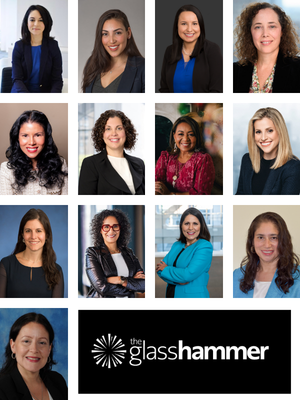 Last year during Hispanic Heritage Month, The Glass Hammer looked at the steep ascent Latina women continue to face in corporate leadership, including the systemic and cultural barriers that can make advancement more difficult. This year, we are asking a different question: What can we learn from Latina leaders who have navigated that terrain?
Across our profiles, these women have taken very different paths. Some moved laterally before moving forward. Others created opportunities that did not yet have a name. Many learned to speak up before they felt completely ready. And several discovered that the career they built looked nothing like the one they initially imagined.
Taken together, their stories suggest a different way to think about career advancement: not simply climbing the next rung, but creating more options for where you can go next.
In a last week’s Glass Hammer profile, Karelis Barrios, Global Head of Wholesale Lending Operations at Citi, put a name to that idea:
“The truest measure of success is how much optionality you have.”
Create, Don’t Wait
Alexandra Wilson-Elizondo, Partner and Co-Chief Investment Officer of Multi-Asset Solutions at Goldman Sachs Asset Management, puts career ownership plainly:
“Build things, do not wait for people to assign things to you. Continue to constantly learn about what you’re interested in; being an expert is always a good thing, and it will help your career.”
Monica Marquez, workforce reinvention strategist and co-founder of Flipwork, takes that idea a step further, arguing that waiting until you feel completely prepared can itself become a career constraint.
“Women have a tendency to be very certainty driven, and they end up not taking as many risks and opportunities. Women need to be much more open to taking the opportunity and embracing just-in-time learning, so they don’t rob themselves before they try.”
Cassandra Cuellar, now a Partner at DLA Piper, similarly describes taking ownership as central to her career.
“I have a willingness to take ownership over things without necessarily having to be so dependent on a hierarchical structure.”
And when she encounters something unfamiliar?
“Whatever you can throw at me, I’m going to figure it out.”
For both women, taking ownership is less about knowing exactly where a decision will lead than about being willing to act. Each new experience adds another skill, relationship or piece of knowledge to draw on later.
Let the Path Change
If creating options is the goal, a career cannot be treated as a fixed route.
Yasmine Coupal, a Partner at Goldman Sachs, expected a very different career trajectory before an unexpected opportunity led her into finance.
“Careers are not linear, and there isn’t a one size fits all approach.”
Vanessa Rodriguez, Head of Community Lending & Investment, Commercial Real Estate at Wells Fargo, offers an equally useful reminder that moving forward does not always mean moving up.
“Sometimes, you must take a step back, or move laterally, to go forward.”
Angela Cruz, Sales Effectiveness Leader for Sales Excellence at Accenture, has reinvented herself several times, moving from electrical engineering and technical roles into marketing and sales leadership. Looking back, she identifies one quality that helped her make those transitions:
“Continuous learning has been a key driver. I have reinvented myself quite a few times because I’ve always been open, flexible, and curious to learn.”
Lola Ninonuevo, International Chief Operating Officer at Wells Fargo, takes the long view:
“Your career is over decades. It’s not the be-all and end-all. There are periods where you can really lean in and put 100% into it, and there are periods where you can’t, and that’s okay as long as you stay connected.”
A lateral move can build a skill. An unexpected role can reveal an interest you did not know you had. A pause can create room for something else.
Build What Gives You Options
Being open to change is one part of creating options, but again and again, the women we have profiled point to relationships as an important part of the infrastructure of a career.
Ninonuevo describes relationships as central to her leadership approach:
“I really focus on building relationships. I’m honest and candid in my approach.”
Indhira Arrington, Global Chief Diversity, Equity and Inclusion Officer at Ares Management, has a more specific observation about what it takes to turn strong performance into sponsorship:
“There are thousands of people that are good at their job and that want to ascend the corporate ladder, but doing it alone likely won’t get you there. You also need to have strong executive presence and act like a leader, and then hopefully that combination gains you the sponsors who have the power to open those doors, propel you and pull you up.”
Graciella Dominguez, VP of Investment Operations, Operations and Innovations at PGIM, began her career with a different expectation of what her work would require:
“When I started as an accountant, I didn’t realize that interacting with people and building relationships was going to be more central to my experience. I have been able to grow my relationships, and they are so important – and rewarding – in accomplishing greater things.”
Know Your Value
For some of the women we have profiled, creating options has also meant recognizing the value in the different perspectives and identities they bring to the workplace.
Claudia Vázquez, Founder of Elevnik, describes how her perspective changed over time:
“What I saw as a disadvantage at the beginning, I turned it around to make my secret weapon, because I realized this is what makes me unique and able to see things from a different perspective.”
Alma Rosa Montañez, Chief Corporate Counsel at S&P Global, describes reaching a point where she stopped feeling she had to choose between parts of her identity:
“I learned to become comfortable with the fact that I’m really not either Mexican or American – I’m both.”
For Vanessa Nazario, now Chief Impact Officer at Episcopal Health Services, the shift has implications beyond how you see yourself:
“Once you claim your value, it opens a lot of opportunities.”
The message is not to ignore the barriers that can shape a career. It is to recognize that the perspective, experience and identity you bring with you can also be part of what creates opportunities.
Think Beyond the Next Promotion
Karelis Barrios’ idea of optionality brings these lessons together. Career advancement is not only about moving up. It can also mean building enough experience, relationships and confidence that you have choices when circumstances change.
As Barrios puts it:
“A step back in leadership does not have to be the end of the story. Sometimes it creates the space to grow, and strong leaders recognize when someone is ready to be given another opportunity.”
And ultimately:
“The truest measure of success is how much optionality you have. You work hard for the options that success provides you.”
Taken together, the advice from these Latina leaders suggests that career advancement is not only about reaching the next level. It is about steadily increasing what you are capable of doing, who knows your work, where you can contribute and what opportunities you are prepared to pursue.
You may not know exactly where those choices will lead.
But you can make sure that, when the next opportunity appears, you have more than one way to move forward.