
Tag Archive for: AAPI Heritage

Top Asian Women in FinanceThere is a phrase that Ida Liu now CEO of HSBC Private Bank returns to when she talks about her career. “I have a double ceiling,” she has said, “the glass ceiling on one side and the bamboo ceiling on the other.”

Ida Liu built her career at Citi around this insight. After years in investment banking in New York and Hong Kong, she detoured through the fashion industry — serving as Global Head of Sales and Marketing at designer Vivienne Tam before returning to finance with an idea: a Fashion, Retail and Entertainment practice at Citi Private Bank, followed by the creation of the firm’s North America Asian Clients Group. Her cultural fluency, her language skills in Mandarin and Spanish, and her understanding of Asian ultra-high-net-worth families became a competitive differentiator that propelled her from managing director to Global Head of one of the world’s most prestigious private banks. Today, as CEO of HSBC Private Bank — which she has described as the one institution she would have considered joining — she oversees $566 billion in invested assets and customer deposits, with her background as a central part of her value proposition.

It is a formulation that captures the particular challenge facing Asian women who have risen to the top of financial services and the Fortune 1000. They have had to break through not one barrier, but two: the persistent underrepresentation of women in senior finance roles, and the equally stubborn phenomenon that leaves Asian professionals clustered in technical and mid-level positions while remaining conspicuously absent from boardrooms and C-suites.

Yet a remarkable cohort of Asian women has done exactly that, ascending to roles that were unimaginable a generation ago. Their paths differ, from investment banking to asset management, from private wealth to regulatory fintech but their hard-won lessons form a coherent body of wisdom for women navigating the same terrain today.

A new book, Walk Away: Step Out to Step Up by Singapore-based author and executive Sally J. Clarke and US based co-author Deborah Overdeput, adds a compelling dimension to that wisdom. They gather the stories of high-achieving women across Asia who discovered that sometimes the most powerful career move is not pushing harder, but instead stepping back with clarity and intention to then reach their goals more effectively.

The Landscape: Progress, But Not Parity

The headline numbers tell an optimistic story. Yie-Hsin Hung, president and CEO of State Street Investment Management, leads one of the world’s four largest asset managers with more than $5 trillion in assets under management. Lisa Su runs AMD. Susan Li is CFO of Meta. These names have become shorthand for a generation of Asian women who have reached the commanding heights of corporate America and global finance.

But the structural picture is more complicated. According to a 2023 study by KPMG and Ascend, a global network for Asian professionals, directors of Asian ancestry hold just 6.4% of Fortune 1,000 board seats, far below their share of the educated workforce. Research by MIT Sloan’s Professor Jackson Lu has found that East Asian Americans in particular advance to senior roles at lower rates than both white and South Asian peers, a disparity that persists even after controlling for qualifications. The bamboo ceiling, a term popularized by Jane Hyun in her 2005 book Breaking the Bamboo Ceiling, is not a relic — it is a present-day reality, shaped by cultural stereotypes, implicit biases, and leadership frameworks that were never designed with Asian women in mind.

“We’re chipping away at the glass ceiling,” Liu observed recently. “But when it comes to the bamboo ceiling, there’s still a lot of work to do.”

A Cultural Nuance: Visibility Is Not Vanity: It is Strategy

One of the most consistent themes among Asian women who have reached the top of financial services is the deliberate decision to make themselves seen and heard, even when cultural upbringing inclined them toward restraint.

Ida Liu has spoken openly about conducting “elevator pitch sessions” through Citi’s Asian heritage network, coaching Asian women in the art of self-advocacy. The inherited norms of humility that serve as virtues in many Asian families such as being modest, not boasting, and deferring to the group can quietly derail careers in an industry where visibility and sponsorship are currency.

“Communication is key, and networking is everything,” she has said, describing the advice she wishes she could give her younger self.

Yie-Hsin Hung’s trajectory illustrates what deliberate visibility can achieve. A mechanical engineering graduate of Northwestern and MBA from Harvard, she spent years at Morgan Stanley and Bridgewater before becoming CEO of New York Life Investment Management in 2015 — where she became the highest-ranking Asian American and female executive at the parent company. She was the first woman and first Asian American to chair the Investment Company Institute’s Board of Governors in its eight-decade history. These firsts were not accidents. They were the product of sustained engagement with the networks, associations, and platforms that allow leaders to be recognized beyond their immediate organizations.

The lesson is practical and simply put, attend the conference, join the board, take the speaking engagement, even when the instinct is to let the work speak for itself. In financial services, work rarely speaks loudly enough on its own.

Build Relationships Across, Not Just Up

Traditional career advice emphasizes the importance of senior sponsors and sponsorship remains genuinely critical, particularly in an industry where promotion decisions are often made in rooms that exclude the candidates being discussed. But the Asian women who have reached the top of financial services have often distinguished themselves by investing equally in lateral relationships: peers, direct reports, colleagues in adjacent functions.

Yie-Hsin Hung has described her leadership philosophy in terms that go beyond conventional hierarchy. She has spoken of the importance of “engaging people’s hearts” alongside their intellects, of leading organizations that live and breathe their values, not merely execute their strategies. At State Street Investment Management, she introduced performance management processes centered on career conversations and real-time feedback, and launched leadership development programs that explicitly teach communication skills and emotional intelligence. She has made building a diverse leadership team a stated priority, noting that the senior leadership of her organization is now more than half women.

The Walk Away contributors echo this orientation toward community and reciprocity. As Clarke writes in the book’s framing, recurring refrains heard from high-achieving women across continents include the necessity of mentorship, the importance of building networks, and the value of lifelong learning. These are not soft supplements to technical excellence; they are the architecture through which Asian and Asian American women in finance have most reliably built the sponsorship, the visibility, and the trust that formal credentials alone rarely confer.

The implication for women building careers today: the relationships you cultivate with people at every level and the reputation you earn as someone who develops others, not merely outperforms them will matter as much as any individual achievement when senior roles are being filled.

By Nicki Gilmour, founder and CEO of theglasshammer.com and Evolved People Coaching.
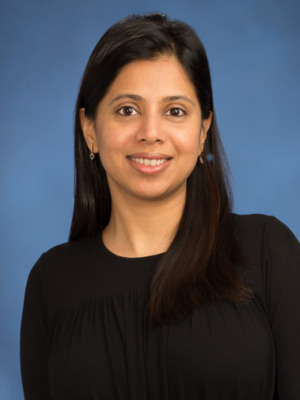
Pooja Prahlad“Leaders should hold complexity without the temptation to collapse it,” says Pooja Mishra Prahlad. “They should want to look at things from different perspectives and think deeply to earn the answer.”

As a partner at Goldman Sachs with more than two decades in the industry, Prahlad’s call to slow down, reflect, and resist the easy path is a throughline for how she moves through the world. She leads with curiosity, comfort in ambiguity, and a conviction that the best things, whether careers, relationships, or ideas, are built with time and intention. Now as Head of Americas Equity Structuring, she continues to be energized by innovation, by the people around her, and by a belief rooted in her own unlikely journey and her father’s before her: a single opportunity given to the right person at the right moment can change the trajectory of generations.

An Unexpected Arc

Prahlad grew up in a world far removed from Wall Street. As the daughter of a Naval officer, she spent her childhood moving across India, living in identical government-issued houses, and attending the same schools as her neighbors, in a community where, as she puts it, “nobody ever discussed money or invested in the stock market.”

That upbringing, Prahlad says, turned out to be more preparation than limitation.

“The life I led in India was a great foundation for being able to adapt to a new set-up and new people. The Indian Navy is very diverse. You have people from all over the country with regional differences and language differences, a diversity born of meritocracy working towards a greater good. There is so much celebration of that in the culture.” This has led her to fundamentally believe that a truly meritocratic organization breeds a diverse environment.

Like many academically strong students in India at the time, Prahlad studied computer science and worked briefly at a software firm. But she quickly realized something was missing. ” Even though I enjoyed the intellectual challenge of problem-solving, I wanted to have more of the advisory piece.”

Business school brought Prahlad to a Goldman Sachs internship in London, and it proved transformative. The energy of the equity trading floor, and the combination of analytical rigor with constant interaction, felt like a natural fit.

“It ticked all those boxes of a job that involves thinking, but also working with a lot of people,” explains Prahlad. She joined full-time in 2005 and has been at Goldman ever since.

Innovation at the Epicenter

Today, as a partner leading equity structuring, Prahlad builds bespoke solutions for clients navigating a rapidly shifting landscape.

“It sits at the epicenter of a lot of innovation,” she says. “In my job, I have a vantage point to a changing landscape — market structure changes, regulatory changes, macroeconomic changes. And you get to read the tea leaves of what it means for clients.”

The other thread running through her work is the one she didn’t anticipate loving as much as she does: the trusted advisor relationship. “It’s a real privilege to work with clients and have them not just rely on you for expertise, but to rely on you for counsel. That’s become more and more meaningful as I’ve grown in my career.”

Her North Star

When asked who has inspired her most, Prahlad speaks movingly about her father. His own life followed an improbable arc, from a small village with no local high school to higher education, a Navy career, and later aviation, all made possible by a relative who chose to support his education.

“What is amazing about his journey is I never saw him allow struggle to rest heavily on him. He was so bright, but also so funny. You would have never known what his journey had been.”

The lesson Prahlad took from her father’s example is one she returns to often: “What people remember is who you are with them and how you treat them.”

The second lesson shapes how she leads today: “It’s possible to change not just one person’s life, but generations after them, by giving someone an opportunity.”

That belief now shapes how she approaches her own role. Reflecting on her rise to partner, Prahlad challenges the idea of a replicable formula. She credits a willingness to embrace innovation, change and discomfort, and the mentors and sponsors who opened doors at pivotal moments.

Not All Doubt is Counterproductive

As a mentor, Prahlad notices one theme that surfaces repeatedly: self-doubt. Her take on it is more nuanced than one might expect.

“Not all self-doubt is bad. It’s healthy to doubt your opinion without doubting your ability. It can make you want to work harder. It can make you think more deeply about the consequences of your actions to others. Our culture sometimes demonizes a little bit of doubt, but it’s not necessarily bad.”

The problem, she says, is when it tips into paralysis. “Confidence comes with action. Take a step in the direction you want to go, then take another step, then take a third step. If you fail – fail fast, that’s the best way to overcome the doubt and lead to clarity.”

Earn the Answer

When Prahlad speaks about leadership and the future, her focus consistently returns to responsibility, both to ideas and to people. She believes the financial industry is in a generational moment of change, shaped by new technologies, evolving approaches to risk, and shifting models of capital allocation. Within that landscape, she offers three principles.

First: sit with complexity. “Resist the pull toward quick, serviceable answers. The distance to an answer is so short now, especially with AI. It’s easy to stop there, even when it’s not the best answer…Spend time to earn the answer.”

Second: stay curious. “As you grow in your career, you end up teaching more than learning. It’s really important to stay curious and create the time for that.”

Third: bring people with you. “If you want to go far, you can’t go alone. Having conviction in your view, articulating your vision clearly, building trust and earning people’s followership over a long period of time require investment of time and energy. They are not a quick solve.”

Opportunity Can Change Everything

Outside of Goldman, Prahlad’s life remains anchored by her family, now by her husband and thirteen year old son. “Whatever the demands of the day, my husband and my son are where I return – in every sense of the word. I learn from them constantly – they both move through the world with a hunger to understand it. They keep me honest about what growth looks like”.

The same spirit extends into her broader commitments. Prahlad sits on the board of the American India Foundation, focused on livelihood and education for women and children in India, and supports the Nudge Foundation, which works with communities living in ultra-poverty. Their missions mirror the chance once given to her own family.

“The world has more talent than it has opportunity,” she says. “Anything that I can do to bring opportunity to people who have the desire to transform their lives is very important to me.”

In a fast-moving, efficiency-driven world, Prahlad embraces depth: depth of thought, of relationships, and of responsibility. She is a leader guided by curiosity, sustained by people, and anchored in the conviction that opportunity, when offered thoughtfully to the deserving, can change everything.

“I genuinely believe in what I bring to the table,” she says. “But it is also important to recognize that through the arc of life, there were discrete moments where people came in and did their bit. It’s my turn to do that now, for people who come after me.”

By Jessica Robaire

Anar Patel“You’re the marketing team behind your own personal brand, and sometimes, that means creating opportunities for yourself that didn’t exist before,” says Anar Patel.

Patel exudes a strong sense of purpose, confidently pursuing her aspirations to be a strong female leader that empowers other women to seize opportunities for professional growth. Since joining PGIM a decade ago, her proactive approach and clear communication of her interests have fueled her advancement. Reflecting on her journey, she credits her self-advocacy and growth mindset for her “organic transition” from one role to the next.

“In every role, I continued to stay focused, do great work, think about what my next move was and communicate the career trajectory that I wanted. You have to advocate for yourself. You’re the marketing team behind your own personal brand, and sometimes, that means creating opportunities for yourself that didn’t exist before.”

Now, as a director in Portfolio Construction, Patel is excited to continue building on her investment experience in managing multi-asset and model portfolios. She speaks to why she is passionate about working in finance, lessons learned from pivotal moments and what she values in leadership.

The Impact of Financial Planning

Patel credits her father for her tenacity and passion for working in the financial industry. Shortly after her parents immigrated to the U.S., her older brother was diagnosed with a severe form of epilepsy, and her father had to pivot from studying for his master’s in chemistry to focusing on caring for his family. He found a way to provide for his family while also making sure to put something aside as an investment for the future.

“The most tangible thing I learned from my father outside of sacrificing and working hard was the importance of saving and investing and how life changing it can be. Thoughtful financial planning provided him with the means necessary to take control of his future.”

Watching her father diligently invest so he could achieve his goals of financial security inspired Patel to provide those opportunities for others. She is enthusiastic about the potential of technology and other tools that make investing more accessible.

“With today’s technological advancements and the increase in availability of different investment vehicles, I think it’s important to democratize investing – to make sure everyone has the information and ability to financially plan for the future. Accessibility and knowledge are empowering more and more people to take control of their financial futures like he did. People can get access to top investment managers, like PGIM, in ways that they couldn’t before.”

2020 – A Pivotal Year

Patel went through her own pivotal moment of personal and professional growth at the onset of Covid in 2020, experiencing the loss of her grandmother, while transitioning into a new role at work, taking a full load of courses in her executive MBA program and planning her wedding.

She reflects, “It was a lot of balancing, and I came out of the experience with a newfound confidence. I learned the depth of my own resilience, adaptability and tenacity, as I had to adjust with all these changes and roll with the punches.”

This tumultuous period also gave her perspective on where she wanted to devote her energy.

“I began to prioritize what was important to me versus what I thought was expected of me. When I started to do that, it freed up a lot of space to focus on my goals and the things that were making me happy.”

Patel admits she is someone who strives for perfection and likes to be in control. However, her experiences in 2020 made her realize that she needed to relinquish some control and share the mental load she was carrying while juggling work and other priorities. That meant working out new routines and responsibilities at home with her fiancée.

“I think we’re seeing a lot of momentum and progress on this already, with society stepping away from traditional gender norms in the household and both partners contributing in a more balanced way. It improves the trajectory for women to assume leadership roles when there’s equality in both the workplace and the household.”

Value of Network Building

Patel’s growing confidence enabled her to create opportunities for herself, not just by being vocal about her aspirations, but also by continuing to build her network. She emphasizes the importance of being proactive and getting out there.

“I sign up for everything – lunch and learns, volunteer events, networking circles. It helps to meet different people – some of whom you might not have the opportunity to meet or interact with given your role.” Patel notes that being connected to a variety of people is a value-add, particularly in getting comfortable walking into different spaces.

During her Executive MBA program at Columbia, Patel enjoyed the opportunity to extend that network beyond her workplace – meeting people from all different industries and walks of life. The program also provided a space to explore ideas and practice presenting them, bolstering her confidence outside the classroom.

“When you feel psychologically safe in an environment, you’re empowered and comfortable testing new ideas, bouncing them off your colleagues, making it easier to scale them for different situations and audiences… You don’t feel as nervous raising your hand.”

The Leader She Aspires to Become

It is hard to envision Patel being nervous, radiating the confidence and self-awareness that people seek in potential leaders. Unsurprisingly, she is clear about what she values in a leader and the type of leader she aims to become. She says emotional intelligence, effective communication and investing in team growth help lay the foundation for a strong leader.

In terms of emotional intelligence, Patel explains, “It’s about understanding how different people work, what motivates them and leveraging their strengths to drive progress.”

Communication is key to understanding people, particularly in creating positive interactions where they feel heard and engaged. “When you know how people prefer to receive information, it really moves things forward. Communicating in ways that resonate with your colleagues and stakeholders can help build and strengthen relationships,” Patel says.

Patel credits part of her professional growth to leaders who were invested in her development. She hopes to be the kind of leader that advocates for others’ growth, recognizing that creating a strong culture of learning that is full of advancement opportunities can motivate employees to bring their best selves to work – and positively impact the company and its bottom line.

She also strives to be the type of leader who makes a positive impact through Diversity, Equity and Inclusion (DEI) initiatives, recently leading the rollout of PGIM’s Inclusive Leadership training to PGIM Investments. Although she believes the industry has made a lot of progress in DEI, she emphasizes the need to keep powering forward.

“It goes beyond getting different voices into a room. Now, it’s about amplifying them and ensuring they’re heard. This may mean waiting for others to speak first or encouraging those more introverted to voice their opinions, since everyone has valuable ideas to contribute to the discussion.”

Pursuing Her Bucket List

As invested in her personal growth as she is in her professional growth, Patel recently made her first solo trip abroad to Malaga, Spain.

“It was on my bucket list to travel by myself, something I really wanted to experience. During the past few years, I realized my strength, resiliency and everything I am capable of, which gave me the courage to book my ticket.”

Patel also enjoys traveling with her husband, most recently going on a safari in South Africa earlier this year. Additionally, she loves to read, host game nights and play with her chocolate Labrador, Bailey.

By Jessica Robaire

Anna Thomas“It’s all about people. Projects, systems, everything else goes away. You might even forget what you were executing back then,” says Anna Thomas, “but people connections can remain even after 25 years, and that is very fulfilling.”

Thomas speaks to managing work and family, the value of executional and relational strengths and how bias often feels like what goes unsaid.

Managing Career And Family

As a lover of mathematics entering into computer science, Thomas worked with a Professor to research computer simulations of ancient mathematical algorithms based on Indian Vedic scriptures when she worked in MIT India.

After coming to the states to attain her Masters in computer science and a few years of work in tech in the telecommunications industry, she moved to apply her skills within the financial services world. But a week into her job at J.P. Morgan, initially as a consultant, she discovered she was pregnant with her second son. The manager at that time was very supportive and continued to give her larger opportunities.

After a C-section, she planned to take a three-month maternity leave, but the firm was going through an intense merger, and they asked if she could return after six weeks. So even in 2003, Thomas found herself remote working on a desktop computer that had been sent to her home, with the close support of her mother with her new baby.

After moving up to VP in Barclays and changes of firm, Thomas took on a Global VP role at Experian in which she managed 200 technical professionals across 13 worldwide locations. She traveled for work, spending only one week each month at the home office in New York. Her husband agreed to take a job close to home to make it all work.

“I had a very supportive husband and very independent kids too,” she says. “When I think about it, I’m don’t even remember how we did it all. My sons were able to do everything other kids did (ice hockey, karate, baseball, soccer) and mom still had a demanding job.”

Preserving Weekends For the Family

Thomas said her secret was not only designating the weekends solely for family time and home, but also making sure she was “home every day” in another way.

“I still wanted them to have home cooked Indian meals and the heritage,” she recalls. “So I would block off Sunday and bulk cook different dinner dishes for the whole week to eat while I was away.”

“Also, I made personal days off and when I was here, I was committed, not on my Blackberry,” she recalls—whether volunteering to read at her son’s childcare or going on a field trip as a volunteer and getting to know her son’s friends and having them over on the weekend.

Skills of Success

Much like her Sunday approach or how she plans out family vacations, Thomas puts a lot of her business success and leadership capacity down to her strategic and executional strength.

“My passion is to plan, lead and execute,” she says. “You stay disciplined and that’s how you can actually get through whatever you need to do.

Simplification has been another asset to her leadership style.

“Being a woman, you come with a different perspective and empathy, a diverse way of looking at decisions,” says Thomas. “You sit around the table and sometimes there are very complex ways of thinking. It’s often easy for me to make it practical and lay out simple, practical solutions.

“Everything starts with the end in mind—everything has to be for the business. I am very client-centric. If I do something, is this going to be valuable for the client? And that’s how I start thinking about anything, any solution,” she says. “How do I get there? What are the issues in between? Everything else becomes the means to get there. How do I go in steps?”

When it comes to failing, Thomas recommends to be agile with failure too.

“I want to see what happens, and if I am going to fail, I want to fail fast, learn from my mistakes and get up and run again,” she says. “Everyone is going to fail at some point. Everyone is going to have their bad projects. Try to just do it in small cycles, learn fast, and then apply your learning and keep moving.”

No Matter the Work, Leadership is About People

Thomas emphasizes that even in a technical or product development role, what you are really working with is people. She feels parenting transfers to help, too.

At the end of the day, any technology, finance, or other field that you’re talking about, is ultimately about the people who do the work,” she says. “To understand people—have empathy with different perspectives, different personalities, and awareness of context—is critical to your success.”

Due to her background, Thomas offers a keen sensitivity to, and ability to navigate, cultural differences.

“I have the benefit of growing up in a different country and being exposed to different cultures, so that helps me to understand and work with cross-cultural teams,” says Thomas. “For example, in Asian culture, unless you actually reach out and ask, someone will often think it’s disrespectful to provide their view of things. I grew up in that culture, so I know and I can actually coax and ask someone to speak up. I can come from that angle.”

For her, the most nourishing part of work is the “people agenda” and mentoring.

“Something I’ve learned is that a mentor-mentee relationship is always a give-and-take. You are teaching and learning from everyone at the same time,” she says. “There’s no age or experiences that are little. There is a perspective of a person. I have the breadth because I managed a number of things, but down the road, you may have the depth of something I can rely on.”

Bias Can Be The Untold Factor

Thomas has often been the only woman in her technology-based team. One of the things she has experienced as an Indian woman in technology is that ethnic and gender bias is not always easy to point at, but often feels like the elusive thing going unstated.

“When you’re put up against a promotion, you’re in the top two, you have nine out of ten credentials and someone else only has seven out of ten and they get it, you wonder. I rarely have that explained, and I’ve had that experience more than once,” she says. “It’s an untold thing. If my performance exceeds all expectations every time, why not? It’s often unclear what the breaking criteria is.“

She has at times received vague feedback as to skills she would need for a role, as other women have spoke to. In a past firm, when a boss she’d worked with across two firms appointed her to a CTO role because of her change-agent capacity, she experienced a senior male peer visiting her office to attempt to intimidate her away from the role.

“I reported him and I kicked ass taking on that role,” she says. Not surprisingly, she has found that attempts at suppression only comes with visibility and achievements.

In any organization, Thomas looks for opportunities to constantly stay current and update her self and her technology proficiency. Growth is a critical objective for her and she has learned to move on from situations where that is thwarted.

Enjoying Home

Thomas is currently enjoying home life with her husband and her 15 year old son. She likes doing the small mundane things she didn’t always have time for all those traveling years, whether errands to the store or Netflix binges. She still keeps her Sunday meal preparation routine, and her 19 year old son requests his favorite Indian dishes from childhood when he visits from college.

By Aimee Hansen