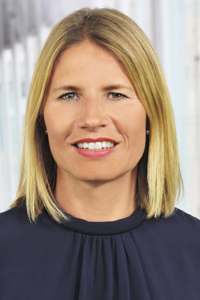
 By Cathie Ericson
Victoria Park believes there’s a real benefit in spending your younger years working with a larger organization where you have ample opportunity to identify your passion, and which allows you to stretch and broaden yourself early on.
She recommends that women surround themselves with a small and diverse group of genuinely supportive mentors and sponsors, formal and informal, male and female. “Rarely is there one role model with whom you identify completely, so ensure you are getting different perspectives to help you find your way.”
An Internal Program Bolsters Her Career
Park relocated to Australia in the late 1990s. “My initial step into financial and professional services recruitment provided the funds for travel en route to Australia and set me onto a different career path completely,” she says. Due to her evident passion for people, she joined PwC in Sydney in an HR role. Over the past 14 years she has built a career in HR at PwC, earned a post-grad diploma in strategic HR and started a family.
She says that in 2006 she found herself at a fork in her career and self-nominated for a development program called the Young Leadership Team, which consisted of five, three-day residential programs.
Park found it to be an incredible experience from the minute she put herself forward; having been with the firm only 18 months and not having the benefit of joining a professional services firm straight out of school, as many do.
When she was selected to participate, she took full advantage of making sure the entire process was beneficial to her learning and career advancement, not the least was just making the decision to put herself out there in a vulnerable way.
Then, she found that the robust feedback she received on her application and the process of interview prep helped her position herself and recognize some of the development points that would be useful for her, including how a breadth of thinking can impact the team. Park says this was one of the most profound experiences in her career.
Along the way she also learned sideways opportunities can be as beneficial, if not more so, in the long term, as you progress into senior leadership roles because diversity of experience is important for long-term success.
Expanding Programs to Support Diversity and Inclusion
Currently she oversees the firm’s Diversity & Inclusion strategy after stepping into the diversity and inclusion program director role 18 months ago, where she found her professional skills, purpose and passion have collided. She had a steep learning curve on some groups she wasn’t as well versed on including LGBT and Australian native groups.
This renewed focus gave the firm the opportunity to reset and look out to 2020 where some recent leadership changes have reinvigorated diversity issues. She notes that there is appetite from the new CEO to see that his legacy around diversity and inclusion is truly embedded in the organization and how they operate with clients and within the firm
“We have done awesome work updating some policies and will have even more success as we overhaul some of the other legacy systems we have in place,” she says, adding that they will be making dramatically different and sustainable changes.
Among the advances they are instituting are a culture change that emphasizes flexibility. The program was introduced two years ago and will be fundamental to their success going forward in attracting diverse workers.
“Organizations that don’t adopt a flexible outlook will miss out on talent,” she says. While there are large opportunities to be flexible in terms of where people work and how they choose to work, she acknowledges it can cause challenges in the short term in changing the standard five-day work week and traditional acceptance of longer hours.
But, by genuinely looking at how teams work, they can offer flexibility for everyone, including supporting males in the role of caregivers. “Flexibility and support for men will allow greater female participation in the work force.”
She finds that work/life balance challenges for women in professional services are impacted by the strong client service ethic, where they assume they need 24/7 accessibility. This has spurred another unintended consequence of limiting the number of senior role models available to show the pathway to younger women coming up.
She herself has been involved in or designed a number of different female leadership programs over the past 10 years.
“The main benefit I and the cohort got from all of them was the opportunity to broaden and deepen the female network,” she notes. She says that they also spent time considering the concept of “swimming against the tide” and acknowledging the feeling most women have encountered where they are in a minority.
Finding Her Own Balance
As technology has evolved over her career, Park has realized the need to consciously consider categories such as hobbies/philanthropy/family/travel as part of how she plans her life. “The distinction between work and home gets increasingly blurred when we consider the traditional working week model we still broadly operate in. By being conscious I strive to ensure that these critical elements of life get the right time and focus to ensure I feel fulfilled.”
As a wife and mother of two boys, ages 9 and 7, she wants to raise them with a positive mental attitude and health, which means being actively involved in their lives and finding time to build a strong connection.
One way to blend the two is to link hobbies to health and family, so they all enjoy running, ocean swimming and sports. She and her husband met working in the wine industry and wine, food and cooking continue to be interests they share.
Over the past few years they have started to share their love of travel, taking the boys on a last-minute trip to Beijing when she was travelling with work, and using the opportunity of trips to the UK to see family and to travel around Europe.
Her philanthropic activity also centers around shared family passions. In 2015 she participated in a fundraising trip to Everest Base Camp to raise money for OzHarvest as her husband is passionate about food wastage at home. “Unfortunately we got caught up in the earthquakes and missed the goal by one day, but luckily we returned safe and unharmed,” she says. More recently she has completed her Bronze Surf Lifesaving qualification and enjoys supporting the local community when on beach patrol.
Through work and outside activities, she wholeheartedly lives this charge: “Have fun, enjoy what you do at least 80% of the time, or change what you are doing.”

Thought Leader: Barbara Reinhard, Head of Asset Allocation and Senior Portfolio Manager for Voya Investment Management’s Multi Asset Strategy and Solutions team
Voices of ExperienceThis is the philosophy that weaves its way through Barbara’s work, in both the day-to-day and long-term activities of focus. Currently enmeshed in the firm’s annual update to its strategic asset portfolios, Barbara appreciates her work at Voya because the firm is not a “traditional” asset manager. “Very few asset managers focus exclusively on retirement investing,” she notes. “Most want to be everything to everybody.”
Voya’s work with retirement plans means that the long-term demographic trend for the investment business is very positive. “The need for adequate retirement savings affects all Americans” notes Barbara.
One challenge in today’s environment is the uncertainty surrounding business regulation, but there are endless opportunities as investors seek value-added advice.
Analytics will continue to be one of the biggest tools Voya has at its disposal, which helps drive innovation. “We are increasingly mining big data to help inform our investment analysis and further our understanding of trends,” says Barbara. “This information is exceedingly valuable as we strive to meet our clients’ needs.”
The best advice she can offer other women in the industry? “Early on, identify a good mentor who can give you sage advice throughout your career.”
Mover and Shaker: Renata Caine, Vice President, Virtual Payments, WEX
Movers and Shakers“I used to think that showing weakness was a sign of inexperience, but by focusing on my confidence I can see that failure is a part of every professional,” says WEX’s Renata Caine. “I know that imperfection is authentic, and that helps me promote an environment that allows failure when it’s used as a learning experience.”
Highlighting a Team Dynamic Internally and Externally
Although WEX is not technically her first job, Caine says it’s where she feels that she grew up professionally. “The virtual payments line of business is very entrepreneurial and fast paced, which gives people the opportunity to do things they haven’t before. I have learned a lot in a short period of time,” she says.
Her career progression began as an individual contributor, and she knew she loved building relationships; she now manages a sales and marketing team responsible for the acquisition and support of external customers. “To me, building an internal team is not so different to supporting external customers.” I feel that I’ve found exactly what makes me happy.”
One of the best parts of her current team dynamic is the respect they have for one another. The relationships between the team members allows for some good-natured fun: They never miss an opportunity to laugh with one another.
And that is the professional achievement she is most proud of: Working alongside her team and bringing value, building mutual respect and watching them grow, surrounded by people who have the same goals and sense of purpose. “Right now I’m leading a team that’s at full capacity and building them out to know their role in continuing to create a high-achieving cohort. Together we’re all working toward motivating each other and fostering success working together.”
When she first entered the corporate world, she thought there might be a culture of “every man for themselves,” and while that might be the case in some places, she finds that people at WEX are always happy to help one another. “Relationships are the core of our business and I see that played out within WEX and across customers as well,” she says. “Every aspect of building a team and working with customers and prospects has been relationship-oriented.”
In fact, over the years, she has appreciated the transparency that her clients have shared about their business and what they can accomplish together. This has allowed her to get glimpses into the inner workings of other companies, creating a better combined strategy.
Finding Success Through Modeling Others
Caine has had unofficial mentors throughout her career; some began organically and helped all along the way, while others came along during certain parts of her career and helped her grow in a specific situations or roles. “I’ve taken bits and pieces from so many people and that has molded me into what I’ve become,” she says.
By participating in WEX’s Integrated Leadership Development Program in May 2015, she allowed herself to admit where she struggled as a leader and see where others saw her strengths and weaknesses. “It was a valuable experience because as a group, we would celebrate what we did well,” Caine says. “I learned that my perception of myself doesn’t always match others’ perceptions of me, which forced me to be more self-aware. This, over time, empowered my development.”
But she hearkens back to her mother as her original role model. “Growing up and watching her work every single day, she seemed to have achieved balance with career, managing a household and raising two successful kids, never complaining, and always getting it done,” she says.
That ethic is mirrored in her work today, where Caine says that her success has come from hard work, combined with focus and commitment and letting others know she’s dependable and available to them.
Seeking Balance With Family
Caine finds comfort in a balance that supports work and home life — sometimes one gets more attention than the other, which is always a work in progress.
“As passionate as I am for my contribution to WEX, my passion for family exceeds it,” she says, of her son and daughter, ages seven and six. “I want them both to know equally that they can achieve whatever they set out to,” she says, adding that the times she’s away from home are opportunities to share the wonders of the world and diversities of culture. “I want them to appreciate all there is to find, and I hope it propels them to seek adventures in their own lives.”
The Power of Slowing Down: Three ways to “Slow Down” and “Speed Up” Your Success
Career Advice, Guest Contribution, Office PoliticsToo much to do, too little time: this seems to be the mantra of our age. We all have too many emails, too many phone calls, and constantly feel pulled in a million directions.
And the stress of success can take an incredible toll on our health. A study released by researchers at Harvard Business School and Stanford University found that stress at work is just as damaging to a person’s health as secondhand smoke.
And if we want to advance in the workspace, do we all need to sacrifice our family life to do it? In her book “All Joy and No Fun, Jennifer Senior polled working parents with college degrees and discovered that 65 percent of them found it difficult to balance job and family.
So what is the answer to achieving your career goals without sacrificing your health and family life to get there?
Define What Success Means For You
Are you loving the life that you love? What really matters to you? Do you dream of having a family, a house on the beach, helping others?
Oftentimes we lose touch with our real dreams in the manic shuffle of life. Perhaps your heart-felt goals were deemed “unrealistic” or buried beneath the criticism of friends and family. So dig up those dreams and take the time every day to “slow down” and connect with what uniquely inspires you.
Connecting with what matters is the best time management tool you could ever have. When you prioritise your time based on what you love, you may find that your workload naturally dwindles. You can easily eliminate the counterproductive items in your task list when you are stay connected to your top priorities in life.
Keep it Simple
Warren Buffet’s best business advice to Bill Gates was: “Keep Things Simple.” Simplicity has many implications and it’s an incredible secret to managing time, saving money, and eliminating drama.
One aspect of simplicity is the art of being fully present in the moment. It’s amazing how we can sit together in a meeting and yet be thinking of that ever expanding task list or browsing out bottomless inbox. And yet this simple act of full presence is not only refreshing, it can save an incredible amount of time and energy. When you are distracted, it’s nearly impossible to fully understand someone, fully comprehend a situation, or even sense if someone is telling a lie. Being fully aware, thoroughly hearing others, and assimilating the nuances of a situation leads to win/win negotiations, healthy decisions and a balanced bottom line.
Simplicity also applies to policies, procedures, and products. Challenges are an opportunity to evaluate the complexity of what lies beneath the challenge: has the overall structure become too complex or is the product too hard to use?
Take Care of Yourself
What does self-care have to success? Everything! You are not a disembodied mind floating in a tank; your true power lies within every cell of your body. Although much of our work these days involves intellectual prowess, optimal function of the mind requires optimal care of the body!
When your body is healthy, you are able to perform at your peak, connect deeply with what matters, and be fully present. When you take care of yourself, you can maximize your productivity, and avoid burnout, illness and fatigue.
So if you take the time to “slow down”, eat right and take care of yourself, you will save time and energy in the long run.
What is Time, Really?
Time is a strange thing; it has the ability to expand and contract seemingly at our will. We wish time would slow down when we are doing what we love. And we curse how slow the clock is moving when we’re bored at a meeting.
And although it has the ability to expand and contract, the irony is: our time here on earth is so very limited. And so in the end, if we take the time to “slow down,” we maximize the time we do have, so we have the time to do what matters.
Jennifer Noel Taylor, is the author of Love Incorporated: The Business of Doing What You Love.
In her book, she helps you connect with your innate wisdom and pursue your true calling in life. As the CEO of Quantum-Touch Inc. she helps people achieve optimal wellness through energy medicine. She has grown Quantum-Touch from a small company into a multinational corporation based on a foundation of integrity and compassion.
Disclaimer: The opinions and views of our Guest contributors are not necessarily those of theglasshammer.com
Save
Leave For The Right Reasons
Career Advice, Career Tip of the Week!By Nicki Gilmour, Executive Coach and Organizational Psychologist
Many times, people come to me and they have suffered at work.
Be it a perceived slight, being undermined or even harassed in a very real way. It is normal to want to leave the team, firm or in some cases the industry itself. When coaching, we look hard at whether you just need to leave a manager or whether yes in reality you are ready for a complete change of scene. Knowing what you like doing is crucial and we work on getting to the heart of the matter. But, equally it is important to understand that feelings are real. However, the brain can trick us significantly. There is a cognitive theory by Kant that suggests that we see danger so we think we are in danger (thought) and feel fear (emotion) so we run. Brain science is telling us that if we saw a tiger once, chances are we are hyper-vigilant for the next one. We run sometimes because we are feeling fear due to thinking we see a tiger, before we actually see one.
How do we ensure we do not leave the firm or the industry for the wrong reasons? Women and other minority group members are susceptible to this because often yes we saw a tiger once and that is no lie.
Work with a good coach to know if you are anticipating scenarios before they happen and reason out what impact this is having in how you engage, operate and even consider new roles
If you are interested in hiring an executive coach contact nicki@glasshammer2.wpengine.com directly for a no obligation discussion
Voice of Experience: Kathleen Kelley, CEO, Queen Anne’s Gate Capital Management
Voices of ExperienceIt’s vitally important for women to find a mentor early on who can help them navigate their path, says Kathleen Kelley. “I was lucky enough to find Paul Jones, who became my mentor, but that was a fortunate accident since I hadn’t set out with that as my mission. It’s important to think about who would be the right mentor and establish that relationship early on.”
After studying math and economics in college — which, incidentally, she believes that all women should take math courses whatever their career aspirations – Kelley became a portfolio manager at Tudor Investment Management. She spent 10 years there, initially doing research and then moving to portfolio management, where she ran a macro portfolio focusing on commodities.
She moved to Kingdon to run a macro portfolio for seven years and then took a year off and moved to London with her kids. When she returned, she started her own fund, Queen Anne’s Gate Capital Management, named after the street they lived on in England. While the firm was focused on the fund when she first started it, it has evolved to offer research as well.
Going out on her own is the professional achievement she’s most proud of, primarily because of the example it sets for other young women. “They need to see the opportunity set available to them, but they can’t if they don’t see other women taking those steps,” she says. “That’s one of the reasons it was important to me to take that risk and start my own firm.”
Currently she specializes in consulting to complement her past 20 years where she has focused on investing and portfolio management. Commodity markets have always been her specialty, and she notes that the recent renewed interest in the space is promising. She also believes there is a trend for hedge funds and asset managers to meet in the middle: As the fee structure and performance of hedge funds have been maligned over the past couple of years, asset managers have been accumulating more of the assets as they broaden their reach. “I believe there are increasing opportunities for companies like mine that serve both hedge funds and asset managers,” she says.
Bolstering Women’s Career Prospects at All Levels
Her focus on the financial world extends to her philanthropic pursuits. Ten years ago she co-founded the High Water Women Foundation, which offers an annual impact investing seminar in the fall and trains volunteers to teach financial literacy. “We were early to the space, which has been growing like crazy, so the program keeps expanding to meet overwhelming demand.”
Kelley admits she is frustrated by the slow progress women have been afforded, especially when you consider the make-up of corporate boards and realize many companies have no women represented. She sees how the problem perpetuates itself: If a man joins a board and they mention they need another member, he’ll call his colleague. “We need to put the same buddy network in place to facilitate this process for women,” she notes.
To that end, she says that most of her friends in the industry are actively promoting other women but can always do more.
Closer to home, she continues to foster her kids’ interest in culture and travel. They are half-Spanish so they visit Spain regularly, and she and her daughter are training together to run the London Marathon.
Kelley serves on seven non-profit boards, including her alma mater Smith College and London School of Economics, as well as High Water Women Foundation.
Voice of Experience: Victoria Park, Diversity & Inclusion Director at PwC Australia
Voices of ExperienceVictoria Park believes there’s a real benefit in spending your younger years working with a larger organization where you have ample opportunity to identify your passion, and which allows you to stretch and broaden yourself early on.
She recommends that women surround themselves with a small and diverse group of genuinely supportive mentors and sponsors, formal and informal, male and female. “Rarely is there one role model with whom you identify completely, so ensure you are getting different perspectives to help you find your way.”
An Internal Program Bolsters Her Career
Park relocated to Australia in the late 1990s. “My initial step into financial and professional services recruitment provided the funds for travel en route to Australia and set me onto a different career path completely,” she says. Due to her evident passion for people, she joined PwC in Sydney in an HR role. Over the past 14 years she has built a career in HR at PwC, earned a post-grad diploma in strategic HR and started a family.
She says that in 2006 she found herself at a fork in her career and self-nominated for a development program called the Young Leadership Team, which consisted of five, three-day residential programs.
Park found it to be an incredible experience from the minute she put herself forward; having been with the firm only 18 months and not having the benefit of joining a professional services firm straight out of school, as many do.
When she was selected to participate, she took full advantage of making sure the entire process was beneficial to her learning and career advancement, not the least was just making the decision to put herself out there in a vulnerable way.
Then, she found that the robust feedback she received on her application and the process of interview prep helped her position herself and recognize some of the development points that would be useful for her, including how a breadth of thinking can impact the team. Park says this was one of the most profound experiences in her career.
Along the way she also learned sideways opportunities can be as beneficial, if not more so, in the long term, as you progress into senior leadership roles because diversity of experience is important for long-term success.
Expanding Programs to Support Diversity and Inclusion
Currently she oversees the firm’s Diversity & Inclusion strategy after stepping into the diversity and inclusion program director role 18 months ago, where she found her professional skills, purpose and passion have collided. She had a steep learning curve on some groups she wasn’t as well versed on including LGBT and Australian native groups.
This renewed focus gave the firm the opportunity to reset and look out to 2020 where some recent leadership changes have reinvigorated diversity issues. She notes that there is appetite from the new CEO to see that his legacy around diversity and inclusion is truly embedded in the organization and how they operate with clients and within the firm
“We have done awesome work updating some policies and will have even more success as we overhaul some of the other legacy systems we have in place,” she says, adding that they will be making dramatically different and sustainable changes.
Among the advances they are instituting are a culture change that emphasizes flexibility. The program was introduced two years ago and will be fundamental to their success going forward in attracting diverse workers.
“Organizations that don’t adopt a flexible outlook will miss out on talent,” she says. While there are large opportunities to be flexible in terms of where people work and how they choose to work, she acknowledges it can cause challenges in the short term in changing the standard five-day work week and traditional acceptance of longer hours.
But, by genuinely looking at how teams work, they can offer flexibility for everyone, including supporting males in the role of caregivers. “Flexibility and support for men will allow greater female participation in the work force.”
She finds that work/life balance challenges for women in professional services are impacted by the strong client service ethic, where they assume they need 24/7 accessibility. This has spurred another unintended consequence of limiting the number of senior role models available to show the pathway to younger women coming up.
She herself has been involved in or designed a number of different female leadership programs over the past 10 years.
“The main benefit I and the cohort got from all of them was the opportunity to broaden and deepen the female network,” she notes. She says that they also spent time considering the concept of “swimming against the tide” and acknowledging the feeling most women have encountered where they are in a minority.
Finding Her Own Balance
As technology has evolved over her career, Park has realized the need to consciously consider categories such as hobbies/philanthropy/family/travel as part of how she plans her life. “The distinction between work and home gets increasingly blurred when we consider the traditional working week model we still broadly operate in. By being conscious I strive to ensure that these critical elements of life get the right time and focus to ensure I feel fulfilled.”
As a wife and mother of two boys, ages 9 and 7, she wants to raise them with a positive mental attitude and health, which means being actively involved in their lives and finding time to build a strong connection.
One way to blend the two is to link hobbies to health and family, so they all enjoy running, ocean swimming and sports. She and her husband met working in the wine industry and wine, food and cooking continue to be interests they share.
Over the past few years they have started to share their love of travel, taking the boys on a last-minute trip to Beijing when she was travelling with work, and using the opportunity of trips to the UK to see family and to travel around Europe.
Her philanthropic activity also centers around shared family passions. In 2015 she participated in a fundraising trip to Everest Base Camp to raise money for OzHarvest as her husband is passionate about food wastage at home. “Unfortunately we got caught up in the earthquakes and missed the goal by one day, but luckily we returned safe and unharmed,” she says. More recently she has completed her Bronze Surf Lifesaving qualification and enjoys supporting the local community when on beach patrol.
Through work and outside activities, she wholeheartedly lives this charge: “Have fun, enjoy what you do at least 80% of the time, or change what you are doing.”
How to Mentor Millennials
Career Advice, Career Tip of the Week!, Guest ContributionHaving a successful protégé reflects well on you and adds to the progress of professional women everywhere. So mentally brace yourself for the mentor/mentee relationship.
Remember what it was like to be an inexperienced person? Once you are mentally prepared to start molding a successful protégé, you must then prepare yourself for the patience it will take to get started.
Whether or not you had a mentor when you were younger, you can still relate to the feeling of being the new person in the office. As someone who has now been in the grind for years, you may have a tough time knowing where to start with your mentee. Well, think back.
When you were the new person, what qualities did you appreciate in your colleagues? Most likely, you wanted to work with those who:
Now that you’re on the other side of the mentor/mentee relationship, you can make good use of these memories.
With your mentee, discuss expectations — both yours and theirs. Set goals. Pay attention to their progress. Give feedback. Be supportive. Offer advice, but also listen. And, most importantly, take a genuine interest in their work and well-being.
Appreciate Generational Differences
More than likely, your near-future mentees are going to be millennials. Like every generation, millennials have their own set of concerns, indignations, interests, goals and talents.
Millennials are generally tech-savvy, environmentally conscious, insistent upon equal rights, adventurous, innovative and generally more interested in finding meaningful work than the largest paycheck or the best job security they can get.
However, despite the differences between millennials and non-millennials, all of the millennial-specific qualities can be channeled toward the greater good of a business. It’s up to you, as a mentor, to find the benefits these qualities have to offer, and to guide your mentees to apply them correctly.
Parting Thoughts
No matter who your mentee is — man or woman, intern or new hire, millennial or baby boomer — it’s up to you to help them succeed. The best way to do this is to understand what it means to be a mentor. It takes patience, dedication and a genuine investment in their progress.
If you decide to take on the role of the mentor, embrace the qualities that make you uniquely successful and help your mentee to do the same. And, as you learn and grow alongside your protégé, know that you’re doing your part for the advancement of professional women.
(The views and opinions of Guest Contributors are not necessarily those of theglasshammer.com)
The Gender Pay Gap
Career Advice, Money TalksThis month we celebrate Equal Pay Day. Take a look at these informative Pay Gap articles previously published on theglasshammer.
This week we hit “Equal Pay Day” on Tuesday, a day which symbolizes the extra days women must work to make the same salary as her male peers did last year. According to the Demystifying The Gender Pay Gap survey by Glassdoor, the biggest myth about the gender pay gap is that it doesn’t exist at all, as 7 in 10 employees across seven countries assumed men and women received the same pay for the same work. But even when narrowed down to an apples-to-apples comparison within companies, researchers found a significant gender gap exists.
Closing the investment gap for women as well as the better- documented pay gap needs to happen. What is the investment gap? And why are most women, even highly paid professional women still missing out? Sallie Krawcheck just wrote a post about the cost of not realizing what we are missing financially by not investing properly on LinkedIn.
In March 2015, the US Census Bureau released the latest pay statistics from 2013, including median earnings by detailed occupation, showing that full-time working women earn 78.8% of what full-time working men do. The census data revealed that across 342 occupations, women (barely) out-earn men in only nine.
Narrow the Hidden Executive Pay Gap Starting Now
As women move to senior ranks, the gender pay gap widens. Your best career management play? Begin closing it now.
Voice of Experience: Carey Halio, Partner, Finance Division, Goldman Sachs
Voices of Experience“Your career is a marathon, not a sprint,” notes Goldman Sachs’ Carey Halio, though she admits that while she received this advice early in her career, she didn’t always take it to heart.
“Many of us are hard-driving individuals who want to make an immediate and constant impact, but it’s vital to remember that your experiences, skills and network build upon each other throughout your career.”
Even though she was recently named partner, Halio finds that she still needs to remind herself of this advice, and likens her career to training for a real marathon. “When I first started running, I could only handle one mile, then two, five, and so on, and your career builds in the same incremental way. But, it’s hard to keep that in mind because you don’t have the benefit of hindsight when you’re in the moment,” she says.
Helping the Firm Embrace New Challenges and Growth Opportunities
Before beginning her career in finance, Halio served as a member of the Peace Corps, where she learned the importance of resilience as she worked in Guatemala without access to basics, such as running water and telephones. That experience instilled within Halio the belief that she would be capable of “figuring it out” in any situation, and she was able to overcome her initial intimidation upon joining Goldman Sachs following business school.
“I now see how hugely beneficial my time in the Peace Corps was in teaching me to be resilient and confident to know that things will work out even if you don’t have all the ideal tools readily available. This has been very important in my career and life,” she says.
Halio spent the majority of her tenure in the Credit Risk Management & Advisory Group within the Securities Division before joining Goldman Sachs Bank USA as Chief Financial Officer in 2014.
She notes that her role in Goldman Sachs Bank USA is an exciting position, as the bank was formed relatively recently and now offers consumer lending and deposit products, an area of the financial sector that Goldman Sachs had not traditionally been involved in. “It is very exciting to be part of completely new activities within an institution that has been in business for 148 years.”
Having been in the financial services industry through its ups and downs, she looks back on the tumult as a time of growth. “While the financial crisis was scary, I know that it helped me become a better risk manager, as I was running a team covering companies that failed,” she says. “I grew professionally in multiple ways, learning how to maintain composure in the face of uncertain circumstances.”
A Supportive Environment
In addition to her fulfilling day-to-day work, Halio enjoys the firm’s culture, which encourages mentoring. New female partners are encouraged to pay it forward: She herself has reaped the benefits of a network of women who have been generous with career advice as well as thoughts on childcare and work/life balance. “We need to do the same to keep that spirit alive with our younger colleagues,” she says.
While working at Goldman Sachs, Halio has been active in her division’s Women’s Network, appreciating the opportunity to hear from noteworthy speakers and develop supportive relationships with peers with whom she has “grown up.”
Integrating Balance
While women continue to make major strides in the workforce, childcare and balance remain areas of challenge. As Halio says, with two young boys, no matter how much responsibility she has at work, when she’s home, she’s mom. “I love my work and am proud of what I’ve accomplished but I am still focused on creating a close, engaging family.”
On that note, Halio cites the book “Wonder Women: Sex, Power, and the Quest for Perfection,” by Debora Spar, the president of Barnard College and former Goldman Sachs board member.
Referencing the book, Halio cautions, “You can’t have it all; you have to pick and choose what’s important to you at certain times.” She notes that there are a million things she would like to do, from spending more time with colleagues, to cooking more meals from scratch, but it’s not practical to expect to be able to do everything. She adds that over time your priorities change and you have to make meaningful tradeoffs and have the confidence to make tough choices.
For Halio, that means carefully choosing her outside activities. One that she spends some of her time on is serving as an active board member of her alma mater, Whittier College in Southern California.
She, her husband and sons, ages 3 and 7, enjoy spending their weekends together and reinforcing the family dynamic that can be hard to achieve during the week. They deliberately chose to live outside the city and invest in their community. “I want to provide my sons with a stable, strong foundation and we enjoy hanging out and being part of our town.”
OP-Ed: What Happened After International Women’s Day 2017?
Career Advice, Featured, International Womens DayThere was a flurry of activity for international women’s day this year, observationally more than usual and that could be correlated with the determination of some to deny women equality in a fairly overt way or it could just be a coincidence. You decide. There were hashtags such as #Beboldforchange, there were marches and a strike concept (A day without women), there was a designated color to wear (red). What does it all mean? And where are we really at?
Well, let’s have a quick recap of a small slice of life regarding NY based IWD activities as a microcosm for awareness of first world issues on this day which is mostly about third world women issues. However, in many ways IWD represents why we are going in circles with diversity and gender work.
Statestreet erected a statue of a little bronze girl staring in a defiant manner at the bull of wall street. That famous icon that can be construed in all sorts of ways, but mostly it is a bull representing good markets (bull markets). Next, some young white idiotic man accosted the statue in a suggestive sexual manner totally reinforcing in part why it was there in the first place. Backlash to this surprised me as not so long ago this would have been considered a drunken rite of passage so maybe we are making progress or maybe we are just more citizen journalist than ever. Then, in the spirit of no good deed goes unpunished and what was a good social statement from Statestreet (and marketing for the gender index SHE) quickly turned into curiosity of just how many women they have in high places. Also, the statue has now been removed as it was always a temporary erection, if you will pardon the pun when perhaps we should be asking why it couldn’t stay there more permanently if we are to remain mindful of the lack of parity?
Are we getting anywhere?
It seems progress is definitely not linear to anyone really looking at the macro side of it. In the myth of the ideal worker research by Catalyst, we see what we know to be true, the tactics that work for men to advance doesn’t not apply to women necessarily in equal measure and the piece in HBR back in 2010 interestingly points out the importance of one’s early managers.
So how can we have conversations that matter? Conversations that progress things and that engage people and then create actual actions? Beyond the politeness and avoidance of things that matter in an increasingly weird and fragmented world where everything is accused rightly or wrongly to be politicized, how do we talk to each other?
The first step that we need to take, I believe, is to recognize there isn’t equality everywhere at work currently. I am not talking about society at large, instead this is a focused narrower conversation as it pertains to executives and professionals but certainly some of this applies more widely without doubt.
To recognize a lack of level playing field, sometimes you have to have awkward, painful conversations with people who may have differing viewpoints than you. It does take bravery to have bold conversations at work as there is an element of risk and that is usually on the less powerful individual in that bold conversation. On International Women’s Day 2017, Catalyst held their annual conference and awards dinner while revealing their new initiative called the Catalyst CEO Champions For Change stating it to be transformational for diversity and inclusion because more than 40 high-profile CEOs and top leaders, many from the Catalyst Board of Directors, have pledged to do even more to accelerate diversity, inclusion and gender equality within their organizations. Curious to the mechanics of how this will actually work and impact real change for the women in the trenches, Catalyst assures me that this is different due to the fact that the companies that have signed on will share data on the representation of women in their workplaces with Catalyst, so that collective progress can be tracked, analyzed and reported. They state that,
This (initiative) is a good example of companies understanding that there is a reason to think we might have an issue that can actually be solved.”
Krista Brookman, Vice President, Inclusive Leadership Initiative, Catalyst weighs in on the importance of leadership when it comes to diversity,
“Leaders can ensure that women are accelerating in their workplaces by committing to visibility, access, and equity. That means that women have access to high quality mentors and sponsors for women, that women are considered for “hot jobs” – high profile, high visibility, and international assignments, that women have access to the unwritten rules (generally unspoken workplace norms and behaviors), that leaders are intentional and about making women’s achievements visible, that leaders interrupt bias and stereotypes in their choices and decision-making, and that leaders understand, develop and practice inclusive leadership skills and behaviors with men and women on their teams.
Thirdly, there has to be action, execution and accountability in the middle ranks and this is often a tricky factor in the success of diversity work and getting managers involved rather than handing them HR policy is the way to go.
Does the solution start with you and I?
A panel at the conference discussing how to engage in conversations about Gender, Race and Ethnicity in the workplace stuck me as interesting as intersectionality is often where the wheels come off and division of people happens based on social identities, wealth, and life experiences amongst other stuff. I caught up with Jennifer Allyn, Diversity Strategy Leader for PwC in the US, after the panel that she just had sat on and she recounted how bold leadership is needed to create a culture where dialogue can happen. Jennifer comments how PwC recognized that you cannot just ignore tragic current events as people carry that around emotionally and have feelings about issues either way. She states,
“After the spate of police shootings last year, our CEO, Tim Ryan sent a message asking everyone in the firm to have conversations with their teams about what happened. It was an explicit invitation to talk about race and the trust gap in society.
Tim Ryan’s stance on tackling tough issues is not run of the mill but neither is his appointment of the most diverse leadership team in the firm’s history consisting of four white women, three women of color, four men of color, and an openly gay partner on the team.
Jennifer continued that it is best to assume your colleagues have good intentions because “being self righteous isn’t helpful in a difficult conversation”. She states,
“If your goal is to learn from someone else’s perspective, the conversation has to be reciprocal. You have to do more listening than talking. The panel moderator Dnika J. Travis, PhD, Vice President and Center Leader, Catalyst Research Center for Corporate Practice said it best – ‘you take fear with you’ and the biggest humility is understanding that other people don’t have the same experiences that you do.”
There is nothing to fear but fear itself and if there is an action to take away from International’s women’s month perhaps it is to spark up a conversation with someone who has opposing views and just hear them.