By Cathie Ericson
There is great value in being able to simplify complex problems, says PwC’s Mary O’Hara, but it’s something you might not realize when you’re starting out and are impressed by technical talk and “consultancy speak.”
“Technical excellence is a prerequisite in my role, but the trick is you have to be able to talk about it in simple terms so that you bring everyone in the room along with you so they feel like they can engage with the issue and aren’t excluded. You have to learn to eliminate jargon to get your message across.”
One Firm, Many Roles
And certainly her technical expertise is vast. During her younger years, O’Hara developed a love of STEM subjects, studying applied mathematics, physics and accountancy. Upon graduation she looked into options in engineering, actuarial and accounting, and was delighted to receive a job offer from PwC to join its training program.
Although she has spent her entire career there, she notes there’s never a feeling of sameness, as both the firm and her role have transformed immeasurably and been reinvented numerous times over the years.
Since she built her career there, being named partner is the professional achievement she is most proud of so far, along with raising a family. And she has overseen remarkable growth in her business division, which started with just a handful of people and has since grown to more than 120 professionals. She’s also proud of the gender balance – of the six partners in her division, half are women.
Her work now entails supporting multinational companies in rewarding and mobilizing their workforces — work that is changing along with the ability to work anywhere and be connected by technology. But while technology assists in many kinds of work, it can block engagement with coworkers and clients if you’re not thoughtful about it. “Email is great, but you still need to breathe the air with them,” she says. “You have to make technology work for you without interfering with relationships.”
As with most industries, her clients are affected by megatrends and technological breakthroughs, such as robotics and AI, as well as the proliferation of data and the importance of leveraging analytics to help companies to make better business decisions.
These advances, which are fundamentally changing the environment in which we all work, will be especially important to the coming generations and will present both great challenges and great opportunities, she notes. “To succeed, businesses must adapt to the changing ways that people work and help companies navigate them to have an engaged workforce.”
As the speed of change has accelerated over the past five years, it has instilled a desire in younger generations to know the purpose they serve and focus on development, through new experiences in new places. And, these new generations want to be part of an organization that has strong value systems, so she finds it an exciting challenge to help employers navigate these new waters.
Helping Women Achieve and Advance
O’Hara believes that any conversation about gender equity starts with making sure that the business case is properly understood — for all stakeholders to realize why a diverse gender pool is important. Then you can examine the culture in your organization and identify what biases exist.
While it can appear to be a benign bias, if women are not given opportunities to advance their careers, you have to break down what the issues are.
Sometimes it’s a need for a sponsor who can accelerate exposure for women. It’s important to embrace the effect that sponsorship can play in a career trajectory, when women have someone early in their career advocating for them and bolstering their career progression.
“You have to take ownership of your career from day one, and seek out opportunities to enhance your experiences, build a strong professional network and collect and act on feedback,” she says.
She believes it’s important for women in her position to talk about issues and get them out in the open. “It’s not a mystery how we got to where we are, but those of us in senior positions need to remember that the climb itself can be so hard that it might dissuade talented women. While our senior roles might be challenging, they are often more doable because of the autonomy we now have, which is often a well-kept secret that might encourage others.”
O’Hara is heartened by the fact that gender diversity is on the PwC agenda, starting from the top. If they are not bringing through equal numbers of men and women, they have a conversation about why and how to fix it.
PwC in Ireland has also established a diversity council around four pillars: international, gender, GLEE and generational, with people throughout the organization at different levels helping to figure out what can make a difference on the ground. “Our focus is on engaging with our people, valuing differences and helping everyone to be the best they can be” she says.
Outside of work, her time is devoted to her family, which includes her husband, young son, and five step children, as well as a close-knit circle of friends.
And she brings her focus on gender diversity outside of her immediate firm, serving on the steering committee of the 30% Club in Ireland as one of the founding members in 2014. The 30% Club is a group of Chairs and CEOs committed to better gender balance at all levels of their organisations through voluntary actions.
“It’s been a phenomenal journey to see what can be done within leading organisations, including professional services firms, to promote gender balances as we share ideas and best practices.” But she notes that while it’s been a way she can give back to the wider business community, she ends up being as much a receiver, given the wide network she’s earned through her time with the group. “It’s very rewarding to be part of something that’s making a difference,” she says.

Intrepid Woman: Nikki Barua, CEO, BeyondCurious
Intrepid Women Series, People, Women in TechnologyFear is imaginary, says entrepreneur Nikki Barua. “The more you focus on it, the more it grows, and the only way to overcome fear is to replace it with faith. I have always had faith in myself, my team and my purpose and that’s what fuels my confidence.”
She finds that most people go through their lives worrying about losing love, money or job security. “That fear can keep you from taking risks. Imagine the life you could create if you weren’t gripped by fear. Imagine doing what you love and not worrying about how people view you or not being defined by other people’s expectations of you.”
A Career Built on Helping Companies Thrive in Disruption
Barua knows all too well the importance of moving past those fears. An immigrant from India, she came to America in 1997 for business school. After graduation, she built her career first in management consulting, and then in digital marketing, honing her skills as a digital innovator and a business leader in the corporate world.
As she helped global brands transform their business with digital solutions, she noticed that many clients struggled with the pace of change in technology, competition and customer expectations. Big brands needed to be more agile and adapt quickly to change and needed to think and act with the agility of a startup, she found. “They needed an entrepreneurial culture designed for change. That challenge fascinated me, and I was obsessed with a singular question, ‘How do you make elephants run?’”
That question led to her entrepreneurial journey: She left her corporate career and the prestige and security that accompanies that territory and started her business with no clients, no case studies and barely any capital.
“All I had was a clear purpose — to unlock the limitless potential of people and organizations. That clarity gave me the courage to take the steps forward despite my fears, learning to navigate through unknown territory,” she says.
Although she had managed P&Ls and led people, she nevertheless felt unprepared for the challenges of building a business from scratch. As she describes it, each day was filled with untold challenges and gut- wrenching setbacks, followed by big successes and unexpected victories. As she kept learning and adapting, BeyondCurious soon became a successful business, and Barua reveled in her successful transition from corporate leader to entrepreneur.
Along the way, she discovered an important truth that has been the foundation of her success: Whether you work in a big corporation or run your own business, the fundamentals are the same — delight your customer, inspire your team and keep innovating.
Bold Dreams Will Define Your Success
Barua remembers daydreaming about her future as a young girl in India, and how big the dreams seemed at the time. But eventually those dreams came true so she dreamed bigger and bigger. “The lesson I learned is that you only achieve what you dream of, so if your dreams aren’t big, your achievements won’t be either,” Barua notes. “When you dream big, your creativity is unleashed; your confidence grows; your potential is unlocked; and you break barriers of what you thought was possible for yourself and for the world.”
As her company has succeeded, she has found that her biggest challenge is growing herself along with the organization. She advises other entrepreneurs to stay hungry, keep learning and get comfortable being uncomfortable. “When you embrace the discomfort of not knowing, you are able to learn at an exponential rate,” she says.
Along with dreams comes action, and Barua believes firmly you have to stand for what you believe in. “Be authentic in your culture and leadership, and build a tribe of believers that have a shared sense of purpose and core values,” she says. “A movement is more powerful than any organization.”
Proving Herself as a Change Agent
Today’s world is experiencing disruption across the board — in society, government, technology and culture. “When the things we believed in and the rules we lived by no longer hold true, it presents an opportunity to create something better and more meaningful,” Barua says, adding that leaders have the privilege and the responsibility of shaping the world the way they wish it to be.
That’s why it’s so important not to just be business leaders or entrepreneurs, but to be inspiring role models and purpose-driven change agents.
She believes the ultimate purpose of leadership is to unlock the potential in others by giving people a platform to be their best and creating an environment where people thrive because they are constantly learning, growing and breaking barriers. She has found that when people are aligned around shared values and connections, they are more fulfilled.
She herself has a mission to unlock the potential of a billion people – talk about dreaming big!
“I believe we are all limitless, but we are held back when we lack the clarity, courage or conviction to go beyond our barriers,” she says.
“I am deeply passionate about being a catalyst that helps people unlock that limitless potential. It’s what I love to do above all else and what has fueled all my career success,” she says.
“As an entrepreneur, educator, public speaker, author and social activist, everything I do is aligned to that singular mission. Every day is about taking courageous action, learning, adapting and never giving up.”
Tips on Building on Your Company’s Commitment to Diversity
Career Advice, Guest ContributionGuest contributed by Karina DeLaCruz, Diversity Executive at CSAA Insurance Group, a AAA Insurer
Image via Shutterstock
Companies that embrace diversity can better reap the economic benefits of a diverse and inclusive workforce — and increasingly diverse markets. Our growing diversity as a nation and the impacts of globalization underscore why it’s critical for companies to embed the value of diversity and inclusion in their policies and practices for long-term success.
Diversity has an impact and is proven to drive engagement, innovation and profitability – all of which have very real bottom-line impacts:
Diversity drives engagement. Organizations that capitalize on the strengths of all employees – and leverage their differences and unique values – have the most engaged employees. Employees with the highest level of engagement perform 20 percent better and are 87 percent less likely to leave the organization than employees with low levels of engagement, according to a study by the Corporate Leadership Council. Engaged employees are more satisfied at work and more productive, and are more likely to stay with an organization and contribute to its success.
Diversity drives innovation. By bringing together different backgrounds, skills, and experiences, businesses are better positioned to develop innovative solutions needed to succeed in an increasingly competitive economy. Forbes Insights conducted a survey of more than 300 senior executives: among companies with more than $10 billion in annual revenues, 56 percent strongly agreed that diversity helps drive innovation.
Diversity drives profitability. Numerous studies have demonstrated a business benefit to diversity. Deloitte highlighted research of 506 U.S. organizations showing that organizations with greater racial and gender diversity performed better in terms of sales revenues, number of customers and market share. Catalyst looked at Fortune 500 companies with the highest representation of women board directors and they attained higher financial performance, on average, than those with the lowest representation of women board directors.
How do we get started?
If not approached strategically, diversity can feel like “just one more thing” employees are asked to take on. Consider these three key components in building out your diversity and inclusion strategy:
Launching a diversity and inclusion program – or expanding efforts – may require having difficult conversations to break through unconscious biases and educating leadership on how the program supports company goals and can benefit the employees and customers. Only when that foundational work is complete can you fully implement a successful diversity and inclusion program and reap the benefits.
How do you measure success?
No matter how much value you believe the program brings to the company, it’s important to track results. We look at metrics focused on key initiatives in each of the four pillars of our diversity and inclusion strategy. These include:
We developed a scorecard to measure success. For example, for the workplace pillar we look at our workforce representation, as most companies do. We also have a diversity index within our annual employee engagement survey that allows us to measure our effectiveness in providing an inclusive work environment. When it comes to community and marketplace, we evaluate how we’re doing in the area of supplier diversity and whether we’re increasing our community presence in terms of volunteer hours and community events hosted by the diversity and inclusion team.
The future of diversity and inclusion
Twenty years ago when we talked about diversity, the focus was on race, ethnicity and in some cases, sexual orientation. More companies are shifting their focus from diversity to inclusion or belonging. Diversity is a fact. Inclusion is a practice. Equity is the goal.
Ultimately, diversity and inclusion is a journey with no finish line. We all can play a role in helping create a more welcoming environment at work, while also enjoying the competitive advantages of inclusion.
Karina DeLaCruz is the Human Resources Consulting and Diversity Executive at CSAA Insurance Group based in Walnut Creek, CA. She has extensive background and expertise in Human Resources, Diversity and Inclusion, Leadership Development, Business Operations and Customer Service. In her role at CSAA Insurance Group, she is responsible for the design and execution of the company’s diversity and inclusion strategy and oversees all of their diversity and inclusion initiatives and programs.
Disclaimer: The opinions and views of guest contributors are not necessarily those of theglasshammer.com
Voice of Experience: Mary O’Hara, Partner, Human Resource Services, PwC Ireland
People, Voices of ExperienceBy Cathie Ericson
There is great value in being able to simplify complex problems, says PwC’s Mary O’Hara, but it’s something you might not realize when you’re starting out and are impressed by technical talk and “consultancy speak.”
“Technical excellence is a prerequisite in my role, but the trick is you have to be able to talk about it in simple terms so that you bring everyone in the room along with you so they feel like they can engage with the issue and aren’t excluded. You have to learn to eliminate jargon to get your message across.”
One Firm, Many Roles
And certainly her technical expertise is vast. During her younger years, O’Hara developed a love of STEM subjects, studying applied mathematics, physics and accountancy. Upon graduation she looked into options in engineering, actuarial and accounting, and was delighted to receive a job offer from PwC to join its training program.
Although she has spent her entire career there, she notes there’s never a feeling of sameness, as both the firm and her role have transformed immeasurably and been reinvented numerous times over the years.
Since she built her career there, being named partner is the professional achievement she is most proud of so far, along with raising a family. And she has overseen remarkable growth in her business division, which started with just a handful of people and has since grown to more than 120 professionals. She’s also proud of the gender balance – of the six partners in her division, half are women.
Her work now entails supporting multinational companies in rewarding and mobilizing their workforces — work that is changing along with the ability to work anywhere and be connected by technology. But while technology assists in many kinds of work, it can block engagement with coworkers and clients if you’re not thoughtful about it. “Email is great, but you still need to breathe the air with them,” she says. “You have to make technology work for you without interfering with relationships.”
As with most industries, her clients are affected by megatrends and technological breakthroughs, such as robotics and AI, as well as the proliferation of data and the importance of leveraging analytics to help companies to make better business decisions.
These advances, which are fundamentally changing the environment in which we all work, will be especially important to the coming generations and will present both great challenges and great opportunities, she notes. “To succeed, businesses must adapt to the changing ways that people work and help companies navigate them to have an engaged workforce.”
As the speed of change has accelerated over the past five years, it has instilled a desire in younger generations to know the purpose they serve and focus on development, through new experiences in new places. And, these new generations want to be part of an organization that has strong value systems, so she finds it an exciting challenge to help employers navigate these new waters.
Helping Women Achieve and Advance
O’Hara believes that any conversation about gender equity starts with making sure that the business case is properly understood — for all stakeholders to realize why a diverse gender pool is important. Then you can examine the culture in your organization and identify what biases exist.
While it can appear to be a benign bias, if women are not given opportunities to advance their careers, you have to break down what the issues are.
Sometimes it’s a need for a sponsor who can accelerate exposure for women. It’s important to embrace the effect that sponsorship can play in a career trajectory, when women have someone early in their career advocating for them and bolstering their career progression.
“You have to take ownership of your career from day one, and seek out opportunities to enhance your experiences, build a strong professional network and collect and act on feedback,” she says.
She believes it’s important for women in her position to talk about issues and get them out in the open. “It’s not a mystery how we got to where we are, but those of us in senior positions need to remember that the climb itself can be so hard that it might dissuade talented women. While our senior roles might be challenging, they are often more doable because of the autonomy we now have, which is often a well-kept secret that might encourage others.”
O’Hara is heartened by the fact that gender diversity is on the PwC agenda, starting from the top. If they are not bringing through equal numbers of men and women, they have a conversation about why and how to fix it.
PwC in Ireland has also established a diversity council around four pillars: international, gender, GLEE and generational, with people throughout the organization at different levels helping to figure out what can make a difference on the ground. “Our focus is on engaging with our people, valuing differences and helping everyone to be the best they can be” she says.
Outside of work, her time is devoted to her family, which includes her husband, young son, and five step children, as well as a close-knit circle of friends.
And she brings her focus on gender diversity outside of her immediate firm, serving on the steering committee of the 30% Club in Ireland as one of the founding members in 2014. The 30% Club is a group of Chairs and CEOs committed to better gender balance at all levels of their organisations through voluntary actions.
“It’s been a phenomenal journey to see what can be done within leading organisations, including professional services firms, to promote gender balances as we share ideas and best practices.” But she notes that while it’s been a way she can give back to the wider business community, she ends up being as much a receiver, given the wide network she’s earned through her time with the group. “It’s very rewarding to be part of something that’s making a difference,” she says.
Not to Be Missed Articles
Career AdviceDid you miss these popular articles? Take a look at the articles below previously published on theglasshammer.com
Why it’s a Bigger Issue than Work-Family Conflict
By Aimee Hansen
The culture of chronic overwork isn’t working in many ways, but there’s one way it works too well: upholding gender inequality.
Professor Robin Ely of Harvard Business School, co-author of a recent study released by the Gender Initative, tells us “It is the culture of overwork—not women’s work-family conflict—that locks gender inequality in place.”
According to Ely and her co-authors, the focus on work-family conflict is a gendered diversion from the bigger 24/7 work week problem that deflects long hours as a women’s issue.
We spoke to Ely about the dilemma, what needs to change and what women can do.
Career Progression – Moving Sideways and Diagonally to Move Forward
By Nneka Orji
Most of us will be familiar with the typical career path within big corporates; the graduate entry role, the progression to middle management, and for a few who meet what are deemed to be the prerequisites, the senior management and leadership positions are within grasp. Career progression – in the traditional sense – has been valued by the pace at which individuals make it the top of the organisational hierarchy, and any move off the ladder or taking a non-traditional route has until very recently been viewed as detrimental to achieving the end goal. However things are changing; with technological advancement, evolving needs of the workforce, and a more diverse talent pool, the perception of a successful career is being challenged and new forms of career paths are being introduced. Could an unconventional career path lead to a more fulfilling and sustainable career?
Working Women: It’s Time to Take Charge of Your Career
Career Advice, Career Tip of the Week!, Guest ContributionYou will make a few errors along the way, but that is to be expected. Mistakes are often the best way to learn. If you handle them with grace, you might even be surprised by how well your positive attitude will impress your boss. Rather than hang your head and apologize, own up to it and ask how you could have done things differently and what skillsets you need to work on in order to be adequately prepared for future opportunities. Count your mishaps as a blessing in disguise and move forward.
What Would Oprah Say?
Career Advice, Career Tip of the Week!By Nicki Gilmour, Executive Coach and Organizational Psychologist
Advice giving is a tricky business and when I thought up the title of this week’s column, I actually googled the sentence “What would Oprah say?” to find out she is the modern day Plato. No one can argue with her words of wisdom as she is a mentor to us all in that respect and a glass breaker in so many ways. I watched her as a girl from my TV screen in Northern Ireland not knowing that my own destiny would bring me to the USA to help people be their best selves.
My point? As useful as anyone’s advice is in this life, what matters is how you use it and integrate it. To do this, it’s key to know yourself and the constructs that you have built over time. What beliefs do you hold? How does that affect how you to take on new beliefs? Do those new ones confirm old biases or transform you? How can you check for validity in a meta-universal way so you can escape subjectivity of just adding to the pile of assumptions that may or may not be true? What beliefs are so implicit that they are hidden to you, yet create competing agendas to your espoused goals?
Oprah can tell you to go higher, Sheryl can tell you to lean in and all of that has truth in it. It’s good advice, but its just advice. Only you can dig deep into your own paradigms and figure out what you believe in and why you do what you do.
Voice of Experience: Vidya Lakshmi, Managing Director, Head of Human Capital Management, Goldman Sachs, Bengaluru
People, Voices of ExperienceBy Cathie Ericson
“A senior leader once asked me asked me about which seat I would choose when I enter a conference room and I promptly responded that I’d like to be seated in a quiet corner. The advice I received was to take a central position in the conference room to ensure that I was heard.” Vidya Lakshmi says she encourages women to be deliberate about their career by building technical expertise and firmly being rooted in one’s passion.
An Illustrious Career Spanning Functions and Locations
Born in India, Vidya spent a large part of her childhood in Kenya. She moved back to India and enrolled in college to complete her bachelor’s degree in economics. She then earned her Chartered Accountancy degree (CPA equivalent), and began her journey in the corporate world.
In her first job as an auditor with PriceWaterhouseCoopers, Vidya gained exposure to clients across different industries, had the opportunity to travel and strengthened her technical skillset as an auditor.
Vidya joined Goldman Sachs in 2004 and with no background in banking, her foray into the world of investment banking was one of the risks she took early on in her career that paid healthy dividends. Looking back on this decision, she encourages women to step out of their comfort zone, learn to say an emphatic ‘yes’ to opportunities and be vocal about their ambitions.
She spent her first five years at Goldman Sachs in banking, initially in India and then relocated to New York in 2007. Working in investment banking in the middle of the financial crisis in New York was a key learning moment in her career. “The New York stint taught me resilience, the need to make tough decisions and pushed me to strive for excellence in everything I do,” says Vidya.
Since then, Vidya has relocated back to India and has held multiple roles, including serving as the Chief of Staff to the CEO of Goldman Sachs Bengaluru, building the analytic and quantitative capabilities in the Securities Division and running a myriad of functions within Human Capital Management.
In 2016, Vidya assumed her current role as head of Human Capital Management in Bengaluru. Currently, she is excited about engaging and hiring top engineering talent from engineering campuses across India to address cutting-edge areas such as machine learning, process automation and workflow digitization. Another key aspect of her role is responding to the needs of a millennial talent pool, as 85 percent of the Bengaluru office is composed of millennials.
Helping Overcome Cultural Norms and Other Challenges for Women
Vidya observes that Indian women typically step back from their careers in order to balance family life, and are likely to quit jobs mid-career due to the “double burden syndrome,” a culture in which both men and women feel family and household duties are primarily a woman’s responsibility. Due to these social norms, she says organizations play a critical role in fostering an environment that supports and retains women in the workforce.
“My husband is a CPA, and given the strong career trajectories we both have had, the traditional roles expected to be played by husband and wife have become blurred. We have supported each other through the highs and lows of our careers. For example, my children recently spent two years in Zurich with my husband while he was on assignment, while I stayed in Bengaluru to continue working at Goldman Sachs.” She believes that one of the biggest decisions a woman makes in her life is the partner she chooses to spend her life with.
In her career, Vidya has learned that women need to be wary of understating their own abilities and that one way to bolster their career is through sponsorship. “Unlike mentors, sponsors go beyond career advice and are invested in one’s career,” she notes. “Finding sponsors for women within an organization and investing in those relationships can help create a strong pipeline.”
Vidya is involved in a number of initiatives, including Women Emerging in Finance, which aims to dispel myths young Indian women may have about the financial services industry, particularly regarding work/life balance, that may keep them from pursuing a finance career. Every year, they aspire to speak with at least 1,000 young women across engineering and management campuses, to provide them with more information to make an informed decision and encourage them to join the financial services industry – and ideally — Goldman Sachs.
Vidya understands the challenges women face in the workplace throughout various life stages. She has experienced the benefits of leveraging the infrastructure the firm provides to continue to pursue her career. An example that stands out is Goldman Sachs’ on-site Children’s center, which she is proud to oversee in her current role.
“Life throws us many curveballs. I have learned to stay the course, build resilience and in moments of doubt, to reflect on my own journey,” Vidya recommends.
A Full Life Outside of Work
Vidya loves learning new languages and is currently learning German on the weekends. “It was a passion I left behind when I got busy in the corporate world, and I am thrilled that I have intentionally carved out time to do something I enjoy,” she says.
She also loves spending time with her two boys, Harsh and Aditya, and enjoys traveling with them. In the last two years Vidya and her family have traveled extensively across Europe.
Mover and Shaker: Katherine Ferguson, Vice President, Marketing, WEX
Movers and Shakers, PeopleBy Cathie Ericson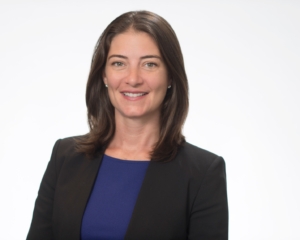
When considering the path of your career, one factor that WEX’s Katherine Ferguson always suggests younger women focus on is sponsorship. She says it’s vital not only to have someone who is supportive of your path, but is willing to take risks to advocate for you and pull you up. “Find that person and build a relationship, and it will serve you well throughout your career,” she says.
For her part, she says she has been fortunate to have had experience working with amazing leaders who have served as models as she attempts to emulate the qualities she admires, including a calm presence, authenticity and supportive leadership.
“I have learned how important relationships are, and how you have to take the time to nurture them, whether they are colleagues, peers, team members or those in senior roles,” she says. “Often when you enter your career, you are focused on getting the work done, but you have to remember to take the time to network and develop relationships that will be instrumental in your path for years to come.”
Searching For and Finding Her Passion
After completing degrees in art history and accounting, Ferguson began a career in accounting, including a stint at the Smithsonian that tied her two interests together. She soon decided that she wanted to move out of accounting and realized marketing appealed to her, with the balance of creativity, data and analytics.
Ferguson joined American Express out of graduate school and spent 14 years there serving different customer and geographic segments. She then decided she wanted to take her experience to a company that was smaller, but growing fast, where she would have an impactful role transforming the brand and customer experiences.
WEX was a perfect fit, particularly due to its culture. Having grown up with a father who was an executive, she had some sense of what the corporate world would be like, but over her career she has grown to appreciate the fact that each company has a different culture that impacts your career and working environment. That has helped inform her path along the way, as she assesses the culture of various roles and then strives to build a great culture among her team.
Right now, she is enjoying challenging her team as they elevate marketing into a best-in-class organization, including launching new products, new partnerships and new customer journeys.
One of her secrets to success is to hire people who are smarter than you, set them up for success, then get out of their way, she says.
A Focus on Mentoring Women
Currently, Ferguson is working with two senior executives on a recently launched women’s network. “I’ve been so impressed by WEX in general and the importance it places on supporting women, from our female CEO, cascading down to numerous senior female executives and beyond. This emphasis really speaks to our community and culture,” she says.
The network is designed to help build a community of women throughout the organization who will support each other and collaborate through common challenges. “It’s a concept that’s near and dear to my heart,” Ferguson says.
Aside from the many hats she wears at work, Ferguson makes time to find balance in her life — from spending time with her family to nurturing friendships and giving back to the community.
A recent newcomer to the Portland area, she has jumped right in, joining the boards of the Portland Museum of Art and United Way. She is also very proud of the time she spent mentoring a refugee student from Somalia at Portland High School last year. Although the woman spoke four languages, English was not one of them until she arrived in the United States, so Ferguson helped her with her school work and the college application process, celebrating the fact that she is now a student at the University of Southern Maine.
You Should Reconsider What You Think About Creative People in Leadership
Career Advice, Guest ContributionThough “creativity” is almost always included on lists of mandatory qualities of good leaders, creative people or “creatives” are rarely seen as the leader type.
Instead, creatives are revered for their originality, their resourcefulness, and their spirit. But to be successful, creatives need to be perceived as more proactive, risk-taking, problem-solving, and communicative which are the perceived traits assigned to leaders.
Why Creative Types Aren’t Often Leaders
In a study from the University of Pennsylvania’s Wharton School, researchers asked workers and students rate their peers’ potential for creativity and leadership. Neither group rated the most creative people among the most likely to become leaders.
Yet, the most popular stories of leadership focus on those with ingenuity. We love to hear tales of CEOs and politicians who solve problems not with determined effort or underhanded maneuvering but rather with imagination and resourcefulness. There are few people more inspirational than those with innovative ideas who change the course of an entire industry. Why do we collect stories of creative leaders while ruing the idea of being led by them?
The researchers of the Wharton study, psychologists Jennifer Mueller, Jack Goncalo, and Dishan Kamdar, have discovered that leaders are often expected to uphold structure and order within an organization, while creative types tend to think laterally, outside typical paths and boundaries. Additionally, creatives are often depicted as isolated or at least introverted, but leaders necessarily must be comfortable with near-constant interactions. Further research refutes these suppositions. Most notably, a Wharton study by Adam Grant discovered that introverted leaders outperform extroverted ones, disproving the conception that a leader must be gregarious to be productive.
In another study led by Jennifer Mueller, participants consciously argued for the power of creative ideas, asserting that they want more creativity in leadership, but subconsciously, those same participants rejected more creative concepts when exposed to uncertain situations. It seems that we are primed to deny creative leadership, even despite evidence of its potential.
How Creatives Use Leadership Skills
Creative people and leaders share some traits and behaviors in common:
Given that creatives innately boast the most important qualities of leaders, it seems obvious that creatives would be good in leadership positions. The stereotype of creatives types is not the same stereotype of traditional leader types. This is just a stereotype but one that remains in place for now. One way to prepare oneself for business positions, regardless of one’s past work experience or identity as a creative person, is to continue to be creative while learning traditional business skills. By doing an MBA online, or in-person creatives can hone their leadership skills and gain new knowledge that is useful in guiding teams of workers. Even more importantly, advanced credentials almost guarantee management positions, ensuring creative types access to entry-level leadership roles. Just as the theory goes more women in leadership positions increases the likelihood of female-friendly workplaces, more creatives in leadership positions could help to build businesses that are friendly to creative thinking.
Disclaimer: The opinions and views of Guest contributors are not necessarily those of theglasshammer.com
5 steps to take ownership of your career
Career Advice, Guest ContributionI spend a lot of time speaking to early career professionals who are looking for advice or wanting to further their development. And one of the pieces of advice I find myself giving all the time is “Don’t ask permission”. But taking ownership of your own career path is easier said than done. Here are five steps you can take today to start making progress.
1. Write Your Future Resume
What do you see yourself doing in the future? Write it down. I find it useful to write it in the format of a resume or a bio. Something that walks back through your experience from the fictional and aspirational future (written in present tense), backing all the way to the current job and role that you are in today. Write the final job first and then think about what experiences you might need to get that job and make that your second-to-the-last role. Repeat that until you have walked back through a progression of roles or companies that take you where you want to go. Don’t forget to add in education, training, non-profit involvement, or anything else that will be a part of your future, idealized career. There is something powerful about writing it down.
2. Invent Your Path
One of the things you will notice about your resume activity is that you might struggle naming some of the roles that you might want to have. Sometimes getting experience and being seen as ready for promotion isn’t a matter of title (marketing specialist leads to marketing manager leads to marketing director), but rather of actual job contents. And of course in the future, the contents of the job are going to be different. 30 years ago, who have thought we’d pay to take rides with strangers or spend a significant part of our marketing budget on pay-per-click advertising? So, you have an opportunity to invent a job or two along the way. Take advantage of the blank sheet of paper to design a job or role that would give you that experience. And remember, some of that experience might come from volunteer work or even entrepreneurial efforts. Don’t limit yourself. You are writing fiction, so make it worthy of a New York Times best seller award.
3. Research and Network
Look at that fictional resume you wrote for your future self. What questions arose when writing it? Did you wonder what people had done before they became a Chief Marketing Officer? Did you invent a position, but now you wonder if that role exists in some companies today? Are you curious how much education a financial analyst needs to work on a big merger and acquisition agreement? These things are knowable and worth researching. Look up people on LinkedIn in the roles to which you aspire and look at their career progression. Contact people in your network who might know the answers or have ideas of where to look. They could be people that work at your company (check out the leadership page on your company website, if you don’t know people outside your own team or group), or people in the community at large. When asked for their expertise, most people will be generous.
4. Tell Someone
Just like there is power in writing something down, it is amplified in the sharing. This is why sites like BucketList.org exist. They figure you are more likely to do things, even crazy things like climbing mountains or learning Mandarin, if you share your dreams with others. Find people who will be supportive and share some of your ideas with them. If you don’t have people in your immediate circle of friends and family who are likely to empathize, find a group, like HeartSpark, or a professional coach to help you listen and refine your ideas. Or join a networking group, like BizWomen or your local rotary to find a group of like-minded folks to help you grow.
5. Believe
At the heart of all of this is believing in your potential and what you have to offer a potential employer or entrepreneurial opportunity. I’m a big believer in positive affirmations and visualization. By affirming yourself and visualizing where you will go, you breathe belief into yourself. This starts the wheels of destiny in motion. Believe that your career is something you get to build.
So let your imagination run wild and see where it takes you. Be deliberate and bold. Don’t settle for the next rung on your chain of jobs or tasks. Take ownership of your professional story. It can be refined by experiences and reshaped when you want it to be. It may have imperfections, but at the end it will be yours.
Jennifer Davis is CMO and VP of Product Strategy at Planar, a Leyard Company