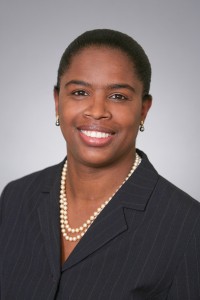
 By Cathie Ericson
As important as hard work is, success is built on your relationships, says Carol Noel, senior portfolio manager and team leader for BNY Mellon Wealth Management. “The skill set you needed in the beginning of your career is not the skill set that will drive you forward. In the early part you focus on hard work, and while that’s important to provide access and recognition, you have to constantly ask for feedback, course correct and build out relationships in order to move to higher levels,” she says.
Making a Difference in Private Wealth Management
After earning her bachelor’s degree from Cornell University and her master of business administration from Georgetown University, Noel worked at Bankers Trust Company for five years, and then joined BNY Mellon’s rotational leadership development program. From the beginning, she was part of private wealth management, a group that focuses on client relationships to help high-net-worth families achieve their financial goals.
Noel’s career epitomizes longevity: She has been with the group for 18 years and now leads a team of 13 professionals.Over the years, she has mastered all aspects of the business, from managing portfolios and researching stocks to managing people, executing business plans and guiding important client relationships.
She is particularly proud that her team earned recognition from BNY Mellon’s corporate leadership, which welcomed the group into the prestigious Chairman’s Circle in 2014 as the top revenue team. “Our successes represent a team effort of doing well for both our clients and the firm,” Noel says. “I work with an amazing group of people who care as deeply about the clients as I do, and we appreciated the recognition for our collective success,” she adds. “It was a nice topper to our efforts.”
The team continues to explore new ways to grow the business, including reaching out to new client segments where they have expertise. One such area is in supporting endowments, where they are working to provide services around philanthropic endeavors.
Over the years, she has watched the wealth management industry change dramatically, with clients seeking a more holistic approach to their wealth planning. Clients today expect more than just investment performance: They might be seeking advice on how to handle the long-term care of a grandparent or to provide for a child with autism. Approaching them with a 360-degree view of their financial and family situation allows her team to provide better solutions.
Building Your Career Involves Others
Noel has found that women will often believe it’s their responsibility to fix any problem on their desk. But that’s not the case, she says, underscoring that having the right team to resolve an issue is just as good as doing it yourself. “Bring together the right people to share the challenges that have to be met” she says, adding that a robust network should include people in your department as well as in others, and should cross cultural, gender and hierarchical lines.
She also advises women to start off by differentiating themselves from the pack. “There are lots of talented people, but you have to show that you can be successful, whether that’s meeting financial goals or working collaboratively with internal partners.” She says that if you take accountability for managing your career, you’ll go farther by being intentional and strategic.
“It’s not offensive behavior to be offensive about your career,” she says, even though that might seem contrary to what many girls learned growing up. “Having and executing a plan is vital to moving ahead. It’s not a negative thing to say you want a certain role and go for it. Have coffee, ask colleagues for an informational interview.”
And while she believes that women should help each other, she sees value in having both men and women as sponsors. “The diverse background in your network will help you get where you want to be.”
To that end, Noel is active in Impact, a multicultural Employee Resource Group where she’s a mentor and also participates in the Women’s Initiative Network (WIN). In addition, she has piloted a leadership development program designed to encourage people with diverse backgrounds to seek senior leadership.
“The firm is a strong supporter of building up good people internally, as much as hiring externally. They’ll look anywhere for the best people.”
A CFA charter holder, she also stays active in professional groups, including the New York Society of Security Analysts and the CFA Institute.
A Balanced Life
Noel finds her quest for a balanced life is getting easier as her two kids get older. She and her husband enjoy traveling as a family and her children “are enjoying the ride now too,” she says.
Equally important to that balance is giving back, and Noel is a member of the finance committee for the Havens Relief Fund Society, a foundation that provides one-time grants to help struggling families overcome imminent financial crises.
“I do what I love, and I never run away from a challenge. “

Surviving Even the Most Grueling Interview Process
Pipeline, What's OnRead more
Mover and Shaker: Shirley Murray, Senior Lead Program Manager, TIAA-CREF
Movers and ShakersMurray attributes that mindset to one of her mentors, her high school math teacher. “I really blossomed under her new approach that helped me understand both the ‘what’ and the ‘why,’” she says.
That perspective helped Murray in her first career as a math teacher. It still helps in her current role at TIAA-CREF where she focuses on deciphering the ‘why,’ instead of just doing what was done in the past.
During her time as a math teacher, Murray realized her love of programming when she created an introductory computer course for students. She then leveraged these skills to take a programming role in an actuarial firm. Soon after, Murray moved from her native Jamaica to the United States, where she joined TIAA-CREF in its New York City office. Murray began her career as part of the rotational development program within the actuarial department and has been with the financial services firm for the past 27 years.
A Focus on Efficiencies
Murray has served in several roles that involved programming and managing operations across many different groups, including both insurance services and the corporate actuarial department. She helped oversee the production of the firm’s financial statements and helped develop a tool for management reporting, an application that is still in use.
After this success, she had the opportunity to move to the firm’s Charlotte office to lead a group responsible for calculating accumulation values and overseeing financial controls. In this role, Murray helped install a suite of applications as part of the organization’s master record-keeping initiative. In 2013, she moved to the information technology department to lead a newly created group that supports the actuarial function, with the goal of streamlining their technologies to allow the group to devote more time to their analytical roles.
Streamlining processes has been important to Murray throughout her career; in fact, one of the accomplishments she’s most proud of was a project in 2011 that helped create more efficient processes that ultimately decreased the time involved in the daily pricing of products by two hours. “We overcame lots of challenges to roll it out,” she says.
She’s also excited about a current project that entails tracking data to see how it changes over time and how they can use that historicalinformation to create assumptions that can help them project into the future. “Using past behavior as a model helps our business divisions,” she says. Two of the projects she’s working on are also breaking new ground by providing automation for processes that were formerly completed manually.
Her work was recently acknowledged with TIAA-CREF’s “IT Outcomes that Matter” award, which she received for her work as part of a cross-functional team with members from across IT.
Learning the Ropes of the Corporate World
From her background as a teacher, where she was able to determine the delivery of her curriculum, she had come to the corporate world excited to get involved in a faster-paced industry. Murray realized that regardless of the industry or firm, there are always going to be challenges. “I learned that you have to be patient and find ways to be proactive to overcome obstacles.”
Having benefitted from the support of mentors and a sponsor, Murray has learned the importance of having someone watch out for you and in turn has become the mentor of other African-American females throughout the years.She recognizes that being a minority in the workplace can be difficult, yet advises those in similar situations to focus on your performance. “Sometimes only positive experience can overcome these biases, so I just do the best that I can regardless of my role or the challenges I face, and ultimately this mentality has allowed me to progress in my career.”
Another one of her best pieces of advice for others is to make sure that you plan for the long term, not just the short term – whether for your career or a project. “You have to move knowledge from one role into the next, thus building rather than compartmentalizing.” And, she adds, don’t be afraid to take risks and challenge the status quo.
Among Murray’s hobbies when she’s not at work are doing puzzles, particularly jigsaw puzzles, and traveling, especially to Jamaica to visit her mother and brothers.
Black Women Are Raising Their Hands For Leadership
Career AdviceNot only would Corporate America benefit to listen up, but there may also be a message for non-black women when it comes to owning our impact within leadership roles.
Help, my manager is killing my career
Career Advice, Career Tip of the Week!What can you do? Explore other options within the same company and navigate the politics by lunching with peers from other teams and even get a sponsor who a leader (the boss of your boss, or higher or a different team leader) so that you can start to understand the bigger picture of mobility, project allocation and promotional tracks. Also, sometimes a bad manager isn’t just someone who has a bad personality but someone who is stuck between a rock and a hard place themselves suffering from systemic constraints ( such as lack of resources, understaffed etc.) and so you have to figure out if this is a temporary issue or a true sign of dysfunction of the entire company.
Failing that, sometimes you just have to call a spade a spade and move on. There are other firms out there.
By Nicki Gilmour, Executive Coach and Organizational Psychologist
Contact nicki@theglasshammer.com if you would like to hire an executive coach to help you navigate the path to optimal personal success at work
Office Romance: A No, No For Your Career?
Career Advice, Work-LifeVoice of Experience: Carol Noel, Senior Director, Team Leader, BNY Mellon Wealth Management
Voices of ExperienceAs important as hard work is, success is built on your relationships, says Carol Noel, senior portfolio manager and team leader for BNY Mellon Wealth Management. “The skill set you needed in the beginning of your career is not the skill set that will drive you forward. In the early part you focus on hard work, and while that’s important to provide access and recognition, you have to constantly ask for feedback, course correct and build out relationships in order to move to higher levels,” she says.
Making a Difference in Private Wealth Management
After earning her bachelor’s degree from Cornell University and her master of business administration from Georgetown University, Noel worked at Bankers Trust Company for five years, and then joined BNY Mellon’s rotational leadership development program. From the beginning, she was part of private wealth management, a group that focuses on client relationships to help high-net-worth families achieve their financial goals.
Noel’s career epitomizes longevity: She has been with the group for 18 years and now leads a team of 13 professionals.Over the years, she has mastered all aspects of the business, from managing portfolios and researching stocks to managing people, executing business plans and guiding important client relationships.
She is particularly proud that her team earned recognition from BNY Mellon’s corporate leadership, which welcomed the group into the prestigious Chairman’s Circle in 2014 as the top revenue team. “Our successes represent a team effort of doing well for both our clients and the firm,” Noel says. “I work with an amazing group of people who care as deeply about the clients as I do, and we appreciated the recognition for our collective success,” she adds. “It was a nice topper to our efforts.”
The team continues to explore new ways to grow the business, including reaching out to new client segments where they have expertise. One such area is in supporting endowments, where they are working to provide services around philanthropic endeavors.
Over the years, she has watched the wealth management industry change dramatically, with clients seeking a more holistic approach to their wealth planning. Clients today expect more than just investment performance: They might be seeking advice on how to handle the long-term care of a grandparent or to provide for a child with autism. Approaching them with a 360-degree view of their financial and family situation allows her team to provide better solutions.
Building Your Career Involves Others
Noel has found that women will often believe it’s their responsibility to fix any problem on their desk. But that’s not the case, she says, underscoring that having the right team to resolve an issue is just as good as doing it yourself. “Bring together the right people to share the challenges that have to be met” she says, adding that a robust network should include people in your department as well as in others, and should cross cultural, gender and hierarchical lines.
She also advises women to start off by differentiating themselves from the pack. “There are lots of talented people, but you have to show that you can be successful, whether that’s meeting financial goals or working collaboratively with internal partners.” She says that if you take accountability for managing your career, you’ll go farther by being intentional and strategic.
“It’s not offensive behavior to be offensive about your career,” she says, even though that might seem contrary to what many girls learned growing up. “Having and executing a plan is vital to moving ahead. It’s not a negative thing to say you want a certain role and go for it. Have coffee, ask colleagues for an informational interview.”
And while she believes that women should help each other, she sees value in having both men and women as sponsors. “The diverse background in your network will help you get where you want to be.”
To that end, Noel is active in Impact, a multicultural Employee Resource Group where she’s a mentor and also participates in the Women’s Initiative Network (WIN). In addition, she has piloted a leadership development program designed to encourage people with diverse backgrounds to seek senior leadership.
“The firm is a strong supporter of building up good people internally, as much as hiring externally. They’ll look anywhere for the best people.”
A CFA charter holder, she also stays active in professional groups, including the New York Society of Security Analysts and the CFA Institute.
A Balanced Life
Noel finds her quest for a balanced life is getting easier as her two kids get older. She and her husband enjoy traveling as a family and her children “are enjoying the ride now too,” she says.
Equally important to that balance is giving back, and Noel is a member of the finance committee for the Havens Relief Fund Society, a foundation that provides one-time grants to help struggling families overcome imminent financial crises.
“I do what I love, and I never run away from a challenge. “
Black History Month 2016 – Honoring African American Women in Business
Career AdviceMuch of anyone’s success depends on two factors, this begins with you and your personality traits and then the second factor is the direct environment you are in, so yes working in a good team and an inclusive firm does matter. But, do multicultural women have a different set of challenges? This is a very interesting and debated question and you are sure to get a different answer from every person that you ask. Research such as Catalyst’s work on the “Concrete Ceiling” for African American women in Corporate America, would show that there are specific systemic issues hindering the progress of this group.
Are you looked at for your gender or your ethnicity first? This is often a question that is pondered on this topic by academics and women in the trenches alike. The fact remains that when we look around we see fewer black women at the top than white women and much fewer women generally than men but this is not new news.
That is why we are here to show you that African American women are in senior positions and are leading teams and leading change. Like any of us, we can talk about our own experiences, since we cannot speak for all women everywhere, we cannot speak for all Black women everywhere either when we profile a small group, but we can provide a platform for interesting dynamic women to share their stories and personal career journey.
Black History Month for me at least is not only about celebrating African Heritage and Black people in history who should be remembered for their feats and contributions but also as a time for other people to acknowledge their whiteness and some of the systemic and historical privileges that have gone with that identity. A recent article published on medium.com demonstrates in a very visual way how we have privilege in different ways. How would you answer the questions asked? How does that match us with how others see you?
From a career advice perspective which is what we tackle here on The Glass Hammer, no matter who you are reading this article, you need to know that “You according to you and you according to them” are often different versions of you due to other people’s stereotypes. Having differing visible aspects such as being a woman or being of color has real consequences, often unseen to certain people in the dominant societal group who often are built to experientially learn and so find it hard to conceptualize other people’s experiences. Some less kindly call this a lack of empathy. On a side note, I would love to see a study of overlaps traits like empathy and voting patterns in US politics if anyone has that to share. Back to the point however, if you are a right handed person do you ever really have to think about how life is for left handed people? Probably not.
You don’t have to look too far in the press right now to see all sorts of weird mutations of racial issues that rage on. From people arguing all sides of the Oscars with #OscarsSoWhite with the entertainment industry’s seeming preference to reward one type of people, to Michael Jackson being played by Ralph Fiennes (really, too much to discuss here from all angles), to important issues regarding a potential future President being an overt racist. As a non- American, I have no issue getting political and I recently found myself intrigued by people who insist on saying “All Lives Matter” in response to the statement “Black Lives Matter”. The activist group aside for a second, let’s look at the constructs behind that rebuttal. As an organizational psychologist specializing in the diversity topic, this very sentence is so close to the themes I see daily in my gender work as men and women defend the patriarchy in a similar way, that being a system which favors men over women albeit often in a deeply held unconscious way. Even people with good intentions in that sentence who want to say they value all lives (those who have bad intentions need their own article) completely overlook the historical and actual dynamics in play. I see this often as it is a way for us all to cognitively convince ourselves that somehow by saying all people should be treated equally we find a way to dismiss, discredit or deny (the 3 d’s) the actual weighted and skewed reality of what is happening in terms of how people are grouped and on some level, treated.
Even the word multicultural can be considered controversial and many women who get pegged with this label ask why their culture is not considered like any other Americans. Good question and from my perspective as an actual foreigner working in America with Americans who then tack a heritage qualifier such as African, Irish or Italian onto their American nationality, I often wonder where the need comes from to differentiate so strongly. I do believe however there are legitimate reasons to do so as an uneven playing field based on one’s ethnicity seems to very much still exist in the USA and translates into the workplace due to humans being humans and carrying their biases and constructs into the skyscraper with them in the morning.
So what can you do? Ask yourself who is in your network and sponsor and mentor different types of people. Assume nothing and don’t expect people to educate you at their expense yet go the extra mile to break your own stereotypical notions of people in your team. Go to the multicultural network events with a friend just as you would expect men to be interested in your career as a woman, white women can lift as they climb and so if you find yourself ascending take all women with you, conscious that you are being inclusive in your actions and choices.
I hope I have made you think today. That is all I can ask, the rest is up to you.
We coach leaders in being inter-culturally competent and help them address how their constructs have been formed and how preferences that cause bias can be overridden when necessary. Political correctness can often hinder the real work.
Check back all month long to read about African American women who are making a difference at work.
By Nicki Gilmour
Can you see a clear path forward? How motivation theory works in practice
Career Advice, Career Tip of the Week!Goal setting theory and other organizational psychology theories and basic principles suggests that motivation is not a specific trait in any one person but rather it is a combination of your ability to do the job and experience more successes than grinding organizational obstacles, along with your ability to see a clear path forward otherwise known as “opportunity”. This is how you stay motivated at work.
However, make sure you are actually seeing the big picture- firms often offer much more mobility than you can see with the naked eye. First port of call is to ask your manager how he or she feels you can grow in the firm and how you can grow in the next year or two? Network outside of your direct team as openly as you see fit in your specific situation. Look at job boards and see what opportunities are being advertised.
The art and the science is knowing how much trust you can have in your manager to sponsor you. Next week we shall talk more about this.
By Nicki Gilmour, Executive Coach and Organizational Psychologist
Contact nicki@theglasshammer.com if you would like to hire an executive coach to help you navigate the path to optimal personal success at work
Margaret Anadu, Managing Director, Goldman Sachs
Voices of Experience“There is some truth to the millennial stereotype that we want everything in business right away,” she says. “But I’ve found that the hard work you put in during your early years will really bear fruit later on. Whether it was changing roles or working on a tough transaction, everything I went through along the way made something else in the future easier. Tenure is something that I encourage my generation to respect and place value on.”
Anadu joined Goldman Sachs’ analyst program directly after graduating from Harvard in 2003. She says that the program was the ideal entrée to both the firm and the industry as it allowed her to learn all facets of the business and form a close-knit group of colleagues whom she relies on to this day. She spent her analyst years in the firm’s Securities Division, delving into the markets and helping to serve the firm’s clients. Taking advantage of the firm’s opportunities for mobility, she spent her final year as an analyst in the Urban Investment Group, where she climbed the ladder to eventually become a managing director. “I loved it when I started, and I love it today,” she says.
Impactful Work
Goldman’s Urban Investment Group deploys the firm’s capital by making investments and loans that benefit urban communities, largely in underserved neighborhoods. When she first started, investments were in the $2 million range; in 2014, the group committed $300 million in its biggest commitment for a project to date – the Essex Crossing project on the Lower East side.
“That illustrates the growth of the firm’s appetite in terms of these transactions,” she says. The capital is being used to transform a moderate-income community on the Lower East side [C1] to create a new multifaceted neighborhood that includes affordable housing, market rate housing, a community center, a senior center, new retail and more.
Along with the increased transaction size, interest in the sector has grown from all sides – from other corporations, institutional funds and even business schools which now offer classes in impact investing. “The more types of entities that get involved, the better for our work,” she says, adding that it’s been extremely rewarding to watch the next generation of impact investors develop, including her team of 30 “incredibly smart, ambitious people,” as she describes them.
Putting Stock in Early Career Advice
Anadu says she wishes she’d recognized that all the advice she got early in her career would end up being so pertinent along the way. “People at our firm take a lot of time to sit down and mentor you, and I’ve realized that along the way, the advice I’ve used the most is what I heard back when I started. If I’d known how relevant it would all be, I would have captured it in a notebook,” a practice she uses these days, which she recommends as a way to reflect and invest time in thinking about your career intentionally.
She also advises women who are starting out to realize that their network and mentors should be comprised of people at all levels. “A mentor is traditionally thought of as someone senior who will lift you up, but peers and even those who are junior can be impactful,” she says, adding that those she began with at Goldman as analysts have been helpful all along the way, giving advice on projects or how to view a client issue differently.
She says that the industry is continuing to evolve with more senior women, and the ranks will continue to grow, offering more opportunity to mine their examples of success and how to balance work and family. “All the efforts we are making today will have impact on the senior level landscape 10 or 15 years from now.”
Anadu says she grew her own mentoring network through her involvement with Goldman’s Emerging Leaders Program, designed for high-performing vice presidents. In addition to gaining a senior sponsor, she was able to build a network across the firm through the panels and informal events, developing useful contacts and mentors who have helped as she advanced.
Hobbies Then and Now
As a new mom, Anadu notes that she now spends most of her free time with her six-month-old daughter but she still makes time for her favorite hobby, walking, which dovetails well with her work. “I love to walk the streets of New York and learn about new neighborhoods,” she says.
Have You Been Told You’re Overqualified? Here are some Tactics to Help You Get Your Foot in the Door
Managing ChangeRead more