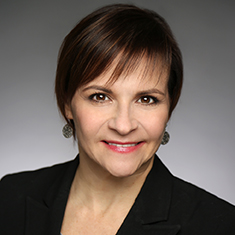
 Mimi Addy is probably the only artist/electrical engineer/lawyer/MBA you will ever meet. And each part of that description represents an interesting facet that has contributed to her successful and varied career.
Addy initially earned a degree in electrical engineering for one important reason: she recognized the value of being financially independent, and when researching which careers were the most lucrative, engineering came out on top. To maintain a balance, she combined it with a double major in something about which she is passionate — art.
After graduation, she decided to parlay her technical education into a career that was more “people-facing” than a typical engineering career and pursued law school to become a patent lawyer.
New Degrees, New Opportunities
With the ‘90s recession in full swing, Addy’s background as an electrical engineer lawyer gave her an advantage, and she joined Willian Brinks Olds Hofer Gilson & Lione (“Brinks”). She remembers how privileged she felt to be an associate at the large, established intellectual property firm and worked there for 17 years.
While an associate at Brinks, she returned to school at John Marshall Law School to earn her LLM in intellectual property, which introduced her to new areas of law, but one of the biggest benefits was the networking opportunities the school offered. Her teachers were federal judges and top practitioners, and she also forged meaningful relationships with her peers that have paid off as they have risen in the industry.
One important connection she made was with the Honorable Paul Michel, a federal appellate judge specializing in patent cases. She told him that if he ever needed a law clerk, she would love to be considered, and a year later, his office contacted her about an opening, which she applied for and earned.
“That clerkship really focused my career,” she recalls, adding that it was a bold move that put her on a new path.
After a year in Washington, D.C., she returned to private practice at Brinks where she focused on federal appeals in patent cases. She was named a partner in 2000 and stayed there until 2011 when it appeared the firm was going in a divergent direction. “Because of the great people, I would have loved to have stayed at Brinks for my entire career, but I got to a point where I needed something different than the firm was able to offer.”
She had learned that she enjoyed the process of managing, building and growing teams so turned her attention to finding an opportunity where she could run a practice. She moved to Steptoe & Johnson’s Chicago office as managing partner and head of their office, which she doubled in size during her tenure.
“It was fun to be collaborating with the people whom you respect in the community and whose company you also enjoy,” she says.
While there, she started to note that the practice of law was changing and that individual skills were no longer enough to gain an advantage so she returned to school and earned her MBA at the University of Chicago. “At various points in my career, different accomplishments appear to be my biggest achievement, but right now it’s earning that MBA because it reinvigorated my interest in my career and in new ways that I could succeed.”
She then landed at Katten Muchin Rosenman LLP, which was looking for someone to chair and grow the patent litigation group, and she was eager to apply her managerial skills to running the practice and large litigation teams.
Along with her legal work, Addy is currently focused on trying to develop a new model for reviewing and billing legal services. “Most clients are looking for a better way to forecast to management what the legal costs should be,” she says.
Women in the Legal Field
Addy believes that there are issues that will always make it harder for professional women than men. “If I’m the one having the child, I have to take time to be with the child, and that will affect my career path. Life is about choices: You can’t have it all, all of the time, but if you plan well, you can do a lot,” she says. “Even in today’s legal practice, however, there are subliminal biases you can’t get rid of, and no matter how hard we try to level the playing field, women will always be working harder.”
As a lawyer and former engineer, she understands firsthand the importance of encouraging more women to pursue careers in male-dominated industries. She sees a need for more networking-based women’s groups for mentoring and business development opportunities. “We can be successful in the system as it is, but women need to help women,” she says, adding “We network differently than men do, and that’s a fact.”
Addy, who wishes she had had the confidence and assertiveness when starting out that she developed later on, feels passionately that women need to be taught to be assertive because you will never get what you want unless you ask for it, even pursue it. “People will notice your good work, but that’s not enough. You have to ask for assignments and opportunities and put yourself out there. If you don’t ask, the answer is always no.”
On the Home Front
Addy still embraces the creative side of her nature, saying that creating and collecting art relaxes her mind and enhances her legal career. But her best stress relief? Her daughters, Jackie, age 14, and Meaghan, age 12: “fantastic athletes, outgoing girls and my buds.”

Black History Month 2016 – Honoring African American Women in Business
Career AdviceMuch of anyone’s success depends on two factors, this begins with you and your personality traits and then the second factor is the direct environment you are in, so yes working in a good team and an inclusive firm does matter. But, do multicultural women have a different set of challenges? This is a very interesting and debated question and you are sure to get a different answer from every person that you ask. Research such as Catalyst’s work on the “Concrete Ceiling” for African American women in Corporate America, would show that there are specific systemic issues hindering the progress of this group.
Are you looked at for your gender or your ethnicity first? This is often a question that is pondered on this topic by academics and women in the trenches alike. The fact remains that when we look around we see fewer black women at the top than white women and much fewer women generally than men but this is not new news.
That is why we are here to show you that African American women are in senior positions and are leading teams and leading change. Like any of us, we can talk about our own experiences, since we cannot speak for all women everywhere, we cannot speak for all Black women everywhere either when we profile a small group, but we can provide a platform for interesting dynamic women to share their stories and personal career journey.
Black History Month for me at least is not only about celebrating African Heritage and Black people in history who should be remembered for their feats and contributions but also as a time for other people to acknowledge their whiteness and some of the systemic and historical privileges that have gone with that identity. A recent article published on medium.com demonstrates in a very visual way how we have privilege in different ways. How would you answer the questions asked? How does that match us with how others see you?
From a career advice perspective which is what we tackle here on The Glass Hammer, no matter who you are reading this article, you need to know that “You according to you and you according to them” are often different versions of you due to other people’s stereotypes. Having differing visible aspects such as being a woman or being of color has real consequences, often unseen to certain people in the dominant societal group who often are built to experientially learn and so find it hard to conceptualize other people’s experiences. Some less kindly call this a lack of empathy. On a side note, I would love to see a study of overlaps traits like empathy and voting patterns in US politics if anyone has that to share. Back to the point however, if you are a right handed person do you ever really have to think about how life is for left handed people? Probably not.
You don’t have to look too far in the press right now to see all sorts of weird mutations of racial issues that rage on. From people arguing all sides of the Oscars with #OscarsSoWhite with the entertainment industry’s seeming preference to reward one type of people, to Michael Jackson being played by Ralph Fiennes (really, too much to discuss here from all angles), to important issues regarding a potential future President being an overt racist. As a non- American, I have no issue getting political and I recently found myself intrigued by people who insist on saying “All Lives Matter” in response to the statement “Black Lives Matter”. The activist group aside for a second, let’s look at the constructs behind that rebuttal. As an organizational psychologist specializing in the diversity topic, this very sentence is so close to the themes I see daily in my gender work as men and women defend the patriarchy in a similar way, that being a system which favors men over women albeit often in a deeply held unconscious way. Even people with good intentions in that sentence who want to say they value all lives (those who have bad intentions need their own article) completely overlook the historical and actual dynamics in play. I see this often as it is a way for us all to cognitively convince ourselves that somehow by saying all people should be treated equally we find a way to dismiss, discredit or deny (the 3 d’s) the actual weighted and skewed reality of what is happening in terms of how people are grouped and on some level, treated.
Even the word multicultural can be considered controversial and many women who get pegged with this label ask why their culture is not considered like any other Americans. Good question and from my perspective as an actual foreigner working in America with Americans who then tack a heritage qualifier such as African, Irish or Italian onto their American nationality, I often wonder where the need comes from to differentiate so strongly. I do believe however there are legitimate reasons to do so as an uneven playing field based on one’s ethnicity seems to very much still exist in the USA and translates into the workplace due to humans being humans and carrying their biases and constructs into the skyscraper with them in the morning.
So what can you do? Ask yourself who is in your network and sponsor and mentor different types of people. Assume nothing and don’t expect people to educate you at their expense yet go the extra mile to break your own stereotypical notions of people in your team. Go to the multicultural network events with a friend just as you would expect men to be interested in your career as a woman, white women can lift as they climb and so if you find yourself ascending take all women with you, conscious that you are being inclusive in your actions and choices.
I hope I have made you think today. That is all I can ask, the rest is up to you.
We coach leaders in being inter-culturally competent and help them address how their constructs have been formed and how preferences that cause bias can be overridden when necessary. Political correctness can often hinder the real work.
Check back all month long to read about African American women who are making a difference at work.
By Nicki Gilmour
Can you see a clear path forward? How motivation theory works in practice
Career Advice, Career Tip of the Week!Goal setting theory and other organizational psychology theories and basic principles suggests that motivation is not a specific trait in any one person but rather it is a combination of your ability to do the job and experience more successes than grinding organizational obstacles, along with your ability to see a clear path forward otherwise known as “opportunity”. This is how you stay motivated at work.
However, make sure you are actually seeing the big picture- firms often offer much more mobility than you can see with the naked eye. First port of call is to ask your manager how he or she feels you can grow in the firm and how you can grow in the next year or two? Network outside of your direct team as openly as you see fit in your specific situation. Look at job boards and see what opportunities are being advertised.
The art and the science is knowing how much trust you can have in your manager to sponsor you. Next week we shall talk more about this.
By Nicki Gilmour, Executive Coach and Organizational Psychologist
Contact nicki@theglasshammer.com if you would like to hire an executive coach to help you navigate the path to optimal personal success at work
Margaret Anadu, Managing Director, Goldman Sachs
Voices of Experience“There is some truth to the millennial stereotype that we want everything in business right away,” she says. “But I’ve found that the hard work you put in during your early years will really bear fruit later on. Whether it was changing roles or working on a tough transaction, everything I went through along the way made something else in the future easier. Tenure is something that I encourage my generation to respect and place value on.”
Anadu joined Goldman Sachs’ analyst program directly after graduating from Harvard in 2003. She says that the program was the ideal entrée to both the firm and the industry as it allowed her to learn all facets of the business and form a close-knit group of colleagues whom she relies on to this day. She spent her analyst years in the firm’s Securities Division, delving into the markets and helping to serve the firm’s clients. Taking advantage of the firm’s opportunities for mobility, she spent her final year as an analyst in the Urban Investment Group, where she climbed the ladder to eventually become a managing director. “I loved it when I started, and I love it today,” she says.
Impactful Work
Goldman’s Urban Investment Group deploys the firm’s capital by making investments and loans that benefit urban communities, largely in underserved neighborhoods. When she first started, investments were in the $2 million range; in 2014, the group committed $300 million in its biggest commitment for a project to date – the Essex Crossing project on the Lower East side.
“That illustrates the growth of the firm’s appetite in terms of these transactions,” she says. The capital is being used to transform a moderate-income community on the Lower East side [C1] to create a new multifaceted neighborhood that includes affordable housing, market rate housing, a community center, a senior center, new retail and more.
Along with the increased transaction size, interest in the sector has grown from all sides – from other corporations, institutional funds and even business schools which now offer classes in impact investing. “The more types of entities that get involved, the better for our work,” she says, adding that it’s been extremely rewarding to watch the next generation of impact investors develop, including her team of 30 “incredibly smart, ambitious people,” as she describes them.
Putting Stock in Early Career Advice
Anadu says she wishes she’d recognized that all the advice she got early in her career would end up being so pertinent along the way. “People at our firm take a lot of time to sit down and mentor you, and I’ve realized that along the way, the advice I’ve used the most is what I heard back when I started. If I’d known how relevant it would all be, I would have captured it in a notebook,” a practice she uses these days, which she recommends as a way to reflect and invest time in thinking about your career intentionally.
She also advises women who are starting out to realize that their network and mentors should be comprised of people at all levels. “A mentor is traditionally thought of as someone senior who will lift you up, but peers and even those who are junior can be impactful,” she says, adding that those she began with at Goldman as analysts have been helpful all along the way, giving advice on projects or how to view a client issue differently.
She says that the industry is continuing to evolve with more senior women, and the ranks will continue to grow, offering more opportunity to mine their examples of success and how to balance work and family. “All the efforts we are making today will have impact on the senior level landscape 10 or 15 years from now.”
Anadu says she grew her own mentoring network through her involvement with Goldman’s Emerging Leaders Program, designed for high-performing vice presidents. In addition to gaining a senior sponsor, she was able to build a network across the firm through the panels and informal events, developing useful contacts and mentors who have helped as she advanced.
Hobbies Then and Now
As a new mom, Anadu notes that she now spends most of her free time with her six-month-old daughter but she still makes time for her favorite hobby, walking, which dovetails well with her work. “I love to walk the streets of New York and learn about new neighborhoods,” she says.
Have You Been Told You’re Overqualified? Here are some Tactics to Help You Get Your Foot in the Door
Managing ChangeRead more
Voice of Experience: Meredith Addy, National Chair Patent Litigation, Katten Muchin Rosenman LLP
People, Voices of ExperienceAddy initially earned a degree in electrical engineering for one important reason: she recognized the value of being financially independent, and when researching which careers were the most lucrative, engineering came out on top. To maintain a balance, she combined it with a double major in something about which she is passionate — art.
After graduation, she decided to parlay her technical education into a career that was more “people-facing” than a typical engineering career and pursued law school to become a patent lawyer.
New Degrees, New Opportunities
With the ‘90s recession in full swing, Addy’s background as an electrical engineer lawyer gave her an advantage, and she joined Willian Brinks Olds Hofer Gilson & Lione (“Brinks”). She remembers how privileged she felt to be an associate at the large, established intellectual property firm and worked there for 17 years.
While an associate at Brinks, she returned to school at John Marshall Law School to earn her LLM in intellectual property, which introduced her to new areas of law, but one of the biggest benefits was the networking opportunities the school offered. Her teachers were federal judges and top practitioners, and she also forged meaningful relationships with her peers that have paid off as they have risen in the industry.
One important connection she made was with the Honorable Paul Michel, a federal appellate judge specializing in patent cases. She told him that if he ever needed a law clerk, she would love to be considered, and a year later, his office contacted her about an opening, which she applied for and earned.
“That clerkship really focused my career,” she recalls, adding that it was a bold move that put her on a new path.
After a year in Washington, D.C., she returned to private practice at Brinks where she focused on federal appeals in patent cases. She was named a partner in 2000 and stayed there until 2011 when it appeared the firm was going in a divergent direction. “Because of the great people, I would have loved to have stayed at Brinks for my entire career, but I got to a point where I needed something different than the firm was able to offer.”
She had learned that she enjoyed the process of managing, building and growing teams so turned her attention to finding an opportunity where she could run a practice. She moved to Steptoe & Johnson’s Chicago office as managing partner and head of their office, which she doubled in size during her tenure.
“It was fun to be collaborating with the people whom you respect in the community and whose company you also enjoy,” she says.
While there, she started to note that the practice of law was changing and that individual skills were no longer enough to gain an advantage so she returned to school and earned her MBA at the University of Chicago. “At various points in my career, different accomplishments appear to be my biggest achievement, but right now it’s earning that MBA because it reinvigorated my interest in my career and in new ways that I could succeed.”
She then landed at Katten Muchin Rosenman LLP, which was looking for someone to chair and grow the patent litigation group, and she was eager to apply her managerial skills to running the practice and large litigation teams.
Along with her legal work, Addy is currently focused on trying to develop a new model for reviewing and billing legal services. “Most clients are looking for a better way to forecast to management what the legal costs should be,” she says.
Women in the Legal Field
Addy believes that there are issues that will always make it harder for professional women than men. “If I’m the one having the child, I have to take time to be with the child, and that will affect my career path. Life is about choices: You can’t have it all, all of the time, but if you plan well, you can do a lot,” she says. “Even in today’s legal practice, however, there are subliminal biases you can’t get rid of, and no matter how hard we try to level the playing field, women will always be working harder.”
As a lawyer and former engineer, she understands firsthand the importance of encouraging more women to pursue careers in male-dominated industries. She sees a need for more networking-based women’s groups for mentoring and business development opportunities. “We can be successful in the system as it is, but women need to help women,” she says, adding “We network differently than men do, and that’s a fact.”
Addy, who wishes she had had the confidence and assertiveness when starting out that she developed later on, feels passionately that women need to be taught to be assertive because you will never get what you want unless you ask for it, even pursue it. “People will notice your good work, but that’s not enough. You have to ask for assignments and opportunities and put yourself out there. If you don’t ask, the answer is always no.”
On the Home Front
Addy still embraces the creative side of her nature, saying that creating and collecting art relaxes her mind and enhances her legal career. But her best stress relief? Her daughters, Jackie, age 14, and Meaghan, age 12: “fantastic athletes, outgoing girls and my buds.”
Professional Women in Germany: The Chutes and Ladders
Career Advice, NewsIt may be surprising to learn that no other industrial nation has as few top female managers as Germany. Despite having a female Chancellor, there is a general sense that Germany today is stuck well in the past.
Only 11% of German companies have women within management positions. This is lower than the European Union average of 14% and way behind the United States and Canada who have around 40% parity. Many see Germany’s corporate culture and even German society as the biggest obstacle to German women gaining footing in the corporate world. Reinhild Engel, an equal opportunity official at the German company Schering says, “Women have to fight for lead positions. We have to change the company culture and the social culture.”
Some say that Germany is simply stuck in the past. Gabriele Schaffran-Deutschmann, a recognized advocate for women also in Schering stated, “I think it’s true that Germany is 20 years behind.” Today’s Germany has a firmly entrenched masculine working culture. In Germany fewer women work full time than in France, Great Britain and all of the Scandinavian countries. Of those who do join the workforce, less than 4% reach positions of top management.
In politics German women are also lagging behind many of the other EU countries. Economist Ute Klammer, who led a study on German women and work which was presented to the federal government recently stated, “Most European countries have more women in leading positions.” There is a growing sense that Germany is behind its more gender progressive neighbours. Current German tax laws are also seen as responsible. Klammer also said, “If you look at West Germany in particular, there is a strong breadwinner model. There is still the idea that the man supports the family and the female works part-time, if at all.”
These systemic problems have had massive effects on the corporate world. Men still outnumber women in Germany’s boardrooms 8 to 1 despite a federal cabinet which is comprised of 40% women. According to the DIW economic think-tank, women occupy just 7 percent of executive board seats among the 30 largest companies on Germany’s blue-chip DAX index.
This problem is compounded by the lack of German women returning to work after having children. This is caused in part by the current parental leave law which states that an employer can return to the same or, an equivalent job up to 3 years after childbirth. However despite the law encouraging 98% of women back into the workforce, employers are often leery of both hiring women in the first place and of promoting them when they come back.
Hans-Olaf Henkel, the former president of the Association of German Industry says, “A very limited number of women advance after they have children. Women are more or less forced to quit in Germany.”
These deeply entrenched gender roles are sometimes attributed to Germany’s turbulent history. A German female banking executive who refused to be identified recently stated, “After the war, so many men were lost, it was essential for women to raise their children as a duty to the Fatherland. If you left your children to others, you were a rabenmutter, a bad mother, like the raven bird pushing her little ones out of the nest.” Barbara Schaeffer-Hegel, founder of the European Academy for Women in Politics and Business stated, “The mother ideology of the Third Reich and the conservative women’s’ politics in the postwar time have left deep marks. The division of the areas of public and private were cemented with the exclusive responsibility of women for the private areas– caring for children and ensuring the welfare of the family.”
These cultural inclinations toward raising one’s own children singlehandedly have left their mark on Germany’s daycare systems. These factors make companies even more wary of promoting women. “It’s a lot harder to reconcile having a family and a career in Germany than it is in most developing countries and almost all industrial nations,” says Schaeffer-Hegel.
The present reality and the future progress
But there are signs that things are getting better for Germany’s corporate women. According to Fidar, a German initiative which promotes female managers, women held 11.1% of positions in executive and supervisory boards in 2013. This is a huge 4.6% jump from 2011. But while this is impressive, Fidar was quick to express that much more work needs to be done. Fidar president Monika Schulz-Strelow said, “It is not enough to bring one woman into the supervisory board. In order for things to change, several women must be in leadership positions of a company.” Fidar states that for actual change to occur and remain so, at least 20-25% of German management positions must be filled by women.
In 2014 the figure for women in supervisory positions rose to 16.2% causing great fanfare in the German media. However what was less promising is the mere 5.9% of women in executive boards. This figure rose just 3.4% from 2013. Schulz-Strelow went on to state, “Nearly a quarter of Dax companies are completely free of women in their leadership. The realization is spreading that having women in the executive and supervisory boards is very good for a company. Yet despite this, companies which simply bring one woman into a leadership position but do not change the culture will simply lose those women again.”
In order to avoid this, Chancellor Merkel and the German government have suggested installing female quotas for German corporate positions. These quotas are being taken very seriously by the media and during policy debates. Merkel has promised that from 2016 on, women must hold at least 30 percent of corporate board positions in some of Germany’s biggest listed companies. And while the debate for and against these quotas is still in heated progress, there is at least consolation in the fact that the argument exists at all.
By Ben Rozon
Its all about the money. Getting that pay rise
Career Advice, Career Tip of the Week!Let’s start with the financial factor of feeling or being actually underpaid for the job that you do. First thing to do is to do some research on what your peers get paid online and yes interviewing is a way to do this as well as conversations with trusted peers. Secondly, before leaving, there are ways to explore pay and compensation changes with your boss and your HR team without threatening to leave and never present an ultimatum and especially if you don’t actually have a new job to go to. Do Not Bluff unless you are independently wealthy and can afford some time off.
Go to your boss and say that you would like to take him or her to lunch to chat about the past year. If you did a great job, present your case and ask for a higher base and/or a higher bonus or commission structure. Sometimes base salaries are harder to play with than commissions but ultimately if you are truly under market values ( as women often come in lower than men on base salary) there is a real case to give you the bump that aligns you with peers. If it is just about the money, and you are otherwise pretty happy, then why jump ship to an unknown workplace culture and structure? This conversation is worth having and then you can decide what to do!
By Nicki Gilmour, Executive Coach and Organizational Psychologist
Contact nicki@theglasshammer.com if you would like to hire an executive coach to help you navigate the path to optimal personal success at work
Voice of Experience: Michelle Orozco, Assurance Partner and Diversity and Inclusion Leader, PwC Mexico
Voices of ExperienceOrozco serves as a role model of a professional woman capable of successfully addressing work/life balance.
She joined PWC in 1997 as an auditor, soon heading to London where she spent four years assisting in developing guidance for accounting standards used by the firm worldwide. She returned to Mexico City, where her successful experience from London formed a critical part of the business case for her admittance to the partnership as an expert in International Financial Reporting Standards (IFRS). Her current role as head of Global Accounting Consulting Services in Mexico includes supporting clients with complex transactions, assisting with internal and external training in IFRS and providing advice to clients with respect to their accounting approaches.
“Everything that affects our clients is of interest to me, and it’s vital that we are prepared for the accounting consequences of global and national economic issues so we can advise them.”
She also was appointed diversity leader in June 2014, which she terms both a great honor and a great challenge. “My background is more technical and related to numbers so dealing with diversity initiatives allows me to explore a different side with more emphasis on business skills. It’s been a learning experience I have appreciated.”
Rooting Out Subconscious Bias
Orozco believes that subconscious bias is still prevalent in Mexico, reinforcing the stereotype that women should stay home and men should be the bread winner. “That belief can affect decisions about who is the best person for a certain role,” she says, adding that there needs to be an emphasis on accepting that not all women and men have the same desires.
“We need to focus on talent, rather than gender, and be cautious about how our beliefs may affect decisions that could prevent women from continuing to grow.”
For their part she says that women need to realize that they don’t need to be super women. “As long as you’re delivering results, you can manage your personal and professional goals. Take your flexibility and use it as needed and make sure you have the balance of teamwork you need at home and at work.”
Over the years, she has found that women face greater challenges in tackling balance. “Becoming a partner involves difficult work, and you have to make a choice that you will be sacrificing some of your personal time, but you have to balance that with the pride you feel in your professional accomplishments. In truth the sacrifice has been very limited; I’ve never had to miss an important family event or any of my children’s special occasions,” Orozco says.
She also believes that young women should carefully consider their partner’s support of their career aspirations. “It’s vital to ensure that you have the same interests and goals. Here in Mexico we have cultural differences, and some men believe women should stay at home, so that’s an issue that should be addressed.”
She has also seen great strides in men being more upfront about their desire to spend time with family, and that’s where she believes flexibility is important.
And she has seen that women have a role to play too: “We don’t always help other women, and that needs to change. We need to be more open and understanding that even if it was difficult for you, it doesn’t have to be as difficult for others.”
Making Time for Other Women and Family
That belief plays into her ongoing efforts to mentor other women. She has recently assisted in creating a firm network to discuss issues such as personal brand, improving confidence and other professional skills that they will formalize this year. She is also part of a mentoring initiative with the American Chamber, and next year will be involved in “Reach Out” — an initiative first introduced in India that involves PwC, American Express, Microsoft and General Motors. Women will be selected to network and attend monthly professional development sessions and also be mentored by the CEOs of those companies and others in the group.
A mom to three children, two boys, ages 12 and 7, and a four-year-old girl, Orozco relies on other supportive women, including connections she has with other families via her children’s schools.
Orozco prioritizes personal time, visiting her parents and friends often and focusing on her husband and kids. They enjoy traveling but also spending time at home, going out to the cinema or weekend restaurant nights, where, as she says, devices are forbidden and distractions are few, so they can really connect.
Being the Mentee You Were Meant to Be
Mentors and SponsorsFailing to put enough thought into career objectives, expecting mentors to do most of the heavy lifting and neglecting to show appreciation for the time commitment made by mentors could put a strain on the mentor-mentee relationship.
Read more
Real Midlife Crisis
Career Advice, Managing ChangeIn the UK, the dramatic increase in unemployment and decrease in labor force participation in women over 50 is being attributed to two factors: downsizing in the public sector and elder care. In the US, it is assumed that middle aged women are dropping out of the workforce mostly to care for their aging parents. Elder care is a very real issue, but it isn’t the only one. Since this trend accelerated during the recession, there must have been important factors related to the economic downturn, as well. Have late-career women continued to drop—or be pushed—out of the labor force in the new economy, and what is going on beneath the surface?
Following Up
The UK Since 2012
According to 2014 data from the Office for National Statistics in the UK, the unemployment rate for women between 50 and 64 has decreased by 12% since that 2012 article was written, however, the decrease in unemployment for men in the same age range has been much higher: 31%. Based on data from the same source, it appears that British women in the last third of their careers were still struggling in 2014. It is likely that the decrease in the number of public sector jobs, where British women are overrepresented, has indeed played an important role in this. It seems that unemployed women who previously worked for the government may be having trouble finding new jobs.
The US in Perspective
The US statistics on labor force participation show that middle-aged men and women took a similar, recession-related hit. The reason why unemployment among later-career women stands out is because it’s in contrast to much more static levels of employment among younger women. In the US, the recession hit men aged 20 to 34 harder than women in the same age range, but mature women were hit as hard or harder than men of the same age. Since young women tend to be the lowest paid employees, this might reflect a purge of workers who have traditionally earned more: men and higher level employees of both sexes. It’s also related to the fact that young men are overrepresented in construction and manufacturing, which are especially sensitive to economic troubles. That said, the diminishing role of US women in their prime earning years is a cause for concern. Most of the experienced leaders who hold top positions in business and finance are 40 and up.
Changes in Midlife
Some late-career women who have dropped out of the workforce have done so because of job loss. Others quit their jobs to care for aging parents or to change tracks. The problem is, both voluntary and involuntary job loss in the middle years can be devastating to future earning potential. The dynamics of unemployment in the last 15 or 20 years of a woman’s work life are complex and are affected by both age and gender. Since the recession, many late-career professionals who lost their jobs have been forced into lower paying and lower status work. Faced with that eventuality, some women are doubtless choosing to abandon the search for work if they can afford to. Nobody wants a reduction in status and a cut in pay.
Entrepreneurship
Perhaps some middle aged women are fed up with glass ceilings, realize that they’ll never be as successful as they’d hoped, and are leaving large corporations at the height of their careers. But are they dropping out of the labor force permanently? Some are taking the time they need to refocus and begin new projects. In the US, women are the majority of entrepreneurs and in the UK, the number of women starting their own businesses is increasing steadily. Many women who have not been handed leadership positions in larger organizations are starting their own companies, where they can take the lead much more decisively, guiding the culture and direction of an enterprise.
Frustrated in the Final Third?
There’s no denying that many women who should be at the height of their power in business and the professions—women in the final third of their work lives—are feeling frustrated, especially if they have not yet been able to meet their professional goals and are feeling stuck. However, the grass is not necessarily greener on the other side. Entrepreneurship isn’t for everyone, elder care is incredibly demanding both physically and emotionally, and simply not working? Many find that it isn’t as nice as it sounds. Family is important, but in most cases, there is a way to stay close to aging parents without sacrificing everything else.
When we’re faced with a late career challenge, there are so many answers other than dropping out or accepting defeat: transfers, job switches, entrepreneurship… and sometimes the answer is simply to call on other family members and professionals for help with aging parents, or to restructure our thinking about work after a period of unemployment.
By Deidre Miller