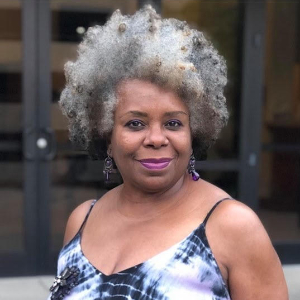

May Nazareno “Who you are right now in this moment is a gift. It is an offering that is meant to be shared, and you really don’t know how it sparks another person from the other side,” says May Nazareno. “What I’m trying to always ask is: can I create space, within myself and anyone I engage with, can I create the space for us to be truthful and real?”

Nazareno speaks to activating leadership in girls and young women, catalyzing change through storytelling, and how the world needs all of who you are.

Fundraising For The Future Pipeline Of Female Leaders

In her role, Nazareno creates a community of stakeholders across the Northeast who helps IGNITE “build a movement of young women who are ready and eager to become the next generation of political leaders.”

Founded in 2010 to address the lack of political parity in the US, the national organization seeks to increase the number of women as elected officials, appointed to public boards and commissions, and in supporting leadership positions that make it possible for women to occupy those political spaces. By creating multiple entry points for young women to advance in political leadership, IGNITE pushes for a large-scale solution that has the capacity to flood the political pipeline.

Currently, with a team of 17 women who operate under a budget of less than $3 million, IGNITE is the only non-partisan organization in the US that provides sustained community-based training and support to nearly 13,000 + women and girls across 36 states. Currently, a top ten finalist for the $10 million dollar Equality Can’t Wait Challenge, IGNITE’s goal to train 100,000 women each year starting in 2025 could be in reach.

Her Own Bittersweet Experience In Leadership

For Nazareno, advocating for IGNITE is personal. “I had never seen myself as a political person, nor did I think that being part of the student government was an option for me when I was in high school or college.” She admits she fell into student government while in college, “because someone asked me to,” and that the opportunity to run for her university’s vice president position: “was entirely because the secretary of the Student Union just said to me: ‘what do you have to lose?’” Nazareno was met with a lot of resistance from her male peers – and even from other women. “It was the late 90’s and everyone’s questioning if you’re qualified enough.”

Despite Nazareno winning her election by a landslide, and during her tenure, raising significant funds and forging interconnectedness between different cultural and identity-based groups – she faced a hostile environment with no collective support behind her. “What makes IGNITE personal is that the typical IGNITE woman comes to our programs with a desire to solve problems in her community – rarely with a desire to run. And yet, when she goes through our trainings, she learns how to push past her fears of being isolated and pitted against the boys club – because we help her create a ‘girl gang’ of support. I often think what if IGNITE was around when I was in college? What would have happened to my life if I met other women like me, and got the mentorship and the networking needed to navigate a political life? Undoubtedly, I would have considered public service as a calling.”

Though highly encouraged on the path, Nazareno admits she was burned out. Her experience as an elected student leader at her university was surrounded by so much divisiveness – that while she considered pursuing law school – she turned to study playwriting.

“What I cared about the most was figuring out how to foster a shared interconnectedness between students who were passionate about their own identity politics. What were the things that we could understand and respect about each other rather than focusing on what drives us apart? And I knew that law wasn’t going to answer those questions. I didn’t want to tell people what to think. I didn’t want to get caught up in ‘I’m right’ or ‘you’re wrong’. I wanted to come from a place of encouraging deep self-reflection,” she recalls. “At the theatre, you watch conflict and see both sides of the story. You sit in the audience and decide for yourself.”

Catalyzing Dialogue Through a One Woman Show

To the disbelief of her parents, Nazareno rescinded her law school applications and set off to Seattle to become an actor, despite warnings that she’d be cut off from her family.

“I had a bag of clothes and a few books, my laptop, and my yoga mat – and there I was in this hostel in downtown Seattle when 9/11 hit. My Dad used to work at the World Trade Center…,” she laments. “And yet, everyone around me saw this moment as an isolated NYC problem.” She perceived it as both a national and international affair and watched as knee-jerk political reactivity took hold.

“I was impacted by the need to find a way to break through the bubble, not even having words for that. It’s 2001, we have no idea what’s happening, but you hold onto your bubble – to whatever you can to salvage any sense of normalcy,” she said. “The bubble cracked for me in 2003 when I had a family member who was the personal aide to Sérgio Vieira de Mello, the Brazilian United Nations Special Representative for Iraq, go missing.”

De Mello’s death in a hotel bombing in Baghdad and the presumed death of her family member, who then reappeared, catalyzed her to write a one-woman show entitled Dead Woman Home that she took to Seattle, San Francisco, Off-Off-Broadway in New York, and the Philippines. Nazareno’s intention was to challenge the depersonalized perceptions and opinions about war and the Iraqi people that could justify an almost instant reaction to go to war.

“This was my very first play and I wrote it almost twenty years ago. At the time, I wanted to ask audiences: do we realize the implications and the unnecessary incalculable loss of innocent life? Can we sit with that? If I was sharing this play now, what I really want to ask is this: today we live with growing hatred towards others – and often because there’s nothing left to feel anymore. Who among us still have the courage to love?”

Nazareno wanted to hear what people thought about our occupation in Iraq and connected with teens in juvenile detention centers, vets, and high school and college students from low-resourced communities. She intended to reach new audiences who didn’t have access to theatre and create space for civic dialogue that would inspire social action. Indeed, her play galvanized a group of grad students in the Philippines to submit policy strategies to the UN.

“When I met those grad students, I could have never predicted that kind of response to my play. It finally hit me: stories have the power to change people’s perception of themselves and the world around them.”

Flipping The Story to Empower Perspectives

After two years of touring, Nazareno returned to the U.S. and decided to try event management and fundraising. “I was proud that my show broke even during its run. I didn’t have any formal training in the logistics of producing my show. Everything about me was just scrappy and I wanted to formally learn how to raise funds.”

Nazareno landed a job at Stanford, where she was taken under the wing of Lorraine Alexander, who mentored her. “I was lucky. Lorraine was my first teacher and along the way, I met Theda Jackson-Mau and Kim Gerstman who also showed me the ropes. Learning from them ultimately changed my life. I realized that everything up to this point was preparing me to tell stories that inspire people to question their position in the world and what they can do with that position,” says Nazareno, who took a step away from the politics of theater. “In many ways, that’s been the throughline of my work. We all have stories, and our stories give us the capacity to influence and lead, but what does it mean to be a leader and how can we lead in a new way?”

“We are all part of the solution for a more just world,” says Nazareno. “That’s what I’m trying to get across in my work. When I was a teenager, I heard Mother Teresa speak at St. Patrick’s Cathedral and I was moved when she told us that God doesn’t have hands, but our hands.” Nazareno is adamant about IGNITE because the organization trains young women who come from historically marginalized communities to develop their leadership potential and recognize how their lived experiences are essential to creating a democracy that represents our country’s diversity.

“The narrative is often ‘I come from a low-income neighborhood, I was raised by a single parent, my father is in jail, my brother was killed, I didn’t go to an Ivy League school. I’ve got no credentials to lead and zero cash. Who am I to run?” says Nazareno. “And we flip the script and say: who are you not to? We’re here to convince each young woman that her whole life is what makes her qualified to lead. Right now, out of the 520,000 elected offices across the country, women hold 30.5% of municipal offices, 30.9% of seats in state legislatures, and 26.5% of seats in the US Congress. If we dramatically broaden our audience, and just 0.1% of young women run in the next decade we will dramatically increase the pool of female candidates in America.”

“Women are the backbone of our democracy,” Nazareno adds. “We have to shift our understanding and challenge this notion of ‘leadership material.’ We need to show young women that their leadership is needed and there’s a path to realize their ambitions. If we can do that, we can change the way we think about women leaders in America.”

“Right now, there are many people – mostly men – who sit in local government who have little or no visceral sense of what it means to live day-to-day in the communities where our young women live. This is why we train young women to realize that they are the best representation of what their community needs and what needs to change.”

“We’re at this tipping point where it’s abundantly clear that if we want our country to continue to thrive we have to invest in child care, mandate equitable pay for women, keep children and women safe from domestic violence and gun violence as national priorities, and make access to healthcare a fundamental human right – among a whole host of other things. Who knows these issues better than women? That’s why we must elect more women to get a seat at the political table, and that’s why IGNITE gives girls and young women the tools, networks, and resources to succeed in this environment. Not only will they run, they’ll win. And not only will they win, but they stay in the game…” says Nazareno. “In the midst of COVID, 13 IGNITE women ran for office across the country last year. This year, 21 IGNITE women have declared their candidacies. – That’s why I wake up every morning truly inspired.”

Showing Up As Who You Are

Nazareno feels the pandemic has been another huge catalyst to breaking our bubbles, realizing our interconnectedness, how deeply woven our lives are and how dependent we are on one another. Amidst so much divisiveness, she sees that we’re all presented with this question: how are you going to show up to this moment?

When it comes to reflecting on her journey and what motivates her day-to-day, it’s exactly that question. Nazareno’s own father came from humble means and wanted to become a cinematographer. But with his mother’s disapproval, he became the engineer he was expected to be. Nazareno dared the opposite.

“What I carry from his story is that while we make sacrifices and concessions along the way, we can’t forget the spark that lives inside us – especially now. As I see it, that spark is the essence of who you are. And it’s a choice to share it with others or hide it. How am I showing up? What am I bringing to the table?” she questions. “Am I really bringing me, or am I consciously dimming my spark, and if so, for whom – and why? And is it worth it? Or can I trust that bringing all of me – whatever that is in this moment – is enough?”

By: Aimee Hansen
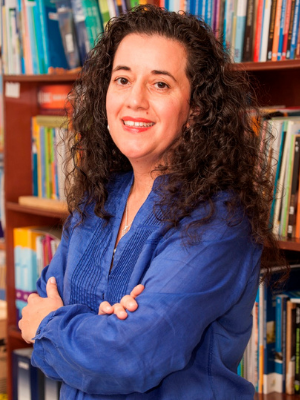
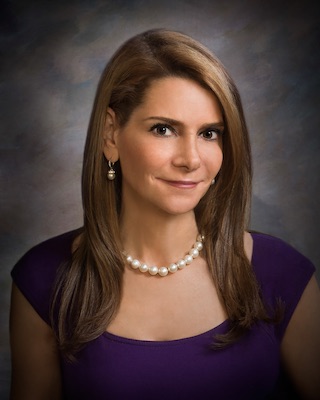
Mariella Greco “In difficult moments in the development world, I draw on what I learned from the intensity of the trading room,” says Mariella Greco, a global leader in gender, development and finance. “The motivators are different, but those same skills make me a better leader in the not-for-profit sector.”

Heeding the Call

Having majored in international relations in university, Greco was magnetized to international development.

But after a short assignment at Canada’s Permanent Mission to the UN in 1990, she put her call to international service on hold and accepted a domestic position with the Royal Bank of Canada back in Windsor, Ontario, her hometown, staying near her mother during her parent’s difficult divorce.

When family matters settled, she left Windsor to pivot back to international affairs, but in banking. She succeeded in a tough dealer training program that she landed as the only woman on the Canada desk. Nicknamed “Stella”—and with the occasional “what-a-guy” pat on the back—she learned to hold her own as one of very few women dealers in the bank’s main trading room.

But Greco still felt the pull to international development and began volunteering for Plan International in Canada.

When she began at the Royal Bank, she promised herself (in writing, along with other life goals she recorded in a book) that she would revisit her path in time: within 5 years, she would either try international development or stay the course in finance.

“My head was like don’t be stupid,” recalls Greco, “but my heart was still feeling this call.”

Giving up a hard-won position in the global headquarters of Canada’s biggest bank for an NGO job with a 50% pay cut was both risky and daunting.

“So for a year I went home everyday and asked myself, ’Is this a day where I feel I want to go, stay or am I neutral?’ I literally logged it,” she explains. “Like the markets, my feelings about taking the leap had highs and lows. I tried to find balance with a daily risk-reward analysis about what I wanted in life. At the end of the year, I added it all up, and bottom line—there were more days where my gut said GO.”

Greco heeded the math and left for a “planned” two year break from banking that became two decades working in international development, while living in five countries, traveling to 50 countries and gaining proficiency in several languages, before returning to Canada with her family in 2018.

Transferable Leadership Lessons

Calm Under Fire

On the trading floor, Greco learned that as important as being a good winner was, so was being a good loser.

The EVP who interviewed her for the dealer job asked her, “Can you speak your mind to your boss, and give your opinion knowing his is different, even if he is yelling because of market volatility? Can you speak up then, too?” She said yes, and she did because it was the expectation.

“They wanted to know if you can stand the heat and carry on, even when stress is overwhelming and you’re losing money,” says Greco. “Loyalty to the team meant sharing differing opinions, and it also meant closing ranks when final decisions were taken.”

This insight and learning to stand the heat helped her to be a strong leader in many challenging situations, and to do so while also caring for her team’s wellbeing (physical, mental and socio-emotional), such as in humanitarian crises.

“The most rewarding experiences are sometimes the hardest ones,” says Greco, such as the Category 5 hurricane response she led in Nicaragua (earning her one of her official Medals of Honor).

Also, ensuring child safeguarding and gender equality were part of each and every Plan staff member’s performance objectives was rewarding too, because it positively impacted both the quality of their work and the personal lives of her team.

Speaking Truth to Power and Holding Midterm Vision

Honed in the trading room, several bosses have told Greco that her strong voice is her “superpower”.

When pregnant with her first daughter, Greco learned that expatriate women in her organization didn’t receive maternity leave, even as she was unexpectedly promoted shortly after giving birth. As her contract was subject to U.S. labor laws, she was limited to six weeks of “disability leave” after birth, because maternity leave might be interpreted as discriminatory against men, creating liability risk for the organization.

“I was shocked that giving birth was deemed a disability in an organization dedicated to children and gender,” shares Greco.

Not only did that seem wrong, but also that it was only 6 weeks of leave, especially when compared to the year that mothers may take off in Canada.

Greco began a five year internal campaign that gave birth to a maternity leave policy that was more coherent with the organization’s mandate. In doing so, she helped remove barriers for younger women aspiring to both leadership and motherhood.

“Some things you can take a short-term view on, but for other things you need to play the long game, even if you can’t see around the corner,” Greco reflects. “Be willing to also sow seeds and nurture change for positive impacts that may only blossom after you are long gone.”

Greco values learning to speak truth to power early in life. Reflecting on a “Me Too” incident she had early in her career, Greco recalls the unconditional support of her male bosses when she reported being harassed by a senior executive, who was also way over their heads.

“I had stood my ground with him and let my bosses know the next day, but I also asked them to refrain from intervening unless he bothered me again,” remembers Greco. “They were so outraged that instead of doing what I asked, they made it known to their leadership that they had my back.”

When the “Me Too” movement gained prominence, she realized how rare their reactions were. So she wrote her ex-bosses and asked them to sit their daughters down and tell them that story “so they know how stand-up their dads were and so they know the standard of support they should expect if it happens to them.”

“That whole experience (good and bad),” reflects Greco, “helped me better support others who faced this.”

Multidirectional Career Moves

Greco made yet another non-traditional career move in 2019, pivoting towards government this time.

“People too often think their path must be up, up, up, like that’s the only direction worth going” she observes. “Had I been hostage to that mentality, I would have missed an amazing journey. I feel the same way about the journey ahead”.

She likens working in government to learning about a whole new world: “It is a bit like being paid to attend a university program, continuing to work and add value, but influencing for change more subtly.”

Empowering Girls to Lead

Greco credits her successes—whether as a trainee or as a Country Director—to both fortune and her willingness to try.

In Plan, Greco was steadfast in her efforts to advance gender equality and promote the leadership potential of girls. Ahead of Plan’s #GirlsTakeover on International Day of the Girl on October 11th, Paraguayan colleagues warned that national leaders would never cede their positions to girls, given entrenched gender attitudes and the political environment.

Greco decided she would try, anyway, at least with one Minister. When she phoned him, he quickly agreed. So she called another, and then another, planning to stop when one Minister said ‘no’. None did.

That year, Paraguay’s Cabinet, Senate, Congress, Supreme Court and even the Central Bank were led by girls. It catalyzed the President to create a Council of Girl Minsters, inspired Paraguayan girls to dream bigger dreams and it helped chip away at arthritic gender stereotypes. The next year, ministers were asking her to be involved.

“Without that risk tolerance built into me, whether inherent or strengthened in the trading room, I probably wouldn’t have asked” says Greco. “Don’t squander your opportunities out of fear of a ‘no’. Try. ”

Which Organizations Will Dare?

Greco discusses gender and COVID-19 impacts with her daughters, even the 140,000 U.S. job losses in December 2020, in which women netted 156,000 losses vs. the 16,000 net jobs gained among men.

Women fill so many jobs deemed “essential”—yet are disproportionately bearing the economic brunt of the pandemic, whether in job losses, being underpaid or exiting the workforce for unpaid family responsibilities. Paying wages commensurate with essential work and implementing measures that close the wage gap could slow the loss of women from the labor force, but Greco feels the solution space of gender impacts needs more innovate thinking for systemic change.

“Incremental change is safe but too slow,” observes Greco. “Taking some risks to accelerate long term gains is long overdue.”

Basics like paid maternity leave and flexible arrangements for family responsibilities (the brunt of which continue to fall to women) are critical, but additional measures that fast-track women back onto their career should help them regain momentum too.

When faced with women exiting the workforce (be it a result of the pandemic, family responsibilities or wage gap disincentives), do employers just lament and accept it, or do they step up and flex what’s possible to keep their talent? Can organizational playbooks and rules historically written by men be modernized through a more balanced lens?

Greco looks to organizations with deep pockets to pilot such changes that matter, lean into some risks and help pave the way for others.

The True Pipeline

After witnessing so many empowered girls inspiringly take to leadership, and the impact on their personal sense of agency, Greco reframes the pipeline when it comes to future change.

“Younger people are more powerful, engaging and influential early on,” she says. “It’s not only about a line of new and energetic ‘replacement’ candidates to fulfill status quo positions, but rather an idea stream with young and unencumbered perspectives that will evolve our vision and how we do things.”

“Avoid the typical training that ‘indoctrinates’ young talent in how things are done, because if we listen better, we just might realize that they have the most forward looking solutions,” she advises. “Consider stewarding and facilitating emerging talent and ideas. That’s what’s going to tip it, for those willing to ask—to listen to differing opinions and to courageously take calculated risks.”

By Aimee Hansen

Beverly RobinsonBeverly Robinson, Client Service Consultant Abbot Downing is a woman both of influence and advocacy.

“I’ve learned to “code-switch” conversationally, in order to convey diverse philosophies and concepts. This tactic allows me to circumvent being profiled and misinterpreted as “angry or aggressive”, and in that way, my voice for diversity and inclusion, and ideas for advocacy are heard more clearly. As an African American woman in Corporate America, I’ve learned that I cannot afford to be thin-skinned when my ideas are usurped, re-mixed or claimed by others. There’s an art to being a woman of diversity, inclusion and advocacy.

My banking career is a means to my economic well-being. However, support of the disenfranchised and marginalized is where I have the greatest impact, and receive heartfelt, profound fulfillment.

As a survivor of childhood molestation, it’s imperative that I fight for those whose voices are often stifled by domestic violence, fear, stigma and even death. I spend priceless time at our local Family Services and Rape Crisis Centers, talking with mothers, hearing their stories of survival, and offering my time and resources. Organizing programs for the national “Domestic Abuse Awareness Month”, to assist the families in moving to the next level, empowers these families and creates hope for a brighter future. In addition, I spend time on college campuses, speaking for the National “Take Back the Night” campaign, and have met and formed friendships with students who have opened up and come forward with their own stories of abuse. Many of these students have graduated to become powerful advocates. Pushing my corporation to provide professional opportunities for students of color who attend Historically Black Colleges and Universities (HBCU’s) is an ongoing passion, resulting in graduates achieving internships and careers and even becoming entrepreneurs. Several of my colleagues have volunteered to become guest lecturers at those HBCU’s, forming an alliance with the faculty and students, helping to power an enduring and ever growing partnership, focused on providing opportunities for a rising generation of talent and leaders.

Because of the confluence of all the above, I became an author, sharing my story and life experiences, presenting workshops and seminars, and traveling nationally doing book tours. My audience is diverse, broad and varied.

Growing up, my upbringing was a bit eclectic. My childhood was not unusual, but not necessarily normal. I began school in Ft. Riley, Kansas where my step-dad was stationed in the Army, in an integrated environment including students who were children of soldiers. Our neighborhood was fully integrated, and by all accounts, civility and unity ruled the day. Being a leader in class both scholastically and athletically, I made friends easily. I clearly remember my first bold act of advocacy on behalf of my classmate, my little blonde, blue-eyed friend named Donna, who, when called on by our teacher to give answers to pop quizzes, was paralyzed with fear, unable to raise her hand to answer the questions asked in rapid fire succession.

As all of our hands were upstretched in excitement, wanting to be picked to answer the questions, our teacher continued to purposely call on her, making my classmate cry uncontrollably, in embarrassment.

The discomfort I felt for her compelled me to yell out the answer each time our teacher berated her, which angered and frustrated the teacher. I spoke up and answered the questions out of turn, knowing I would get in trouble. Donna’s feelings mattered to me. I didn’t appreciate the mistreatment and bullying of my friend. Conversely, my teacher didn’t appreciate my interjections, with my yelling out the answers, so she hastily took me out of the classroom, and in the presence of another teacher as the “witness”, I received corporal punishment. The other teacher seemed irritated that the punishment did not fit the crime, but did not interfere, nor raise opposition. I remained defiant. After this episode,  the teacher tapered her verbal assaults directed at my classmate, all but ignoring her. I remained prepared to yell out answers on her behalf. I learned about getting into “good trouble” early on.

My step-dad’s military career was cut short due to his poor physical health. The normality of my childhood was disrupted because he was also unhealthy mentally. He was an incestuous pedophile. We left Ft. Riley, and moved back to my hometown, where I began a new school. A segregated school. The anomaly of transferring from an integrated school to a segregated school and neighborhood wasn’t earth shattering in my young eyes, as I felt comfortable in both settings. My new school was all-Black. All of the teachers, faculty and staff were Black, and the students were treated like family. The women wore dresses, pearls and heals, and all the men wore suits and ties every single day. The pride they carried washed over us as students. They believed strongly in instilling in us a solid education. They believed in excellence and wouldn’t allow any of us to settle for less. Integration and busing came to our school four years later. Our fifth grade teacher, Mrs. Tanner, who was beautiful and brilliant, prepared us for the integration process that was to happen the following year. She gave us “the talk”, and drilled in us that although the books, equipment and educational materials that we used for study were old and dated, compared to the ones of our white peers whose schools were on the more prominent side of town, we were just as smart and capable. I believed Mrs. Tanner, and her words regarding capability settled in my consciousness to this day. I graduated from college and obtained my MBA.

From corporate boardrooms to college campuses, and from church pulpits to women’s empowerment conferences, my sphere of influence has allowed me the esteemed opportunity to listen with compassion, create viable diversity programming, to serve as mentor and trusted advisor to executive management, share life experiences, and to empower and affirm those seeking answers to life’s challenges. I learn and grow with each interaction. Advocacy isn’t the path of least resistance, and often, fighting for others while girding oneself mentally and emotionally is typically the road less
traveled. At times, my resolve and tenacity has been shaken when I’ve seen clear paths and pipelines to inclusion, but met with non-cooperation, deflection, indifference and lack of enthusiasm. It’s always a challenge understanding those who are not willing to work hard on behalf of others, unless they receive accolades – self-aggrandizement. But I’ve learned that to push forward to accomplish goals, ideologies and dreams, sometimes obstacles have to be sidestepped, and rerouting and recalibrating is necessary in order to accomplish the objectives of unity and inclusion.

I’m enjoying my journey, paying keen and sincere attention to the needs of those requiring a voice. I relish being able to push, pull and convince others to work on behalf of those in need. All of our lives improve markedly when we serve l.o[0others. I shall continue to advocate for those within our company structure, and for those outside of our corporation. And, as I say often, “courage takes courage”.

Abbot Downing, a Wells Fargo business, and Wells Fargo Private Bank offer products and services through Wells Fargo Bank, N.A. and its various affiliates and subsidiaries. Wells Fargo Bank, N.A. is a bank affiliate of Wells Fargo & Company

By Aimee Hansen

Liz Eltingby Cathie Ericson

“Those who can help, should help.”

That’s the impetus behind Liz Elting’s mission, as founder and CEO of the Elizabeth Elting Foundation, which lifts up women and marginalized populations in education, health and other ways.

Using Her Success to Help Others

Elting’s philanthropic ability comes from previous work success. She always loved languages—learning four of them while living, studying and working in five countries. After graduating from college with a degree in world languages, she worked at a translation company in production and sales which prompted her to realize the practice could likely be done better. After three years she decided to go back to school and earned her MBA from NYU; shortly after graduating, she held a finance position in a French bank and quickly realized it wasn’t for her. “As the only woman professional there, whenever the phone rang, they would call for me,” she says.

That led her to strike out on her own, where she started her own translation company. Over the next 26 years she grew TransPerfect into the world’s largest language solutions company, with over $600 million in revenue, more than 5,000 employees and 11,000 clients and offices in more than 90 cities worldwide.

In 2018 she sold her half of the company in order to focus full time on philanthropy, launching the Elizabeth Elting Foundation, which revolves around pure philanthropy, but also supporting entrepreneurs.

A Wide-Ranging Mission

The foundation has recently launched the Halo Project to meet the needs of those affected by COVID-19. “It’s a public health and economic catastrophe unlike anything we’ve seen; not only did it spread like wildfire faster than we could understand, but it painfully underscored structural inequalities,” she says. The foundation aims to identify areas where they can have the best impact, and it was an easy pivot to focus on women since they are often on the front lines.

Other important areas the foundation services include public health, such as the International Waldenstrom’s Macroglobulinemia Foundation, designed to help research and treat a rare kind of lymphoma, which Elting’s father has. He had been told he had five years to live and now the common diagnosis has expanded to 18 years, signifying satisfying and rewarding progress.

She also does work with the American Heart Association, helping to raise awareness of women’s heart issues, an important need given that most heart research is directed toward men. Thanks to her work with Go Red for Women and her participation with the board, she’s become connected with other groups to help spread the word about heart disease prevention. For example, the foundation has installed a blood pressure kiosk at the Campaign Against Hunger’s sites to help those populations get their blood pressure checked. She also has supplied Susan’s Place, a women’s shelter in Harlem, with equipment like blood pressure cuffs.

Other work includes donating to the National Organization for Women and helping support “Leftover Cuisine,” which takes extra restaurant meals directly to food banks. She was able to connect a friend who works with auto dealers to help supply the cars and drivers as a win-win to keep the dealerships’ teams employed while delivering much-needed food to the food banks.

In addition, Elting is active with her alma maters, including Trinity College where she attended undergraduate school and the NYU Business School. Her foundation gives four annual MBA scholarships for high-performing women, along with investing in two entrepreneurs a year.

As she considers areas where she can make a difference, Elting prioritizes research to make sure the money is going to the right causes and confirm exactly where the funds are going. So, for example, when she makes a cash donation to the food bank, she wants to make sure that every dollar goes to food. With the AHA, she made sure the donation directly funds the blood pressure station drive rather than being directed to a more general fund, and at NYU, she directly gives to the scholarships.

“It’s important to clarify where your money is going, which makes it more rewarding and fulfilling,” Elting notes.

In her spare time, Elting loves to read and is a self-described “news junkie.” With two teen sons, she loves to indulge in outdoorsy hobbies, like skiing and the beach, and looks forward to resuming travel when the time is right.

“Failure will help you advance in your career if you examine it carefully and accept it as an important teacher. Failure never lets up. It’s not about doing things wrong. It’s about learning and re-learning all the lessons that a challenging career offers.”

Carol Evans, Intrepid Woman, Pioneer and Advocate for working women shares her insights on what she wished she knew early on in  her career journey. She continues, “Failure will always be with you. Be not afraid of it.”

Carol started her career in advertising in 1976 and worked on the test issue of a new magazine called Working Mother. Evans loved the idea of this  magazine because her own mom went back to work when she was 12. “ It was the best thing that ever happened to my mom and to us, her children! Working mothers were the fastest growing segment of the workforce, and I knew how to help this new demographic because of my own mom’s career.” In her 10 years as publisher Evans took Working Mother magazine  from a test issue to a full blown  success with over 2 million readers.   Ready to move forward in her career, she left Working Mother to join Stagebill magazine for the performing arts in a bigger role as President.

“Stagebill was amazing: Lots of opera and Phantom of the Opera, meeting famous singers, dancers and actors.  I was a partner to the executive directors in the challenge to print programs nightly for 110 arts organizations.”

In 1996 Evans joined  Chief Executive magazine as COO.  “Meeting all these Fortune 500 CEOs made me feel that I could take on that role. They were just people–not gods!  They were almost all men, which made me mad!”

Six years later Working Mother magazine came up for sale and Carol decided to put her career to the test.  She went to 35 possible funders to acquire Working Mother, getting turned down 35 times. Then she met the CEO of MCG Capital and made a deal to buy the magazine and form Working Mother Media. It was August, 2001.  Evans relays how the first order of business was to survive the terrible days after 9/11. She adds,

“We then built Working Mother Media into a powerful for-profit advocacy organization that took on the advancement of women as our guiding cause. We focused our magazine and websites, conferences and research  on the needs of working moms, women lawyers, women of color, executive women, hourly workers and other segments of the female workforce. “

In 2015, Evans  retired from Working Mother Media to co-found Executive Women for Hillary, which grew to a force of 2400 women nationwide working on Hillary’s primary and then presidential campaigns.

In late 2019, after 38 years in the media business, she joined the non-profit sector as CEO of SHARE, an organization started in 1976 by breast cancer survivors that now helps 200,000 women every year. SHARE brings women newly diagnosed with breast, ovarian, uterine and metastatic cancer together with women who have survived or are living with these cancers. Through group meetings, helplines and webinars SHARE  creates a giving circle of support, knowledge sharing and community. She states,

“I’m excited about starting a new career!  Leading a non-profit focused on the women who are so often overlooked in the battle against cancer as money flows to research but not to human beings is deeply meaningful to me.”

She continues that the non-profit world is new and fascinating to her..

“ The sense of purpose is exhilarating and the work is rigorous. Non-profits have had to navigate the digital revolution as much as for profits, and have come out stronger in most cases. SHARE combines digital savvy with face to face support for women who have entered a club that no one wants to join.Many of the volunteers at SHARE had big careers that they had to or chose to leave because of their cancer. SHARE gives them a challenging and deeply healing way to give back to new members of the terrible cancer club.”

The new thing  she is working on now is fundraising on Facebook through individuals taking up SHARE’s cause on their birthday or their mother’s birthday.  “We are excited to reach out to the millions of women whose lives have been touched by female cancers to support our organization.”

Risk, Reward and Achievements

When asked about achievements that she is most proud of she cites her new job as well as saving Working Mother magazine from certain death in 2001.

“Launching it (the magazine) in 1979 and being a successful CEO in a world where few CEOs are women is a great source of pride to me.   Having the foresight to launch Best Companies for Working Mothers in 1986 and the bravery to launch Best Companies for Women of Color in 2002 is my most enduring contribution to women.”

Carol has certainly taken calculated risks and she recalls that when she left her very wonderful job as VP Publisher of Working Mother in 1989 to work for an entrepreneur it was because she wanted to become an entrepreneur. She states,

“ It was a gamble but it paid off when 12 years and 2 jobs later I was able to acquire Working Mother and form my own company, Working Mother Media.”

Outside of Work

Carol states, “My family is everything to me. Robert was born 9 years after we launched Working Mother and Julia was born just after I joined Stagebill.  I loved being a working mother, with all the challenges and all the ups and downs.  My husband Bob made it all work by encouraging my career at every twist and turn. He still doesn’t fold laundry the way I like but he’s been a great dad and partner.”

We congratulate Carol in her new venture and proudly bestow her theglasshammer mantle of being an Intrepid Woman.


Adrienne Rubin “Don’t think too hard about your next career step; try whatever is your fancy and give it a go. That’s how you will find success in both your personal and professional life,” says Adrienne Rubin.
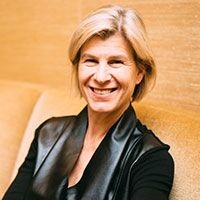
In fact, the first page of her soon-to-be-released book Diamonds and Scoundrels: My Life in the Jewelry Business is a poem with the first line, “Somebody said that it couldn’t be done.” But it can, Rubin says. “Whatever you want to do, make it happen. You have it within you.”

From Teaching to Business Building

Rubin started as a French teacher in the ‘60s and ‘70s; even though she had thought about law school, most women in that era didn’t tackle that sort of career—instead, if women worked at all, it was mostly either teaching or stenography as the breadth of careers available.

After Rubin’s second child was born, she became a substitute teacher, but quickly found that they weren’t respected, unlike her attorney husband, which caused frustration. She turned her attention to volunteer work, but she soon learned that volunteer work also wasn’t for her. On vacation she was offered the opportunity to be an importer of silver jewelry, and she jumped at the chance finding that business offered both money and respect.

However, Rubin soon found that silver wasn’t the top seller she had expected….instead, gold was the trend, and women were even buying it for themselves. She pivoted to gold and soon added rubies, sapphires and other gems to her line. “I learned on the road, taking my merchandise to jewelry stores, where I would listen to their advice about what they needed from suppliers and manufacturers.” After more research, Rubin became a supplier for charms, charm holders and chains, and expanded her marketing by attending industry conferences where she connected to gift stores, which became a large part of her selling success.

“What drove me wasn’t a passion for jewelry itself, but for helping other people make money; I found that if I had the right product and could sell it to the retailer for the right price, they would prosper as well,” Rubin said.  For that reason she traveled extensively to find new products each and every season.

One of her biggest challenges was to avoid being taken advantage of as a businesswomen, and in hindsight, she realizes she wasn’t always strict enough in whom she sold to, which meant she often wasn’t paid. In fact, that’s the impetus behind the “scoundrels” reference in her book’s title. For example, one of her early clients was a gambler who took diamonds on loan and gambled them away. It required determination to get out of that situation—and others she encountered along the way—but she was able to do so with ingenuity.

Of course, trends change, and Rubin soon found herself working against a wide variety of factors. First of all, today’s younger generation isn’t as interested in jewelry, as they have turned to other priorities. “When it comes down to getting a new computer or a gold bracelet, they are apt to turn to the prospect of a new tech gadget,” she points out. In addition, gold prices have skyrocketed, necessitating a large amount of capital, and there is fierce competition from the internet. For this and other reasons, her attention now has turned to real estate, often refurbishing properties, which is her current way to stay in the business game.

Advice for Women, No Matter What the Business

“Be your own boss if you can,” Rubin recommends, and take equal care with those you hire and those you sell to. “It’s vital to vet both parties,” she says. “In any business you will run across unethical people, so you have to be business-minded to make sure they aren’t taking advantage of you or using poor judgement that could reflect on your own success.”

And to really go full steam ahead, don’t be afraid to make bold decisions, such as borrowing money as needed to get your business to the next level.

Finally, she recommends realizing that you need to find balance to be content. “Business can become a 24/7 proposition if you let it, particularly at the beginning when you want to be successful and get your career on the ground.” But that can lead to neglecting other parts of your life unless you pay attention and vow to keep things balanced. Rubin, for example, focused on making sure to have uninterrupted family time on an annual vacation to balance her other travel.

Today she is an active volunteer with Cedars Sinai Hospital and the Arthritis Foundation. In addition, she became an avid cyclist and for many years has participated in the “California Coast Classic,” biking from San Francisco to Los Angeles. While she initially wasn’t a bike rider per se, she equates acquiring the skill to learning many aspects of business. “You have to commit to learning in order to succeed.”

Stephanie SandbergStephanie Sandberg is a fan of bringing your whole self to the lunch table, or anywhere.
“There’s so much energy that is consumed by not saying the things you are thinking,” she says. So right up front when she was at a business lunch and someone would ask what her husband does, she would blurt out early that she was with a woman. “It helped ease the conversation and provided me a sense of wholeness,” she says, in urging young gay people to be open with their reality.

A Career in Media As the Foundation for Her Current Work

Sandberg spent the first 25 years of her career in magazine publishing, working on marketing for titles like the L.A. Times, Newsweek and the New Yorker before becoming president and publisher of the New Republic and, later, executive publisher of the Columbia Journalism Review. Then she pivoted to consultant work.

After dabbling in a variety of projects, she realized she wanted to focus on one area and became interested in women’s leadership and the barriers to advancement women faced at the top echelons. Sandberg joined Out Leadership on a project basis, which aligned with her interests in diversity and inclusion.

But, she found, “inclusion” was often male-dominated.

“Lesbians are underrepresented, underleveraged and don’t have a voice at the table,” she says. “The gay world is very similar to the straight world in how gendered it is.”

So she helped the organization launch OutWOMEN, running discussion dinners to get people around the table.

“We realized that women don’t come together as intentionally around professional matters,” Sandberg notes, so they launched both formal and informal events. The satisfaction she derived from this work pointed her consulting in that direction, and she ended up at a holiday party for LPAC in 2018, where she learned they were looking for an executive director.

Leveraging the Voices of Gay Women

Today Sandberg heads LPAC as a political voice for the LGBTQ+ community. One of her first moves was officially shortening the name from “Lesbian Political Action Committee” to its acronym, as she found the name wasn’t embraced by everyone.

Then she began leveraging what she learned at OUTWomen about how women come together. Just as she had previously discovered that women prefer to socialize differently, she learned in her early days with LPAC that LGBTQ women’s political concerns are different, but rarely discussed as such. “Gay women don’t always have the same priorities as gay men,” she points out, adding that healthcare, choice and women’s equality are paramount to gay women. “We needed to carve out a place and build a voice for this subset from the LGBTQ community and address inequalities by championing candidates who support us.”

Right now her mission is to make sure the community knows about LPAC, particularly people who have the financial capacity to support the group. The biggest challenge, she finds, is building the group out to where potential donors not only know about it, but also choose it as a priority among so many worthy causes.

“If they understand that their investment is an investment in strengthening this community, and then convert that enthusiasm and awareness by including us in their giving, I will have done my job,” she says.

Sandberg believes that will come as they build empirical data about how they have amplified the effect for the candidates they endorse. To that end, they launched a nonprofit group Project LPAC and have a fundraising event—Levity and Justice for All –scheduled for June 25, the only official World Pride event specifically for women.

Sandberg has the benefit of knowing the work she does will benefit her personal life, too, including for her wife of 20 years and two daughters, ages 16 and 12, but she also knows the importance of making them the focal point of her life aside from work.

“While my work is important, a broader wholeness comes from have a balance; a lot of career people find themselves too deep in the work, and while it matters, it can’t at the expense of family,” she says. “You have to treasure being able to have family experiences at the end of the day; my main goal is to spend that time with my girls.”

Noha WaibsnaiderWhen one of Noha Waibsnaider’s loved ones passed away, she was overwhelmed by grief—which made the logistical hurdles of coordination and communication that much more challenging during an already difficult time.
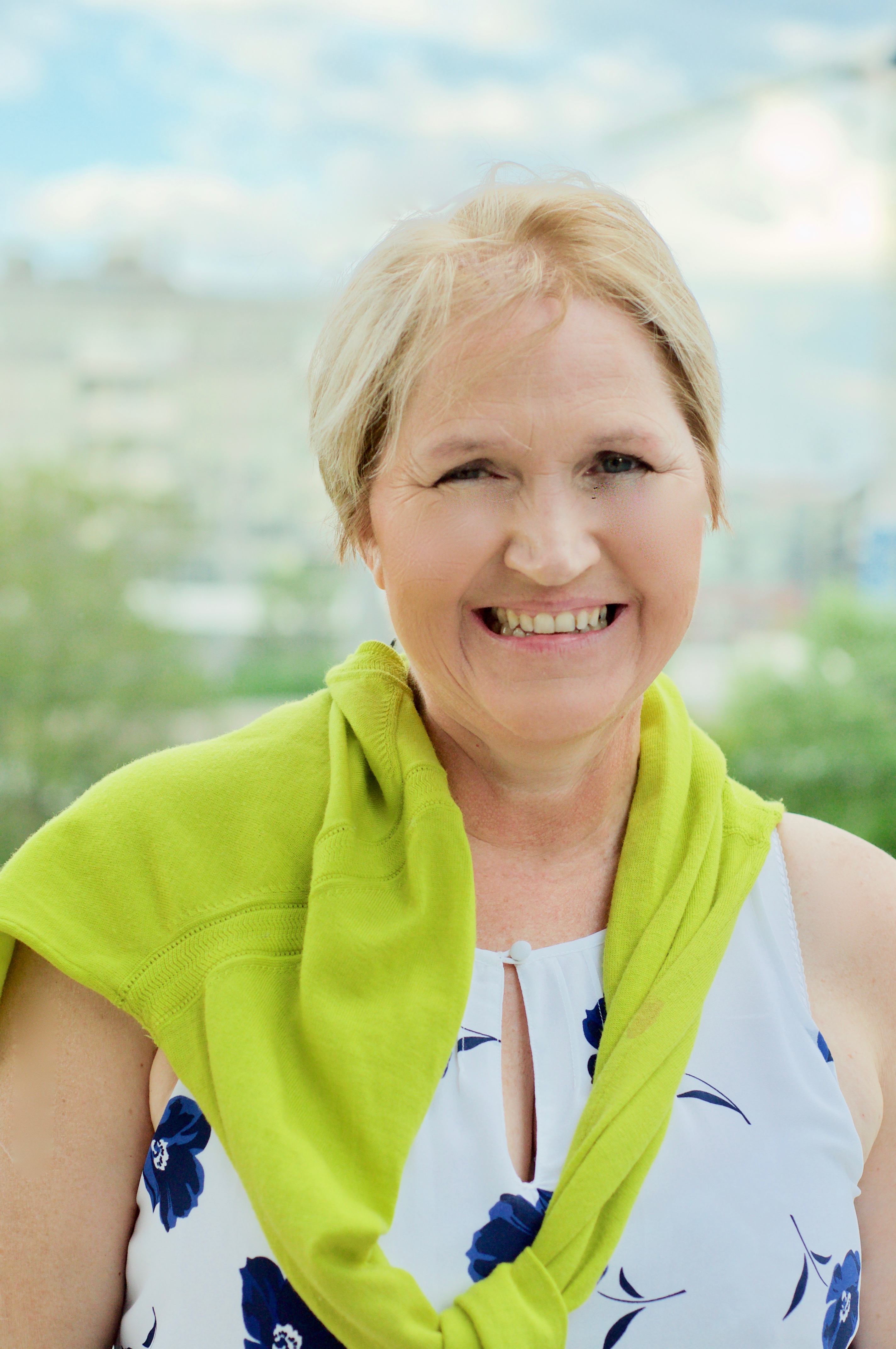
She yearned for a simpler way to find support, conduct all the necessary tasks and purposefully commemorate a life. That was the catalyst for the website GatheringUs, a lasting online space that brings communities together after a death to support each other and celebrate the life of their loved ones.

As part of a large family, she has organized many memorials and funerals, and so knew firsthand the challenges of coordinating family and friends—trying to keep everyone in the loop while planning multiple events and logistics, and doing it all through the emotional roller coaster of mourning.“I was grateful for the outpouring of support from my community, and I realized many wanted to help, yet struggled to find ways to be supportive. I created GatheringUs to provide resources and a simpler way to mobilize everyone and commemorate loved ones,” Waibsnaider explains.

The need is so clear, she says, noting that after launching the site just three months ago, they have already had 30,000 visitors and memorials from all over the world, representing diverse groups of different ethnicities, religions and generations.

“Death scares people, and they don’t want to talk about it, and then you add in the preconceived notions about how funerals are supposed to be. Our goal is to empower people to celebrate and honor their loved ones in a meaningful and personal way that helps them process the loss.”

An Impressive Pedigree

This latest venture sprang from a personal, relatable need, but Waibsnaider already possessed the business acumen that has allowed her to build it so successfully. A serial social entrepreneur and brand builder, she holds an MBA from Columbia Business School and started her career in brand management at Unilever for consumer staples such as Ragu and Lipton. She parlayed that success into a new venture and founded Peeled Snacks, an organic food company, in 2004. She grew and ran the brand for 13 years—vaulting it into the upper echelon by raising $20 million in equity financing and bringing healthy fruit and vegetable snacks to millions of consumers nationwide.

“When I started my last company, I was in a rush to grow and sell within a very short time. I wish in retrospect that I had set my sights on a longer-term horizon,” she says, which would have made it easier to ride the highs and lows and put less pressure on immediate results. Nevertheless, even with that perspective, there’s no denying the impact she made on the business world with her ambition and ingenuity.

Along the way Waibsnaider has been honored with numerous awards, having been recognized as a White House Champion of Change; one of the “Women to Watch,” from Jewish Women International; named to the list of “50 Fastest-Growing Women-Led Companies” by the Women Presidents’ Organization; recognized as a Columbia Business School Distinguished Alumna; and received the Ecademy Award for Entrepreneurship, also from Columbia Business School.

She advises other would-be entrepreneurs to identify a cause or void that they are passionate about, which will allow you to sustain meaning and purpose over time. However, you also have to make sure it has a viable financial model because you can only keep doing it if you can support the business. In addition, she urges entrepreneurs to ask for help from their community. “They want to be there to support you and be part of your success story,” Waibsnaider says.

While she builds her new company, she is in a mode of continuous education and outreach. Notably, she is a 360° Council Member of Reimagine, a nonprofit that hosts a public conversation around death and life celebrations, including a week-long festival in various cities on the topic. The festival in New York in October included 350 events that ranged from presentations by end-of-life doulas and palliative care physicians to art, music, comedians and more, in an inspiring collaboration designed to help others in their stages of grief.

Fear is imaginary, says entrepreneur Nikki Barua. “The more you focus on it, the more it grows, and the only way to overcome fear is to replace it with faith. I have always had faith in myself, my team and my purpose and that’s what fuels my confidence.”Nicki B

She finds that most people go through their lives worrying about losing love, money or job security. “That fear can keep you from taking risks. Imagine the life you could create if you weren’t gripped by fear. Imagine doing what you love and not worrying about how people view you or not being defined by other people’s expectations of you.”

A Career Built on Helping Companies Thrive in Disruption

Barua knows all too well the importance of moving past those fears. An immigrant from India, she came to America in 1997 for business school. After graduation, she built her career first in management consulting, and then in digital marketing, honing her skills as a digital innovator and a business leader in the corporate world.

As she helped global brands transform their business with digital solutions, she noticed that many clients struggled with the pace of change in technology, competition and customer expectations. Big brands needed to be more agile and adapt quickly to change and needed to think and act with the agility of a startup, she found. “They needed an entrepreneurial culture designed for change. That challenge fascinated me, and I was obsessed with a singular question, ‘How do you make elephants run?’”

That question led to her entrepreneurial journey: She left her corporate career and the prestige and security that accompanies that territory and started her business with no clients, no case studies and barely any capital.

“All I had was a clear purpose — to unlock the limitless potential of people and organizations. That clarity gave me the courage to take the steps forward despite my fears, learning to navigate through unknown territory,” she says.

Although she had managed P&Ls and led people, she nevertheless felt unprepared for the challenges of building a business from scratch. As she describes it, each day was filled with untold challenges and gut- wrenching setbacks, followed by big successes and unexpected victories. As she kept learning and adapting, BeyondCurious soon became a successful business, and Barua reveled in her successful transition from corporate leader to entrepreneur.

Along the way, she discovered an important truth that has been the foundation of her success: Whether you work in a big corporation or run your own business, the fundamentals are the same — delight your customer, inspire your team and keep innovating.

Bold Dreams Will Define Your Success

Barua remembers daydreaming about her future as a young girl in India, and how big the dreams seemed at the time. But eventually those dreams came true so she dreamed bigger and bigger. “The lesson I learned is that you only achieve what you dream of, so if your dreams aren’t big, your achievements won’t be either,” Barua notes. “When you dream big, your creativity is unleashed; your confidence grows; your potential is unlocked; and you break barriers of what you thought was possible for yourself and for the world.”

As her company has succeeded, she has found that her biggest challenge is growing herself along with the organization. She advises other entrepreneurs to stay hungry, keep learning and get comfortable being uncomfortable. “When you embrace the discomfort of not knowing, you are able to learn at an exponential rate,” she says.

Along with dreams comes action, and Barua believes firmly you have to stand for what you believe in. “Be authentic in your culture and leadership, and build a tribe of believers that have a shared sense of purpose and core values,” she says. “A movement is more powerful than any organization.”

Proving Herself as a Change Agent

Today’s world is experiencing disruption across the board — in society, government, technology and culture. “When the things we believed in and the rules we lived by no longer hold true, it presents an opportunity to create something better and more meaningful,” Barua says, adding that leaders have the privilege and the responsibility of shaping the world the way they wish it to be.

That’s why it’s so important not to just be business leaders or entrepreneurs, but to be inspiring role models and purpose-driven change agents.

She believes the ultimate purpose of leadership is to unlock the potential in others by giving people a platform to be their best and creating an environment where people thrive because they are constantly learning, growing and breaking barriers. She has found that when people are aligned around shared values and connections, they are more fulfilled.

She herself has a mission to unlock the potential of a billion people – talk about dreaming big!

“I believe we are all limitless, but we are held back when we lack the clarity, courage or conviction to go beyond our barriers,” she says.

“I am deeply passionate about being a catalyst that helps people unlock that limitless potential. It’s what I love to do above all else and what has fueled all my career success,” she says.

“As an entrepreneur, educator, public speaker, author and social activist, everything I do is aligned to that singular mission. Every day is about taking courageous action, learning, adapting and never giving up.”

As part of disability awareness month, we are giving a platform to women to tell their stories. Marie Heron

Successful, career oriented, and a visionary, Marie Heron has transformed her $100,000 funded agency into multiple delivery sites and more than 1.5 million dollars in funding. Over the years, she has been an adult educator, career counsellor and eventually an Executive Director. Heron’s career path, however, was far from barrier free.

At the age of 24, Heron worked as a sales representative for an International Personnel Agency. A self described over achiever, Heron strived to climb the career ladder to become a site manager. Her life, however, was about to take an unexpected turn, beginning with an emergency visit to St. Michael’s Hospital. After three days of testing, Heron was diagnosed as having the chronic illness Multiple Sclerosis.

Left with more questions than answers, Heron returned to work, where she quickly learned that life was not what it was before. ”After the initial diagnosis, I had three successive relapses, which required time off of work,” said Heron. “My employer had to let me go because I was taking so much time off work.”

Taking a Step Back to Move Forward

Not wanting to repeat this experience, Heron made the decision to take on shorter-term contracts while she adapted to life with a chronic illness. Although, it was a choice that resulted in significantly less money, it was a necessary step to gain a better understanding of her illness and what she would need to do to adapt. Over time, Heron realized that she could either sit and wallow in self pity or proceed forward with her dreams. And so, she moved forward, determined to construct her own career path. “Physically I was having periodic episodes of vertigo, vision loss and falls, intermixed with periods of remission,” said Heron. “I recognized that I was the only one responsible for my career, so I took control.” The answer for Heron was to start her own business, the Art of Reception, a training company for receptionists.   The business started out small, with a few key staff members that she could trust to take the lead during periods of relapse.

After a few years, Heron recognized the company’s potential for growth, but to do so she would require additional capital. “I went to a local politician’s office, every week, for a year and half, with the hopes of obtaining federal funding,” said Heron. Her perseverance paid off. “I was the youngest and first woman to get that much federal funding,” said Heron. “But it was what my contact said when the funding was received that was both surprising and inspiring.” The politician shared that he had helped to knock down the doors, but what Heron did beyond the doors was up to her.

And that is exactly what she did, continuing to break down barriers and expand her company. With the growth of the company, Heron became less forthcoming about her illness to her staff. “When people heard that I had multiple sclerosis, immediately they started to research and develop biases that impacted our interactions,” said Heron. “And so, I made the decisions to not tell people about my illness, as it did not define who I was.”

Strange Side Effects of the Illness

Navigating a career with a chronic illness, equipped Heron with both a positive attitude and perseverance that helped to both inspire and motivate her clients. Because she had such high expectations for herself, she, found herself expecting her staff to follow her example. “Because I had done so much myself, “said Heron. “I found that I had developed extremely high expectations for my employees.” To help manage her expectations, Heron hired a human resources consultant to assist her with both management techniques and to develop policies and procedures for her company.

Over the years, Heron has learned a lot about growing her career and the importance of self-care, but this wasn’t always the case. In her twenties and thirties, Heron, would often find herself working overtime, including weekends, to get in documents days before the deadline. Today, she’s learned to take things a bit slower, still ensuring that the deadline is met, but also taking the time to rest and rejuvenate.

“I recently read an article by Jack Osborne, who shared that there is a silver lining with being diagnosed“, said Heron. “He said, that if you can maintain your positivity, you can steer your progression. It resonated with me because I’ve always tried to be positive.” Although, multiple sclerosis does not define Heron, there is no question that it has helped evolve her to the person that she is today.

About Marie-Heron

Marie Heron, Executive Director at On-Track Career & Employment Services, was diagnosed with M.S. at 24. She has created a new podcast, “Truth Be Told” so that young people living with M.S. can find a safe resource for hope, inspiration, and advocacy.