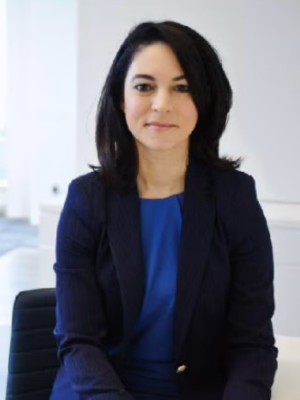
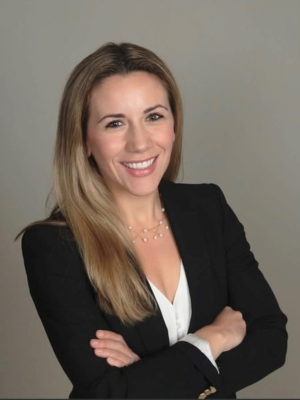
Julie Bowe“The times throughout my career that seemed the most challenging have turned out to be some of the most incredible opportunities,” says Juli Bowe.

For Bowe, the challenge is often where the opportunity begins. In 2023, she was promoted to run Wells Fargo’s CMBS trading desk just as commercial real estate entered a distress cycle. “That felt very daunting,” she admits. Yet it was also the kind of moment that brought into focus what she has learned throughout her career: do the work, trust the expertise you’ve built, have the confidence to put your perspective forward, and stay humble enough to know there is always more to learn.

Learning to Take the Leap

Bowe majored in finance and minored in math at William & Mary, graduating in 2009, 2010 right as the financial crisis had frozen Wall Street hiring. “Internships were slim,” she remembers. Through her network, she was able to secure a sales and trading internship at Goldman Sachs, whereby summer’s end, she’d landed on the CMBS (Commercial Mortgage Backed Securities) desk, the seat that would define the next decade and a half of her career.

Four years at Goldman taught Bowe the mechanics of flow trading. A move to the buy side, at hedge fund Appaloosa, allowed her to continue building her skills while also giving her the unique opportunity to work with David Tepper.

“He is one of the best investors in the world; being able to watch him every day was an invaluable experience.”

In 2019, Bowe returned to the sell side, joining Wells Fargo and relocating to Charlotte, where she and her husband knew exactly one person.

“There was an opportunity to build something here at Wells, and that was really exciting,” she says. “Despite all the unknowns and how crazy it seemed at the time, it’s definitely been one of the best decisions of my life.”

The Work You Can Control

Bowe describes her work ethic as one of her defining characteristics, something she honed early on as a competitive soccer player. While she played all through childhood and then at William & Mary, she had to fight for a starting spot.

“I was not the best player on the team, wasn’t the fastest, but I could work harder than anyone else.”

That ethic became her professional foundation, and the first thing she tells the interns and young analysts who come through her desk.

“The number one thing you can control is how hard you work, especially early in your career. Over time, the challenge is turning that preparation into judgment and conviction.”

Build Credibility, Then Use Your Voice

That advice matters even more, she believes, for younger women in trading. While she has seen progress, women remain underrepresented on trading floors, and Bowe says it took her longer to build credibility than it did for some of her male counterparts. Her message is direct: “If you are good at what you do and do the work, you build credibility. The next step is trusting that credibility enough to develop a point of view and use your voice. It can be hard, especially in those earlier years, to hold on to that. But if you stick with it, it pays off.”

But preparation alone isn’t enough if no one hears your thinking.

“Earlier in my career, I wasn’t always confident enough to speak up with people I thought knew more than I did. I learned that having something valuable to contribute doesn’t necessarily require being the most experienced person in the room.”

In her role leading CMBS, that’s sometimes meant taking a contrarian stance. In 2023, when many investors were avoiding office exposure, Bowe built a thesis that companies would want people back in the office. “I was able to trade and connect with clients on that view,” she explains.

Relationships Are the Differentiator

For all the market knowledge and analysis trading requires, Bowe returns often to the human side of the business. “I really care about people and value relationships,” she says. Across her career, mentors, managers, and sponsors have shaped her path, and she’s careful to distinguish between them.

“A mentor is someone who you can get advice from and talk with, but a sponsor is someone who’s going to have your back when you’re not in the room.”

That kind of advocacy shaped Bowe’s own decision to join Wells Fargo. “A huge reason of why I came to Wells was that I saw senior leaders here that were women. That was really important to me.”

Relationships matter in the market, too. As AI and other technologies make information faster to access, Bowe believes human connection still sets people apart.

“The real value that you can add as a trader or a salesperson is your ability to connect with somebody,” she says. “If you’re able to do that better than everyone else, you’ll be able to differentiate yourself.”

It’s why her team is in the office five days a week, and why so much of her own client work happens on the road, over a meal or a round of golf, rather than at a desk.

Knowing What You Don’t Know

That same instinct to lean on relationships rather than shortcuts has shaped how Bowe approaches leadership itself. When she first took over the CMBS desk, she assumed the leadership side would be the easy part.

“I’ve been captain of soccer teams, I’ve been president of clubs, I know how to lead people,” she remembers thinking, “But I was humbled very quickly in terms of the people management.”

That same humility has carried into her newest challenge. Earlier this year, Bowe’s role expanded to include CLO trading, a business outside her wheelhouse that required learning a new product, meeting a new client base, and thinking about risk differently. It reminded her that experience doesn’t always transfer cleanly.

“Being a contrarian in CMBS has set me up well, but it does not necessarily mean that I can just bring that skill set over to this different asset class and expect the same results,” she says.

“Taking on CLO trading expanded my leadership responsibilities, but also required me to become a student again. Experience gives you a foundation, but every new market has its own dynamics and requires you to keep learning.

Becoming a Multiplier

The mark Bowe wants to make now extends beyond business performance to the people she develops and the team she builds. Having worked under both exceptional and difficult managers, she knows firsthand “how impactful a person’s manager can be” on someone’s day-to-day quality of life, and that awareness has shaped the kind of leader she wants to be.

“I want to deliver great business results, but I also want to set people up to succeed and build teams of people who can go on to have great careers.”

Outside the office, Bowe is raising three kids under seven and still finds time to train for half marathons. “Having a plan keeps me accountable,” she says. It’s the same mindset that she has carried throughout her career: take on what feels daunting, and trust you’ll figure it out.

By Jessica Robaire
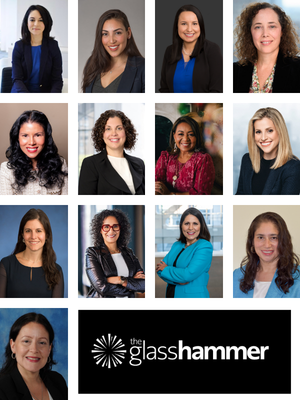
Career Lessons from Latina leadersLast year during Hispanic Heritage Month, The Glass Hammer looked at the steep ascent Latina women continue to face in corporate leadership, including the systemic and cultural barriers that can make advancement more difficult. This year, we are asking a different question: What can we learn from Latina leaders who have navigated that terrain?

Across our profiles, these women have taken very different paths. Some moved laterally before moving forward. Others created opportunities that did not yet have a name. Many learned to speak up before they felt completely ready. And several discovered that the career they built looked nothing like the one they initially imagined.

Taken together, their stories suggest a different way to think about career advancement: not simply climbing the next rung, but creating more options for where you can go next.

In a last week’s Glass Hammer profile, Karelis Barrios, Global Head of Wholesale Lending Operations at Citi, put a name to that idea:

“The truest measure of success is how much optionality you have.”

Create, Don’t Wait

Alexandra Wilson-Elizondo, Partner and Co-Chief Investment Officer of Multi-Asset Solutions at Goldman Sachs Asset Management, puts career ownership plainly:

“Build things, do not wait for people to assign things to you. Continue to constantly learn about what you’re interested in; being an expert is always a good thing, and it will help your career.”

Monica Marquez, workforce reinvention strategist and co-founder of Flipwork, takes that idea a step further, arguing that waiting until you feel completely prepared can itself become a career constraint.

“Women have a tendency to be very certainty driven, and they end up not taking as many risks and opportunities. Women need to be much more open to taking the opportunity and embracing just-in-time learning, so they don’t rob themselves before they try.”

Cassandra Cuellar, now a Partner at DLA Piper, similarly describes taking ownership as central to her career.

“I have a willingness to take ownership over things without necessarily having to be so dependent on a hierarchical structure.”

And when she encounters something unfamiliar?

“Whatever you can throw at me, I’m going to figure it out.”

For both women, taking ownership is less about knowing exactly where a decision will lead than about being willing to act. Each new experience adds another skill, relationship or piece of knowledge to draw on later.

Let the Path Change

If creating options is the goal, a career cannot be treated as a fixed route.

Yasmine Coupal, a Partner at Goldman Sachs, expected a very different career trajectory before an unexpected opportunity led her into finance.

“Careers are not linear, and there isn’t a one size fits all approach.”

Vanessa Rodriguez, Head of Community Lending & Investment, Commercial Real Estate at Wells Fargo, offers an equally useful reminder that moving forward does not always mean moving up.

“Sometimes, you must take a step back, or move laterally, to go forward.”

Angela Cruz, Sales Effectiveness Leader for Sales Excellence at Accenture, has reinvented herself several times, moving from electrical engineering and technical roles into marketing and sales leadership. Looking back, she identifies one quality that helped her make those transitions:

“Continuous learning has been a key driver. I have reinvented myself quite a few times because I’ve always been open, flexible, and curious to learn.”

Lola Ninonuevo, International Chief Operating Officer at Wells Fargo, takes the long view:

“Your career is over decades. It’s not the be-all and end-all. There are periods where you can really lean in and put 100% into it, and there are periods where you can’t, and that’s okay as long as you stay connected.”

A lateral move can build a skill. An unexpected role can reveal an interest you did not know you had. A pause can create room for something else.

Build What Gives You Options

Being open to change is one part of creating options, but again and again, the women we have profiled point to relationships as an important part of the infrastructure of a career.

Ninonuevo describes relationships as central to her leadership approach:

“I really focus on building relationships. I’m honest and candid in my approach.”

Indhira Arrington, Global Chief Diversity, Equity and Inclusion Officer at Ares Management, has a more specific observation about what it takes to turn strong performance into sponsorship:

“There are thousands of people that are good at their job and that want to ascend the corporate ladder, but doing it alone likely won’t get you there. You also need to have strong executive presence and act like a leader, and then hopefully that combination gains you the sponsors who have the power to open those doors, propel you and pull you up.”

Graciella Dominguez, VP of Investment Operations, Operations and Innovations at PGIM, began her career with a different expectation of what her work would require:

“When I started as an accountant, I didn’t realize that interacting with people and building relationships was going to be more central to my experience. I have been able to grow my relationships, and they are so important – and rewarding – in accomplishing greater things.”

Know Your Value

For some of the women we have profiled, creating options has also meant recognizing the value in the different perspectives and identities they bring to the workplace.

Claudia Vázquez, Founder of Elevnik, describes how her perspective changed over time:

“What I saw as a disadvantage at the beginning, I turned it around to make my secret weapon, because I realized this is what makes me unique and able to see things from a different perspective.”

Alma Rosa Montañez, Chief Corporate Counsel at S&P Global, describes reaching a point where she stopped feeling she had to choose between parts of her identity:

“I learned to become comfortable with the fact that I’m really not either Mexican or American – I’m both.”

For Vanessa Nazario, now Chief Impact Officer at Episcopal Health Services, the shift has implications beyond how you see yourself:

“Once you claim your value, it opens a lot of opportunities.”

The message is not to ignore the barriers that can shape a career. It is to recognize that the perspective, experience and identity you bring with you can also be part of what creates opportunities.

Think Beyond the Next Promotion

Karelis Barrios’ idea of optionality brings these lessons together. Career advancement is not only about moving up. It can also mean building enough experience, relationships and confidence that you have choices when circumstances change.

As Barrios puts it:

“A step back in leadership does not have to be the end of the story. Sometimes it creates the space to grow, and strong leaders recognize when someone is ready to be given another opportunity.”

And ultimately:

“The truest measure of success is how much optionality you have. You work hard for the options that success provides you.”

Taken together, the advice from these Latina leaders suggests that career advancement is not only about reaching the next level. It is about steadily increasing what you are capable of doing, who knows your work, where you can contribute and what opportunities you are prepared to pursue.

You may not know exactly where those choices will lead.

But you can make sure that, when the next opportunity appears, you have more than one way to move forward.

Karelis Barrios“I often reference Maya Angelou’s quote, ‘I’ve learned that people will forget what you said, people will forget what you did, but people will never forget how you made them feel’,” says Karelis Barrios. “It’s the resounding philosophy of who I want to be as a leader.”

As Global Head of Wholesale Lending Operations at Citi, Barrios leads with a rare mix of humility and resolve, shaped by a path that began far from Wall Street. She shares how her immigrant journey, an early leadership misstep, and a lifelong pursuit of “optionality” have shaped her approach to leading teams, mentoring others, and defining success by her own measure.

Widening the Aperture of What’s Possible

Born in Cuba, Barrios moved to the United States while in middle school, arriving with little to no English proficiency. While ESL classes helped her pick up the language, she struggled with pronunciation, leading her father to send her to a four-week immersion program in Tennessee focused purely on diction.

“I was upset at him at the time about going, but I wonder if some of the opportunities I received would still be the same if I hadn’t gone,” she reflects now. It’s a small, formative example of a theme that runs through her career: the compounding value of decisions made early that widen the aperture of what’s possible later.

That aperture kept widening. Barrios went on to study at the University of Miami and, despite never having set foot in New York, accepted a job there with Morgan Stanley the moment it was offered. She admits she was drawn in as much by the romance of the idea of living in New York as by the opportunity itself. Twenty years, several institutions, and a role building an organization from scratch at Capital One later, she joined Citi a little over four years ago to become the Global Head of Wholesale Lending Operations.

“I love lending,” Barrios says. “When you look at even the most complicated products in a bank, at their foundation, almost everything comes back to it.” What sealed it for her was Citi itself, not only its scale, but also the people she met along the way.

“Citi is the most global bank, and that’s not by accident,” she asserts. “You’ll meet people sitting in offices all over the world, and you can walk into an office and hear a dozen different languages being spoken. It’s really impressive.”

Learning to Lead by Failing First

The moment that most shaped Barrios as a leader is not a triumph, but rather a formative challenge during her first leadership role.

“I had this idea that leadership meant I had to take responsibility for everything, and make sure I was personally the one doing everything,” Barrios recalls. That approach ultimately proved unsustainable and led to an adjustment in her scope. It was, by her own account, a sobering experience. She came to realize that as a leader, success was no longer measured by how much she alone could produce, but by how well a team around her could perform without her hands on every piece of it.

“It was an adjustment to get to a place where I realized it’s not about highlighting what I’m doing but shining a light on the work that my team is doing.” Recognizing her team’s work, rather than completing it herself, she learned, was what moved people to contribute. Later, that same manager who had been part of the earlier scope adjustment gave her another opportunity, reinforcing that the experience was not an endpoint but part of her development as a leader.

“A step back in leadership does not have to be the end of the story. Sometimes it creates the space to grow, and strong leaders recognize when someone is ready to be given another opportunity”

Mentors at Every Level

For Barrios, the best mentors are the ones who show you a different perspective on what’s possible. One mentor, a now retired executive she still considers a friend, gave her an opportunity she wasn’t fully sure she was ready for. “He saw potential in me that I wasn’t yet seeing in myself,” she says. “We all need someone to give us that next big opportunity.”

Barrios also believes that guidance doesn’t always have to come from people with more experience, it can be equally powerful coming from someone more junior. She recalls one colleague, roughly a decade younger, who helped her reframe a moment of anxiety before a new role.

“She just looked at me and said, ‘What are you so worried about? The imposter never thinks they’re the imposter.’ And it hit me: I was overanalyzing something I was genuinely excited about. I have learned to trust my gut, and recognize that sound advice can come from many directions, not just from those with the most seniority.

Responsible Leadership, and the Will to Win

In considering what leadership will require in the years ahead, particularly as AI reshapes the industry, Barrios emphasizes responsible leadership: balancing growth and innovation with integrity and being honest with teams about how technology will change roles while committing to building new pathways for people affected by that change.

That sense of responsibility doesn’t dampen her ambition, if anything, it sharpens it. “I want to win,” Barrios says. “I want my team to win. I want Citi to win.” For her, winning isn’t disconnected from responsibility; it’s the mechanism through which a bank makes good on its role in the broader economy, “the fabric of how money and commerce move.” Not every innovation cycle produces winners, she notes, drawing a comparison to past waves of transformation.

“Think about the railroad, or radio — hugely innovative ideas, but not every company that invested in them survived. It’s going to be the same with AI. Not every AI company is going to be a winner. The work we do, the careful analysis and attention to numbers, matters because it helps maintain liquidity and stability in the markets, in ways that impact people more than they may realize”

Success and Optionality

If there’s a single word Barrios would hand to her younger self, it’s optionality. “The truest measure of success is how much optionality you have,” she emphasizes. “You work hard for the options that success provides you.” It’s a principle she’s tried to instill in her own children: that choice itself, not any particular choice, is what builds self-worth and reduces stress.

For Barrios, that optionality shows up in the everyday. It’s what lets her carve out the time to make her kids, her greatest passion outside of work, a priority. Every Sunday, she cooks, pre-making lunches and snacks for the week from scratch, and explains, “it’s my way of showing them love.”

However, Barrios is careful to note that none of this optionality was hers alone to build. She recognizes that her parents and grandparents gave up far more than she initially understood in order to give her options she didn’t yet know she’d been given. When she made managing director, a milestone celebrated across the financial services industry, she called her parents, and her father said simply in Spanish: Nos ascendieron. “They promoted us.”

“That story still warms me,” Barrios says with a smile. “It’s not about being an immigrant. I work with plenty of people who are the first in their family to go to college, or the first to make what they make. Those are big, powerful moments people carry in different ways.”

That kind of inheritance, she says, never felt like weight. It felt like a cloud of love surrounding her, proof that she could have ended up somewhere very different, and instead, gets to do this.

By Jessica Robaire

entrepreneur like a motherWe sat in the boardroom with an idea we knew was good. We had the numbers. We had the plan. We walked the room through every line of it. Heads nodded. People agreed it had legs. And then came the sentence that decides a career if you let it.

“Maybe next year.”

Not no. Not yet. Maybe next year. The corporate way of telling an ambitious woman to wait her turn while someone else decides whether her idea is convenient for them.

We did not wait. We left and built two consulting firms. Then we sold them. Both in less than 20 years. Financial freedom for our families including the nine kids between us, raised through all of it.

If you are a VP or above and you have started reading articles like this one, you already know the “maybe next year” feeling. Here is what nobody tells you on your way out the door. You are not starting from zero. You already have most of what it takes. You just have to add a few things you were never allowed to use inside the building.

What You Already Have

You already have a Kitchen Cabinet

Twenty years in financial services means you know people. The banker who tells you the truth. The lawyer who does not flinch. The operator who has already done the thing you are about to attempt. We call that handpicked group your Kitchen Cabinet, and yours is already built. You assembled it one good working relationship at a time, and most of those people would take your call tomorrow.

You already know the financials

This is the part most first-time founders fake, and you do not have to. You can read a P&L in your sleep. You know the difference between revenue and margin, between a number that looks good and a number that is good. The most common way new businesses die is running out of cash, and you are already fluent in the thing that kills them. That is not a small edge. That is most of the game.

You already know how to fail

You have lost the pitch. Missed the number. Survived the reorg that was not your fault. Corporate trained you to take a hit in front of people and show up the next morning anyway. Entrepreneurship is that, on repeat. The skill was never avoiding the fall. It is getting up, brushing yourself off, and going again. You have done that more times than you can count.

What You Need to Adopt

Now the harder part. Three things the corporate building actively trained out of you.

Make peace with uncertainty

A salary is certainty. A title is certainty. A roadmap someone hands you is certainty. You are about to trade all of it for a question mark, and the discomfort is real. Sit in it. The founders who make it are not the ones who feel certain. They are the ones who can act while feeling uncertain. That tolerance is a muscle, and you can start building it now, before you give notice.

Ship the MVP, not the finished product

Corporate taught you to polish. Nothing leaves the building until it is perfect, vetted, and signed off by six people. That instinct will sink you as a founder. Your first version is supposed to be rough. Get the minimum viable version into the market, let real customers tell you what is wrong, and fix it in the open. Done and learning beats perfect and theoretical every time.

Actually use your Kitchen Cabinet

Here is the twist. Having the cabinet is the asset. Using it is the skill, and it is the one senior women resist most. You spent two decades being the person with the answers. Now you have to be the person who asks. Call them to troubleshoot the problem you cannot crack alone. Call them to connect you to the client you cannot reach. Call them on the bad day, just to be reminded you are not crazy for trying. The people are already there. Your only job is to be willing to pick up the phone.

So Here is the Math

The corporate ceiling is real. The Fortune 500 only reached 11 percent women CEOs in 2025, the first time the number crossed 10 percent in the list’s 71-year history. You can wait another 71 years for someone to tell you it is finally your turn. Or you can stop waiting for the room to approve the idea you already know is good.

That boardroom told us “maybe next year.” We decided next year was ours, not theirs.

What is the idea you have been waiting for permission to build?

By: Beth Mazza and Victoria Sivrais are the co-authors of Entrepreneur Like a Mother (Wiley, September 2026). They previously built and sold two consulting firms, Ashton Partners and Clermont Partners, while raising nine children between them.

(Guest Contribution: The opinions and views of guest contributions are not necessarily those of theglasshammer.com)