
Tag Archive for: integrity

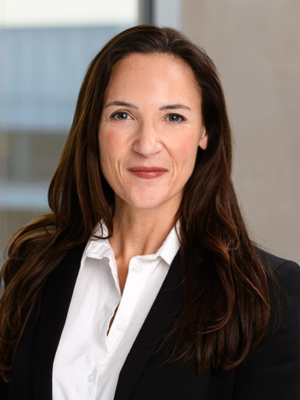
Katherine Kirkpatrick BosKatherine Kirkpatrick Bos, General Counsel of StarkWare, is excited about zero knowledge proof technology (ZKP), a revolutionary tool in cryptography. She explains that ZKP allows people to prove something is true without revealing underlying information.

ZKPs enable verification without disclosure—complete, sound, and private. While often discussed in the context of blockchain scalability and transaction speed, their possible use extends far beyond cryptocurrencies. Healthcare records, voting systems, and government services all rely on forms of verification that routinely overshare personal data. Zero-knowledge technology offers a path to redesign those systems around privacy by default.

“StarkWare is deep, cutting-edge technology,” she says. “These are some of the smartest cryptographers and developers in the world.”

This potential drew Kirkpatrick Bos to StarkWare, a company building cryptographic systems at the frontier of zero-knowledge technology. The work is not only about present-day challenges. StarkWare has also developed quantum-resistant technology—an increasingly urgent priority as advances in quantum computing threaten existing cryptographic standards.

“Quantum computing could break a lot of what we rely on today,” she notes. “Quantum-resistant code makes that significantly harder.”

Choosing the Right Room

Prior to joining StarkWare, Kirkpatrick Bos was in listed derivatives on digital assets. She was the Chief Legal Officer of Cboe Digital, a U.S. regulated exchange and clearinghouse for spot crypto and crypto derivatives markets; and General Counsel of Maple Finance, a capital efficient corporate debt marketplace which facilitates crypto institutional borrowing via liquidity pools funded by Decentralized Financial (DeFi) ecosystems. Kirkpatrick Bos was also a partner in the Special Matters and Government Investigations practice at King & Spalding.

Kirkpatrick Bos is candid about career inflection points. She has experienced the frustration of executing a plan within a business that wasn’t growing as expected—and realizing she wasn’t in the room where the real decisions were being made.

“That’s a difficult place to be,” she says. “Especially if you believe you could be doing more.”

The response, in her view, is rarely comfort. It is movement.

“It’s much easier to stay where you are than to start over,” she notes. “But if you want growth, you have to take that risk.”

She is especially direct about this advice for women, who are often encouraged—explicitly or implicitly—to value stability over advancement.

“I’ve always approached my career strategically. You have to understand what’s next.”

Mentorship, Integrity, and Judgment

Kirkpatrick Bos credits much of her professional grounding to early mentors, including a senior partner she worked with for over a decade at King & Spalding.

“He could be prickly,” she recalls, “but he inspired loyalty through integrity.”

That lesson—never compromise ethical standards—has stayed with her. So has the importance of seeing what is possible. Senior women who pushed boundaries in their careers made abstract ambition tangible.

“If you see it, you can be it,” she emphasizes. “If others are doing it, it’s not impossible.”

The guidance she now imparts is unsentimental and practical: protect your principles, make hard decisions when required, put your family first, and outsource what you can.

Leadership in an Age of AI

As artificial intelligence reshapes professional services, Kirkpatrick Bos remains skeptical of claims that judgment can be automated.

“AI is a powerful tool,” she acknowledges. “But it can’t replace instinct.”

Over her career, she has seen lawyers develop competence through experience—and others who never do.

“Judgment is hard to teach. Problem-solving, instinct, knowing when something doesn’t feel right—that still matters.”

As General Counsel, much of her role is translation: helping regulators understand technology, and helping technologists understand the law.

“You have to listen carefully,” she says. “Then explain things in a way the other side can actually understand.”

Why It Endures

There are always difficult days. Seniority does not eliminate friction; it reframes it.

What sustains Kirkpatrick Bos is the belief that the work itself matters—that she is helping shape the legal and regulatory framework for technologies that will define the next generation.

She imagines a future where people look back in disbelief at how much personal information was once routinely shared to prove a single fact.

Innovative technology, she believes, does more than improve systems. It keeps people engaged, even when the work is hard.

And in that sense, zero knowledge is not just a cryptographic concept—it is a blueprint for more thoughtful leadership.

By Jessica Darmoni

radical self-trustAs a leader who wishes to inspire and empower, you will be more impactful if you earn the trust of those whom you wish to lead. For that trust to be built upon a solid foundation, you must first cultivate a deep sense of inner self-trust.

It’s an axiom for a reason. The most important relationship is the one you build with yourself, and the relationship you wish to build with others begins with you.

Trust is Relational and Earned

Let’s talk relationship dynamics. Within the organism of any organization, trust is the precursor and basis of a functioning team. When trust is absent, the team cannot effectively resolve conflict, foster commitment, create accountability, or develop and deliver to its capacity.

Well, the same is true with yourself. Without a basis of self-trust, how can you confront decisions where you feel internally divided, authentically commit, be accountable, develop, or reach your goals?

Trust is also at the crux of any close, enduring relationship. Trust is not owed to another—it is earned. Trust is relational, and self-trust is a fundamental reflection of the quality of relationship you have with yourself.

  • What is the gap between your values and your life?
  • Between your words and your actions?
  • Between your knowing and your doing?
  • Between what truly matters to you and what you give time and energy to?

If there are real gaps, and you are a self-aware person, you will know and feel it—even if you avoid knowing that you know. These gaps create leaks in self-trust. They dilute your sense of self and integrity.

Self-trust comes from living in alignment with your truths and values, and being able to admit, and even amend, where you fall out of alignment.

The Self-Trust and Confidence Loop

According to Stephen M. R. Covey, self-trust is finding yourself credible. The four cores of credibility are comprised of:

Character (who you are):

  • Intent – being straightforward in motivation with genuine care in others
  • Integrity – being honest, keeping promises, aligning action and values, willingness to do the hard thing if the right thing

Competence (what you do):

  • Capabilities – gifts, skills, knowledge, styles of approaching
  • Results – your followthrough, consistency, and outcomes

As you build self-trust, it gives rise to a feeling of self-assurance and authentic confidence, based on a grounded experience of yourself that is greater than dips in motivation and emotional fluctuations. On a shaky day, you know you’re strong at the roots.

When your act with intent, leverage your capabilities, and follow through, you accumulate self-trust and generate confidence.

The loop then reinforces itself. The behaviors that build self-trust contribute to a feeling of confidence which gives you the courage to take more actions (such as trying new things, taking on challenges and making commitments) that lead to greater self-trust.

Six Types of Relational Trust—With Yourself?

In healthy relationships, there are six different kinds of trust that can be nurtured. One category is about self-trust. But what if you treated each as important to your relationship with self? Let’s adapt them and see.

1) Emotional trust – to allow vulnerability, show up to feelings with empathy rather than judgement, and to foster deeper connection.

  • How do you allow space for your emotions? What do you try to avoid or ignore feeling? What feeling could you be more open to?
  • How strong is your inner critic versus your inner sense of compassion? Whose voice is more prominent for you?
  • How are you kind to yourself? How do you trivialize or undermine your needs? How could you be more receptive and open to yourself?

2) Instrumental trust – to consistently show up, follow through on commitments, and keep promises.

  • How do you already show up consistently for what matters to you?
  • What is one way you could easily commit to regularly showing up to something important to you? Make it achievable.
  • How do you keep your word with yourself? How do you break your word with yourself?

3) Informational trust – to be able to be truthful, transparent, clear, and honest with yourself

  • How willing are you to admit the truths you know deep down within?
  • Where in your life may you be avoiding being honest with yourself or others?
  • Where in life would you like to become clearer and more transparent? What stops you?

4) Self-trust – to honor your worth, trust your judgement and intuition, and to show up to challenges

  • From where do your source your sense of self and worth? Is there anywhere where you are still trying to win approval?
  • What are examples of trusting your discernment or intuition? Where in life have you, or are you, dismissing your intuition?
  • What challenges have you taken on? What is a growth space you’d like to step into, but have yet to?

5) Situational trust – to be able to trust and rely on self in particular contexts, based on strengths and knowledge in that space

  • In what contexts, situations, and discussions do you really trust in yourself and your capacity?
  • In what contexts, situations, and discussions do you feel disconnected from your self-trust? Why?
  • Is there a context in which you wish to improve trust in self? How could you?

6) Physical trust – to feel safe in your own presence, knowing you will respect and protect your own health and safety

  • How are you looking after your wellbeing and health as the only human in charge of that job?
  • In what ways do you compromise your wellbeing and health? How could you be more protective and caring?
  • What would it mean to show yourself more love and respect? What would change?

It’s the one relationship you’ve been in since the moment you became aware of yourself, so it’s a good question to ask: do I have a relationship of trust with myself, and how can I improve that relationship?

And if you are willing, you may find the same is true as in any relationship. Growth requires a willingness to have the real, and sometimes challenging, conversations with yourself.

But if you do, integrity becomes its own reward.


By: Aimee Hansen is a long time writer and heart coach with theglasshammer.com. Her recent work includes “This Book is a Retreat” co-written with Marianne Richmond.

If you would like to work with Aimee or any of our coaches including Nicki Gilmour our head coach and founder, please click HERE for a free, exploratory call with Nicki who can match you with the right coach for you (we have six coaches, all with different backgrounds who can help you depending on what you need).

Heather Plumski“I lead with integrity and faith,” says Heather Plumski. “That means being honest, thorough, and accountable.”

As President of Stearns Bank, Plumski brings a rare blend of head and heart. She shares how her leadership is driven by values, grounded in purpose, and distinguished by forward thinking with a readiness to own both the good and the bad.

From Part-Time Teller to President

Plumski’s journey started in forensic science before pivoting to accounting, completing her degree in two years. While classmates chased big-city roles, she chose central Minnesota and a part-time teller job that turned into a career.

“I didn’t even know what a credit analyst was,” she recalls. “But it let me work with numbers and small businesses both objectively and subjectively to understand their needs…which I found to be incredibly rewarding.”

Since joining Stearns in 2005, Plumski has led through every phase from underwriting through the Great Recession to helping build the SBA and equipment finance programs. As CFO, she drove strategy. Now, as President, she leads a women-owned, employee-owned institution committed to helping people reach their full financial potential.

“We walk the walk. As employee-owners, we understand the challenges our customers face, and we build solutions that serve them.”

Authentic, Inclusive Leadership

Plumski’s leadership style is rooted in authenticity. “You can’t fake it,” she says. “When you’re aligned with who you are, your decisions get clearer, your leadership gets stronger.”

Her collaborative approach encourages open thinking. “I used to wait until every idea was perfect. Now, I bring it to the table early. It invites feedback and makes the work better.”

She credits her growth to staying curious and stretching beyond her comfort zone. One major stretch? Leading technology. “It was like learning a new language. But I learned I didn’t need to know everything I needed to trust the experts around me.”

Just Keep Going

Plumski pushes back on perfectionism and encourages boldness. “Women often hesitate if they don’t check every box. My advice? Don’t count yourself out – say yes before you say no.”

Her mantra: “Don’t quit on a bad day.” That resilience, she says, has made all the difference.

Coaching, Clarity, and Perspective

Executive coaching has been a game changer for Plumski. “It pulls me out of the weeds. I walk away with clearer thinking, stronger communication, and better perspective.”

Even when she feels too busy to take the call, she never skips it. “I always leave better than I came.”

Empowering Employees, Growing Communities

Looking forward, Plumski is focused on deepening Stearns Bank’s impact from growing employee ownership to expanding inclusive financial solutions nationwide.

“Our Employee Stock Ownership Plan isn’t just a model. It’s a movement,” she says. “When we help our customers succeed, our employee-owners build generational wealth.”

That sense of shared prosperity also drives Stearns’ focus on underserved markets. “We listen first. Then we build whether it’s through our Salaam Banking Division or nonprofit solutions. And by the time the rest of the industry catches up, we’re already on to what’s next.”

Family and the Mountains

When she’s not leading a national bank, Plumski is hiking, running, canoeing and simply soaking in family life with her four kids, husband and extended friends and family.

“There’s something about the mountains,” she says. “They remind me how small we are, and how big our purpose can be.”

By Jessica Robaire

Leaders Build RespectIn today’s high-stakes, high-performance industries, from finance and law to tech and consulting, one often-overlooked leadership skill can quietly make or break teams, productivity, and profits: respect.

Workplace incivility, or persistent disrespect, now costs U.S. businesses a staggering $2 billion per day, according to Gallup estimates. That’s not just a human problem – it’s a bottom-line problem. A Harvard Business Review study found that 50% of employees who experienced workplace incivility reduced work effort, and 12% left their jobs.

And for women in leadership roles, the stakes are sometimes higher. When we lead, we’re often scrutinized more harshly and held to different standards. But we also have a powerful opportunity to model a leadership style that encourages loyalty, psychological safety, and measurable success.

As the former CEO of Syms Corp., the first off-price retailer of its kind, I learned early on that cultivating respect wasn’t a luxury. It was a leadership imperative. In a male-dominated industry, I rose to become the youngest female president of a company listed on the New York Stock Exchange. And I did it by building a culture where people felt seen, valued, and heard. That’s still rare. But it shouldn’t be.

In my upcoming book, Leading with Respect, I argue that creating a workplace grounded in dignity is no longer optional – it’s the most sustainable way forward in today’s anxious, fast-moving professional landscape. With 31% of employees feeling disengaged, according to Gallup, now is the time for leaders to focus on improving performance, collaboration, and retention.

Below are five ways women executives can lead with respect and reshape the cultures they’re part of, from the top down.

1. Set the Tone Early and Often

Respect starts at the top. Leaders who model respect and inclusion empower others to do the same. If you ignore microaggressions, tolerate dismissiveness, or let egos dominate meetings, your silence sets the tone. So does your presence.

Whether you’re onboarding a new analyst or presenting to the board, show up in a way that centers clarity, presence, and attentiveness. Respect isn’t about being “nice” – it’s about creating space for everyone to contribute meaningfully.

In team meetings, implement a simple practice of rotating who leads or facilitates. This democratizes airtime and signals that hierarchy doesn’t override value.

2. Listen Like It’s a Leadership Skill (Because It Is)

Too often, leadership is associated with speaking. But in high-performing firms, real power comes from listening. Employees, especially those in early or marginalized career stages, might not volunteer truth unless they trust you’re genuinely open to hearing it. And we know women are interrupted 50% more often than men in professional settings, so let’s interrupt that pattern with active listening. This also builds psychological safety, which makes employees feel more comfortable. When people feel heard, they stay engaged. When they don’t, they quietly check out.

Replace “Any questions?” with “What’s not clear yet?” or “What am I missing from your perspective?” These prompts unlock better dialogue and better data.

3. Respect Boundaries – Yours and Theirs

Respect also means knowing when to pause. In industries where overwork is normalized (“hustle culture”) and availability signals loyalty, boundary-setting can feel risky. But leaders who respect their own limits model sustainability. And those who acknowledge their team’s personal and professional boundaries earn deeper trust.

It’s especially vital for women leaders to reclaim time and enforce boundaries as part of workplace culture, not despite being ambitious, but because of it.

Normalize “focus hours” on team calendars. Publicly support people who decline late meetings or take full parental leave. Set the example without apology.

4. Reward Integrity Over Optics

Too often, loud performers get the spotlight while quiet excellence goes unnoticed. If your culture rewards only visibility, you risk alienating the very people who keep your business running with consistency and integrity.

Women leaders are uniquely positioned to challenge performative cultures by rewarding substance over showmanship. Promote those who lift others, not just themselves.

In performance reviews, build in metrics for collaboration, mentorship, and ethical decision-making, not just revenue or output.

5. Be Explicit About Inclusion and Act on It

Don’t assume that respect will trickle down. Cultures of inclusion must be intentionally built. That means regularly reviewing who’s in the room, who gets airtime, and who’s being overlooked.

When women in leadership elevate others, especially across lines of identity and background, we disrupt exclusionary systems that thrive in silence.

Create sponsorship programs, not just mentorship ones. Advocate for underrepresented voices when promotions, stretch projects, or visibility opportunities arise.

Respect Isn’t Soft; It’s Smart

In the boardroom, courtroom, or C-suite, respect is not a sentiment. It’s a strategy. And while it costs nothing to implement, it pays dividends across every business metric that matters. According to Deloitte, leaders who model respect and inclusion significantly outperform those who don’t.

For women in leadership, leading with respect is also a form of defiance. It says: I don’t have to emulate toxic models to succeed. I can build something better, and I can bring others with me.

In a world where too many companies are quietly cracking under the weight of incivility, women executives have the power and responsibility to lead differently. To lead with respect.

By: Marcy Syms is a social entrepreneur, philanthropist, and the former chair and CEO of Syms Corp., the first truly off-price retail chain in America. Her forthcoming book Leading with Respect: Adventures of an Off-Price Fashion Pioneer (Citadel // August 26, 2025) explores how respect-focused leadership fuels performance and purpose in today’s workplace.

(Guest Contribution: The opinions and views of guest contributions are not necessarily those of theglasshammer.com)

Nicola Free“It’s hard to teach determination, but if you’ve had setbacks, and you’ve had to fight to get to where you are, it is built in you to keep going,” says Nicola Free. “It’s how quickly you bounce back, what learnings you take away, that can make you even stronger.”

With a career shaped by determination, hard-won resilience, and a commitment to leading with integrity, Free does not just navigate change — she drives it. She reflects on how embracing risk, learning from inspirational leaders, and trusting in both her existing skills and her capacity to grow have been central to her journey.

Taking Risks and Having Faith in Herself

From an early age, Free learned to be a self-starter. She reflects, “I came from a very working-class background and went to the worst school in Warwickshire. I had to teach myself my GCSEs because the classes were so disruptive.”

Determined to “do something with my life and make my parents proud,” Free was the first in her family to attend university, where she pursued law. However, it did not take long for her to realize that the legal path, while hard-earned, was not where she wanted to stay. When a client she had supported on a major securitization project invited her to help launch a CMBS platform, she made a decision that would completely change her career.

“It was definitely a big risk,” Free admits. “I would never have anticipated that I would have left the law a year after qualification, but this new opportunity sounded really interesting.”

Jumping into a completely new environment, Free recalls that “a third of it was in my comfort zone and two-thirds I was learning from scratch.” Free leaned on what she knew: her work ethic and resilience.

“Have confidence in the skills you bring, work hard to learn what you don’t know, and don’t give up at the first hurdle. Be willing to take a leap of faith. Ultimately, it’s about believing in yourself; that you’ll get there, and that you can do it.”

That mindset has carried her through ever since. Today, Free is a recognized leader in her field. As Head of Commercial Real Estate (CRE), EMEA for Wells Fargo, she is driving the firm’s CRE strategy across Europe, strengthening its capital markets capabilities, and deepening client relationships in the region.

“It’s a hugely exciting time to be a part of this business and the opportunity ahead of us…this is the year that the strategy is all coming together.”

Leading with Humility and Authenticity

When reflecting on her leadership approach, Free emphasizes the importance of clarity, humility, and authenticity.

“I always try and bring people along with me,” she says. “Give them a vision of what the strategy is, what we’re trying to achieve…make them feel like they’re part of something really special.”

She continues, “it’s about leading with integrity, humility, and doing the right thing for the business, the clients, and the strategy we’ve set for ourselves.”

Mentoring and feedback are important elements to how she leads. “The only way I managed to make a success of my career change was having good people around me who were prepared to coach and teach me,” Free says. “It’s incumbent on us all, particularly as leaders, to be that player-coach where you take the time to give people feedback and help them develop.”

She recognizes that it is also about holding oneself accountable when things go wrong and ensuring others are recognized when they go right. “When things are going really well, make sure people are getting the credit.”

Find a Culture that Aligns with Your Values and Leadership who Embody It

While Free is unquestionably guided by a strong internal compass, she also highlights the vital role that external factors, particularly an organization’s culture and leadership, play in shaping meaningful career development.

“One of the things I’ve learned throughout my career is to ask: What’s the culture? What kind of institution do you want to work for? At Wells Fargo I enjoy working for a bank that has a strong culture that I can relate to while being guided by truly inspirational leaders.”

Free is particularly inspired by Kara McShane, Head of Commercial Real Estate at Wells Fargo, “who is seen as one of the most influential women in finance.”

“To be able to work for somebody like her is really inspiring…and when you have leaders you trust and respect, you want to do your best for them.” It’s a dynamic she now pays forward to her own team. “I want them to come in and feel they’re part of something great, and that they want to succeed because they believe in me, in the business, and in the leadership above me.”

Be Bold. Own It.

Surrounded by leaders she respects, and serving as one herself, Free is acutely aware that leadership is not just about results; it’s also about presence. For women in real estate finance, that presence is still too rare at the top.

“If you’re a woman running a lending business in this industry,” she recalls reading in Real Estate Capital, “then you’re pretty extraordinary.” The line gave her pause, not out of self-congratulation, but reflection. “I come in and do my day job because I love it and want us to succeed. I don’t think of myself as any different than any other leader. But seeing that made me realize there’s a responsibility that comes with being one of the few.”

It is a responsibility that Free takes seriously. As she has risen through the ranks, invitations to speak and serve on panels have increased, and she uses them to push for broader representation. “I’m always conscious about making sure there are other women at the table, that the panels are diverse, and that we’re holding ourselves and others accountable.”

Her visibility is intentional. Instead of blending in, she embraces standing out.

“There’s a big real estate conference I go to every year,” she says. “You queue to board the flight, and it’s just a sea of men in navy suits. I make a point of wearing something bright and own the fact that I’m not the guy in the navy suit. I’m the woman in the bright red dress. It’s an opportunity to be seen.”

She emphasizes, “Being different can make you more memorable. It’s not just about gender. You might be younger, newer, or from a different background. Whatever it is, don’t be afraid to be visible. Have confidence and own it.”

Outside of work, Free applies the same conviction and focus to her personal life. She’s a mother of two daughters, and a competitive CrossFit athlete.

“I’m a strong working mom, and it demands a lot of my time, but I’m showing my girls what working hard and loving what you do can lead to and I’m not apologetic about it.” CrossFit is her outlet, her reset. “When I am training hard, I’m not thinking about anything other than being in the moment… it’s a really good way of switching off.”

That thread of determination runs through everything she does, whether it’s qualifying for a legal career, shifting into finance, growing a business, mentoring a team, or lifting a barbell.

“When things get really tough, don’t give up,” she says. “If you keep digging in, you’re going to feel so great at the end of it.”

By Jessica Robaire

Graciella Dominguez“Lean into all experiences, professionally and personally,” says Graciella Dominguez. “Find the opportunity to grow from everything you experience, channel those lessons, and then use them to do good.”

From Numbers to Relationships

Dominguez was drawn to accounting due to her love of numbers – concepts like credits and debits that felt concrete and measurable. She began working for Ernst & Young while in college, and then joined Prudential a year after graduating. After switching to a smaller firm for a few years to try out auditing, she returned to PGIM, Prudential’s global asset management firm, where she has been for 23 years.

“That brief experience in auditing really challenged me and gave me a lot of confidence in going to different places, interacting with different people and tracking with different levels,” she says. “It was pivotal for my career, but it wasn’t for me long-term, so I brought what I learned back to PGIM.”

PGIM has grown tremendously during her career, and so has she. Although Dominguez went into accounting because of a love for numbers, her work focused just as much on supporting people as she stepped into leadership.

“You really have to push yourself in areas of unexpected growth. When I started as an accountant, I didn’t realize that interacting with people and building relationships was going to be more central to my experience,” she says. “I have been able to grow my relationships, and they are so important – and rewarding – in accomplishing greater things.”

Facing the Toughest Experiences as a Mother

“What has been most pivotal in my career, and truly in my life, was when I became a mom,” says Dominguez. When it comes to the challenge of dividing your energies between work and home as a working mother, nobody understands what that means more than she does. She lost her 11 year-old son, Alexander, five years ago. Throughout her son’s life journey, Dominguez worked, mostly full-time. One of her key motivators was providing for her son and his needs.

“I think we as women have to lean into all of our experiences. For me, that included leaning into being a mom of a child with special needs. It shaped me both as a person and as a professional,” she says. “I learned from his great strength, determination and courage in his short life.”

Alexander was born medically fragile, immunocompromised, hearing impaired, legally blind and ultimately unable to walk. While parenting a child with several medical needs, Dominguez had to find her voice in advocating for what was important when it mattered most.

“Being a mom to a child with so many medical complexities gave me the confidence to speak up and say, ‘No, I don’t agree with that. I don’t agree with how you’re going to treat my son,’” she says. “And that same confidence to speak up for what I believe crossed over into my work.”

Her motherhood has also inspired her to be a more empathetic leader. “As a leader, I’m more compassionate now,” she says. “Because I understand that people have so much more going on than you see at work. You don’t know the challenges people are facing day in and day out. Everybody has a story.”

She continues, “But at the same time I also expect a lot from people, because I saw my son, who was completely disabled, and his friends who faced the same conditions, show up for school every day with a smile and ready to work. That inspired me and really shaped me. Witnessing that has given me the courage to face anything. That is how I honor his legacy to make him proud.”

Dominguez describes her son as a social butterfly with a sparkling personality and smile that shone through no matter what challenges life threw at him. Knowing him has pushed her to get out of her comfort zone – as an introverted person – and show up more with her own voice to share her story and her son’s legacy.

“I hope sharing my story can inspire people to learn how both amazing and fragile life is,” she reflects. “We all have these gifts and abilities to do good things, so never take that for granted.”

Working with Integrity as a Core Value

Being detail- and research-oriented has supported Dominguez throughout her career, as well as her principle of doing due diligence for the work and her clients. Integrity is the most important value to her – being who you are, being true to yourself and leaning into your experiences.

As such, Dominguez is inspired by leaders who show openness and truly embody their words and what they stand for. “I admire the leaders who truly act and behave from who they say they are and who show up as their authentic selves,” she says. “I respect integrity.”

When approaching any challenge, Dominguez emphasizes process – taking the necessary extra steps and knowing the why behind every decision you make. This comes to the forefront especially when bringing junior members on board – helping them learn processes in a way that helps them appreciate each step and helping them question each decision. She aims to always rise to the challenge to do the best, most complete job for the task at hand.

Using Her Voice as a Latina Woman

As the daughter of Cuban immigrants, Dominguez prizes hard work. “My family came to this country seeking freedom, and that’s not lost on me. My family left everything and sacrificed so much. Their experience instilled in me a strong work ethic,” she says. “My grandparents and my parents (who immigrated as adolescents) understood the importance of education and hard work to succeed amidst challenges, and that drives me. I want to honor their legacy, and my son’s, with how I show up in my own life.”

Dominguez appreciates working in a culture that also values high integrity and high standards, and emphasizes diversity and inclusion. She is also co-founder of the PGIM Operations & Innovation Latinx Networking group.

“Representation is really important to me as a Latina woman. Earlier in my career I used to observe women in more senior positions. I love working for a company that really values diversity of backgrounds and perspectives, and puts so much effort into their initiatives for diversity and inclusion,” she says. “It’s really important to me to use my voice and honor all the women who paved the way for me. I am also trying to pave the way for other women. I don’t take that responsibility lightly.”

For those beginning to make their mark in the professional world, whom she also learns from, she advises, “Be yourself. Hard work and integrity pay off at the end of the day. Be yourself and be open to possibilities.”

Reflecting back she says, “I wish I would have been kinder to myself as a young mom. Challenges can look so big sometimes, but you will climb them and be successful, and it’s going to be OK.”

Kindness, More Kindness, and Service

“The more I go through life, the more I realize we do not know what challenges people have every day,” reiterates Dominguez. “So above all, we need to practice kindness towards ourselves and others.”

Classically trained in piano, Dominguez has also returned to playing piano since leaving it behind in her early 20s. She is remembering how to read music again and starting out first with greatest hits.

Born and raised in New Jersey, Dominguez is passionate about volunteerism and giving back to the community. She is on the finance council and works with children at her church. In honor of Alexander’s birthday each year, Dominguez and her husband collect and donate books to Cooperman Barnabas Medical Center, the local hospital where their son spent so much of his time.

By Aimee Hansen

performative DEI Too many leaders and organizations aren’t making it over the basic hurdles of credibility when it comes to employee well-being policies and DEI policies: that people believe what you say is truthful and that you’re committed to act in the ways you say.

Indeed, the Women in The Workplace 2021 report found that while 70% of companies say DEI is critical, only 25% of them are formally recognizing the work. Only 2/3 are holding senior leaders accountable, less than 1/3 hold managers accountable and even when it’s claimed leaders are held accountable, diversity goals make it into performance reviews less than half of the time.

Other research has shown that leaders are nearly twice as likely as their employees to perceive they are creating empowering and inclusive environments. And a Korn Ferry study of 24,000 leadership assessments revealed that only 5% of leaders globally would qualify as inclusive leaders. And while U.S. organizations pledged to spend up to $60 billion on racial equity initiatives, one year later only $250 million had been committed to specific initiatives.

In short: DEI words are not aligning to perceptions and in many cases, actions.

Are Organizations Being Performative or Genuine?

In a study of 7,000 people across 14 countries, Catalyst found that employees are more likely to perceive the Covid-19 and racial equity polices of their organizations in the last couple years to be merely performative.

More than 2/3 of employees feel their organization’s pandemic-related policies for care and safety were not genuine and 3/4 of employees feel their organization’s racial equity policies are not genuine. Employees from marginalized racial and ethnic groups were even less likely to view the latter as genuine (23%) than white employees (29%).

Here’s some ways organizations come across as non-genuine: talk without action, virtue signaling in social media or staff e-mails without visible follow-through, announcing plans such as training that don’t get implemented, over-claiming advances from minor policy updates, pledging funds that don’t get invested, putting new DEI positions in place without empowering these individuals with decision-making and resource, making big one-off claims while ignoring daily incidents of bias and exclusion, allowing remote work without being flexible for caretaking needs, and talking about burnout without doing anything to counter unmanageable workloads or 24/7 “on” culture.

Are companies failing to communicate or failing to convert talk into real steps of change? Based on Catalyst’s analysis, most organizational behavior around DEI is perceived as insincere – which can ultimately lead to people questioning the moral character, ethics and overall values of the organization; erode trust in leaders and the organization; and decrease team performance and productivity. Candidates also prefer to work for organizations that are perceived as having high moral character.

Is Pushing the Business Case Rationale Helping?

Meanwhile, in Harvard Business Review, Oriane Georgac and Aneeta Rattan reveal that how the majority (80%) of Fortune 500 companies explain their interest in diversity – through the business case of benefitting the bottom line – actually puts off candidates, and creates a 6% drop in feeling the commitment to diversity is genuine.

The researchers found about 80% of companies use the business case, 5% use the fariness/moral case, and 15% do not explain why they value diversity or do not list it as a value.

The business case is most off-putting to job candidates. Underrepresented participants exposed to a job posting that provided a business case explanation for valuing diversity anticipated to experience less sense of belonging (11% vs fairness explanation; 27% vs neutral message), were more concerned about being stereotyped (16% vs fairness; 27% vs neutral) and were more concerned they would be seen as interchangeable with members of their identity group (10% vs fairness; 21% vs neutral).

The researchers argue the business case backfires because it subtly positions ‘diverse’ employees as a means to an end, rather than valued in themselves as individuals. In that equation, the “benefits” that diversity provides – different skills, perspectives, experiences, working styles – could make candidates feel they will be depersonalized and stereotyped, as opposed to seen for who they are.

The researchers found the fairness case (which sees diversity as its own end) made people feel more positive about organizations than the business case, halving the negative impact. But the best approach was to express diversity was a value without explaining the why: “If you don’t need an explanation for the presence of well-represented groups in the workplace beyond their expertise, then you don’t need a justification for the presence of underrepresented groups either.”

The researchers argue that when something is truly a core value (such as innovation or integrity), you don’t try to convince others why. Why an organization should value integrity, for example, is not up for discussion. So why does diversity require a justification, or convincing?

Empathetic Leadership And Genuine Action

Going back to the Catalyst work, truly genuine policies “are aligned with the stated values of the organization, motivated by care and concern for employees, and thoughtfully implemented.”

Organizations show they are genuine by: taking a stand both externally and internally, admitting bias and being transparent (including data) about the organization’s current diversity and inclusion, providing safe spaces for employees to report feeling psychologically unsafe, taking actual steps to remove bias, empowering employees to create resource groups, taking visible steps to diversify senior leadership, being consistent in communication and actions around DEI, treating everyone with respect, celebrating cultural heritage and bringing DEI experts on board.

The employees who actually do perceive their organization’s policies as genuine (whether Covid-related or racial equity) experience many benefits: more inclusion, engagement, feelings of respect and value for their life circumstances, ability to balance life-work demands, and intention to stay with their jobs.

Further, perceiving empathy in senior leaders is a key determinant to whether policies are perceived positively and sincerely. An empathetic leader “demonstrates care, concern and understanding for employees’ life circumstances.”

When a leader authentically “gets it” from an intrinsic standpoint, they are more likely to commit: previous research by Harvard Business Review Analytics found that among companies who are “DEI Laggard,” 50% of people feel a lack of leadership commitment hinders their DEI efforts. Whereas “DEI Leader” organizations are more than twice as likely as Laggards (77% vs. 34%) to have visible executive support.

Catalyst found employees who perceive both empathetic leaders and genuine Covid policies have less burnout than others (about 30% less). Among employees of color, the combination of genuine policies and empathetic leaders increases inclusion – and there is a general halo effect on women feeling more respected, valued and engaged, too.

The Call To Interconnected Leadership

Research has shown that “the ability of a leader to be empathetic and compassionate has the greatest impact on organizational profitability and productivity.” The research from HBR Analytics indicates that DEI Leaders have two clear things in common: “a commitment from leadership and a commitment to data.” Indeed, the most important factors in creating a culture of inclusion are leadership commitment and demonstrating a visible awareness of the bias within oneself and the organization.

Empathy is a distinct component of emotional intelligence, which becomes increasingly important with seniority in leadership: at executive level, emotional intelligence accounts for 80% to 90% of the abilities that distinguish high performers. An empathetic leader can also own fallibility and personal and organizational susceptibility to systemic realities like institutional racism and sexism, and rise to that challenge.

Catalyst found that having a highly empathetic leadership (versus less empathetic leadership) makes a huge difference in an employee feeling regularly innovative at work (61% vs 13%), feeling engaged at work (76% vs 32%), feeling included (50% vs 17%), feeling able to navigate work/life demands (86% vs 60%), and having fewer thoughts about leaving.

The question is does leadership really “get it?” Do leaders see the reshaping of power structures to harness diversity and the inclusion of all employees as win-wins for themselves, others and the organization? Could we have more that do?

As previously shared, the late Bell Hooks said equity would require a revolution of self-actualization and any real movement of social justice would be based in the ethic of love, where we would recognize that oppression and exclusion cost too much to every single one of us, including those who benefit: “The moment we choose to love we begin to move against domination, against oppression. The moment we choose to love we begin to move towards freedom, to act in ways that liberate ourselves and others.”

Intrinsic motivation does not come from the societal or legal pressure to do something, the business case or even the fairness argument: it’s beyond all that. When more organizations start demonstrating they truly “get it,” we will not be wondering if it’s genuine.

By Aimee Hansen