Tag Archive for: Innovation

entrepreneur like a motherWe sat in the boardroom with an idea we knew was good. We had the numbers. We had the plan. We walked the room through every line of it. Heads nodded. People agreed it had legs. And then came the sentence that decides a career if you let it.

“Maybe next year.”

Not no. Not yet. Maybe next year. The corporate way of telling an ambitious woman to wait her turn while someone else decides whether her idea is convenient for them.

We did not wait. We left and built two consulting firms. Then we sold them. Both in less than 20 years. Financial freedom for our families including the nine kids between us, raised through all of it.

If you are a VP or above and you have started reading articles like this one, you already know the “maybe next year” feeling. Here is what nobody tells you on your way out the door. You are not starting from zero. You already have most of what it takes. You just have to add a few things you were never allowed to use inside the building.

What You Already Have

You already have a Kitchen Cabinet

Twenty years in financial services means you know people. The banker who tells you the truth. The lawyer who does not flinch. The operator who has already done the thing you are about to attempt. We call that handpicked group your Kitchen Cabinet, and yours is already built. You assembled it one good working relationship at a time, and most of those people would take your call tomorrow.

You already know the financials

This is the part most first-time founders fake, and you do not have to. You can read a P&L in your sleep. You know the difference between revenue and margin, between a number that looks good and a number that is good. The most common way new businesses die is running out of cash, and you are already fluent in the thing that kills them. That is not a small edge. That is most of the game.

You already know how to fail

You have lost the pitch. Missed the number. Survived the reorg that was not your fault. Corporate trained you to take a hit in front of people and show up the next morning anyway. Entrepreneurship is that, on repeat. The skill was never avoiding the fall. It is getting up, brushing yourself off, and going again. You have done that more times than you can count.

What You Need to Adopt

Now the harder part. Three things the corporate building actively trained out of you.

Make peace with uncertainty

A salary is certainty. A title is certainty. A roadmap someone hands you is certainty. You are about to trade all of it for a question mark, and the discomfort is real. Sit in it. The founders who make it are not the ones who feel certain. They are the ones who can act while feeling uncertain. That tolerance is a muscle, and you can start building it now, before you give notice.

Ship the MVP, not the finished product

Corporate taught you to polish. Nothing leaves the building until it is perfect, vetted, and signed off by six people. That instinct will sink you as a founder. Your first version is supposed to be rough. Get the minimum viable version into the market, let real customers tell you what is wrong, and fix it in the open. Done and learning beats perfect and theoretical every time.

Actually use your Kitchen Cabinet

Here is the twist. Having the cabinet is the asset. Using it is the skill, and it is the one senior women resist most. You spent two decades being the person with the answers. Now you have to be the person who asks. Call them to troubleshoot the problem you cannot crack alone. Call them to connect you to the client you cannot reach. Call them on the bad day, just to be reminded you are not crazy for trying. The people are already there. Your only job is to be willing to pick up the phone.

So Here is the Math

The corporate ceiling is real. The Fortune 500 only reached 11 percent women CEOs in 2025, the first time the number crossed 10 percent in the list’s 71-year history. You can wait another 71 years for someone to tell you it is finally your turn. Or you can stop waiting for the room to approve the idea you already know is good.

That boardroom told us “maybe next year.” We decided next year was ours, not theirs.

What is the idea you have been waiting for permission to build?

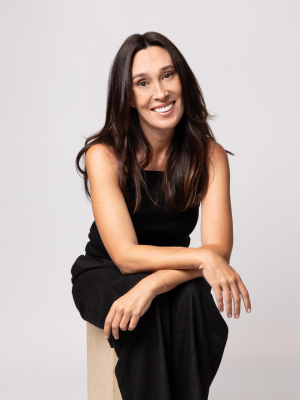
By: Beth Mazza and Victoria Sivrais are the co-authors of Entrepreneur Like a Mother (Wiley, September 2026). They previously built and sold two consulting firms, Ashton Partners and Clermont Partners, while raising nine children between them.

(Guest Contribution: The opinions and views of guest contributions are not necessarily those of theglasshammer.com)

Caroline FriedmanBy Jessica Darmoni

“With the GENIUS Act establishing a federal framework for stablecoin issuance, the window to define what responsible stablecoin infrastructure looks like is right now,” says Caroline Friedman. “That is a moment I wanted to be a part of, and it has been energizing to build a strong team at Bastion to seize it.”

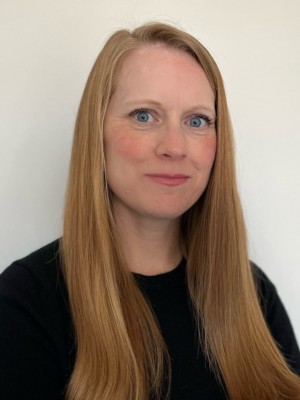
Friedman is the COO and Board Member at Bastion, a financial institution purpose-built for stablecoin services, and she has spent her career preparing for exactly this kind of moment. A founding member of the company, she oversees legal, compliance, finance, operations, and go-to-market, and brings to the role something rare in the industry: extensive experience in both the public and private sectors.

She started as an associate attorney in the government regulations practice at Jones Day in Washington D.C., then became a federal prosecutor in the National Security and International Crimes Unit in the Eastern District of Virginia, and later in the Major Crimes Unit in Colorado. From there she moved into crypto as Chief of Staff and Regulatory Strategy Counsel at Kraken, then as Chief of Staff at a16z crypto, before co-founding Bastion.

From Courtroom to Crypto

The prosecutorial years set a standard Friedman has never lowered. “Federal cases demand precision. Every detail matters and the analysis has to hold up.” That same rigor now runs through every compliance framework and governance structure she builds at Bastion.

Her two Chief of Staff roles gave her something equally formative: a way of seeing across entire organizations at a moment when the crypto industry was still taking shape. At a16z, the vantage point was clarifying. “Sitting close to world-class investment partners and seeing dozens of companies up close was an education in pattern recognition. You see what separates the teams that scale from the teams that stall, and that lens stays with you.”

She is equally direct about what those platform roles built in her as an operator. “I learned how to operate across an entire organization, how to support leaders, how to be a force multiplier and how to build the connective tissue that keeps fast-moving teams aligned. These kinds of roles can shape a career in ways that are hard to replicate elsewhere.”

Built for This Moment

Bastion’s full-stack product suite covers custodial wallet infrastructure, global asset conversion rails, and white-label stablecoin issuance, serving banks, fintechs, and global enterprises that need to move money faster, settle cross-border transactions efficiently, and operate under controls that hold up to scrutiny. Friedman is unambiguous about where the market stands.

“It is clear that the market has shifted. Stablecoins are no longer a niche conversation. There is a federal framework to anchor on, banks are issuing, and enterprises are integrating. There is a lot happening, and Bastion was built for this moment.”

Her compliance-first philosophy is not defensive posturing. It is rooted in a conviction about what makes the technology genuinely valuable.

“Stablecoins are showing up in everyday commerce, corporate treasury and local payment networks. The technology can reach people, businesses, and corridors that the existing system hasn’t served well, but that promise only matters if it gets built in a way that is safe and secure. Regulations exist for a reason. They are there to protect consumers.”

Delegation, Endurance, and the Lego Principle

Building a regulated financial institution from the ground up, Friedman says, requires a specific kind of staying power. “It is a long, often quiet practice in perseverance, dedication, diligence, and constant curiosity. The hardest moments are not always the obvious ones. They are the stretches where the path forward is not yet clear and the only thing to do is keep showing up.”

Her most reliable reset is her children. “There is a clarity that comes from stepping away from screens and into a context where the only thing required of me is to be present. Parenting is the ultimate forcing function. It sharpens what actually matters.”

On the leadership principle she repeats most often, she credits Molly Graham: “Give away your Legos. Every time the company expands, parts of your job have to belong to someone else. The leaders who cannot let go become bottlenecks. The ones who can, who actually celebrate handing something off, make room for the next thing the company needs from them.”

Alongside it, she returns to a second frame: “It is a marathon, not a sprint. The work we are doing at Bastion takes years, not months, and the teams that build something durable are the ones that protect their pace.”

Advice for the Next Generation

For women earlier in their careers, Friedman’s guidance is concrete. Start by understanding the business as a whole, not just your function. “What are the real priorities? Where are the gaps? Who needs to be aligned? The people who build influence early in their careers are the ones who can hold that context and act on it, and that reputation compounds over time.”

Seek roles that stretch, even the ones that resist easy explanation. “The jobs where you have to context-switch constantly, solve ambiguous problems, and get things over the line across multiple workstreams build range. Range is what makes you a strong leader later.”

And take opportunities early, even unconventional ones.

“I interned for free for countless summers through college, law school, and post-grad. Those experiences shaped my career path, helped me build a network early and gave me the confidence to keep exploring. You can create your own narrative, and the skills you build along the way are almost always more applicable than they look at the time. Mine is what gave me the confidence to take a Bastion-sized risk in building a company.”

The Skills That Will Matter Most

On the qualities that will define future leaders, Friedman’s answers are grounded: listening and professionalism. “Most of the time, people are either talking or thinking about what they want to say next, rather than actually hearing the person across from them. Real listening is the greatest gift you can offer in any moment, to a customer, a colleague, a partner. It is also where the best decisions start.”

By professionalism, she means something more than presentation. “Showing up consistently, treating every person you encounter with respect regardless of their seniority, following through on commitments, and bringing the same rigor to the routine work as you do to the high profile work. In an industry where credibility is currency, that consistency matters.”

As for what she hopes Bastion stands for in the end, she points to what gets built on top of it.

“What I am most excited about is what our customers will build on top of Bastion. The innovative, delightful products that will change the way people and businesses use money.” And for the industry itself: “I would like to look back and feel like the frameworks we built at Bastion, the conversations we had with regulators, and the way we ran the company helped move the industry forward.”

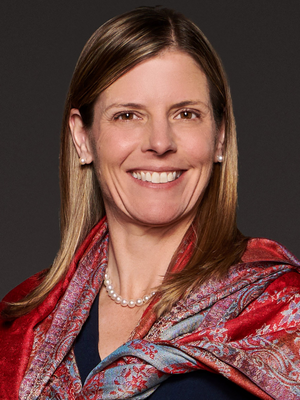
Katherine Kirkpatrick BosKatherine Kirkpatrick Bos, General Counsel of StarkWare, is excited about zero knowledge proof technology (ZKP), a revolutionary tool in cryptography. She explains that ZKP allows people to prove something is true without revealing underlying information.

ZKPs enable verification without disclosure—complete, sound, and private. While often discussed in the context of blockchain scalability and transaction speed, their possible use extends far beyond cryptocurrencies. Healthcare records, voting systems, and government services all rely on forms of verification that routinely overshare personal data. Zero-knowledge technology offers a path to redesign those systems around privacy by default.

“StarkWare is deep, cutting-edge technology,” she says. “These are some of the smartest cryptographers and developers in the world.”

This potential drew Kirkpatrick Bos to StarkWare, a company building cryptographic systems at the frontier of zero-knowledge technology. The work is not only about present-day challenges. StarkWare has also developed quantum-resistant technology—an increasingly urgent priority as advances in quantum computing threaten existing cryptographic standards.

“Quantum computing could break a lot of what we rely on today,” she notes. “Quantum-resistant code makes that significantly harder.”

Choosing the Right Room

Prior to joining StarkWare, Kirkpatrick Bos was in listed derivatives on digital assets. She was the Chief Legal Officer of Cboe Digital, a U.S. regulated exchange and clearinghouse for spot crypto and crypto derivatives markets; and General Counsel of Maple Finance, a capital efficient corporate debt marketplace which facilitates crypto institutional borrowing via liquidity pools funded by Decentralized Financial (DeFi) ecosystems. Kirkpatrick Bos was also a partner in the Special Matters and Government Investigations practice at King & Spalding.

Kirkpatrick Bos is candid about career inflection points. She has experienced the frustration of executing a plan within a business that wasn’t growing as expected—and realizing she wasn’t in the room where the real decisions were being made.

“That’s a difficult place to be,” she says. “Especially if you believe you could be doing more.”

The response, in her view, is rarely comfort. It is movement.

“It’s much easier to stay where you are than to start over,” she notes. “But if you want growth, you have to take that risk.”

She is especially direct about this advice for women, who are often encouraged—explicitly or implicitly—to value stability over advancement.

“I’ve always approached my career strategically. You have to understand what’s next.”

Mentorship, Integrity, and Judgment

Kirkpatrick Bos credits much of her professional grounding to early mentors, including a senior partner she worked with for over a decade at King & Spalding.

“He could be prickly,” she recalls, “but he inspired loyalty through integrity.”

That lesson—never compromise ethical standards—has stayed with her. So has the importance of seeing what is possible. Senior women who pushed boundaries in their careers made abstract ambition tangible.

“If you see it, you can be it,” she emphasizes. “If others are doing it, it’s not impossible.”

The guidance she now imparts is unsentimental and practical: protect your principles, make hard decisions when required, put your family first, and outsource what you can.

Leadership in an Age of AI

As artificial intelligence reshapes professional services, Kirkpatrick Bos remains skeptical of claims that judgment can be automated.

“AI is a powerful tool,” she acknowledges. “But it can’t replace instinct.”

Over her career, she has seen lawyers develop competence through experience—and others who never do.

“Judgment is hard to teach. Problem-solving, instinct, knowing when something doesn’t feel right—that still matters.”

As General Counsel, much of her role is translation: helping regulators understand technology, and helping technologists understand the law.

“You have to listen carefully,” she says. “Then explain things in a way the other side can actually understand.”

Why It Endures

There are always difficult days. Seniority does not eliminate friction; it reframes it.

What sustains Kirkpatrick Bos is the belief that the work itself matters—that she is helping shape the legal and regulatory framework for technologies that will define the next generation.

She imagines a future where people look back in disbelief at how much personal information was once routinely shared to prove a single fact.

Innovative technology, she believes, does more than improve systems. It keeps people engaged, even when the work is hard.

And in that sense, zero knowledge is not just a cryptographic concept—it is a blueprint for more thoughtful leadership.

By Jessica Darmoni

agilityIf you’ve ever felt like the rules of advancement keep changing just when you think you’ve figured them out, you’re not alone. The challenge with “Merit” as we know it is that research demonstrates that people worldwide tend to believe their societies are more meritocratic than they actually are, and this blind spot particularly affects professional women, LGBTQ+ and people of color. Interestingly, studies show that when organizations emphasize meritocracy as a value, it can actually trigger implicit gender biases.

Most humans are fascinatingly steeped in their contextual and subjective realities, combine that with stereotypical implicit beliefs and it is cognitively easy to believe that more effort would equal more success. Social psychology meets neuroscience very quickly here to result in false conclusions with real life negative impacts for people when surface thinking instead of systems thinking is applied by HR and leaders.

Why Learning Agility is Your Competitive Edge

Here’s where it gets interesting. The most successful organizations are shifting away from traditional merit measures toward something called “learning agility”— and this change could be your secret weapon. Learning agility isn’t just about taking more courses or earning additional certifications. It’s about demonstrating your ability to adapt, grow, and deliver results in new situations. Research shows that learning agility — the ability to learn from experience — is one of the key characteristics of high-potential employees. Even better, Korn Ferry research shows that people with high learning agility are promoted twice as fast as individuals with low learning agility.

This shift matters because it measures what you can do, not just what you’ve already done. For women who may have had fewer opportunities to build traditional credentials, learning agility creates new pathways to demonstrate your potential.

Four Ways to Build Your Learning Agility Profile

1. Become the Solution Finder

Instead of just executing tasks, position yourself as someone who tackles complex problems. Studies demonstrate that workforce agility enhances not only individual performance but also promotes innovation and effective knowledge dissemination. When challenges arise, volunteer to lead cross-functional teams or pilot new approaches.

Action Step: In your next team meeting, don’t just report on your progress. Come prepared with one process improvement suggestion and offer to lead the implementation.

2. Make Your Learning Visible

It’s not enough to learn—you need to demonstrate how your learning translates into results. Research indicates that learning agility directly affects employee engagement and innovative behavior, but only if others can see the connection.

Action Step: After completing any training or taking on a new challenge, send a brief summary to your manager highlighting what you learned and how you’re applying it. Include specific metrics when possible.

3. Seek Stretch Assignments

Learning agility is best demonstrated through performance in unfamiliar situations. Ask for projects outside your comfort zone, volunteer for challenging assignments, or request to work with different teams or departments.

Action Step: Identify one area where your organization needs improvement but lacks expertise. Propose a pilot project and position yourself to lead it, even if it’s not directly related to your current role.

4. Build Your Feedback Loop

Learning agility requires continuous improvement, which means you need honest feedback. Create a system for getting regular input from colleagues, clients, and supervisors about your performance and growth areas.

Action Step: Schedule quarterly “learning check-ins” with your manager. Come prepared with specific questions about your performance and growth areas, and ask for concrete suggestions for improvement.

Navigating the Transition

Not every organization has made this shift yet, and you may encounter resistance. In 2020 Robin J. Ely and David A. Thomas share in HBR a study named “Getting serious about diversity: Enough with the business case” as a follow up from their 1996 research paper called Managing Differences Matter which included a prediction of an emerging paradigm cited as the learning and effectiveness paradigm. This work may have provided answers if it had of been applied, but the work was not undertaken by most firms at scale. For meritocracy or “diversity” benefits to truly be realized, organizations have to adopt a learning orientation and be willing to change structures, and culture.

If you are in a more traditional environment or an environment now recoiling from their last twenty years efforts, focus on building your learning agility profile quietly while demonstrating clear results.

Your Next Steps

The workplace is changing, and this shift toward learning and effectiveness could be the key to unlocking opportunities that traditional merit systems may have denied you. Start building your learning agility profile.

1. Assess your current situation: Where have you demonstrated learning agility in the past year?
2. Identify growth opportunities: What challenges could you volunteer to tackle?
3. Make your learning visible: How can you better communicate your development to key stakeholders?
4. Build your support network: Who can provide feedback and advocate for your growth?

The traditional rules of advancement may have been stacked against you, but the new rules reward exactly what you bring to the table: adaptability, fresh perspectives, and the ability to learn and grow. It’s time to make that work in your favor.

Work with a coach – book in for an exploratory chat to see if coaching is right for you HERE

By Nicki Gilmour, founder and CEO of theglasshammer.com and Evolved People Coaching

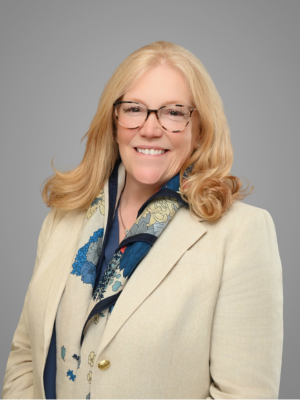
Kelley Conway“Part of a leadership vision includes incorporating a learning curve in how you get there. None of us are always right and we’re all going to make mistakes as we go along,” says Kelley Conway. “But the objective is still the right objective. You’ve got to move and learn along the way how to best make it where you want to go.”

The Reward of Impact

With a love for science and math, Conway studied chemical engineering before opting against a PhD and career path that she feels wouldn’t have fit her. Animated by interaction, problem-solving and dynamic impact, she found herself drawn to consultancy in tech strategy. Picking up an MBA, she then moved into digital transformation in financial services.

After twenty years of consulting a wide variety of top-tier clients, Conway was ready to steward her strategic work through to impact, recruited to lead the charge on accelerating digital strategy at Northern Trust in Chicago in January 2021. She appreciated the ability to sit down with Chairman and CEO Michael O’Grady and co-create the vision for her role: “That’s how it ended up a as a corporate and digital strategy role. Because we saw that you can’t really separate those anymore.”

Conway considers the move her best career decision to date and a culmination of everything she’s done so far.

“Nobody can look at their life and say every single day they get up in the morning radiant, right? That’s just a lie,” she half-jokes. “But even if I’m in a funk, I feel better going to work. I can feel the excitement, movement and momentum in leading impact with the talent all around me.”

“Digital For a Purpose”

With her consulting background, Conway has put a framework around the amorphous concept of “digital” to create “digital for a purpose” and drive outcomes. She defines the five layers of digital as the user experience, insight & analytics, the data that serves as the linchpin to everything — the underlying platform including cloud, and the ways of working. The challenge is ensuring all these components work together to drive real outcomes.

Conway says that when Google Maps points out the “world’s biggest potato” when you’re on a road trip, that’s an outcome of AI insight built on massive data collection, making user specific connections to know you might want to see that potato. While we benefit from the end-user experience, most of us don’t understand all the invisible – and extensive – work that has created it.

She is specifically excited about leading the charge on a data modernization program that is “democratizing” data across Northern Trust. By applying a data mesh construct, she is helping make data accessible to end users where it can drive significant business outcomes. Now, more people are also thinking and talking the language of data in effective ways that will transform the business and help to partner with clients on the innovations that matter to them.

“One of the things I have learned during my career is that communicating progress to senior leadership is a key component of this journey, and candidly I’m still working on that,” says Conway. “You have to show people iterative outcomes so they know you’re building a vision that will take us to the future.”

Humility and Passion

Growing up outside of Pittsburgh, Conway’s parents were blue collar workers in the steel mill. She learned the value of hard work, being practical and moving with humility as you put energy behind your vision. One form of humility she learned was maximizing the resources at your disposal while you have them.

“Consider the macro-economic environment we’re living in right now – high inflation and recession. Resources are always limited or going up and down,” notes Conway. “So how can you be practical? How can you actually prioritize to get the most out of the resources?”

Another form of humility is staying surrounded by people that are more knowledgeable than you in their field of expertise.

“I want people around me who know more and can see different things. The amount that I know is a lot less than the amount that I don’t know,” says Conway. “That diversity of thought and knowledge gets us to better solutions.”

Conway is genuinely passionate about tech, and conveys a sincere belief in the power of technology to transform organizations.

“Sometimes leadership requires seeing a path, charting the path and having the confidence to take that path. Sure it might be risky but we’re convinced it will accelerate our progress,” says Conway. “As a leader, my job is to communicate that vision with enthusiasm and authenticity, supported by leadership and an amazing team.”

She’s a big fan of taking measured risks amidst uncertainty of outcome, because the alternative is not learning and not growing: “You may not know if this is going to work, but you can see it’s the best thing you can try. And if you don’t try, you don’t get anything,” notes Conway.

Leveraging Your Difference

When Conway made partner at the consulting firm years ago, a junior woman told her she was an inspiration, which both surprised and emboldened her.

“I’ve now taken that in two directions. One is I recognize the broader responsibility and think about how to help individuals succeed. And secondly, I take advantage of that uniqueness in the room, and that confidence is something that has come with experience and wisdom.”

Conway has three children, 17 and 15 year old sons and a 2 1/2 year old daughter. With a form of dwarfism called achondroplasia, her oldest son is 4’6”. She’s always told him that he will not go unnoticed in the world, so he can futilely try to blend into the woodwork or he can leverage the opportunity of his uniqueness to move forward. Early on, she was also the woman in tech in the corner trying to blend in, when that was always impossible. Now, she’s embraced owning her difference to get her message across stronger.

On the note of leaning into your voice, Conway says her little girl has “a will on her like nobody’s business” which she takes pride in: “She’s impossible and stubborn and I refuse to squash that,” says Conway, “because I know exactly what she’s going to face in her life and I want that to be there.”

Her approach to working motherhood has evolved. When her sons were little, she put her career above everything and their dad was highly supportive. At that time, she believed she had to choose family or career. With her little daughter now, her approach has changed.

“I prioritize making time with her more, yet I still have the same passion for my career. I’m still making the change I want. I realized you can actually find balance,” says Conway, who comes into the office early and leaves early. “There are trade-offs, but it’s not that you can either have this or that. I have an incredibly supportive team and I’ve learned to take a much more balanced view of my life.”

Leadership that Inspires and Empowers

“I am very much a believer in leaders who empower their teams versus control their teams. I don’t appreciate command-and-control leaders. That stifles innovation and digital and everything I love,” says Conway. “I’ve had managers who are caring and give you all the room in the world and that helped me.”

Aspiring to lead that way, she also looks for the traits of humility and empowering others in the people she will work with. Conway recalls she had the opportunity to inspire and empower her team.

While there was hesitation around whether they had the talent in place as they set off into data modernization, she could see the potential in the talent already there. So she focused on bringing the team into the vision, animating them in learning and developing team passion around it. She saw her job as removing the roadblocks and then watching as her team moved faster than she had imagined. In general, Conway has many times heard from others that the problem is too complex, but she’s not one to “pack her bags and go home” just because things are difficult and it’s going to take innovative team approaches to navigate the terrain.

Climbing Higher

Conway underlines the importance of agency amidst requests for support: “I’m a big believer that you control your own destiny. People will support you, but you have to also take those opportunities and drive your career. You have an onus to take responsibility for your career as much as the onus on those around you to support you.”

Conway is an avid mountaineer, although she is pausing on that activity until her daughter is a bit older. She’s climbed Mont Blanc, Mount Ararat and Mount Kilimanjaro. She’s ice-climbed in Patagonia and broken 20,000 feet in Nepal, having gone to Everest base camp and Mount Mera. She is eyeing the challenge of Aconcagua in Argentina.

When climbing, she says, “everything shuts off. You’re working towards a goal. Sometimes it’s a slog, but you pick your head up and it’s this amazing spiritual sensation,” she muses. “That’s what rejuvenates me. A career can provide that same experience. Digital modernization can be a long, incremental process, so you have to stop sometimes and appreciate the amazing progress you’ve made.”

By Aimee Hansen

neurodiversityRoben Dunkin, chief operations and innovation officer at PGIM, talks about the importance of neurodiversity in creating a culture of innovation in the workplace.

A Lesson From Mom

When she was just a little girl, Roben Dunkin received one of the biggest lessons that would later help shape her nearly three decades in the finance industry, most recently as chief operations and innovation officer at PGIM, the $1.5 trillion asset management business of Prudential Financial Inc. It was a lesson she learned from her mother, a teacher at a school for children on the autism spectrum. Meeting the children her mother worked with and seeing how she related to them was eye opening.

“The autism spectrum is such a broad range of so many different ways the brain works,” Dunkin says. “I could see my mom’s frustration, because the ability to communicate for some of these kids wasn’t there. But at the same time, I saw her compassion and patience. She found a way to understand what each one of them needed and she found a way to get through. She never gave up on anyone.”

That experience was something that stuck with her as she began her career in finance at Lehman Brothers, where she rose to global head of sales and investment banking technology.

“What I learned from my mom actually makes me a good manager—having that patience, and really trying to understand the different levels of how people communicate with each other,” Dunkin says. “It’s not just people with autism, everyone is so different and kind of quirky in their own way. Within my own family, we have a lot of dyslexia and ADHD. When you grow up with that around you, you learn that some people need extra time and attention to bring out their best. And their best might astound you. Not everyone understands that. They think if someone has one of those conditions, they’re not smart, or they’re not good enough.”

After Lehman’s failure in the financial crisis, Dunkin joined Credit Suisse and became a leader in the firm’s technology organization. In a position to influence the company’s talent strategy, she set her sights on changing management’s perception of what traits made a valuable employee.

The Great Untapped Population

“Everyone seems to understand now how important diversity is to a company, but too often, they overlook a large part of our population that is truly underserved, but also incredibly talented—one that crosses, race, religion, gender, sexual orientation and national origin,” Dunkin says. “People across the neurodiverse spectrum, which includes everything from Asperger’s and autism to ADHD and dyslexia, have to face a stigma. Their levels of unemployment are quite higher than the general population—as high as 80%.”

And yet, Dunkin points out, even if someone doesn’t have any of these conditions, they almost certainly know someone who does.

“Earlier in my career, one of my peers had a son who had Asperger’s syndrome and couldn’t get a job. And we talked about how so many people who are on the spectrum, their brains think differently—sometimes they can see patterns other people can’t, they go about solving problems differently, and that can be a good thing. We started just kind of brainstorming, asking, ‘What can we do about this?’”

The idea that Dunkin and her colleague eventually developed was to actively seek out neurodiverse individuals for a pilot program in data science—specifically, to identify anomalies in data surrounding trade fails. Trade fails can happen when there are mistakes in processing or mismatched information, and they can be a costly problem for a firm. One of the goals of Roben’s team was to discover if there were particular clients, types of trades, or other patterns that would help them identify where problems might occur. While AI and machine learning could parse huge amounts of data, the computers had their limitations. There were still reams of data to filter out.

Participants in the pilot program, as it turned out, were quick to find patterns others had missed. “They were able to look at the data and pinpoint the issue, pinpoint the problem. They had the ability to redirect the technology to ask the right questions. That’s such a specific skill set that most of us really have to learn. There seemed to be an innate ability in some of the people that we were working with to be able to do that,” Dunkin says. “It was just really impressive the amount of positive feedback that we got from people working with the individuals in the pilot program. And those participants—they were so thrilled to be employed and really contribute. It was so rewarding on so many levels.”

Dunkin doesn’t want to make it sound simple, because it isn’t. A lot of legwork went into making sure the program was set up for success.

The Right Goals, The Right People, The Right Projects

It’s the same work Dunkin is putting in now to establish the neurodiversity program at PGIM, with one big difference.

“We’re not looking to narrowly focus this on one area of the business,” Dunkin says. “Individuals on the spectrum have skills and interests that are just as diverse as their neurotypical peers, and we see this as something we want all our asset managers to be involved in and benefit from.”

That begins with a firm commitment from the top.

“Neurodiversity can be a very emotional topic,” Dunkin says. “Recently we had a panel with many of our senior leaders at PGIM, some with children who are on the spectrum, even leaders who identify as neurodiverse themselves. The head of our largest asset management business spoke at length about his two sons who have autism. We had hundreds of employees attend and it was game changing for a lot of people who were able to put their hand up and self-identify. We broke through a lot of walls.”

Secondly, for a neurodiversity program to succeed, managers need to be trained and prepared to work with individuals who may miss social cues. Those managers need to be clear about expectations and literal about tasks.

“Cues and signals that we might expect would be normal are not normal for a lot of people on the spectrum. So you have to ask questions differently—you have to be more nuanced, and can’t worry about body language and eye contact. Job interviewers and managers should be able to understand how to engage with people differently,” Dunkin says. “It’s important to learn where someone is on the spectrum and understand how to help them thrive and deliver their very best. Do they feel more comfortable emailing, do they not do well in a group setting? You want to always be learning how you can give and receive feedback so you can course correct relatively quickly.”

The remote work environment brought on by the pandemic has added to this challenge.

“In some cases, if you talk to some of the people who are on the spectrum, they’re loving remote work, because they don’t have to interact with people in person,” Dunkin says. “At the same time, for a manager, it makes it even more difficult to engage with that individual and make sure they feel included.”

Finally, Dunkin says you need to connect individuals with the right projects, with a clear business case and business value.

“You can’t necessarily put someone on a trading desk environment, but you can put someone on in a data science role. So it’s being very clear about matching the person and the right skill set with the right job and being really explicit about what you’re aiming to accomplish,” Dunkin says.

Why all this matters

“The financial services industry is struggling to hold onto talent,” Dunkin says. “And here is a talent pool that is able and willing to work, and has skills to contribute in the right roles.”

Her prior experience tells her the effort is worth it.

“It’s hard to find data scientists—you can’t train them fast enough. And we know there’s high attrition rates in data science—when you train them, they leave. But our neurodiverse employees in the pilot program were super loyal. We built a team of data scientists from scratch who were able to help us leapfrog ahead quite drastically to meet our goals. We’d done right by them, we gave them a chance, and they rewarded us by staying with the company.”

Dunkin believes that attention paid to neurodiversity in an organization has a much wider impact on company culture, leading to better outcomes for all employees.

“The pandemic has been a very challenging time,” she says. “We’re all uncomfortable, we’re all re-learning how to interact with each other, we’re all working differently. We all need compassion and patience. If we’re not using this moment to identify talented individuals inside and outside our organizations and do what we need to do to support them, then we’re wasting a golden opportunity.”

Svetla MarinovaBy Cathie Ericson

“I always assumed that one needed to have studied a particular major in college in order to work in that industry, especially finance, but I have come to find that some of my most successful colleagues and classmates found their way into their respective industries by ‘falling into it’ in different ways,” says APG’s Svetla Marinova.

“I believe they are so good at what they do because their minds approach problems differently from the minds of their peers who have all been trained in the same traditional way, and they are valued for that very reason.”

Marinova’s creative career path certainly bears that out.

Seizing Opportunities Throughout Her Career

Marinova always thought she’d pursue academia and focused on preparing herself for a PhD in Economics, with a focus on Environmental Economics — even spending an extra year in college focusing on math, and then earning a Master’s degree in Climate & Society at Columbia straight after college. But when she eventually started her PhD, she realized a research career did not fit her energetic and outgoing personality.

“I wanted to be in a dynamic environment where my actions could effect change right away,” she says, deciding to join a consulting firm as a way to figure out what industry she might be drawn to. She joined what was at the time a startup called AlphaSights, now a 400+ employee firm, as the first female employee in their NYC team of 10.

After a year she fell into fintech, becoming the first employee of S&P Global’s Innovation Lab, where she developed an affinity for the field and the Lean Startup methodology as it applies to software development, particularly driven by an interest in deriving insights from data through data visualization.

While at S&P Global, she created a summer internship competition called Mission Possible, where interns form teams and act like startups, developing a product over two months. The competition culminates with a pitch before senior management who act like VCs; for four summers she oversaw the program with 50+ interns each summer. She also created more than a dozen proofs-of-concept with her S&P team, and initiated numerous initiatives meant to stir the organization into more creative thinking.

While there, Marinova also designed and product-managed a smart search tool at a time when natural language processing was in its infancy as applied to financial services. Within six months, her team had a cutting-edge product that they had built iteratively with zero prior experience in natural language processing and with limited resources.
“It was incredibly rewarding, and I learned that I’m capable of picking up any project and making it successful if I do the proper research and am given freedom and support to execute,” she notes. “I also taught myself to pick up the phone and ask for advice when I don’t know how to do something, which saves a lot of time and worries. Of course, being surrounded by top-notch engineers with the same can-do attitude was essential to our success.”

And, she learned that while her ideas were sometimes outside-the-box, and that not everyone was going to get them or love them immediately, there are opportunities and challenges in the fintech space that merit exactly that type of bold and unconventional thinking.

In an effort to learn more about data architecture, she spent two years working on strategic data sourcing initiatives at Deutsche Bank, where she co-led an employee resource group called Career360, a knowledge-exchange program between junior and senior employees. The program has grown significantly and exists in many countries around the world now.

During that time she began the Executive MBA program at the Wharton School of Business, a two-year program with the same curriculum as a full-time MBA, but with the caveat that all students also work full-time during the program. She graduated in May 2018, proud of her success at completing the intense program.

In addition to learning about finance, marketing, general management and entrepreneurship, she says she gained confidence and traveled the world with classmates on global knowledge trips to Japan, Argentina and Spain, to name a few, along the way meeting incredible people from a variety of industries and geographies.

She joined APG, the largest Dutch pension fund, in September 2017 as vice president and manager of innovation, where for now at least, she is again a one-woman show building out an innovation program for the New York office using the lessons learned from her Innovation colleagues in The Netherlands . This entails scouting out the fintech ecosystem for startups who could be potential strategic partners; coaching experiments or internal R&D projects aimed at delivering products and services for the pensioner of the future or aimed at improving the investment process; and creating and sustaining a culture of innovation via various internal initiatives from a speaker series to ideation sessions.

“I’m excited to be building cutting-edge tools for a company that believes in and supports innovation,” Marinova says. “I feel encouraged to explore ideas in the areas of fintech that truly interest me, such as artificial intelligence, blockchain, and sustainable investing.”

At the moment, she finds she’s most enthusiastic about their experiment with alternative data, which she researched thoroughly prior to designing by talking to industry peers, alternative data vendors, platform providers, internal investment experts and compliance professionals. “It’s a truly collaborative effort between our New York and Amsterdam offices, and I cannot wait to find out what we will learn from this experiment about how to tackle the growing volumes and types of data that are becoming available.”

A Full Life Inside and Outside of Work

Marinova participates in the APG U.S. Women’s Forum, which is an initiative that seeks to enhance careers by providing opportunities both within and outside APG to share information, strengthen skills and develop rewarding professional relationships. In addition, they seek to serve the broader community, especially in ways that have a positive impact on women and girls. For example in February, they raised money for the Young Women’s Leadership School, whose students visited the office for job shadowing, mock interviews and case coaching.

Starting with her first role model, her father, Marinova mentions that all of her mentors and managers thus far have been male, and she looks forward to the day when she will end up reporting to a woman she can look up to. “Unfortunately women are massively underrepresented in the fintech space, especially in senior roles,” she says, adding that she catches herself counting the number of females on panels or even in the audience at major fintech conferences. “I think it is slowly growing, but still remains within double or even single digits. I hope to change that.”

Outside of work, Marinova engages in a wide variety of hobbies, including travel, music, dabbling in arts, and reading – from books that help her retain her professional edge to fiction. She has served as a volunteer coach with FIRST Robotics and NFTE, where she taught entrepreneurship to high school students, and looks forward to re-engaging in her mentoring and volunteer activities after completing her MBA.

And all of her efforts are guided by an underlying principle: “Don’t cut corners when it comes to your personal effort — make things happen using the highest standards that you can think of,” she says. For her that manifests itself as thinking of every project as an opportunity to showcase existing skills and learn new ones. She’ll seek advice from online journals or others in her network, but isn’t afraid to make up her own way of doing something if she finds that nobody is doing it quite right. “When nobody has figured out the solution yet, that’s a great opportunity — this is how new products and processes are born out of a blank canvas,” she says.

Equally important to her is always maintaining integrity, and always being kind to everyone you meet along the way, eager to help others and to hear them out. “As Ray Dalio says, it’s essential to surround yourself with smart people who are not afraid to disagree with you — this brings us all closer to the truth.” “Being open to entertaining opposing views is how you create trust with people, and they will always remember if you’re someone who is willing to fight for the right thing,” she says. Not to mention, of course, that besides being a recipe for career success, it is also one for living a happy life and sleeping well at night.