
 By Jessica Darmoni
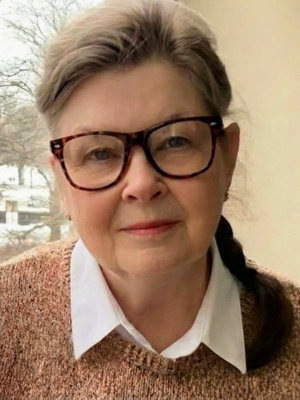
“What an incredible purpose the derivatives markets play… price discovery and risk management together represent a massive economic purpose for being,” says Melinda Schramm. “Beyond traditional and agricultural markets, they are essential in emerging markets, shaping how we manage risk and our future. I am proud to be part of something that is essential to the American value of life.”
After more than four decades in the derivatives industry, Melinda Schramm still approaches the markets with the same clarity of purpose that first drew her in, because this work matters to her. The Glass Hammer first met Schramm in 2009 as Founder and Chairman of the National Introducing Brokers Association (NIBA). Since then, Schramm has spent her career not only navigating the complexities of futures and options products, but also helping others understand their essential role in the global economy. Today, NIBA is focused on educating their members and advocating for the Introducing Broker (IB), Commodity Trading Advisors, accountants, lawyers and market participants that have joined the NIBA network. Schramm’s work also continues in a new and evolving context that includes emerging products like prediction markets and crypto assets, and an ongoing dialogue with regulators.
A Voice in a Changing Regulatory Landscape
While speaking with The Glass Hammer, Schramm is preparing a comment letter to the Commodity Futures Trading Commission on behalf of Introducing Broker (IB) members of NIBA. The topic is prediction markets, which is an area drawing increased attention as regulators seek input on how these platforms should function within the broader derivatives ecosystem.
For Schramm, the issue comes back to first principles. Do these markets serve a legitimate economic purpose?
“Price discovery is critical,” she emphasizes. “But we also need to understand how that price is formed and disseminated in prediction markets, and whether it contributes meaningfully to the system.”
The response from the IB community so far has been measured. Many are taking a “wait and see” approach, not out of resistance, but out of a need for deeper understanding. Prediction markets represent a shift—one that requires education before adoption.
“There’s interest,” Schramm notes, “but also a recognition that we need to understand how to approach it responsibly.”
Her comment letter reflects that balance: openness to innovation, paired with a clear focus on purpose, transparency, and market integrity.
Understanding the Purpose of Derivatives
That focus on purpose has been a constant throughout Schramm’s career. While derivatives markets are often viewed as complex or opaque, she sees them as fundamentally practical.
From agricultural hedging to managing financial risk, these markets allow participants to navigate uncertainty. They enable businesses to make decisions with greater confidence and stability.
“Once you really understand the futures and options business,” she says, “you see how essential it is, not just to specific industries but to the broader economy.”
That perspective has shaped her leadership and her long-standing commitment to education. Early in her career, she recognized that many people, even those in finance, lacked a clear understanding of how derivatives function.
Building Knowledge in a Fast-Paced, Ever-Evolving Industry
When Schramm first entered the industry, trading floors served as informal classrooms. They were places where newcomers could observe, ask questions, and learn by immersion. Today, those entry points no longer exist.
In response, she has helped build more structured pathways into the industry through education and outreach. Working through NIBA, she collaborates with institutions like DePaul University and the Illinois Institute of Technology Stuart School of Business to introduce students to the realities of derivatives markets.
“These efforts go beyond trading,” she says. “There are a wide range of roles that support the industry, including legal, compliance, operations, and technology. Many students have never heard of key functions like Futures Commission Merchants (FCMs) or Introducing Brokers.”
But once they do, something shifts.
“They start to see how the whole system fits together,” she explains. “And then they begin to see where they might fit within it.”
Lifetime Lessons from the Markets
Schramm’s longevity in the industry has required constant adaptation. Markets evolve daily, shaped by new data, global events, and regulatory developments. The ability to adjust quickly is not optional but essential.
“I tend to overthink decisions,” she admits. “But this business doesn’t allow for that. You have to be able to change your focus on a dime.”
Equally important is the ability to listen. Whether working with clients or engaging in regulatory discussions, understanding what is truly being asked—and what is actually needed—requires careful attention.
Resilience is another defining trait. Mistakes happen, especially in a fast-moving environment. Schramm’s approach is straightforward: address the issue, fix it, and move forward.
“You can’t take everything personally,” she says. “It’s about learning and continuing.”
Navigating Change and Challenging Assumptions
Over the course of her 50 year career, Schramm has also witnessed shifts in workplace dynamics. When she first started, women were rare in the field and often met with mixed reactions—either dismissed or treated with a kind of over-cautiousness that limited their effectiveness.
While progress has been made, challenges remain. Even today, she occasionally finds herself in rooms where she feels underestimated, whether due to gender or age.
“There are moments where I feel like I have to raise my hand to be heard,” she reflects. “There aren’t many women at this stage of life sitting at those tables.”
Yet her continued presence, and influence, speaks for itself. With decades of experience, she remains deeply engaged with modern markets, from traditional commodities to emerging digital assets.
Looking Forward
As Schramm helps lead preparations for NIBA’s 35th anniversary gathering this July at DePaul University, her focus is both forward-looking and grounded in experience. The event will address emerging topics like prediction markets while also recognizing the individuals who have shaped the industry with the introduction of a NIBA Hall of Fame, sponsored by the CME Group.
However, for Schramm, the work is ongoing. Whether through education, advocacy, or direct engagement with regulators, her goal remains consistent: to ensure that derivatives markets continue to serve a meaningful purpose.
That purpose, rooted in price discovery, risk management, and economic stability is what has sustained her career.
And as new markets emerge and new questions arise, it is also what continues to guide her voice.