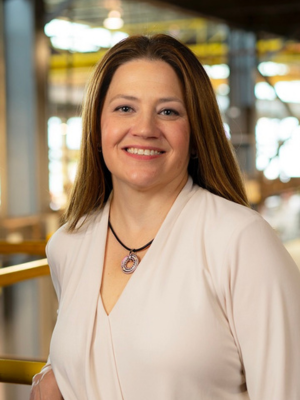
 The Glasshammer is running a “Where Are They Now?” series where we catch up with some of the professional women who we profiled ten or more years ago. We spoke with Carey Ryan, now Chief of Staff for Citi Technology & Business Enablement at Citi, about her career evolution and the role she plays in powering the future from both a technological and cultural perspective.
Nicki: Since we last spoke, where are you now?
Carey: We last spoke for the first time about 10 years ago, which seems like a long time but feels like the blink of an eye. I’ve held a number of roles since then, all within Citi’s Technology & Business Enablement group (though the name has changed a few times).
Now, I am the Chief of Staff for Citi Technology & Business Enablement. This entails working across both our technology organization and the wider bank to ensure we are effectively communicating and implementing new technologies, both with the goal of strengthening how we work and streamlining the time it takes to get work done.
Nicki: How did you get there?
Carey: In my 20 years at Citi, I have learned the best way to grow is to embrace every opportunity, especially if it allows you to learn more about how a company works. All of the roles I have had have allowed me the opportunity to support key areas of the business, including risk and control, data, and cybersecurity, each of which are vital to ensuring impactful technology can be developed or invested in and scaled to the full firm.
Nicki: Can you share a little about your current work?
Carey: Lately, much of my focus has been driving adoption and awareness for our Citi AI tools, helping us find the best places to practically and responsibly implement AI. This work includes leading our AI Champion and Accelerator programs, which are made up of approximately 4,000 volunteers around the firm who dedicate hours each week to serve as Citi AI advocates.
I also spend a lot of time working with our technology communication teams, each of whom covers a specific but global vertical within the larger technology business. No communication initiative is turnkey, and we always work to find new ways to impactfully reach colleagues with the information they need, be it in-person mediums like executive town halls or roundtable discussions, or through digital channels like email or lobby signage. Technology is the largest organization within Citi, so it’s key to focus on communication to enable change and drive execution while strengthening our culture.
Nicki: Have there been any unexpected or interesting twists in your career trajectory?
Carey: I have always worked in or adjacent to the technology space so, even before I recognized it, I was always headed for a career in enabling companies to leverage new technology to strengthen how they operated. That said, the world looks measurably different than it did when I entered the workforce, and Citi is no different. Some of these changes came quickly, such as the introduction and integration of AI, that has demanded the need to quickly shift priorities without much advance warning.
Nicki: Have any of them taught you a valuable lesson?
Carey: Citi is a large company, so I have had the opportunity to work on many projects with many people. Given this, the two key lessons I would share that always keep in mind is to always remember the end goal of every project and to stay flexible.
Nicki: What inspires you to be a leader and your leadership style?
Carey: My favorite part of my role is collaborating with dedicated and passionate colleagues. Whether it be the implementation of cutting-edge software, the voluntary work of a small team creating new patented technology tool, or an analyst successfully completing their first rotation with the bank – it is the passionate, innovative and solution-focused people that inspire me each day.
As I have risen in my career, I strive to be a good mentor and reliable leader for all members of my team, regardless of level. I’ve been lucky to have had several mentors whose advice I still hold on to, and it’s important to pay it forward. I also can’t help but think of my teenage daughter, I want to set a positive example for her as well as for my teams of what is possible in their careers and how leaders should treat their employees. An example that, hopefully, they will one day share with their own teams and mentees.
Nicki: Since we last spoke, can you share any challenging moments, setbacks, or self-doubt you’ve experienced as well as how you have navigated them?
Carey: I’m not sure I can pinpoint just one moment, but every new challenge I am presented with comes with a bit of imposter syndrome when I do not immediately have all the answers. Almost everyday features at least one conversation about something that where either I’m not the expert or the topic is completely new to me. It can be hard to ask questions when you think everyone except you has the answer, but the ability to step out of your comfort zone and know that you add value is a skill that will never go out of style. Self-doubt is something everyone faces, and the unknown is allowed to be scary. The key is being confident in your own ability to learn and adapt to problem-solve when navigating an unfamiliar situation.
Nicki: What skills do you think will matter most for future leaders?
Carey: When I was younger, I always assumed the fear and anxiety I felt about the unknown would go away. That one day I’d wake up and know everything there was to know about my job. But you quickly figure you’ll never know it all, because the world is always changing. Instead, I found the key is to always be ready by learning how to operate effectively with uncertainty and always be willing to learn.
Future leaders must be willing to be agile and adaptive, especially as the pace of change in the world continues to increase. AI is a great example of this. It is an unavoidable technology, and we should be willing to integrate it into how we work.
Nicki: Can you share an invaluable, specific piece of guidance a mentor or someone you admire has imparted on you?
Carey: I’ve had a number of tremendous mentors over the years. What I admired most in all of them was not any guidance they offered me, but the way they all led through their actions. Each of them led with kindness and empathy, listened carefully and accepted all forms of feedback, and were more than willing to change course if something was not working.
Nicki: Has coaching supported you in your journey, and if so, how?
Carey: Yes, I’ve been very fortunate to have had several coaches throughout my career. Coaches who were mentors, coaches whose job it was to support me, and coaches who were my peers. Career coaching offers an objective view of your decision-making. This often leads to introspective reflection on ways you can reframe your thinking, which is invaluable.
We can all sometimes be so goal-oriented, but it’s critical to take a step back and reflect on if we are taking the right steps to reach these goals. I often find myself going into my coaching session with one idea of what we will talk about and coming out with an entirely new perspective. Sometimes, the external guidance that a career coach offers is what one truly needs to help unlock those ‘aha’ moments.
Nicki: We are excited to see what you do next at Citi; we wish you continued success!