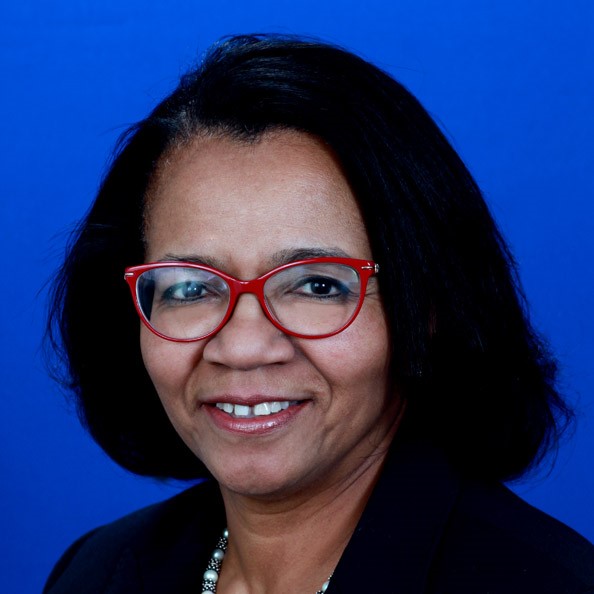
 “I naturally step into a role when there is a dearth of leadership,” says Marie Bober. “It’s just part of who I am – I see the need and think, ‘I got it.’”
From captaining sports teams as a kid to speaking up in moments of silence, taking charge has always felt instinctive for Bober. “I come from a really long line of very bossy women,” she laughs. “I think it’s probably genetic.” While her grandmothers ran their households with authority, her mother broke barriers, becoming one of the first women to earn a PhD in chemistry from NYU in 1972.
That inherited sense of purpose shaped Bober’s own unconventional path. She started college as a chemistry major but quickly pivoted to psychology. Drawn to forensic work, she earned a master’s and spent three years at a pediatric psychopharmacology lab at Massachusetts General Hospital researching ADHD and pediatric bipolar disorder.
“My plan was to go on to get my PhD, but research itself started to feel like a tough long-term path with low pay, questionable ethics in some corners, and not a great ROI if you wanted a sustainable career.”
Still captivated by the intersection of law and human behavior, Bober pivoted again, this time to law school at Northeastern University. Being a part of Northeastern’s distinctive co-op program allowed her to try a little bit of everything: working with a solo practitioner, in a judge’s chambers, the DA’s office, and an in-house legal team.
“In-house was by far my favorite, but you don’t just go from law school to in-house,” says Bober. Instead, she built her experience through small firms, auditing work, and ultimately opened her own practice while keeping her eye on the long game.
Bober’s diligence paid off when a friend offered her an in-house legal role at Gracie Asset Management, a Moelis subsidiary. The only catch was the job was in New York, which meant that Bober and her wife had to live long distance for a few years. When Gracie had a key man event resulting in steep layoffs, Bober moved over to the parent company. After a few internal moves – and the sudden loss of a friend that left a senior counsel role vacant – she was promoted into her current role as Chief Compliance Officer and Senior Counsel at Moelis Asset Management.
Breadth that Delivers
Looking back on what has helped her succeed, Bober points to adaptability and a breadth of knowledge, both of which are essential in a role that spans legal and compliance.
“To be in this particular role, you can’t be rigid or precious,” she explains. “We’re an entrepreneurial business…everybody’s got to do a little bit of something, and you have to be okay with that. We’re always thinking about new strategies, markets to tap and ways to get clients. It’s flexibility and a willingness to pick up the next thing and learn.”
Bober points to the growth of the business as another part of what requires adaptability: “when we started, we were private equity. Now we’re private equity, broadly syndicated loans, direct lending, seeding of emerging managers, venture capital.”
As the business expands, so too does Bober’s knowledge base, which is necessary for her to guide legal and compliance issues.
“I call myself a triage nurse because there are certain areas that I’m deep in, like fund formation or structuring, but then I also have to be able to direct counsel for things like litigation, tax matters, or employment. I might not be an expert on all those issues, but I must be conversant enough so that my subject matter experts can direct me effectively.”
What They Didn’t Teach in Law School
Beyond technical range and flexibility, Bober believes that one skill rises above the rest when it comes to lasting success: knowing how to navigate people.
“How to handle and approach people is key; it gets you so much further than even your technical knowledge,” she emphasizes. “One of the things law school doesn’t teach you is that if you’re a practicing lawyer in a firm, networking is 98% of your job. To be a partner at a law firm means that you bring in a good amount of business.”
Bober adds, “My boss likes to joke that he thinks that my psych degree sometimes helps me more than my law degree because it definitely gives you a framework for understanding people.”
That understanding shapes the way Bober communicates, builds relationships, and earns trust, especially in the context of leadership and knowing how to manage in all directions.
“Managing up is a skill that’s rarely taught, and it matters just as much as managing direct reports. I’ve learned how to communicate differently depending on who I’m talking to, and how to present something in a way that gets the right response.” As Chief Compliance Officer, she often needs people to act on specific requests and ideally, do so with genuine buy-in. “I’ve seen people try to lead through fear or pressure, but that only works for so long. Eventually, people tune you out.”
It is a message she impresses on junior staff as well: “be proactive, message appropriately, be polite and respectful, and if you make a mistake or get it wrong, have the ego to walk it back and take responsibility. It builds trust.”
Leadership as a Team Sport: Fostering Growth Over Competition
In an industry known for individual ambition, Bober takes a different approach to leadership; one that is shaped by hard-earned lessons and a clear sense of the kind of environment she wants to create.
“I’m a competitive person,” she says, “but I try not to be competitive at work. That’s not the environment I want to foster.”
Earlier in her career, Bober saw firsthand how toxic leadership can erode trust. She recalls a former manager who guarded her influence closely and refused to use any of her political capital to support others.
“When my mom passed away, I got two days of bereavement. Other department heads had given people the full week, but my boss told me if I wanted the extra time to attend the funeral, I’d have to use vacation days. She didn’t want to spend any of her political capital justifying why I was not billing or there for that week.” That experience left a mark, but also a guidepost: “It taught me exactly the kind of leader I don’t want to be.”
Now, as a senior leader herself, Bober sees mentoring others not as a threat, but as part of what defines strong leadership. She draws inspiration from Brazilian Jiu Jitsu, a sport she trains in outside of work.
“My coach always says he never hides the best parts of his game because if someone can master it in two weeks and beat him, they deserve to win.” The same philosophy, she says, applies in leadership. “Helping my associate grow, bringing her along and giving her what I can to help her succeed doesn’t threaten me; it strengthens the team, and if I ever move on, she’s ready to step in.”
Success, On and Off the Mat
Whether she is preparing for a Brazilian Jiu Jitsu tournament in New Jersey or aiming for another podium finish at Masters Worlds in Las Vegas, Bober brings the same focus and drive to the mat that she brings to her role at Moelis. A two-time Masters World Champion as a brown belt and now a black belt competitor, she thrives on the discipline and challenge of competing and on the fulfillment it brings outside the office.
That mix of ambition and purpose is intentional. “I strove to have an in-house position. I strove to have work-life balance in my career,” she says. “And I think I’m in a spot where I can do both.”
For Bober, success is not about chasing the highest title or the biggest paycheck. It’s about feeling grounded, challenged, and able to pursue what matters. “I can sing in a rock choir on Tuesday nights. I can do jiu jitsu. That’s what makes it all worth it.”
By Jessica Robaire