
Tag Archive for: authenticity

women's retreatAs we enter spring, summer vacation is approaching. While sometimes a vacation is the perfect break from daily life, other times it may feel like a too short escape. Sometimes, as women, we don’t wish only to take a week away from our lives. Sometimes we want to take a deeper look at how we are feeling in our lives and what belongs here, now? 

Once in a while, a woman admits she skipped the annual girlfriends cocktails on the beach trip or perhaps gifted herself a rare week away alone because she knew she was being called to do something else. That voice came from nowhere but within. Rather than a break, sometimes women want to put the brakes on everything, step back and connect: This is my life: how awake am I to the living of it?

Sometimes we want to listen into our own center with less noise around. We want to take an honest look at whether we are allowing ourselves to feel what we truly feel, be who we want to be and do what we most want to do – and how we, ourselves, might be getting in our way. We want to see if we have fallen into getting by in life instead of enchanting our lives. We want to reimagine our possibilities and shift, within ourselves, to be more intentionally in alignment with our desires.

When women choose a women’s retreat, it’s often because they are confronting a crossroads or seek soul nourishiment or simply a fuller sense of aliveness. Which also means they want an experience of life that is nourished from within rather than defined by constant striving. While often held in an idyllic location with exceptional scenery, the real invitation of a women’s retreat is as much to the inner journey as it is to the travel adventure.

Debating about summer plans?

Here are some reasons why you might choose a women’s retreat this year instead of just the usual summer vacation.

You will release stress and be nurtured. Even short mindfulness retreats have shown a significant reduction in stress and anxiety levels and improved biological markers of inflammation. Going on retreat is a way to strip away the distractions and allow yourself to simply be nourished – by your host, by the warmth and sharing of your fellow participants, by the rich offerings of your surroundings. But not only that – you again remember how to truly nourish yourself while on retreat and the importance of that, and not just for a week.

You can disrupt your routine and thought patterns. We typically think at least 6,000 thoughts a day (some say far more) and up to 90% of thoughts are repetitive. Talk about exhausting! At a retreat, you release control of the small decisions and surrender into a different and foreign rhythm. Why does that matter? It disrupts and shakes up your repetitive thought patterns and creates spaciousness in which you can hear other voices within. It’s amazing how the questions and also being-ness that lie buried just under the busy-ness begin to surface.

You will get back into your body and intuition. We live so predominantly in our minds in the modern world and even more so as faces on screens in the virtual workplace. And how much of achievement culture is based on striving and producing at all costs, even if overriding the physical self? Have your ever actually, even once, crossed off the entire to-do list and finally got to the landing? You have to create it for yourself, regardless. A retreat invites you to get back into your body. Whether through breathing or meditation or yoga or free movement, you are given the opportunity to connect with your body and the rich and embodied insight that lives in your cellular awareness.

You will step out of your roles. We play many roles in our lives, but sometimes, we can get so enmeshed with them that the roles start to parade around as us. A role includes any ‘part’ you play from which you derive value, worth or a sense of identity – both the roles that you love (chief executive, favorite grandmother) and roles that you don’t (undervalued team member, sleepless mom of a difficult child). No matter the role, no matter who assigned it to you, no matter what you’ve made it mean and no matter how much your identity may be wrapped up in it, every role is too small. Sometimes we derive our worth from the roles we play and the scripts we’ve created, displacing it from our core. We can also victimize or aggrandize ourselves through roles. Stepping out of them challenges you to value yourself inherently.

You will be seen, heard and validated. Small talk comprises up to one-third of our speech, and plays an important role in social interaction. But women do not come to a retreat to have the usual conversation. A retreat circle is a circle of women who usually did not know each other previously: it can provide a place without history. No blueprint of your identity exists here. Women often come to shake up the conversation they have with themselves. And sometimes, all it takes is being heard saying something you thought you could not, so you can finally clear your throat and let your voice come through. You are invited to be raw and authentic and unresolved. In a women’s retreat, women come together with the intention to honor and support each other – but in doing so, we also redefine what that means.

You can expect some perspective shifts. Of course, putting yourself in new and often incredible surroundings can refresh your perspective. But, if you dare, expect more. Whether we want to face it, there is no one consensus reality. Our experience of life emerges through our practices of perception. In the context of a women’s retreat, you may be able to see where you are buying into beliefs about yourself and the world that have never worked for you. You may be able to see where you are inhibiting yourself with the patterns or false virtues or committing to things you don’t want to with regular reinforcing action, instead of what you want. What if you’ve played down the part of you that would benefit you most to play up? You may recognize that you are sitting in victimhood where it would feel so much more empowering to recognize your agency and your choice. What if the world and your options are not nearly as limited as you have been determined to see them?

You may feel a rush of life force or have new visions. In a women’s retreat, you are invited to remember that being self-loving is how you fill your own cup, so that you can spill over. As you begin to pour into yourself on retreat, with less going on externally to take up space within you, do not be surprised if you begin to feel like you are accessing more of yourself. You may find more to be grateful for. You may remember a vivid energy or quality about yourself that you’ve forgotten and now want to bring back. Or a new way you want to share from your heart. You may realize you have enough resource and energy to make real steps, first within, towards a change you wish for. You may simply feel more at peace and able to be less shaken by the chaos outside of you. But it would be very rare if you thought and felt exactly the same as you did arriving.

Which is the main point, really. So, the biggest reason to skip the traditional summer vacation and go on a women’s retreat this year? What animates you most in life is living into and showing up for this adventure of you.

By: Aimee Hansen – Our “Heart” coach, interviewer, and lead writer – is a women’s retreat creator and facilitator. The Journey Into Sacred Expression writing and yoga women’s retreats on Lake Atitlan in Guatemala are recommended in Lonely Planet Wellness Escapes and have been praised by the nearly 200 women who have gathered with her. Circle with women underneath volcanoes to write, meditate, do yoga, move and participate in various sessions. She has two summer events in 2023: July 7-15 and Aug 25 – Sept 2. Each has 12 spaces only.
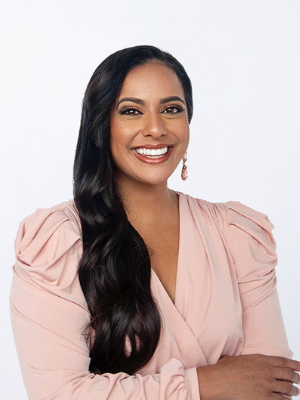
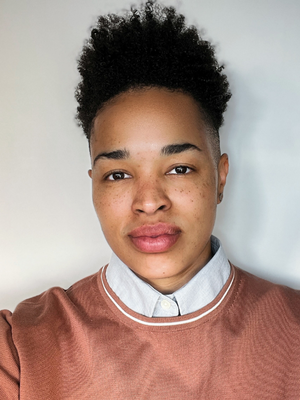
Leena Bakshi McLean As women who go to work every day with a passion to create change and impact in the world, navigating the workforce can be difficult and often lead to cynicism, burnout, and disillusionment. It’s easy to forget why we took the job in the first place, especially when we get too removed from the impact we’re trying to create. I’ve been there too, and it was my own disillusionment that led me to quit my 9-5 job and try another route.

In fact, entrepreneurship was the tool that allowed me to pursue solutions to a problem I cared deeply about—equitable education—without all the red tape and obstacles associated with working in school districts. If you find yourself feeling discouraged about the impact you’ve had (or haven’t had) at your job perhaps now is the perfect time to also consider another route. These are the steps I took in evaluating my transition from my role as a teacher and an administrator to one of founder and executive director.

Know When It’s Time to Go

Science Technology Engineering and Mathematics (STEM) education has always been my passion; my mom would say it was ingrained in me as a child when my grandfather would read calculus textbooks instead of literature to me. I started as a Biology, Algebra and Health teacher before becoming a program director for science at a County Office of Education in California. It was the perfect role to work with districts on a holistic level, researching systems change, fostering teacher leadership, and encouraging teams to look at equity within their district programming. I finally had the opportunity to run science programs at the county and state levels. I thought it was my dream job, and it was until I realized that my programs were not serving every student in the county.

I saw so much racism at play in my school district that I couldn’t ignore the ways it directly impacted students and their ability to flourish. The tipping point came while planning a computer science fair for the students at the court and community schools. Several supervisors spoke up about security concerns—they thought we didn’t have enough security to “manage” certain students. They recommended that we un-invite these students to the fair.

When the team I was on spoke up about the drastic inequity and the blatant restriction of access to our students from the court and community schools, we ruffled feathers. Although we were eventually able to allow the students to attend the fair, my colleagues and I were penalized for it by getting passed up for promotions, having our teams separated, and dealing with supervisors doing “cubicle walk-throughs” to police the staff. This is when I knew that politics and power were being prioritized over students. I had to ask myself: will I sit down in compliance or stand up for justice?

As you plan for the year ahead, take stock of what’s keeping you from having the impact you desire at work. Is it a similar situation where politics are at play and the power of a few is being prioritized over the mission? Is that you just have a few roadblocks in your way that a manager could help remove? Is that you’re in the wrong role or on the wrong team? Trace back your disappointment to see if it’s time to make a shift internally or if it really is time to go.

Consider Your Next Step

Despite all this drama behind the scenes, I loved working with every group of students and helping teachers increase access to quality and equitable STEM education. I knew I wanted to stay in my professional field, so I looked for other similar positions to fill the void created by my 9-5 role. However, none of the potential jobs combined STEM and social justice. This was important to me because I would often end up in professional development where the two topics were seen as separate entities in education. I knew combining the two was key to my mission of creating equitable education. When I couldn’t find what I was looking for, I decided to be the first to create it and jumped into entrepreneurship to do so.

So what will your next step be? Perhaps it is simply making the ask of a manager to provide more support and lessen obstacles. Perhaps it’s looking for a new role. Perhaps it’s even approaching the issue you care about from a new angle. For example, if you work for a nonprofit, are there for-profit organizations you could apply to for a different approach?

If you’re completely roadblocked at your current role and no other job fits you or you find yourself compromising your values and passions for a job, then maybe it’s time to take a leap and try entrepreneurship.

Set Up for Impact

If you’re considering entrepreneurship as your next step, welcome aboard! Entrepreneurship has been a difficult journey, but in retrospect, I would not trade this life for anything else. I do what I love with the people I love, and I get to stay true to my values in the meantime.

If you decide the risk is worth the potential impact, you can set yourself up for impact with the following steps:

  • Strengthen and Reinforce Your Vision: When you find yourself at a crossroads where you have a vision and you want to make a change, and you can’t do it in your own context or another organization, I recommend “dreamstorming” what it would take to carry out this vision. That’s how STEM4Real started: as a vision that is now an educational movement, making STEM #4Real for each student.
  • Own Your Voice: Once you have your vision, you’ll need a strong and distinct voice to share it. Whether it’s online and in marketing materials, in sales meetings, or at networking events, you want to be able to share your vision consistently and with conviction.
  • Seek Other Values-Aligned Organizations in Your Field: I am so inspired by the work we see from our partners, fellow organizations, and other entrepreneurs. Seek out other people and groups who are doing similar work, guided by values that match yours. That community and connection will be invaluable.

Going at it “alone” or from the outside isn’t always easy. But if you’ve tried the traditional 9-5 path and haven’t been able to create the impact you want, consider this your invitation to weigh the possibility of entrepreneurship as the path to impact.

By: Dr. Leena Bakshi McLean is the founder of STEM4Real, a nonprofit professional learning organization committed to combining STEM and NGSS standards-based content learning and leadership with principles of equity and social justice. She is a former county and state-level administrator and mathematics, science and health teacher with research interests in Science/STEM education and figuring out how to create access and opportunities for each and every student regardless of race, ethnicity, religion or socioeconomic status.

(The opinions and views of guest contributions are not necessarily those of theglasshammer.com)

Amber Hairston“For this moment, while employers are asking you to bring yourself to work, do it. Do it now. Do it today,” says Amber Hairston. “The hope is that this is a movement, not a moment. But time is of the essence, so do it. It will pay dividends.”

In honor of National Coming Out Day on October 11th, we share Hairston’s experience on freeing yourself into authenticity. 

Seeing the Hurdles Before They Come

Graduating during the global financial crisis and determined to exit the social confines of her rural Virginia hometown, Hairston took a position in marketing and communications. But “in typical Millennial fashion,” she made a network connection on Twitter who saw her as suited to commercial real estate finance and directed her towards an opportunity. In 2015, she then moved to PGIM, where she ascended across four positions within six years.

“I was redirected to the path that was intended for me,” reflects Hairston, who had planned to study business before diverting towards communications. “I think of myself now as a different kind of storyteller.”

As an underwriter, Hairston pitches deals to loan approvers after careful assessment of a property, who’s operating it, the market, and other financial risks. Attributing her work ethic to her parents, Hairston prides herself on attention to detail: “I’m very thoughtful in assessing what the hurdles are. I don’t always like to call them ‘risks’ necessarily. I call them ‘hurdles’—these are the hurdles, and this is how we can and will clear them.”

The volatility in the domestic and global economy, and the impact on the real estate investment marketplace, has definitely provided challenges to step into—and Hairston finds that exhilarating. While she won’t speak the most in a meeting room, when she does, she has reflected and has something powerful to say.

Time management and foresight have been her boons. “There’s nothing that I haven’t thought about when I’m underwriting a deal. There’s nothing that I encounter that I haven’t at least entertained as a possible hurdle. I’m never caught flat-footed or surprised.”

“Dropping the Weight Vest” To Rise in Authenticity

Reflecting on her desire to stretch beyond home as a teenager, she says, “It was a very black and white space in a literal and figurative sense. There wasn’t a lot of space for a queer woman of color in the town that I came from, and I knew that I could not grow in the ways that I needed to grow in that environment,” says Hairston. “D.C. just made a lot more sense, and it was my dream city in the United States.”

But while having left the confines of her small town, Hairston in some ways brought the burden of constraints within her to D.C.—until the pandemic.

“I kept the queer part of myself under wraps for so long. I tried to be something else and it was exhausting. And it’s not because of PGIM – this is the box that I grew up in, a limited view of what a woman can and should be, what they should look like,” says Hairston. “But the pandemic changed everything. We were at home and there was nobody to see me. There was only the work. It felt like I had been walking around with a ‘weight vest’ for years.”

Hairston recalls a moment when she was overwhelmed with work while colleagues were away and she needed all of herself: “I think that was the moment that everything changed because I didn’t have a choice. I had to take off the vest at that moment to power through.”

She continues, “Then as we started to return to the office in late 2021, I just told myself I wasn’t putting it back on. I decided I was done with it.”

“In a virtual setting and with all the focus on diversity, equity and inclusion, I was ready to bring the breadth and depth to my experience to bear as a queer woman of color.”

That choice has impacted her relationships across the organization and the industry: “My relationships wouldn’t be as meaningful personally or impactful professionally had I not brought everything to the table.”

And it’s impacted her performance and visibility: “I’ve never been a stronger performer. I draw so much power from all the things that make me different. I used to view it as a disadvantage, but it’s so essential to how I’m able to show up, how effective and efficient I am, and the impact that I’m able to make. I draw from everything, and to have not done that for so many years was a detriment to my performance.”

Reflecting overall, she says, “It sounds sad this box that I, in part, put myself into, the unnecessary weight that I carried for so long, but the upside is maybe I can run faster and jump higher than I ever thought I could.”

Evolving Her Work Relationships From Within

As Hairston has become more comfortable in taking up space in a way that is authentic to herself, she’s feels she’s allowed others to do the same.

“Historically, I’ve been really hard on people. I could be pretty demanding and have really high expectations,” reflects Hairston. “I’m not sure that’s changed, but with the pandemic and everything, the way that I approach it has changed. I’ve had to take it easier on myself and that’s translated to other people.“

Reflecting deeper, she shares, “My harshness was a reflection of how I was talking to myself. Now that I’ve reined in my own self talk, I’m more patient, compassionate and thoughtful in how I get the best out of others, because that’s ultimately what I want.”

Empowering Others Beyond Yourself

Hairston feels blessed by an abundance of mentors and sponsors who had her best interests at heart, even when it meant losing her: “I think a lot of people see those who support them, whether consciously or unconsciously, as tools for their own growth and advancement and production. But there have been many people, at many turns, who let me go even when it was going to make things uncomfortable for them. They wanted to see me rise.”

She wishes to take that with her, “There are people in this organization, and across the industry, who have altered the trajectory of my career by presenting me with an opportunity or a challenge. That’s the type of impact that I want to have,” she says.

“Part of the responsibility of leadership, whether you’re the CEO or have one direct report, is to develop people and I hope I never lose sight of that.” It’s also important to her to be a steady presence that others can call on when they need anything.

Hairston is inspired by leaders who embody vulnerability and transparency. “They have the confidence to give you the latitude for mistakes and really allow you to grow,” she says. That latitude has looked like saying her name in rooms she can’t be in and risking putting their name behind hers while advancing her into new challenges.

She traveled broadly before the pandemic – from Costa Rica, Dubai, and Cape Town to London and Zurich. While more grounded during recent times, she’s explored cultures through food and suspects she’s read about 35 books in the last year and a half.

A sci-fi fantasy and Harry Potter fan, she enjoys V.E. Schwab and sometimes reads young adult fiction to appreciate the diversity of representation that was absent when she was growing up. Though never a “dog person,” she was lovingly coerced into puppy parenting. She and her partner have a seven-month-old Bichon Frise named Artemis.

By Aimee Hansen

Latina Inclusion FeatureThe gap in Latina leadership in Corporate America is still an inclusion issue. But as more Latinas decide to go where they are valued, it’s Corporate America that is losing out the most – and more so in the future.

Hispanic and Latina women comprise only 1.6% of senior executives in the U.S.’s largest companies, less than other major demographic groups. USA TODAY reviewed 92 companies in the S&P 100 and found 18 had no Latinas in senior executive positions: including Apple, CostCo and Netflix. While few had a proportion equal to representation in the U.S. Workforce, PepsiCo, Procter & Gamble and Visa came closest.

It’s not just senior management: Latinas are underrepresented as only 4.4% of managers and 3.2% of professionals. And, according to the Latino Corporate Directors Association, Latinas hold only 1% of board seats in Fortune 500 companies, fewer than other gender or ethnic groups. But Latinas comprise 16% of the female labor force – the largest group behind white women, and by 2029, are projected to be 9.3% of the total US labor force.

Hispanic women earned 16.4% of bachelor’s degrees and 12.3% of master’s degrees in 2020, and Latinas represent 56% of Latinx students, though Latinx enrollment has taken some hit since the pandemic. Over two million Latina-owned small businesses exist – the fastest growing segment of the business community – with over 87% growth in business numbers since 2007. Latinas are creating business six times faster than any other group.

Barriers to Inclusion

Comprising 19% of the population and growing, Hispanic buying power continues to accelerate and demand that organizations understand this market.

While Latina women should have good reason to feel more emboldened than ever to bring their full identities to work through culturally relevant Latina leadership, they continue to be under-supported to do so and underpaid by corporate America.

When it comes to the paycheck, Latinas earn 55 cents for every dollar earned by non-Latino white men: even in the exact same job. Latinas earn 28% less than white women. The pay gap is also widest for Latinas with college degrees.

While Latinas ask for promotions and raises at similar rates to white men, the “broken rung” is exposed when you consider that Latinas are only 71% as likely as men in general to be promoted. Only 19% of Latinas feel supported by white co-workers. Only 5% of Latinos overall in big companies say they have a sponsor, whereas Latinos who do have sponsors are 42% more likely to be satisfied with career progression. Latinas who have reached executive levels often report the importance of that sponsorship in reaching where they are.

Latinas have reported being cast as caretakers, or the media image of ‘jefa of the household,’ rather than corporate leaders. Latinas are arguably more culturally wired for community building, a deeply held value which they often practice at home and that would serve organizations, but the value of individualism still dominates vertical mobility.

Latina women also report, according to Esther Aguilera, CEO of the Latino Corporate Directors Association, having to overcome biases around accents and myths and misperceptions around capabilities – which leads to a cycle, as we’ve heard echoed at The Glass Hammer this month, of Latina execs still feeling the internal drive of needing to prove themselves.

Indeed, 63% of Hispanic leaders indicated they have to work harder because of their ethnicity. And two in three Hispanic professionals felt educating coworkers around DEI falls upon them, spending substantial time whether it relates to their job or expertise.

Compared to non-Hispanic peers, Hispanic professionals are 53% less likely to feel included at work and 53% less likely to say they’re comfortable fully expressing their identities at work. Latina women have reported having to “check their identity at the door” or adjust their persona (code-switch) to fit into white masculine stereotypes of leadership.

The Post-Pandemic Impact

So it may come as no surprise that UCLA found that Latinas are leaving the workforce at higher rates than any other major demographic. Between March 2020 and March 2021, the workforce lost 336,000 Latinas, a drop of 2.74% in the workforce. Perhaps the promise of the American dream became too far stretched in reality for some, taking too much emotional, mental and physical toll without enough reward. One qualitative study found that senior level Latina talent were exiting Corporate America because of poor culture fit and a lack of evidence that Latinas were being structurally promoted.

“The Latina Pathway to Excellence in a Post-Pandemic World” report shared how the pandemic had changed the employment outlook of many Latinas. They both felt more invisible and yet found a “new virtual world confidence” in which they’ve learned to promote their profile more authentically at a professional level.

Mid-career Latinas expressed challenges such as: difficulty in maintaining their true selves in the workplace, a lack of champions they could identify with and trust, a lack of management check-ins, and lack of access to upper management. They emphasized the value of knowing your unique gifts and individual brand and leveraging the value that intersectionality brings to the table.

Executive-level leaders discussed promoting your distinct qualities, developing more skills and taking risks to seize opportunities amidst reduced visibility. They emphasized the importance of overcoming imposter syndrome as well as cultural Latin gender norms, being ‘ready to represent’ at the upper echelons amidst disproportionate scrutiny, and seeking mentorship and sponsorship (many had been sponsored by Latino men). They also encouraged trusting in the “Latina 6th sense” of intuition and decision making. Some C-Suite Latinas had leveraged the virtual meeting place to create new connections and visibility with senior leaders.

As written in Be Latina, “The growth of the virtual world allowed, in certain ways, for ‘authenticity in the business world.’”

It’s about Latina Inclusion

So what about organizations that want to get serious about promoting Latina talent? The answer is valuing the culture add and fostering cultural inclusion. At base level, greater inclusion for Hispanic and Latina women requires at least three things:

  1. Address unconscious bias in talent management decisions – Too many talent decisions are riddled in bias at each level (hiring, promotion, pay) and inhibiting organizations from leveraging and promoting Latina talent. From entry level recruitment to promotion to senior posts to pay packages, it’s possible to identify and shake up the way approaches have kept Latina talent from top positions.
  2. Make sponsorship happen – Ideally through formal sponsorship programs, managers and senior leaders should be challenged to reach beyond their own affinity bias and the gap in sponsorship for Latina women must close to transcend the block to corporate leadership.
  3. Encourage authenticity – Build a culture that celebrates each individual’s perspective, and the intersectionality that often informs that perspective, rather than pressures Latina women to forgo their wholeness to belong in the corporate workplace.
Please Don’t Check Your Identity!

Ask Hispanic and Latina executives, and showing up authentically can be the biggest challenge, but ultimately, there’s no path to stronger performance and personal fulfillment than being able to be who you are.

Latina women are bicultural, bilingual and possess many aspects of cultural wealth that can be leveraged as a leader. In part because of what it’s taken to get this far, Latinas often have developed strong skillsets of resilience, creativity, optimism, social ease, charisma, passion, relationship-building, multi-tasking and adaptability.

It’s recommended that Latinas who wish to thrive look for strong cultural fits that will value your whole selves, be persistent and also know when to adapt and take risks to overcome barriers. It’s important to accept imperfection in selves and others and be grounded in your ethnic background while navigating two cultures. Surround yourselves with mentors and those who can support your advancement.

One hunch about Latina leadership: it’s happening and those who embrace cultural diversity and inclusion will know the advantage of leveraging it.

By Aimee Hansen

Vanessa Nazario“I love to take the time to get to know individuals: to listen and to avoid assumptions,” says Vanessa Nazario. “I think that creates a space where people can be authentic, which leads to new conversations and new opportunities.”

From housing to financial services to health, for 29 years, Nazario has been following the single thread of “creating access to spaces for those who have been historically left behind, underrepresented, marginalized, or alienated” – often including or focusing on the Hispanic community.

Following Inclusion Through a Career Pivot

Nazario’s journey began in her hometown of Trenton, New Jersey, supporting low to moderate income families to become first-time homebuyers. Nazario knew nothing about mortgages but was passionate about creating access to homes. Next, she found herself ensuring that low to moderate income families in urban communities had access to financial services and benefits while at PNC, where she worked her way up through positions for twenty years.

While ‘inclusion’ was not yet a hot topic in the office, her work was inclusion for customers and communities. Nominated to participate in the first Latino BRG at PNC, she knew little about employee networks, but she seized the opportunity to lean into her authentic self: “That experience opened my eyes to the power in using my Latina voice to be seen and heard in certain spaces where we were not represented before that. It became a gateway to inviting other Latina/o voices into the conversation and opening pathways for others.”

She eventually became Chapter President of the Latino BRG and began to be sought out as a thought leader. She attributes her C-suite position to valuing and showing up for this experience: “That’s why I’m a chief diversity officer now. Because I said ‘yes’ to being part of a newly formed diversity initiative at PNC.”

Then came the moment where Nazario decided that she wanted to make inclusion her full-time career. Not only did she go from programs and products management to DEI, but she simultaneously made a leap between industries. Leveraging her network, she landed a DEI director position within healthcare, later joined Memorial Healthcare System in 2021, becoming CDO in July.

“It was a big learning curve to go from financial lingo to healthcare lingo. It took time, but ultimately there’s a common thread across the different industries: it’s about creating equal spaces, access and equity for all – and it’s just how you approach it that differs. And once that clicked for me, I was like, I got this.”

Inclusion Through the Talent Pipeline


“Does your staff represent the community it serves? When you look at your community demographics, do you see that in the building?” asks Nazario. “How well is that mirrored not only in the services side of your organization, but across different departments and, especially, in leadership?”

She observes, “Sitting in South Florida, we’re blessed with an abundance of diversity, but that still doesn’t mean it happens organically. Your organization has to be committed to creating a diverse workforce.”

Much of Nazario’s strategic focus is on development and succession planning to elevate talent throughout the organization: “Rich in diversity, our work is making sure that diverse talent feels included and has a sense of belonging. When you have people from every walk of life, you’re going to have conflict. I spend a lot of time educating about the value of different cultures and different perspectives, as well as meeting people where they’re at.”

Nazario witnesses how having a staff that feels seen, heard, valued, included and therefore engaged positively impacts upon the patient experience: “In the healthcare sector, you have to be so attentive about making sure you are creating that sense of belonging and culture of inclusion. It’s so important that people feel they can bring their whole selves to work.”

Overcoming Imposter Syndrome

Nazario’s inquisitive mind, always questioning how things can be done better, has served her. Her passion and compassion for people is at the heart of how she approaches her work. Her drive and attentiveness is partly born from her own experiences as a Puerto Rican woman who has not always found it easy to come into new spaces.

“Being both a Hispanic woman and from a low-income community, I’ve combatted perceptions many times throughout my career,” says Nazario, but she feels she fell into traps around stereotypes more so early on: “I would show up to meetings and wonder, are they receiving me, or are they putting me into some box because I am a Puerto Rican woman from a diverse neighborhood?

So Nazario has consistently exceeded performance expectations and countered the perceptions she felt others might box her into – demonstrating that being from a certain background does not mean you cannot also achieve.

Nazario has often not been able to see someone like her in positions she could aspire to. She values the mentors that encouraged her to envision herself there. “What are the chances of a Hispanic woman from an urban community like Trenton, New Jersey and from a culture not typically seen in these corporate spaces? I often think about stereotype threat, and maybe it would hold me back,” she reflects. “So, you need those mentors to say you’re doing all the right things and to nudge you in approaching opportunities.”

In a 360 review, Nazario once described herself as being a quieter voice, only to have her mentor immediately reflect that she was a powerful voice in the organization that was informative, impactful and influential in decisions: “Other’s perception of you is probably totally different than what you think.”

Beyond Proving Your Value, Claiming It

Nazario recognizes an inner push that exists within her, and not only her, to be very well versed in her craft and to continue to challenge and prove herself.

“I do have that hunger to continue to be successful and validate to myself that I can do it, that I can open doors. I might say ‘yes’ to a project when someone else might say ‘no,’” she says. “And as a Hispanic woman, I’m always thinking, maybe if I get another degree, one more certificate, that will open up more doors for me…I’ll be that much better, that much more qualified.

While her drive has clearly served her, it is also growth when you no longer have to prove your worth and belonging in the face of imposter syndrome: “We just have to keep lifting each other up. Once you claim your value, it opens a lot of opportunities.”

She emphasizes to other Latinas coming in to own their voice at the table, and not hold themselves back, and she implores leaders to invite that opportunity in the room for diverse voices to express themselves.

Nazario loves reading as a way of constant learning. She has four dogs and feels fortunate to live near beaches, where she can mediate and listen to the waves every Saturday in a personal reset.

By Aimee Hansen

Charlene Kennedy“One of the key attributes of a great leader is authenticity, therefore I refuse to have separate work and home life personalities” says Charlene Kennedy. “ I believe it is time to change the message that women or indeed anyone, needs to adjust their personalities to fit with the corporate world.”

Kennedy speaks to starting out her working life as a mom, leading from authenticity and vulnerability, and holding your vision.

Going Into Her Career as a Young, Single Mom

Kennedy gave birth to her first son in her final year of law studies so being a working mom was her reality from the start: “When I think back, the image that really stands out is sitting at this desk in my little college apartment, the baby in a rocker, and me rocking the baby with my foot while working my way through big, thick law books.”

As a single mother, Kennedy completed her law licensing exams and then secured a role with PricewaterhouseCoopers in their corporate finance team where she qualified as an accountant.

Shortly before the banking crisis, she joined Bank of Scotland Ireland, and was there until the company exited the Irish market. Kennedy then reassessed where she wanted to live and moved to the north coast area of Ireland to enjoy the lifestyle and support of family while growing her own. It was there where she joined Prudential. Coinciding with the arrival of her third child, she moved into PGIM Private Capital, and became CEO of their Irish entity 18 months ago.

“It’s been an extremely challenging but also a very rewarding year. My legal background, my finance background, my banking background, every single one of those aspects I use and weave together in my day-to-day role as CEO,” says Kennedy. “Each twist and turn along the way led me to being the right person for this role at the right time.”

Why Being a Mom Enhanced Her Career

“In my early 20s, most of my peers and colleagues were out partying at the weekend. I think being a mom really focused me on my career,” reflects Kennedy. “I was either at work or studying, or I was looking after my son. I was very serious early because I had a lot of responsibility, which from a career aspect is very helpful.”

She still remembers her weekly and daily schedule, as keeping to a rhythm was important in making her full life work: “Those years built resilience. I gained an ability to deal with challenges, because I confronted so many of them early on.”

Being Led by Curiosity and Desire for Growth

“I am extremely curious. I believe that knowledge and perspective bring a deeper understanding of what you are doing and why you are doing it. The bigger picture perspective allows you to deliver over and above what your role allows and creates opportunity for you and your company,” says Kennedy.

An essential ingredient to self-development in leadership, she feels her curiosity has truly come into greater value in the C-suite, where Kennedy is constantly interpreting “what does this mean?”

Kennedy has learned to embrace that she’s wired for growth more than comfort.

“I’ve had to accept about myself, and my personality, that I always want to be involved and be moving forward,” says Kennedy. “Even when I have taken jobs that could be a Monday-Friday, 9am-5pm, which are good from a lifestyle perspective, I could not just say stop and enjoy it. I couldn’t help but to involve myself in other projects.”

She has learned to manage her own drive to intentionally balance both family and work, which calls on those boundaries she learned young. Today, she is mom to three sons, who are 18, 4 and 2.

“I come home and I put down the phone or the laptop in a corner for family time,” says Kennedy. “I block out my calendar so nobody can put meetings in when the kids are home from daycare so I have those hours exclusively with them, and then I’m open to a meeting with colleagues once they are in bed.”

Holding To Your Vision

Along with many women in her generation, Kennedy feels she was strongly influenced in her worldview by seeing Mary Robinson, a lawyer, who had studied at Trinity College in Ireland and at Harvard Law School, become the first female president of Ireland in 1990: “My mother sat me down in front of the TV during the inauguration and said, ‘If a woman can become president of this country, there is nothing in this world stopping you from being who you want to be and doing what you want to do.’”

Kennedy feels that she internalized that message as a young woman, as did many women in her generation, and it has fortified their sense of belonging to their dreams.

From early on, Kennedy learned the value of keeping your eyes set on the big picture, regardless of situational challenges. “There have been hurdles and challenges along the way, but I don’t focus on them, I focus on where it is I want to go, and the hurdles eventually fade away, and I keep moving forward.”

“That’s the resilience I built,” she says.

Being Authentic as a Woman Leader and Embracing Vulnerability

The biggest skill that Kennedy has leaned into more in her CEO position is vulnerability.

“When you come from a technical background, whether it’s on the law side or the finance side, you pride yourself on technical knowledge and knowing everything about everything,” she notes. “As you step into leadership roles, that isn’t always going to be the case. You have to learn to be comfortable with not knowing everything and turning to others for guidance.”

“I like to surround myself with people that are a lot smarter than me and people from different backgrounds and perspectives. I embrace their challenge and feedback, and actually feel quite uncomfortable in an environment where everyone agrees with me.”

Kennedy has observed that if we truly value authenticity in leadership, then we should not encourage women to fit into a corporate mold that precludes the ability to be themselves.

“I love to see people push the boundaries a little. My husband, as a joke one year, bought me a book on defiant Irish women. I loved it. I keep that book on my desk, and it reminds me that we can achieve great things. You can be professional and successful, but you can also be yourself.”

Beyond all the advice one might receive on how you need to be and how you need to act as a leader, Kennedy suggests one benchmark: “At the end of the day, when you look back, how do you feel about how you behaved as a person? If you want to be proud of what you did, the way you do that is to be true to yourself.”

Being Approachable and Team-Oriented

Kennedy’s first partner she worked for at PwC is among her most inspiring leaders—and one she would want to emulate. He was personable, down-to-earth and approachable, but extremely knowledgeable and effective in his role. Those qualities inspired the organic support and loyalty of his team.

When it comes to managing her teams, Kennedy pulls from her experience playing team sports to emphasize the team approach: “We all have our roles and we all have to equally put in our input in order to deliver on a team focus,” she notes. “We all have our responsibilities, but we all need each other. It’s never about just one person, and when someone is overly focused on only themselves, it is disruptive.”

With time, the one thing Kennedy has improved on is embracing mistakes, and knowing that one mistake does not define a career nor negate your many accomplishments. She remembers a time when a mistake would have overtaken her focus, and she’s had to learn to overcome that tendency to beat herself up.

“I’ve learned to be easier on myself throughout the years. It’s still not easy and it’s something that I have to work at. I have found ways that help me relax, such as exercising and going to reflexology on a regular basis,” says Kennedy.

Kennedy’s sons are her greatest achievements. After hiking to Everest base camp back in 2012, she loves to hike in the mountains of coastal Ireland around Donegal with her family, where she relishes the energetic high of an expanded perspective.

By Aimee Hansen

Sara Coelho“I’m open to things going in a lot of different directions and to seeing things in a different way than people expect,” says Sara Coelho. “I really try to foster that approach, because novel solutions bubble up.”

Coelho talks about why her practice is a jack-of-all-trades art, standing her ground as a woman and the creativity of receptivity within law.

The “Liberal Arts Area of Law”

With Shearman & Sterling since 2016, and promoted to partner this past July, Coelho has been in the insolvency practice for fifteen years.

“Any time you have an insolvency situation, by definition people can’t follow the law. When something isn’t working, you get to take a deep dive into why and have to figure out a way to make something of that, and the tools really vary depending on the business,” she says. “Every situation has its own dimensions, so you constantly get to learn something new. If you are a liberal arts major, you would like what I do.”

Coelho continues, “I’m often doing things I have no prior expertise in, for example, negotiating tax debt and tax statutes, because of the underlying needs of the situation,” she further explains. “Sometimes we litigate to get to a resolution of a dispute. Sometimes we create deals. We’ll use any field of law to construct a deal that takes the situation to a better place.”

Her area is so flexible that when students ask her about a typical day, Coelho tells them to give her a year and she’ll say what she was doing in that period of time. Collaboration with other lawyers and financial advisors is critical to her work: often part of the solution is bringing in the expert who knows the tried-and-true approach, and another is confronting an issue alien to anything she’s ever done. Hence, the sophistication of problems, quality of people and intellectual challenges have held her attention in this field.

The Creativity of Receptivity

Coelho feels persistence has served her. She has always been able to put her head down and commit to a project she’s taken on. She’s been called a “lawyer’s lawyer” in that she has an analytical curiosity and loves to go deep into a problem, which means encouraging a spaciousness for unexpected solutions.

“There’s often a real reluctance to bring forward something that is a little off the wall,” she observes, “but you could miss an opportunity that way.”

In law, creativity is often less conceiving of something new and bringing it into existence, but rather an artful receptivity to the hidden key that already exists that you’re not yet seeing.

“So much of law is a very set underlying body of concepts, and people lose track of a big percentage of it. So often there is just something lurking there, that’s pretty direct and obvious, but actually very hard to see if you don’t come at it with an open mindset,” she explains. “It’s a receptivity, an orientation of faith that there’s going to be useful things that emerge. It’s a melding of a creative mindset with the orthodox.”

Staking Her Ground As A Woman

While Coelho admits her field has an inadequate representation of women, especially senior partners, she also often finds there are more women than she realized. She also feels the reputation of being male-dominated deters women from considering a field they might thrive in: “There are women who are thriving in all of the difficult roles and more than you would think.”

At the same time, Coelho acknowledges that she does feels some pressure to be beyond perfect and tends to speak concisely, getting to her point quickly while she has the moment, whereas she witnesses men talk at length without the social pressure to be precise.

“I’m working on trying to take up more time and space, and defending the perimeter to be able to do that,” she notes, “because sometimes you can’t appropriately advocate otherwise.”

Coelho acknowledges that being a woman distinguishes you, but that advantage can backfire if you’re perceived as the woman lawyer and especially if there’s a general assumption of irrelevance.

For example, on a conference call for a major deal where both Coelho and another female counterpart lawyer represented different clients with predictably different perspectives, the opposing side confused their two arguments, because, she suspects, the woman lawyers’ voices were understood as interchangeable. Coelho finds it hard to imagine that same bewildering lack of differentiation occurring for a man.

“Things still go on, but at the same time, you’re just focused on the problem and the work,” says Coelho. She notes that self-validating verbal feedback from highly respected top lawyers has been a touchstone to measure her lawyering and has kept her from falling into an unproductive level of self-questioning, especially when she’s confronted with aggression or doubt.

Clarifying The “Stupid Questions“

In addition to helping associates become familiar with the essential craft of her “renaissance profession,” Coelho seeks to demystify some of the basics that challenged her. When she first began, she felt one of the hardest parts was just figuring out how things got done – down to how you frame an e-mail and how long you wait to chase up on it.

Coelho volunteers information and invites the conversation around questions she found perplexing when starting out, especially if the response she had was reactive or dismissive: “I try to ask, what would have been the most constructive response for me?”

“For example, as a lawyer, to say how much time should I spend on something is a very loaded question because obviously you should do the best job possible for the client. Well, the best job possible might mean thousands of hours or significant expense, and maybe the client doesn’t want that,” she notes. “So there’s always this judgment about how exactly to approach the problem, how much depth to go in and what are the optimal things to focus on. These are complex judgements people have to make, so I like to be transparent about that kind of process.”

Boiling down why inviting questions as a senior lawyer is important, Coelho says: “The stupid question is the most important one to ask because you definitely don’t want to make a stupid mistake.”

For women in particular, Coelho also emphasizes the importance of really stepping back to ask what you personally want, rather than letting the ongoing demands of your external environment, including simply keeping up with the work, dictate where you end up.

An Unforgettable Mentor

Coelho considers her grandmother the most mindful person she has ever met. As a child, Coelho would join her in hanging laundry, picking fruit or doing some other form of tending to ordinary things.

The most unforgettable moment that affected her was listening to her grandmother talk about one single lemon with such elaborate understanding and appreciation that it underlined a whole wisdom of her Grandmother’s way of living in the world: “Listening to her talk about this lemon and what it was, exactly why it had a different flavor than others and how you would use it, in such depth, crystallized for me her way of being and how wonderful that is. And how much better life is, if you can bring that sort of appreciation and experience to whatever it is you’re doing.”

Coelho adores her three and a half year old son, Caleb, and, in addition to being a prolific reader of social sciences “light” and economics, loves to garden – and as her grandmother, tend attentively to the small and sacred matters of the home.

By Aimee Hansen

Anna De Jong“A lot of people will tell you this or that can’t be done, and that goes for your personal and your professional life, but don’t take that as a given,” advises Anna de Jong. “Have the confidence and be strong until you get the answer that works for you.”

De Jong speaks about how the journey you take is what shapes you, the importance of knowing yourself and having the confidence to pursue the important questions.

What Defines You is the Journey You’re On

After growing up in a small village in the north of Holland, where she felt her limbs wanting to stretch even as a girl, de Jong adventured for a half year opportunity in London that became fifteen years between Merrill Lynch, Morgan Stanley and other firms, thriving amidst a diversity of people, experiences, inspiration and opportunities.

Just when she reached the point of considering a move back to Holland for family motivations two years ago, PGIM Fixed Income approached about her current role in the Netherlands, which met the professional trajectory she also wanted. With London life having felt as much like home to her, de Jong reframes the question of where are you from to what it’s really about.

“It’s not where you’re from that matters. It’s just a box that people want to put you in. Ultimately, it’s about the journey that you’re on and the journey that you take that opens doors, or closes them,” she reflects.

It’s About The Personal Factor

The people factor has always magnetized her to her work. “In my field of work, I work for my clients and prospects, and I need to very quickly understand who I’m dealing with and how to progress things,” says de Jong. “You must be able to read people quickly in order to be successful, and that still holds today. I think that human element is what makes me most content in my work.”

De Jong advises that when working closely with others, it’s important to know yourself so you don’t lose your own intentions in any deal or interaction: “I’ve learned you need to hold your ground. You must understand yourself in order to do well professionally, but also personally. That’s a journey I also help other people with: stick with your convictions, yet be open to learning.”

Being approachable is important to de Jong: “I don’t think in different levels. I’ve learned from all walks of life and different parts of business and people,” says de Jong. “I’m always available and listening to everybody around. I am genuinely interested in people, and I think if you can understand what’s going on, then a lot of things make more sense, and it also matters when achieving the right results.”

De Jong notes that while remote working has been validated, being together with your team and clients is invaluable for creating connection and work culture.

“Covid is a lonely time, I think,” she reflects. “And ultimately you spend so much of your time at work. It’s good to see people, but being behind a screen also hides a lot. There’s no longer an excuse for saying that we can’t work from home because we all clearly can, but it’s also important to be with colleagues and have face-to-face time.”

Knowing and Balancing Your Values

“Someone once told me that when your career takes off, something else is going to suffer. For a long time, I was convinced that you have to work very hard while other things would have to take a backseat,” says de Jong. “ I have become of the opinion that’s entirely untrue. You are actually more successful when you understand what is really important to you and cultivate personal satisfaction, as well.”

Years ago, a friend introduced de Jong to a four pillar system. The four pillars represent what is personally important to you and emphasize keeping what matters to you in a balance. She uses the analogy of a chair, it can function with three but ideally needs four legs to be fully stable. For de Jong, she values home and family, friends, work and health: “If one gets out of whack, it makes the rest volatile and you do not perform as well, personally or professionally. It can be a juggling act, but you don’t have to forget about what’s important in your personal life in order to succeed in professional life and vice versa. In a way, they all become one.”

When the work aspect of life becomes too much, de Jong feels it’s important and okay to speak up about that, and not fall into the cultural notion of having to keep everything separate. Personally, she doesn’t resonate with a sense of being “successful” that connotes “achieving the best results regardless.”

De Jong does not perceive that getting the result, no matter what the impact on others or personal life, can ever be success. Rather, she speaks more to harmony and co-creation from a place that is aligned with your internal values.

When it comes to her personal success, “I do my work with lots of pleasure and have happy clients who are keeping and raising assets,” she notes, “but it’s also being home with my daughter and husband. It’s as elementary as that.”

De Jong feels well-matched by the atmosphere at her workspace: “PGIM Fixed Income has this fantastic work culture, that when I joined just felt like a warm blanket – where people work together, give each other challenges and opportunities. It’s been really fantastic.”

With a desire to keep growing, she is curious about pursuing courses in ESG investing and being able to mentor even more in that space.

Guidance For The Journey

“Some guidance that really stuck with me is to ask the same question until you get the right answer,” she notes, having tried this out in areas like promotion as well as anytime you’re immediately told something isn’t possible. “I will continue asking a question until I get the answer that I think works best.”

De Jong tells mentees: “Know, embrace, respect yourself and dare to be different. You have to be yourself, because if you don’t know who you are, then you don’t know where you’re going. It’s the journey you’re on that defines who you are. Embrace that.”

She emphasizes accepting and learning and being willing to let something go when it’s not the right thing. The more honest and non-judging you can be with yourself and others, feels de Jong, the more trust you build and the more you create results together. She has always advised women to be kind to each other, as it can be especially tricky to navigate in banking or finance when you first begin as a woman.

The hardest experience she’s had was in a previous role when she returned from maternity leave only two and a half months after having her daughter, and found part of her region moved from her remit and no expanded team as anticipated. Reflecting, she realizes the feeling that she could only take such a short leave was a red flag in feeling supported.

De Jong feels both men and women can contribute to normalizing parental leave by embracing it, and notes that her own husband has been a huge support.

Vocalize and Invest In Your Needs

De Jong now realizes that earlier in her career, she was often too scared to really ask for what would fulfill her, and so she often got something else. She feels it’s important to be very clear when you’re not satisfied.

“I would get frustrated but nobody seemed to notice, and then I would hand in my resignation and people were so surprised and often disappointed,” says de Jong. “They would ask, ‘why did you not tell me before?’ And I seriously thought I had, but clearly hadn’t been very vocal about my dissatisfaction.”

De Jong enjoys her four-year-old daughter, playing piano and is still looking for an experience in Holland akin to the community volunteer hub she loved in London. Her favorite volunteer work has been a charity she helped create called Launchpad Labs, which offered workspace and mentoring to those with challenging backgrounds.

“Helping others is a great way to stay on your feet to understand the bigger picture and that helps in your personal space and helps with your work,” says de Jong, “It helps to ground those four pillars and understanding what is important.”

She emphasizes investing in yourself and your personal happiness, as well as listening to your body. She loves exercise, baking, and continuing to learn and grow.

By: Aimee Hansen

Natalie Tucker “As a professional golfer, you either hire someone to run the business side of your career, or you run it on your own. I ran my own business, raised nearly a million dollars in capital, hired my whole team and traveled around the world,” says Natalie Tucker. “It was a great experience that taught me a lot about business.”

Tucker shares some unique insights from the golf course to apply in the workplace, why you should focus on influencing the influencers and the price she once paid for feeling unable to bring her whole self to work.

From the Golf Course to Health Care

Tucker was a professional golfer for ten years before she retired her golf clubs at the competitive level and moved into healthcare.

Though she realizes being a professional athlete, especially as a woman, is an inspiration to others to embrace your gifts and follow your dreams, she also felt compelled to find avenues to more directly impact the lives of others. Having been surrounded by the business of health as a golfer, she was magnetized to go into healthcare while leveraging the science-inclined side of herself.

“Being a professional athlete was fun and entertaining, but for me, it felt like something was missing. In my work now, I feel I am helping people and bringing value to them,” says Tucker. “The patients benefit from our work, and you really feel like you’re making a difference.”

After a period of working in a company that focused on artificial intelligence for skin cancer detection, she attained her MBA from Yale, before moving into consulting for pharmaceutical companies. Eventually she joined Novartis – where she heads strategy and operations for a business unit focusing on radiopharmaceuticals for the treatment of patients with various cancers.

Lessons For Navigating the Course of Business

In a unique training ground where her personal career depended not only upon her athletic ability but also on her business prowess, Tucker acquired many valuable lessons as an athlete that she continues to draw from, over 10 years after leaving the golf course.

Maintaining Calm Under Pressure

Tucker gives credit to her professional golf career for helping her learn to manage pressure and anxiety. Her ability to retain her LPGA Tour Card, and therefore her job for the following year, depended on her performance in a single four-day tournament. When the stakes are that high, with six-figure sponsors on the line, you have to stay in your center and focus.

“If you play poorly over four days, you lose everything. You lose your income, you have nothing,” she recalls. “So there’s a lot of pressure. I had to learn ways of self-calming: how do I quiet my mind, take two minutes and just relax, and empty everything out? I did that on the golf course to get through these really hard moments.”

“This is a hundred percent applicable to business. Before I go into an interview, before I give a presentation, before I talk with the CEO of the company – I take two minutes just to calm myself. All of the methods that help maintain an even keel transfer from golf to business.”

Visualizing Your End Goal and Pathway To Success

“In playing professional golf, you spend a lot of time visualizing or mentally planning what you want to accomplish,” she notes. “The best way to be successful in business is also to think about what you’re trying to accomplish, and ask yourself ‘What does the end goal look like?’ ”

Once you know where you want to go, it’s about setting the plan for how to arrive to that outcome.

“Unless you have a vision of where you want to go and a plan of how you’re going to get there, you’re not going to make it, this is true in golf or business,” observes Tucker. “When you play a tournament, you plan every single shot in advance and visualize yourself accomplishing it – For example, for each hole, you look at where the pin is, and you think of the best angle to approach it. This angle informs every shot ahead of it. It’s starting with the end in mind to inform your first move.

In business, not only do you need to identify ‘what good looks like’ and sketch a project plan for how you’re going to get there”, says Tucker, “but you also need to ask yourself who you need to bring in.”

Bringing In Your Support Team

“Running my own business as a professional golfer taught me how to work with people, and not just for the purpose of ‘transacting’. I learned how to understand what others’ needs are, and the importance of that knowledge to build a strong relationship,” says Tucker.

It’s a misconception that being a golfer is not also about being part of a team, as her team was essential to overall success.

“When I came into business, I thought I could be successful if I worked hard enough, but that’s not necessarily true. You have to bring others along with you for the ride,” she notes. “Similar to golf, the more you can bring the right team on board, the more successful you will be.”

Tucker feels that dialogue is what gives rise to the best solutions, as the combined insight from others is what often catalyzes the best path, not just your own thinking.

Influencing the Influencers

Previously very focused on personal performance, getting out of her comfort zone and moving towards greater focus on interconnectivity has ultimately been highly fulfilling and encouraged versatility.

“Taking the time and really getting to know people has been the most rewarding part of my career. I’m really happy that I’ve adjusted my style of work to look beyond the work itself, and broaden my perspective to focus on people.”

One of the biggest adjustments that Tucker felt coming into business, as a performance-focused introvert, was the necessary need to navigate the more strategic connections that are so often a large component of being effective in the business world. In golf, the bottom line of Tucker’s success was her performance down to the numbers. If she performed well, the right people would come to her.

“The hardest part about the corporate world is there’s no black and white success criteria. There’s nothing that says if you do well on this project, you will be promoted,” says Tucker. “It’s performance over time and there’s a whole communication network that took me a long time to understand, and adjust to.”

As she had to do with raising money in golf, Tucker has learned to engage beyond the people in her team, and not necessarily by going three levels up for visibility either. Her strategy has been to develop real connections with influencers to the decision-makers.

“What I see too often is people only building relationships with those people who are like them and in their comfort zone, often at the same level or nearby in the office,” she notes. “But people would really benefit by looking at an organization and asking: who are the key decision-makers, and who are the influencers to those key decision makers?”

“People often want to go directly to the key decision maker and say ‘get to know me’, but if you get to know the influencers of the key decision makers, you become an influencer in the organization as well,” she has realized. “When joining an organization, this is a good first step for those who are more introverted and looking to quickly create positive impact on the business because you’re able to have honest dialogues on key matters. It’s about reading the organization, and learning about its people – not their title, but who they are, and their communication networks. Once you understand the communication network of an organization, you can navigate it well.”

The Price of Not Bringing Her Whole Self To Work

As a professional golfer twenty years ago, Tucker’s brand was critical to her ability to raise funds and support her athletic career – and she went through a very tough lesson as a gay woman who did not feel she could risk being her whole self.

At one point, one of her major sponsors told her that he had heard rumors she was gay. If true, he made it explicit that this would be a dealbreaker for continued sponsorship.

“Now this was 20 years ago, and times were different, but I hid who I was. I changed my image, tried to behave and walk differently, and it destroyed my career,” Tucker states. “I was trying to be someone I wasn’t, and I wasn’t authentic to myself or to the world around me. If I could do it over again, I would have behaved differently, even though it would have dissolved my access to income at the time. Trying to hide who I was made it impossible to be great. I couldn’t be my best without being my full self.”

After leaving golf where success was so dependent on her image, Tucker found the protections of the corporate world to be a huge relief.

“There was a transition period, where I learned how to be who I was, without feeling that I was going to be retaliated against,” she notes. “Today, everybody knows my wife, Marion. I finally feel like I have the ability to be open, and to be who I am. But it was a learning experience for me, and it definitely wasn’t easy along the way.”

In addition to loving cooking, Tucker loves to be outside enjoying nature whenever she can, and still loves to compete. These days, squash, tennis with her wife (who she jokes is ‘not that bad’ on the court against her) and basketball, to stay in shape, are her sports of choice.

By Aimee Hansen

May Nazareno “Who you are right now in this moment is a gift. It is an offering that is meant to be shared, and you really don’t know how it sparks another person from the other side,” says May Nazareno. “What I’m trying to always ask is: can I create space, within myself and anyone I engage with, can I create the space for us to be truthful and real?”

Nazareno speaks to activating leadership in girls and young women, catalyzing change through storytelling, and how the world needs all of who you are.

Fundraising For The Future Pipeline Of Female Leaders

In her role, Nazareno creates a community of stakeholders across the Northeast who helps IGNITE “build a movement of young women who are ready and eager to become the next generation of political leaders.”

Founded in 2010 to address the lack of political parity in the US, the national organization seeks to increase the number of women as elected officials, appointed to public boards and commissions, and in supporting leadership positions that make it possible for women to occupy those political spaces. By creating multiple entry points for young women to advance in political leadership, IGNITE pushes for a large-scale solution that has the capacity to flood the political pipeline.

Currently, with a team of 17 women who operate under a budget of less than $3 million, IGNITE is the only non-partisan organization in the US that provides sustained community-based training and support to nearly 13,000 + women and girls across 36 states. Currently, a top ten finalist for the $10 million dollar Equality Can’t Wait Challenge, IGNITE’s goal to train 100,000 women each year starting in 2025 could be in reach.

Her Own Bittersweet Experience In Leadership

For Nazareno, advocating for IGNITE is personal. “I had never seen myself as a political person, nor did I think that being part of the student government was an option for me when I was in high school or college.” She admits she fell into student government while in college, “because someone asked me to,” and that the opportunity to run for her university’s vice president position: “was entirely because the secretary of the Student Union just said to me: ‘what do you have to lose?’” Nazareno was met with a lot of resistance from her male peers – and even from other women. “It was the late 90’s and everyone’s questioning if you’re qualified enough.”

Despite Nazareno winning her election by a landslide, and during her tenure, raising significant funds and forging interconnectedness between different cultural and identity-based groups – she faced a hostile environment with no collective support behind her. “What makes IGNITE personal is that the typical IGNITE woman comes to our programs with a desire to solve problems in her community – rarely with a desire to run. And yet, when she goes through our trainings, she learns how to push past her fears of being isolated and pitted against the boys club – because we help her create a ‘girl gang’ of support. I often think what if IGNITE was around when I was in college? What would have happened to my life if I met other women like me, and got the mentorship and the networking needed to navigate a political life? Undoubtedly, I would have considered public service as a calling.”

Though highly encouraged on the path, Nazareno admits she was burned out. Her experience as an elected student leader at her university was surrounded by so much divisiveness – that while she considered pursuing law school – she turned to study playwriting.

“What I cared about the most was figuring out how to foster a shared interconnectedness between students who were passionate about their own identity politics. What were the things that we could understand and respect about each other rather than focusing on what drives us apart? And I knew that law wasn’t going to answer those questions. I didn’t want to tell people what to think. I didn’t want to get caught up in ‘I’m right’ or ‘you’re wrong’. I wanted to come from a place of encouraging deep self-reflection,” she recalls. “At the theatre, you watch conflict and see both sides of the story. You sit in the audience and decide for yourself.”

Catalyzing Dialogue Through a One Woman Show

To the disbelief of her parents, Nazareno rescinded her law school applications and set off to Seattle to become an actor, despite warnings that she’d be cut off from her family.

“I had a bag of clothes and a few books, my laptop, and my yoga mat – and there I was in this hostel in downtown Seattle when 9/11 hit. My Dad used to work at the World Trade Center…,” she laments. “And yet, everyone around me saw this moment as an isolated NYC problem.” She perceived it as both a national and international affair and watched as knee-jerk political reactivity took hold.

“I was impacted by the need to find a way to break through the bubble, not even having words for that. It’s 2001, we have no idea what’s happening, but you hold onto your bubble – to whatever you can to salvage any sense of normalcy,” she said. “The bubble cracked for me in 2003 when I had a family member who was the personal aide to Sérgio Vieira de Mello, the Brazilian United Nations Special Representative for Iraq, go missing.”

De Mello’s death in a hotel bombing in Baghdad and the presumed death of her family member, who then reappeared, catalyzed her to write a one-woman show entitled Dead Woman Home that she took to Seattle, San Francisco, Off-Off-Broadway in New York, and the Philippines. Nazareno’s intention was to challenge the depersonalized perceptions and opinions about war and the Iraqi people that could justify an almost instant reaction to go to war.

“This was my very first play and I wrote it almost twenty years ago. At the time, I wanted to ask audiences: do we realize the implications and the unnecessary incalculable loss of innocent life? Can we sit with that? If I was sharing this play now, what I really want to ask is this: today we live with growing hatred towards others – and often because there’s nothing left to feel anymore. Who among us still have the courage to love?”

Nazareno wanted to hear what people thought about our occupation in Iraq and connected with teens in juvenile detention centers, vets, and high school and college students from low-resourced communities. She intended to reach new audiences who didn’t have access to theatre and create space for civic dialogue that would inspire social action. Indeed, her play galvanized a group of grad students in the Philippines to submit policy strategies to the UN.

“When I met those grad students, I could have never predicted that kind of response to my play. It finally hit me: stories have the power to change people’s perception of themselves and the world around them.”

Flipping The Story to Empower Perspectives

After two years of touring, Nazareno returned to the U.S. and decided to try event management and fundraising. “I was proud that my show broke even during its run. I didn’t have any formal training in the logistics of producing my show. Everything about me was just scrappy and I wanted to formally learn how to raise funds.”

Nazareno landed a job at Stanford, where she was taken under the wing of Lorraine Alexander, who mentored her. “I was lucky. Lorraine was my first teacher and along the way, I met Theda Jackson-Mau and Kim Gerstman who also showed me the ropes. Learning from them ultimately changed my life. I realized that everything up to this point was preparing me to tell stories that inspire people to question their position in the world and what they can do with that position,” says Nazareno, who took a step away from the politics of theater. “In many ways, that’s been the throughline of my work. We all have stories, and our stories give us the capacity to influence and lead, but what does it mean to be a leader and how can we lead in a new way?”

“We are all part of the solution for a more just world,” says Nazareno. “That’s what I’m trying to get across in my work. When I was a teenager, I heard Mother Teresa speak at St. Patrick’s Cathedral and I was moved when she told us that God doesn’t have hands, but our hands.” Nazareno is adamant about IGNITE because the organization trains young women who come from historically marginalized communities to develop their leadership potential and recognize how their lived experiences are essential to creating a democracy that represents our country’s diversity.

“The narrative is often ‘I come from a low-income neighborhood, I was raised by a single parent, my father is in jail, my brother was killed, I didn’t go to an Ivy League school. I’ve got no credentials to lead and zero cash. Who am I to run?” says Nazareno. “And we flip the script and say: who are you not to? We’re here to convince each young woman that her whole life is what makes her qualified to lead. Right now, out of the 520,000 elected offices across the country, women hold 30.5% of municipal offices, 30.9% of seats in state legislatures, and 26.5% of seats in the US Congress. If we dramatically broaden our audience, and just 0.1% of young women run in the next decade we will dramatically increase the pool of female candidates in America.”

“Women are the backbone of our democracy,” Nazareno adds. “We have to shift our understanding and challenge this notion of ‘leadership material.’ We need to show young women that their leadership is needed and there’s a path to realize their ambitions. If we can do that, we can change the way we think about women leaders in America.”

“Right now, there are many people – mostly men – who sit in local government who have little or no visceral sense of what it means to live day-to-day in the communities where our young women live. This is why we train young women to realize that they are the best representation of what their community needs and what needs to change.”

“We’re at this tipping point where it’s abundantly clear that if we want our country to continue to thrive we have to invest in child care, mandate equitable pay for women, keep children and women safe from domestic violence and gun violence as national priorities, and make access to healthcare a fundamental human right – among a whole host of other things. Who knows these issues better than women? That’s why we must elect more women to get a seat at the political table, and that’s why IGNITE gives girls and young women the tools, networks, and resources to succeed in this environment. Not only will they run, they’ll win. And not only will they win, but they stay in the game…” says Nazareno. “In the midst of COVID, 13 IGNITE women ran for office across the country last year. This year, 21 IGNITE women have declared their candidacies. – That’s why I wake up every morning truly inspired.”

Showing Up As Who You Are

Nazareno feels the pandemic has been another huge catalyst to breaking our bubbles, realizing our interconnectedness, how deeply woven our lives are and how dependent we are on one another. Amidst so much divisiveness, she sees that we’re all presented with this question: how are you going to show up to this moment?

When it comes to reflecting on her journey and what motivates her day-to-day, it’s exactly that question. Nazareno’s own father came from humble means and wanted to become a cinematographer. But with his mother’s disapproval, he became the engineer he was expected to be. Nazareno dared the opposite.

“What I carry from his story is that while we make sacrifices and concessions along the way, we can’t forget the spark that lives inside us – especially now. As I see it, that spark is the essence of who you are. And it’s a choice to share it with others or hide it. How am I showing up? What am I bringing to the table?” she questions. “Am I really bringing me, or am I consciously dimming my spark, and if so, for whom – and why? And is it worth it? Or can I trust that bringing all of me – whatever that is in this moment – is enough?”

By: Aimee Hansen