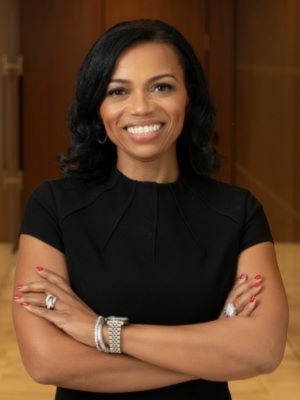
 “Future leaders will need learning agility above everything else,” says Erika Irish Brown. “The pace of change is only accelerating. Today it’s AI, but we don’t yet know what we’ll be navigating tomorrow. What we do know is that the leaders who thrive will be the ones who stay curious, stay open and embrace change rather than resist it.”
As part of The Glass Hammer’s Where Are They Now series, we are catching up with leaders we have spoken with before to see how their careers and perspectives have evolved over time. Erika Irish Brown, now Head of Talent Management and Engagement at Citi, has long been focused on creating opportunity and building inclusive workplaces. In this next chapter of her career, she shares how that mission is expanding as organizations rethink leadership, mobility and learning in an era defined by rapid technological change.
Q: What are you currently working on?
As Head of Talent Management and Engagement at Citi, my focus is on our global, talent centric approach to supporting our workforce—one that invests in people, creates opportunities for growth and fosters a culture where everyone can thrive.
Our team leads all of Citi’s efforts around development planning, talent designations, talent processes and succession planning. We also oversee enterprise coaching, our engagement activities including 12 global Inclusion Networks and Talent Management and Engagement Councils across each business and function.
Q: What is inspiring you to lead in the future?
What inspires me about leading into the future is the real momentum we’re building at Citi. We have a clear strategy, a leadership team driving meaningful change and a firm accelerating on every front, including technology.
AI is opening new doors for our people, helping colleagues find opportunities that match their skills and aspirations. As it becomes more integrated into how we work, it will continue to fuel growth, innovation and faster execution.
You can see this momentum in our focus on mobility. In 2025, we filled more than 55,000 roles with 44% coming from internal moves and promoted over 28,500 colleagues into new roles. And with initiatives like Development 365, more than 165,000 colleagues created personal development plans last year.
The combination of our strategy, our people and the possibilities technology unlocks makes the future incredibly energizing.
Q: What makes Citi special?
What makes Citi special is the combination of our globality and our focus on human-centered leadership. As the world’s most global bank, we have people on the ground in more than 90 countries, which gives us a unique level of cultural fluency. It allows us to connect with colleagues where they are, listen to their experiences and ensure our strategy reflects the realities of each market. Our clients tell us this reach is a true differentiator.
Our scale also means we tackle complex challenges across borders and offer a wide range of roles and career paths within one firm. That combination of global breadth and opportunity is hard to find anywhere else.
What also sets Citi apart is our leadership. Jane Fraser, our Chair and CEO, leads with a clear vision, and her leadership shapes a culture of understanding from the top. She is a trailblazer in financial services and the first woman to lead a major financial institution. Our global footprint – who we are, where we are, and the businesses we run—makes Citi a truly special place to grow and make an impact.
Q: What lessons in leadership have you learned working at the world’s most global bank?
I’ve had the privilege of working at several of the world’s leading financial institutions, and those experiences have deepened my understanding of culture and lived experience and reinforced that ambition and leadership show up differently around the globe. Leadership is packaged in all different ways, and that has underscored the need for our leadership frameworks to evolve.
We have to break the myth that there is only one archetype of a leader, especially when it comes to succession planning. Not everyone will say, “I want to be CEO.” Many people are quiet leaders, and that doesn’t make them any less ready for what’s next.
Leadership doesn’t begin with a title — anyone can lead, and leadership can be shown at every level. At Citi, we measure leadership against three principles: we take ownership, we deliver with pride and we succeed together. Whether you lead a large team or contribute as an individual, how you bring these principles to life is what truly matters.
Q: How have you navigated challenging moments, setbacks or self doubt?
Navigating difficult moments starts with remembering that meaningful and sustainable change doesn’t happen overnight. Impact builds over time. I try to focus on what I can control and release what I can’t. At the end of each day, its important that I am able to look in the mirror and know I used my voice—especially when it was uncomfortable or challenged the status quo. I believe silence is a form of endorsement; if I’m not willing to speak up, then who will?
Setbacks are part of the process, but I stay grounded in my competence and confidence. If you’re competent, you have every reason to be confident. Mistakes are okay as long as you take feedback, course-correct quickly and keep moving. Learning agility and making progress matters far more than perfection.
When things don’t work out, I remind myself that there may be something else in God’s plan. Faith helps keep everything in perspective. And if I can honestly say I fought the good fight and did my best on behalf of others, I can move forward with confidence.
Q: What skills do you think will matter most for future leaders?
Future leaders will need learning agility above everything else. The pace of change is only accelerating. Today it’s AI, but we don’t yet know what we’ll be navigating tomorrow. What we do know is that the leaders who thrive will be the ones who stay curious, stay open and embrace change rather than resist it.
Being a lifelong learner is no longer optional—it’s a leadership requirement. The leaders who succeed will absorb new information quickly, adapt their approach and translate what they learn into action.
At the heart of learning agility is staying curious —the willingness to ask questions, seek out new perspectives and lean into what you don’t yet know. Curiosity keeps you growing, keeps you adaptable and keeps you ready for what comes next.
Q: Who inspired or influenced you most on your journey, and what did you learn from them?
My parents are my biggest inspirations. They set high expectations, especially around academics and STEM. My mother was a junior high math teacher, and my father rose through the New York City Housing Authority to become Head of Computer Services. In our house, if your grades weren’t where they needed to be, the question wasn’t “Did you try your best?” It was “What happened?”
They taught me to be a change agent. If something wasn’t the way you wanted it to be, you had the power and the responsibility to fix it. That mindset shaped me. You have agency. You can challenge the status quo. You can create opportunities that don’t yet exist.
They also taught me the value of effort and the associated outcomes. What you put into something is what you get out—karma. Education, hard work and smart risks can change your life’s trajectory. Those lessons—accountability, agency and effort—have guided my career and influence how I lead today.
Q: What invaluable, specific guidance have you received along the way?
A few pieces have stayed with me:
- Listen first. Let the culture shape your understanding. Listen to understand, not to reply.
- Invest in people. Exposure, opportunity and access change outcomes. Meet people where they are, lift as you climb and bring others on the journey with you.
- Lead authentically. People, including yourself, thrive when they build trust and feel psychologically safe.
- Challenge the status quo. Commitment and persistence pay off. Be brave and use your voice. Innovate.
Q: What do you impart upon those you mentor — or would impart upon your younger self?
Be ambitious, take stretch assignments and stay curious. Don’t assume your work will speak for itself — advocate for your own growth. And always consider the legacy you’re building. Making a difference doesn’t have to be grand; it can start with creating an opportunity for even one person to succeed.
Q: Has coaching supported you in your journey, and if so, how?
I have absolutely benefited from coaching. At Citi, executive coaching is a capability we invest in as part of our Talent strategy because we know it elevates performance; it’s not about fixing a problem. Just as elite athletes rely on coaches to refine their craft, high performing leaders gain so much from trusted advisors who help deepen self awareness, strengthen impact and navigate complexity with greater effectiveness. When we prioritize continuous development, we position our leaders and our organization to succeed in an environment that is constantly evolving.
Q: Looking ahead five to ten years, what kind of future are you hoping to help create?
Looking five to ten years ahead, I want to build on the true meritocracy here at Citi. My focus is on a deep, durable leadership pipeline where the next generation is prepared for and stepping into senior roles, ready to run the firm and succeed our most senior leaders.
Equally important is an environment where inclusion shows up in outcomes. Our leadership should reflect the communities and clients we serve, and every colleague should have the same opportunity to grow, to lead and to succeed based on performance, potential and ambition. If we keep investing in people and creating real mobility, Citi will be even stronger, more inclusive and positioned for long term success.
Q: What practices help you sustain energy and resilience?
Staying connected to purpose, spending time with my family and staying close to colleagues keeps me grounded and energized. And for balance, I carve out one hour of Orangetheory Fitness almost every day– the best reset is 60 minutes of self-care.
Q: What are you passionate about in your personal life?
Outside of work, I’m passionate about giving back, especially when it comes to youth development and community programs. My years with the Riverside Hawks — as a parent, board member and advocate — have been some of the most meaningful experiences of my life. I also serve as Vice Chair of the Bedford Stuyvesant Restoration Corporation, which has been a cornerstone of Central Brooklyn for decades.
Service has always been a big part of who I am. I’ve been an active member of Delta Sigma Theta Sorority, Incorporated for more than 35 years, and I’m also a proud member of The Links, Incorporated. And staying connected to my alma mater is important to me too, so I continue to give back through my work on the Columbia Business School board.

 As part of our mid-year roundup, we’re revisiting the answers women leaders gave when we asked them what skills will matter most for the future of leadership.