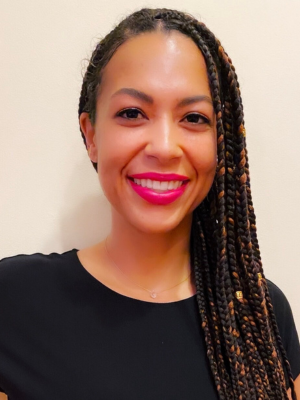
 “It might seem tough at first, but I’ve come to learn that you have to relax and enjoy the ride. No journey is linear where you must pass A and B, to reach C, or else you’re lost. That’s just not how it works,” says Rachel Lockett.
Lockett shares her thoughts on embracing a career pivot, building leadership skills through diverse experiences, prioritizing team development, and the importance of finding meaning in her work.
Pivoting from the Public to the Private Sector
Lockett’s path into marketing in the beauty industry took an unconventional route, beginning with a career in international relations. Working on the Mexico desk at the State Department while getting a graduate degree, she found herself intrigued by the macro subject matter and sense of altruism behind the work, but ultimately craved a faster pace and more control. This led her to pivot into the private sector, earning an MBA in marketing and finance and joining Johnson & Johnson’s international rotation program before landing a role at L’Oréal in New York.
She reflects, “I was interviewing at the UN while I was interviewing at L’Oréal, but the next phase for the UN was sitting for an exam. When L’Oreal offered me the job, I had to choose. I remember there being a lot of pressure to make a ‘right choice,’ feeling the weight of a decision that might be irreversible.”
Lockett recognizes that even though she felt the heaviness of the decision at the time, she is pleased with the way things turned out, particularly as she never even initially saw herself in the beauty space.
“Initially, I didn’t see myself as a ‘beauty girl,’ but my perception has changed over time. I’ve really grown to adore it. Throughout my career, I’ve delved into various roles in trade marketing, brand marketing, and consumer engagement, all within the beauty vertical. I’ve come to realize that I am, in fact, a ‘beauty girl’ and I proudly embrace this identity.”
Empowering Women to Express their Unique Individuality and Beauty
Lockett finds her marketing career in the beauty industry to be as dynamic as she anticipated, constantly offering new challenges and opportunities that energize her.
“The platforms, retailers and landscape of competitors are always changing…there is also the opportunity to work cross-functionally with retailers, media partners, and event activation vendors, making it both diverse and exciting.”
Her enthusiasm for the work shows through in what she has been able to accomplish, with her team winning an Ogilvy award and two Glossy awards for different brand campaigns. These achievements also reflect her commitment to finding innovative ideas to break through and “introduce MAC to a younger Gen Z consumer.” She continues, “a lot of these efforts have been specifically targeted around those goals and have successfully moved the needle in increasing our awareness among younger multi-ethnic consumers.”
Lockett’s aim for MAC is to continue to promote and expand diverse representations of beauty, whether it be body type, skin color and texture, sexual orientation, or gender, through thoughtful decisions around casting, who they feature on their story wall, influencers they work with, and people they feature on their social handles.
“All of those representations are really powerful, and they make a huge impact on how people see themselves and experience the brand’s transformative effect.” She continues, “it’s about encouraging self-expression and experimentation and affirming that everyone is beautiful in their own way.”
Becoming a Well-Rounded Leader who Uses Her Voice
Lockett emphasizes the dual importance of creativity and operational savvy in marketing leadership. While innovative ideas are significant, effective leadership also hinges on adeptly navigating organizational processes, securing resources, and assembling the right team. She advocates for cultivating leadership skills through diverse experiences rather than solely focusing on moving up the ladder.
“Success stems from a breadth of experiences. The broader your understanding and hands-on involvement across domains, the better equipped you will be to thrive in senior roles. Focusing on the richness and depth of experience versus the speed to get there will pay off in the long-term.”
As Lockett builds on her varied experiences to advance her career, she is committed to using her voice and point of view in how she shows up as a leader, particularly as a woman of color. Even though she finds the beauty industry to generally have more women in leadership roles, she notes that there are noticeably more men in the higher ranks of beauty.
She advocates, “As you move up, it’s important to bring your voice and your experience. Remember to speak up, because you bring a unique perspective and a richness to the conversation or strategy discussion that’s not always represented.”
Valuing the Development and Growth of Her Team
Building relationships and sustaining connections is another key element of Lockett’s leadership style, particularly when it comes to managing a team.
“As your team grows and as your profile becomes more visible cross-functionally, simple gestures like walking around the office, asking about people’s weekends, and fostering personal connections can make a big difference in their engagement and commitment because they know you genuinely care.”
Creating engaged and high-performing teams by letting everyone in on the “why” can also go a long way in making people feel included and that they are an important contributing team member.
“As you progress into senior leadership roles, you may gain insight into the ‘why’ of certain strategies, yet this information may not always trickle down to every team. Pausing to communicate the overarching vision to the broader group and explaining the reasons behind our collective efforts fosters camaraderie, understanding, and an investment from the entire team.”
Beyond engaging her team in the vision, Lockett fosters a strong team dynamic in being accessible and open to hearing feedback, demonstrating that the team has a voice and can influence change. She also looks for opportunities for the team to bond outside the office, whether it be a graffiti class or mini golf, so that the team can get to know one another in a more relaxed atmosphere, as she notes, “it can go a long way when down the line they might be in a challenging conversation or have to work long hours getting ready for a big launch.”
Coaching Helps Connect the Dots
Lockett’s insightful reflections on her development as a leader are testament to the value of executive coaching, a recent experience for her.
“Having external perspective has helped me connect the dots between my experiences and approach to things by having someone externally mirror it back to me. Also, through targeted resources and exercises, I’ve gleaned more insights into how other people learn and how I may need to adapt and present information to effectively communicate and engage with others.”
Lockett notes that the benefit of having someone outside the organization facilitate that reflective process is that it helps reveal potential limiting beliefs or behaviors that may not be beneficial, opening new possibilities for how to approach an issue.
“I’ve seen the impact of leadership coaching reflected in my ability to dedicate more time with my team, listen to their perspectives and advocate for what they need in a way that I may not have in the past.”
Making an Impact with the Relaunch of VIVA GLAM
Lockett is an inspirational leader who not only hopes to make an impact with her team, but also on a macro level through the relaunching of the MAC VIVA GLAM campaign. The charitable arm of MAC, VIVA GLAM has given over half a billion dollars globally to support organizations in their mission to create healthy futures and equal rights for all. Now thirty years after its founding, MAC VIVA GLAM has an expanded mission with new pillars including sexual equality, racial equality, gender equality and sustainability that all markets can tailor with grant funding.
“Being involved with VIVA GLAM is one of my favorite parts of working on MAC. I get to oversee the programs that we will run and the charities that we support, allowing me to play a role in making an impact on something – and someone – that is much bigger than myself.”
Reflecting on where she started with aspirations to work in international relations, she realizes, “finding what’s important to you and how to bring that into your work” is what she values most, and she is excited to have an opportunity to continue to do that in her leadership role at MAC.
By Jessica Robaire

What Does LGBTQ+ Pride Have to Do with Team Performance?
Career Advice, Career Tip of the Week!Putting the kind welcoming human argument aside as we know by now humans vary in their traits, behaviors and beliefs, it is less subjective to put organizational performance as the reason to create a great culture at work for everyone. Whether it involves LGBTQ+ coworkers, professional women, or BIPOC/people of color, the leadership and organizational competency (and it is a competency) to create the best conditions for talent to thrive should be the core of diversity, equity, and inclusion work. And, diversity is not the final destination, not least because it exists already, and it is the legacy power dynamics that need to be examined. Consider the adoption of what Ely and Thomas coined as a learning and effectiveness paradigm first proposed in their 1996 HBR work, Making Difference Matter. Despite this being introduced nearly thirty years ago, they critically reminded us in 2020 that most companies have not progressed beyond the basic strategies of the 1990s, which primarily address foundational fairness and discrimination. In their article “Getting Serious About Diversity: Enough Already with the Business Case” (Harvard Business Review, November/December 2020) Ely and Thomas state:
“Having people from various identity groups “at the table” is no guarantee that anything will get better; in fact, research shows that things often get worse, because increasing diversity can increase tensions and conflict. Under the right organizational conditions, though, employees can turn cultural differences into assets for achieving team goals.”
Social/organizational psychologists such as myself will tell you that the studies over thirty years show that without understanding how to leverage differences and the conflict that comes with them, higher performance is not a guarantee. The antecedents for optimal team and organizational performance for the 30% of near future LGBTQ+ workers are much like the those of any current non-LGBTQ+ worker—psychological safety for the ability to be oneself. Conditions matter, and processes and systems have to incentivize behaviors that align with strategic talent goals to develop, promote and retain people.
Here are two strategies to successfully support LGBTQ+ talent…
Create Psychological Safety
Creating the right conditions is foundational. Coming out is still hard and still constant. Even in the best of welcoming familiar and societal conditions, there is always slight trepidation that being different won’t be received as well as being the same. There are an estimated 8-20 million of your colleagues in the US that are LGBTQ+ and of which 50% still mostly hide their identity to HR, but almost 80% are now willing to come out to one person with coming out to manager at a lower rate. At work, in a professional setting, everyone wants to show up to do their best and regardless of who you are, you have to feel psychologically safe to focus on the job at hand. When someone feels like they belong, it creates happier, and high performing employees who stay engaged.
Psychological safety refers to an individual’s perception of the consequences of taking interpersonal risks in a particular context, such as a workplace. For LGBTQ+ employees, this means feeling secure enough to express their identity without fear of negative repercussions. When employees feel psychologically safe, they are more likely to be engaged, innovative, and committed to their work. LGBTQ+ employees report a greater sense of belonging when working remotely versus in-person as they experience an increase in microaggressions when in the office. Furthermore, the UCLA William’s Institute research cites that two thirds of LGBTQ+ employees still witness slurs and pejorative talk with half of respondents experiencing discrimination. Workplace culture is societal culture as it is merely a way of saying “how do we do things around here”. Pride in the dictionary is the opposite of shame which is the flag that the wife of the US Supreme Court judge, Justice Alito wants to fly while he has publicly stated he wants to reverse gay marriage (69% of Americans are not polarized on this, supporting gay marriage). Laws matter, they influence culture as well as very real elements of LGBTQ+ peoples’ lives and careers. While partner preference if you are LGBTQ+ does not define the content of your character, judging others based on one’s own subjective beliefs, does.
Create Real Mentoring and Sponsorship Relationships
Programs and policies to support any initiative or business or organizational development goal are key but alone are not enough; climate, management practices and attitudes and mentoring and sponsorship play a crucial role. Building real relationships can bridge gaps and humanize people who are otherwise at risk of being stereotyped. For LGBTQ+ employees, having mentors and sponsors who understand and support them can make a significant difference in their career development and overall workplace experience. Policies should be implemented in a way that they are not just on paper but are actively endorsed and lived within the workplace culture. Theglasshammer now offers a coaching upskill program where mentors who want to coach their mentees in addition to giving advice and support can now acquire coaching skills for all types of mentees including specifically LGBTQ+, BIPOC and women mentees.
Creating an inclusive workplace culture is systemic work. It goes beyond unconscious bias training, since it is always good to examine one’s unconscious beliefs, but it is also shown that explicit beliefs cannot be changed this way. Continue to leverage employee resource groups and promote allyship as this can help foster a more inclusive environment. Allies, who engage in supportive and advocacy behaviors such as mentoring, sponsoring via advocating, and coaching can play a significant role in improving workplace outcomes for LGBTQ+ employees. Ultimately, fostering a supportive and inclusive workplace culture benefits everyone. Managers should use these insights to enhance organizational commitment to inclusivity, which, in turn, can lead to better job attitudes and performance for both LGBTQ+ and non-LGBTQ+ employees. It is instead a “yes, and” approach that requires modeling positive and inclusive behavior and actively engaging all employees incentivized by processes and systems around talent and meritocracy to provide support to their LGBTQ+ and all colleagues. By focusing on creating a culture of support and belonging, organizations can ensure that all employees can thrive and contribute to the organization’s success.
Be a human first and know that the LGBTQ+ community has a lot of different people in that acronym much like society at large, it consists of many people with varying degrees of ambition, talents and experiences. Most LGBTQ+ people just want to get on with life, work hard in their career, perhaps raise kids, walk their dog, see their families and occasionally enjoy a vacation. Be proud of who you are, we are all only here for an average of 4000 weeks and what do you want to do in that time?
Happy Summer from theglasshammer.com – We will be back later July after we take a vacation!
By Nicki Gilmour, Founder and CEO of theglasshammer.com
Elyssa McMullen: Managing Director, Head of Credit Tenant Lease Financing, PGIM Private Capital
People, Voices of ExperienceLeading with conviction and passion, McMullen exemplifies how bringing your authentic self to work can create meaningful connections and drive success. As an LGBTQ+ ally and the daughter of a gay man who did not come out until much later in life, she also acknowledges the challenges some face in feeling free to fully express themselves at work or elsewhere.
“My father lived most of his life unable to be his authentic self, knowing he was gay as a teen. Today, I feel we’ve made such strides as a society, encouraging people to be their true selves and celebrating it, which I encourage my kids to do.”
McMullen reflects on how being confident in expressing herself and fostering an environment where others can do the same has helped her build a successful career and a supportive community.
Finding a natural fit
After more than 25 years in the financial industry, McMullen is certain she found a role that suits her well. However, like many leaders, she reached this point in her career through the process of exploration and adjustment, which she did by identifying areas of personal development and prioritized growth in those areas by putting herself in situations to improve in those dimensions.
Recognizing her strong math skills, and with encouragement from her family, she initially pursued engineering at Virginia Tech but quickly realized she chose a major that others thought she should be doing – not a major that felt right to her – so, she trusted her instincts and switched to finance. Since graduating and joining PGIM, McMullen has steadily climbed the ranks, advancing from associate analyst to her current role as managing director, where she leads the Credit Tenant Lease Financing team. In this role, she is responsible for managing a team that sources, structures and manages credit tenant lease transactions globally.
She reflects, “Once you find something that’s a natural fit, what you do day in and day out doesn’t feel difficult. That intersection of finding where your skills are with something that’s interesting to you makes work more enjoyable.”
Discovering a career that aligned with her natural abilities also ignited her passion and conviction.
“I’ve learned to make sure that you’re giving your energy to the right thing. Having conviction and passion and being able to moderate that with other perspectives and points of view is important and helps create balance on a team.”
McMullen feels fortunate to channel her enthusiasm and dedication within PGIM Private Capital, which enables her to embrace her entrepreneurial mindset. She is energized by exploring new ways to grow the business and providing opportunities for junior team members to contribute to that innovative way of thinking.
“I’ve had the opportunity to hire more people and create opportunities for others to help grow our business. It has been really exciting to foster the careers of junior talent and help them learn, develop their careers and achieve their goals.”
Inspiring others to find their confidence and voice
Early in her career, McMullen had the confidence to speak up and voice her opinion, but she acknowledges that her success also depended on having leaders who listened and took her seriously. Now, as a leader, she strives to do the same for others.
“As leaders, we must empower junior employees to speak their minds and give them a safe space to share their point of view. We have to value their perspectives, even if we disagree with them. It’s important to listen and create this platform for our team.” She emphasizes, “The onus is on leaders to ensure that as they move into more senior roles, they don’t lose sight of the fresh perspectives that others around them have.”
PGIM Private Capital’s structure of small deal teams offers junior analysts the opportunity to learn and interact with senior leaders, gain experience and have agency in the process.
“In our meetings, I have the analysts on our team present transactions that they’re working on and their portfolio investments as a way of encouraging them to be vocal, gain confidence and demonstrate that their contributions to the team are seen, heard and matter.”
She continues, “I think it makes me a better investor, and us a better team, when everyone’s working on the same goal, has the same objective and is engaged in the process because they feel valued for their contributions.”
Giving to others…as a leader, mother and daughter
McMullen is equally as nurturing in her personal life as she is in her professional one. Not only is she the primary caregiver for her elderly father, but she is also the mother of two active teenagers and spends a lot of her time engaging in her children’s extracurricular activities and volunteering.
“I try to instill the idea of giving back to our community in my children by encouraging them to volunteer in work that aligns with their interests,” she says. For her daughter who loves to play soccer, this means volunteering with a group that pairs soccer buddies with kids who have disabilities. For her son, it has been volunteering through Boy Scouts and temple initiatives.
Creating a community of support
While McMullen knows how important it is to serve as a support system for others, she also recognizes the importance of having a strong support system to tap into for herself as well.
“Building communities around you are key to your success – these are the people that you rely and depend on. Having this network – the colleagues, friends, family, and for me, mothers in my community – has helped me thrive in my personal and professional life.”
Once she became a mother, working to create that community of support helped her become better at reaching out and developing a network in the workplace. McMullen is looking forward to further building those relationships as a program leader at an upcoming industry conference. “It’s wonderful that there is organizational support around fostering community and those professional connections,” she says.
Another community that McMullen taps into is her running group, which she not only uses to stay active, but for the social and emotional outlet as well. Her group of friends hit the pavement – rain or shine to train for races – and have even done a couple marathons together. When creating networks of support, both in and outside the office, McMullen admits that there is no magic when it comes to managing her time and energy. For her, it’s about adapting to the needs of the moment and keeping what is truly important top of mind.
“It’s important to prioritize and be present for your kids when it matters, while also being there for your team and colleagues who need you. Managing these responsibilities looks different every day and won’t always feel balanced or eliminate guilt. But, having clear objectives and striving towards them helps you feel like you’re moving in the right direction.”
By Jessica Robaire
Lauren Uranker: Managing Director, Head of Workplace Advisory Client Business, Goldman Sachs Ayco
People, Voices of ExperienceAs a leader and an openly lesbian executive, Uranker has built her career on a foundation of empathy and understanding. In her roles as the head of Workplace Advisory Client Business for Goldman Sachs Ayco and the co-head of the Americas LGBTQ+ Client Engagement Pillar at the firm, she navigates the complexities of leadership with a unique perspective shaped by her personal and professional experiences.
“When you spend time figuring out who you are as a person, what that means in the context of your life and your relationships with family and friends, it prepares you to do it professionally. It prepares you to give a lot of thought to how you show up as a colleague and how you show up as someone who supports clients. It gets you comfortable with constantly evaluating who you are as an individual, and how you’re growing and changing as time goes on.”
Uranker reflects on what she attributes to her success, highlighting her authentic leadership style, commitment to mentorship and diversity, and openness to taking on roles that broaden her experience and skillset in different ways.
“I haven’t always looked up to the next thing. Sometimes, by looking laterally and across, you accumulate diverse professional experiences that make you well-rounded. This can eventually lead to being seen as an expert or someone sought after to be a part of the team.”
For Uranker, being open to a lateral move is what put her on the trajectory to the leadership role she is in today.
“I was on the path to become a financial advisor, but a mentor of mine said, ‘There’s actually an opportunity on the institutional sales team.’ I took that leap. It felt like a diversion at the time, but it set me on an incredible path. From the sales team I then joined the relationship management function and even though that was a lateral move, having those two diverse professional experiences helped me get to the seat I’m in today.”
How Finance Became a Career Path
The story of Uranker’s path to leadership at Goldman Sachs Ayco connects back to a difficult period of her life when she suffered the loss of her father at the age of sixteen.
She remembers, “what really stuck with me were the people who came to help us. One of them was my neighbor, who sat down with my mom at the kitchen table, helping her organize her finances and navigate her new financial reality.” Years later while contemplating a career pivot, she recalled her neighbor’s kindness and decided to reach out, discovering that her neighbor worked at Goldman Sachs Ayco. “That’s how I found my way here, a little over a decade ago and I was proud to be named Managing Director in 2021.”
In addition to leading with empathy, she attributes her success to her competitiveness, strong listening skills, and sense of humor.
She explains, “as a former college basketball player, that competitive instinct has always been embedded in me and certainly helps professionally.” Coupling that competitive spirit with the humility to listen and the empathy to understand, she recognizes that, “you don’t always have to be the first person to speak. Sometimes your words can be more powerful if you use fewer of them.”
Uranker also highlights how humor can go a long way to creating connections as it can be used to “lighten intense moments and to drive home a point while building relationships.”
Mentorship and Sponsorship Across Diverse Communities
Uranker acknowledges that no leader succeeds alone and feels fortunate to have had mentors and managers who recognized her skills and potential, helping to build her confidence early in her career. She hopes to do the same for others and is excited to be a part of programs at Goldman that foster those relationships.
“Goldman has done quite a bit to establish frameworks that connect senior people to more junior folks in their career, but also paying special attention to diverse communities. I’ve had the incredible opportunity to be a mentor in our Black and Hispanic Analyst and Associate Initiatives.”
Uranker finds mentoring to be mutually rewarding as she learns from her mentee’s experiences and appreciates how their generationally different viewpoints can generate fresh ideas for improving the business.
Speaking specifically to the LGBTQ+ community, she notes that most of her mentorships and sponsorships have been informal, with people seeking her out after seeing her speak or knowing about her role in leading the LGBTQ+ Client Engagement Pillar. In reflecting on how young LGBTQ+ folks might create those informal connections, Uranker advocates for finding “someone who you want to spend time with and talk to; not forcing a relationship or a mentorship.” She also emphasizes not being afraid to ask, even if it might seem intimidating.
“There was a mentor I had who said, ‘If you don’t ask, you don’t get’. I think particularly for women it’s a great reminder to make your voice heard. Put your hand up and ask because the worst thing that can happen is, someone says, no.”
Embracing Additional Leadership Opportunities
Uranker’s approach to building leadership experience includes formal and voluntary approaches, as she is co-head of the Americas LGBTQ+ Client Engagement pillar and serves on the Asset & Wealth Management Inclusion & Diversity Council. She underscores the benefits of participating in and holding leadership positions in these groups, particularly at a large company like Goldman Sachs.
“First, it gives you a great way to meet people across the firm that you may not have met otherwise. Also, it provides people with an additional opportunity to flex leadership muscles and to demonstrate those skills in a different environment, perhaps one that might feel more natural to them and who they are as a person.”
Uranker shares how networks like the LGBTQ+ Inclusion Network foster cross-divisional collaboration and bring clients together in a meaningful way.
“We always look for interesting ways to gather our LGBTQ+ clients and regularly put together events to engage with them. We have one coming up in celebration of Pride.” She continues, “Coordinating events like that are a really fulfilling and fun opportunity to work cross-divisionally in a big organization and have the LGBTQ+ piece be the common thread. Through the network, I have had the opportunity to work closely with colleagues in other areas of the firm I don’t typically connect with in my day-to-day role including Mary Baccash, Nora Cruz, and Molly English. These are among the most meaningful partnerships I’ve formed at the firm.”
Dedicated to Community Engagement
Passionate about contributing to the LGBTQ+ community, Uranker served on the board of the Persad Center, an organization in Pittsburgh that provides scalable and free mental health access to the LGBTQ+ community.
“Like many people, I believe that taking care of your mental health is incredibly important and knowing some of the challenges within the LGBTQ+ community, it’s even more important that access to these resources exist.”
After moving from Pittsburgh to Seattle recently, Uranker continues to look for opportunities to give back and is thrilled that Goldman demonstrates this same commitment to philanthropy through programs including Community Teamworks. She explains, “through the program, employees are encouraged to take at least one day to volunteer with their colleagues in their communities. Last year, I had the opportunity to clean up some of the trails here in the Seattle region for hikers, which I really enjoyed.”
Outside of work, Uranker makes sure to take some time to decompress by practicing yoga. She also enjoys playing basketball, traveling with her wife, and reading. Interestingly, her book recommendations demonstrate that she is as much a well-rounded reader as she is leader, noting that she recently read and loved the nonfiction book, “Stolen Focus: Why You Can’t Pay Attention” by Johann Hari and the memoir “Crying in H Mart” by Michelle Zauner.
By Jessica Robaire
Celebrating PRIDE Month: Reflections by Britt Brown
Career AdviceDespite the advantages my father’s sacrifices provided, it was clear early on that I was different from my affluent classmates. I distinctly remember struggling to read aloud in kindergarten and my mother’s stern advice: “You need to figure this out or you will be left behind.” Harsh as it may seem to tell a six-year-old, that message instilled in me a resilience and determination that carried me through my academic and athletic endeavors. At Riverdale, I learned to be my own advocate and to outwork everyone in the room. This mindset propelled me through my collegiate athletic career, playing lacrosse while juggling various work-study jobs. Every challenge I faced was met with the support of my team, lifting me up before I could succumb to doubts.
After college, I chose to pursue a job in Charlotte, NC, instead of New York City like many of my peers. My parents were concerned that I would encounter challenges as a masculine-presenting lesbian of color living in the South. The reality is that I “come out” every day simply by being myself and this daily reality initially made me apprehensive about finding a supportive community. However, my experiences at Riverdale and Penn had prepared me well. I had plenty of ups and downs in my athletic career, but every single time, it was the team that lifted me. Joining the Asset Backed Finance Sales and Trading team at Wells Fargo, I found colleagues who, despite our different backgrounds, took me under their wings and guided me as they would any new analyst or associate. Finding a team whether it was on the field or in the office has spurred inspiration, great collaboration, and helped me sustain my career growth.
Reflecting on my seven years at the firm, I attribute my success so far to three key factors:
As I look ahead, I am excited to continue learning from my peers and mentors. On a personal note, I am thrilled to be expecting my first child with my wife, Kate, in July. This new chapter in my life brings a heightened sense of responsibility to pay it forward like so many folks have for me. I hope to help mentor new employees and encourage them to be their authentic selves at work. I hope to help recruit more diverse individuals to the firm, so we have different perspectives up and down the ranks. Also, I look forward to engaging more in the community with charities in Charlotte like Time Out Youth, the largest LGBTQ+ youth organization in Charlotte, and continue my work with CityLax, the largest PSAL lacrosse non-profit in NYC.
By Britt Brown, Senior Product Manager in the Structured Products Group of Wells Fargo’s Corporate and Investment Banking.
Marion Regnier: Partner, Technology Strategy, PwC
People, Voices of ExperienceMaking Partner
Becoming a partner in 2020 amid the pandemic was a unique experience for Regnier, as she celebrated virtually with a morning glass of champagne in front of her laptop. Despite the solitary setting, it marked a significant moment of recognition for her hard work, instilling a deep sense of pride and responsibility as the firm entrusted her with this title. Since becoming partner, Regnier finds joy in the realization that the role affords her greater control over how she allocates her time, enabling her to direct her efforts towards activities that resonate more closely with her passions.
“Becoming partner has allowed me to create a balance of where I spend my time between driving impact at our clients, collaborating with my team, working on innovative projects, and nurturing and developing relationships with clients. I enjoy my work a lot more because I have more control over where I can make an impact and focus my efforts.”
Making an impact is important to Regnier, particularly as it relates to finding creative solutions for her clients. In her role as partner in technology strategy, she is energized by the challenge of exploring ways to rethink and reframe her clients’ complex problems to come up with innovative solutions.
“Innovation is significant to me as it involves applying creativity to how we work and problem solve as a team as well as addressing our clients’ challenges. We need to strike a balance between leveraging our experience and taking calculated risks to think differently. Merely repeating past strategies may not yield the desired results for every client; we need to creatively rethink our approach to maximize impact and factor in each companies’ culture, values, goals and ability to absorb change.”
Thinking Ahead and Being Proactive
In contemplating the factors contributing to her advancement as a leader, Regnier underscores the significance of proactively taking initiative and anticipating both clients’ future needs and the needs of the organization.
“Instead of thinking transactionally when working on a project, it is important to be proactive in anticipating clients’ future needs. Our clients are busy and often time-slice constantly. We are of most help when we can think 10 steps ahead and advise on what they need to do now to prepare. It’s about constantly thinking ahead as opposed to only reacting.”
Not only does Regnier take this proactive approach externally when working with clients, but she also uses it internally to reflect on where there might be a value-add for the firm.
“For me, it is interesting to notice where in the organization there is a void or a white space for a particular type of service that we should provide to our clients based on demand, questions we are getting, and general market evolution. Then putting together a strategy to fill the gap that understands and meets clients’ needs effectively.”
Regnier sites a recent example of how she used this approach to address the environmental needs of a client’s CIO (Chief Information Officer).
“A CIO is a huge player in trying to help their company achieve climate goals, and we needed to comprehensively respond to their questions on what is an effective IT sustainability strategy. As technology creates a material carbon footprint, in particular for industries that are more digital than physical, a CIO has very specific needs, requiring a thoughtful strategy to embed environmental principles, measurements, ways of working to deliver IT services differently. Consequently, I proactively raised my hand to address this specific need.”
What started as taking initiative in addressing an organizational need has turned into a passion project for Regnier, as she notes that she enjoys working on something that she really cares about. She also sees it as a strategic move in her career, as she is inclined towards exploring emerging areas with both personal interest and potential business value.
You Don’t Succeed in Your Career Alone
Beyond thinking innovatively and being proactive, Regnier emphasizes the importance of collaboration as central to career success.
“You don’t succeed in your career alone. It’s not enough to just work hard or effectively. It’s about doing the work not alone, but in collaboration, and finding a group of people with whom you get problems solved and outcomes accomplished.”
Regnier distinguishes collaboration from building a network as she sees a network as more of a web of acquaintances who might help with information, referrals, or advancement. In her view, true collaboration is interconnectedness, an ecosystem of people where there is give and take and you are challenged and coached, and it’s reciprocated.
She reflects, “Earlier in my career, I thought what mattered to be successful was being excellent at my job and prioritized “doing the work” above all else. Then I came to recognize overtime and with seniority that the relationships formed and the collaborative work with others were more impactful. You have to be open to that collaboration and not solely focused on your own success because the success of the collective also matters. Meaning the success of the project, the success of the client, and the success of the firm. That is why the interconnectedness of collaborators in driving value and outcomes is so important.”
At PwC, Regnier finds that true collaboration can happen because of the emphasis on teamwork. She shares, “Our profession is suited for collaboration because we work in teams that aren’t static. We have an organizational team, and then we have project teams, therefore the composition is always changing. This dynamic structure allows us to engage in different projects and topics with various groups and be exposed to a variety of thinkers who constantly allow you to grow and step outside of your comfort zone.”
Sponsorship as a Change Agent
Sponsorship is another key facet of Regnier’s perspective that “you don’t succeed in your career alone”. Regnier cites one of her own sponsors as integral to her professional growth.
“He’s always believed in me and inspired me to be better. He also gave me a different perspective and opened up the aperture to look at things in new ways, to not only focus on “doing” but rather to rethink how to best focus on value. I appreciate that he continues to challenge me.”
Regnier also sees sponsorship as a vehicle for creating change not just for an individual, but for the organization as a whole. She values talent development and understands the skills, experience, and responsibility to create more diversity in leadership. Regnier points to the value of finding opportunities for women and other talent such as LGBTQ and BIPOC individuals to develop skills that will help take them forward and upward.
“When you give any person the right opportunity needed to help them grow or acquire new skills, you are taking the time to invest in them. To me that is core to leading. It’s not only about putting someone knowledgeable on a project, but rather thinking about who you can give that opportunity to so that they can develop new skills, and this includes thinking about who doesn’t get asked, typically.”
Development of people also extends to organizational commitment when it comes to supporting people through different chapters of their life.
“PwC understands and supports new parents very well. I was able to take parental leave when my wife gave birth to our first child and then again when I gave birth to our second child. It is this type of commitment to all parents that allows people to perform at their highest levels. I even can use an emergency childcare service several times per year to cover any contingencies in childcare.”
Even once people make it to partner, Regnier believes that it is important to continue to invest in leaders’ development.
“After you make partner, you’re left with a queasy sense of… what’s next? That is where the focus on impact for our clients and paying it forward via sponsorship can be effective in helping junior partners learn from senior partners. For example, they can bring their “sponsee” to a board meeting not only because they might have something to bring to the table, but also as an opportunity for experiential learning and succession planning.”
Outside of work, Regnier is exploring the balance and embracing the joy of having two kids under three years old. Immersing them in her native French language is important to her, and taking the time to teach them to solve problems and care for others is core to what she defines as parenthood.
By Jessica Robaire
Op-Ed: How Military Service Prepared Me for Corporate Life
Career AdviceBy Stephanie Toomey-Johnson, Wells Fargo Commercial Banking Relationship Manager
An essential part of my life that has shaped me and my career is that I am a proud veteran who had the honor of serving our country. My grandfathers, father, uncles, and older brother also served. Growing up, I admired their sense of duty and courage, but I remember thinking my life plans would focus on academics and athletics instead.
My immediate family was small — just me and my older brother Tommy. Because we were so close in age, I was always right behind him, following in his footsteps to match his achievements and make him proud. On his 17th birthday he went into the delayed entry program, leaving for bootcamp the day after he graduated high school. As my brother entered the fleet Marine force, I began my senior year of high school.
September 11th happened not long after and I sat paralyzed in front of the TV. I was shocked at the images, unable to understand how this could happen while wondering what this would mean for my brother.
After graduating, I immediately enlisted. Three days later, I was being yelled at by drill instructors. I didn’t know exactly how, but I sensed things would be both challenging and ultimately rewarding.
I started my Marine Corps career with the rank of Private and an occupational specialty as field radio operator. I completed three deployments, with two in Iraq. On the heels of my last deployment, I decided it was time to leave the Marine Corps and focus on my growing family.
I married an Army infantryman, so you can imagine our house is occasionally divided. My husband has been instrumental in my personal and professional growth, and we have three children who amaze us and make us proud. I believe that military children have their own resilient traits, and I am humbled to have strong and determined children. Our approach to parenting stems from lessons learned while serving, and we teach them to adapt, overcome obstacles, and make the very best of things whenever they can.
Recently my eight-year-old daughter heard I was preparing to deliver a Veteran Reflection speech and said, “Mommy, write this down: it takes a lot of team spirit to be in the military.” It was so adorable coming from my aspiring athlete, but when she walked away, I realized she was right.
I speak from firsthand experience in confirming that the U.S. military has team spirit equal to any other organization. Our bonds start with an oath, are forged through adversity, and become branded in the fabric of who we are and how we function. The military trains and teaches us not to work as individuals, but as a unit. The military takes any weakness, selfishness, distraction, and fear, and turns those things into a disciplined, fortified, and most importantly, a unified front.
The military instilled in me the confidence to think critically and become a confident decision-maker. It also gave me a sense of camaraderie and purpose.
It was bittersweet for me to leave active duty, and it was a culture shock transitioning back into the civilian world. I had doubts, and I wondered if I could be as good at a career in civilian life.
Years later, I’m happy to report that I see myself both as a successful Marine and a strong working professional and leader. I grew to learn there is something on the other side of service, and importantly that service prepares us for almost every possible obstacle, challenge, or bend in road.
My skills and background from the Marines translated well into corporate life. I learned skills like problem solving, being a team player, and being quick on your feet are valued in Corporate America. We are trained to believe in ourselves and believe in broader missions. That also translates to my current role at Wells Fargo.
Wells Fargo found me through their Veteran Hiring program. They recognized my skill set and quickly made me feel like an integral part of the team. Their core values aligned with mine.
I am currently a Commercial Banking Relationship Manager, which means I am an advocate for our clients and an agent for the company. The work I do is challenging and rewarding. I have used my experience to connect with veteran-led and veteran-owned businesses. Additionally, with the support of my team and senior leadership, we have hosted veteran-focused events and made strides expanding our client base to be more inclusive of the veteran community. I am proud of the leadership role I have played in helping us make tangible progress.
I will always be an advocate for the veteran community, both internally and externally. I am grateful for the opportunity to do what I do every day in a place that recognized my unique skill set and respected the experience I could bring to the organization.
There is no question that the military altered the trajectory of my life. It helped inspire a girl from Duval County in Jacksonville, Florida, who was fueled by the admiration she felt for her now late brother. Today, I am filled with immense gratitude for my time served. It helped mold me into a strong, confident, successful professional. I proudly wear many hats as a veteran, wife, mother, sister, and now business leader who gets to serve Wells Fargo clients with pride. Thank you, Semper Fidelis.
Anar Patel: Director, Portfolio Construction, PGIM Investments
Movers and Shakers, PeoplePatel exudes a strong sense of purpose, confidently pursuing her aspirations to be a strong female leader that empowers other women to seize opportunities for professional growth. Since joining PGIM a decade ago, her proactive approach and clear communication of her interests have fueled her advancement. Reflecting on her journey, she credits her self-advocacy and growth mindset for her “organic transition” from one role to the next.
“In every role, I continued to stay focused, do great work, think about what my next move was and communicate the career trajectory that I wanted. You have to advocate for yourself. You’re the marketing team behind your own personal brand, and sometimes, that means creating opportunities for yourself that didn’t exist before.”
Now, as a director in Portfolio Construction, Patel is excited to continue building on her investment experience in managing multi-asset and model portfolios. She speaks to why she is passionate about working in finance, lessons learned from pivotal moments and what she values in leadership.
The Impact of Financial Planning
Patel credits her father for her tenacity and passion for working in the financial industry. Shortly after her parents immigrated to the U.S., her older brother was diagnosed with a severe form of epilepsy, and her father had to pivot from studying for his master’s in chemistry to focusing on caring for his family. He found a way to provide for his family while also making sure to put something aside as an investment for the future.
“The most tangible thing I learned from my father outside of sacrificing and working hard was the importance of saving and investing and how life changing it can be. Thoughtful financial planning provided him with the means necessary to take control of his future.”
Watching her father diligently invest so he could achieve his goals of financial security inspired Patel to provide those opportunities for others. She is enthusiastic about the potential of technology and other tools that make investing more accessible.
“With today’s technological advancements and the increase in availability of different investment vehicles, I think it’s important to democratize investing – to make sure everyone has the information and ability to financially plan for the future. Accessibility and knowledge are empowering more and more people to take control of their financial futures like he did. People can get access to top investment managers, like PGIM, in ways that they couldn’t before.”
2020 – A Pivotal Year
Patel went through her own pivotal moment of personal and professional growth at the onset of Covid in 2020, experiencing the loss of her grandmother, while transitioning into a new role at work, taking a full load of courses in her executive MBA program and planning her wedding.
She reflects, “It was a lot of balancing, and I came out of the experience with a newfound confidence. I learned the depth of my own resilience, adaptability and tenacity, as I had to adjust with all these changes and roll with the punches.”
This tumultuous period also gave her perspective on where she wanted to devote her energy.
“I began to prioritize what was important to me versus what I thought was expected of me. When I started to do that, it freed up a lot of space to focus on my goals and the things that were making me happy.”
Patel admits she is someone who strives for perfection and likes to be in control. However, her experiences in 2020 made her realize that she needed to relinquish some control and share the mental load she was carrying while juggling work and other priorities. That meant working out new routines and responsibilities at home with her fiancée.
“I think we’re seeing a lot of momentum and progress on this already, with society stepping away from traditional gender norms in the household and both partners contributing in a more balanced way. It improves the trajectory for women to assume leadership roles when there’s equality in both the workplace and the household.”
Value of Network Building
Patel’s growing confidence enabled her to create opportunities for herself, not just by being vocal about her aspirations, but also by continuing to build her network. She emphasizes the importance of being proactive and getting out there.
“I sign up for everything – lunch and learns, volunteer events, networking circles. It helps to meet different people – some of whom you might not have the opportunity to meet or interact with given your role.” Patel notes that being connected to a variety of people is a value-add, particularly in getting comfortable walking into different spaces.
During her Executive MBA program at Columbia, Patel enjoyed the opportunity to extend that network beyond her workplace – meeting people from all different industries and walks of life. The program also provided a space to explore ideas and practice presenting them, bolstering her confidence outside the classroom.
“When you feel psychologically safe in an environment, you’re empowered and comfortable testing new ideas, bouncing them off your colleagues, making it easier to scale them for different situations and audiences… You don’t feel as nervous raising your hand.”
The Leader She Aspires to Become
It is hard to envision Patel being nervous, radiating the confidence and self-awareness that people seek in potential leaders. Unsurprisingly, she is clear about what she values in a leader and the type of leader she aims to become. She says emotional intelligence, effective communication and investing in team growth help lay the foundation for a strong leader.
In terms of emotional intelligence, Patel explains, “It’s about understanding how different people work, what motivates them and leveraging their strengths to drive progress.”
Communication is key to understanding people, particularly in creating positive interactions where they feel heard and engaged. “When you know how people prefer to receive information, it really moves things forward. Communicating in ways that resonate with your colleagues and stakeholders can help build and strengthen relationships,” Patel says.
Patel credits part of her professional growth to leaders who were invested in her development. She hopes to be the kind of leader that advocates for others’ growth, recognizing that creating a strong culture of learning that is full of advancement opportunities can motivate employees to bring their best selves to work – and positively impact the company and its bottom line.
She also strives to be the type of leader who makes a positive impact through Diversity, Equity and Inclusion (DEI) initiatives, recently leading the rollout of PGIM’s Inclusive Leadership training to PGIM Investments. Although she believes the industry has made a lot of progress in DEI, she emphasizes the need to keep powering forward.
“It goes beyond getting different voices into a room. Now, it’s about amplifying them and ensuring they’re heard. This may mean waiting for others to speak first or encouraging those more introverted to voice their opinions, since everyone has valuable ideas to contribute to the discussion.”
Pursuing Her Bucket List
As invested in her personal growth as she is in her professional growth, Patel recently made her first solo trip abroad to Malaga, Spain.
“It was on my bucket list to travel by myself, something I really wanted to experience. During the past few years, I realized my strength, resiliency and everything I am capable of, which gave me the courage to book my ticket.”
Patel also enjoys traveling with her husband, most recently going on a safari in South Africa earlier this year. Additionally, she loves to read, host game nights and play with her chocolate Labrador, Bailey.
By Jessica Robaire
Mandy Wan: Managing Director, Head of Markets, Co-Head of CIB APAC, Wells Fargo
People, Voices of ExperienceWan shares how she values learning from diverse experiences, her insights on setting the right culture in a team, and what it means to be a leader who “walks the talk.”
Finding the Right Fit on the Trading Floor
Wan learned from an early age the value of hard work and determination in pursuing her dreams. Growing up in Hong Kong as the eldest child of parents who were refugees of the Chinese Cultural Revolution, Wan took care of her younger brothers and worked after school and during summer breaks to help contribute to the family. Recognizing that to build the life she wanted, she needed to find the right job to support it, Wan attended business school with a focus on accounting.
Although Wan ultimately found accounting wasn’t for her, she remained motivated to work in an environment where she could learn and meet people from different backgrounds and explore other countries. She found what she was looking for on the trading floor.
“During my final year of school, I secured a part-time role at UBS where I worked on the trading floor. It became clear to me that this was where I wanted to be. The environment is incredibly diverse, with people from many different cultures, and the fast-paced, dynamic nature of the job presents new challenges every day, making it exciting.”
Directing her energy and enthusiasm to every opportunity, Wan successfully moved up through UBS, having the chance to travel around the world to market Asian financial products. She relished these experiences as they broadened her horizons, giving her a window into how other people communicate and make investment decisions. Now as the Managing Director, Head of Markets, and Co-Head of CIB APAC at Wells Fargo, Wan channels her tenacity and drive into leading Wells Fargo’s APAC Markets business.
Shaping the Business from the Ground Up
Wan’s entrepreneurial spirit shines through when she describes her passion for leading the Wells Fargo Markets business in APAC.
“I have a full mandate to manage the client franchise in Asia. The opportunity is thrilling as it allows me to envision and shape the business we aim to create from the ground up. I love that aspect because I get to continually learn and be challenged by it.”
In addition, Wan points to the people she works with as integral to what makes her feel deeply committed in her role. She highlights the advantage of being able to recruit those who share that drive when you are in the position of starting anew.
“I always feel more energized when there are people around me who share the same passion.” She continues, “When you build a business, you have the opportunity to assemble the team, and you want to look for someone who is entrepreneurial and energetic and has the passion to enhance the business. When you get the chance to pick a team like that, people feel invested in the sense of ‘we get to do this together.’”
Setting the Right Culture
Another advantage of leading the process of developing a business and team is being able to shape the culture from the beginning. For Wan that means, “a culture of doing the right thing, of running the business, and doing what’s right for the customer and the company. The customer values partnership a lot more and are looking for a trusted party to help them really talk about how we can help them become financially successful.”
Setting an ethos of integrity not only aligns with what customers want, but it is also what members of the team want. As Wan reflects, “employees these days desire to work for a company with aligned aspirations, where they can develop personal achievements. They’re looking for meaningful goals that matter to them, and they want to work alongside people they respect and can learn from, and this particularly applies to recruiting and retaining young talent.”
As setting the right culture recruits, retains and motivates the team, it ultimately is good for business.
“A positive culture can lead to favorable P&L outcomes, as well as financial success and satisfied customers.”
Being a Leader who “Walks the Talk”
In thinking about how she creates the right culture for the business and her team, Wan points to effective communication and recognizing that you have to “walk the talk” as a leader.
“I give very candid feedback, but constructively. The team also needs to feel comfortable to embrace candor with each other in a respectful way.”
She highlights that, “this industry is all about people and the number one thing about working with people is communication. I always urge people to reflect on and improve their communication style.”
As Wan sets the tone for communication by being respectful, but constructive in her interactions, she also is purposeful in how she shows up as a leader, in some cases quite literally.
“The most important thing is that you yourself have to walk the talk. For example, after Covid, a lot of people wanted to work from home. But if you want the team to be in the office, you have to show up. You are demonstrating to them, ‘I’m here and this is why we are here: we need to talk to each other, we need to communicate, because we are on the trading floor’.”
Another example of how Wan models her expectations of others is in how she supports her team’s development.
“If you want people to really take care of junior talent on the floor, you must start with yourself. Consider how you would invest time and mentor your team members. Eventually, everyone will observe your behavior and realize that they should follow suit.”
Be Present in Everything That You Do
Wan relocated to Singapore from Hong Kong last year. Although this wasn’t the first time Wan lived in Singapore, it was the first time she made the move as a mother of three young boys. Getting a family settled while leading the APAC hub made for a busy year and Wan reflects that at times when it’s hard to find work-life balance, she puts extra effort in organizing her schedule, focusing on staying present, and engaging in doing what she committed that time to do.
“Multitasking is a myth. You have to stay focused on what you’re doing in the time that you assigned for it, and then you will find that you are a lot more efficient, therefore improving the quality of time you spend with your family and outside of work.”
Wan also prioritizes wellness and staying active and loves to connect with her kids through sports. As a family they ski, snowboard, and play golf together. She extends this passion for wellness to her work. She is a strong supporter of wellbeing and employee engagement initiatives across the region as a way to engage with her colleagues, devote time to their wellbeing, and give back to the community. Wan is the Executive Sponsor for the Diversity, Equity and Inclusion council in APAC and leads with authenticity and a style that is evident both in the office and in her recreational pursuits.
“Focusing on building the right culture is important for the entire firm. That’s why it is important for me to walk the talk and show up.”
By Jessica Robaire
Developing as a Leader – How to Use a Coach for Best Results!
Career Advice, Career Tip of the Week!Are You Ready for a Coach?
Some leaders come to coaching with very specific goals or outcomes that they want to achieve. A good coach can help with furthering your objectives and goals by evoking your highest thinking around how to figure out the exact pathways to get there. Coaches can also help you to sanity check your goals, to help refine and define and sometimes tweak the goals. It can be daunting to specifically articulate your desired future state to work towards so gaining clarity in goal setting is very much part of the process as it is through deep conversations with a coach, executives can identify their strengths, values, and areas for growth. This clarity enables you to set ambitious, yet achievable career objectives aligned with your long-term vision. Previous articles here on theglasshammer.com have addressed transformative ways to improve your professional life and specifically coaching is recommended as the fastest, most effective way to not only grow, but get tangible results. Evidence based research shows that coaching female leaders still reaps massive benefits for the coachee and the organization at large; I believe coaching men in conjunction with organizational development of structures, systems and behaviors is the most effective way to ensure the effects of coaching women are amplified.
What Does Coaching Help all Executives and Leaders do Better Exactly?
1. Develop Self-Awareness and Emotional Intelligence:
Effective leadership begins with self-awareness and emotional intelligence. It has been claimed via research that women demonstrate more EQ naturally then men, but honestly, I believe everyone regardless of gender has a varying amount of self-regulation which is formed over their entire life experience and arguably yes some amount is intrinsic. Coaches work with leaders to deepen their understanding of their own emotions, behaviors, and impact on others and by enhancing self-awareness, leaders can better manage their emotions, build stronger relationships, and make more informed decisions.
It is obvious then that improved communication skills enable leaders to build trust, motivate others, and foster collaboration within their organizations. As leaders become more self-assured and adaptable, they can lead with greater personal conviction and inspire confidence in their teams. A very specific extra skill you should look for in a coach is the ability to help you clear any hidden competing commitments that are lurking in your subconscious preventing you from doing the actions you need to do to actually obtain your goals. It is removing any “immunity to change” that will make the more elusive goals that perhaps you have struggled with for a while, become reachable because we address our inner critic and pour cold water on paradigms that we have been holding for a long time on the “way it is”. Most of us have hidden fears, or even a sense of shame or lack of worthiness and this can be addressed with the right coach who knows how to use a mix of developmental and cognitive theory together to remove any constructs that cause psychological barriers to success. Leadership can be challenging, often requiring confidence to navigate uncertainties and setbacks.
2. Be Better at Strategic Thinking and Decision-Making
Coaching cultivates strategic thinking and decision-making skills among leaders. Coaches encourage leaders to think critically, analyze complex situations, and anticipate future challenges trends. Through guided reflection and exploration, leaders gain the ability to make well-informed decisions that drive individual, team, and ultimately organizational success. Navigating the systemic issues that belong to the company around ways of working is really fundamental. A coach with a background in organizational psychology can enable you to parse what is your development versus what belongs to the organization and the company’s own work for development can feel like a burden is lifted from you and you can focus on what is truly your own work to do.
3. Get Comfortable with your Leadership Style
Coaching encourages leaders to adopt empowering leadership styles that foster growth and development within their teams. Coaches assist leaders in delegating effectively, empowering team members, and nurturing talent. Flexing style is also a key component to being a leader and a coach can privately help any leader learn how to lead in various ways as most of us have a preferred style when it comes to communication, thinking, doing, and even learning. Leadership development through coaching promotes a mindset of continuous learning and adaptability. We know that female leaders walk a fine line in style, especially when gender issues are present (most companies!). Sometimes it is a matter of flexing a communication style and other times it is truly about changing your entire lens on the world to move into a learner mindset and change the questions you ask.
Coaches encourage leaders to seek feedback, embrace new challenges, and embrace lifelong learning. This commitment to growth enables leaders to stay agile and responsive in dynamic business environments.
4. Have Deeper Alignment with Organizational Goals
Coaching is aligned with organizational goals and priorities. Coaches work collaboratively with leaders to ensure that their development efforts support the organization’s vision, values, and strategic objectives. By cultivating leadership skills that directly contribute to organizational success, coaching becomes an integral part of driving performance and achieving results. Team coaching is also an increasingly popular way to connect a senior management team to the culture, strategy and to what is happening in the trenches of their own teams and those of their peers. The “Five Dysfunctions of a Team” by Pat Lencioni is a great way to approach team performance challenges as it all starts with trust!
Coaching plays a vital role in developing a pipeline of future leaders within organizations. By investing in coaching for current leaders, organizations groom high-potential individuals for future leadership roles.
Get Started with Executive Coaching Today!
To embark on a transformative leadership journey, consider engaging with a professional coach like Nicki Gilmour, Founder of theglasshammer.com. With a background in social-organizational psychology and a team of experienced associates, Nicki offers tailored coaching programs designed to accelerate career growth and leadership development.
For a comprehensive coaching experience over 6 sessions spanning 12-18 months, book an exploratory session with Nicki or one of her endorsed coaches. Take the first step towards realizing your leadership potential and achieving unprecedented success in your career. Click here for a complimentary 1st mini session (30 minutes long chemistry and goal setting meeting). * Cost of 6 full sessions (a pack) is $2999 or 10 sessions for $4799 – sessions are 90 minutes long. Or bring us in to work with your team – we design and deliver offsites and programs! Check out testimonials on LinkedIn.
By Nicki Gilmour, Founder and CEO of theglasshammer.com
Rachel Lockett: Vice President of Marketing, MAC Cosmetics
Movers and Shakers, PeopleLockett shares her thoughts on embracing a career pivot, building leadership skills through diverse experiences, prioritizing team development, and the importance of finding meaning in her work.
Pivoting from the Public to the Private Sector
Lockett’s path into marketing in the beauty industry took an unconventional route, beginning with a career in international relations. Working on the Mexico desk at the State Department while getting a graduate degree, she found herself intrigued by the macro subject matter and sense of altruism behind the work, but ultimately craved a faster pace and more control. This led her to pivot into the private sector, earning an MBA in marketing and finance and joining Johnson & Johnson’s international rotation program before landing a role at L’Oréal in New York.
She reflects, “I was interviewing at the UN while I was interviewing at L’Oréal, but the next phase for the UN was sitting for an exam. When L’Oreal offered me the job, I had to choose. I remember there being a lot of pressure to make a ‘right choice,’ feeling the weight of a decision that might be irreversible.”
Lockett recognizes that even though she felt the heaviness of the decision at the time, she is pleased with the way things turned out, particularly as she never even initially saw herself in the beauty space.
“Initially, I didn’t see myself as a ‘beauty girl,’ but my perception has changed over time. I’ve really grown to adore it. Throughout my career, I’ve delved into various roles in trade marketing, brand marketing, and consumer engagement, all within the beauty vertical. I’ve come to realize that I am, in fact, a ‘beauty girl’ and I proudly embrace this identity.”
Empowering Women to Express their Unique Individuality and Beauty
Lockett finds her marketing career in the beauty industry to be as dynamic as she anticipated, constantly offering new challenges and opportunities that energize her.
“The platforms, retailers and landscape of competitors are always changing…there is also the opportunity to work cross-functionally with retailers, media partners, and event activation vendors, making it both diverse and exciting.”
Her enthusiasm for the work shows through in what she has been able to accomplish, with her team winning an Ogilvy award and two Glossy awards for different brand campaigns. These achievements also reflect her commitment to finding innovative ideas to break through and “introduce MAC to a younger Gen Z consumer.” She continues, “a lot of these efforts have been specifically targeted around those goals and have successfully moved the needle in increasing our awareness among younger multi-ethnic consumers.”
Lockett’s aim for MAC is to continue to promote and expand diverse representations of beauty, whether it be body type, skin color and texture, sexual orientation, or gender, through thoughtful decisions around casting, who they feature on their story wall, influencers they work with, and people they feature on their social handles.
“All of those representations are really powerful, and they make a huge impact on how people see themselves and experience the brand’s transformative effect.” She continues, “it’s about encouraging self-expression and experimentation and affirming that everyone is beautiful in their own way.”
Becoming a Well-Rounded Leader who Uses Her Voice
Lockett emphasizes the dual importance of creativity and operational savvy in marketing leadership. While innovative ideas are significant, effective leadership also hinges on adeptly navigating organizational processes, securing resources, and assembling the right team. She advocates for cultivating leadership skills through diverse experiences rather than solely focusing on moving up the ladder.
“Success stems from a breadth of experiences. The broader your understanding and hands-on involvement across domains, the better equipped you will be to thrive in senior roles. Focusing on the richness and depth of experience versus the speed to get there will pay off in the long-term.”
As Lockett builds on her varied experiences to advance her career, she is committed to using her voice and point of view in how she shows up as a leader, particularly as a woman of color. Even though she finds the beauty industry to generally have more women in leadership roles, she notes that there are noticeably more men in the higher ranks of beauty.
She advocates, “As you move up, it’s important to bring your voice and your experience. Remember to speak up, because you bring a unique perspective and a richness to the conversation or strategy discussion that’s not always represented.”
Valuing the Development and Growth of Her Team
Building relationships and sustaining connections is another key element of Lockett’s leadership style, particularly when it comes to managing a team.
“As your team grows and as your profile becomes more visible cross-functionally, simple gestures like walking around the office, asking about people’s weekends, and fostering personal connections can make a big difference in their engagement and commitment because they know you genuinely care.”
Creating engaged and high-performing teams by letting everyone in on the “why” can also go a long way in making people feel included and that they are an important contributing team member.
“As you progress into senior leadership roles, you may gain insight into the ‘why’ of certain strategies, yet this information may not always trickle down to every team. Pausing to communicate the overarching vision to the broader group and explaining the reasons behind our collective efforts fosters camaraderie, understanding, and an investment from the entire team.”
Beyond engaging her team in the vision, Lockett fosters a strong team dynamic in being accessible and open to hearing feedback, demonstrating that the team has a voice and can influence change. She also looks for opportunities for the team to bond outside the office, whether it be a graffiti class or mini golf, so that the team can get to know one another in a more relaxed atmosphere, as she notes, “it can go a long way when down the line they might be in a challenging conversation or have to work long hours getting ready for a big launch.”
Coaching Helps Connect the Dots
Lockett’s insightful reflections on her development as a leader are testament to the value of executive coaching, a recent experience for her.
“Having external perspective has helped me connect the dots between my experiences and approach to things by having someone externally mirror it back to me. Also, through targeted resources and exercises, I’ve gleaned more insights into how other people learn and how I may need to adapt and present information to effectively communicate and engage with others.”
Lockett notes that the benefit of having someone outside the organization facilitate that reflective process is that it helps reveal potential limiting beliefs or behaviors that may not be beneficial, opening new possibilities for how to approach an issue.
“I’ve seen the impact of leadership coaching reflected in my ability to dedicate more time with my team, listen to their perspectives and advocate for what they need in a way that I may not have in the past.”
Making an Impact with the Relaunch of VIVA GLAM
Lockett is an inspirational leader who not only hopes to make an impact with her team, but also on a macro level through the relaunching of the MAC VIVA GLAM campaign. The charitable arm of MAC, VIVA GLAM has given over half a billion dollars globally to support organizations in their mission to create healthy futures and equal rights for all. Now thirty years after its founding, MAC VIVA GLAM has an expanded mission with new pillars including sexual equality, racial equality, gender equality and sustainability that all markets can tailor with grant funding.
“Being involved with VIVA GLAM is one of my favorite parts of working on MAC. I get to oversee the programs that we will run and the charities that we support, allowing me to play a role in making an impact on something – and someone – that is much bigger than myself.”
Reflecting on where she started with aspirations to work in international relations, she realizes, “finding what’s important to you and how to bring that into your work” is what she values most, and she is excited to have an opportunity to continue to do that in her leadership role at MAC.
By Jessica Robaire