 By Cathie Ericson
Numbers talk, say Wells Fargo’s Lance LaVergne, and one of the most powerful ways to point out the importance of diversity is through the data. “The numbers can tell a compelling story and show you where you have areas of opportunity,” he says.
His approach is to start with the baseline assumption that the company recruits great people, so if these smart, capable people come in and then have an under-performing experience, a company really needs to consider other environmental factors . And if data doesn’t work, he appeals to hearts and minds: “To be effective, all your people need to be experiencing the organization in a positive way.”
With enough of these conversations and effective solutions, people will commit, he says. “If you are trying to promote meritocracy and are significantly represented in one particular group, chances are we’re missing some of the best people available,” he points out.
A Career Built on a Commitment to Diversity and Inclusion
Currently a senior vice president within enterprise talent acquisition, LaVergne leads the strategy and practice team, which includes targeted recruitment of diverse groups such as veterans and people with disabilities. In this role, he oversees all recruitment marketing, advertising and employer branding, including social media and candidate experience, as well as the assessment team, which builds out their online and written assessments.
But his diversity journey began in 2000 when he joined Goldman Sachs as the diversity officer for the investment management division, holding a number of diversity and recruiting roles since then. Prior to joining Wells Fargo, he spent three years as chief diversity officer for NY Life and also headed talent acquisition at Alcoa.
He has seen the industry evolve from the mid-90s when his employer Merrill Lynch was engaged in diversity activities, but it wasn’t until he took the role at Goldman that he came to appreciate the value and importance of diversity and the impact that this type of work can have on individuals and the broader organizational ecosystem.
“My goal is to help level the playing field and create an equal set of opportunities for all demographic groups, as I have seen how the connection between diversity and inclusion and talent management is inextricable,” he says. “If you’re effective at diversity and inclusion, then more than likely you’ll be good at overall talent management.”
Over the years, he has observed the challenges that people from underrepresented groups face in large organizations, which is why he has been committed to addressing the issues and helping people overcome those challenges. “Typically, diversity initiatives start with gender and ethnicity, and then as the analysis broadens, you are able to identify other differences in people’s backgrounds that can inhibit their progression and success in an organization, such as sexual orientation, socioeconomic status or generational difference.”
When thinking of gender equality, LaVergne notes that even in industries and companies with broad representation of women, it often still remains a pyramid, where the closer you get to the CEO, the lower the gender representation becomes.
He finds that as companies analyze the experiences women have, they recognize the need to understand why women are either not progressing or are opting out at certain career inflection points and to implement programs that address the declining representation curve. “Once you understand the issues, then you can design initiatives that specifically focus on those issues.”
The strategy has to be two-pronged: greater visibility and talent development for women as they are progressing and then fixing the institutional barriers that exist. They have to happen simultaneously, he points out.
At Wells Fargo, 33% of its Board director nominees are women and the company has a strong record of recruiting, promoting, and rewarding women at all levels of the organization.
Coaching Men and Women
Because he works in HR, LaVergne has ample opportunity to mentor women within his department, but he also advises women in other lines of business on how to navigate the culture and different work situations. And since male perspectives may be different, he finds he’s often called on to provide insight into how to interpret interactions. He also frequently serves as a network broker to help plot strategies for garnering better visibility.
When working with leaders to help them appreciate the experiences of those from underrepresented groups, LaVergne knows it’s important to have a variety of tactics available to address blind spots, employing different strategies based on his relationship with the person. If he knows them well, he can be direct about dynamics and approach the situation head-on.
But if it’s not someone with whom he has a relationship, he employs a more diplomatic approach: He’s found it helpful to share analogous situations that help them appreciate the circumstances. “When you start to make it a little personal, people can better understand the issues you are trying to discuss,” he notes. A favorite example is asking men if they’ve ever been to a women’s club meeting where they were the only guy, and to recall how it felt to stand in a corner by yourself because no one talked to you. “When I say, ‘Imagine if you had to do that every day,’ they really start to understand how it feels to be a woman in an often male dominated industry.”
Finally, he believes people must be mindful of language. One of his least favorite “proof points” for the importance of diversity is “It’s the right thing to do.” That’s because, unfortunately, when times get tough and hard decisions are made, people get real focused on business and the “right thing to do” can get lost in conversation.
On that same note, he says that it’s important to use language that affirms a group’s ability to succeed, cautioning others to avoid any language that undermines or questions the capabilities of underrepresented groups.
“We don’t have enough women,” or “We just need to hire more minorities,” can indicate that the company is making concessions or compromises to achieve diversity. “Instead we need to talk about the value of diversity and the skills, attributes and achievements different people bring,” he says. “We have to recognize the success that comes when we incorporate different viewpoints and backgrounds.”
LaVergne also went on to say,
“At Wells Fargo, we aspire to hire the best talent that reflects the diversity of the customers we serve because a workplace that leverages both our similarities and our differences is a competitive advantage in the marketpace .”

Voice of Experience: Alica Pavukova, Partner, PwC Slovakia, CEE
Voices of ExperienceWhen you live in a culture, rather than just visit it, you learn to adapt your own style to day-to-day norms in that new environment, says PwC’s Alica Pavukova. “You can bring that knowledge back home and utilize it in a broader way, which can help create better relationships and rapport if you learn how to cooperate and exist in different environments.”
A Career Built on International Travel
That philosophy has led Pavukova far in her diverse career with PwC. After earning her degree in mechanical engineering, traveling around US for a year, she attended a recruitment meeting at Coopers and Lybrand where she realized she really enjoyed audit work, so much so that she has been there for 26 years.
Her tenure there has allowed her to fulfill her passion for not only travel but really immersing herself in cultures with a wide variety of international experience. She began with a project in Russia; then went to the U.K. for six months and subsequently transferred to Melbourne for 18 months where she became a senior manager. In fact, she credits her mobility and experience in in different cultures as a fundamental reason for her success.
Seventeen years ago Pavukova returned to the Slovakia office, where she continued to help grow a profitable division – from six people to now more than 250 in audit and 550 overall — and now leads assurance and audit, as well as serving as the diversity and inclusion leader overseeing 28 countries in CEE.
That’s one of the achievements she is most proud of, expanding the diversity and inclusion footprint through the introduction of a an awards competition for business women in Slovakia, run in conjunction with a reputable economics magazine, that helps bring attention to successful women in local corporations. She is also proud that PwC in Slovakia has been instrumental in the Initiative of Diversity Charter, spearheaded by EU, where companies sign a diversity charter, acknowledging that they implement polices to promote diversity and inclusion.
Championing Women in the Workplace
As the leader of the audit practice, she plans to continue the success they’ve had so far developing future leaders by working with the pipeline of managers and developers to ensure there is equal access to promotions. The D&I element in CEE has been very successful thus far, currently 30% of the partners are women, one of the leading regions globally, although they realize there is always room for growth.
As a diversity leader, Pavukova sees unconscious bias as an ongoing issue. First, people need to identify their own biases, and then through accountability training, leaders can be given objectives to promote diversity and ensure the pipeline for partner and manager promotion takes into account all forms of diversity.
While she acknowledges there are some barriers for women, she says the greater question is about how you look at them: For example, PwC’s CEE levels are impressive with a 50 percent balance throughout the organization below partner level and 30 percent at partner level, which is better than most, yet still she sees the falloff as careers escalate.
Of course, some women decide after starting a family that they don’t want to progress in their career, but she knows there must be many who want to continue, but the work and family environment don’t support them in the way that’s most conducive, and then their mindset confirms it.
Pavukova believes that three components must mesh for it to work: First, employers need to create work environments where mothers are encouraged to work, through flexibility and maternity/paternity leaves; second, working parents must support each other and mutually participate in the activities of running the family; and finally, women themselves must not constantly create guilt but rather feel proud of their success. There’s a simple reason: She believes that when kids are grown, they will recognize their moms’ achievements.
She herself is an excellent example of realizing that work/life balance and serving as a role model. She and her husband and two sons love sports and travel and try to combine them; for example on a recent trip to Costa Rica where they hiked, surfed and more.
Opportunity to Nominate an Inspiring Woman to Be Profiled on the Glass Hammer
FeaturedDo you know an inspiring woman from the Corporate world of Financial and Professional Services that you would like to nominate to have their career profiled on theglasshammer.com?
In the following Months we are celebrating Spotlight on Asia, Latina Leaders and Women in Technology. Included below are examples of profiles previously published on theglasshammer
Voice of Experience: Stephanie Hui, head of the Merchant Banking Division in Asia Pacific Ex-Japan, Goldman Sachs
“But over time, I realized we are in the business of taking calculated risks and just keeping my head down to produce top quality work while hoping others would notice would not make me a leader.
Voice of Experience: IIka Vazquez, Advisory Partner, PwC US
“We assume someone is noticing our great work and will reward us, but the reality is that you can speed up the process if you talk about your success to people who are influential. Your elevator speech gets better the more you give it and can help you establish a personal brand.”
Move and Shaker: Ciara Quinlan, Head of Electronic Principal Trading FX, Rates & Credit, UBS
Few would call banking a “flexible” career, but UBS’ Ciara Quinlan has found the secret to success in balancing work with family life.
“When it comes to being a great mum and achieving my career goals in parallel, I’m a believer in having it all,” she says. “I took off the time I wanted when I had my son four years ago, and initially came back part time while managing to roll out a major project and advance my career at the same time.”
This is a fantastic opportunity and If you know of a woman you would like to nominate then please put the nomination forward to louise@theglasshammer.com by the following dates. We will let you now as soon as possible if your nomination has been successful.
Spotlight on Asia: August 2
Latina Leaders: August 10
Women in Technology: September 1
Men Who Get it: Lance A. LaVergne, Senior Vice President, Enterprise Talent Acquisition Strategy & Practice, Wells Fargo
Men Who "Get It", PeopleNumbers talk, say Wells Fargo’s Lance LaVergne, and one of the most powerful ways to point out the importance of diversity is through the data. “The numbers can tell a compelling story and show you where you have areas of opportunity,” he says.
His approach is to start with the baseline assumption that the company recruits great people, so if these smart, capable people come in and then have an under-performing experience, a company really needs to consider other environmental factors . And if data doesn’t work, he appeals to hearts and minds: “To be effective, all your people need to be experiencing the organization in a positive way.”
With enough of these conversations and effective solutions, people will commit, he says. “If you are trying to promote meritocracy and are significantly represented in one particular group, chances are we’re missing some of the best people available,” he points out.
A Career Built on a Commitment to Diversity and Inclusion
Currently a senior vice president within enterprise talent acquisition, LaVergne leads the strategy and practice team, which includes targeted recruitment of diverse groups such as veterans and people with disabilities. In this role, he oversees all recruitment marketing, advertising and employer branding, including social media and candidate experience, as well as the assessment team, which builds out their online and written assessments.
But his diversity journey began in 2000 when he joined Goldman Sachs as the diversity officer for the investment management division, holding a number of diversity and recruiting roles since then. Prior to joining Wells Fargo, he spent three years as chief diversity officer for NY Life and also headed talent acquisition at Alcoa.
He has seen the industry evolve from the mid-90s when his employer Merrill Lynch was engaged in diversity activities, but it wasn’t until he took the role at Goldman that he came to appreciate the value and importance of diversity and the impact that this type of work can have on individuals and the broader organizational ecosystem.
“My goal is to help level the playing field and create an equal set of opportunities for all demographic groups, as I have seen how the connection between diversity and inclusion and talent management is inextricable,” he says. “If you’re effective at diversity and inclusion, then more than likely you’ll be good at overall talent management.”
Over the years, he has observed the challenges that people from underrepresented groups face in large organizations, which is why he has been committed to addressing the issues and helping people overcome those challenges. “Typically, diversity initiatives start with gender and ethnicity, and then as the analysis broadens, you are able to identify other differences in people’s backgrounds that can inhibit their progression and success in an organization, such as sexual orientation, socioeconomic status or generational difference.”
When thinking of gender equality, LaVergne notes that even in industries and companies with broad representation of women, it often still remains a pyramid, where the closer you get to the CEO, the lower the gender representation becomes.
He finds that as companies analyze the experiences women have, they recognize the need to understand why women are either not progressing or are opting out at certain career inflection points and to implement programs that address the declining representation curve. “Once you understand the issues, then you can design initiatives that specifically focus on those issues.”
The strategy has to be two-pronged: greater visibility and talent development for women as they are progressing and then fixing the institutional barriers that exist. They have to happen simultaneously, he points out.
At Wells Fargo, 33% of its Board director nominees are women and the company has a strong record of recruiting, promoting, and rewarding women at all levels of the organization.
Coaching Men and Women
Because he works in HR, LaVergne has ample opportunity to mentor women within his department, but he also advises women in other lines of business on how to navigate the culture and different work situations. And since male perspectives may be different, he finds he’s often called on to provide insight into how to interpret interactions. He also frequently serves as a network broker to help plot strategies for garnering better visibility.
When working with leaders to help them appreciate the experiences of those from underrepresented groups, LaVergne knows it’s important to have a variety of tactics available to address blind spots, employing different strategies based on his relationship with the person. If he knows them well, he can be direct about dynamics and approach the situation head-on.
But if it’s not someone with whom he has a relationship, he employs a more diplomatic approach: He’s found it helpful to share analogous situations that help them appreciate the circumstances. “When you start to make it a little personal, people can better understand the issues you are trying to discuss,” he notes. A favorite example is asking men if they’ve ever been to a women’s club meeting where they were the only guy, and to recall how it felt to stand in a corner by yourself because no one talked to you. “When I say, ‘Imagine if you had to do that every day,’ they really start to understand how it feels to be a woman in an often male dominated industry.”
Finally, he believes people must be mindful of language. One of his least favorite “proof points” for the importance of diversity is “It’s the right thing to do.” That’s because, unfortunately, when times get tough and hard decisions are made, people get real focused on business and the “right thing to do” can get lost in conversation.
On that same note, he says that it’s important to use language that affirms a group’s ability to succeed, cautioning others to avoid any language that undermines or questions the capabilities of underrepresented groups.
“We don’t have enough women,” or “We just need to hire more minorities,” can indicate that the company is making concessions or compromises to achieve diversity. “Instead we need to talk about the value of diversity and the skills, attributes and achievements different people bring,” he says. “We have to recognize the success that comes when we incorporate different viewpoints and backgrounds.”
LaVergne also went on to say,
What Skills Differentiate Women Who Make It To The Top?
Career Advice, Guest Contribution, Men Who "Get It"Image via Shutterstock
Guest contributed by Steven Stein
What does it really take for women leaders to make it to the top in the business world? Over the past 20 years, we’ve compiled the world’s largest database of testing results on emotional intelligence—approximately 2 million people worldwide. The Emotional Quotients Inventory (EQ-i 2.0) is the first and most widely used emotional intelligence test in the world. One of the areas we look at is the relationship between emotional intelligence and success at work. In addition, we’ve looked at the role gender plays in how these emotional skills are expressed.
We were the first to document the differences between men and women’s emotional intelligence profiles. Interestingly, the results were consistent around the world. And while there’s no significant difference in overall emotional intelligence scores, there were differences in the types of emotional intelligence. Men scored higher in independence, stress tolerance and problem solving. Women, however, scored higher in emotional self-awareness, emotional expression and empathy.
Building on women’s strengths
In the early days of reporting on my organization’s emotional intelligence and organizational success research, I was challenged by a number of businesswomen. They told me that to be successful in the male corporate environment, such as in financial institutions and the tech industry, it was important to be tough. They thought that they had to be tougher than the men in order to succeed. Being aggressive, they said, was rewarded and the way to get ahead.
I thought differently. I suggested that women were generally better in interpersonal skills, empathy and emotional expression, and they should leverage these skills. While the traditionally male-dominant traits of stress tolerance, independence and using appropriate emotions in solving problems were important qualities for leaders, women’s skills in these areas did not lag behind the men’s. And to get ahead of the curve in leadership, the skills women already excelled in were the ones to focus on improving even more.
Women are moving the needle on defining leadership traits
One of our current research samples includes 280 executives who are about to be or are currently on boards of directors. These high-level executives, most of whom have worked their way up the organizational ladder, have acquired the skills one needs to make it to the top. The sample shows that women have essentially closed the gap in the areas where men traditionally score higher—independence, stress tolerance and problem solving. They have had to deal with stress throughout their careers and, at this stage, are more balanced in dealing with difficult situations. Also, they’ve been at a decision-making level for a significant amount of time and can manage the decision-making process well.
But the data also shows that women who make it to the level of senior executives moving onto boards bring some extra skills with them to the boardroom. These women outscore their male counterparts in emotional self-awareness, emotional expression and empathy. These skills have now emerged as defining future leaders.
What difference does it make having females on the board of directors? The New York Times reported on a study by Credit Suisse looking at gender differences of board members. They examined almost 2,400 global corporations from 2005 to 2011, including the years directly preceding and following the financial crisis, and found that large-cap companies with at least one woman on their boards outperformed comparable companies with all-male boards by 26 percent.
The report continued, “Some might assume that there was a cost to this as well, that boards with women must have been excessively cautious before the financial crisis of 2008… Not so. From 2005 to 2007, Credit Suisse also found, the stock performance of companies with women on their boards essentially matched performance of companies with all-male boards. Nothing lost, but much gained.” Unfortunately, the number of women getting to the boardroom is still much lower than men.
Increase your emotional intelligence
Whatever your emotional intelligence strengths, you can develop and enhance the three specific traits exhibited strongly by women in leadership roles.
* * *
Steven Stein, Ph.D., is a leading expert on psychological assessment and emotional intelligence. He is the founder and CEO of Multi-Health Systems, a leading publisher of scientifically validated assessments. Dr. Steven Stein is the author and coauthor of several books on emotional intelligence, including his new book, The EQ Leader: Instilling Passion, Creating Shared Goals, and Building Meaningful Organizations through Emotional Intelligence
Disclaimer: The views and advice given by our Guest contributors are not necessarily those of theglasshammer.com
Women Leaders as Agenda Movers: Leveling the Playing Field
Career Advice, Guest Contribution, Men Who "Get It"Recently I was asked to give a talk to a forum attended by fifty women executives. The topic was based on my new book and was titled, “The Agenda Mover: When Your Good Idea Is Not Enough.” Two days before the talk, two invitees objected, or at least questioned, my legitimacy, and pointedly asked the organizers “What does a man know about women and leadership?”
My response was that, indeed, I had no expertise that was unique to the challenges of being or aspiring to be a woman leader. My expertise is in the micro-political skills that any leader—no matter what their personality, background, age, gender—needs in order to move their ideas, their agendas, and their change efforts forward.
I am the first to admit that every leader brings to their agenda mover challenges their unique voice, their unique skills, and their unique narrative. Leaders face different burdens. While, for some, due to societal expectations and pressures, the burdens are greater, the core skills of leadership are ubiquitous.
If you want to succeed in an organization, if you want to move your idea forward, if you want to drive your career—to lead any effort, you need to have mastered political competence. That is, you must acquire and develop the micro-skills overcome resistance, mobilize support, and go the distance. Leaders of all stripes need to understand that a good idea is simply not enough. As a leader, you need the skills of political competence.
Having trained leaders at all levels of numerous organizations, I have determined that there are four fundamental agenda-moving skills:
1. Anticipate. When innovating and creating change, your idea is inevitably going to impact others. You have to anticipate how others will react to your idea. You need to know whom you’re dealing with, interpret their intentions, gauge their resistance, and expect the arguments that they will make against your idea.
Successful leaders spend as much time formulating their plan as they do mapping the political terrain and working out how they will present and justify their ideas to others. They expect resistance, and have made plans to overcome the naysayers.
2. Mobilize. You can’t do it alone. To achieve results, you have to work with a coalition of supporters who share your goals. Coalitions not only lighten the workload, but they reinforce your credibility and protect you—and your team—against unexpected setbacks.
To mobilize others, you must be careful to focus your message, be smart about timing the release of your messaging, astute about language, and perceptive about your audience. Support can be weak or strong, or middling, and politically competent leaders know when lukewarm support is enough to get their agenda accomplished, and when they have to press harder for a greater degree backing.
3. Negotiate. You have to negotiate support. You have to show others that there is little risk in joining you in your effort. Give a sense that you are fine without them, but it would be nice to have them along on the effort. Show prospective coalition members what they can gain from aligning their interests with yours. Getting the buy-in is about shifting your focus from your passion to really seriously thinking about where others are coming from, and what would motivate them to join your effort.
4. Sustain. You have to keep working after your coalition is in place. It falls on your shoulders as the leader to maintain traction, create short-term wins, create short-term victories, supply resources, and reinforce an optimistic outlook.
Sometimes agenda movers make the mistake of front-loading their effort on the coalition creation stage, and slack off once the coalition is formed. You can’t let your enthusiasm flag as you head toward the finish line. Make sure your coalition becomes a focused, agile, coordinated, forward-moving team.
After my talk, one attendee came up to me and said that the agenda moving skills were something that she learned late in life. She also mentioned that young men are taught the ropes of the political games well before young women. Isn’t that the sad truth?
Considering the challenges that women face, mastering the skills of an agenda mover is just but one more step to leveling the playing field.
About the author
Samuel B. Bacharach is the author of THE AGENDA MOVER: When Your Good Idea Is Not Enough (Cornell University Press, 2016). He is also co-founder of the Bacharach Leadership Group, which focuses on training leaders in the skills of the Agenda Mover, and is the McKelvey-Grant Professor at Cornell University.
Disclaimer: Views and opinions of Guest contributors are not necessarily those of theglasshammer.com
Men Who Get It: Adam Quinton, Founder and CEO of Lucas Point Ventures
Featured, Men Who "Get It", People“If there’s a key word that resonates with me, it’s ‘fairness,’” says Adam Quinton. He feels that while most workplaces claim to be a meritocracy, there are a host of issues you’ll notice, if you’re paying attention, that make it not quite as meritocratic as you thought.
And that’s an issue that he has seen play out particularly in the context of early-stage financing, the space where he works. “If you’re looking at the companies of tomorrow, there’s a lot of evidence based on who gets funding that it’s not a level playing field.”
Understanding the Diversity Barriers
With a long history in financial services, from big companies to startups, Quinton has seen many scenarios where diversity has been important, and is currently working to champion diversity and level the playing field in the venture capital arena.
In fact, more than 80 percent of the companies in which he has invested have at least one female founder. This compares to the average of one in five startups which receive seed funding and just one in 10 startups which receive venture capital funding.
“Unless you believe that female entrepreneurs are not as capable, as innovative or as driven as men, then that disparity seems weird and feels unfair. However, to me it also feels like a compelling investing opportunity others are missing.”
He notes that most early stage investors are not as objective as they think they are, and that Silicon Valley’s belief that it is the ultimate meritocracy is part of its problem. In early-stage investing, this phenomenon is known as “patent recognition” – a polite way of saying investors tend to be biased towards founders and ideas that they have seen succeed in the past. Hence, he describes, “the stereotype of the 20-something white guy wear in a hoodie from an elite school as the model Silicon Valley entrepreneur.” That contributes to the reality that women, people of color and others outside that stereotype find fund raising much harder.
Besides being unfair, he laments the huge source of economic loss and of innovation resulting from venture capitalists essentially sidelining more than half of the population. “That lack of fairness has non-trivial societal and economic consequences,” he notes.
Rooting Out Unconscious Bias as a Sponsor and a Mentor
To Quinton, being a sponsor is crucially about advocating for people who are “not in the room.” And while he accepts that mentoring is a valuable way to offer advice, he argues that sponsorship is a more important relationship because the sponsor is staking their reputation on their protégé. “It takes courage to put your own credibility on the line for someone else; even when it’s the right thing to do, there is an element of risk.”
To combat unconscious bias, Quinton says it’s key to understand that even with the best intentions we all are certain to be impacted by it ourselves; as he says “it is part of the human condition.” Hence he shares his view that engaging in personal discovery will serve you well. For example, even though you may think you’re the least racist person you know, embedded in your unconscious brain may be something you might not like. “You can’t advise other people how to act without knowing yourself.”
And that, he says, is how you can start “being the change you want to see.” To the extent you understand yourself and the complex issues that surround decision-making, you can be more be sensitive to bias and stand up to it when you see it, even in a situation that might look trivial. For example, if you’re in a meeting and a man interrupts a woman, you have to be conscious of this “micro inequity.” In fact, research shows that men interrupt or talk over women twice as often as women interrupt or talk over men. To disrupt this example of bias, he suggests a participant speak up and say, “Hey, I didn’t get all of your point Susan; where were you headed?”
Another issue he notes that might appear to be trivial is where people sit in meetings. He sees a tendency for the Type A person, usually male, to sit next to the leader in the “seat of power.” That’s where he believes it is up to the meeting leader to conduct the micro-intervention, being conscious of who sits where and making sure that voices get heard equitably.
And it is important to question your own decisions. “When you have a discussion about a promotion, reflect on why you suggested one colleague over another. Was it for fact-based and objective reasons, or were you jumping to conclusions based on your own biases?” he says.
Breaking Barriers through Mentorship
One suggestion Quinton has for mentorship is to work with someone at least two degrees of difference from you – where difference means both obvious physical factors, such as gender, race and age, but also factors that are not as obvious which may include disability or veteran status. In his view, making the conscious effort to mentor people who are “more” different brings the mentor greater understanding of the situations and challenges of others, as well hopefully as bringing benefits to the mentees.
Words of Advice for Leaders
Finally, he recommends that leaders “Think like a fox and understand like a hedgehog.” When considering decision making, people can typically be categorized into one of two buckets: Hedgehogs have one strong and fixed view of the world, while foxes are a more flexible and prepared to change their minds.
We want motivated leaders who can stick with the mission, he says, but that can be a derailing characteristic if they don’t think like a fox and react when there’s other mounting information that conflicts with their approach.
“The world is a complicated and unpredictable place,” Quinton says. “The leaders of the companies I work with have a strong vision of where they want to get to, of course. But the best ones are constantly questioning and testing their ideas and approaches. They are not locked into one strategy for all time and hence can pivot when the evidence — and their gut — point in a new direction.”
Save
Save
Voice of Experience: Saralyn Cohen, Pro Bono Counsel and Global Director, Shearman & Sterling
People, Voices of ExperienceBy Cathie Ericson
One of the keys to career success, according to Saralyn Cohen? Having an open mind about where you’re working. “You never know where you will end up – so take chances and be open-minded when opportunities present themselves,” she says. “A law degree can open multiple doors – so don’t sell yourself short. Take a chance and say ‘I would love to learn that.’ Don’t get too narrow, especially early on in your career.”
Tracing Her Successful Path One Step at A Time
Reflecting on her own route, it’s easy for Cohen to see how each step she took built upon the previous one, eventually leading to her current position, which she has held since 1999. She says that if you had told her in law school this is where she would end up, she never would have believed it. “It’s too good to be true,” she says.
Her dreams of being a lawyer began in middle school as did her passion for thoroughbred horse racing. She had intended to combine the two – forgoing the on-campus interviews during law school to pursue firms that practiced in her niche, typically in southern states. That’s why she and her adviser were shocked when a job was posted looking for someone for a thoroughbred racing law practice in a New York firm.
She got the job and spent several years there – able to practice in her niche, but since racing wasn’t a full time specialty, she was also exposed to other disciples, such as reinsurance and litigation. That led to a job with a medium-size firm where she was hired in the reinsurance practice, working her way up to junior partner.
While at the firm, she and two other associates formed a pro bono committee as a way to professionalize the pro bono practice, and upon her return from maternity leave, Cohen learned of a job availability for the pro bono position at Shearman. “I feel very fortunate to be working at a place I love and doing meaningful work I love,” she says.
Advancing the Specialty
Cohen was the only practitioner in the firm of this relatively new, unique practice and had few people to bounce ideas off of. She soon learned that was the case at most firms, and with fellow practitioners, helped formalize the discipline in the industry, forming the Association of Pro Bono Counsel (APBCo). Ten years later they have 200 members globally and benefit from the opportunity to collaborate with counterparts at other firms.
“We are doing everything we can to try to narrow the justice gap,” she says.
One current topic of great interest is immigration law, helping immigrants know their rights and obtain representation and guidance. As a federal law, it invites collaboration as the issues and the filings are the same in all states. Another new and upcoming field is social ventures, including figuring out sustainability and access to clean water and solar energy and how this discipline can benefit from pro bono.
Industry wide, they also have to counteract the image of pro bono law as “a mommy job,” which she finds slightly offensive as external contacts picture her and her counterparts flitting about the community looking for work or attending galas.
“It’s not an issue within my firm as they understand and value what I do, but one of APBCo’s goals is to underscore throughout the industry that it is a legitimate practice area,” she says, adding that she and her counterparts in the law firm pro bono industry space have the responsibility not to undervalue their work. “We add value in our firm and within the legal profession, and we work hard to do that; it’s not a frivolous job.”
On a broader scale, she hopes women continue to act as role models for more junior women. “It’s vital to have access to mentors and those who can guide you from the standpoint of being a woman lawyer,” she says, noting how grateful she is for how much Shearman is doing to advance the cause.
With a “wonderful husband and two teens,” she appreciates that her job allows her to inspire her kids that everyone can use their skills to address a need in the community. “You don’t wait around for someone to tell you what to do. Take action and get involved – if everyone does a little something, a lot can get done.”
Save
Is It Possible to Be an Entrepreneur within a Corporate Structure?
Career Advice, Guest ContributionAt some point in everyone’s career we begin to take inventory of what want in a job, what we seek for our professional growth and what brings us joy. In an ideal world, we’d all have jobs that don’t feel like work, pull a huge paycheck and allow us to achieve our goals. However, the reality is that many people, for reasons often beyond their control, leave work every day feeling unfulfilled – often, this is due to underutilizing a key skill set or feeling that potential is being left untapped.
For individuals who are drawn to entrepreneurship but don’t yet own a business, there’s a middle ground – the less-talked-about intrapreneurship. In a nutshell, intrapreneurs bring the entrepreneurial spirit to their corporate structure. This translates to freedom of thought, out-of-the-box problem solving, flexible brainstorming and long-range thinking that can be lost in the day-to-day grind. Intrapreneurs have the advantage of paycheck security and other benefits, all while being able to explore new avenues to sell a product or service in a role they already have familiarity with.
Another important component of intrapreneurship is the level of focus that intrapreneurs possess. An entrepreneur should view his or her company as a vision from starting point to end, but an intrapreneur works within the company to focus directly on a specific problem. Intrapreneurs, therefore, should have more directly applicable skills for a specific task. An intrapreneur takes risks, but those risks fall within the context of his or her job in the existing company. So, rather than focusing on the whole company, intrapreneurs hone in on the processes within it.
In this same vein, intrapreneurs are the primary forces of innovation within their companies. Like entrepreneurs, they look to provide solutions to unique, often market-driven problems. They focus on policies, technologies and applications that solve a specific problem, often resulting in productivity issues. In the same way that an entrepreneur starts a company to provide a service or product, an intrapreneur takes on a task within the company to strengthen it as a whole.
This sounds great, right? Somehow being able to balance your entrepreneurial ambitions with job security? Well, it’s not that easy – the first step is finding a company that’s open to intrapreneurs and their big ideas. When you’re looking for a job, make a point to find a corporate culture that supports your innovation, and actively interview for a culture that matches your values, goals and personality. Flexibility should be encouraged instead of suppressed, and the company should be comfortable with out-of-the-box thinking. It’s also worth considering exploring if the company has the budget – and internal capacity – to make the changes you might bring. Flexibility is key, but the space for implementation of your new ideas is what will actually allow intrapreneurs to fully realize their ideas.
What do intrapreneurs look like? They’re often independent, willingly autonomous individuals who like to thoroughly investigate every facet of a problem they’re presented with. They don’t respond well to micromanagement as they feel it stifles the experimental and creative processes. They’re free thinkers, but appreciate the overarching structure of a company that they feel aligns well with their values, goals and career direction. They’re the building blocks of their company’s executive teams and are a driving force behind innovation and forward motion.
If you see yourself in the description of an intrapreneur, you’re not alone – women make great intrapreneurs. We’re better equipped to challenge the status quo – we’ve been doing it as long as we’ve been alive! Fighting is in our blood, and we have great ideas that are well thought out and adaptable. Young women, in particular, have shown increasingly entrepreneurial ambitions, but many lack the experience or resources to pursue their own business at this time – however, entrepreneurially minded women may find that bringing a spirit of intrapreneurship to their corporate jobs gets them quite far. In fact, most businesses celebrate having women in higher-level positions, so why not harness this positive energy and look at ways to challenge the status quo further with big ideas, long-range thinking and out-of-the-box problem solving?
Meg Schmitz is an independent consultant of FranChoice based in Morton Grove, Ill. Her free services aid individuals along their path to professional independence, while developing a plan to achieve personal lifestyle goals through franchise investments. Contact Meg at MegSchmitz@FranChoice.com.
Why Are Women Underrepresented in These Key Job Markets?
Career Advice, Guest ContributionImage via Shutterstock
By Tiffany Rowe
Our technological world is expanding at an astounding rate and jobs in the STEM industry remain in high demand. Those holding degrees in math, technology, engineering, and the sciences have, in many cases, their pick of lucrative and rewarding jobs. When you add an advanced degree in one of those subjects or in business then the opportunities are seemingly endless.
However, while the world as a whole is contributing to advancements in these areas, the people who secure these jobs are overwhelmingly men. Women are represented equally in some of these fields but engineering and computer science degrees are given to only about 29 percent of female undergraduates. University classrooms where STEM classes are taught are generally filled with male students. Some women are the sole representatives of their gender in these classes.
Many of us have long been told that this gender gap in these fields is related to the notion that girls receive less encouragement than their male counterparts to tackle these subjects during their lower educational years. While this can’t be proven, the simple fact that men far outnumber women in the STEM industries can’t be ignored.
While you may hear many different reasons why this occurs, we’re going to look at some solutions that can help women boost their power in the STEM job market and bring their unique talents to the industry.
Erase the Stigma
Many people erroneously believe that girls are not supported nor encouraged to take on advanced classes in mathematics and sciences during their younger years or that they’re not as capable as boys are. Factually this is untrue as both boys and girls show equal results on aptitude tests for these subjects.
Women and girls are more than capable of learning the fundamentals of higher mathematics and sciences when they’re given the opportunity. However, the stigma still exists that girls are less capable of excelling at these subjects than boys are. Younger children are experiencing less of this today than they were even just a few years ago, but young women in high school and college may still feel that these fields are not right for them or that they won’t succeed.
What Parents and Educators Can Do
While educational trends and how they focus on female students are changing, there are still many things that parents and educators can do to encourage interest in these subjects. Childhood curiosity knows no gender so if your daughter shows an interest in computers, math, or science do all you can to encourage that.
Learning how to write code comes very easily for younger children just as foreign languages do. If you’re an educator, encourage your school district’s administrators to implement these classes for children in lower grades. There has been a push to encourage more coding education, backed by the likes of Amazon, Google, Code.org, and more. As of just a few years ago, only 0.4 percent of college-bound women intended to major in computer science.
What Women Can Do for Themselves
Many women who have already attended university and achieved a degree in an unrelated field may think they’re now unqualified for any type of job in the STEM industry. Fortunately that’s not always the case. Many women who have undergraduate degrees in arts or humanities can take additional classes to better familiarize themselves with the fundamentals.
Earning online MBAs is a great way to get an edge in the industry. Advanced business degrees almost always include the option to narrow the focus of the program and these focuses do include some science and technology. Plus, innovations made in science and technology are useless unless the right person has the business and marketing skills to introduce them successfully to the public or direct them to the proper channels for further research and development.
It’s very easy to realize that, given the complex nature of our changing society and environment, that people with the technological skills and education to continue to make advancements for the benefit of society are invaluable. In fact, our lives and the lives of generations to come may depend on the technology we perfect and discover today. All of us can only benefit from having as many people tasked with solving complex problems as we can and that needs to include women. And with the right education, encouragement, and tools there’s no reason that can’t happen.
Voice of Experience: Hilary Rapkin, Senior Vice President and General Counsel, WEX
People, Voices of ExperienceBy Cathie Ericson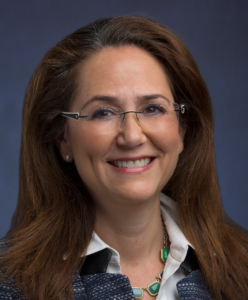
Life is a series of stages, says WEX’s Hilary Rapkin, an observation she was recently reflecting on as advice given to her by a mentor. That means what you feel like when you have a six-month-old baby is not what you’ll feel like when that child is two or four. Life changes, and you can’t base career decisions on those emotions you feel at the start, she says.
Over the years Rapkin has been able to cultivate relationships with professional women in similar stages so they could share common experiences — whether about babies, teens or elderly parents– all in an effort to have a rich life and find the elusive work/life balance. That vision and support is how women can successfully integrate a high-powered career with family, she says.
A Serendipitous Interview Launches an Illustrious Career
After law school, Rapkin joined a boutique firm in Portland, Maine, where she soon found that law firm life, specifically litigation, wasn’t a good fit for her. However, she realized she could parlay the employment discrimination work she was doing into a potential career in HR. While interviewing with WEX, the HR director noted that Rapkin’s experience was a better match to a legal position – one the company was considering creating. She was hired and has spent 22 years at the company, growing from a one-person legal department to today, where she oversees the company’s global legal footprint and has HR reporting directly to her.
Among the many noteworthy experiences she’s had over the years, Rapkin considers her involvement in WEX’s IPO in 2005 to be the professional achievement she is most proud of thus far. The team accomplished the filing in three months – while she was pregnant – and she remembers the fast learning curve as being particularly exciting.
Aside from that, she says that over the past few years she has been involved with the HR function, she has found it extremely satisfying to watch the evolution of cultural elements that make WEX special. “The process that has made our culture so strong has been very intentional, and some of the HR programs, such as philanthropy, have had a meaningful impact on employees that may be hard to measure, but you know it when you see it,” she says. “It’s made me really proud of who WEX is and how it is becoming visible to the outside world.”
She looks forward to seeing how WEX can continue to move forward along that trajectory, and to watching the forward-thinking programs and compensation plans come to fruition.
On the legal front, she is pleased to see investments in technology which will create efficiencies and opportunities for legal staff to develop deeper advisory roles with their clients. The new systems are designed to simplify core processes like contract maintenance in an effort to free up associates’ time for more strategic work, such as building business relationships and helping WEX achieve its business objectives. “It’s hard to work on becoming a trusted business partner if you are mired in contract work, so I look forward to seeing how these additional systems will help our team.”
As the department has grown, Rapkin has become an expert on new business segments, as WEX has moved into the broader payments landscape. She finds that 22 years later, her job is still challenging as she works through evolutions in technology and the complexities that a global payments company present. She thinks future lawyers will have similar interdisciplinary experiences as law schools couple with business and finance functions to groom lawyers who are more well-rounded when they enter the field.
An Environment Dedicated to Success
While Rapkin never took psychology, she remembers taking the Myers-Briggs personality test. This led her to think about who she was compared to peers, and the effect those different personality styles had on their relationships.
“By knowing your relative strengths and weaknesses, you start realizing that it’s the sum of the parts that makes companies successful, and you don’t have to have the weight of the world on your shoulders,” she says. “It’s important to figure out how to get the best out of your team by managing each individual as an individual.”
She’s proud of the strides WEX has made in implementing programs that she says are a clear depiction of the company’s commitment to offering choices to both women and men, including paid parental leave, which only 17 percent of companies offer. “I hear from people all the time about how that sets us apart, and certainly our profile as a diverse company is bolstered by having three female members on the executive leadership team.”
Rapkin is poised to launch an informal women’s group this summer that will encourage them to learn from one another through informal dialogue around topics like networking, perceptions of women in the workplace and goal-setting.
Gender equality is just part of who WEX is as a company so Rapkin has never felt any gender bias. She does note that sometimes it’s hard to balance parenting and work, although she stresses that her work has ultimately made her a better parent.
A Commitment to Balance
Rapkin takes every opportunity to do yoga as part of her quest for balance, and also counts philanthropy as an important component towards that end. She enjoys bringing her kids, ages 15 and 12, with her to volunteer at a local Jewish nursing home, and is also on the board of a local theater company that often produces original works.
Her kids have inherited her love of adventure, having traveled since they were babies. “We live in a beautiful place, but I want them to see the world,” she says, adding they are looking forward to a summer trip to Chile.
She is also quick to mention that she doesn’t do it all herself.