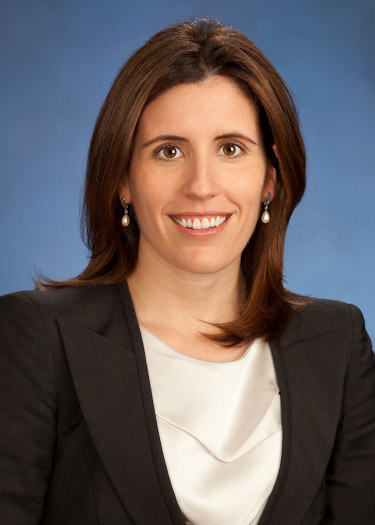
 Given the sizable success that Goldman Sachs’ Katie Koch has had in her career, it may seem surprising that failure is one of the factors that drives her.
“Taking risks and refusing to be paralyzed by a fear of failure has served me well,” she says, explaining that she has developed a sound personal philosophy and approach to taking risk. “I approach every challenge with a philosophy that my mom introduced to me and my siblings when she would say, ‘What choice would you make if you knew you would not fail?’”
Taking that approach has allowed Koch to make decisions based on optimism rather than fear and has biased her towards taking calculated risks. “When you’re taking risk repeatedly, you’re naturally going to occasionally fail, so it’s important to view failure as fuel,” she says. A quote that has resonated with her came from an inspiring commencement address by soccer superstar Abby Wambach, who said, “Failure is not something to be ashamed of, it’s something to be POWERED by. Failure is the highest octane fuel your life can run on. You got to learn to make failure your fuel.”
If something doesn’t work out the way you wanted it to, figure out why, and move forward with those lessons, Koch advises.
Taking Risks Leads to Diverse and Rewarding Career Path
Although Koch has spent 16 years with Goldman Sachs, it’s as though she’s had several careers, given the diverse portfolio of experiences she’s had – across different divisions, offices (Chicago, London and New York) and four different business lines. One of her favorite roles is working with incoming talent, and she always makes sure to express how this wealth of opportunities allows professionals at Goldman Sachs to experience a fulfilling career – at one firm.
Koch acknowledges it can be challenging to start over with a new business, team and mandate, but the advantages of working in a new business are immense.
First, she has been able to build a deep network, and secondly, working in different roles allows you to have additional context as you inevitably come across problems you’ve tackled before.
And while she was grateful to be named a partner at the age of 36, the aspect that was most meaningful was having so many people, including her own team, champion her throughout the process. “I believe that the more senior you become, the more dependent your success is on having the best team around you and the right sponsorship above you.”
Living Out a Commitment to Diversity
Koch’s belief in the importance of diversity permeates every aspect of her role at Goldman Sachs. She sees a strong business case for spending time and effort to build diverse teams, and her role helping to lead the equity business – which oversees $65 billion in assets – has proven that diversity of thought is critical to positive investment outcomes. “Successful investing requires the healthy tension of variant perspectives, so it’s a competitive advantage that we have a highly diverse investing team; more than half of our assets are handled by talented portfolio managers who happen to be women, an industry-leading statistic,” she notes.
At the firmwide level, Koch is a champion of Launch With GS, a new initiative that will invest $500 million of the firm’s and its clients’ capital in private, late-stage, women-founded, women-owned or women-led companies, through direct funding, as well as seeding women investment managers who are starting their own funds. “Our ambition is to become a partner of choice for women seeking to scale their businesses and build capital,” she says of the effort.
Sharing Advice That Has Propelled Her Career
Mentoring women is important to Koch, and one lesson that she is quick to impart is that you have to treat a career differently than school. Women in particular excel in the academic environment, where they are rewarded for subject mastery; however, when women transition to a career, they often remain on that path and focus on the content of their role and “keeping their head down.” While it’s vital to be a subject matter expert at your core, she finds women tend to overinvest in this, but chronically underinvest in developing their network.
“I encourage young women to be exceptional at what they do, but also be deliberate in carving out time to meet people in their direct line of business and across their firm, industry and client base, all of which will help you build seniority over the long arc of your career,” she says. “You need to balance what you know with who you know.”
As the beneficiary of a supportive community of other partners, she advises her peers to continue to signal ambition – appropriately of course – and create a plan to articulate career goals to the right people, at the right moment and in the right way.
“It’s so important to think boldly and have a clearly defined top-level goal. Knowing exactly where you want to go allows you to organize your time and efforts toward those aspirational roles,” she says, recommending that while women should focus on outstanding execution in their current role, they should also be asking themselves, “Am I working toward my next job?”
Koch comments, “One of the best ways to prove you are deserving of a job is to act as though you already have the title – even before it is officially yours. That communicates to others that you are hungry, proactive and will bring solutions as a leader.”
One of the programs that was particularly beneficial to Koch was the personal coaching that Goldman Sachs offers, where the coach solicits direct feedback from everyone you work with and provides insight to help you grow as a professional.
Koch noted, “As you achieve early success in your career you can lose sight of how much room there is to improve. This is compounded by the fact that as you get more senior, less people are willing to give you tough feedback directly.”
The coaching process can help you address your blind spots, and Koch found real value in getting this feedback to continue to grow and evolve in her career. She shares, “Once I really opened myself up to the feedback, I learned some profound truths about myself as a professional and a manager. I distinctly remember my coach trying to make the point that people felt shut-down when I interrupted them. I interjected to explain that I don’t interrupt people – I just help them reach a conclusion more quickly. She had to gently point out that I had just interrupted her to explain that I don’t interrupt people!” Taking feedback can be humbling, but Koch believes that self-actualization is only possible when you seek out areas to improve at every stage of your career.
Despite the many hats she wears at work, Koch’s main priority is her family—her husband, two daughters and a son born a few weeks ago. With three children aged four and under, she feels extremely fortunate to have bosses such as Tim O’Neill and Eric Lane, who don’t see successful careers and meaningful family lives as mutually exclusive. “I have had an exceptionally positive experience at Goldman Sachs simultaneously growing my career and my family. I think it underscores the importance for women to choose their employer and their boss wisely.”
“My family is my biggest priority, but I always think of what we say in investing—we won’t get the stock picks right every time, but we try to get it right over time. To me that is the ideal metaphor for integrating life and family. My family can’t come first every time, but they must come first over time, and my goal is to organize my life that way.”
Prior to kids, she and her husband indulged a love of adventure travel; she has been to all seven continents—including Antarctica for her honeymoon—and has climbed extensively from Kilimanjaro to the Alps. For now, most of her adventures take place through books. As an avid reader, she averages about a book a week and frequently trades recommendations with her mom and her team.

Voice of Experience: Wendy Cohen, Partner; Katten Muchin Rosenman LLP
Voices of ExperienceCohen states, “You have to ask for what you want and recognize what your contribution is; then refuse to feel diminished, intimidated or not as worthy as your male counterparts just because you may have different demands on your time and elements of your life to balance.”
Cohen never conceded her talents and thus was able to parlay a temporary downshift with a part-time schedule into becoming a partner.
A Mutually Beneficial Arrangement Leads to Career and Firm Success
Directly from law school Cohen started at her current firm’s predecessor, Rosenman & Colin LLP, which merged with Katten in 2002. She joined the firm’s then-corporate department, and during her second year began working with Fred Santo, a partner who specialized in financial services. In addition to public commodity deals, she earned a lot of experience with private funds, now commonly known as hedge funds.
But even though she was a well-regarded associate on an upward trajectory, she removed herself from the partner track to focus on building a family, paring back to four days a week.
After having her twins in 1995, Cohen came back to work three days a week when they were six months old. While she enjoyed her client work, the lack of technology at the time made it too challenging to effectively juggle home and work, and when she became pregnant with her third child, she left the firm again at the end of 1996.
In 2001, Cohen reached back out to her former partner to see if she could work on a project basis; he welcomed her back and she worked as a consultant, billing time directly to the client. After ramping up to working in the office three days a week, it wasn’t long before the firm realized that they wanted to formalize the arrangement, and they offered her a partnership.
As her kids grew and her available time expanded, Cohen gradually extended her days in the office. In 2011 she was named a partner, and two years later she became a capital partner. “I was so proud to become a partner while balancing time in the office and at home,” she says, adding that the arrangement has been mutually beneficial. “Fred is retiring at the end of this year, but I will be able to take over those clients with whom I have worked for 25 years. The firm maintained their investment in me, and now they have the benefit of retaining clients with a seamless transition.”
And as she says, she now is able to devote all her time to the firm. “I provide a tremendous value-add that they would have missed out on had they not allowed me to come back part-time; and at the same time I appreciate the value they saw in me. We all would have lost if they hadn’t been committed to this non-traditional arrangement.”
As current co-chair of the financial services department, Cohen continues to work with clients, including advising her first private investment fund that’s investing in cryptocurrency, and also is focused on business development and lateral hiring.
Perspective That Comes With Experience
Looking back on her career, Cohen appreciates how things change when you don’t even notice. “At some point you realize life is finite, and not to sweat the small stuff—and as they say, most of it is. I am glad I spent time with my kids when they were growing up…I certainly didn’t rush life away during that chapter, but I also didn’t necessarily appreciate that it would change the way it has.”
That wise perspective is one she is able to share with younger professionals as they decide how to forge their paths. While she feels fortunate that firm management allowed her the bandwidth and flexibility she enjoyed, she realizes that although it’s better than it used to be and more common for attorneys to experience balance, it’s not yet where it should be.
“My path should not be anomalous; it should be available to all women who choose to downshift, without being viewed as less successful, committed or capable,” Cohen says.
While other women partners she works with might have taken different paths, she thinks it’s important for all associates to see that there’s not one standard for reaching the goal of partner. “Katten management has been making great strides, but as an industry, we still have work to do for women to realize there is value to their contribution not only for themselves individually, but also for the whole firm.”
And she advises women who are her peers to realize that although they might have had to make sacrifices to achieve their success, they shouldn’t hold that against the new generation. “We can nurture our younger women attorneys in different ways and allow them to decide for themselves the best way to provide value, even if it’s different from what you did.”
But she realizes that there are other ways that being a women can be tenuous. For example one of her clients is a seed investor in Glam Squad so at a recent meeting of 100 Women in Finance, where she co-chairs the Legal Peer Advisory committee, two of the founders talked to the group, then stylists came and “glammed” them.
Although Cohen grappled briefly with whether that would undercut the group, she realized second guessing the event was unreasonable. After all, they have a business model that is fascinating and substantive, and there’s nothing wrong with looking your best and feeling more confident. “We can do things our own way. It doesn’t diminish us; it’s just a different way of networking and bonding.”
She also is working on hosting a panel in January sponsored by 100 Women in Finance with the former managing director of a large private equity firm speaking about women on boards and how to advocate for board seats.
Cohen is active in Katten’s “Women Leadership Forum,” recently attending a women’s networking event at the Knicks game. “The firm is very committed to diversity, and expends a great deal of energy and time nurturing women,” she says adding that the firm is “Mansfield Certified” for excellence in diversity.
In her spare time, Cohen also volunteers closer to home, as the past president of the Jewish Federation in Westport. And she loves to spend time with her husband and now- adult kids—travelling and eating and ideally combining the two, she laughs.
Mover & Shaker: Clare Murphy, Commercial Director – Europe, WEX
Movers and Shakers“Most people believe the customer has to come first, but I’ve found that the key is to get the team dynamic right first instead. If you have that, they will naturally put the customers at the center, and you have a win/win.”
And, she adds, a key component of building that team rapport is collaborating to find out how you can be a better manager. “Ask them for feedback on an ongoing basis so you can fine-tune your own performance,” she recommends.
Collaboration is the key to success
Murphy ran her own consultancy for seven years buying corporate travel, and became curious why there was a general lack of innovation in the payments sphere, despite existing options such as payment cards. So when she was approached by Travelport where she had previously worked, she jumped at the chance to help with its newly formed payment division. As only the second hire, she helped build its capabilities from the ground up, helping set up the office and spearheading major bids.
About two years into her tenure there, WEX approached her with an appealing role as commercial director, where she’s now been a year. For Murphy, it’s the perfect intersection of the travel and tech/payment industries that she knows will continue to provide exciting developments. “We have such a fantastic opportunity to make the payment experience more simple and efficient for our customers, and it’s exciting to be on the front line,” she says.
Over the past year she has helped lead the transformation of WEX’s commercial team in Europe, and she has been delighted to see the evidence of their efforts in living the WEX values, specifically related to integrity, she says, adding that their recent appointment to the “Great Place to Work” list reinforces they are on the right track.
Rising With the Support of Others
Over the course of her career, Murphy knows she has been fortunate to have worked with senior leaders who were invested in her career, and assisted with the opportunities and networking that would allow her to move to the next level. And she was fortunate to have a mentor in former supervisor Elaine Halt, whose gravitas and ability to help teams coalesce around a goal was particularly inspirational. “When she left, we were all devastated, but I still keep in touch with her. Even though I haven’t worked with her in 15 years, I still see her regularly and appreciate her counsel and feedback that has helped me throughout my career,” Murphy says.
In her position at the cross section of travel and payments, she has become a part of a number of industry groups that have strengthen and motivated her professional development, including; Women in Payments, the Emerging Payments Association, Women in Fintech and Women Travel Executives. Not only does Murphy see personally benefit, but she makes sure that her female and male colleagues do too. She regularly invites junior team members to sessions, giving them experience and exposure to the great work these groups offer.
Balance Leads to a Full Life
Over the years, Murphy has realized the importance of not letting yourself get caught up in the day-to-day struggle of determining what is and isn’t urgent. She has learned to take a long-term view to find time to focus on things that are important, but not necessarily urgent, such as professional development and networking. That helps her find a good balance where she calendars those in, and treats them as equally important to other items on her to-do list.
And of course, her top priority remains her family – her husband and two children. As an “extreme sports” family, they take time to build bonds by skiing and scuba diving, having just returned from a trip to Cancun.
They also work together to fundraise for the Bone Cancer Research Trust, and have raised more than £2,000 while continuing to do charity events in support. Her daughter even donated her hair to charity. While she is proud of the money they have raised, there has been another important byproduct that comes from having her children see her ask for money and instilling a sense of philanthropic interest.
In addition, Murphy has been on the Board of Governors for her children’s school for eight years, overseeing strategy and curriculum. “It’s been a pleasure to see the school flourish, and I look forward to returning to even more volunteering when my career is less busy,” she says.
OP-ED: Why Corporations have a role in America’s STEM Pipeline
Career Advice, Guest Contribution, Op-EdBy Serene Gallegos
According to the U.S. Bureau of Labor, by 2020 there will be more than one million more computer science-related job openings in the U.S. than graduating college students qualified to fill them.
And it’s not just computer science careers that are changing; at the same time, automation is reshaping the way we work across professions. So, what does that mean as we try to prepare today’s students for tomorrow’s jobs – many that don’t even exist quite yet?
As a former elementary teacher, I know firsthand that teachers face a unique challenge to build lessons that are engaging and relevant for the future. Plus, it’s easy to become overwhelmed with the resources that may or may not be available – particularly around STEM and computer science. These subjects used to be relegated to math and science, but in today’s digital-first environment, technology permeates throughout everything we do, and therefore everything we teach.
To successfully navigate this new era of technology, students must be problem-solvers armed with skills to compose a successful workforce in the future. To achieve this, we need to implement a new way of thinking – namely, computational thinking – into the classroom. That’s part of the reason why I made the move to the private sector. Today, I work at Tata Consultancy Services (TCS) to lead a program equipping teachers with relevant lesson plans and experiential learning activities that help bring computational thinking to life.
So, what exactly is computational thinking? It’s a higher-level problem solving process whereby students learn to decipher information and form innovative solutions. What sets computational thinking apart from traditional critical thinking is that it considers how 21st century technology overlaps with key strategies to solve any given challenge. Computational thinking goes far beyond computer science to encompass all subject areas across all industries – from social studies to physical education, or simple tasks like packing a suitcase, learning to dance, or cooking a meal.
According to a recent report released by The World Economic Forum, by 2022 more than 54 percent of employees will require re-skilling because of new and emerging technology. Computational thinking is a foundational skill for the success of the future workforce and is how we future-proof students with skills that will be relevant to any career they choose.
In general, organizations are increasingly recognizing the value of building a diverse workforce. With STEM jobs growing 50% higher than the national growth average, it’s important to engage diverse backgrounds and different problem solving perspectives in order to maximize innovation. In addition, we know that the economic impact of stable, salaried STEM jobs for women and people of color will strengthen our economy. Yet for resource-strapped school districts, it’s difficult to single-handedly retrain teachers or implement costly new technologies in the classroom that engage all students.
Additionally, women’s underrepresentation in STEM is widely reported. Surprisingly, the number of female computer science college grads is trending downward – at just 18 percent according to the latest figures. Yet, women bring a highly valuable perspective to business operations today; just look at Lyft, a company that’s built a reputation for driving gender-inclusive policies that evens the playing field between drivers and passengers. Lyft partially attributes their app design to input from female leadership. This is just one example of why critical, computational thinking is an essential tool for women that can be applied in many different ways in today’s digital-first workforce.
That’s why education-focused corporate partnerships can truly make an impact to broaden the reach of STEM skill-building. TCS unveiled Ignite My Future In School in partnership with Discovery Education to provide free, easy-to-implement lesson plans and resources for teachers that can jump-start their ability to bring computational thinking to the forefront, across subjects, and for all students.
The value of corporate-led initiatives like TCS’ Ignite My Future in School are unique in that they are designed to meet teachers where they are, regardless of experience. Whether you are a new art teacher just starting out your career, or a tenured teacher with more than twenty years under your belt, curriculum that is digestible to all is less daunting to implement, and is also the most well-received by students. In many cases, schools cannot achieve this on their own – at least, not without a costly investment that may or may not be realistic. That’s why corporations are key to help fill a void, so long as they work in tandem with school needs.
Also, corporations must be realistic that they also can’t do this alone. When building out a successful education-focused CSR initiative, it’s crucial to bring in the right partners who can successfully integrate technology into resources that will resonate well with teachers. At TCS, we chose to partner with Discovery Education, a well-established leader in teacher resources and professional development, which only strengthens awareness and the educational components of our program.
When you’re a teacher, particularly in elementary education, you must become adept at many things – not just your subject area. You gain an understanding of how to incorporate different activities to bring your classroom teaching to life. Having an arsenal of resources with a curriculum that explores all subject areas and includes lesson plans on everything from building drones to deliver pizzas, to how to spur activism as it relates to an ecological crisis, is so powerful. That is why looking to corporations who are willing to step up to the plate, take accountability and address building a teacher’s capacity to the best of their ability is so critical in 2018.
My experience as a teacher has proved very valuable in helping TCS consider ways that our CSR program can positively influence the STEM pipeline in our country. I would stress then, that for other corporations’ programs to be just as successful, they should look to diversify the minds behind it and ensure that they are employing those from all walks of life who can bring unique perspectives to the table. When businesses take the first step, but also work in tandem with experts and thought leaders that can help guide their efforts to make a difference, they have the power to shape and propel us towards a prosperous future.
What would you like to change for 2019?
Career Tip of the Week!By Nicki Gilmour
Let’s face it, we are always changing, evolving and adapting to survive. Imagine how you can use change to thrive.
Last week, we talked about themes from 2018 and what was memorable to you. What is your “theme” going into 2019? Is it a new theme? Are you carrying around a theme that you no longer want? Is it even your theme? Or is it what you think you ‘should’ be doing according to other people’s wisdom? Or even due to ‘norms’ for people at your stage of your career or life?
Think about what you want and then think about what you have to do to get there. Simple right? Sounds like goal setting, right? And it is mostly. But something to also consider is the behavioral piece of achieving goals because if you have a goal and your actual actions are not aligning then it might not be as easy as it looks on paper.
What do you have to do? And will you do it? What is behind what you tell yourself?
Who do you have to be? Who do you want to be in 2019?
Book a free exploratory chat with Nicki to see if coaching will help you get you further, faster.
Rising Star: Sunaina Kohli, People Experience; PwC Middle East
PeopleIntuitive Decisions – Dynamic Opportunities
Kenyan born, Kohli was raised and educated in the UK. She left university halfway through her law degree for personal reasons and was immediately offered an opportunity by the CEO of a small group of private investors. She worked her way up from an executive assistant to project manager and ultimately chief of staff to the CEO. At that point she felt she had tapped out her growth opportunities, so she took a six-month sabbatical to travel the world, a long-time ambition of hers.
Kohli started in Kenya with the mantra “The plan is there is no plan,” and within eight weeks she found herself in New Delhi, India, where she was offered a contract with an aviation and aerospace consultancy firm to work on government-related projects. Fast forward 10 months and a PwC recruiter discovered her through LinkedIn and hired her to join the Middle East firm.
A year in, she was presented with an opportunity to join PwC’s Global Human Capital team in New York, followed by a stint in Washington DC, working on the Global Human Capital transformation agenda, impacting the PwC Network of approximately 250,000 people.
This role evolved to an invitation to work at their Global Human Capital Leadership office and allowed her to extend her scope across the firm’s priority projects which included Diversity & Inclusion, Wellbeing, Talent Development, Workforce of the Future and change management to support the implementation of new technologies aligned with PwC’s digital transformation agenda.
Her work demanded a great amount of travel, visiting over 35 cities around the world in just three years. More recently, she was invited to rejoin the Middle East firm to drive the People Experience agenda regionally, focusing on priorities such as Wellbeing and Diversity and Inclusion.
“Very early in life, I learned that failure and hardship are incredible drivers to success, to the point that my tenacity defines my professional brand” said Kohli, who finds it’s a quality that her leaders have always appreciated and has led to many inspiring opportunities. Following your intuition can lead to new and unpredictable paths that ultimately challenge and define you.
“My decision to move my life across continents was a result of my intuition, driven by hunger for the next big challenge,” she says.
Navigating the Working World—Making a Difference
Through the Diversity and Inclusion agenda, she is proud to have the opportunity to be a strong advocate and influence, to directly and positively impact the advancement of professional women.
Kohli’s passion for supporting this agenda comes from her experiences; in the UK she worked as a volunteer to support women who struggled through domestic abuse. Kohli developed curriculums to support them on what can be a challenging journey to leave extreme situations, through to coping methods and life skills that would help them navigate their newfound independence and responsibilities.
She also taught underprivileged and disabled children to rise above their emotions through obstacles and challenges, using her classes as a way to help disabled children share commonalities with their more abled siblings. “Parents found this experience extremely rewarding as it finally gave them a leveled field for all their children to come together and share a collective interest and activity,” she added.
While in India, she worked with orphaned girls, teaching them the same types of skills, but also about empowerment. A self-taught henna artist, she was able to share that skill so that they would always have a safe means to make a living, as well as an emotional outlet through creative self-expression.
Her time spent across continents—from the gender-dominant environments of India and the Middle East to the more gender-balanced United States—has been eye opening. She feels fortunate to have worked with so many inspiring female leaders, who showed her that you can have it all if you want it, and she is eager to share this perspective now that she has returned to the Middle East; “We need to be more mindful about spotlighting our strong and successful female talent in the Middle East – you cannot be what you cannot see, so greater visibility of the incredible women that work among us is essential.”
Kohli also recognizes career sponsorship and mentoring as drivers to develop the female talent pipeline. She views sponsorship as a career game changer and has had a number of colleagues, both male and female, advocating on her behalf, vastly impacting her career progression. In addition, she has found that mentors have played a huge role in her development.
Describing the difference, she explains that mentors help you see what you may not see in yourself, pushing you closer to your aspirations; while sponsors advocate for you and believe in you. “It’s indescribably life-changing when inspiring and successful leaders see something in you and take the time to know and understand your capabilities better than you know yourself,” she notes.
Kohli’s commitment to empowering others culminated recently in joining her colleagues to successfully deliver the first women’s empowerment workshop to over 180 women from PwC offices across Saudi Arabia. This was a historic moment that defines the firm’s commitment to gender equality, especially as a UN HeForShe Impact 10 Champion.
Creating Human Impact
All these initiatives and projects coincide and directly correlate with the work Kohli is doing for the PwC Wellbeing agenda. Specifically, she aspires to make a difference in employees’ personal and professional wellbeing and domino positive effects on communities the firm operates in. “In today’s incredibly dynamic environment, where change is the only certainty, people are having to work harder and faster than ever. Through managing wellbeing, our people will become more resilient and develop the capacity to thrive in demanding situations, helping them recover from setbacks and ultimately be able to bring their best selves to all they do,” she explained.
Kohli added, “Now, more than ever, it is extremely important to me to make a positive, human impact on people’s lives in what is a very disruptive and technology-driven world.”This ethos shines through in her philanthropic endeavors. Having lived on five continents and traveled extensively around the world, Kohli has always tried to bring a meaningful and positive impact to local communities, usually in environments when there is no one to guide, nurture and help an individual grow, she explained.
From her career to her volunteer work, all of Kohli’s pursuits have shared a common thread that allowed her to focus on her strengths. She concluded, “I am a very agile learner, a key skill to future-proof yourself in today’s increasingly fast evolving world where successful professionals will need to constantly adapt to remain relevant.” With this, today she has the opportunity to directly and positively impact those around her.
Voice of Experience: Marci Eisenstein, Managing Partner; Schiff Hardin
Voices of Experience“Work on developing your professional excellence and seize the opportunities that are presented,” she says, adding that she wishes she herself had known earlier the value of never being afraid to speak in your own voice. “People will appreciate your authenticity, and you’ll be more effective the quicker you learn that you should be who you are.”
But that includes balancing confidence with humility, since, as she points out, no one wants to work with lawyers who are know-it-alls. “Often women err the other way and project insecurity, so it’s also important not to be self-deprecating or downplay your work, but ask for the opportunities to grow,” advice she has put into practice throughout her career.
Setting Records With Nearly 40 Years at the Firm
With a father who was a doctor, Eisenstein always knew she wanted to be a professional, and law appeared to be an excellent fit, given her love of writing and speaking – and distaste for blood. She went directly from college to law school, joining Schiff Hardin immediately after graduation, and has spent an illustrious near-four decades there.
Although she knew she wanted to be a litigator, she has decided that the placement of her office helped dictate her future career path, sandwiched as it was right between the head of litigation and the first lieutenant. They stopped in her office and asked her if she would participate in some class action work for a long-standing client, to which she enthusiastically responded yes, knowing now that those first days helped guide her career.
Eisenstein became a class action litigator, handling numerous cases in the insurance space. Along the way she became the longest tenured female lawyer at the firm, a rank she will hold until she leaves, as the women who were more senior when she arrived have moved on. Three years ago she became the firm’s first female managing partner in its 150-year history.
“It’s gratifying to have had a seat on the firm’s executive committee to have influence in helping maintain our independence and unique culture,” she says. For Schiff Hardin that includes maintaining values focused on collegiality — mentoring and supporting a diverse group – as well as a commitment to pro bono work and loyalty to one another. “This is a place where we enjoy working together and develop deep, strong client relationships,” she says. “As a group we have an unwavering commitment to professional excellence, and having a role in maintaining that special culture has been a source of great personal and professional pride.”
In addition, Eisenstein is proud of the body of work she has built up, most notably helping secure a reversal of a case that had resulted in a billion dollar judgment. “Going through the process and achieving that reversal taught me an enormous amount about how to lead a team through tough times with tenacity,” she says.
Developing Opportunities for Women
Currently Eisenstein is proud of the firm’s leadership in the #MeToo movement in the Chicago area; having recently participated in a regional effort organized by the Chicago Foundation for Women that encouraged all participating businesses to host facilitated discussions for employees around a set of questions about how the issue manifests itself in their professional and personal lives.
All six offices of the firm took a lunch break and brought in the entire workforce, from staff to the most senior people, to talk about these issues. She participated in a session that included nearly 80 people — men and women, from new staff members to practice group leaders. “The dialogue was so open and authentic, and I was proud to be in a place that fosters this type of discussion,” she says, adding that she believes they were the only law firm that participated.
“We addressed a lot of issues and while we don’t have all the answers, the idea that there can be such frank and open discussion was very gratifying and goes back to the values of our firm we are able to maintain,” she says.
She herself sees that one of the main barriers for women relates to the gender imbalance in equity partnership throughout the industry, since it’s easier for young women to see a path to success when there are ample role models. While there are strides to be made, she is proud that Schiff Hardin is ahead of its peer firms in terms of equity partnership with 25% being women, compared to the industry average of 19%. “I like to believe this is a place that attracts women based on our model,” she says, adding that the perspectives offered by diverse teams has helped their own decision making. “We look for every opportunity to make sure we put forward the best team from experience and expertise, and that includes the diversity perspective,” Eisenstein says.
For initiatives to be successful, they have to emanate from the top down, she notes, and as the founder and original chair of the Diversity Committee, she has seen high levels of support to help it grow into a powerhouse committee where partners participate actively and associates participate in the firm’s multiple affinity groups.
Another barrier many women may face is the continued focus on hours over performance. “Too frequently workplaces value the time clock more than the effectiveness and efficiency of the work, and that approach can negatively affect women and how we manage all our responsibilities,” she says.
When she first started at the firm, there weren’t the same type of women-oriented mentoring or advocacy programs that there are today, so she did what she could, initially finding another colleague who was pregnant at the same time and working together to develop a proposal for how their maternity leave should be handled. Now of course, the firm offers numerous programs for gender-neutral parental leave, mindful return and other online courses that help parents navigate this tricky time.
A Passion for A Cause
Eisenstein’s oldest daughter was diagnosed with Type 1 diabetes at the age of three, when Eisenstein had just became a new partner. That insight into raising a child with a chronic condition has confirmed her family’s dedication to raising funds for finding a cure. She has served as chair for the Chicago gala, raising more than $5 million for JDRF research, and remains active in the Illinois chapter of JDRF. “When you are moving an organization through change and also taking care of a child with a condition they face day in and day out, you have to have resilience and optimism in life and work,” she says.
Eisenstein also enjoys spending time with her husband of 42 years, and her four granddaughters who all live locally.
How to Combat Perfectionism
Career Advice, Guest ContributionPsychologist Susanna Mittermaier says perfectionism is often fueled by cultural expectations and conditioning, involves a harsh inner critic, ruins people’s capacity to feel joy and needs to be addressed.
She states:
“I grew up in a culture where it was very important to be as perfect as possible, which meant living in the constant fear of judgement and the need to filter everything through the question of: is this perfect enough?” she says. “We must put an end to this for ourselves and the generations to come.”
Mittermaier teaches people how to step out of self-judgement and perfectionistic tendencies in her Right Voice for You course. It invites people to let go of the harsh internal critical voice and make way for their own. Some of her top tips include:
1. Stop judging you
Every judgement defines you and stops positive energy and opportunities from flowing into your world. Every time you judge yourself negatively or harshly it’s like putting the brakes on whatever you’re trying to create in your life.
2. Be willing to let go
Perfectionists can hold onto ideas, projects and contributions in fear of the judgement that will come if they share them before they are 100 percent perfect. Be willing to let these ideas, projects and conversation pieces fly out into the world, whether they’re perfect or not.
3. Don’t look for others approval
If you feel excited about saying, creating or contributing something in your home, workplace or social circles, don’t wait for approval from others (or even your inner critic). Other people’s points of view are not relevant.
3. Don’t wait. Create.
Stop waiting for conditions to be perfect to start creating the experiences you actually want in your life. Give yourself permission to stop worrying about the outcomes (whether things will be perfect or what others will think) and start creating today. Creation starts with one choice. Ask yourself what the first, easy step you could take might be.
4. Your past does not determine who you are in the present or future
Perfectionists have usually judged themselves harshly. They may have never measured up to the expectations of others or that of their own inner critic, which can leave many feeling like a failure. Don’t buy into the story of your past. Instead, start creating your future.
5. Get to know your imperfections
Make a list of your top three imperfections. Then, ask how can you can use each of them to your advantage? If you think you are shy and you believe that is a weakness, ask yourself what the power of shyness is? Shy people are usually great listeners, which can be a great advantage in many work and social settings.
6. Learn to enjoy being imperfect
Perfection is about measuring yourself against the standards of society and others. See your individuality as a resource rather than a liability. Enjoy your imperfection and recognize your difference as a treasure box of gifts then use them to create your life, projects and relationships in a way that is unique to you.
“Perfectionism stops people from being able to express themselves in the world,” Mittermaier says. “Giving up the need to be perfect and allowing your right voice to come through into the world is so liberating for people. I love it when people realize they can do things they’ve been stopping themselves from doing, especially when those things have the capacity to make them happy.”
About the author
Susanna Mittermaier is a clinical psychologist, psychotherapist and author of the #1 International Bestselling book, “Pragmatic Psychology: Practical Tools for Being Crazy Happy.” A global speaker, she has also been featured in magazines such as TV soap, Women’s Weekly, Empowerment Channel Voice America, Om Times, Motherpedia, Newstalk New Zealand and Holistic Bliss. Susanna offers a new paradigm of therapy called Pragmatic Psychology and is known for her revolutionary perspective on mental illness. Her unique perspective identifies depression, anxiety, ADHD and other forms of mental illness as a capacity that has not yet been acknowledged. Susanna is an internationally accredited Access Consciousness Facilitator, including Right Riches for You, a specialty program of Access Consciousness. She transforms people’s problems and difficulties into possibilities and powerful choices. Follow on Twitter @AccessSusanna.
Making 2019 the best that it can be!
Career Tip of the Week!At this time of year, we start to think about goal setting for 2019.
Call them New Year’s resolutions or good old fashioned hope strategies, but either way, what we are really saying is that we want change. And, change can be hard.
Intentionality is the starting block for change. Knowing that we want to change is key. And better yet, if you can know and articulate where you are now and what the future state might look like then you are further on that you think. However, don’t panic if you do not know all or any of these three elements.
Just start by looking deep inside and being honest with yourself, go for a walk and breathe while you think about these prepared questions to get you started:
1. What stands out for you from 2018?
Note down what thematically or specifically took up your mind, heart or soul. It can be good, bad, neutral but something memorable. It can be an event, thought, insight, learning or feeling. It can be one thing or several things.
2. What are you proud of/did best at in 2018?
Everyone is different. Some of us easily know what we did well at and others ( i am one) sometimes struggle to see just how far we have come. Often high achievers can be insecure and can’t see their amazing myriad of accomplishments, so if this is the case, push yourself to see the good by ‘getting on the balcony’ for a second so you can watch the movie of your life more objectively as well as star in it. You might be surprised by what you learn.
3. What made you happy in 2018?
Simple question, right? Maybe hard to answer so dig deep into all the aspects of your life- career, family, friends, spiritually, fun, money and whatever values matter to you. Then specifically, think about what made you happy at work. Which tasks, interactions, role and responsibilities energized you?
Now, of course even the best goal setting can be derailed by 2 factors and the first factor can be you, yourself! The second is less surprising to guess – yes – others can rain on your parade.
By you, I mean your unconscious mind producing completing agendas (seen as ” i cant do that because I …..e.g. don’t have time).
The conscious mind is an interesting concept, because how much of it drives the bus? If we dare to examine how our values and constructs are often inherited or implicit from our surroundings, we find that some goals are not even what we want anymore, that they have been formed at a different time in our lives for different reasons that no longer work for us. You do not have to autopilot your way through life believing everything you were told by your dad, mom or granny.
It is ok to evolve. Give yourself permission. Best. Holiday. Gift. Ever.
We have coaches who can help you with our sister company www.evolvedpeople.com
Book time now with Nicki Gilmour for a complementary exploration to see if coaching is for you. Or email nicki@evolvedpeople.com
Katie Koch, Partner, Goldman Sachs
Voices of Experience“Taking risks and refusing to be paralyzed by a fear of failure has served me well,” she says, explaining that she has developed a sound personal philosophy and approach to taking risk. “I approach every challenge with a philosophy that my mom introduced to me and my siblings when she would say, ‘What choice would you make if you knew you would not fail?’”
Taking that approach has allowed Koch to make decisions based on optimism rather than fear and has biased her towards taking calculated risks. “When you’re taking risk repeatedly, you’re naturally going to occasionally fail, so it’s important to view failure as fuel,” she says. A quote that has resonated with her came from an inspiring commencement address by soccer superstar Abby Wambach, who said, “Failure is not something to be ashamed of, it’s something to be POWERED by. Failure is the highest octane fuel your life can run on. You got to learn to make failure your fuel.”
If something doesn’t work out the way you wanted it to, figure out why, and move forward with those lessons, Koch advises.
Taking Risks Leads to Diverse and Rewarding Career Path
Although Koch has spent 16 years with Goldman Sachs, it’s as though she’s had several careers, given the diverse portfolio of experiences she’s had – across different divisions, offices (Chicago, London and New York) and four different business lines. One of her favorite roles is working with incoming talent, and she always makes sure to express how this wealth of opportunities allows professionals at Goldman Sachs to experience a fulfilling career – at one firm.
Koch acknowledges it can be challenging to start over with a new business, team and mandate, but the advantages of working in a new business are immense.
First, she has been able to build a deep network, and secondly, working in different roles allows you to have additional context as you inevitably come across problems you’ve tackled before.
And while she was grateful to be named a partner at the age of 36, the aspect that was most meaningful was having so many people, including her own team, champion her throughout the process. “I believe that the more senior you become, the more dependent your success is on having the best team around you and the right sponsorship above you.”
Living Out a Commitment to Diversity
Koch’s belief in the importance of diversity permeates every aspect of her role at Goldman Sachs. She sees a strong business case for spending time and effort to build diverse teams, and her role helping to lead the equity business – which oversees $65 billion in assets – has proven that diversity of thought is critical to positive investment outcomes. “Successful investing requires the healthy tension of variant perspectives, so it’s a competitive advantage that we have a highly diverse investing team; more than half of our assets are handled by talented portfolio managers who happen to be women, an industry-leading statistic,” she notes.
At the firmwide level, Koch is a champion of Launch With GS, a new initiative that will invest $500 million of the firm’s and its clients’ capital in private, late-stage, women-founded, women-owned or women-led companies, through direct funding, as well as seeding women investment managers who are starting their own funds. “Our ambition is to become a partner of choice for women seeking to scale their businesses and build capital,” she says of the effort.
Sharing Advice That Has Propelled Her Career
Mentoring women is important to Koch, and one lesson that she is quick to impart is that you have to treat a career differently than school. Women in particular excel in the academic environment, where they are rewarded for subject mastery; however, when women transition to a career, they often remain on that path and focus on the content of their role and “keeping their head down.” While it’s vital to be a subject matter expert at your core, she finds women tend to overinvest in this, but chronically underinvest in developing their network.
“I encourage young women to be exceptional at what they do, but also be deliberate in carving out time to meet people in their direct line of business and across their firm, industry and client base, all of which will help you build seniority over the long arc of your career,” she says. “You need to balance what you know with who you know.”
As the beneficiary of a supportive community of other partners, she advises her peers to continue to signal ambition – appropriately of course – and create a plan to articulate career goals to the right people, at the right moment and in the right way.
“It’s so important to think boldly and have a clearly defined top-level goal. Knowing exactly where you want to go allows you to organize your time and efforts toward those aspirational roles,” she says, recommending that while women should focus on outstanding execution in their current role, they should also be asking themselves, “Am I working toward my next job?”
Koch comments, “One of the best ways to prove you are deserving of a job is to act as though you already have the title – even before it is officially yours. That communicates to others that you are hungry, proactive and will bring solutions as a leader.”
One of the programs that was particularly beneficial to Koch was the personal coaching that Goldman Sachs offers, where the coach solicits direct feedback from everyone you work with and provides insight to help you grow as a professional.
Koch noted, “As you achieve early success in your career you can lose sight of how much room there is to improve. This is compounded by the fact that as you get more senior, less people are willing to give you tough feedback directly.”
The coaching process can help you address your blind spots, and Koch found real value in getting this feedback to continue to grow and evolve in her career. She shares, “Once I really opened myself up to the feedback, I learned some profound truths about myself as a professional and a manager. I distinctly remember my coach trying to make the point that people felt shut-down when I interrupted them. I interjected to explain that I don’t interrupt people – I just help them reach a conclusion more quickly. She had to gently point out that I had just interrupted her to explain that I don’t interrupt people!” Taking feedback can be humbling, but Koch believes that self-actualization is only possible when you seek out areas to improve at every stage of your career.
Despite the many hats she wears at work, Koch’s main priority is her family—her husband, two daughters and a son born a few weeks ago. With three children aged four and under, she feels extremely fortunate to have bosses such as Tim O’Neill and Eric Lane, who don’t see successful careers and meaningful family lives as mutually exclusive. “I have had an exceptionally positive experience at Goldman Sachs simultaneously growing my career and my family. I think it underscores the importance for women to choose their employer and their boss wisely.”
“My family is my biggest priority, but I always think of what we say in investing—we won’t get the stock picks right every time, but we try to get it right over time. To me that is the ideal metaphor for integrating life and family. My family can’t come first every time, but they must come first over time, and my goal is to organize my life that way.”
Prior to kids, she and her husband indulged a love of adventure travel; she has been to all seven continents—including Antarctica for her honeymoon—and has climbed extensively from Kilimanjaro to the Alps. For now, most of her adventures take place through books. As an avid reader, she averages about a book a week and frequently trades recommendations with her mom and her team.
Mover and Shaker: Carolyn Fitzpatrick, Director, IFCS Application Development and Portfolio Management, WEX
Movers and Shakers“People grow and learn when receiving guidance and when mentoring and supporting others.”
Once you’ve built relationships with coworkers, it’s important to maintain them—even if it’s just a quick touch base or unexpected lunch. “You can continue to learn from the people you’ve worked with in the past as you already have a basis of trust. They’re likely experiencing some of the same challenges and having different experiences that you can all share.”
Finding Satisfaction in Program and Team Management
For Fitzpatrick, all those disparate career moments and teams have added up to a fulfilling path. She began her career at LL Bean in IT as a developer—not because that’s what she was interested in, but because that’s where the money was. Her position evolved into different roles ending as a Manager of IT Application Development, which provided the challenge she was looking for.
“It gave me the opportunity to work with different areas of the business and people at all levels of the organization and make a material contribution. That was exciting and fun and didn’t feel like work at all,” she says. “I love the excitement of pulling a team together and accomplishing things that most think are not achievable, and then looking in the rear view mirror and seeing a successful milestone along the journey.”
A stint at IDEXX Laboratories followed, and then she transitioned to WEX about eight years ago, starting out in the North America Fleet division and advancing to the Emerging Technologies business where she started working more globally. She found it fascinating to partner with executives from around the globe and oversee programs of work that had significant impact to the bottom line. While the days grew long partnering across regions, the challenges are exciting and provide a sense of accomplishment.
In October 2014, she was asked to help with a strategic project; with the technology being delivered in New Zealand, the project needed recovery to hit a critical December delivery. Fitzpatrick was sent to ensure the milestone was met successfully, and she’s been leading aspects of this portfolio ever since. She is proud of what her and her team have accomplished; over the past three years her division has delivered multiple programs in APAC and Europe, has made major improvements in IT delivery and is turning the corner to become a more profitable line of business.
While building teams is one of the professional achievements that brings her the most satisfaction, she also is always focused on improving the bottom line. For example, at IDEXX her team was implementing a new Application Development Environment, and the CTO recommended creating a throwaway system to learn how to use the tool.
Fitzpatrick realized that it would be better to invest the time in creating a system that would live on, so she suggested an alternative—build a replacement for the green screen customer service system. She put a small team in a room for nine months, and after many long and challenging days using an iterative agile process, they succeeded in creating a system that set the foundation for what is still in use today.
Even now, it remains one of her most memorable work experiences. “It’s one of those projects that whenever you run into someone else who was involved, you can’t help but smile at how we were able to achieve so much.”
Soft Skills Nurture Success
Like many who enter the corporate world, Fitzpatrick initially assumed that top-notch skills and technical abilities were what made a professional successful, but she soon found that those are things you can “learn.” What is more difficult to develop are the soft skills that professionals need, such as collaboration and communication, and understanding how building relationships can impact results.
“While I have high expectations of myself and others and always drive to deliver the best for our customers and company, it is also important to balance that drive with caring and support of the people who make it all possible. I look at the people with whom I work as a family and treat them in an encouraging and supportive way, but I also know that it’s ok to have disagreements and challenge each other to gain the optimum results,” she says. “The key to success is to stay positive, focused on what a successful outcome looks like and then do everything possible to make it happen. Where you focus your energy is what will grow,” she says.
Fitzpatrick has benefitted from informal mentoring over the years and so she works to provide that to her team. She says one of her best qualities is being able to see in other people what they are capable of, often before they even see it in themselves. “I especially try to encourage younger women to be more confident in themselves and what they bring to the table; when you give them opportunities to shine, it is rewarding to watch them grow and thrive as they see themselves be successful,” she says, adding that she is often thanked for taking time to share what people need to hear instead of what they want to hear. “It’s important to hone your skill of supplying feedback in a supportive manner that will help team members accept the feedback needed to help them develop.”
Embracing Professional Development At Every Stage
Some of her best career advice came from a leadership development coach who helped her see that when people come to work you likely only see the tip of the iceberg of their whole self. “Leaders need to take into account that we are all humans who come from different perspectives and have different goals. When you connect with the heart and mind, success will always follow.”
One of her most fulfilling career development experiences was the opportunity to go to the International Leadership Development Programme (ILDP) with a group of global peers. After the session she was assigned an executive coach for the year, and hers was instrumental in helping her navigate the challenges of a global team. She also helped Fitzpatrick see that as a leader attending a meeting, she needs to be clear with the team whether she is communicating a direction or requirement, or if in fact she is just approaching the meeting as a participating team member looking for ideas in the spirit of collaboration.
Overall, one of the facets of WEX that she loves the most is the chance to work with a number of strong female role models who are genuinely supportive and encouraging. “It’s wonderful to know you’re in a company where you can call a colleague when you have an issue, and they’ll give you time to discuss and explore options,” she says.
Equally important is the emphasis WEX puts on appreciating the supporting role a family plays in our success. “The reason I can give WEX the time and focus I do is because I have an incredibly supportive family, and I know it’s important to appreciate those who help get us where we are,” she says, noting a former CTO who had a ritual at the end of meetings that emphasized this point. “He would recommend that we go home and thank our family for their support and commitment to us, which is what allows us to do what we do.”