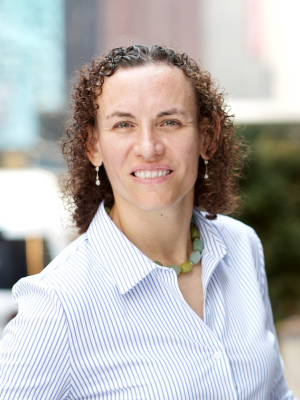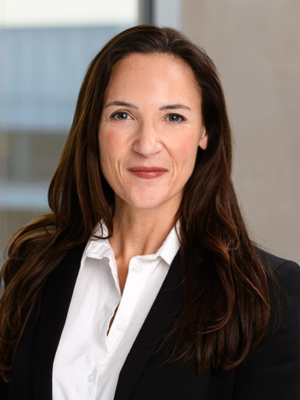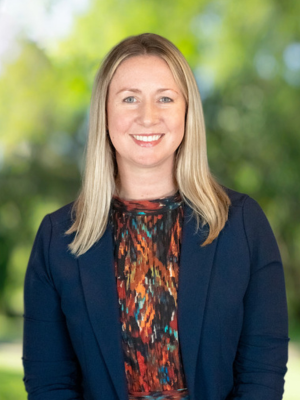
Angela Cruz“One of my love languages is acts of service, and at work, I manifest that through mentoring, supporting career advancement, anything that fosters engagement,” says Angela Cruz. “It’s how I bring to life a part of me that’s very important to my soul.”

For Cruz, the work matters, but it is the people, the learning, and the community that make it meaningful. She shares how through every chapter of her journey, authenticity, connection, curiosity, and service are the compass guiding both her growth and her leadership.

From Technical Skills to Personal Alignment

Moving from the Dominican Republic to the United States at fifteen, Cruz faced the dual challenges of learning English and adapting to a new culture, yet she remained optimistic about the possibilities ahead. She started her studies at a community college, the most affordable and accessible option, and explored different paths before settling on electrical engineering. The choice was pragmatic rather than inspired. “It wasn’t a calling,” she reflects. “I wanted to finish college with a career that had a financially stable future, and technical careers were very well paid.”

That practical decision laid the foundation for Cruz’ first professional chapter at AT&T Bell Labs, where she spent 15 years. She describes it as “like what working for Google or Apple is today,” a place defined by PhDs and cutting-edge innovation. “That’s where I grew up professionally,” she says. But just as important, “that’s where I also learned about corporate culture… to get involved in passion projects that contributed to the culture of the team and the company.”

After more than a decade in technical roles, Cruz realized her personality aligned more naturally with business development. Marketing became a bridge into sales, where she discovered the work felt intuitive. “Sales isn’t something you really learn in a university,” she explains. “It was something I evolved to, and it had a lot to do with my personality—my ability to connect people and build relationships, which is the heart of what sales is.”

Cruz’ combination of technical grounding and people-centered skills propelled her into sales leadership across the telecommunications and software platform landscape. Today at Accenture, she brings those same strengths to her role as Sales Effectiveness leader for Sales Excellence.

“I’m in a sales-effectiveness role, helping account teams bring innovative solutions to clients, all anchored on GenAI and Agentic Architecture. To be in a role that is so relevant to what’s business reinvention and transformation– it’s a huge privilege.”

Connection, Adaptability, and Purpose

The qualities that have carried Cruz forward extend well beyond relationship-building; she describes how cultural alignment, adaptability, and purpose also play a defining role.

“I learned at a certain point in my career what my strengths were in terms of cultural alignment. When I transitioned into sales, I worked a lot with Caribbean and Latin America, which is where I come from. Having the dual language and the cultural sensitivity gave me an edge in navigating that transition, which was very motivating for me.”

That shift into sales also coincided with a move from New Jersey to Miami, which tested and reinforced her adaptability. “Flexibility, being open to adjust to different environments, adapting to new circumstances, it’s something I learned very early on, and that trait has helped me along the way as I navigated my career.”

While connection and adaptability opened doors, purpose is the force that sustains Cruz.

“Every company I’ve been at, I’ve always combined my responsibilities with volunteer work both within the company and within the community. That’s what has kept me with a high level of enthusiasm for what I do. I always need to have the two: not just the job, but also the engagement.”

Leaning on Guidance

As much as Cruz’ strengths have contributed to her achievement, so too are the people who believed in her potential. “I’ve always had a personal board of directors. Some people come into your life for a season, for a reason, or for a lifetime. I’ve had all those types of influences.”

Cruz highlights the mentor who gave her a chance when she had no sales experience and sponsored her move to Miami. “I experienced impostor syndrome in the beginning, but his encouragement eased the transition.  He’s always been invested in my success and has been there through every career milestone.”

That kind of support has remained important at every stage of her career. When Cruz joined Accenture through an acquisition, she recalls how overwhelming the transition felt. “When you come as a group that was just acquired, you’re completely lost. But I was fortunate to work with people like Alex Tyler, a Managing Director and extraordinary leader who was kind, patient and recognized my value.”  Those experiences of being championed are at the heart of why she invests so deeply in others. “I know the power of sponsorship, mentorship, and advocacy. I’ve fully taken advantage of it, and that’s why I feel so strongly about paying it forward!”

Family is also a grounding force. Cruz credits her grandmother, now 101, as a pillar and role model. “She had 13 kids, and now there are about 169 family members over five generations. She’s taught me resilience, strength, faith, and positive mindset. She loves music, she’s witty, light-hearted and full of joy. She’s been a huge influence and my source of inspiration.”

Bring Your Full Self and Build Community

Nearly four decades after making the pivotal decision to study electrical engineering, Cruz was invited to return to her alma mater to deliver the commencement address.  Speaking to over 1,800 graduates, many from underrepresented backgrounds, her message was both simple and profound: “Always be proud of who you are, and bring your full self to whatever environment you’re in. It’s what makes you unique, and the world needs you as an individual and what you bring to the table.”

Second, she highlighted the importance of building community. “I’ve moved and started over several times. Managing those transitions successfully is only possible when you make community, when you connect with people, when you find affinity and appreciate differences. The differences are where you learn.”

For Cruz, this same principle applies in business. Networking, she explains, is less about career advancement than about deepening understanding. “That’s where you really learn –when you connect with people in different companies that do different things than you do. It enriches you as a professional and as a person.”

Continuous Learning, Lasting Pride

Even at this stage of her career, Cruz challenges herself to try something new, recognizing that part of her success is a willingness to evolve. “Continuous learning has been a key driver,” she reflects. “I have reinvented myself quite a few times because I’ve always been open, flexible, and curious to learn.”

Her current position at Accenture is a clear example of that mindset in action. “This was a stretch assignment for me. While I had worked in Sales Operations in the past, the scope is much broader here, in fact is called Sales Excellence for a reason, best in class. There was a lot I needed to learn… and I said, yes, I’ll do it.”

Cruz reflects on the impact of that choice. “Fast forward one year, I feel very privileged and successful, because I helped the team achieve the goals the firm established. It fills me with a lot of pride.”

When it comes to her greatest accomplishment, however, Cruz does not look to her career. “I have very strong family values and my kids are a huge source of pride for me. They are grown and very successful professionals – my older son is in cybersecurity at Zendesk, my younger son is a digital content producer with the Miami Heat, and my daughter works for the president of TelevisaUnivision. I raised them as single parent, and to me, that is, besides work or anything else, my biggest accomplishment. They are my anchor and my beacon of light.”

By Jessica Robaire

Johanna Diaz“In facing challenges or change, I always go back to the questions: Am I in the right place? Am I surrounded by the right people? Am I learning? Am I growing?” says Johanna Diaz. “When you can identify core tenets to return to and hold yourself to them, they become a guide for navigating almost anything.”

Led as much by her intuition as by the foundational aspirations of her first-generation beginnings, Diaz leverages every opportunity to learn, grow, and lead. She shares how her trajectory reflects not only her resilience but also the support of mentors whose influence continues to inform her leadership.

From the Bronx to Goldman Sachs

Born in the Bronx to parents who immigrated from the Dominican Republic, Diaz understood the value of education from an early age: “being a first-generation American, my parents made it a priority for my siblings and me. We were the first in our family to attend university and enter the business world.”

For Diaz, that focus on education was also a path to financial stability, which led her to pursue accounting — a profession she saw as both practical and reliable. Starting her career first as an intern and then as a CPA at Grant Thornton, Diaz gained both skills and exposure. When she was first introduced to Goldman Sachs as a client of Grant Thornton, the experience left an impression.

“I was blown away by the caliber of the people, the rigor around collaborative teamwork and the focus on delivery.” That exposure opened her eyes to possibilities beyond what Diaz had imagined. When the opportunity came to join Goldman, she took the leap. “That was the first big twist in my career as it redirected my vision from accounting to a whole other world of possibility.”

Over the next two decades, Diaz’ career grew organically across business development, research, and ultimately asset management to be the Global Head of Alternatives Product Strategy, a role that she finds equally rewarding and inspiring.

“The last five years have been so incredible, pivoting to the alternative investing landscape. I’ve had the opportunity to help build a business from scratch and expand the shelf as it relates to our products. The content, as well as being a part of a team that is integral to Goldman Sachs’ growth has been so fulfilling.”

The Influence of Mentors and Executive Coaching

Diaz credits her ability to pivot, take risks, and grow in new roles as being bolstered by the mentors who offered guidance and perspective along the way. An early mentor gave her a piece of advice that still resonates: take stock every few years.

“That conversation was pivotal for me. Even 20 years later, every two to three years, I take a personal moment of deep reflection: Where am I? Have I accomplished what I set out to do? Could there be more? That practice has guided me throughout my entire time at Goldman.”

She sees mentors as a personal “board of directors” — people who know her well and can be honest when she calls on them for guidance, whether about career decisions or balancing family and work. “My mentors played a huge role in helping me navigate my personal journey, including building a family, while building momentum in my career.”

Executive coaching complemented that support, giving Diaz structured feedback and tools to grow. Early programs offered through Goldman helped her refine presentation skills, while later on she focused on refining “leadership and communication skills but in a more nuanced way than I’d ever had before.”

Together, mentorship and coaching have provided Diaz with both a trusted sounding board and a framework for continuous growth, shaping the leader she is today.

Values-Driven Leadership

Beyond the mentors and coaches who helped guide her, Diaz points to a foundation of authenticity and integrity as key to her success.

“First and foremost, it’s important to remain true to yourself,” she says. “All of my values anchor around being a good human and working with high integrity. They guide me through everything I do.”

Fairness is equally central. Diaz strives to create a work environment where people feel valued, connected, and confident that they will be treated justly. “I want to be someone people feel comfortable approaching,” she explains. “They should know I’ll listen and provide support.” Drawing on lessons from leaders she has worked with, Diaz shapes her leadership around trust, relationship-building, and followership.

Hard work and high standards also define her approach. She believes in delivering quality work with reliable outcomes and modeling excellence to inspire her team to do the same. “As a baseline, I expect that not only of myself, but it’s also important to me to set the right example that my team then wants to follow,” she notes.

Embracing Risk

While Diaz’s career has been marked by achievement, it has not been without moments of uncertainty. She recalls these moments as an opportunity to pause and reflect.

“Early on, I faced a decision about whether to continue in research or move toward a more strategic, leadership-focused role. It was uncomfortable because I wasn’t sure I’d excel, but I leaned on my core values and trusted mentors to guide the decision.”

Over time, Diaz has learned to embrace risk thoughtfully, viewing it as an opportunity to challenge herself and explore new possibilities. Her recent transition into asset management illustrates this approach. Encouraged by a mentor to consider another part of the firm, she reflects, “it was through that conversation that I realized that it was time to take a risk. I was super comfortable. I had a lot of security. I had to consider, ‘do I want to push myself a little more?’”

Deciding to “take a risk on herself” and accept the opportunity to become the COO of Goldman’s growth business, Diaz says, “was a big transition. But it pushed me, and it’s been the most pivotal part of my career.”

Legacy of Access and Opportunity

Looking ahead, Diaz is focused on creating opportunities for others to grow, much like she was supported throughout her career. “I hope to provide a platform for the teams I work with, and for the junior professionals I mentor, where they have access, exposure, and opportunity the way I did.”

Reflecting on her own journey, Diaz acknowledges how her first-generation roots are a part of shaping this commitment. “We really have lived the proverbial American dream. My parents grew up on a farm — my mom one of 12 kids, my dad one of nine — and through a combination of hard work, timing, and a little luck, we’ve seen growth that isn’t just financial. It’s also about access to the world, to opportunities that otherwise wouldn’t have been organic. It’s important to me and my family to pay it forward.”

Thanks to the holistic support embedded in Goldman’s culture, Diaz also makes an impact beyond the firm through programs like 10,000 Small Businesses. “Having the opportunity to serve as a mentor in the program, I have listened to small business owners’ pitches and given feedback—providing people with access that they otherwise wouldn’t have.”

Ultimately, Diaz measures her legacy by the people she supports. By combining high standards, integrity, and a values-driven leadership style, she aims to cultivate talent, inspire confidence, and foster a culture where people feel valued, challenged, and capable of achieving their potential.

“If, 20 years from now, I can look back and see that the people I touched built successful, meaningful careers, then I’ll know I’ve done my part.”

By Jessica Robaire

Heather Plumski“I lead with integrity and faith,” says Heather Plumski. “That means being honest, thorough, and accountable.”

As President of Stearns Bank, Plumski brings a rare blend of head and heart. She shares how her leadership is driven by values, grounded in purpose, and distinguished by forward thinking with a readiness to own both the good and the bad.

From Part-Time Teller to President

Plumski’s journey started in forensic science before pivoting to accounting, completing her degree in two years. While classmates chased big-city roles, she chose central Minnesota and a part-time teller job that turned into a career.

“I didn’t even know what a credit analyst was,” she recalls. “But it let me work with numbers and small businesses both objectively and subjectively to understand their needs…which I found to be incredibly rewarding.”

Since joining Stearns in 2005, Plumski has led through every phase from underwriting through the Great Recession to helping build the SBA and equipment finance programs. As CFO, she drove strategy. Now, as President, she leads a women-owned, employee-owned institution committed to helping people reach their full financial potential.

“We walk the walk. As employee-owners, we understand the challenges our customers face, and we build solutions that serve them.”

Authentic, Inclusive Leadership

Plumski’s leadership style is rooted in authenticity. “You can’t fake it,” she says. “When you’re aligned with who you are, your decisions get clearer, your leadership gets stronger.”

Her collaborative approach encourages open thinking. “I used to wait until every idea was perfect. Now, I bring it to the table early. It invites feedback and makes the work better.”

She credits her growth to staying curious and stretching beyond her comfort zone. One major stretch? Leading technology. “It was like learning a new language. But I learned I didn’t need to know everything I needed to trust the experts around me.”

Just Keep Going

Plumski pushes back on perfectionism and encourages boldness. “Women often hesitate if they don’t check every box. My advice? Don’t count yourself out – say yes before you say no.”

Her mantra: “Don’t quit on a bad day.” That resilience, she says, has made all the difference.

Coaching, Clarity, and Perspective

Executive coaching has been a game changer for Plumski. “It pulls me out of the weeds. I walk away with clearer thinking, stronger communication, and better perspective.”

Even when she feels too busy to take the call, she never skips it. “I always leave better than I came.”

Empowering Employees, Growing Communities

Looking forward, Plumski is focused on deepening Stearns Bank’s impact from growing employee ownership to expanding inclusive financial solutions nationwide.

“Our Employee Stock Ownership Plan isn’t just a model. It’s a movement,” she says. “When we help our customers succeed, our employee-owners build generational wealth.”

That sense of shared prosperity also drives Stearns’ focus on underserved markets. “We listen first. Then we build whether it’s through our Salaam Banking Division or nonprofit solutions. And by the time the rest of the industry catches up, we’re already on to what’s next.”

Family and the Mountains

When she’s not leading a national bank, Plumski is hiking, running, canoeing and simply soaking in family life with her four kids, husband and extended friends and family.

“There’s something about the mountains,” she says. “They remind me how small we are, and how big our purpose can be.”

By Jessica Robaire

Marie Bober“I naturally step into a role when there is a dearth of leadership,” says Marie Bober. “It’s just part of who I am – I see the need and think, ‘I got it.’”

From captaining sports teams as a kid to speaking up in moments of silence, taking charge has always felt instinctive for Bober. “I come from a really long line of very bossy women,” she laughs. “I think it’s probably genetic.” While her grandmothers ran their households with authority, her mother broke barriers, becoming one of the first women to earn a PhD in chemistry from NYU in 1972.

That inherited sense of purpose shaped Bober’s own unconventional path. She started college as a chemistry major but quickly pivoted to psychology. Drawn to forensic work, she earned a master’s and spent three years at a pediatric psychopharmacology lab at Massachusetts General Hospital researching ADHD and pediatric bipolar disorder.

“My plan was to go on to get my PhD, but research itself started to feel like a tough long-term path with low pay, questionable ethics in some corners, and not a great ROI if you wanted a sustainable career.”

Still captivated by the intersection of law and human behavior, Bober pivoted again, this time to law school at Northeastern University. Being a part of Northeastern’s distinctive co-op program allowed her to try a little bit of everything: working with a solo practitioner, in a judge’s chambers, the DA’s office, and an in-house legal team.

“In-house was by far my favorite, but you don’t just go from law school to in-house,” says Bober. Instead, she built her experience through small firms, auditing work, and ultimately opened her own practice while keeping her eye on the long game.

Bober’s diligence paid off when a friend offered her an in-house legal role at Gracie Asset Management, a Moelis subsidiary. The only catch was the job was in New York, which meant that Bober and her wife had to live long distance for a few years. When Gracie had a key man event resulting in steep layoffs, Bober moved over to the parent company. After a few internal moves – and the sudden loss of a friend that left a senior counsel role vacant – she was promoted into her current role as Chief Compliance Officer and Senior Counsel at Moelis Asset Management.

Breadth that Delivers

Looking back on what has helped her succeed, Bober points to adaptability and a breadth of knowledge, both of which are essential in a role that spans legal and compliance.

“To be in this particular role, you can’t be rigid or precious,” she explains. “We’re an entrepreneurial business…everybody’s got to do a little bit of something, and you have to be okay with that. We’re always thinking about new strategies, markets to tap and ways to get clients. It’s flexibility and a willingness to pick up the next thing and learn.”

Bober points to the growth of the business as another part of what requires adaptability: “when we started, we were private equity. Now we’re private equity, broadly syndicated loans, direct lending, seeding of emerging managers, venture capital.”

As the business expands, so too does Bober’s knowledge base, which is necessary for her to guide legal and compliance issues.

“I call myself a triage nurse because there are certain areas that I’m deep in, like fund formation or structuring, but then I also have to be able to direct counsel for things like litigation, tax matters, or employment. I might not be an expert on all those issues, but I must be conversant enough so that my subject matter experts can direct me effectively.”

What They Didn’t Teach in Law School

Beyond technical range and flexibility, Bober believes that one skill rises above the rest when it comes to lasting success: knowing how to navigate people.

“How to handle and approach people is key; it gets you so much further than even your technical knowledge,” she emphasizes. “One of the things law school doesn’t teach you is that if you’re a practicing lawyer in a firm, networking is 98% of your job. To be a partner at a law firm means that you bring in a good amount of business.”

Bober adds, “My boss likes to joke that he thinks that my psych degree sometimes helps me more than my law degree because it definitely gives you a framework for understanding people.”

That understanding shapes the way Bober communicates, builds relationships, and earns trust, especially in the context of leadership and knowing how to manage in all directions.

“Managing up is a skill that’s rarely taught, and it matters just as much as managing direct reports. I’ve learned how to communicate differently depending on who I’m talking to, and how to present something in a way that gets the right response.” As Chief Compliance Officer, she often needs people to act on specific requests and ideally, do so with genuine buy-in. “I’ve seen people try to lead through fear or pressure, but that only works for so long. Eventually, people tune you out.”

It is a message she impresses on junior staff as well: “be proactive, message appropriately, be polite and respectful, and if you make a mistake or get it wrong, have the ego to walk it back and take responsibility. It builds trust.”

Leadership as a Team Sport: Fostering Growth Over Competition

In an industry known for individual ambition, Bober takes a different approach to leadership; one that is shaped by hard-earned lessons and a clear sense of the kind of environment she wants to create.

“I’m a competitive person,” she says, “but I try not to be competitive at work. That’s not the environment I want to foster.”

Earlier in her career, Bober saw firsthand how toxic leadership can erode trust. She recalls a former manager who guarded her influence closely and refused to use any of her political capital to support others.

“When my mom passed away, I got two days of bereavement. Other department heads had given people the full week, but my boss told me if I wanted the extra time to attend the funeral, I’d have to use vacation days. She didn’t want to spend any of her political capital justifying why I was not billing or there for that week.” That experience left a mark, but also a guidepost: “It taught me exactly the kind of leader I don’t want to be.”

Now, as a senior leader herself, Bober sees mentoring others not as a threat, but as part of what defines strong leadership. She draws inspiration from Brazilian Jiu Jitsu, a sport she trains in outside of work.

“My coach always says he never hides the best parts of his game because if someone can master it in two weeks and beat him, they deserve to win.” The same philosophy, she says, applies in leadership. “Helping my associate grow, bringing her along and giving her what I can to help her succeed doesn’t threaten me; it strengthens the team, and if I ever move on, she’s ready to step in.”

Success, On and Off the Mat

Whether she is preparing for a Brazilian Jiu Jitsu tournament in New Jersey or aiming for another podium finish at Masters Worlds in Las Vegas, Bober brings the same focus and drive to the mat that she brings to her role at Moelis. A two-time Masters World Champion as a brown belt and now a black belt competitor, she thrives on the discipline and challenge of competing and on the fulfillment it brings outside the office.

That mix of ambition and purpose is intentional. “I strove to have an in-house position. I strove to have work-life balance in my career,” she says. “And I think I’m in a spot where I can do both.”

For Bober, success is not about chasing the highest title or the biggest paycheck. It’s about feeling grounded, challenged, and able to pursue what matters. “I can sing in a rock choir on Tuesday nights. I can do jiu jitsu. That’s what makes it all worth it.”

By Jessica Robaire

Nicola Free“It’s hard to teach determination, but if you’ve had setbacks, and you’ve had to fight to get to where you are, it is built in you to keep going,” says Nicola Free. “It’s how quickly you bounce back, what learnings you take away, that can make you even stronger.”

With a career shaped by determination, hard-won resilience, and a commitment to leading with integrity, Free does not just navigate change — she drives it. She reflects on how embracing risk, learning from inspirational leaders, and trusting in both her existing skills and her capacity to grow have been central to her journey.

Taking Risks and Having Faith in Herself

From an early age, Free learned to be a self-starter. She reflects, “I came from a very working-class background and went to the worst school in Warwickshire. I had to teach myself my GCSEs because the classes were so disruptive.”

Determined to “do something with my life and make my parents proud,” Free was the first in her family to attend university, where she pursued law. However, it did not take long for her to realize that the legal path, while hard-earned, was not where she wanted to stay. When a client she had supported on a major securitization project invited her to help launch a CMBS platform, she made a decision that would completely change her career.

“It was definitely a big risk,” Free admits. “I would never have anticipated that I would have left the law a year after qualification, but this new opportunity sounded really interesting.”

Jumping into a completely new environment, Free recalls that “a third of it was in my comfort zone and two-thirds I was learning from scratch.” Free leaned on what she knew: her work ethic and resilience.

“Have confidence in the skills you bring, work hard to learn what you don’t know, and don’t give up at the first hurdle. Be willing to take a leap of faith. Ultimately, it’s about believing in yourself; that you’ll get there, and that you can do it.”

That mindset has carried her through ever since. Today, Free is a recognized leader in her field. As Head of Commercial Real Estate (CRE), EMEA for Wells Fargo, she is driving the firm’s CRE strategy across Europe, strengthening its capital markets capabilities, and deepening client relationships in the region.

“It’s a hugely exciting time to be a part of this business and the opportunity ahead of us…this is the year that the strategy is all coming together.”

Leading with Humility and Authenticity

When reflecting on her leadership approach, Free emphasizes the importance of clarity, humility, and authenticity.

“I always try and bring people along with me,” she says. “Give them a vision of what the strategy is, what we’re trying to achieve…make them feel like they’re part of something really special.”

She continues, “it’s about leading with integrity, humility, and doing the right thing for the business, the clients, and the strategy we’ve set for ourselves.”

Mentoring and feedback are important elements to how she leads. “The only way I managed to make a success of my career change was having good people around me who were prepared to coach and teach me,” Free says. “It’s incumbent on us all, particularly as leaders, to be that player-coach where you take the time to give people feedback and help them develop.”

She recognizes that it is also about holding oneself accountable when things go wrong and ensuring others are recognized when they go right. “When things are going really well, make sure people are getting the credit.”

Find a Culture that Aligns with Your Values and Leadership who Embody It

While Free is unquestionably guided by a strong internal compass, she also highlights the vital role that external factors, particularly an organization’s culture and leadership, play in shaping meaningful career development.

“One of the things I’ve learned throughout my career is to ask: What’s the culture? What kind of institution do you want to work for? At Wells Fargo I enjoy working for a bank that has a strong culture that I can relate to while being guided by truly inspirational leaders.”

Free is particularly inspired by Kara McShane, Head of Commercial Real Estate at Wells Fargo, “who is seen as one of the most influential women in finance.”

“To be able to work for somebody like her is really inspiring…and when you have leaders you trust and respect, you want to do your best for them.” It’s a dynamic she now pays forward to her own team. “I want them to come in and feel they’re part of something great, and that they want to succeed because they believe in me, in the business, and in the leadership above me.”

Be Bold. Own It.

Surrounded by leaders she respects, and serving as one herself, Free is acutely aware that leadership is not just about results; it’s also about presence. For women in real estate finance, that presence is still too rare at the top.

“If you’re a woman running a lending business in this industry,” she recalls reading in Real Estate Capital, “then you’re pretty extraordinary.” The line gave her pause, not out of self-congratulation, but reflection. “I come in and do my day job because I love it and want us to succeed. I don’t think of myself as any different than any other leader. But seeing that made me realize there’s a responsibility that comes with being one of the few.”

It is a responsibility that Free takes seriously. As she has risen through the ranks, invitations to speak and serve on panels have increased, and she uses them to push for broader representation. “I’m always conscious about making sure there are other women at the table, that the panels are diverse, and that we’re holding ourselves and others accountable.”

Her visibility is intentional. Instead of blending in, she embraces standing out.

“There’s a big real estate conference I go to every year,” she says. “You queue to board the flight, and it’s just a sea of men in navy suits. I make a point of wearing something bright and own the fact that I’m not the guy in the navy suit. I’m the woman in the bright red dress. It’s an opportunity to be seen.”

She emphasizes, “Being different can make you more memorable. It’s not just about gender. You might be younger, newer, or from a different background. Whatever it is, don’t be afraid to be visible. Have confidence and own it.”

Outside of work, Free applies the same conviction and focus to her personal life. She’s a mother of two daughters, and a competitive CrossFit athlete.

“I’m a strong working mom, and it demands a lot of my time, but I’m showing my girls what working hard and loving what you do can lead to and I’m not apologetic about it.” CrossFit is her outlet, her reset. “When I am training hard, I’m not thinking about anything other than being in the moment… it’s a really good way of switching off.”

That thread of determination runs through everything she does, whether it’s qualifying for a legal career, shifting into finance, growing a business, mentoring a team, or lifting a barbell.

“When things get really tough, don’t give up,” she says. “If you keep digging in, you’re going to feel so great at the end of it.”

By Jessica Robaire

Christine McIntyre“When you reach the C-suite, you understand that you’re not supposed to know everything. You’re not meant to have every skill,” says Christine McIntyre. “What really matters is building a team with those skills and knowing how to identify and leverage their strengths to get the right things done.”

McIntyre shares how pivotal choices, purpose-driven work, and a commitment to self-awareness shaped her path to CFO. Through coaching and experience, she’s learned that great leadership starts with knowing yourself and knowing how to assemble the right mix of talent and tools to be effective.

From Investment Banker to CFO

“It’s been a winding road, one I never could have predicted,” McIntyre says of her path to CFO. A psychology major, she started out in Bank of America’s Executive Compensation group, but a well-timed connection soon pulled her into investment banking. This launched her 15-year career in public finance, where her clients were state and local governments.

Despite the excitement and pace of investment banking, something was missing. “Public finance never really captured me. It felt like the same type of deal over and over again,” she reflects. That growing disconnect led her to take a bold step: leaving investment banking to become Director of Finance at a water utility in Alexandria, Virginia. “At the time, I saw it as a step to eventually get away from the public sector work,” she says. “But instead, I fell in love with it.”

Working closely with the city she lived in, McIntyre found deep satisfaction in seeing the direct impact of her work, like financing a massive environmental project in historic Alexandria. When the utility’s CFO departed, McIntyre stepped up, eventually earning the role officially. “It was my first time as CFO and my first time on an executive leadership team — it was a tremendous experience.”

A desire to be closer to family during the pandemic brought her back to North Carolina, and after months of commuting, McIntyre landed what she knew instantly was the right next step. Now as CFO at Raftelis, she has found the perfect intersection of private-sector leadership and public-sector impact. “It’s the same client base I worked with in investment banking – cities, counties, utilities – but now I get to blend strategic leadership with direct project work, which keeps me grounded in what our clients really need.”

Natural Instincts, Sharpened with Coaching

McIntyre describes herself as a driven, energetic leader, someone who moves fast, gets things done, and brings enthusiasm to every challenge. “In some ways, leadership comes naturally to me. I’m a very hard-driving, direct person,” she says. “That kind of energy has been appreciated by my employers.”

However, she is also quick to acknowledge that leadership is not just about instinct, but rather it is a craft she has worked to refine over time. “There is a lot about leadership I had to learn,” she admits. “I’ve worked with several executive coaches throughout my career, and each one has helped me grow in different ways.”

One pivotal experience came during her time at the Alexandria utility, where the organization was preparing for a major CEO transition. A leadership coach was brought in to support the executive team, and the timing could not have been better.

“The coaching relationship was incredibly helpful. It taught me how to use my strengths, but also how to soften my edges,” she reflects. “Particularly in the public sector, I had to learn to slow down and take everyone else on the journey.”

She continues, “I’m a big proponent of coaching. Everyone has blind spots. It’s not about changing who you are, it’s about understanding your tendencies and adjusting to the context you’re working in.”

Leading Beyond Your Expertise

McIntyre sees strong leadership not as a matter of having every skill, but of understanding where you need support and how to get it. “Now that I’m further along in my career, I don’t feel the same pressure to know everything, I’ve learned to take that weight off my shoulders.”

McIntyre applies that mindset to building teams and networks. “I’m not a traditional CFO in the sense that I don’t have an accounting background. When tough accounting questions come up, I don’t pretend to know it all. I focus on finding the right resources.” In one instance, recognizing a gap in deep expertise of government accounting, she sourced a specialist through a consulting firm. “Having someone I could call made all the difference.”

Rather than defaulting to solving everything internally, McIntyre believes smart outsourcing is often the more strategic and cost-effective choice.

“Our water utility was small, so we outsourced a lot, and it was hugely beneficial. Some companies think it’s cheaper or more efficient to handle everything internally, but that’s not always the case. There are highly specialized tasks where it makes more sense to pay a consultant for 100 hours of work than to hire a full-time employee. I’ve brought that same approach to my role as CFO of Raftelis.”

McIntyre advocates for creating a roster of experts through intentional networking, actively seeking out specialists who can offer support when needed.

“If we use a certain software, I’ll seek out someone in my industry who uses it too. Those connections are gold because we can help each other in ways no one else can.”

Whether it’s tapping into external networks, attending user conferences to meet industry peers, or outsourcing specialized work, McIntyre sees her role as assembling the right mix of talent and tools. “I see myself as a resource manager and that’s a big part of what makes me effective in my role.”

Advice for Navigating Your Career

When offering advice to those a few years into their careers, McIntyre stresses the importance of not getting so caught up in the daily grind that you lose sight of the bigger picture. “It’s important to remember that your career and your job are two different things. Whether you are happy in your current job or not, you always want to think about your broader career trajectory outside of the present position,” she explains.

Building and maintaining connections, she notes, is essential for staying aware of opportunities.

“Keep up with LinkedIn and go to networking events. Don’t get so heads-down focused on being successful in your current job that you don’t also build connections outside in industry groups and peer groups.”

McIntyre also encourages professionals to remain open to unexpected opportunities rather than adhering to a rigid career path.

“There are many times where you can make lateral moves or jump to a different sector and surprise yourself,” she says. “Earlier in my career, I was too narrow in my thinking about what I was capable of, when in reality, I could do so much more than I gave myself credit for.”

Where Purpose Meets Impact

McIntyre draws inspiration from the mission-driven people she’s worked with, especially the bold, principled women in public service. “They could be doing anything with their talents, but they choose local government because they care about their community,” she says.

That sense of purpose fuels her work. From financing capital projects to leading infrastructure initiatives, she’s energized by the tangible impact. “When it’s actually happening in your community, especially a big, transformative project with environmental benefits, it’s even more exciting.”

Now, as CFO of Raftelis, McIntyre continues to see that connection firsthand. Whether it’s Baltimore, Philadelphia, or a smaller municipality, the projects Raftelis supports – often centered on clean water, infrastructure, and long-term planning – tie directly to community well-being. “We help communities figure out how to pay for it all and keep their bills affordable enough that their customers can manage them.”

That sense of purpose extends beyond work. To sustain the energy she brings to her role, McIntyre prioritizes self-care and mental clarity. “I bring a lot of enthusiasm and energy to what I do, and I can’t really turn it off,” she says. “But I know that if I keep it up all the time, I’ll burn out.” A longtime hot yoga devotee, she carves out time each week for practice and once a year, she attends a retreat, often unplugging for days at a time. “After about two days without screens your thinking hits a different level,” she says. “It gives me a broader perspective on my life without all the little distractions.”

By Jessica Robaire

Jennifer Marsland“While I’ve always worked in travel, this role is truly unique because we’re saving lives,” says Jennifer Marsland. “That’s what makes this company and our work so meaningful.”

A Passion for Sales in Travel Risk Management

For nearly two decades, Marsland has thrived in the travel industry, energized and excited to drive sales in a space she is personally passionate about.

“Once you’re in the travel industry, you never want to leave,” says Marsland. “I talk to friends who’ve been in travel for years, and we all say the same thing: What else would we do? I love that this job takes you all over the world and lets you connect with people about where they’re going and what they’re experiencing.”

Now as Head of Sales for World Travel Protection, Marsland is thrilled to take that passion to the next level by being involved in an area of the industry that makes a tangible difference in people’s lives.

“I’ve always been in sales. My first real job was in a shoe store, so I feel like I’ve always sold something. But here, we’re not just selling, we’re saving lives. We’re helping business travelers travel safer and get the care they need.”

World Travel Protection specializes in helping business travelers navigate risks, from securing accommodations in safe areas to managing major crises like medical emergencies, political unrest, or natural disasters. Marsland’s belief in the company’s mission is deeply personal. She recalls the moment she landed in Paris in 2015, just as terror attacks unfolded, leaving the city in lockdown. “It was pretty scary with flights canceled, uncertainty everywhere. How do you navigate that?” That experience solidified her understanding of the real need for travel risk management.

Returning to the travel industry after a brief pivot during the pandemic, Marsland is energized by the chance to build something new as the Head of Sales for North America. “They were looking for someone to develop their North American sales team and drive growth. Now more than ever, people need what we do.”

Keys to Success: Positivity and Adaptability

A strong belief in positivity has been a guiding force throughout Marsland’s career. “One of my core leadership values is positivity. I truly believe things happen for a reason, and that even when difficulties arise, it will all work out in the end.”

Beyond optimism, Marsland credits adaptability as essential. Having worked at a company where she reported to 17 different managers in 15 years, she learned to navigate constant change. “Whether it’s a reorg, a job change, a new manager, stick it out, things will shift. If a move wasn’t right, it will course-correct. You’ll get a different manager, or land in the right role. It’s about being open to change.”

Marsland’s own adaptability was tested during COVID-19, when the travel industry ground to a halt. Instead of waiting for things to return to normal, she pivoted to a Silicon Valley startup specializing in identity verification technology. The shift forced her to stretch beyond her usual expertise and reinforced an important lesson: “You also have to be willing to take risks. No one is going to tap you on the shoulder and promote you. You have to apply, ask, put yourself out there.”

Learning from the Best

Marsland’s tenacity stems from an early mentor: her mother. A successful artist and master negotiator, her mother taught her the value of asking for what she wanted. “She negotiated all her own contracts. She passed away ten years ago, but we’re still getting royalties because her contracts were so strong.”

As a self-described shy child, Marsland credits her mother for pushing her outside her comfort zone, whether encouraging her to take a job selling shoes in college or urging her to seize new opportunities.

“She really influenced how I approached my career — whether it was landing a job, excelling in a role, or advocating for myself. I often think back to how she never hesitated to ask for what she wanted or go after opportunities.”

Listening and Letting Go

Among the most important skills Marsland’s honed as a leader is the ability to listen. “I always remind myself to listen to understand, not to respond.”

In sales, this lesson is particularly relevant. Too often, she notes, salespeople focus on delivering information rather than asking the right questions and truly hearing the customer’s needs.

Another key insight she highlights is letting go of the need to dictate how things get done, particularly as leadership requires a shift from being an individual contributor to keeping the larger picture in mind. “I’ve been in sales. I know how I would do it. But I’ve learned that different people have different styles — and that’s a good thing.”

She recalls a former manager who exclusively hired people with identical approaches. “You end up with a team that lacks diversity in thinking. I don’t think that’s great for business.”

In building the team at World Travel Protection, Marsland is intentional in looking for diverse viewpoints and approaches. “I want different perspectives, different strengths. One person might be great at presentations; another might excel in negotiations. As long as the job gets done, I don’t need everyone to work the same way.”

Mentorship and Women in Leadership

Committed to supporting the next generation of female leaders, Marsland mentors through GBTA’s (Global Business Travel Association) WINiT program. She helps mentees explore what they want to do next in their career, touching on such issues as how to showcase leadership skills or build out a better resume.

“I impart experiences that I’ve been through and what’s worked for me, encouraging them to talk to other women within the industry that they admire and learn from them.”

Interestingly, Marsland’s own mentors have primarily been men. “I’ve worked in male-dominated industries, so that’s just how it worked out. But now, at World Travel Protection, I’m surrounded by strong female leaders. My boss’s entire leadership team is women. Even at our parent company, Zurich Insurance Group, more than half of the executive leadership team is women. It’s refreshing to be in an environment where female leadership is the norm.”

Building for the Future

At this stage in her career, Marsland finds the greatest satisfaction in building, whether it’s teams, strategies, or relationships. “You don’t always get the chance to leave your mark, but I feel like I’m doing that here — this is my team, and I’m shaping what we’re building.”

With geopolitical shifts, evolving risks, and an increased focus on corporate travel safety, she sees immense opportunity ahead. “Companies need risk management now more than ever. We have great momentum, a strong team, and a supportive leadership structure. This year is going to be an exciting one.”

Work-life integration also plays a role in her enthusiasm. “World Travel Protection makes it easy. Sometimes I have late-night calls with Australia, but if I need to step out during the day for an errand, I can. That flexibility makes all the difference.”

Having that flexibility also allows Marsland to care for her six beloved pets: two dogs and four cats. And while travel is central to her career, it’s just as much a passion in her personal life. “I try to visit a new destination every year. We just booked Argentina and Uruguay. But my favorite place is Tokyo — I’ve been nine times, and I’d go again in a heartbeat. I’ll travel anywhere, anytime, just for the experience.”

By Jessica Robaire

Pamela Codo-Lotti“Throughout my life, I’d often find myself in situations that were unfamiliar, but having the will to take the harder path typically leads to greater rewards,” says Pamela Codo-Lotti. “When I left Côte d’Ivoire for France, and later France for the U.S., my parents would ask, ‘Why do you always choose the most difficult route?’ But I’d remind them — that’s the example they set.”

Resilient and driven, Codo-Lotti is continually inspired by the values her parents instilled in her from a young age. As a newly minted partner at Goldman Sachs, she has embraced challenges with relentless determination, a strong intellectual curiosity, and an unwavering commitment to her clients and colleagues. From her early love of numbers and education to her passion for mentorship and financial independence for all, Codo-Lotti shares how persistence and purpose are central to her journey.

From Associate to Partner

Fueled by an early interest in numbers and giving advice, Codo-Lotti found a career in finance to be the perfect fit.  After moving to the U.S. from France to earn her MBA at the Wharton School of Business, Codo-Lotti joined Goldman Sachs as an Associate.  Over the next two decades, she rose through the ranks up to her recent promotion to partner.

“It was a great moment because it’s a recognition by your peers and by your clients, of all your hard work,” she reflects. “I look forward to continuing to focus on building a stronger business, giving advice to more clients, and mentoring more people.”

For Codo-Lotti, the partner title is not just an accolade but a platform to amplify her impact.  “As a senior leader, I have a deep understanding of the firm, allowing me to offer practical guidance and support to others in achieving success.”

Codo-Lotti credits her natural curiosity as an important element in her career evolution.  “Finance is an expansive and ever-evolving field, and there’s always more to learn. Curiosity drives me — I’m constantly reading, exploring, and deepening my understanding of different areas, even in my current role.”

A Foundation of Education and Determination

Codo-Lotti notes how her insatiable curiosity and determination are rooted in her childhood and the inspiration of her parents, whom she considers trailblazers.

“They came from a small African country, Benin, and were sent to study in France on merit-based scholarships. They always told us, ‘Your brain is the most important thing. Nurture it.’ They went out of their way to get us to the best schools, no matter what.”

Her parents’ determination to give her a solid educational foundation was equally matched by Codo-Lotti’s internal drive. She highlights this quality as an important element to her success.

“There is a little white dog in a famous French cartoon named Idefix (“Idee Fixe”), which literally means ‘fixed idea.’ My dad nicknamed me that because even from a young age, when I want something, I go after it. Persistence and staying focused on the end goal really helped me in my career and got me through difficult and challenging moments.”

An Empathetic Approach

“People often tell me that I’m very empathetic,” she says. “It has been a tremendous asset because my clients know that I genuinely care. When someone has a problem, I really want to find a way to help. I think it has played a significant role in my career.”

Empathy also shapes Codo-Lotti’s leadership style. She explains, “In a team there will inevitably be a lot of opinions, so it is important to understand where people are coming from and what they’re looking to achieve.”

In addition, she tries to be  intentional about being accessible to her team, recognizing that as she becomes more senior, the perception of her availability and approachability may change.  “It’s important for me to spend time with my team at work, but also making sure we connect informally, whether for a quick coffee catch-up or dinner.”

Mentorship Advice

Beyond the inspiration of her parents, Codo-Lotti points to the guidance of mentors as integral to her career development. Now as a mentor to others, she advises, “the most important thing is to trust yourself and not shut down your own voice. While advice from mentors is important, they succeeded based on who they are. What works for them may not work for you.”

She continues, “what I tell people is that I will give you advice and tell you what I think is best, but at the end of the day you have your own instincts, and you have to see if that fits with who you are and what you want to do.”

When it comes to fostering mentoring relationships, Codo-Lotti encourages taking initiative. “Sometimes you have to take chances. Whenever I worked with someone who impressed me, I put time on their calendar and introduced myself. Sometimes you click, sometimes you don’t, but when you do, you invest in that relationship.”

Finding Strength in Uniqueness Through Executive Coaching

Executive coaching has played a pivotal role in Codo-Lotti’s growth, particularly in embracing her uniqueness while leveling up her communication skills. “I’m a French native speaker; English is my second language. When I came to the U.S., it took me a while to view my accent not as a disadvantage, but as something that made me unique.”

Coaching helped her refine her communication. “I focused on how I could be more structured, more powerful, more impactful—so that the accent became a strength. The firm provided me with a coach who helped me work on my communication and presentation style, which really made a difference. I also found having an external perspective, someone who listens and helps you understand how others hear you, to be invaluable.”

Committed to Education and Financial Independence for Women

Looking ahead, Codo-Lotti is passionate about uplifting the next generation.  As a senior leader at Goldman Sachs, she emphasizes, “I hope to help a lot of talented and diverse junior bankers succeed.”

Codo-Lotti looks to extend that impact beyond Goldman Sachs through her work with the Jeremiah Program, which helps single mothers return to college.  As a member of the board, Codo-Lotti is thrilled to be a part of the program’s mission.

“By supporting single mothers in pursuing their education, there is an opportunity to break the cycle of poverty across two generations — empowering both mother and child, so she doesn’t have to choose between her education, financial stability, and caring for her family.”

As a mother of a young family, Codo-Lotti finds joy in watching their intellectual curiosity take shape. “It’s fascinating to watch my children grow into their own as human beings.  My husband and I love seeing their minds expand, even when it means that they start beating us at board games. It’s a reminder of how quickly they’re learning and evolving.”

Just as she was encouraged to nurture her mind and embrace learning, Codo-Lotti is committed to passing that mindset forward — both at home and in her broader mission to empower others.

By Jessica Robaire

Julie Burger“I’m incredibly proud of what we’ve built—not just as a public finance department but in the way we serve and connect with clients, which has always been a priority for me,” says Julie Burger. “Being a player-coach leader lets me guide the team while staying hands-on, delivering smart, impactful solutions every step of the way.”

For nearly two decades, Burger has dedicated her career to public finance, crafting a path defined by hard work, meaningful connections, and a passion for tangible impact. From her very first internship at Bank of America, she realized she had found the right fit—a field that blended challenge and purpose in ways that resonated deeply.

“I loved public finance,” Burger reflects. “It’s been my career since day one. Starting as an analyst, I worked incredibly hard to learn, grow, and show that I was willing to work harder than anyone else. That’s been a central theme in my career— dedicating myself fully and relentlessly to everything I do.”

In 2011, Burger joined Wells Fargo during a pivotal moment when the firm was in a building phase. “I had the chance to help build our transportation public finance practice from the ground up,” she recalls, noting how much she enjoys collaborating with her clients and colleagues on meaningful projects.

Her unwavering tenacity and passion didn’t go unnoticed. Two years ago, she was named Co-Head of Public Finance. “It was a challenge and an opportunity,” she says. “Public finance needs more women leaders, and I felt I owed it to myself and others to step up. It’s been incredibly rewarding.”

In her leadership role, Burger, alongside her co-lead, has guided her team to remarkable success, achieving a top-five ranking as senior manager of negotiated issuance in the municipal market. “I’m incredibly proud of what we’ve built; it’s the result of the team’s hard work and dedication,” she says.

The Tangible Impact of Public Finance

One of the reasons Burger remains passionate about her work is its visible, lasting impact. “Public finance is about infrastructure—the roads we drive on, the hospitals we visit, the colleges we attend,” she explains. “It’s tangible. When we work on a project, we’re helping to build something, which isn’t always the case in every area of finance.”

From bridges in Pennsylvania to a new street lighting system in the District of Columbia, Burger finds inspiration in being part of something bigger than herself. “Infrastructure is vital—it shapes how people move, access clean water, and build their communities,” she says.

Hard Work, Empathy, and Embracing Change

Reflecting on her success, Burger credits a few core principles. “Be willing to put in a lot of hard work. When you put in the effort, people notice—your boss, your clients, your colleagues. It makes a difference,” she says.

Burger also points to being kind and empathetic as important in her career. “Sometimes women feel they can’t be empathetic because it might seem like a weakness. I think the opposite. Empathy is a strength. I came up the ranks, so I understand what it’s like to be a junior analyst or a woman trying to succeed in this business.”

In addition, Burger highlights being solution oriented. “It’s about being thoughtful in how I serve my clients and delivering the absolute best results. I care deeply about the people I work with, and that drives everything I do.”

While hard work, empathy, and being solution-oriented have been her guiding principles, Burger candidly admits that embracing change has not come as naturally—but it’s a skill she’s intentionally developed to grow and succeed.

“I’m not someone who loves change,” she confesses. “But one of the best pieces of advice I got—and now share—is to push yourself out of your comfort zone. Challenges can be scary because inevitably they involve change, but it leads to growth. It’s about taking calculated risks and being okay with change when you know it can lead to something better.”

The Player-Coach Approach

Throughout her career, Burger has refined her leadership style, finding that the player-coach approach aligns best with her strengths. “I’ve always loved working with clients—solving problems, delivering solutions. When I took on this role, I didn’t want to lose that connection,” she explains. “I still actively work with clients, and I think my team appreciates that I understand what it’s like to be in the trenches.”

She believes in leading by example. “It’s not about telling people what to do—it’s about showing them. I’ve worked under some great leaders who stayed close to the work, and I’ve tried to emulate that.”

In addition to being intentional about the kind of leader she wants to be, Burger also emphasizes the value of creating a positive team culture. “Nobody succeeds alone. I want my team to understand that being a good teammate is key to success—not just for themselves, but for everyone.”

Mentorship is a Responsibility

At Wells Fargo, Burger continues to look for opportunities to give back and support the next generation of leaders, whether through formal arrangements like the Women Go Far initiative or informally within her team. She sees mentorship as a responsibility, especially for women leaders.

“It’s important for women leaders to pay it forward—that’s how we ensure the next generation of women rises to leadership. Whether it’s mentoring junior professionals or collaborating with peers, sharing lessons learned and lifting each other up is essential to building a stronger, more inclusive future.”

Finding Balance

Outside of work, Burger has found ways to unwind and maintain perspective—something she acknowledges she didn’t prioritize earlier in her career. “One thing I’d probably tell my younger self is to do a better job at work-life balance,” she reflects. “I was very focused on work and succeeding, but it’s important to have that balance. It makes you better, more grounded, and centered.”

Yoga has been one of the ways she achieves that balance. “I’ve gotten into yoga over the last few years. It’s a great way to de-stress and spend an hour without a phone, just focusing on the moment.”

A lifelong sports fan, Burger spends her Sundays immersed in football. “People know not to bother me from 1:00 to 7:00,” she laughs. She’s also passionate about animals and finds fulfillment volunteering at a local shelter, giving back to a cause she’s always cared about.

By Jessica Robaire