Caroline FriedmanBy Jessica Darmoni

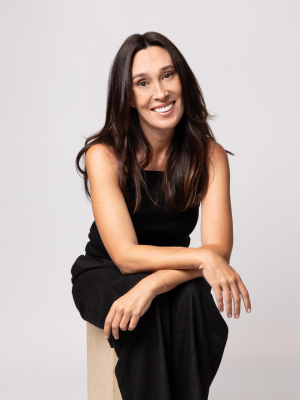
“With the GENIUS Act establishing a federal framework for stablecoin issuance, the window to define what responsible stablecoin infrastructure looks like is right now,” says Caroline Friedman. “That is a moment I wanted to be a part of, and it has been energizing to build a strong team at Bastion to seize it.”

Friedman is the COO and Board Member at Bastion, a financial institution purpose-built for stablecoin services, and she has spent her career preparing for exactly this kind of moment. A founding member of the company, she oversees legal, compliance, finance, operations, and go-to-market, and brings to the role something rare in the industry: extensive experience in both the public and private sectors.

She started as an associate attorney in the government regulations practice at Jones Day in Washington D.C., then became a federal prosecutor in the National Security and International Crimes Unit in the Eastern District of Virginia, and later in the Major Crimes Unit in Colorado. From there she moved into crypto as Chief of Staff and Regulatory Strategy Counsel at Kraken, then as Chief of Staff at a16z crypto, before co-founding Bastion.

From Courtroom to Crypto

The prosecutorial years set a standard Friedman has never lowered. “Federal cases demand precision. Every detail matters and the analysis has to hold up.” That same rigor now runs through every compliance framework and governance structure she builds at Bastion.

Her two Chief of Staff roles gave her something equally formative: a way of seeing across entire organizations at a moment when the crypto industry was still taking shape. At a16z, the vantage point was clarifying. “Sitting close to world-class investment partners and seeing dozens of companies up close was an education in pattern recognition. You see what separates the teams that scale from the teams that stall, and that lens stays with you.”

She is equally direct about what those platform roles built in her as an operator. “I learned how to operate across an entire organization, how to support leaders, how to be a force multiplier and how to build the connective tissue that keeps fast-moving teams aligned. These kinds of roles can shape a career in ways that are hard to replicate elsewhere.”

Built for This Moment

Bastion’s full-stack product suite covers custodial wallet infrastructure, global asset conversion rails, and white-label stablecoin issuance, serving banks, fintechs, and global enterprises that need to move money faster, settle cross-border transactions efficiently, and operate under controls that hold up to scrutiny. Friedman is unambiguous about where the market stands.

“It is clear that the market has shifted. Stablecoins are no longer a niche conversation. There is a federal framework to anchor on, banks are issuing, and enterprises are integrating. There is a lot happening, and Bastion was built for this moment.”

Her compliance-first philosophy is not defensive posturing. It is rooted in a conviction about what makes the technology genuinely valuable.

“Stablecoins are showing up in everyday commerce, corporate treasury and local payment networks. The technology can reach people, businesses, and corridors that the existing system hasn’t served well, but that promise only matters if it gets built in a way that is safe and secure. Regulations exist for a reason. They are there to protect consumers.”

Delegation, Endurance, and the Lego Principle

Building a regulated financial institution from the ground up, Friedman says, requires a specific kind of staying power. “It is a long, often quiet practice in perseverance, dedication, diligence, and constant curiosity. The hardest moments are not always the obvious ones. They are the stretches where the path forward is not yet clear and the only thing to do is keep showing up.”

Her most reliable reset is her children. “There is a clarity that comes from stepping away from screens and into a context where the only thing required of me is to be present. Parenting is the ultimate forcing function. It sharpens what actually matters.”

On the leadership principle she repeats most often, she credits Molly Graham: “Give away your Legos. Every time the company expands, parts of your job have to belong to someone else. The leaders who cannot let go become bottlenecks. The ones who can, who actually celebrate handing something off, make room for the next thing the company needs from them.”

Alongside it, she returns to a second frame: “It is a marathon, not a sprint. The work we are doing at Bastion takes years, not months, and the teams that build something durable are the ones that protect their pace.”

Advice for the Next Generation

For women earlier in their careers, Friedman’s guidance is concrete. Start by understanding the business as a whole, not just your function. “What are the real priorities? Where are the gaps? Who needs to be aligned? The people who build influence early in their careers are the ones who can hold that context and act on it, and that reputation compounds over time.”

Seek roles that stretch, even the ones that resist easy explanation. “The jobs where you have to context-switch constantly, solve ambiguous problems, and get things over the line across multiple workstreams build range. Range is what makes you a strong leader later.”

And take opportunities early, even unconventional ones.

“I interned for free for countless summers through college, law school, and post-grad. Those experiences shaped my career path, helped me build a network early and gave me the confidence to keep exploring. You can create your own narrative, and the skills you build along the way are almost always more applicable than they look at the time. Mine is what gave me the confidence to take a Bastion-sized risk in building a company.”

The Skills That Will Matter Most

On the qualities that will define future leaders, Friedman’s answers are grounded: listening and professionalism. “Most of the time, people are either talking or thinking about what they want to say next, rather than actually hearing the person across from them. Real listening is the greatest gift you can offer in any moment, to a customer, a colleague, a partner. It is also where the best decisions start.”

By professionalism, she means something more than presentation. “Showing up consistently, treating every person you encounter with respect regardless of their seniority, following through on commitments, and bringing the same rigor to the routine work as you do to the high profile work. In an industry where credibility is currency, that consistency matters.”

As for what she hopes Bastion stands for in the end, she points to what gets built on top of it.

“What I am most excited about is what our customers will build on top of Bastion. The innovative, delightful products that will change the way people and businesses use money.” And for the industry itself: “I would like to look back and feel like the frameworks we built at Bastion, the conversations we had with regulators, and the way we ran the company helped move the industry forward.”

visibility in remote and hybrid workIn our last article, we looked at the gap between doing great work and ensuring that work is recognized. Visibility, we argued, isn’t about becoming louder or more self-promotional. It’s about making sure your contributions are understood by the people making decisions about your career.

Remote and hybrid work introduce another layer of complexity: even when your work is visible, you may not be.

The distinction matters because career advancement depends on more than measurable output. Trust, familiarity, sponsorship, mentorship, and influence are built gradually, often through interactions that seem insignificant in the moment but prove important over time. A conversation before a meeting begins, a quick question in the hallway, or an impromptu lunch with colleagues may appear inconsequential, but those moments accumulate.

The challenge, then, is not simply making your work visible. It’s learning how to close the literal visibility gap when some of those interactions are no longer possible.

Proximity Bias

The idea that physical proximity influences career outcomes is supported by a growing body of research.

An analysis of two million white-collar workers in the United States, reported by The Wall Street Journal, found that employees who worked entirely in person or on hybrid schedules were promoted at a rate of 5.6 percent in 2023. Fully remote workers were promoted at a rate of 3.9 percent, a difference of roughly 31 percent. Fully remote employees were also more likely to be laid off.

This does not necessarily mean managers consciously favor people they see in person, but rather that they can have an unconscious tendency to associate physical presence with commitment and reliability, resulting in what researchers call proximity bias.

It is important to note that the research also suggests that hybrid work does not carry the same penalty as fully remote work. Even limited in-person interaction appears to help close the gap, likely because it creates more opportunities for relationship-building, informal feedback, and visibility.

Research from Natalia Emanuel, Emma Harrington, and Amanda Pallais highlights another part of the challenge. Studying software engineers at a Fortune 500 company, they found that employees who worked near one another received significantly more feedback than those who did not. Women, in particular, both gave and received more mentoring when they were physically closer to colleagues.

For leaders, this matters because many career-shaping experiences happen through relationships: receiving feedback, building sponsorship, mentoring others, and being included in important conversations. When those interactions no longer happen naturally, they need to be created intentionally.

Four ways to close the literal visibility gap

Understanding the role that proximity plays is the first step. The next is being intentional about replacing informal interactions with new ways to build relationships, trust, and visibility.

1. Know who needs to know you

Think beyond your manager. Sponsors, mentors, peers, former colleagues, and cross-functional partners all influence how opportunities are created and how reputations are built.

Make a list of the people who are most important to your career development. Ask yourself:

  • Who understands the scope of my work?
  • Who would advocate for me if an opportunity arose?
  • Who has influence over promotions, compensation, or high-profile assignments?
  • Whose perspective do I value?
  • Who should I know better than I do today?

Then create a plan. That might mean scheduling a quarterly check-in, reconnecting after a major project, inviting someone for coffee when you’re in the office, or finding opportunities to collaborate across teams.

2. Create visibility moments, not more meetings

If you have a hybrid schedule, be strategic about when you are in the office. Reserve those days for the interactions that benefit most from being face-to-face: performance conversations, mentoring discussions, project kickoffs, difficult conversations, and meetings with key stakeholders.

A day in the office spent answering emails is unlikely to change how people experience your leadership. A day spent strengthening important relationships might.

If you work remotely, create opportunities for interaction that might otherwise happen naturally. Small actions matter. Turning your camera on when appropriate, following up after meetings, sharing useful information, congratulating colleagues on accomplishments, or introducing people who could benefit from knowing one another can reinforce a sense of connection and continuity.

3. Make mentorship, given and received, visible and scheduled, not incidental

Research suggests that women are especially likely to lose access to the informal feedback, mentoring, and sponsorship that physical proximity often creates.

If you mentor others, remember that talent development is leadership work. Make time for it, be deliberate about it, and ensure that senior leaders understand the role you are playing in developing others.

If you are looking for mentorship, decide whose perspective you need and ask for time directly. Rather than asking for general advice, ask specific questions about challenges you are facing, experiences you should seek, or skills you want to develop.

4. Design visibility for your team before they need it

Leaders have an opportunity to address the same challenges for others that they may be navigating themselves.

Rotate presentation responsibilities, encourage different team members to lead discussions, and intentionally recognize contributions in meetings rather than relying on the most visible people to receive the most recognition.

Pay attention to who receives stretch assignments, who gains access to influential projects, and who benefits from mentoring and sponsorship.

The strongest leaders don’t just manage their own visibility. They create environments in which others can thrive as well.

Visibility is a shared responsibility

The burden of overcoming proximity bias should not sit entirely on the person experiencing it. Organizations have a responsibility to create equitable access to information, feedback, mentorship, and advancement opportunities.

But while those systems continue to evolve, leaders can still be intentional about the relationships and interactions that shape how their work and leadership are understood.

Closing the visibility gap is not about being everywhere or constantly proving your value. It is about understanding how trust, influence, and opportunity are built and then creating those conditions deliberately, regardless of where you work.

At Evolved People Coaching, we work with leaders who are navigating exactly these questions. Together, we help clients strengthen executive presence, build strategic relationships, increase their influence, and develop a plan for the next stage of their careers.

If you’re wondering whether your work, your leadership, and your potential are as visible as they should be, it may be time for a more intentional strategy.

Book a consultation HERE

Jeanine OlivaBy Jessica Darmoni

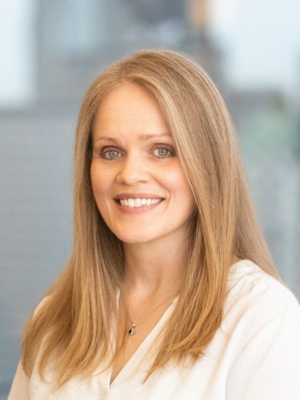
“I have built genuine trust and strong relationships with my team here at Citadel, which go beyond the day-today work,” says Jeanine Oliva, Global Head of Tax Operations at Citadel and Treasurer of WILD Gives Back. “Taking the time to get to know team members as individuals deepens trust, fosters collaboration and in my experience, high performance naturally follows.”

The Glass Hammer sat down with Oliva to learn more about her path to one of the world’s most demanding financial firms. It was not shaped by a master plan but by trusted relationships, a relentless work ethic and a refusal to let self-doubt have the final word.

Impactful Connections

Oliva has always been in roles that support middle and back office operations by understanding how global transactions are taxed. Her path to Citadel first emerged while she was a public accountant at RSM McGladrey.

“I was working with a close friend when he left to join Citadel,” says Oliva. “Soon afterwards, I was hired by a hedge fund administrative company that at the time was owned by Citadel.”

It was through this role that Citadel became one of her clients. The proximity gave her first-hand insight into the company’s culture.

“I saw their high standards and approach to excellence up close,” she explains.

Those qualities did not intimidate her but instead drew her in. She had kept in touch with her former colleague from McGladrey and when the opportunity presented itself to work at Citadel, she was ready.

The Human Endeavor in Leadership

“Being trusted as a leader at Citadel is one of my greatest motivators,” she says. “However, what really sustains my day-to-day are the people.”

This philosophy extends beyond her immediate team. She describes keeping in touch with former colleagues over the years, offering support in the form of a fresh perspective on a tricky problem, or a job reference at just the right moment.

Oliva is also the Treasurer of WILD Gives Back, a not-for-profit 501(c)3, which raises funds for students to study derivatives courses at the Associated Colleges of Illinois. She has a unique perspective from her vantage point.

“Some of the most meaningful moments in my career have been watching people I’ve worked with grow into their full potential,” she reflects.

The Value of Being Seen

Oliva thinks back on her career, which was more of a game of chutes and ladders, than a direct climb to the top. She describes a pivotal moment when early in her career, and pregnant with her first child, a former boss tried to bring her back to his team. She raised a concern that it might not be practical timing and his response has stayed with her ever since: “Half of Jeanine is better than no Jeanine.”

His comment was a critical reminder that genuine professional relationships are not transactional. For a woman in finance, navigating a career alongside pregnancy and motherhood, being told plainly that her presence was valued regardless of circumstance was a message that carried real weight.

Making Space

Oliva points to Harlan Ten Pas, lead partner of the Financial Services team at McGladrey, as another significant influence, shaping not only the early years of her career, but also her leadership.

“He was exceptionally sharp and always approachable, regardless of his seniority. He took a personal interest in each member of his team creating an environment where many colleagues felt like family.”

That mattered especially in the early years, when she was often one of the only women in the room.

“His warmth and investment in his people showed me that belonging was possible in a field that didn’t always make space for me.”

He also modeled something she values deeply. She says he taught her “that a successful career and a fulfilling personal life aren’t mutually exclusive.” Though he passed away last year, his influence continues to shape how she leads.

Turning self-doubt into fuel

While Oliva is secure in her industry knowledge, that does not mean she is not faced with moments of uncertainty.

“When resistance arises in a meeting, I lean into it rather than away,” she says. “At Citadel, being entrepreneurial from day one and challenging ideas constructively and constantly asking, “is there a better way?” is not just permitted, it’s expected.”

When self-doubt surfaces, her response is characteristically grounded because she doubles down on the work. This could mean reading up on recent regulations, talking through issues with colleagues, or building her understanding until she is confident.

“At Citadel confidence comes from knowledge, rigor, and continued curiosity, not complacency.”

A Human Mind Behind AI

Even when it comes to modern technologies such as AI and Machine Learning, Oliva believes the human element will still be an important one.

“Technology, including AI, is only as good as the human mind behind it,” she says.

In an era of rapid AI adoption in finance, this stance feels more relevant than ever. Questioning outputs and challenging existing processes, are not just encouraged at Citadel but expected. The culture of continuous improvement is something she genuinely values, and something she sees as essential for the next generation of leaders.

One of the most practical pieces of guidance Oliva carries is a healthy skepticism of doing “the same as last year.”

“The principle is straightforward,” she says. “Don’t accept inherited processes at face value. Rules and fact patterns can change. Understand the calculations. Know where the data comes from. Do the research.”

Leaders in a Crowd

When she thinks of the young women only starting out, she says, “Keep pushing toward what you want. Persistence and hard work generate dividends. Don’t be afraid to take a different path to get there, and if others doubt you, prove them wrong.”

She believes the leaders of tomorrow will be defined by the strength of their personal relationships and the ability to trust their own judgment.

“Relationships keep you grounded, keep you motivated, and open doors,” she said. “Critical thinking, the capacity to reason beyond what any algorithm can offer, is what ultimately distinguishes a leader from the crowd.”

It’s a vision of leadership that’s both deeply human and rigorously disciplined, which sounds a lot like Jeanine Oliva.