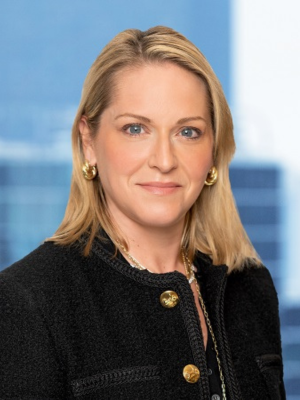

Sustainable success Jharna SahaThis Earth Day, the conversation worth having is less about individual behavior and more about the systems we’ve left unchanged. Jharna Saha, Co-Founder and CMO of Enlog, is working on one of the most overlooked of them: what happens to electricity once it’s inside a building. Enlog enables buildings and facilities to continuously optimize their electricity use through autonomous intelligence — reducing energy consumption by 20–25% without the heavy infrastructure overhaul that traditional retrofits require. Energy efficiency is increasingly becoming a new currency for businesses, one that delivers clear ROI, often with payback periods as short as 6–8 months purely through energy savings.

“What inspires me is building toward a world where efficiency isn’t dependent on awareness or manual control,” says Saha. “Where buildings aren’t passive consumers, they’re responsive systems. That future is technically possible right now. The gap is in how we think about this problem, not in the technology.”

We spoke with Saha about what drives her, what she’s learned building a deep tech company, and the future she’s working toward.

Start with the System, Not the Person

Saha’s path into energy didn’t begin with engineering. Her first job was in marketing, working on Earth Hour, the campaign where people switch off their lights for an hour to make a statement about energy. It was there that a contradiction became impossible to ignore.

“I remember seeing large commercial buildings fully running late at night — cooling systems, lights, everything on — in Cyber City Gurgaon. We were asking people at home to switch things off, while buildings around us consumed at a scale no individual action could offset.”

The dissonance stuck. “We expect people to behave like energy experts. Most people can’t, and realistically, they won’t. So why are we trying to change human behavior instead of fixing the system itself?” That question led to Enlog.

For anyone building a career in sustainability or deep tech, this reframe matters: the most durable solutions don’t rely on changing what people do. They change what the system does by default.

Clarity Is What Scales

The journey from that early question to a functioning company wasn’t linear. “Deep tech is not a straight path,” Saha says. “There are long gestation periods, failures, and iterations. Delivering something truly breakthrough takes that. It’s not about small deltas.”

What kept her oriented through it was a commitment to first principles thinking. “You come across many opinions along the way. But real collaboration happens with clarity and that’s how you actually scale.”

That discipline shows up especially during hard stretches. “In deep tech, cycles are long. You’re not just building a product; you’re building trust in a new way of doing things.” When momentum stalls, Saha returns to the ground truth: “What does the data say? Where is the real inefficiency? That clarity cuts through opinion and noise.”

The Two Skills That Will Define Future Leaders

Ask Saha what capabilities will matter most going forward, and she doesn’t name a technical domain. She names two qualities that are harder to develop and easier to underestimate.

“One is emotional intelligence, not just in managing people, but in navigating uncertainty without overreacting. The ability to stay clear-headed when the situation is genuinely ambiguous.”

The second is synthesis. “Leaders today don’t struggle from lack of information. They struggle from too much of it.”

The ability to take multiple signals — data, context, external shifts and quickly identify what actually matters is increasingly where leadership leverage lives. These two skills reinforce each other: emotional grounding creates the conditions for clear thinking, and clear thinking makes decisive action possible.

Let Your Team Raise Your Standard

When asked who has shaped the way she leads, Saha’s answer is her team.

“I’ve watched them go deep into problems that most people would have given up on, break down assumptions, question the obvious, come back with insights that changed how we think about the product entirely. That level of depth is rare. And when you see it consistently, it quietly raises your own standard. You stop accepting surface-level thinking from yourself.”

The environments and people you choose to work alongside don’t just affect output, they recalibrate your baseline.

Knock on More Doors — Simultaneously

The most useful advice Saha has received is also the most literal: knock on more doors.

“Whether it’s partnerships, deployments, or policy conversations, I don’t depend on one path. I keep multiple conversations alive simultaneously. Some open fast. Some take a year. But the moment you limit yourself to one or two, you’ve already slowed yourself down without realizing it.”

Career opportunity works the same way. A single application, a single mentor, a single network, these create fragility. Building in parallel, even when one path looks most promising, is what sustains momentum across the long cycles that meaningful work requires.

The Permission You’re Waiting For Isn’t Coming

Saha has spoken with over 800 students across colleges, particularly young women without access to strong networks early on. The pattern she sees most often has nothing to do with ability.

“Most of them are genuinely capable, but they’re waiting for someone to tell them it’s okay to go. That permission never comes from outside. That’s the thing I try to leave them with.”

Her other consistent message: go deep. “Don’t just execute what’s asked of you. Think about how what you’re building can scale beyond you. Ownership and scalability together is where real impact lives.”

To her younger self, she’d say the same: “You saw the problem clearly. You just needed to trust that seeing it was enough to start.”

A Different Kind of Sustainability

Saha’s vision for the next decade is specific: “I want to help build a world where managing energy becomes invisible. Where buildings understand and optimize their own consumption in real time — without waiting for someone to notice, without depending on manual intervention.” If that becomes standard, she argues, “efficiency, in that sense, becomes a primary energy source.”

As Saha puts it: “The real constraint in the next decade won’t be generation. It will be how intelligently we use what we already have.”
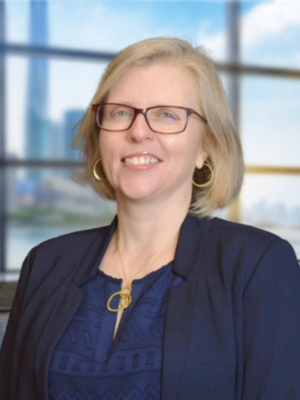

Carey RyanThe Glasshammer is running a “Where Are They Now?” series where we catch up with some of the professional women who we profiled ten or more years ago. We spoke with Carey Ryan, now Chief of Staff for Citi Technology & Business Enablement at Citi, about her career evolution and the role she plays in powering the future from both a technological and cultural perspective.

Nicki: Since we last spoke, where are you now?

Carey: We last spoke for the first time about 10 years ago, which seems like a long time but feels like the blink of an eye. I’ve held a number of roles since then, all within Citi’s Technology & Business Enablement group (though the name has changed a few times).

Now, I am the Chief of Staff for Citi Technology & Business Enablement. This entails working across both our technology organization and the wider bank to ensure we are effectively communicating and implementing new technologies, both with the goal of strengthening how we work and streamlining the time it takes to get work done.

Nicki: How did you get there?

Carey: In my 20 years at Citi, I have learned the best way to grow is to embrace every opportunity, especially if it allows you to learn more about how a company works. All of the roles I have had have allowed me the opportunity to support key areas of the business, including risk and control, data, and cybersecurity, each of which are vital to ensuring impactful technology can be developed or invested in and scaled to the full firm.

Nicki: Can you share a little about your current work?

Carey: Lately, much of my focus has been driving adoption and awareness for our Citi AI tools, helping us find the best places to practically and responsibly implement AI. This work includes leading our AI Champion and Accelerator programs, which are made up of approximately 4,000 volunteers around the firm who dedicate hours each week to serve as Citi AI advocates.

I also spend a lot of time working with our technology communication teams, each of whom covers a specific but global vertical within the larger technology business. No communication initiative is turnkey, and we always work to find new ways to impactfully reach colleagues with the information they need, be it in-person mediums like executive town halls or roundtable discussions, or through digital channels like email or lobby signage. Technology is the largest organization within Citi, so it’s key to focus on communication to enable change and drive execution while strengthening our culture.

Nicki: Have there been any unexpected or interesting twists in your career trajectory?

Carey: I have always worked in or adjacent to the technology space so, even before I recognized it, I was always headed for a career in enabling companies to leverage new technology to strengthen how they operated. That said, the world looks measurably different than it did when I entered the workforce, and Citi is no different. Some of these changes came quickly, such as the introduction and integration of AI, that has demanded the need to quickly shift priorities without much advance warning.

Nicki: Have any of them taught you a valuable lesson?

Carey: Citi is a large company, so I have had the opportunity to work on many projects with many people. Given this, the two key lessons I would share that always keep in mind is to always remember the end goal of every project and to stay flexible.

Nicki: What inspires you to be a leader and your leadership style?

Carey: My favorite part of my role is collaborating with dedicated and passionate colleagues. Whether it be the implementation of cutting-edge software, the voluntary work of a small team creating new patented technology tool, or an analyst successfully completing their first rotation with the bank – it is the passionate, innovative and solution-focused people that inspire me each day.

As I have risen in my career, I strive to be a good mentor and reliable leader for all members of my team, regardless of level. I’ve been lucky to have had several mentors whose advice I still hold on to, and it’s important to pay it forward. I also can’t help but think of my teenage daughter, I want to set a positive example for her as well as for my teams of what is possible in their careers and how leaders should treat their employees. An example that, hopefully, they will one day share with their own teams and mentees.

Nicki: Since we last spoke, can you share any challenging moments, setbacks, or self-doubt you’ve experienced as well as how you have navigated them?

Carey: I’m not sure I can pinpoint just one moment, but every new challenge I am presented with comes with a bit of imposter syndrome when I do not immediately have all the answers. Almost everyday features at least one conversation about something that where either I’m not the expert or the topic is completely new to me. It can be hard to ask questions when you think everyone except you has the answer, but the ability to step out of your comfort zone and know that you add value is a skill that will never go out of style. Self-doubt is something everyone faces, and the unknown is allowed to be scary. The key is being confident in your own ability to learn and adapt to problem-solve when navigating an unfamiliar situation.

Nicki: What skills do you think will matter most for future leaders?

Carey: When I was younger, I always assumed the fear and anxiety I felt about the unknown would go away. That one day I’d wake up and know everything there was to know about my job. But you quickly figure you’ll never know it all, because the world is always changing. Instead, I found the key is to always be ready by learning how to operate effectively with uncertainty and always be willing to learn.

Future leaders must be willing to be agile and adaptive, especially as the pace of change in the world continues to increase. AI is a great example of this. It is an unavoidable technology, and we should be willing to integrate it into how we work.

Nicki: Can you share an invaluable, specific piece of guidance a mentor or someone you admire has imparted on you?

Carey: I’ve had a number of tremendous mentors over the years. What I admired most in all of them was not any guidance they offered me, but the way they all led through their actions. Each of them led with kindness and empathy, listened carefully and accepted all forms of feedback, and were more than willing to change course if something was not working.

Nicki: Has coaching supported you in your journey, and if so, how?

Carey: Yes, I’ve been very fortunate to have had several coaches throughout my career. Coaches who were mentors, coaches whose job it was to support me, and coaches who were my peers. Career coaching offers an objective view of your decision-making. This often leads to introspective reflection on ways you can reframe your thinking, which is invaluable.

We can all sometimes be so goal-oriented, but it’s critical to take a step back and reflect on if we are taking the right steps to reach these goals. I often find myself going into my coaching session with one idea of what we will talk about and coming out with an entirely new perspective. Sometimes, the external guidance that a career coach offers is what one truly needs to help unlock those ‘aha’ moments.

Nicki: We are excited to see what you do next at Citi; we wish you continued success!

assessments build self-aware leadersMost senior women we speak to have done the work. The MBA, the stretch assignments, the careful navigation of rooms where they were the only woman at the table. They have developed sharp strategic instincts, learned to read organizational dynamics, and built reputations on delivering results.

But even with all that experience, there can be a moment where a promotion goes sideways, a team isn’t performing, or a stakeholder relationship never quite clicks. Where the question stops being what do I need to know and becomes what do I need to understand about myself?

That is where coaches who are skilled and qualified in psychometric assessments can be particularly useful as there is value in triangulating this data as a third piece to add to “you, according to you” and formal or informal feedback from others.

Why Self-Awareness Is a Strategic Necessity, Not a Soft Skill

Organizational psychologist Tasha Eurich, whose research involved studies with nearly 5,000 participants, found that while 95% of people believe they are self-aware, only about 10 to 15% actually meet the criteria when objectively assessed. In leadership, that gap has direct consequences for the people you lead and the outcomes you are responsible for.

For women in senior roles, the stakes are compounded. Catalyst’s well-documented research on the double bind describes a dynamic many readers will recognize: behaviors that read as confident and decisive in a male colleague are routinely perceived as aggressive or abrasive in a woman, while collaborative and approachable behaviors can be coded as lacking authority. The margin for misreading your own impact and for having your intentions misread by others is narrower.

Self-awareness, in this context, is political and strategic intelligence and creates an opening for situational awareness. Understanding how your behavioral tendencies are landing, and to learn to watch if there is a gap between “your intent and your impact” is the growth work in coaching. What you default to under pressure is integral to separating leaders who plateau from those who keep growing.

The good news is that this is not guesswork. At Evolved People Coaching, the four tools we use most often each answer a different question and we work with you to identify which one is the right fit for where you are right now.

Four Questions Every Leader Needs to Answer:

1. How do I naturally behave — and how is that landing in different situations with different people?

Tool: DISC Assessment

DISC maps your behavioral tendencies across four dimensions: Dominance (how you respond to challenges), Influence (how you engage with people), Steadiness (how you respond to pace and change), and Conscientiousness (how you approach detail and process). It is not a measure of intelligence or potential; it is a map of your default operating style.

What makes DISC particularly powerful is what it reveals about the distance between how you experience yourself and how others experience you. Consider a senior leader who describes herself as direct, efficient, and results-focused. Her DISC profile confirms a high Dominance pattern. Her feedback tells a different story: her team finds her unapproachable, and two high performers have quietly started looking elsewhere because they feel that their leader cannot hear their ideas and it is not worth it to bring up risks. She isn’t doing anything wrong by her own logic, but without understanding how her style lands with others and adjusting accordingly, she creates an impact she never intended.

This is the gap DISC is designed to close. Not by changing who you are, but by making your behavioral defaults visible so you can choose when to lean in and when to flex.

2. Is my team actually working — or just coexisting?

Tool: Five Behaviors of a Cohesive Team

Individual self-awareness will only take you so far if the team around you isn’t functioning. The Five Behaviors of a Cohesive Team, based on Patrick Lencioni’s widely used model, assesses team health across five dimensions: trust, productive conflict, commitment, accountability, and results orientation.

The tool operates at two levels. For intact teams, every member completes and debriefs the assessment together. What typically surfaces is a shared picture of where the team is genuinely cohesive and where it is performing a version of cohesion that is actually conflict avoidance or surface-level commitment masking real misalignment. For leaders who have inherited a team, are navigating a restructure, or aren’t getting the performance they expect from talented people, this version provides data where there was previously only intuition.

For individuals, a separate assessment helps you understand how you personally show up as a teammate regardless of whether your whole team is participating. This is valuable for leaders stepping into a new environment, those who have received feedback about their collaborative style, or anyone who wants to be more intentional about their contribution to team dynamics. Rather than waiting for the whole team to be ready, this version puts the insight in your hands immediately.

3. How am I actually landing with the people around me?

Tool: Qualitative 360 Assessment

A qualitative 360 goes directly to the source: the colleagues, direct reports, peers, and senior leaders are all stakeholders who experience your leadership every day. Conducted through structured confidential interviews rather than numerical ratings, it surfaces the specific behaviors that are building your reputation and the ones quietly working against you — patterns that no behavioral profile can predict, because they are grounded in the specific context of your organization and your relationships. There is huge psychological safety for the feedback givers because the data collected is anonymized and themed by topic so no comments can be attributed to anyone.

Used well, a qualitative 360 is not an appraisal. It is a rare opportunity to hear, in a safe environment, what people genuinely think and what they wish they could tell you directly. Given the depth of work involved, this is an assessment we typically offer as part of organizational engagements, but for the right leader at the right moment, it is one of the most powerful development investments available.

4. How can I change the behaviors that are hindering my highest potential?

Tool: Immunity to Change Mapping

The Immunity to Change Map process is a tool to uncover any hidden constructs in your subconscious mind that might be covert to you and therefore stopping you from doing the things you need to do to achieve your goals (that are overtly set in a goal setting exercise).

Nicki Gilmour, Founder of Evolved People coaching and theglasshammer.com states,

“Truly, this map is so useful early on in any work with our clients because it skillfully surfaces any or sometimes many implicit constructs that form a type of operating system or deep structure that left untouched, would result in most people wondering why they cannot do the day to day behaviors that would easily enable them to achieve their goal. This applies to any area of change, from working out to delegating work, to speaking up at meetings and even changing careers.”

Finding the Right Starting Point

These four tools address different levels of leadership insight: your default style, your team dynamics, your hidden limiting beliefs, and your real-world impact on the people around you. For most leaders, one will be the clear priority based on where you are in your career, what feedback you have received, or what challenge is most pressing. Our role is to help you identify which one that is, and to make sure the debrief and coaching that follows translates the data into something genuinely useful.

For organizations, our team development workshops use DISC, The Five Behaviors, and even Immunity to Change at a group level for leaders to build the shared visibility and common language that turns a group of talented individuals into a genuinely high-performing team.

The leaders who invest in this work consistently tell us the same thing: they wish they had done it sooner.

If you are ready to close the gap between the leader you are and the leader you intend to be, we would love to talk. Visit evolvedpeoplecoaching.com to explore our coaching programs and team development workshops, or get in touch directly to discuss which assessment is the right starting point for you.

Christina Bresani“Being with my clients, helping them to get deals done, building new relationships is what breathes life into me and gets me excited.”

Ask Christina Bresani, Wells Fargo’s head of Mid-Cap Investment Banking, about a recent client visit and she’ll tell you about climbing into the cab of a semi-truck in high heels and passing a driving simulator test to show her client that she understood their business. That story captures everything about how she approaches her work: with genuine curiosity, a willingness to go wherever the client takes her, and an infectious enthusiasm that has sustained nearly three decades in investment banking.

After 25+ years as an M&A banker at two previous firms, Bresani joined Wells Fargo in 2024 as head of Mid-Cap M&A within the firm’s Global M&A business. In November 2025, she took on the expanded role of leading the firm’s Mid-Cap Investment Banking Practice focused on serving mid-cap clients and delivering investment banking products and services to the bank’s Commercial Banking clients. It’s a dual mandate she wears proudly, and one that plays an important role in Wells Fargo’s Corporate & Investment Banking growth strategy.

“When you love what you do, it’s easy to put your head down and keep doing it,” says Bresani. “But what I saw in Wells Fargo was a new challenge to do what I love and help build a leading corporate and investment bank that can bank companies along the whole spectrum of their growth – from mid-cap to large-cap and beyond.”

Building Something That Lasts

The challenge of building out and developing the Mid-Cap Investment Banking team is one that Bresani finds genuinely energizing. “Creating a strategy, building a team that’s going to be successful in the near term and the long term, is really inspiring to me right now,” she says. “That’s hiring people. It’s getting the strategy right. It’s keeping people motivated because when you are building something, it’s not always a straight line.”

She notes that the foundation of any great team comes down to one word: trust.

“The goal is to build a team with a talented group of people who have the same values and want to lock arms to be successful together. It’s not only about individual success, it’s about elevating the entire team and constantly learning from our collective successes and failures,” she says. “This has always been important to me as a leader and it’s central to Wells Fargo’s culture.”

A Career That Kept Saying Yes

Bresani started out as an analyst, fully expecting to spend two or three years in banking before figuring out what she really wanted to do. Nearly three decades later, she’s still there — and still surprised by it. “Every year I would say, ‘wow, I want to do this, I want to learn this, I want to get better at this,’” she says. “And I just kept going.”

She credits a great deal of that staying power to the mentors who showed up early and stayed. “I was really lucky in my early days to have two amazing mentors: both men. That’s important for young women in the industry to know – you don’t have to only have female mentors.” Those relationships, she says, were as much personal as professional. ” They were ‘work dads’ in the sense that they really guided me and cared about my professional and personal growth. To form those kinds of relationships really makes a difference in this business which can sometimes be tough”

The Moment That Tests You

When asked about setbacks, Bresani reflects on one of the most universal and quietly defining moments in a banker’s career: the first time a client pushes back hard.

“There is always a point in your career where a client doesn’t like you or doesn’t like the advice you’re giving,” she says. “The first time that happens, it’s really hard not to take it personally.”

Just recently, she watched a director on her team navigate exactly that situation. Rather than letting it become a crisis of confidence, Bresani chose to reframe it. “I told him: this is your pivotal moment. Here’s how we help you pick yourself up. Here’s your opportunity to really do your job.” She recalls her own version of that moment as a first-year director, when a mentor stepped in, defended her and then told her precisely what she needed to do better. “You have to learn that not everyone is going to agree with what you say, and you have to have a thick skin. But ultimately, this is a client service business. Not every client is the same, and you have to adjust.”

Fueling the Long Game

How does someone sustain nearly 30 years at that pace without burning out? Bresani takes it one day at a time and deliberately so. “It’s easy in this job to get overwhelmed with everything that has to be done,” she says. “I’m very focused on what needs to get done today, what can wait until tomorrow, and making sure I am prioritizing what is important versus being driven by what is urgent.”

But the off switch matters just as much.

“I have three children, an amazing husband, a menagerie of animals, and I am committed to exercise even if it means a 4.30am workout. I find a way to exercise because I need it. Whatever it is, it’s important to find those things outside of work that make you happy and fill your energy cup.”

Another factor to staying happy and healthy she attributes to friendship, a group forged at an all-women’s college that has stayed tightly bound across careers and time zones. “We have a text chain,” she says, laughing. “We build each other up. We laugh and say, ‘You will never believe what happened today,” She pauses, then finds exactly the right phrase for it: “It’s a group hug via text.”

Still Having Fun

When Bresani’s kids ask her about her day, they don’t want the deal mechanics. They want to hear about the people. “I come home and my kids say, ‘Mom, tell me about the people you met today,’” she says. “I meet the most interesting people.” That, more than any title or transaction, seems to be the through-line of her career. She still operates by a simple rule she set for herself long ago: “I’ll stop doing it when it’s not fun anymore. It’s still really fun.”

By Nicki Gilmour, Founder and CEO of theglasshammer.com and Evolved People Coaching.