
accountability radical candorIf you have ever sat through a meeting where everyone nodded in agreement but then watched the agreed-upon action items quietly dissolve over the following weeks, you already understand the accountability gap. Not as a concept, but in its impact on execution, trust, and results.

That gap matters. Because when teams cannot reliably follow through on what they agree to, it becomes difficult to build momentum, make decisions stick, or deliver consistently as a group.

For many teams, accountability is one of the hardest behaviors to translate into practice. It is easy to agree, in principle, that teams should hold one another accountable. It is much harder to know what that looks like in real conversations, especially when relationships, power dynamics, and organizational pressures are in play.

Why Accountability Breaks Down

The Five Dysfunctions of a Team framework offers a clear model for what teams need in order to be effective and cohesive. Accountability sits near the top of the pyramid, build on a foundation of trust, productive conflict, and clear commitment. Teams first need to be able to have vulnerability-based trust, then healthy debate, then clear decisions. Only after that can people realistically hold one another accountable.

What the model does not always answer is how accountability conversations actually happen.

Even well-resourced, strategically aligned teams can struggle to sustain accountability. The challenge is not a lack of intent, but the nature of the behavior itself. Holding someone accountable requires naming something uncomfortable. It requires you to say, out loud, that an agreement was not met and to do it in a way that preserves the relationship, the trust, and the team’s ability to move forward.

When those conversations do not happen, the ripple effects go well beyond a missed deadline. People may stop raising concerns, stop pushing for clarity, and over time, stop believing the team can deliver on its shared goals.

So, if accountability is so central to team effectiveness, why is it so hard to sustain?

Because at its core, accountability requires uncomfortable conversations and many of us were never taught how to have them well.

A Framework for Accountability Conversations: Radical Candor

One useful framework for navigating these conversations is radical candor. Coined by Kim Scott in her book Radical Candor: Be a Kick-Ass Boss Without Losing Your Humanity, radical candor is an approach to communication that emphasizes two things at once: challenging directly while caring personally.

This is not the same as “brutal honesty.” In fact, in Scott’s framework, brutal honesty sits in a quadrant she calls Obnoxious Aggression, characterized by being critical without caring, or being clear but not kind. For example, public callouts, sarcasm disguised as feedback, or “I’m just being honest” used as an excuse to be harsh.

Radical candor, by contrast, is about having compassion while being transparent. It means being willing to say the hard thing while staying connected to the humanity of the person you are speaking with. It assumes positive intent, even when addressing negative behavior.

Scott’s model also includes two other quadrants that illustrate what it looks like when communication is not balanced between caring personally while challenging directly.

Ruinous Empathy sits in the quadrant of high care, low challenge. This is what happens when someone avoids giving clear feedback to spare feelings or keep the peace, absorbing someone else’s missed deadline rather than addressing it or letting a pattern continue because “they’re going through a lot right now.” It feels compassionate in the moment, but the person never receives the information they need to improve, and the team quietly absorbs the cost of a problem that was never named.

Manipulative Insincerity falls in the quadrant of low care, low challenge, and looks like “nice to your face, critical behind your back.” A team member agrees to a plan in a meeting but complains privately that it is unrealistic. A leader avoids addressing missed commitments directly while venting about them to peers. This behavior is particularly toxic because it erodes the trust that is fundamental to a cohesive team.

Radical Candor Is Not Just for Managers

While the revised edition of Scott’s book is subtitled “Be a Kick-Ass Boss Without Losing Your Humanity,” she is clear that radical candor is not meant to be hierarchical. It should be practiced up, down, and across. Teams are strongest when everyone feels responsible for naming issues and maintaining shared standards.

Practical Ways to Apply Radical Candor

Let us look at some examples of how to use radical candor to maintain accountability on a team, whether you are speaking with your direct report, colleague, or leader.

Leader to Direct Report

In this context, the leader’s role is not just to manage performance, but to protect the team’s agreements:

  • “I want to talk about the commitments we made as a team around project timelines. You committed to delivering your analysis by Tuesday so the rest of the group could build their work. I really value your expertise, and I want you to succeed here — and I also need to be clear that this is the second time it’s slipped and it’s creating delays for others. What’s getting in the way, and how can I support you in meeting this going forward?”

Here, care is shown through respect and support; challenge is shown through naming the pattern and its impact.

Peer to Peer

This is the kind of accountability that is truest to Patrick Lencioni’s use of the term in his Five Dysfunctions of a Team model:

  • “I want to bring something up because I respect you and I care about how we work together. You committed to owning the client update, and when it didn’t go out, I ended up scrambling to cover it. I know things get busy, but I need to be able to rely on our agreements so I can do my part well too.”

The script above works because it opens with relationship, not accusation, and grounds the challenge in shared impact rather than personal frustration.

Direct Report to Leader

While giving feedback in an upward direction may feel risky given potential power dynamics, if psychological safety is present, it can reinforce shared commitments and strengthen trust:

  • “I appreciate how open you encourage us to be in meetings. I also want to be honest that when decisions are already made before we walk in, it discourages real discussion. I’m raising this because I care about our effectiveness.”

When leaders invite and respond well to this kind of feedback, they model accountability as a shared value rather than a power dynamic.

Building Cohesive Teams in Practice

Accountability is not about policing behavior or enforcing rules; it is about protecting the team’s purpose.

Radical candor provides a practical way to do that without sacrificing relationships or culture. It creates a norm where people can name issues early, address them directly, and move forward together.

Ultimately, accountability is a form of respect. It says: Our work matters. Our goals matter. And we value each other and our team enough to have the conversations that matter.

Without it, teams may remain polite, but they will never become truly cohesive.

At Evolved People Coaching, the coaching arm of theglasshammer.com, we work with leadership teams who are looking to transform the way they work and bring their team to the next level. Our team development workshops draw on the Five Behaviors of a Cohesive Team framework alongside evidence-based communication approaches like Radical Candor, helping teams move beyond theory into real conversations. We work alongside teams to build the trust, language, and habits they need to navigate conflict productively, hold one another accountable to shared commitments, and deliver meaningful results together.

Contact us to learn more!
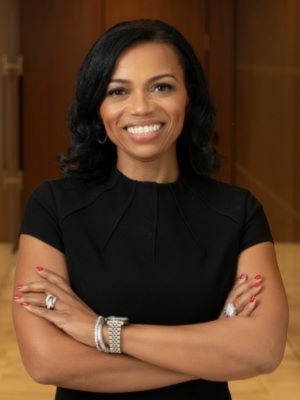
Erika Irish Brown“Future leaders will need learning agility above everything else,” says Erika Irish Brown. “The pace of change is only accelerating. Today it’s AI, but we don’t yet know what we’ll be navigating tomorrow. What we do know is that the leaders who thrive will be the ones who stay curious, stay open and embrace change rather than resist it.”

As part of The Glass Hammer’s Where Are They Now series, we are catching up with leaders we have spoken with before to see how their careers and perspectives have evolved over time. Erika Irish Brown, now Head of Talent Management and Engagement at Citi, has long been focused on creating opportunity and building inclusive workplaces. In this next chapter of her career, she shares how that mission is expanding as organizations rethink leadership, mobility and learning in an era defined by rapid technological change.

Q: What are you currently working on?

As Head of Talent Management and Engagement at Citi, my focus is on our global, talent centric approach to supporting our workforce—one that invests in people, creates opportunities for growth and fosters a culture where everyone can thrive.

Our team leads all of Citi’s efforts around development planning, talent designations, talent processes and succession planning. We also oversee enterprise coaching, our engagement activities including 12 global Inclusion Networks and Talent Management and Engagement Councils across each business and function.

Q: What is inspiring you to lead in the future?

What inspires me about leading into the future is the real momentum we’re building at Citi. We have a clear strategy, a leadership team driving meaningful change and a firm accelerating on every front, including technology.

AI is opening new doors for our people, helping colleagues find opportunities that match their skills and aspirations. As it becomes more integrated into how we work, it will continue to fuel growth, innovation and faster execution.

You can see this momentum in our focus on mobility. In 2025, we filled more than 55,000 roles with 44% coming from internal moves and promoted over 28,500 colleagues into new roles. And with initiatives like Development 365, more than 165,000 colleagues created personal development plans last year.

The combination of our strategy, our people and the possibilities technology unlocks makes the future incredibly energizing.

Q: What makes Citi special?

What makes Citi special is the combination of our globality and our focus on human-centered leadership. As the world’s most global bank, we have people on the ground in more than 90 countries, which gives us a unique level of cultural fluency. It allows us to connect with colleagues where they are, listen to their experiences and ensure our strategy reflects the realities of each market. Our clients tell us this reach is a true differentiator.

Our scale also means we tackle complex challenges across borders and offer a wide range of roles and career paths within one firm. That combination of global breadth and opportunity is hard to find anywhere else.

What also sets Citi apart is our leadership. Jane Fraser, our Chair and CEO, leads with a clear vision, and her leadership shapes a culture of understanding from the top. She is a trailblazer in financial services and the first woman to lead a major financial institution. Our global footprint – who we are, where we are, and the businesses we run—makes Citi a truly special place to grow and make an impact.

Q: What lessons in leadership have you learned working at the world’s most global bank?

I’ve had the privilege of working at several of the world’s leading financial institutions, and those experiences have deepened my understanding of culture and lived experience and reinforced that ambition and leadership show up differently around the globe. Leadership is packaged in all different ways, and that has underscored the need for our leadership frameworks to evolve.

We have to break the myth that there is only one archetype of a leader, especially when it comes to succession planning. Not everyone will say, “I want to be CEO.” Many people are quiet leaders, and that doesn’t make them any less ready for what’s next.

Leadership doesn’t begin with a title — anyone can lead, and leadership can be shown at every level. At Citi, we measure leadership against three principles: we take ownership, we deliver with pride and we succeed together. Whether you lead a large team or contribute as an individual, how you bring these principles to life is what truly matters.

Q: How have you navigated challenging moments, setbacks or self doubt?

Navigating difficult moments starts with remembering that meaningful and sustainable change doesn’t happen overnight. Impact builds over time. I try to focus on what I can control and release what I can’t. At the end of each day, its important that I am able to look in the mirror and know I used my voice—especially when it was uncomfortable or challenged the status quo. I believe silence is a form of endorsement; if I’m not willing to speak up, then who will?

Setbacks are part of the process, but I stay grounded in my competence and confidence. If you’re competent, you have every reason to be confident. Mistakes are okay as long as you take feedback, course-correct quickly and keep moving. Learning agility and making progress matters far more than perfection.

When things don’t work out, I remind myself that there may be something else in God’s plan. Faith helps keep everything in perspective. And if I can honestly say I fought the good fight and did my best on behalf of others, I can move forward with confidence.

Q: What skills do you think will matter most for future leaders?

Future leaders will need learning agility above everything else. The pace of change is only accelerating. Today it’s AI, but we don’t yet know what we’ll be navigating tomorrow. What we do know is that the leaders who thrive will be the ones who stay curious, stay open and embrace change rather than resist it.

Being a lifelong learner is no longer optional—it’s a leadership requirement. The leaders who succeed will absorb new information quickly, adapt their approach and translate what they learn into action.

At the heart of learning agility is staying curious —the willingness to ask questions, seek out new perspectives and lean into what you don’t yet know. Curiosity keeps you growing, keeps you adaptable and keeps you ready for what comes next.

Q: Who inspired or influenced you most on your journey, and what did you learn from them?

My parents are my biggest inspirations. They set high expectations, especially around academics and STEM. My mother was a junior high math teacher, and my father rose through the New York City Housing Authority to become Head of Computer Services. In our house, if your grades weren’t where they needed to be, the question wasn’t “Did you try your best?” It was “What happened?”

They taught me to be a change agent. If something wasn’t the way you wanted it to be, you had the power and the responsibility to fix it. That mindset shaped me. You have agency. You can challenge the status quo. You can create opportunities that don’t yet exist.

They also taught me the value of effort and the associated outcomes. What you put into something is what you get out—karma. Education, hard work and smart risks can change your life’s trajectory. Those lessons—accountability, agency and effort—have guided my career and influence how I lead today.

Q: What invaluable, specific guidance have you received along the way?

A few pieces have stayed with me:

  • Listen first. Let the culture shape your understanding. Listen to understand, not to reply.
  • Invest in people. Exposure, opportunity and access change outcomes. Meet people where they are, lift as you climb and bring others on the journey with you.
  • Lead authentically. People, including yourself, thrive when they build trust and feel psychologically safe.
  • Challenge the status quo. Commitment and persistence pay off. Be brave and use your voice. Innovate.
Q: What do you impart upon those you mentor — or would impart upon your younger self?

Be ambitious, take stretch assignments and stay curious. Don’t assume your work will speak for itself — advocate for your own growth. And always consider the legacy you’re building. Making a difference doesn’t have to be grand; it can start with creating an opportunity for even one person to succeed.

Q: Has coaching supported you in your journey, and if so, how?

I have absolutely benefited from coaching. At Citi, executive coaching is a capability we invest in as part of our Talent strategy because we know it elevates performance; it’s not about fixing a problem. Just as elite athletes rely on coaches to refine their craft, high performing leaders gain so much from trusted advisors who help deepen self awareness, strengthen impact and navigate complexity with greater effectiveness. When we prioritize continuous development, we position our leaders and our organization to succeed in an environment that is constantly evolving.

Q: Looking ahead five to ten years, what kind of future are you hoping to help create?

Looking five to ten years ahead, I want to build on the true meritocracy here at Citi. My focus is on a deep, durable leadership pipeline where the next generation is prepared for and stepping into senior roles, ready to run the firm and succeed our most senior leaders.

Equally important is an environment where inclusion shows up in outcomes. Our leadership should reflect the communities and clients we serve, and every colleague should have the same opportunity to grow, to lead and to succeed based on performance, potential and ambition. If we keep investing in people and creating real mobility, Citi will be even stronger, more inclusive and positioned for long term success.

Q: What practices help you sustain energy and resilience?

Staying connected to purpose, spending time with my family and staying close to colleagues keeps me grounded and energized. And for balance, I carve out one hour of Orangetheory Fitness almost every day– the best reset is 60 minutes of self-care.

Q: What are you passionate about in your personal life?

Outside of work, I’m passionate about giving back, especially when it comes to youth development and community programs. My years with the Riverside Hawks — as a parent, board member and advocate — have been some of the most meaningful experiences of my life. I also serve as Vice Chair of the Bedford Stuyvesant Restoration Corporation, which has been a cornerstone of Central Brooklyn for decades.

Service has always been a big part of who I am. I’ve been an active member of Delta Sigma Theta Sorority, Incorporated for more than 35 years, and I’m also a proud member of The Links, Incorporated. And staying connected to my alma mater is important to me too, so I continue to give back through my work on the Columbia Business School board.

Futures Industry Boca prediction marketsBy Jessica Darmoni

The Futures Industry Association (FIA) held their annual FIA Boca conference in Boca Raton, Florida March 8-11, 2026. The annual gathering brings together institutional investors and professionals in the listed and over-the-counter derivatives markets with an emergence of digital asset firms and retail brokers joining in the past few years.

One of the hot topics this year was the rise of prediction markets, which can be a useful risk management tool enabling participants to hedge against uncertain future events. However as these markets evolve, there is growing concern about when they cross the line from risk management tools to gaming and speculation?

A Repackaged Product

From a structural perspective, prediction market contracts are not new. Many of them are variations of instruments the financial industry has traded for decades. Most operate as fully collateralized products known as binary options. Binary options are contracts that only pay out a fixed amount if a specific event occurs. The buyer will only lose what he spent to buy the option if the event does not occur.

“Everyone is looking for what is next,” says Jim Kharouf, Chief Marketing Officer at IncubEx, which designs and develops environmental derivatives. “We have seen the evolution from the institutional derivatives to e-minis, and options to zero-day contracts and so on. Prediction markets, and even crypto, are more examples of the next layers of innovation.”

While versions of these contracts have existed since the late 1990s, new players have brought a wave of excitement, and potential for scale and scope. Last year, the CME Group announced a partnership with Fanduel (they hired former Chicago Bulls player Scottie Pippen to promote the products at this year’s FIA Boca conference.) Another recent partnership between InterContinental Exchange and Polymarket has brought additional buzz to the prediction market space. Other notable names include Robinhood and Draftkings.

The collaborations represent a shift in the derivatives markets. These exchanges, which traditionally service institutional and professional traders, are introducing event-based trading to a much broader audience with consumer facing platforms. While the foundation of the product has stayed the same, it is the entrance of new participants and the events in which they are trading on, which has brought up these pressing questions.

A Natural Progression

Christopher Hehmeyer, a derivatives industry veteran who was most recently CEO of Warwick Capital, says that we must reframe the issue in terms of public perception. He wonders whether the American public sees a meaningful difference between trading a contract on the next Taylor Swift concert and taking a position in gold.

“It’s gaming on U.S. entertainment versus risk management,” he says, explaining that betting on pop culture events may feel closer to traditional gambling than financial trading.

However, Hehmeyer also points to prediction instruments that serve a clearer economic purpose. Weather contracts, for example, allow businesses and individuals to hedge against environmental risks that can be difficult or expensive to insure.

Contracts tied to weather outcomes are traded on platforms such as Kalshi, a regulated U.S. exchange that offers event-based contracts on topics ranging from economic indicators to climate data.

“If insurance is too expensive, the option to buy a weather contract hedging against a hurricane is a type of risk management,” he says. “That’s not gaming.”

In that scenario, a business located in a hurricane-prone region might buy a contract that pays out if a storm strikes its area. The payout could offset revenue losses caused by the disruption, functioning similarly to an insurance policy.

This illustrates the central challenge regulators face. The same financial instrument can be used in very different ways. A coastal business might use a hurricane contract to hedge real financial exposure, while a retail trader in another state might simply be speculating on the outcome.

The debate therefore often centers less on the structure of the contract and more on the underlying event being traded. As prediction markets expand, this distinction is becoming increasingly important.

A Regulatory Impact

Finally, another complication is the regulatory framework itself. In the United States, prediction markets exist in a complex environment overlapping financial regulation and state gambling laws. Some contracts are treated as derivatives, while others may be restricted depending on how regulators interpret their purpose. Also, states may lose out on potential tax revenue, if there isn’t regulatory certainty and federal legislation, as trading activity shifts to platforms that operate outside of traditional gaming structures.

While prediction markets may be part financial innovation and part speculative entertainment, it is clear that the underlying idea is gaining momentum. As technology makes it easier for individuals to trade on real-world outcomes, prediction markets may become an increasingly visible part of the financial landscape. It is now up to the regulators and policymakers to decide where the line is drawn between real-world risks and betting on the unpredictable.

Joanna Fields

By Jessica Darmoni

“Future leaders must not only understand technology but wield it responsibly to protect reputational integrity in a world where data breaches and automation carry profound consequences,” says Joanna Fields, a financial market veteran who remains focused on enterprise risk management.

Fields has almost 30 years of experience spanning global asset classes such as equities, derivatives, fixed income, futures, treasury, digital assets and capital markets as well as experience with decentralized physical infrastructure networks (DePIN), telecom and utility industries. She has built a reputation not only as an enterprise risk management expert, but as a leader in market structure and financial governance. She sat down with The Glass Hammer to discuss the importance of resilience, reinvention and a human approach to leadership.

The Art of Balance

“This may sound like an unlikely beginning, but I started out as a professional ballerina,” says Fields, who has led market structure initiatives and designed risk governance frameworks.

As a dancer, she learned aplomb, which is the art of balance and stabilization under pressure. She learned teamwork, discipline, and the necessity of believing in yourself even when the spotlight felt overwhelming.

Fields may never have gone into finance, if it weren’t for a car accident that halted her dance career.

“It was a devastating moment and made me redefine not just my profession but my identity.”

Supported by her father’s steadfast commitment to the Socratic method of education which encouraged questions, analysis, and critical thinking; she took a risk into the world of finance and technology.

Fields started her career in market regulation at the Chicago Board Options Exchange and the International Securities Exchange. She went on to hold Head of Market Structure roles and lead compliance departments at Deutsche Bank Securities, Inc and Credit Suisse First Boston.

Her contribution to financial markets, as she describes it, has been “keeping it safer.”

Fields is good at identifying patterns of fraud and misconduct. She has developed surveillance tools to strengthen governance frameworks and has helped institutions avoid “gotcha” regulatory moments.

She believes there will be pivotal themes in 2026 including; how to use artificial intelligence safely while protecting data privacy, the rise of DePIN, emerging regulatory frameworks such as the Genius Act, and the increasing sophistication of cybersecurity fraud.

In a rapidly evolving technological environment shaped by AI, blockchain, DePIN, and crypto markets, her ability to merge technology with risk oversight has become critical.

Rising with Support and Purpose

While Fields has many professional achievements, her greatest source of inspiration is a personal one. In 2022, her daughter experienced sudden vision loss.

“We spent countless hours in a hospital room navigating all the uncertainties. It was a scary and emotional time but my daughter remained unwavering,” she remembers. “She continues to believe that women can do anything, build anything and achieve anything.

They found that sports, in particular softball clinics at Northwestern with dedicated coaches, shifted their perspective.

“We focused on what was possible instead of what had been lost. We had a strong team of family and friends around us that reframed the adversity as a challenge to be met with collaboratively.”

Throughout her journey, Fields has learned that unexpected challenges are inevitable. What matters is the community you build and the confidence you develop in your specialty over time.

“It’s about who you surround yourself with and who will help you rise. Everyone stumbles. What defines a career, or a life, is how you respond to it.”

Leadership is about Legacy, Not Titles

Fields has also dedicated time to mentoring students from Barnard College and Columbia University. Her advice to young women entering the workforce is practical and empowering.

“Try to get two offers and negotiate the best one. Know your worth. You will spend eight to twelve hours a day at work; choose a team you enjoy and respect. Do not be afraid to take risks. And when you are right, stand firm—while remaining open to negotiation and alternative viewpoints. If you are wrong, own it. Clear communication and thoughtful articulation,” she emphasizes, “are foundational to leadership.”

When asked what impact she hopes to create, her answer is twofold.

“I want financial markets to be safer. I want to be able to use technology proactively against fraud and misconduct.”

Fields also finds satisfaction in seeing those she has worked with grow into long-term careers of their own.

“Leadership is not about titles but about legacy.”

Looking forward, she believes the leaders who will thrive are those who can harness AI securely, protect data privacy, and clearly articulate their value in an increasingly automated world.

“As roles evolve, the ability to communicate your unique contribution will be paramount,” she asserts.

From ballerina to financial risk strategist, from navigating personal tragedy to mentoring the next generation, Fields embodies aplomb in its truest sense: balance, grace and strength under pressure.

executive wellness retreatBy Jessica Darmoni

Executive wellness retreats are often judged by their immediate costs: time away from work, financial investment, and short-term disruption. But their real return on investment shows up in longer-lasting gains such as clearer thinking, personal growth, and greater resilience. This makes them powerful tools for leaders operating in complex environments.

Below are a few takeaways when considering an executive retreat including: how participants can become some of your best friends, introducing you to new ideas and concepts as well as how retreats help you take action and strengthen a part of your brain called “the willpower muscle.”

A Social Media Algorithm IRL

In an era where algorithms shape what we read, watch, and believe, executive retreats offer something increasingly rare: a human algorithm designed for growth. The people you meet at retreats introduce you to new programs, ideas, books, music, leadership frameworks, and ways of thinking, but without the advertisements or agendas. Instead of being fed what reinforces who you already are, you are exposed to perspectives that gently, and sometimes uncomfortably, stretch who you might become.

Most leaders seek out retreats based on interests they already have, which immediately creates common ground. Whether it’s leadership development, wellness, strategy, or personal growth, you arrive knowing that everyone in the room has chosen to invest time, money, and attention into becoming better at something that matters. This shared intention accelerates trust.

Retreat Friends Can Be Some of Your Best Friends

What makes retreat connections particularly powerful, however, is not the similarities, but the differences. Retreat participants often come from outside your industry, geography, or social circle. They are people you would not naturally encounter in your day-to-day routine. That distance from familiarity creates space for impact. These individuals can influence not just what you think, but how you think and feel about your everyday life. Their questions land differently, their observations bypass internal defenses and their stories linger.

Over time, retreat friends often become some of your most meaningful relationships. They occupy a unique category, separate from family, colleagues, and long-time friends. There is little overlap, which creates a rare psychological safety. They can offer a clean perspective during moments of career inflection because they don’t know your boss, your board, your team or your history. It can be easier to share ambitions, doubts, and fears with people who hold no preconceived narrative about who you are supposed to be.

For executives, this matters because leadership can be isolating. The higher you rise, the fewer places exist where you can speak openly without consequence. Retreat relationships provide a neutral ground and one where insight is not filtered through politics or expectations. In those conversations, clarity often emerges not because someone gives advice, but because they listen without agenda.

Nothing Changes If Nothing Changes

Beyond relationships, retreats catalyze change in a more fundamental way. Awareness alone does not transform behavior. As comedian Theo Von succinctly put it, “Nothing changes if nothing changes.” Many leaders already know what they want to improve whether that be better health, stronger presence, clearer priorities or more balance. The challenge is not knowledge; it’s execution. Retreats create a structured interruption to routine that makes execution possible.

By removing leaders from their habitual environments, retreats disrupt autopilot thinking. They introduce friction, reflection, and intentional practice. Whether through guided discussion, physical challenge, or skill-building exercises, participants are asked to do something different and that is where growth takes place. Retreats provide a container where discomfort can feel purposeful rather than punishing, and experimentation can feel safe rather than risky.

Importantly, effective retreats do not exist in isolation from real life. The goal is not escape, but integration. The most impactful retreats help leaders translate insight into daily practice; how to bring a new habit, mindset, or leadership behavior back into boardrooms, meetings, and home life. Change becomes tangible when leaders leave with both inspiration and a practical path forward.

The Willpower Muscle

There is also a neurological dimension to this process. Addressing hard things quite literally grows the brain. Research points to the Anterior Mid-Cingulate Cortex, also known as the “willpower muscle,” as a key region involved in resilience, effort, and decision-making. This area increases in size when people engage in productive struggle, such as intense physical exercise or learning new skills. In other words, leaning into difficulty enhances cognitive agility.

Executive retreats often create precisely this kind of productive struggle. They ask leaders to confront limiting beliefs, test physical or mental endurance, and practice unfamiliar ways of thinking. The result is not just emotional insight, but biological reinforcement. Leaders who repeatedly choose to challenge themselves strengthen the neural pathways associated with persistence and adaptability, which are two traits essential in complex, fast-changing environments.

Choose Challenge Over Comfort

The value of executive retreats is not necessarily found in luxury locations or curated schedules. It is in the connecting of people, perspective, and purposeful discomfort. Retreats act as a living algorithm, introducing leaders to ideas and individuals they didn’t know they needed, accelerating self-awareness, and making change unavoidable.

For leaders committed to growth, retreats are not a break from real work. They are the work. They sharpen the mind, expand the network, and create the conditions where meaningful transformation can occur. In a world optimized for convenience, choosing a challenge and choosing people who challenge you, may be the most strategic decision of all.

————-
Evolved Wellbeing – the new executive wellbeing coaching and retreat company, brought to you by Nicki Gilmour, the Founder of theglasshammer.com. This is part of the Evolved People portfolio of offerings – that connects professional development to executive sustainability. Wellness is the cornerstone of high performance.