
deep thoughtA bucket of gravel does not make a boulder.

And yet, consider how many leaders spend their days: back-to-back meetings, two-line email replies, quick notes on a presentation or report. It’s all understandable—the organization’s engine is humming, employees need decisions, and a leader’s job is, among other things, to stay in touch broadly across a team or organization. It’s no wonder leaders often feel that they succeed based on their ability to task-switch as much as their ability to set a vision and galvanize a team.

Or more simply: Your calendar is probably packed. If there’s no time for lunch breaks, or even a bathroom break, there’s definitely no time for leisurely, expansive, deep thought.  According to Dorie Clark in Harvard Business Review, 97 percent of leaders say long-term thinking is critical, and 96 percent of leaders say they don’t have time for it.

The reason frenzied executive calendars continue to exist for so many executives is that, in the short term, it is a functional way to get things done. Peers, teams and clients want discussions, an answer, an approval. That’s what they need to do their jobs. What we sometimes forget as leaders, amidst all the organizational bustle, is that it’s our job to tend to the visionary, strategic questions before they become threatening, existential questions. When we operate only in a place of stimulus-response, we’re actually playing out of position—like a goalie who’s left the goal. This might work for a while, but when a competitor shoots and scores because we weren’t protecting what was most important—our ability to think broadly, creatively, strategically—we lose.

Deep thought is important because as leaders we’re not usually measured by the quantity of our output. We’re measured by the quality of our thought. A brilliant vision. A unique understanding. A counter-intuitive strategy. A prescient decision. These are things that drive careers and businesses. No one was ever promoted for their email response time. Warren Buffett knew this and once said, “I insist on a lot of time being spent, almost every day, to just sit and think. That is very uncommon in American business.”

Deep thought is also important because it’s a beautiful way to spend our time! Warren Buffett ended the quote above not by saying, “I [sit and think] because it drives shareholder value.” He ended it with, “I do it because I like this kind of life.” It can be incredibly nourishing and invigorating to be lost in thought; to find a state of “flow” in which we’re so immersed in our thoughts that everything else seems to slip away.

Unfortunately, deep thought, as you likely know, is not easy to protect. And women managers often face the additional, biased expectation of being “a pleasure to work with”—available and attentive to others’ needs. It’s completely understandable why a female leader would be more inclined to return the email quickly, bolstering her reputation for being responsive, even when her time is better spent thinking deeply. It’s not an unbiased world. And yet we can still find ways to thrive within it.

Here are four things you can do in the next week to start protecting your time to think:

  1. Block and defend the time. Block your calendar for at least two hours. If you need, call it something formal like “Strategy and Planning”. If you can, block what I call a “Do Nothing Day” (or hours), when you commit to producing nothing and instead set your mind to expansive brainstorming or deep consideration of challenges ahead. Now the blocking part is easy—it’s the defending part that’s hard. I have two words for you here, which you can repeat as many times as needed: Still No. Should you shorten your time so you can take that other meeting? No. Maybe by just a little? Still no. Move it to next week? Still no. You deserve this time to think. So does your career. So does your team.
  2. Revere your brain. If you work for your brain, your brain will work for you. Sometimes finding your way to deep thought is just a matter of blocking hours. But you’ve likely experienced that writer’s block feeling of finally arriving to that time, except your brain did not arrive with you. Consider: What places allow you to focus? What do you need to have off your plate? Does music help? What about how you’re sitting or what you’re wearing? Do you prefer having fodder around like research and examples? Or does a blank sheet of paper feel more invitational? Do you want to talk things out with others or muse on your own? Do you think best when you move? Perhaps a walk is in order.
  3. Leave the time unstructured. There are reasons why people so often get ideas in the shower. You’re unreachable. There’s no agenda. Your body is busy getting clean so your mind can wander. When our brains are in threat detection mode—return the email, fix the error, make the call before it’s too late—we are focused on reducing the noise around us. But imagination, foresight, and sharp strategic thought all require creating noise—dreaming up counterfactuals, letting 73 bad ideas flush from our brains before the brilliant number 74 comes. Unstructured time allows for that noise creation. In the words of Georgia O’Keeffe, “To see takes time.
  4. Enjoy! In this harried world you have given yourself the gift of space. You’ve honored what your brain needs to do its best work for you. You’ve prioritized the brilliant thinking you’re capable of—the thinking that will propel your career and your organization. Not every deep thought block will yield a masterpiece, but with consistency, one will. And in the meantime, hopefully you’re having fun. Our lives are short and our careers are shorter—engaging in deep thought is a beautiful use of both.

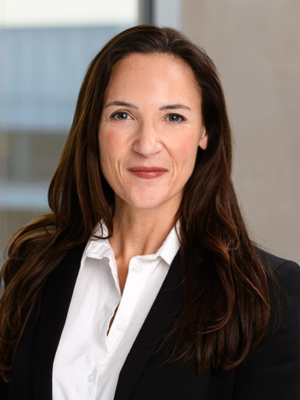
By: Bree Groff is a workplace culture expert and author of Today Was Fun: A Book About Work (Seriously). She has spent her career guiding executives at companies such as Microsoft, Pfizer, Calvin Klein, Google, Atlassian, Target, and Hilton through periods of complex change. She is a Senior Advisor to the global transformation consultancy SYPartners and previously served as the CEO of NOBL Collective. She is a graduate of the University of Pennsylvania and holds an MS in Learning and Organizational Change from Northwestern University. Bree lives in New York City with her husband and daughter.

(Guest Contribution: The opinions and views of guest contributions are not necessarily those of theglasshammer.com).
Nicola Free“It’s hard to teach determination, but if you’ve had setbacks, and you’ve had to fight to get to where you are, it is built in you to keep going,” says Nicola Free. “It’s how quickly you bounce back, what learnings you take away, that can make you even stronger.”

With a career shaped by determination, hard-won resilience, and a commitment to leading with integrity, Free does not just navigate change — she drives it. She reflects on how embracing risk, learning from inspirational leaders, and trusting in both her existing skills and her capacity to grow have been central to her journey.

Taking Risks and Having Faith in Herself

From an early age, Free learned to be a self-starter. She reflects, “I came from a very working-class background and went to the worst school in Warwickshire. I had to teach myself my GCSEs because the classes were so disruptive.”

Determined to “do something with my life and make my parents proud,” Free was the first in her family to attend university, where she pursued law. However, it did not take long for her to realize that the legal path, while hard-earned, was not where she wanted to stay. When a client she had supported on a major securitization project invited her to help launch a CMBS platform, she made a decision that would completely change her career.

“It was definitely a big risk,” Free admits. “I would never have anticipated that I would have left the law a year after qualification, but this new opportunity sounded really interesting.”

Jumping into a completely new environment, Free recalls that “a third of it was in my comfort zone and two-thirds I was learning from scratch.” Free leaned on what she knew: her work ethic and resilience.

“Have confidence in the skills you bring, work hard to learn what you don’t know, and don’t give up at the first hurdle. Be willing to take a leap of faith. Ultimately, it’s about believing in yourself; that you’ll get there, and that you can do it.”

That mindset has carried her through ever since. Today, Free is a recognized leader in her field. As Head of Commercial Real Estate (CRE), EMEA for Wells Fargo, she is driving the firm’s CRE strategy across Europe, strengthening its capital markets capabilities, and deepening client relationships in the region.

“It’s a hugely exciting time to be a part of this business and the opportunity ahead of us…this is the year that the strategy is all coming together.”

Leading with Humility and Authenticity

When reflecting on her leadership approach, Free emphasizes the importance of clarity, humility, and authenticity.

“I always try and bring people along with me,” she says. “Give them a vision of what the strategy is, what we’re trying to achieve…make them feel like they’re part of something really special.”

She continues, “it’s about leading with integrity, humility, and doing the right thing for the business, the clients, and the strategy we’ve set for ourselves.”

Mentoring and feedback are important elements to how she leads. “The only way I managed to make a success of my career change was having good people around me who were prepared to coach and teach me,” Free says. “It’s incumbent on us all, particularly as leaders, to be that player-coach where you take the time to give people feedback and help them develop.”

She recognizes that it is also about holding oneself accountable when things go wrong and ensuring others are recognized when they go right. “When things are going really well, make sure people are getting the credit.”

Find a Culture that Aligns with Your Values and Leadership who Embody It

While Free is unquestionably guided by a strong internal compass, she also highlights the vital role that external factors, particularly an organization’s culture and leadership, play in shaping meaningful career development.

“One of the things I’ve learned throughout my career is to ask: What’s the culture? What kind of institution do you want to work for? At Wells Fargo I enjoy working for a bank that has a strong culture that I can relate to while being guided by truly inspirational leaders.”

Free is particularly inspired by Kara McShane, Head of Commercial Real Estate at Wells Fargo, “who is seen as one of the most influential women in finance.”

“To be able to work for somebody like her is really inspiring…and when you have leaders you trust and respect, you want to do your best for them.” It’s a dynamic she now pays forward to her own team. “I want them to come in and feel they’re part of something great, and that they want to succeed because they believe in me, in the business, and in the leadership above me.”

Be Bold. Own It.

Surrounded by leaders she respects, and serving as one herself, Free is acutely aware that leadership is not just about results; it’s also about presence. For women in real estate finance, that presence is still too rare at the top.

“If you’re a woman running a lending business in this industry,” she recalls reading in Real Estate Capital, “then you’re pretty extraordinary.” The line gave her pause, not out of self-congratulation, but reflection. “I come in and do my day job because I love it and want us to succeed. I don’t think of myself as any different than any other leader. But seeing that made me realize there’s a responsibility that comes with being one of the few.”

It is a responsibility that Free takes seriously. As she has risen through the ranks, invitations to speak and serve on panels have increased, and she uses them to push for broader representation. “I’m always conscious about making sure there are other women at the table, that the panels are diverse, and that we’re holding ourselves and others accountable.”

Her visibility is intentional. Instead of blending in, she embraces standing out.

“There’s a big real estate conference I go to every year,” she says. “You queue to board the flight, and it’s just a sea of men in navy suits. I make a point of wearing something bright and own the fact that I’m not the guy in the navy suit. I’m the woman in the bright red dress. It’s an opportunity to be seen.”

She emphasizes, “Being different can make you more memorable. It’s not just about gender. You might be younger, newer, or from a different background. Whatever it is, don’t be afraid to be visible. Have confidence and own it.”

Outside of work, Free applies the same conviction and focus to her personal life. She’s a mother of two daughters, and a competitive CrossFit athlete.

“I’m a strong working mom, and it demands a lot of my time, but I’m showing my girls what working hard and loving what you do can lead to and I’m not apologetic about it.” CrossFit is her outlet, her reset. “When I am training hard, I’m not thinking about anything other than being in the moment… it’s a really good way of switching off.”

That thread of determination runs through everything she does, whether it’s qualifying for a legal career, shifting into finance, growing a business, mentoring a team, or lifting a barbell.

“When things get really tough, don’t give up,” she says. “If you keep digging in, you’re going to feel so great at the end of it.”

By Jessica Robaire