Tag Archive for: goldman sachs

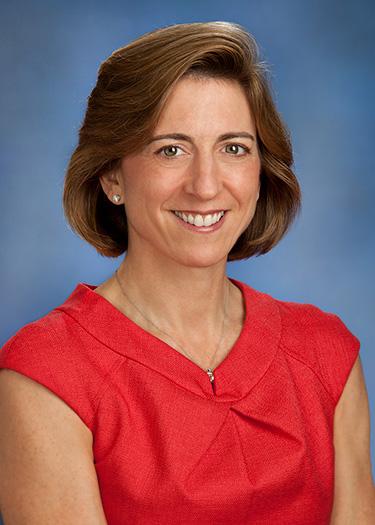
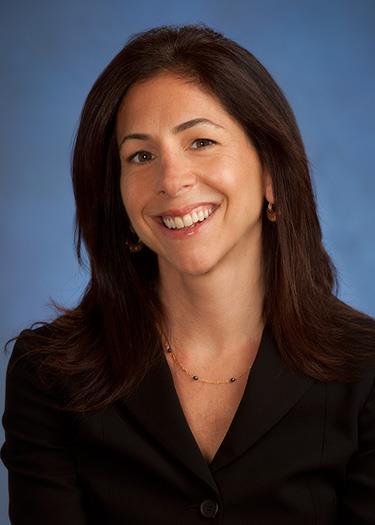
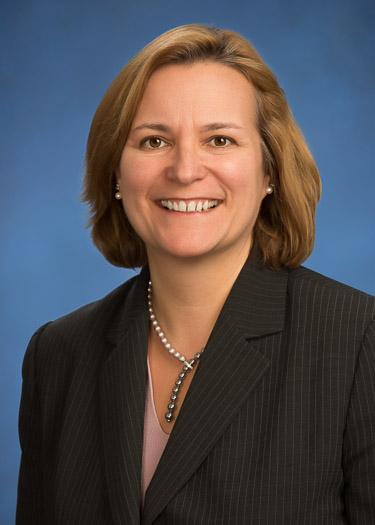
Mary ByronRegarding her career path in technology, Mary Byron notes that it was more of a serendipitous accident as opposed to a calculated plan.

“I didn’t study technology in school, but I was very lucky to have a job in college doing general office work,” said Byron. “One of the tasks was backing up the Word Processing system. They needed someone who could manage pretty basic technology functions and I was fortunate enough to be exposed to this kind of work right around the time personal computing and networking was starting to be widely developed.”

She continued, “As it turns out, I loved technology and I was skilled at it. So I never looked back after starting down that path.”

Career Path in Technology

Throughout her career with Goldman Sachs, Byron has had the opportunity to lead the implementation of many new technologies for the company, including building out the IP network for the firm in the nineties. “I was fortunate that as the Internet really took off, so did all the technologies that supported it and the need for companies to adopt those technologies,” explained Byron.

Byron recalled, “We didn’t even have email when I started at the firm, and every division ran its own technology. In 1994, the company decided to streamline all of the individual IT departments into one centralized division. For seven years we worked on converging eleven different email systems into one uniform system.”

In the early 2000s Byron became the Co-head of Goldman’s technology infrastructure, which included all data centers, networks, computing platforms, operating systems, databases, and help desks.

In 2005, Byron was chosen to be the CIO for Goldman’s Asia business, where she spent six years. “It was exciting to be part of this growth market,” said Byron, “as we were establishing our business in China and India, which are both countries with very different levels of technical prowess and technology adoption.”

During this time, Byron worked on establishing good governance and best practices for the technology division. Organizing this aspect of the business and showing people how to think about technological investments in commercial terms is something that Byron is extremely proud of. She said, “Moving these ideas forward so that they became institutionally recognized as the way we address technology has been very rewarding.”

Byron stated, “I think of all technology as an evolution. In the past, one of the projects I worked on was our first implementation of grid computing, which was the precursor to the cloud. Now, we are working a lot on dynamic computing and the automation of infrastructure, which are things that we identified a need for ten years ago and now have the technology to implement.”

The grid computing project, which Byron referred to as the compute farm, is one project that stands out to her as being one of her most exciting professional achievements. She explained, “When we first started, we anticipated one or two thousand computing engines running on the grid. Now we have tens of thousands computers running on it.”

This dynamic nature of technology and applying technology to solve problems are two things that make Byron excited about the work she currently does in her role as Global Head of Technology for the Federation. “We are spending a lot of time right now working on big data and data governance,” said Byron.

She continued, “Sometimes our best technological ideas are not really about the technology at all, but how we can leverage the technology to make our business bigger and better.”
Read more

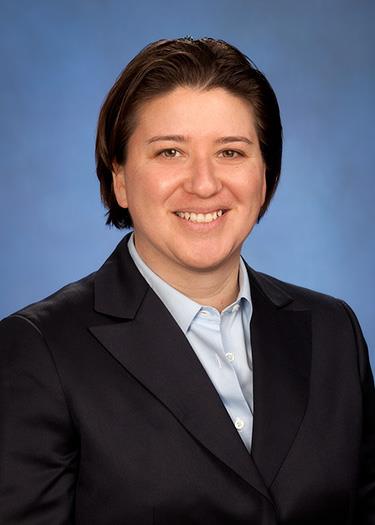
Julie HarrisWelcome to Pride Week on The Glass Hammer — we’ll be profiling successful LGBT business women all week long!

Julie Harris, Managing Director at Goldman Sachs, had a master plan when she entered college – or so she thought. “I come from a blue collar family,” said Harris, “and while my parents have always been incredibly supportive, they did not have a lot of advice on career choices, so I picked a major that seemed challenging and figured I would get a good job. That was my mental model.”

Harris decided that she was going to major in Computer Science and get a job programming. This trajectory probably would have served Harris very well had she not determined in her senior year of college that while she was very interested in applying technology to business problems, she did not love programming.

It was at this juncture that Harris first tapped into a bit of profound professional wisdom. Harris said, “It was the first time I made the distinction between knowing what you can do and are good at, versus knowing what you love doing.” She adds, “This is something I have thought a lot about throughout my career when making choices. When you follow passions instead of just capabilities, it can be the difference between good and great.”

Although Harris had just spent four years preparing to graduate with a Computer Science major and enter the workforce as a top notch programmer, she was unwilling to settle. So, instead of heading to a traditional programming job, Harris decided to apply her technology background in a burgeoning industry at the time known as consulting.

“All the big accounting firms started building consulting arms because clients wanted total solutions.” Harris continued, “I started working at what was then known as Arthur Andersen, which became Andersen Consulting, and is now Accenture, in the Management Information Consulting division.” Out of the nine years Harris spent there, she only focused on programming for two of those years, ultimately moving to business analysis roles which focused more on application of technology to business problems .

Even though this experience formed the foundation for Harris’ professional career, she gleaned much more from her time as a consultant. Harris explained, “The great thing about a firm like that is that it taught someone who didn’t have professional experience how to be structured and disciplined, essentially how to be a professional.”

If Harris was going to continue to be a key player in the corporate arena she knew she had to familiarize herself with the business landscape in order to successfully navigate it. Although her knowledge of business, particularly in the financial services sector, was limited, Harris was not deterred. Instead, this motivated her to enroll in the MBA program at the Kellogg School of Management at Northwestern.

Read more

Bhalla NeetiWomen should aim to maintain a sense of authenticity while rising through the ranks of the investment industry, says Neeti Bhalla, Managing Director and Head of Tactical Asset Allocation in Goldman Sachs‘ Private Wealth business. “Have a sense of what your true north is, a sense of who you are and what you are trying to accomplish,” she explained. “As a young woman coming into the business, you see more successful men than successful women. There is a natural tendency to emulate the men, a tendency to embrace male attributes. But this is unsustainable for women. You have to think, ‘What can I take from the role models I see around me and apply to my situation?’”

Bhalla, who earned a master’s degree in Social Anthropology alongside her MBA at Oxford as a Rhodes Scholar, suggests that embracing one’s individuality can be a competitive advantage. “You have to develop what is unique and differentiating about you. You have to become “a go-to person” for something in your career.”

Read more

Kathy elsesserKathy Elsesser, Managing Director and Head of the Global Consumer Retail Group in Investment Banking at Goldman Sachs, speaks enthusiastically about the opportunities for women in the financial services. She believes that women can achieve their full potential by being authentic and thinking carefully about what they want in life.

“Know what you want and ask for it. I have noticed a tendency on the part of the women I mentor to take what they’re given and do well with it. But the question I try to ask them is ‘what do you really want?’” She continued, “Ask for the things that will help you get that – versus accepting the things that are presented to you.”

And that mindset can benefit women throughout their career – from the entry level all the way to the top. She encouraged women to think carefully about how their skills and talents could be best leveraged at work. “Especially for women who decide to have a family, I would encourage them to think every day about how they are spending their time. As you get older, you begin to realize that time is a limited resource.”

She continued, “When you have a new project, think about whether this is important, or whether, if you personally do it, it is going to have an outsized return relative to someone else taking it on.”

“I really see women take on what they are given rather than asking whether it’s the best use for their time. If someone else can do it, give it to them and find a higher and better use for your time.”

Read more

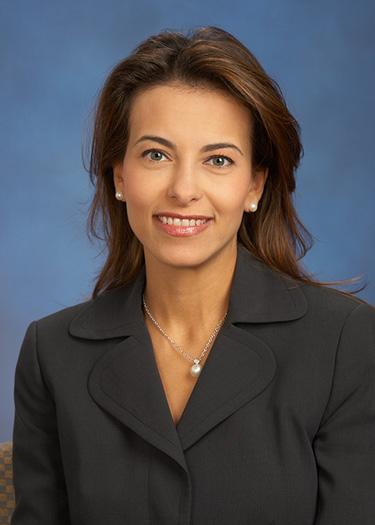
Dina PowellAccording to Dina Powell, President of the Goldman Sachs Foundation and Global Head of Corporate Engagement for the firm, it’s important to be open to new and different opportunities throughout your life.

“One of the things I often say is be careful not to overplan your life. Because the less you are open to opportunities as they come along, the less you have the advantage of a diversity of experience,” she advised.

Powell has spent time in both the public and private sectors, having worked in the White House and for the Department of State before joining Goldman Sachs. She believes this has served her well throughout her career path. “I think having experience in both is key,” she said. “When I think of the many opportunities we have now to work together to solve problems – I think it’s vital to understand how the other side works.”

That breadth of experience is also invaluable when approaching complex challenges in the developing and emerging markets. She said, “When I think of solving global challenges, it’s about making sure all three legs of the stool are represented – the public sector, the private sector, and the non-profit sector.”

“I’ve had the privilege of working with so many women around the world and it’s given me so much faith in women. Women in many parts of the world – Afghanistan, India, Egypt – are faced with so many challenges. Yet they are determined to do everything they can to invest in their communities and their children. When we give women the chance to reach their full potential, it makes a huge difference.”

She added, “Having women as full members of societies really does lead to more peaceful and prosperous communities and a more peaceful and prosperous world.”

Read more

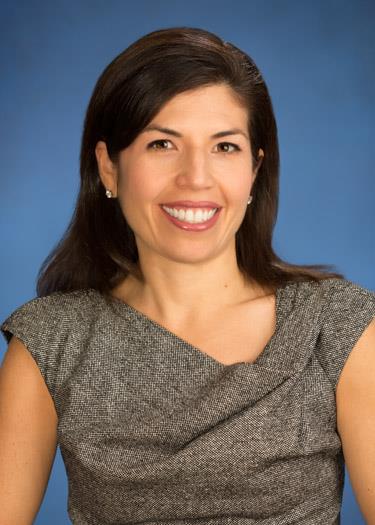
One of the most important lessons Laura Sanchez has learned throughout her career is the importance of being yourself.Laura Sanchez

Sanchez, now a Managing Director in Private Wealth Management at Goldman Sachs, found that by allowing her unique personality to shine, she was better able to connect with clients, which ultimately helped her career.

“When you’re new – and I had also switched industries – you may be anxious about fitting in and looking like everyone else or acting like everyone else. But trying too hard to fit in can stifle who you are.”

She continued, “To not be yourself for the majority of your day creates a lot of stress.”

Ultimately, she says, authenticity was her key to a more fulfilling career. “When I’ve been true to myself and let my own light shine through, that’s when I’ve been my best. That’s when I think the success started,” she explained.

Read more

Lale TopcuogluOriginally from Turkey, Lale Topcuoglu studied economics and politics at Mount Holyoke College in Massachusetts and then took a job as an analyst at Goldman Sachs in 1999, where she quickly ascended the ranks, being named a managing director just ten years later. “That’s probably my proudest achievement,” she said, “getting promoted to Managing Director and co-head of the Investment Grade business. We manage $70 billion in assets and I co-lead a team of 22 people in the US, Europe, and Asia.”

“When I look back at my career, Goldman Sachs has been a land of opportunity for me,” she added.

How did she rise so quickly? Topcuoglu said one of the skills she’s glad to have learned in her career is the ability to negotiate. “Nobody really teaches you this,” she explained. Getting a sense of how your company really works is also important for career growth, she continued. “I learned pretty quick on the job, if you can understand how organizations work, the administration, it will help you.”

Finally, she said, learning self awareness was important for her advancement. “Be aware of your little professional quirks,” she said. “Sometimes I make knee jerk responses, and I’m learning to start with a yes, instead of a no.”

Read more

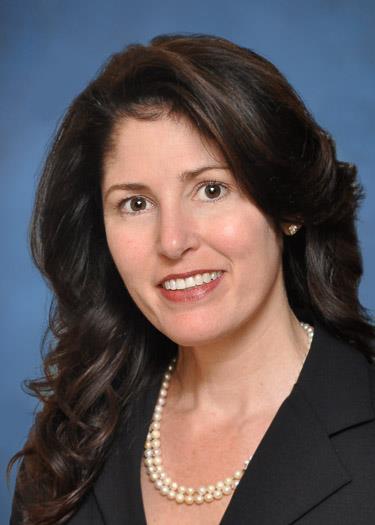
Stacy Bash PolleyAccording to Stacy Bash Polley, Partner and Co-Head of Fixed Income Sales for the Americas at Goldman Sachs, it’s important for senior women to serve as role models and advocates for the next generation of women in finance.

Bash Polley, co-chair of Goldman Sachs’ Firmwide Women’s Network, said that the group’s events are designed to make senior women aware of their own impact on career development.

She explained that in her experience, there are three ways that women engage: as role models, mentors and advocates. Role models are the most passive of the three, serving as visible examples of career success and inspiring younger women to visualize their own career trajectories. Mentors serve as coaches and counselors, guiding women to optimize their current situations to achieve success. Advocates actively engage in the tactical management of someone’s career, identifying the platform that will allow that person to combine his or her passion and skill set for maximum performance.

“All successful women become role models, so we want them to understand that with more visibility comes more responsibility. Once a woman becomes more senior, she should become a mentor or advocate of more junior women and pay it forward. This is how we get critical mass,” she said.

Read more

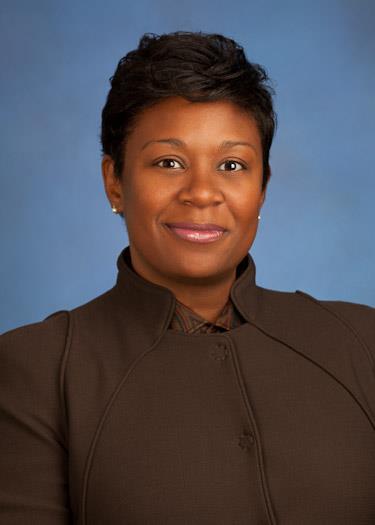
Nicole Pullen Ross“We all have the responsibility to be advocates for more junior women,” said Nicole Pullen Ross, Managing Director of the Mid-Atlantic Region for Goldman Sachs’ Private Wealth Management business.

“And it is a greater responsibility behind closed doors than when in the presence of the people we are mentoring.” She explained, “That advocacy means really pulling someone up behind you in a proactive way, the same way others have done for you.”

Read more

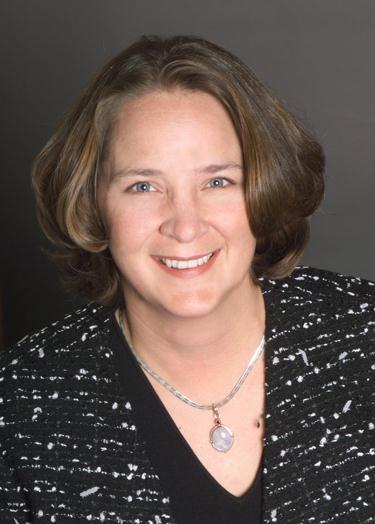
Kathleen HughesShe advised, “Think strategically about how you build your brand. This is something I personally had to learn – the bar gets higher and higher in this industry, and it’s not enough to keep your head down and work. Of course, you have to produce. But you also have to promote your success and build your brand in a different way.”

And, she said, how you build that brand depends significantly on your firm’s culture. “Our culture here tends to be team-oriented. Relationships matter.”

Read more