
Tag Archive for: building trust

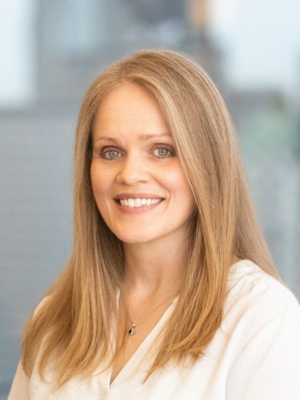
Jeanine OlivaBy Jessica Darmoni

“I have built genuine trust and strong relationships with my team here at Citadel, which go beyond the day-today work,” says Jeanine Oliva, Global Head of Tax Operations at Citadel and Treasurer of WILD Gives Back. “Taking the time to get to know team members as individuals deepens trust, fosters collaboration and in my experience, high performance naturally follows.”

The Glass Hammer sat down with Oliva to learn more about her path to one of the world’s most demanding financial firms. It was not shaped by a master plan but by trusted relationships, a relentless work ethic and a refusal to let self-doubt have the final word.

Impactful Connections

Oliva has always been in roles that support middle and back office operations by understanding how global transactions are taxed. Her path to Citadel first emerged while she was a public accountant at RSM McGladrey.

“I was working with a close friend when he left to join Citadel,” says Oliva. “Soon afterwards, I was hired by a hedge fund administrative company that at the time was owned by Citadel.”

It was through this role that Citadel became one of her clients. The proximity gave her first-hand insight into the company’s culture.

“I saw their high standards and approach to excellence up close,” she explains.

Those qualities did not intimidate her but instead drew her in. She had kept in touch with her former colleague from McGladrey and when the opportunity presented itself to work at Citadel, she was ready.

The Human Endeavor in Leadership

“Being trusted as a leader at Citadel is one of my greatest motivators,” she says. “However, what really sustains my day-to-day are the people.”

This philosophy extends beyond her immediate team. She describes keeping in touch with former colleagues over the years, offering support in the form of a fresh perspective on a tricky problem, or a job reference at just the right moment.

Oliva is also the Treasurer of WILD Gives Back, a not-for-profit 501(c)3, which raises funds for students to study derivatives courses at the Associated Colleges of Illinois. She has a unique perspective from her vantage point.

“Some of the most meaningful moments in my career have been watching people I’ve worked with grow into their full potential,” she reflects.

The Value of Being Seen

Oliva thinks back on her career, which was more of a game of chutes and ladders, than a direct climb to the top. She describes a pivotal moment when early in her career, and pregnant with her first child, a former boss tried to bring her back to his team. She raised a concern that it might not be practical timing and his response has stayed with her ever since: “Half of Jeanine is better than no Jeanine.”

His comment was a critical reminder that genuine professional relationships are not transactional. For a woman in finance, navigating a career alongside pregnancy and motherhood, being told plainly that her presence was valued regardless of circumstance was a message that carried real weight.

Making Space

Oliva points to Harlan Ten Pas, lead partner of the Financial Services team at McGladrey, as another significant influence, shaping not only the early years of her career, but also her leadership.

“He was exceptionally sharp and always approachable, regardless of his seniority. He took a personal interest in each member of his team creating an environment where many colleagues felt like family.”

That mattered especially in the early years, when she was often one of the only women in the room.

“His warmth and investment in his people showed me that belonging was possible in a field that didn’t always make space for me.”

He also modeled something she values deeply. She says he taught her “that a successful career and a fulfilling personal life aren’t mutually exclusive.” Though he passed away last year, his influence continues to shape how she leads.

Turning self-doubt into fuel

While Oliva is secure in her industry knowledge, that does not mean she is not faced with moments of uncertainty.

“When resistance arises in a meeting, I lean into it rather than away,” she says. “At Citadel, being entrepreneurial from day one and challenging ideas constructively and constantly asking, “is there a better way?” is not just permitted, it’s expected.”

When self-doubt surfaces, her response is characteristically grounded because she doubles down on the work. This could mean reading up on recent regulations, talking through issues with colleagues, or building her understanding until she is confident.

“At Citadel confidence comes from knowledge, rigor, and continued curiosity, not complacency.”

A Human Mind Behind AI

Even when it comes to modern technologies such as AI and Machine Learning, Oliva believes the human element will still be an important one.

“Technology, including AI, is only as good as the human mind behind it,” she says.

In an era of rapid AI adoption in finance, this stance feels more relevant than ever. Questioning outputs and challenging existing processes, are not just encouraged at Citadel but expected. The culture of continuous improvement is something she genuinely values, and something she sees as essential for the next generation of leaders.

One of the most practical pieces of guidance Oliva carries is a healthy skepticism of doing “the same as last year.”

“The principle is straightforward,” she says. “Don’t accept inherited processes at face value. Rules and fact patterns can change. Understand the calculations. Know where the data comes from. Do the research.”

Leaders in a Crowd

When she thinks of the young women only starting out, she says, “Keep pushing toward what you want. Persistence and hard work generate dividends. Don’t be afraid to take a different path to get there, and if others doubt you, prove them wrong.”

She believes the leaders of tomorrow will be defined by the strength of their personal relationships and the ability to trust their own judgment.

“Relationships keep you grounded, keep you motivated, and open doors,” she said. “Critical thinking, the capacity to reason beyond what any algorithm can offer, is what ultimately distinguishes a leader from the crowd.”

It’s a vision of leadership that’s both deeply human and rigorously disciplined, which sounds a lot like Jeanine Oliva.

Marie Bober“I naturally step into a role when there is a dearth of leadership,” says Marie Bober. “It’s just part of who I am – I see the need and think, ‘I got it.’”

From captaining sports teams as a kid to speaking up in moments of silence, taking charge has always felt instinctive for Bober. “I come from a really long line of very bossy women,” she laughs. “I think it’s probably genetic.” While her grandmothers ran their households with authority, her mother broke barriers, becoming one of the first women to earn a PhD in chemistry from NYU in 1972.

That inherited sense of purpose shaped Bober’s own unconventional path. She started college as a chemistry major but quickly pivoted to psychology. Drawn to forensic work, she earned a master’s and spent three years at a pediatric psychopharmacology lab at Massachusetts General Hospital researching ADHD and pediatric bipolar disorder.

“My plan was to go on to get my PhD, but research itself started to feel like a tough long-term path with low pay, questionable ethics in some corners, and not a great ROI if you wanted a sustainable career.”

Still captivated by the intersection of law and human behavior, Bober pivoted again, this time to law school at Northeastern University. Being a part of Northeastern’s distinctive co-op program allowed her to try a little bit of everything: working with a solo practitioner, in a judge’s chambers, the DA’s office, and an in-house legal team.

“In-house was by far my favorite, but you don’t just go from law school to in-house,” says Bober. Instead, she built her experience through small firms, auditing work, and ultimately opened her own practice while keeping her eye on the long game.

Bober’s diligence paid off when a friend offered her an in-house legal role at Gracie Asset Management, a Moelis subsidiary. The only catch was the job was in New York, which meant that Bober and her wife had to live long distance for a few years. When Gracie had a key man event resulting in steep layoffs, Bober moved over to the parent company. After a few internal moves – and the sudden loss of a friend that left a senior counsel role vacant – she was promoted into her current role as Chief Compliance Officer and Senior Counsel at Moelis Asset Management.

Breadth that Delivers

Looking back on what has helped her succeed, Bober points to adaptability and a breadth of knowledge, both of which are essential in a role that spans legal and compliance.

“To be in this particular role, you can’t be rigid or precious,” she explains. “We’re an entrepreneurial business…everybody’s got to do a little bit of something, and you have to be okay with that. We’re always thinking about new strategies, markets to tap and ways to get clients. It’s flexibility and a willingness to pick up the next thing and learn.”

Bober points to the growth of the business as another part of what requires adaptability: “when we started, we were private equity. Now we’re private equity, broadly syndicated loans, direct lending, seeding of emerging managers, venture capital.”

As the business expands, so too does Bober’s knowledge base, which is necessary for her to guide legal and compliance issues.

“I call myself a triage nurse because there are certain areas that I’m deep in, like fund formation or structuring, but then I also have to be able to direct counsel for things like litigation, tax matters, or employment. I might not be an expert on all those issues, but I must be conversant enough so that my subject matter experts can direct me effectively.”

What They Didn’t Teach in Law School

Beyond technical range and flexibility, Bober believes that one skill rises above the rest when it comes to lasting success: knowing how to navigate people.

“How to handle and approach people is key; it gets you so much further than even your technical knowledge,” she emphasizes. “One of the things law school doesn’t teach you is that if you’re a practicing lawyer in a firm, networking is 98% of your job. To be a partner at a law firm means that you bring in a good amount of business.”

Bober adds, “My boss likes to joke that he thinks that my psych degree sometimes helps me more than my law degree because it definitely gives you a framework for understanding people.”

That understanding shapes the way Bober communicates, builds relationships, and earns trust, especially in the context of leadership and knowing how to manage in all directions.

“Managing up is a skill that’s rarely taught, and it matters just as much as managing direct reports. I’ve learned how to communicate differently depending on who I’m talking to, and how to present something in a way that gets the right response.” As Chief Compliance Officer, she often needs people to act on specific requests and ideally, do so with genuine buy-in. “I’ve seen people try to lead through fear or pressure, but that only works for so long. Eventually, people tune you out.”

It is a message she impresses on junior staff as well: “be proactive, message appropriately, be polite and respectful, and if you make a mistake or get it wrong, have the ego to walk it back and take responsibility. It builds trust.”

Leadership as a Team Sport: Fostering Growth Over Competition

In an industry known for individual ambition, Bober takes a different approach to leadership; one that is shaped by hard-earned lessons and a clear sense of the kind of environment she wants to create.

“I’m a competitive person,” she says, “but I try not to be competitive at work. That’s not the environment I want to foster.”

Earlier in her career, Bober saw firsthand how toxic leadership can erode trust. She recalls a former manager who guarded her influence closely and refused to use any of her political capital to support others.

“When my mom passed away, I got two days of bereavement. Other department heads had given people the full week, but my boss told me if I wanted the extra time to attend the funeral, I’d have to use vacation days. She didn’t want to spend any of her political capital justifying why I was not billing or there for that week.” That experience left a mark, but also a guidepost: “It taught me exactly the kind of leader I don’t want to be.”

Now, as a senior leader herself, Bober sees mentoring others not as a threat, but as part of what defines strong leadership. She draws inspiration from Brazilian Jiu Jitsu, a sport she trains in outside of work.

“My coach always says he never hides the best parts of his game because if someone can master it in two weeks and beat him, they deserve to win.” The same philosophy, she says, applies in leadership. “Helping my associate grow, bringing her along and giving her what I can to help her succeed doesn’t threaten me; it strengthens the team, and if I ever move on, she’s ready to step in.”

Success, On and Off the Mat

Whether she is preparing for a Brazilian Jiu Jitsu tournament in New Jersey or aiming for another podium finish at Masters Worlds in Las Vegas, Bober brings the same focus and drive to the mat that she brings to her role at Moelis. A two-time Masters World Champion as a brown belt and now a black belt competitor, she thrives on the discipline and challenge of competing and on the fulfillment it brings outside the office.

That mix of ambition and purpose is intentional. “I strove to have an in-house position. I strove to have work-life balance in my career,” she says. “And I think I’m in a spot where I can do both.”

For Bober, success is not about chasing the highest title or the biggest paycheck. It’s about feeling grounded, challenged, and able to pursue what matters. “I can sing in a rock choir on Tuesday nights. I can do jiu jitsu. That’s what makes it all worth it.”

By Jessica Robaire

asking for help leadershipAs today is Halloween, a time when we delight in confronting our fears, it’s worth reflecting on one fear that many leaders can find particularly daunting: asking for help. Much like navigating the eerie unknowns of a haunted house, the vulnerability tied to asking for help can be intimidating. The fear of appearing weak, of losing control, or of being judged can make the very thought of seeking assistance seem like an insurmountable challenge.

But just as Halloween encourages people to face their fears head-on, effective leadership requires confronting this deeply ingrained hesitation. Asking for help is not only necessary—it’s a powerful act of courage that enhances leadership by fostering trust, empowerment, and communication. The ability to embrace vulnerability does not make you less effective; in fact, it strengthens relationships, builds resilience, and opens opportunities for both personal and team growth. Leaders who embrace vulnerability by seeking support not only improve their own leadership effectiveness but also inspire others to do the same.

Why Is Asking for Help So Scary?

One of the main reasons asking for help is so difficult is that it requires vulnerability. Leaders are often expected to exude confidence and have all the answers, and admitting uncertainty can feel like stepping into the unknown—uncertain of what lies ahead. There is a deep-seated fear that showing vulnerability might erode credibility or cause others to question their capabilities. This fear is driven by societal expectations and an outdated view of leadership as a solo venture. However, in today’s collaborative work environments, leadership is about connecting, communicating, and being authentic. By confronting the fear of asking for help, you not only show that you are self-aware but also model the kind of openness and vulnerability that fosters a culture of trust and collaboration.

In fact, research shows that vulnerability is at the heart of effective leadership. In her book Dare to Lead, Brené Brown emphasizes that embracing vulnerability allows leaders to foster trust and deeper connections with their teams. Far from diminishing authority, showing vulnerability strengthens relationships and builds psychological safety.

The Value of Asking for Help

Facing the fear of vulnerability and seeking help has benefits for both leaders and their teams. By stepping into this space of openness, you create an environment where psychological safety can flourish. When people feel safe to express their thoughts, ask questions, and offer help without fear of judgment, creativity and innovation thrive. This sense of security begins with those who demonstrate that vulnerability is a strength, not a weakness.

  1. Modeling Vulnerability and Psychological Safety
    When you ask for help, you send a powerful message to your teams: it’s okay not to have all the answers. This willingness to be open and seek input creates a culture of psychological safety, where team members feel comfortable sharing their own challenges, offering ideas, and seeking support. Amy Edmondson, a professor at Harvard Business School, has shown that psychological safety—where people feel safe to take risks and ask for help—drives higher team performance, creativity, and innovation. Leaders who model vulnerability create a space where others can speak up, admit mistakes, and contribute their best ideas.
  2. Empowering the Team to Step Up
    Asking for help isn’t just about lightening your load—it empowers the team to take on greater responsibilities. When you seek input or delegate tasks, you give team members the chance to step up and showcase their strengths. Research has found that empowering leadership boosts creativity and job satisfaction, as individuals feel more valued and engaged when they are trusted to contribute in meaningful ways. By asking for help, you give your team the opportunity to shine.
  3. Building Trust and Strengthening Relationships
    Trust is the foundation of strong teams, and it’s built through openness and mutual support. When you ask for help, you build trust by showing that you value the input and expertise of others. Research shows that authentic leadership—where vulnerability and transparency are key traits—is directly linked to trust within teams. The act of asking for help signals to team members that their contributions are important, deepening trust and strengthening the overall bond within the team.
  4. Preventing Burnout
    Leaders often carry significant responsibilities, juggling multiple priorities and making decisions that impact both their teams and the organization. Attempting to shoulder these burdens alone can lead to exhaustion and burnout. Asking for help—whether by delegating tasks, seeking advice, or simply admitting that additional support is needed—can prevent this. Sharing the load allows you to focus on strategic initiatives without becoming overwhelmed by day-to-day demands.
Who Can Leaders Turn to for Help?

You may wonder where to turn when you decide to face the fear and ask for help. There are several options, each providing unique support and insights.

1. Your Team, Peers, Mentors

While the importance of turning to your team has already been emphasized, it’s worth reiterating just how impactful it can be. Seeking help from team members not only fosters collaboration but also creates opportunities for them to step into leadership roles themselves, reinforcing a culture of trust and shared responsibility.

Beyond the team, peers and coworkers offer a fresh perspective. They understand the internal dynamics of the organization and can provide insights that help break through roadblocks. Collaborating with peers strengthens networks and promotes a culture where leadership is shared, not siloed.

Mentors, on the other hand, provide a broader, more seasoned viewpoint. Their experience allows them to guide you through challenges they’ve likely faced themselves, offering personalized advice. Mentorship is rooted in trust and respect, giving you the confidence to explore new paths, tackle difficult decisions, and grow with the support of someone who’s been there before.

2. Executive Coaches

Sometimes, asking for help means seeking guidance beyond your immediate circle. Executive coaching offers leaders a personalized approach to growth, providing one-on-one support that can transform both leadership skills and personal development. Coaches help you ask the tough questions, explore vulnerabilities, and create customized plans for improvement. This tailored guidance accelerates growth and empowers you to make informed decisions, overcome obstacles, and advance more quickly.

By seeking help from a coach, you not only invest in your own development but also model the value of vulnerability and continuous learning for your team. It’s a proactive step toward long-term success. If you are ready to take that step, consider an exploratory coaching chat with Evolved People Coaching, the leadership coaching arm of theglasshammer.com. You can book that session here.

How to Make the Ask

Asking for help, while daunting, can be done thoughtfully and effectively. Here are a few strategies to make the ask easier:

  1. Be Clear and Use the SMART Approach: An acronym for specific, measurable, achievable, relevant and time-bound, being SMART when approaching someone for help lends clarity to the kind of support that is needed. Not only will the conversation be more productive, but having a framework for the ask can help alleviate any anxieties about imposing on someone’s time and attention.
  2. Frame It as Collaboration: Asking for help doesn’t need to feel one-sided. By framing the request as an opportunity for collaboration, you create a more balanced exchange. For example, instead of saying, “I don’t know how to do this,” try “I’d love to get your perspective on this challenge.”
  3. Show Gratitude: After asking for help, acknowledging the time and effort others put in is crucial. Expressing gratitude not only strengthens relationships but also encourages future collaboration.
  4. Be Open to Feedback: When asking for help, it’s important to remain open to different ideas and solutions. Embracing diverse perspectives can lead to more creative and effective outcomes.
Embracing Vulnerability for Stronger Leadership

Asking for help is a powerful leadership tool as stepping into vulnerability allows you to grow and strengthen your teams. By seeking support from coworkers, teams, mentors, and executive coaches, you can foster a culture of collaboration, trust, and mutual empowerment. Far from diminishing leadership, asking for help demonstrates the courage to evolve—both as a leader and as a person. By learning to embrace vulnerability, you build stronger connections, create more resilient teams, and lead with authenticity.

By Jessica Robaire

How-to-build-a-teamThere are many books and “experts” on executive presence out there, many of them keen to tell you how to dress and how to act. My take on this is simple, just be yourself. Authenticity and being truthful about who you are has been shown to augment trust between people and people make the work go around. This has been shown especially with LGBT managers.

Now we all know that if you are a woman sometimes you are damned if you do and damned if you don’t ( see every female leader who ever lived, currently Hillary Clinton could tell you about this in detail I am sure) so the least you can do is not assimilate to behaviors that feel odd to you. However, you can be interculturally competent in any situation- which means reading the room while doing it your way!

By Nicki Gilmour, Executive Coach and Organizational Psychologist

Contact nicki@theglasshammer.com if you would like to hire an executive coach to help you navigate the path to optimal personal success at work