 By Melissa J. Anderson (New York City)
According to a new report by executive search firm Egon Zehnder International, increasing the number of women on boards may become more difficult in the near future. While the spotlight on hiring more female directors has shone more brightly in recent years, the percentage of women in those seats has stagnated.
Not only that, new research shows, the pool of women traditionally considered for these jobs may be shrinking. The report says:
“Over the past five years, the number of women reaching senior executive roles has decreased by 12 percent, shrinking the talent pool from which most female directors are likely to be drawn. Despite some recent high-profile appointments, only 4percent of Fortune 500 CEOs are women, and – as any board search professional can attest – boards still almost reflexively seek sitting or retired CEOs to fill board seats.”
Based on EEOC labor statistics, the number of women reaching the C-suite has decreased by 12 percent between 2000 and 2010. And because fewer women seem to be making it to senior management, it may become harder in the coming years for companies to diversify their boards.
As Claudia Pici-Morris, co-author of the report and US Head of Research for Egon Zehnder, explained, “It is surprising to see the number of women making up the future pool shrinking, and shrinking steadily.”
There’s clearly a disconnect between boards’ desire to increase their percentage of female directors (as well as the dialogue and debate around the issue of female leadership within the general public) and the groundwork being laid to prepare women for the director role.
Fortunately, Pici-Morris explained, more can be done to prepare and locate women for board positions – and executive search firms, companies, and women with their eyes on a board seat all have a role to play.

Communication: Top Tool of World’s Greatest Bosses
Industry Leaders, LeadershipAccording to a new study by Seattle-based leadership training group, Fierce Inc., communication is the cornerstone of a good boss-employee relationship. The study, which polled over 1,700 corporate executives and employees, set out to find what qualities make a good boss, what reciprocal qualities make a good employee, and how they can work together to be most effective.
Four out of five respondents (80 percent) said the most important thing a boss can do is ask for feedback from their employees. A smaller but significant group (37 percent) said it was important for a supervisor to provide constructive feedback to his or her direct reports.
Since today is National Boss’s Day here in the United States, it may be a great opportunity to examine your own managerial communication style. How are you conveying your own leadership in the way you communicate?
Read more
Voice of Experience: Pamela Jackson, Partner, Mergers and Acquisitions Tax, PwC
Voices of Experience“Believe in yourself,” advised Pamela Jackson, Partner and Founding Member of PwC’s Mergers and Acquisitions Tax business in the UK.
Through a career spanning over three decades – and three continents – Jackson has had the opportunity to learn a lot. She went from being mistaken for the receptionist when she first started out, to ascending to partnership and leadership within PwC, to being named Women in the City’s Woman of the Year, to now leading one of PwC’s new key strategic initiatives.
Jackson encourages women to embrace their self-confidence. “Tell people what you want. Keep asking for it. Don’t sit and wait for things to come to you. Success comes to people who go out and take it with both hands,” she said.
“Take calculated risks and go for it. Every time you take a risk, you continue on your journey.”
Read more
Voice of Experience: Laura Sanchez, Managing Director, Private Wealth Management, Goldman Sachs
People, Voices of ExperienceOne of the most important lessons Laura Sanchez has learned throughout her career is the importance of being yourself.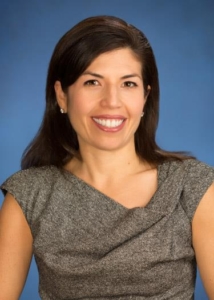
Sanchez, now a Managing Director in Private Wealth Management at Goldman Sachs, found that by allowing her unique personality to shine, she was better able to connect with clients, which ultimately helped her career.
“When you’re new – and I had also switched industries – you may be anxious about fitting in and looking like everyone else or acting like everyone else. But trying too hard to fit in can stifle who you are.”
She continued, “To not be yourself for the majority of your day creates a lot of stress.”
Ultimately, she says, authenticity was her key to a more fulfilling career. “When I’ve been true to myself and let my own light shine through, that’s when I’ve been my best. That’s when I think the success started,” she explained.
Read more
Three Ways Executive Search Firms Can Boost Women on Boards
Industry Leaders, LeadershipAccording to a new report by executive search firm Egon Zehnder International, increasing the number of women on boards may become more difficult in the near future. While the spotlight on hiring more female directors has shone more brightly in recent years, the percentage of women in those seats has stagnated.
Not only that, new research shows, the pool of women traditionally considered for these jobs may be shrinking. The report says:
Based on EEOC labor statistics, the number of women reaching the C-suite has decreased by 12 percent between 2000 and 2010. And because fewer women seem to be making it to senior management, it may become harder in the coming years for companies to diversify their boards.
As Claudia Pici-Morris, co-author of the report and US Head of Research for Egon Zehnder, explained, “It is surprising to see the number of women making up the future pool shrinking, and shrinking steadily.”
There’s clearly a disconnect between boards’ desire to increase their percentage of female directors (as well as the dialogue and debate around the issue of female leadership within the general public) and the groundwork being laid to prepare women for the director role.
Fortunately, Pici-Morris explained, more can be done to prepare and locate women for board positions – and executive search firms, companies, and women with their eyes on a board seat all have a role to play.
Read more
Movers and Shakers: Rosa Bravo, Business Development Director, Accenture
Voices of ExperienceThis week The Glass Hammer is celebrating Hispanic Heritage Month with profiles of senior Hispanic women in the financial and professional services. Check back all week long to read more.
“One of the things I wish I had known earlier,” began Rosa Bravo, a Business Development Director for Accenture, “is that it’s okay to ask for help.”
Bravo, who started her career as an aerospace engineer before moving into consulting, explained, “There are so many choices you have to make along the way, and you just can’t do it alone.”
Asking for help was particularly difficult for her at first. “I’ve been culturally conditioned to be a strong woman, to want to be able to do everything on my own. It took a few years to feel comfortable to raise my hand and ask for help when I needed it.”
She added, “But it made things much easier when I did.”
Read more
What Does Success Mean to You?
Managing ChangeAccording to a new study by Citi and LinkedIn, the notion of success is expanding for women. As more and more women reach high levels in the workforce and handle issues like work life challenges or career advancement in their own way, it should come as no surprise to see that women are generating their own definitions of success.
Linda Descano – Managing Director and Head of Digital Partnerships, Content, and Social at Citi and President and CEO of Women & Co., Citi’s personal finance resource for women – explained, “We knew from the reaction on [Citi’s LinkedIn portal] Connect to this summer’s “having it all” debate that the survey results would paint a much different picture of success than a lot of the media commentary surrounding Anne-Marie Slaughter’s piece. ‘Having it all’ means different things to different people – and we were pleasantly surprised at how that came to life so evidently in the survey results, with marriage, children, and the C-Suite all being factors for some of our respondents – but not all.”
One surprise, though, was how many women said they do believe success is attainable. Very few respondents (four percent) said they didn’t think they could one day “have it all.”
Descano said she was “incredibly optimistic” about this data. “Had we asked that question out of context, I’m not sure if we would have received the same results. But when we asked women to really think about the factors that make up their definition of ‘having it all,’ they realized that it is totally attainable.”
Read more
Voice of Experience: Valeria Strappa, Head of Efficiency and Cost Management for Citi Latin America
Voices of ExperienceThis week The Glass Hammer is celebrating Hispanic Heritage Month with profiles of senior Hispanic women in the financial and professional services. Check back all week long to read more.
According to Valeria Strappa, Head of Efficiency and Cost Management for Citi Latin America, defining a career path and learning to get comfortable with negotiation are critical for women to advance in their careers. What I think is important is to first be the designer of your own destiny and second, to learn that you might not necessarily get what you think you deserve, you will get what you are able to ask for and to sell for your results
Strappa has quickly risen through the ranks at Citi, distinguishing herself as a skilled turnaround expert with a passion for results. She continued, “A lot of times women think people will recognize their work. And they do, but that doesn’t mean you get what you were expecting for it. You have to be able to solve a big problem for a big leader and of course be able to stand up and show your results.”
She added, “This is something I learned from my boss. He once told me: you don’t delegate to your parents the decision of who your husband will be right? Then why delegate designing your career path to your boss? I was shy about this before. But just by letting people know what I want and sharing what I was doing – it made things much easier to get what I wanted.”
Read more
Movers and Shakers: Elizabeth Diep, Senior Manager, Asset Management Practice, PwC
Voices of ExperienceThis week The Glass Hammer is celebrating Hispanic Heritage Month with profiles of senior Hispanic women in the financial and professional services. Check back all week long to read more.
According to Elizabeth Diep, Senior Manager in PwC’s Asset Management Practice, it’s important to be open to new possibilities. “Be open minded. There is such a changing landscape in this profession. We are seeing growth in Latin America, while in Europe, there are challenges now but absolutely something different is going to come out of it. It’s about being open to opportunities and not hesitating to take on new roles.”
Diep is enthusiastic about the pace of change in the industry and how women can leverage that change to advance their careers.
“Every experience, whether good or bad, is going to help you grow. Don’t resist change,” she said. “Change will help you become a seasoned professional a lot faster and a lot better.”
Read more
Voice of Experience: Licenia Rojas, Vice President and Global Leader for Risk and Payments, Technology, American Express
Voices of ExperienceThis week The Glass Hammer is celebrating Hispanic Heritage Month with profiles of senior Hispanic women in the financial and professional services. Check back all week long to read more.
According to Licenia Rojas, Vice President and Global Leader for Risk Automation and Payments for Technology at American Express, as women advance in their careers, and there are fewer role models to draw inspiration and advice from, mentoring and sponsoring within a peer group can be invaluable. “For my peer group, we’re always looking at how to expand each other’s current responsibilities. We’re creating sponsorships among ourselves.”
That can mean letting colleagues know about new roles or projects, or letting other team members know when a peer has made a significant contribution or achievement. “As you grow, it’s important to feel comfortable saying someone is doing a great job. I really believe in paying it forward,” Rojas explained.
Read more
Why Gossip Has To Go
Office PoliticsWhat would you guess is the amount of time most of us spend gossiping? Thirty percent? Not even close. Research studies report that in everyday conversations, gossiping takes up 65 to 80 percent (!) of speaking time.
And 15 percent of work email is gossip, according to a new Georgia Tech study that examined emails from the former Enron Corporation. The average corporate email user sends 112 emails every day, and one in seven of those messages can be called gossip. What’s more, gossip is prevalent at all levels of the corporate hierarchy, though lower levels gossip the most, says the study.
As a consultant and career coach, I’ve been in numerous workplace situations where gossip is the norm and it creates such a toxic environment. I can’t stand it. It has been my goal—more like a mission, really—to change that by providing a new leadership model for women in business called The Women’s Code.
Our culture seems to thrive on knowing personal details of celebrities, and other famous people, our colleagues, even our friends, especially when it’s dirt. At work, people chitchat and pass on rumors about their bosses and colleagues, and on it goes.
Read more