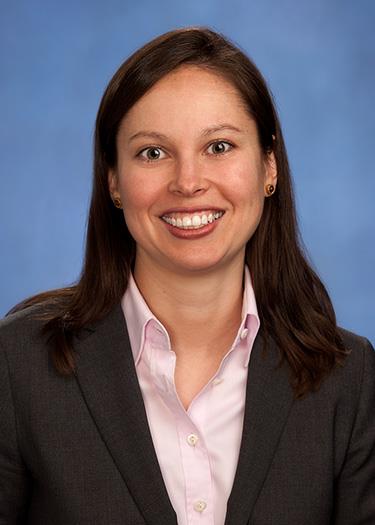
“I consider myself to be a southern girl with big dreams and a lot of faith that they would come true,” said Pamela Ravare Browne regarding the career journey she embarked on before joining ALPFA as the Chief Operating Officer in 2010. She continued, “I have been very blessed as an executive leader with over twenty years of professional experience to utilize my skills and talents as well as my passion for non-profit.”
Ravare Browne was born in California, but spent her childhood in Germany. “This was my first introduction to the international world and gained the perspective that the world is so much bigger and broader than what we see,” she recalled. After growing up overseas, Ravare Browne returned to the United States and completed her undergraduate degree in Marketing and graduate school education at Louisiana State University, earning an MBA with a concentration in Marketing and International Business.
An Unlikely Career Path
“I recognized my desire to pursue higher education and became very passionate about it after being one of the few members of my family to complete a MBA degree,” said Ravare Browne. She continued, “I worked in the corporate arena for a few years at General Motors, IBM, and Proctor and Gamble in the marketing division at each firm.” While Ravare Browne felt very privileged to be working at these Fortune 100 companies, she felt like she was not tapping into her true passion. She explained, “There was something from a contribution standpoint that wasn’t quite gratifying for me.”
After spending some time in China, Ravare Browne came back to the United States and accepted a visiting professor position at the University of Miami-Ohio and began to consider the option of returning to school herself to pursue a Ph.D. “I realized that I loved sharing knowledge and giving back to younger individuals who needed guidance and mentoring,” she said. Ravare Browne continued to pursue her teaching career, accepting positions at other universities across the country, including the University of Dallas. Here, she became the Director of the Pre-MBA program where she had the opportunity to interact with international students from over ninety countries.
Within years, Ravare Browne was promoted to become the Executive Director of International Relations at the University of Dallas. This appointment set the stage for Ravare Browne to spend a lot of time working abroad in different countries facilitating the process of getting international students to come to the United States for their graduate education. “I fell in love with working in a non-profit and academic arena,” said Ravare Browne.
Once again, she started thinking about the possibility of furthering her own education by earning a doctorate, but these plans were placed on the backburner when she was approached by The National Society of Hispanic MBAs, ALPFA’s sister organization, where she accepted a position in the office of the CEO.
Ravare Browne was eventually approached by ALPFA, and three years ago, she moved out to their headquarters in Los Angeles to serve as the Vice President of Strategic Initiatives and was quickly promoted to her current position as Chief Operating Officer. She said, “My journey has been a fabulous mix of corporate American, academia, and non-profit.” She attributes her success in all of these different fields to the cross-functional skills acquired in business school, but ultimately Ravare Browne knew she would be the most effective in the industry for which she is the most passionate. “I found my niche in the non-profit sector because I had the desire to give back,” she explained.
Carrying Out ALPFA’s Mission
“The mission of ALPFA to build Latino business leaders is very clear,” said Ravare Browne, “and I was very attracted to the work ALPFA was doing, especially in the graduate space.” With 22,000 professional and student members, 41 professional chapters, and 120 student chapters, ALPFA is not only the largest Latino business organization in the United States, but also the oldest. “We build leaders through the work that we do,” explained Ravare Browne, “and ALPFA is a safe space for our members to develop their leadership skills and take on professional roles that may not be available to them yet within their own companies.”
Ravare Browne is proud that ALPFA is able to develop leaders who can then go on to work for some of the biggest companies in the world. “We provide talent to major corporations and they view ALPFA as the premier organization for recruiting Latinos in accounting, business, and finance,” she said. “On the other hand, we also bring in the best of the best in executive leadership to our programming. Our members are exposed to top leaders from many different industries.”
Women of ALPFA is one of ALPFA’s core programs that was established about ten years ago and has been instrumental in developing Latina business leaders through networking, training, and development. “We are continuing to expand our programs to serve our female members,” said Ravare Browne. She noted that fifty percent of ALPFA’s national chapters have female presidents.
ALPFA began as a professional organization that evolved to include programs for students at the high school, community college, and university levels. ALPFA also has over 2,000 members who are in graduate school. “We have outreach programs that impact all levels of the pipeline,” said Ravare Browne.
Career Advancement Tools for Latino Business Leaders
According to Ravare Browne, any non-dominant group will face challenges in their professional careers. The mission of ALPFA is to equip Latino business leaders with the tools they need to advocate for themselves and move forward in their careers. “Communication and relationship building are two hurdles that our members encounter, especially our student members,” said Ravare Browne. “Learning how to network as a professional in a room can be intimidating for anyone. It is a common anxiety, but a very real one that can hold someone back in their career if they don’t master these skills.”
One of ALPFA’s goals is to have a positive impact on the percentage of Latino leaders at the highest corporate levels. This underrepresentation results in a somewhat limited network for emerging leaders in the Latino business community. Ravare Browne said, “ALPFA helps to tighten these networks and helps members facilitate valuable business relationships and connections.”
Ravare Browne places a lot of emphasis on the importance of sponsors to the career advancement of high potential talent, and this is a message she works hard to deliver to the members of ALPFA. “Many of our members don’t have that inside edge, so we provide mentoring and coaching in addition to connecting them with individuals who will be sponsors for them within their own companies,” explained Ravare Browne.
She continued, “Culturally, it is not common for Latinos to self-promote themselves. By creating this mentoring and sponsorship concept within the organization, it helps them to see the importance of having both in order to advance in their career.”
Going forward, Ravare Browne hopes that ALPFA will continue to grow and evolve as much as it has since it was established 41 years ago. By continuing to focus on building strong executive leadership programs, she is confident that ALPFA will be increasingly instrumental in ushering strong Latino business leaders through the leadership pipeline over the next 40 years and beyond.
The Glass Hammer is celebrating Hispanic Heritage Month by featuring profiles of Hispanic Women Business Leaders all week long!
By Michelle Hendelman, Editor-in-Chief

 By Michelle Hendelman