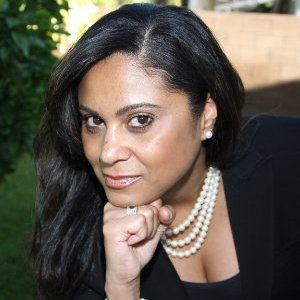
“I consider myself to be a southern girl with big dreams and a lot of faith that they would come true,” said Pamela Ravare Browne regarding the career journey she embarked on before joining ALPFA as the Chief Operating Officer in 2010. She continued, “I have been very blessed as an executive leader with over twenty years of professional experience to utilize my skills and talents as well as my passion for non-profit.”
Ravare Browne was born in California, but spent her childhood in Germany. “This was my first introduction to the international world and gained the perspective that the world is so much bigger and broader than what we see,” she recalled. After growing up overseas, Ravare Browne returned to the United States and completed her undergraduate degree in Marketing and graduate school education at Louisiana State University, earning an MBA with a concentration in Marketing and International Business.
An Unlikely Career Path
“I recognized my desire to pursue higher education and became very passionate about it after being one of the few members of my family to complete a MBA degree,” said Ravare Browne. She continued, “I worked in the corporate arena for a few years at General Motors, IBM, and Proctor and Gamble in the marketing division at each firm.” While Ravare Browne felt very privileged to be working at these Fortune 100 companies, she felt like she was not tapping into her true passion. She explained, “There was something from a contribution standpoint that wasn’t quite gratifying for me.”
After spending some time in China, Ravare Browne came back to the United States and accepted a visiting professor position at the University of Miami-Ohio and began to consider the option of returning to school herself to pursue a Ph.D. “I realized that I loved sharing knowledge and giving back to younger individuals who needed guidance and mentoring,” she said. Ravare Browne continued to pursue her teaching career, accepting positions at other universities across the country, including the University of Dallas. Here, she became the Director of the Pre-MBA program where she had the opportunity to interact with international students from over ninety countries.
Within years, Ravare Browne was promoted to become the Executive Director of International Relations at the University of Dallas. This appointment set the stage for Ravare Browne to spend a lot of time working abroad in different countries facilitating the process of getting international students to come to the United States for their graduate education. “I fell in love with working in a non-profit and academic arena,” said Ravare Browne.
Once again, she started thinking about the possibility of furthering her own education by earning a doctorate, but these plans were placed on the backburner when she was approached by The National Society of Hispanic MBAs, ALPFA’s sister organization, where she accepted a position in the office of the CEO.
Ravare Browne was eventually approached by ALPFA, and three years ago, she moved out to their headquarters in Los Angeles to serve as the Vice President of Strategic Initiatives and was quickly promoted to her current position as Chief Operating Officer. She said, “My journey has been a fabulous mix of corporate American, academia, and non-profit.” She attributes her success in all of these different fields to the cross-functional skills acquired in business school, but ultimately Ravare Browne knew she would be the most effective in the industry for which she is the most passionate. “I found my niche in the non-profit sector because I had the desire to give back,” she explained.
Carrying Out ALPFA’s Mission
“The mission of ALPFA to build Latino business leaders is very clear,” said Ravare Browne, “and I was very attracted to the work ALPFA was doing, especially in the graduate space.” With 22,000 professional and student members, 41 professional chapters, and 120 student chapters, ALPFA is not only the largest Latino business organization in the United States, but also the oldest. “We build leaders through the work that we do,” explained Ravare Browne, “and ALPFA is a safe space for our members to develop their leadership skills and take on professional roles that may not be available to them yet within their own companies.”
Ravare Browne is proud that ALPFA is able to develop leaders who can then go on to work for some of the biggest companies in the world. “We provide talent to major corporations and they view ALPFA as the premier organization for recruiting Latinos in accounting, business, and finance,” she said. “On the other hand, we also bring in the best of the best in executive leadership to our programming. Our members are exposed to top leaders from many different industries.”
Women of ALPFA is one of ALPFA’s core programs that was established about ten years ago and has been instrumental in developing Latina business leaders through networking, training, and development. “We are continuing to expand our programs to serve our female members,” said Ravare Browne. She noted that fifty percent of ALPFA’s national chapters have female presidents.
ALPFA began as a professional organization that evolved to include programs for students at the high school, community college, and university levels. ALPFA also has over 2,000 members who are in graduate school. “We have outreach programs that impact all levels of the pipeline,” said Ravare Browne.
Career Advancement Tools for Latino Business Leaders
According to Ravare Browne, any non-dominant group will face challenges in their professional careers. The mission of ALPFA is to equip Latino business leaders with the tools they need to advocate for themselves and move forward in their careers. “Communication and relationship building are two hurdles that our members encounter, especially our student members,” said Ravare Browne. “Learning how to network as a professional in a room can be intimidating for anyone. It is a common anxiety, but a very real one that can hold someone back in their career if they don’t master these skills.”
One of ALPFA’s goals is to have a positive impact on the percentage of Latino leaders at the highest corporate levels. This underrepresentation results in a somewhat limited network for emerging leaders in the Latino business community. Ravare Browne said, “ALPFA helps to tighten these networks and helps members facilitate valuable business relationships and connections.”
Ravare Browne places a lot of emphasis on the importance of sponsors to the career advancement of high potential talent, and this is a message she works hard to deliver to the members of ALPFA. “Many of our members don’t have that inside edge, so we provide mentoring and coaching in addition to connecting them with individuals who will be sponsors for them within their own companies,” explained Ravare Browne.
She continued, “Culturally, it is not common for Latinos to self-promote themselves. By creating this mentoring and sponsorship concept within the organization, it helps them to see the importance of having both in order to advance in their career.”
Going forward, Ravare Browne hopes that ALPFA will continue to grow and evolve as much as it has since it was established 41 years ago. By continuing to focus on building strong executive leadership programs, she is confident that ALPFA will be increasingly instrumental in ushering strong Latino business leaders through the leadership pipeline over the next 40 years and beyond.
The Glass Hammer is celebrating Hispanic Heritage Month by featuring profiles of Hispanic Women Business Leaders all week long!
By Michelle Hendelman, Editor-in-Chief

Extracurriculars Are Not Just for Kids: The Career Payoffs of Volunteer Experience
Work-LifeNearly 27% of adults in America volunteer through a formal organization, with that rate increasing to 42% among college graduates. Across the board, women volunteer at a higher rate than men. Although some people volunteer for purely altruistic reasons, the social, psychological, and career benefits of volunteering should not be underestimated. When I refer to the career benefits of volunteering, I’m not talking about volunteering at a soup kitchen on Thanksgiving. I’m talking about an ongoing commitment to a specific organization that will allow you to gain valuable leadership experience, try your hand at new skills that may benefit you professionally, increase your visibility in the community, and expand your network.
In this article, I will examine the career benefits of volunteering, and provide recommendations to help you determine which volunteer opportunities are most likely to provide those benefits.
How can volunteering benefit your career?
Obtain leadership experience. With the flattening of corporate hierarchies, opportunities to hone management skills are becoming increasingly scarce. At the same time, one of the most important ways leadership lessons are learned is through trial and error. Taking on a leadership role in a nonprofit can be an excellent way to gain or deepen your leadership experience. I once became President of a nonprofit after the previous President moved out of state. Membership had dwindled to only 30% of what it had been in prior years, events were poorly attended, and the Treasury was low on funds. In less than 2 years as President, I rebuilt the organization to over 80 members. Volunteering to lead this nonprofit out of a challenging time taught me many valuable professional skills: building and managing an executive board, regaining the trust and interest of disappointed members, developing a leadership pipeline, marketing the organization, seeking donations, delivering speeches to large audiences, and much more.
Gain visibility and recognition in the community for your existing skills. Use your professional skills to help a nonprofit. For example, if you are an Accountant, volunteer to serve as Treasurer of a nonprofit organization. New contacts you make through volunteering will become aware of your skills, which could translate into business or job opportunities. Also, if at work you only are responsible for one facet of a project in your area of expertise, volunteering may allow you to have autonomy over an entire project much sooner than you would be able to at work.
Develop new secondary skills that could benefit your career. If you are seeking to complement your professional profile with new skills, consider seeking them in a nonprofit setting. Anyoli Font, Provider Relations Manager at MedTrust Network and President of the Kiwanis Club of Miramar/Pembroke Pines, Florida, shared “Through my volunteer work, I was able to fill all the gaps on my resume.” At her job, Anyoli mainly works alone. Anyoli credits her volunteer experiences for the opportunity to develop skills such as teamwork, running meetings, public speaking and planning large-scale events.
Test your aptitude and interest in a different area before making a career change. Imagine you are a successful Engineer, but have been thinking about seeking a position in the Sales division of your company. Why not volunteer for the Development Committee of a nonprofit, and see how effective you are at obtaining donations first? The nonprofit will be glad to have your help, even if you are not experienced in the area. While you determine whether Sales is a good fit for you, you will gain confidence, take on a new challenge, and ideally, also raise funds for a worthy cause in the process.
Expand your network and sphere of influence. It could be argued that women network differently from men. They focus on nurturing relationships that may prove beneficial in the future, while men tend to network only when they need something. Women’s networking style could prove very conducive to nonprofit settings, where teamwork and long-term relationship building are the focus, as opposed to immediate “give and take.” It goes without saying that volunteering will expand your network substantially, enabling you to get to know people whose paths you probably would not cross as part of your daily routine. You are likely to meet and potentially build relationships with top executives, civic leaders, and other members of the business community who are also interested in the same cause.
Obtain a new set of mentors who see your potential and encourage you to stretch yourself. When others in your organization and in the community begin to recognize your potential, they often will allow you to see strengths and capabilities that you did not see in yourself. Anyoli Font shared a story of a woman who joined her Kiwanis Club. This woman had always wanted to be a leader, but did not believe she was qualified for a leadership position. Anyoli encouraged her to run for Treasurer of the club, and she won the election. Were it not for Anyoli seeing leadership qualities the woman did not see in herself, she would not have achieved her leadership position.
Read more
Leading Multi-cultural Global Teams: Asia
Managing ChangeDo you know that women in India are more likely to give up their career to take care of their elderly parents than to raise kids?
If you think you are ready to build and lead a team spread across the globe or perhaps already do, there are some inter-cultural issues to consider that can help you as you take up the challenge of working in, or working with a team, whose implicit norms are different from your own. Don’t leave the human resources department to be the only folks on top of the “do’s and the don’ts.”
As Shanker Ramamurthy, President of Global Growth & Operations, Thomson Reuters, explained recently at the WILL USA conference in NYC:
As companies scramble for new perspectives and disruptive thinking to wade through emerging markets leaders and top executives – both men and women, need a deep understanding of diverse cultural and gender norms in different parts of the world.
Read more
Harvard Women Reflect on the School’s New Focus of Fostering Female Success
Featured, Managing Change, Office PoliticsThe New York Times recently highlighted Harvard Business School’s (HBS) attempt to create gender parity in the classroom, changing a culture considered to be the breeding ground for corporate leaders globally.
When Harvard’s first female president, Drew Gilpin Faust, appointed the new dean, Nitin Nohria, the dean vowed to do more than his predecessors when it came to remaking gender relations at the school.
HBS’ approach was radical, changing how students spoke, studied, and socialized. The transformation also went deep, with administrators installing stenographers in the classroom to guard against biased grading and providing private coaching for untenured female professors.
Clearly, HBS’ makeover doesn’t mean it is now – or will be – perfect. The school’s gender makeover has resulted in a number of unintended consequences and issues. For example, the grade gap disappeared so quickly, it’s unclear what its true source was. Also, there are demands for more women on the faculty, which is a request deans are struggling to fulfill. There has also been pushback, mostly from young men who believe the makeover to be “intrusive social engineering.”
It wasn’t until August of 1962 that Harvard Business School accepted its first female students and in the fifty-one-years since, women have made considerable gains in academia. Today, three women earn a college degree for every two men and women are earning more graduate degrees than men. Admittedly, Harvard has been a hotbed for progress: the school’s current 900-plus first-year students are 40 percent women – HBS’ highest percentage ever. HBS’ student body is also far more diverse than it was 50 years ago, not just in gender, but in race, ethnicity, social class, and nationality. HBS also recently admitted its first transgender student.
In finance, however, women and minorities have made very little progress, though Harvard seems unafraid of tackling these difficult topics. A recent conference at HBS entitled “Gender and Work: Challenging Conventional Wisdom,” addressed the on-the-ground reality of women leaders 50 years after the first women were admitted to the School’s two-year MBA Program.
Harvard has been more than forthcoming in detailing the many ways the school was failing to retain female students, but how challenging was the atmosphere for female students before the makeover and what do female grads think of the school’s effort to foster female success?
Read more
To Unplug (Completely) or Not During Family Vacation? …that is the question
Expert AnswersRecently, I emailed a woman that I often partner with and received an out of office reply indicating that she was “on vacation with family and 100% unplugged from all communication devices.” She was an entrepreneur mom (like me) and we’d often discussed the challenges that working women/entrepreneurs face so her emphatic and somewhat unconventional out of office reply definitely brought a smile to my face.
While my first visceral reaction was “good for her!”, it was almost immediately followed by a second reaction – “sounds good in theory, but not for me.” As someone who prides herself on being the “queen of work/life balance” it seemed odd to me that I had that response, but if I were honest with myself I had to acknowledge that I’m a “95% unplugged during vacation” mom, and that just works best for me.
We hear “work/life balance” all the time, but we tend to think of that concept as only meaning “how can I pull away from work and spend sufficient time with family, etc?” What I’ve found though when considering this “to unplug or not dilemma” is that for me, I also have to consider the other side of that balance – creating just enough space for “work” to keep my business running and avoid the mind numbing avalanche of emails awaiting me after a week of not checking emails.
Of course, while on vacation my primary purpose and focus is on my family, myself, and having fun (as it should be), but the reality is that clients will continue to approach me with new business opportunities, our tenant may have an emergency, or a friend may have a bad break up and really need to talk.
As a result, I’ve found that when I’ve tried to unplug 100% it creates more stress for me and allowing that 5% of check in time relieves that and enables me to really enjoy my time away. For me, that 5% usually looks like checking email for 20-30 minutes every other day – not doing “real work”, and this allows just enough connection with the outside world for me to feel like I’ve got the balance I need.
To be completely honest, I tried to be 100% unplugged for awhile, and it just wasn’t working. Honestly, it felt a bit like I’d imagine a drug withdrawal might feel or the feeling when I realize that I’ve inadvertently left my purse in a restaurant. Furthermore, I had a bit of a jarring incident during one Destin family vacation. My family was lunching at our favorite restaurant – sipping drinks with umbrellas on the outside patio overlooking the bay when my phone rang.
Read more
Fitting In: What Interviewers are Really Looking For
Office PoliticsHow do hiring managers choose candidates for jobs at top firms? According to Northwestern University research, it’s all about personality.
Based on analysis of the hiring practices of elite professional services firms, Lauren A. Rivera, Assistant Professor of Management and Organizations at Northwestern’s Kellogg School of Management, found that interviewers give far more weight to “fit” than they do to technical skills or academic achievements. After all, hiring managers reason, most Wall Street firms accept entry-level applications mainly from graduating students of Ivy League universities. For the most part, even being able to apply to these top jobs implies a baseline level of competence, and whatever they don’t know, they’ll pick up through a comprehensive analyst or associate training program at the firm.
For applicants, that means getting a job offer is less dependent upon proving smarts or skills, as it is convincing an interviewer they’ll fit in at the company. For interviewers, it means they’ll be sure the person they hire can get along well with team members, who they’ll be spending about 80 hours per week with anyway. This should help boost retention, employee engagement, and all the other good things that create a productive workforce, right?
In her article, “Hiring as Cultural Matching: The Case of Elite Professional Service Firms,” Rivera says she is not so sure. At some point, all this focus on cultural homogeneity is bound to produce a groupthink culture, one which keeps valuable voices out and ushers in people who may not be as qualified for the job.
Most companies claim they want real diversity in their offices, but Rivera’s study shows that diversity of thought may not falling by the wayside.
Read more
Voice of Experience: Hilarie Bass, Co-President, Greenberg Traurig
Voices of ExperienceHilarie Bass, Co-President of Greenberg Traurig, emphasized the importance of defining your personal level of success and mapping out a career path that will enable you to get to that level.
According to Bass, all lawyers should look at their careers through a long lens. “Think about what you want to achieve in five years and create a vision for what that definition of success will look like,” explained Bass. “Being a really good technical lawyer is a precondition to any level of success in the practice of law. That being said, technical ability in and of itself is not enough,” she added.
Career at Greenberg Traurig
Bass has a unique career path in that she has spent her entire career at one law firm. “I came to Greenberg Traurig as a summer associate, accepted a job offer on the spot, and have been here for my entire legal career,” explained Bass. She became a shareholder in 1987, and in the mid-nineties Bass became the head of the Miami Litigation Group.
After leading the litigation group in Miami, Bass spent eight years as chair of the Global Litigation Practice for Greenberg Traurig. She then became Global Operating Shareholder for three years, which gave her the unique opportunity to work with the chairs of all the practice groups at the firm.
Since February, Bass has been getting up to speed in her new position as Co-President. “In this role, I have a lot more opportunities for interaction between our lawyers and our clients,” said Bass.
“The achievement I am most proud of in my career, outside of practicing at Greenberg Traurig, is having served as the chair of the ABA litigation section, which is the largest section of the American Bar Association.”
She continued, “The other moment I am proud of is my work on a pro bono case in which I represented two foster children that led to the finding of unconstitutionality of the statutes that prohibited gay people from adopting in the state of Florida. We raised the legal issues from the perspective of two fit children rather than the adopting parents.”
“It was great to be able to use the law in the way I have always thought about it,” Bass said, “which is a tool for social change.”
Currently, Bass is approaching the end of almost four and half years of litigation in a major case involving Chinese drywall. She explained, “Post-Katrina, it made economic sense to import drywall board into the US. Between the real estate boom and the post-Katrina reconstruction, there was a high demand for drywall. As it turned out, the imported drywall contained an excessive amount of sulfur, which will deteriorate anything made of copper or silver in the house.”
Bass continued, “I represented many of the big public builders across the country who repaired their homes on behalf of their homeowners. We have had a lot of success reaching settlements with various parties. I am glad we are coming to a positive end on this case.”
Read more
Intrepid Woman: Yesi Morillo-Gual, Founder and President, Proud To Be Latina
Intrepid Women SeriesBy Michelle Hendelman, Editor-in-Chief
As a successful senior level Latina at one of the largest global financial services firms, Yesi Morillo-Gual recognized that she was one of few Latinas to hold a Director position. This was one of her primary motivations for starting her Latina networking organization, Proud to Be Latina, three years ago.
“I have been in Corporate America for twenty-one years,” said Morillo-Gual, “starting at the administrative level and working my way up to where I am now.” She continued, “I started Proud To Be Latina because of some of the challenges I faced in my own career. These included things like not knowing how to navigate the landscape, not knowing about the unwritten rules, not having a lot of support, and also not really believing that I belonged because the majority of my colleagues did not look like me.”
As a result, Morillo-Gual found herself creating individual barriers that she admits, in hindsight, probably did not exist. She explained, “I saw other women around me doing this same thing, and that is not to say barriers did not exist, but we were creating more barriers for ourselves. This motivated me to create a platform of empowerment for Latinas to learn from one another, empower, and encourage each other to reach their full potential.”
One of the most important ways Morillo-Gual carries out the mission of Proud To Be Latina is to be a role model and mentor for other professional Latinas who also feel like they are the only Latina in the room at times. The organization also has several programs [PDF] designed to bring professional Latinas together to network and share experiences.
Networking Opportunities for Latina Professionals
Morillo-Gual said, “One of these programs is the EmPower Hour, which is a conference call held on the first Monday of every month. We bring in experts in a field or topic and individuals on the call can ask important questions and discuss relevant issues.” Morillo-Gual mentioned topics discussed in previous EmPower Hours include how to build wealth, learning how to say ‘no,’ and how heritage can be a source of strength for advancement.
“Some Latinas think they have to leave their heritage behind to succeed in corporate America, which is not true at all,” explained Morillo-Gual.
Another program Proud To Be Latina hosts is EmPowered Latinas Connect, a networking event held three to four times a year. At their most recent event, which took place last Friday, they addressed the issue of the unconscious bias Latinas have created against each other and how to overcome this. “We had a really honest conversation about what our responsibilities are to other Latinas,” said Morillo-Gual. These events offer a safe space for professional Latinas to express themselves on these important issues impacting their career advancement.
Finally, Proud To Be Latina hosts an annual Latina EmPowerment Conference to help women bridge the gap being Latina, being American, and never compromising their identity to succeed in their careers, according to Morillo-Gual.
Read more
Employee Enthusiasm for Diversity Underpins Successful D&I
Managing ChangeA study [PDF] published in the Journal of Occupational and Organizational Psychology suggests that one of the core factors in whether a company will build a successful diversity and inclusion program is whether people in the workforce see difference as an asset to the company or not.
The article, “Embracing uniqueness: The underpinnings of a positive climate for diversity” outlines the workforce characteristics of a company noted for a successful diversity program. They authors, Ashley Groggins, Peckham, Inc., and Ann Marie Ryan, Michigan State University, write that they set out to find “how diversity can be translated into attitudes (openness to change, openness to others, openness to error and perceived person-environment fit) and competencies (efficacy for change, interpersonal competence, improvement capacity and actual person-environment fit).”
They identified four factors for success: “our data revealed an underlying concept of diversity as a central organizational attribute, which leads to a key role for concepts of accommodation, difference, learning, and physical and organizational structure.”
When employees see diversity as one of the defining characteristics of their company, they are more likely buy into programs, policies, and structures that promote diversity.
Read more
Thought Leader: Pamela Ravare Browne, National Chief Operating Officer, ALPFA National Office
Thought Leaders“I consider myself to be a southern girl with big dreams and a lot of faith that they would come true,” said Pamela Ravare Browne regarding the career journey she embarked on before joining ALPFA as the Chief Operating Officer in 2010. She continued, “I have been very blessed as an executive leader with over twenty years of professional experience to utilize my skills and talents as well as my passion for non-profit.”
Ravare Browne was born in California, but spent her childhood in Germany. “This was my first introduction to the international world and gained the perspective that the world is so much bigger and broader than what we see,” she recalled. After growing up overseas, Ravare Browne returned to the United States and completed her undergraduate degree in Marketing and graduate school education at Louisiana State University, earning an MBA with a concentration in Marketing and International Business.
An Unlikely Career Path
“I recognized my desire to pursue higher education and became very passionate about it after being one of the few members of my family to complete a MBA degree,” said Ravare Browne. She continued, “I worked in the corporate arena for a few years at General Motors, IBM, and Proctor and Gamble in the marketing division at each firm.” While Ravare Browne felt very privileged to be working at these Fortune 100 companies, she felt like she was not tapping into her true passion. She explained, “There was something from a contribution standpoint that wasn’t quite gratifying for me.”
After spending some time in China, Ravare Browne came back to the United States and accepted a visiting professor position at the University of Miami-Ohio and began to consider the option of returning to school herself to pursue a Ph.D. “I realized that I loved sharing knowledge and giving back to younger individuals who needed guidance and mentoring,” she said. Ravare Browne continued to pursue her teaching career, accepting positions at other universities across the country, including the University of Dallas. Here, she became the Director of the Pre-MBA program where she had the opportunity to interact with international students from over ninety countries.
Within years, Ravare Browne was promoted to become the Executive Director of International Relations at the University of Dallas. This appointment set the stage for Ravare Browne to spend a lot of time working abroad in different countries facilitating the process of getting international students to come to the United States for their graduate education. “I fell in love with working in a non-profit and academic arena,” said Ravare Browne.
Once again, she started thinking about the possibility of furthering her own education by earning a doctorate, but these plans were placed on the backburner when she was approached by The National Society of Hispanic MBAs, ALPFA’s sister organization, where she accepted a position in the office of the CEO.
Ravare Browne was eventually approached by ALPFA, and three years ago, she moved out to their headquarters in Los Angeles to serve as the Vice President of Strategic Initiatives and was quickly promoted to her current position as Chief Operating Officer. She said, “My journey has been a fabulous mix of corporate American, academia, and non-profit.” She attributes her success in all of these different fields to the cross-functional skills acquired in business school, but ultimately Ravare Browne knew she would be the most effective in the industry for which she is the most passionate. “I found my niche in the non-profit sector because I had the desire to give back,” she explained.
Carrying Out ALPFA’s Mission
“The mission of ALPFA to build Latino business leaders is very clear,” said Ravare Browne, “and I was very attracted to the work ALPFA was doing, especially in the graduate space.” With 22,000 professional and student members, 41 professional chapters, and 120 student chapters, ALPFA is not only the largest Latino business organization in the United States, but also the oldest. “We build leaders through the work that we do,” explained Ravare Browne, “and ALPFA is a safe space for our members to develop their leadership skills and take on professional roles that may not be available to them yet within their own companies.”
Ravare Browne is proud that ALPFA is able to develop leaders who can then go on to work for some of the biggest companies in the world. “We provide talent to major corporations and they view ALPFA as the premier organization for recruiting Latinos in accounting, business, and finance,” she said. “On the other hand, we also bring in the best of the best in executive leadership to our programming. Our members are exposed to top leaders from many different industries.”
Women of ALPFA is one of ALPFA’s core programs that was established about ten years ago and has been instrumental in developing Latina business leaders through networking, training, and development. “We are continuing to expand our programs to serve our female members,” said Ravare Browne. She noted that fifty percent of ALPFA’s national chapters have female presidents.
ALPFA began as a professional organization that evolved to include programs for students at the high school, community college, and university levels. ALPFA also has over 2,000 members who are in graduate school. “We have outreach programs that impact all levels of the pipeline,” said Ravare Browne.
Career Advancement Tools for Latino Business Leaders
According to Ravare Browne, any non-dominant group will face challenges in their professional careers. The mission of ALPFA is to equip Latino business leaders with the tools they need to advocate for themselves and move forward in their careers. “Communication and relationship building are two hurdles that our members encounter, especially our student members,” said Ravare Browne. “Learning how to network as a professional in a room can be intimidating for anyone. It is a common anxiety, but a very real one that can hold someone back in their career if they don’t master these skills.”
One of ALPFA’s goals is to have a positive impact on the percentage of Latino leaders at the highest corporate levels. This underrepresentation results in a somewhat limited network for emerging leaders in the Latino business community. Ravare Browne said, “ALPFA helps to tighten these networks and helps members facilitate valuable business relationships and connections.”
Ravare Browne places a lot of emphasis on the importance of sponsors to the career advancement of high potential talent, and this is a message she works hard to deliver to the members of ALPFA. “Many of our members don’t have that inside edge, so we provide mentoring and coaching in addition to connecting them with individuals who will be sponsors for them within their own companies,” explained Ravare Browne.
She continued, “Culturally, it is not common for Latinos to self-promote themselves. By creating this mentoring and sponsorship concept within the organization, it helps them to see the importance of having both in order to advance in their career.”
Going forward, Ravare Browne hopes that ALPFA will continue to grow and evolve as much as it has since it was established 41 years ago. By continuing to focus on building strong executive leadership programs, she is confident that ALPFA will be increasingly instrumental in ushering strong Latino business leaders through the leadership pipeline over the next 40 years and beyond.
The Glass Hammer is celebrating Hispanic Heritage Month by featuring profiles of Hispanic Women Business Leaders all week long!
By Michelle Hendelman, Editor-in-Chief
Voice of Experience: Kelly Brennan, Managing Director, Securities Division, Goldman Sachs
Voices of ExperienceKelly Brennan, Managing Director in the Securities Division at Goldman Sachs, graduated from UC Berkeley with a Liberal Arts degree and a minor in Biology. Her intention at the time was to follow the Pre-Law or Pre-Med track. Instead, Brennan decided to go to the financial industry right out of college when she accepted a position as a junior trader at Susquehanna Trading Group.
“I was one of three women in the incoming class of fifty-five people,” recalled Brennan. She continued, “As a junior trader, I was the only woman at the desk and I learned pretty quickly that instead of trying to fit in by thinking and acting like the men, I could have a true competitive advantage by approaching things in a slightly different way.” As a woman in this male-dominated culture, Brennan realized that she could bring a unique perspective to the table.
Brennan noted, “I learned very early how to lead with content and this has helped me at every level of my career, from being a junior trader to more senior roles.”
At Susquehanna International Group (SIG), Brennan moved her way up the ranks from assistant trader to trader, eventually becoming the only female specialist at SIG on the NYSE. In 2005, Brennan joined Goldman Sachs as an Associate in the Prime Brokerage area on the Securities Lending desk. She was promoted to a Vice President in 2006, and then to Managing Director in 2010.
Brennan pointed out that throughout her career there have been many small achievements as well as a few very poignant moments. “One of the proudest moments of my career happened earlier this year when I returned to work after my first maternity leave. I heard a lot of feedback about how my team had really stepped up while I was out. It was rewarding to hear that the team that I helped to recruit, train, and mentor had not just survived while I was out but managed to push the business forward and excel in my absence. It was validating to see that my role in that was valued and acknowledged.”
The evolution of technology and its application to the trading world is one thing that excites Brennan about the future of financial services. “It leaves a lot of room for innovation in trading and thinking about how we communicate information to our clients via a whole new mechanism of technology that we haven’t seen before in the industry,” said Brennan. She is enthusiastic about building new trading platforms based on new technologies.
Read more